
Singapore Market White Paper · 2025 Edition
Wholesale Suture Pads and Kits Manufacturers & Service in the Singapore Market
A sourcing, compliance and clinical-simulation deep dive for Singapore distributors, hospital procurement teams, nursing schools and skills centres — covering local market reality, global supply structure, technology roadmap and total cost of ownership.
Core Product Lines Supplied to Singapore Distributors
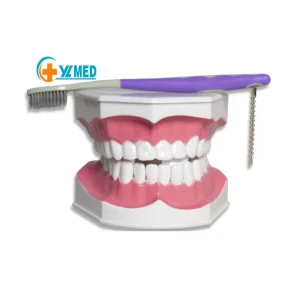
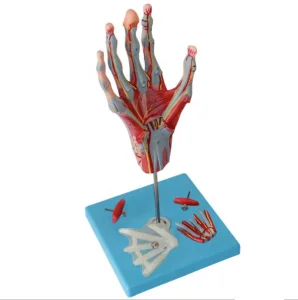
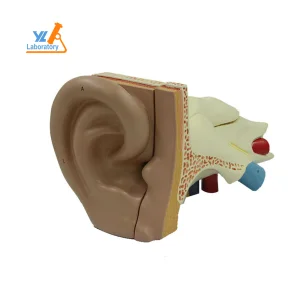
Four Flagship Platforms That Anchor a Singapore Wholesale Order
Suture pads and kits rarely travel alone. Singapore buyers — from hospital cluster procurement offices to private clinic chains — usually consolidate simulation consumables with durable equipment, anatomical models and ward hardware into a single purchase order. The four platforms below represent the highest-frequency consolidation categories requested alongside suture training stock.
China 2 Times Large Teeth Teaching Model Advanced General Configuration and Basic Configuration of Dental Medicine Model Manufacturers, Factories
OEM Human Hand Anatomical Model with Muscles & Blood Vessels, Medical Teaching Equipment Manufacturer, Manufacturers
ODM Life Size Human Ear Anatomical Model, Professional Medical Model for Hospital Use Pricelist, Quotes
Executive Summary
Why Singapore Buys Suture Pads and Kits Differently From Every Other ASEAN Market
Singapore is small geographically but disproportionately dense in clinical training infrastructure. That single characteristic determines how wholesale suture supply chains must be engineered for the market.
A Demand Profile Built on Competency, Not Convenience
Singapore treats surgical simulation as training infrastructure rather than a disposable consumable. National clinical skills centres, the public healthcare clusters, private hospital groups and the polytechnic nursing schools all purchase suture pads and kits against a documented curriculum outcome — typically an OSCE station, an entrustable professional activity (EPA), or a formal competency sign-off for junior residents. Procurement teams therefore ask for specification sheets, material declarations and batch consistency evidence, not just a unit price.
The practical consequence for overseas manufacturers is that the winning supplier is rarely the cheapest one. It is the supplier that can guarantee the same pad behaves identically across three consecutive reorders, which is what exam reliability actually depends on.
Documentation Is the Real Differentiator
Singapore's procurement culture is documentation-first. Public sector tenders expect ISO 9001 evidence, consistent material safety data, and the ability to answer technical clarifications within a defined window. Private buyers are faster but equally intolerant of re-specified goods arriving in the third shipment.
For a wholesale partner, this means the commercial argument shifts from price per pad to total cost of training failure — the cost of a learner who reaches a patient having practised on an anatomically unrealistic pad with unpredictable tissue resistance.
1958Manufacturing origin
2008ISO 9001 certified since
200+Professional staff
10Product lines consolidated
24hTypical quote turnaround
Local Business & Industrial Reality
The Singapore Market: How Suture Training Supply Actually Moves
Understanding the Singapore market requires looking past the country's size and examining five structural forces that shape every purchase order.
1. Cluster Procurement and the Group Purchasing Effect
Singapore's public healthcare delivery is organised into three vertically integrated clusters, each running its own hospitals, polyclinics and community facilities. Simulation consumables are typically aggregated at cluster level rather than bought department by department, which means a single approved specification can unlock volume across a dozen training sites — and equally, a single rejection can lock a brand out for a whole tender cycle.
For manufacturers, this creates an unusual dynamic: the sales cycle is long but the volume is unusually stable. A supplier that clears one cluster's evaluation is positioned for repeat annual replenishment rather than one-off project sales.
2. Teaching Capacity in a Compact Geography
Medical and nursing education in Singapore is compressed into a small number of high-throughput institutions, each running large cohorts through standardised assessment. A single simulation centre may cycle several hundred learners per year through suturing stations. That produces predictable, high-volume, recurring demand for consumable pads — but also a hard requirement for dimensional consistency, because assessment stations are built around fixed layouts and fixed instrument trays.
3. Private Clinics, Ambulatory Surgery and Aesthetics
Singapore's private sector — including day-surgery centres, family practices performing minor procedures, dermatology and medical-aesthetics clinics — is a substantial and under-served buyer of wound-closure training consumables. These buyers usually train in-house, on small benches, with short sessions, and they strongly prefer compact single-use kits with an instrument set included rather than bulk pads requiring separate instrumentation.
4. Regulatory Positioning and Labelling Discipline
Suture pads and kits sold strictly as non-clinical training simulators occupy a different regulatory position from wound-closure devices intended for patient care. Buyers in Singapore increasingly ask suppliers to keep that distinction explicit on the label, the packaging and the catalogue copy. A manufacturer that documents intended use clearly and consistently removes a substantial compliance review burden from the importer, and that is a genuine commercial advantage in tender evaluation.
5. Lead-Time Economics and Freight Reality
Singapore is one of the most efficient import nodes in Asia, and buyers expect that efficiency to be reflected in delivery. Ocean freight from South China typically lands in days rather than weeks, and consolidation through a single export partner allows a buyer to mix suture kits, anatomical models, ward furniture and rehabilitation aids in one container instead of managing four separate suppliers and four separate arrival schedules.
6. An Ageing Population Reshaping Wound Care
Singapore's population is ageing quickly, with a rising share of residents above 65 and a deliberate national shift of chronic and post-surgical care into community settings. This expands the number of nurses, advanced practice nurses and community clinicians who must be competent in wound assessment and closure — widening the buyer base far beyond surgical residents and pushing demand toward layered, anatomically realistic pads that simulate fragile or thin skin.
Global Industry Context
The Global Suture Training Supply Chain in 2025
Suture pads occupy a deceptively simple product category. In reality, they sit at the intersection of three fast-moving global industries: medical simulation, polymer materials, and healthcare education accreditation.
Structural Shift: From Apprenticeship to Competency-Based Education
Across North America, Europe, Australia and increasingly Asia, surgical education has migrated from time-based apprenticeship to competency-based progression. Frameworks such as entrustable professional activities require objective evidence that a trainee can perform a task to standard. Suturing is one of the earliest and most frequently assessed technical skills — which converts a low-cost consumable into a formally required assessment instrument, with all the specification rigour that implies.
The consequence is that simulation consumables are now budgeted as part of curriculum delivery rather than discretionary departmental spending, making demand both larger and more resilient to economic cycles.
Materials Evolution: From Fruit Peel to Multi-Layer Silicone
Two decades ago, learners practised on pig skin, orange peel or basic foam blocks. Today the mainstream specification is a multi-layer silicone or PVC composite that reproduces epidermis, dermis and subcutaneous fat, each with different tensile strength and needle resistance. The clinically meaningful variables are puncture force, tissue drag on suture pull-through, needle-holding stability, and the number of usable wound sites per pad.
Premium segments have added self-healing surfaces, embedded vessels for haemostasis drills, and pre-cut wound geometry aligned to specific assessment rubrics.
Where Manufacturing Concentrates
China remains the dominant global production base for silicone and PVC simulation consumables, supported by an integrated polymer, mould-making and packaging supply chain. That concentration delivers cost efficiency but places a premium on factory selection discipline — the gap between a compliant factory and a marginal one is measured in batch consistency, not in catalogue photography.
Quality Systems as the Buying Criterion
ISO 9001 certification, when genuinely implemented, delivers what simulation buyers actually need: documented process control, traceability across production lots, and a corrective-action mechanism when a batch deviates. For a market like Singapore, a certificate is only the entry ticket; the operational evidence behind it is what survives technical evaluation.
The Rise of the Consolidator Buyer
Globally, distributors are narrowing their supplier lists. Rather than holding twenty small vendors across models, consumables and furniture, they consolidate into three or four manufacturers who can cover multiple categories under one quality system. This trend strongly favours multi-line manufacturers with in-house tooling and design capability over single-product workshops.
Localized Application Scenarios
Where Suture Pads and Kits Are Actually Used in Singapore
A single pad specification rarely satisfies every Singapore buyer. Matching product configuration to the real environment of use is the fastest route to a durable wholesale relationship.
Undergraduate OSCE Preparation
Medical students preparing for objective structured clinical examinations require pads that behave identically from candidate to candidate. The dominant requirement here is dimensional and tactile repeatability, because assessment validity collapses if candidate A receives a firmer substrate than candidate B.
Nursing and Allied Health Skills Labs
Nursing programmes increasingly teach wound closure awareness, dressing technique and post-operative assessment. These cohorts need high-volume, lower-cost practice pads with a simplified wound matrix, plus a smaller quantity of realistic layered pads for advanced modules and demonstration use.
Emergency and Trauma Courses
Trauma and resuscitation programmes demand deep-wound pads with embedded simulated vessels to train haemostasis, layered closure and rapid decision-making. Kits are supplied with instrument trays so a station can be reset in minutes between candidate rotations.
Private Clinics and Day Surgery
Family practices performing minor excisions, and day-surgery centres onboarding new clinicians, run short structured sessions. They favour compact all-in-one kits — pad, needle holder, forceps, scissors, suture and tray — because bench space and sterilisation capacity are both limited.
Community and Home Care Teams
With more post-surgical and chronic wound care delivered outside hospitals, community nursing teams need training substrates that replicate thin, fragile or aged skin — a materially different requirement from the firm, healthy tissue assumed by most standard pads.
Uniformed Services and First-Responder Training
Field-medicine and civil-defence training programmes require kits that survive transport, resist heat and humidity, and can be deployed in austere settings. Packaging durability becomes a specification item, not an afterthought.
Technology Roadmap & Future Outlook
What Suture Simulation Will Look Like Between 2025 and 2030
The next five years will see suture pads move from passive consumable to data-generating assessment instrument. Singapore, with its high digital maturity and centralised training infrastructure, is likely to adopt these changes earlier than most markets in the region.
2025 — 2026
Multi-Layer Silicone Becomes the Baseline
Three-layer construction with distinct epidermis, dermis and subcutaneous fat becomes the default expectation rather than a premium option. Colour-matched skin tones and wound geometry aligned to published assessment rubrics enter mainstream catalogue specifications. Buyers start asking for documented needle-puncture resistance values rather than subjective descriptions.
2026 — 2027
Embedded Sensing and Objective Scoring
Conductive layers and force-sensitive elements allow a pad to register needle entry angle, depth, spacing and tension in real time. The commercial driver is assessment defensibility: examiners in high-stakes settings need objective corroboration of subjective judgement. Expect the first generation to appear as optional add-on trays rather than fully integrated consumables.
2027 — 2028
Mixed-Reality Overlay and Remote Proctoring
Camera-tracked pads paired with AR overlays allow instructors to assess a learner at a different site — directly relevant to Singapore's cluster model, where a single faculty team may supervise training across multiple campuses. Remote proctoring also supports continuing professional education delivered to clinicians in regional partner institutions.
2028 — 2029
Sustainable Substrates and Circular Packaging
Bio-based silicone alternatives, recyclable tray systems and reduced single-use plastic content move from ESG pilot to procurement scoring criterion. Singapore's emphasis on sustainability reporting means suppliers who can document material composition and end-of-life pathways will gain evaluation points, not just goodwill.
2029 — 2030
Longitudinal Competency Analytics
Aggregated training data feeds longitudinal competency dashboards that track a cohort from first-year practice through to independent operating. At that point the suture pad is no longer a consumable line item — it is the physical endpoint of a data pipeline, and the manufacturer supplying it becomes a long-term programme partner rather than a transactional vendor.
Macro Industry Solutions
Four Procurement Models That Work for Singapore Buyers
Different buyer types need structurally different supply arrangements. The models below cover the realistic range of wholesale relationships in the Singapore market.
Model A — Multi-Category Consolidation
A distributor places one order covering suture pads, anatomical models, ward furniture and rehabilitation aids, shipped as a single mixed container. The value is administrative: one supplier, one quality system, one set of shipping documents, one arrival date. For Singapore importers managing tight warehouse footprints, arrival-date certainty is worth as much as unit price.
Model B — Private Label and OEM
Distributors building brand equity in Singapore and neighbouring markets commission private-label packaging, custom kit composition and institution-specific wound matrices. This is where in-house design capability becomes decisive — a supplier without packaging engineering simply cannot execute this model.
Model C — Tender and Framework Supply
Public sector procurement rewards suppliers who can produce specification sheets, material declarations, batch traceability records and consistent technical responses within a defined clarification window. Documentation completeness is scored, not assumed — and it is frequently where a technically adequate bid is lost.
Model D — Scheduled Replenishment
Large simulation centres consume pads predictably. A scheduled quarterly replenishment with a buffer stock agreement eliminates the annual stockout risk that disrupts assessment calendars. This model requires production lead-time transparency from the manufacturer — a supplier that cannot quote realistic lead times cannot support it.
Manufacturing Authority & Reliability
Experience, Expertise, Authority and Trust Behind the Supply
Wholesale relationships in medical training equipment are decided on evidence. Six decades of continuous manufacturing, a certified quality system and a fully documented production base are the foundation on which Singapore buyers can build long-term supply agreements.
Experience Since 1958
Henan Yulin Edu. Project Co., Ltd. was founded in 1958 and has manufactured educational and medical training equipment continuously ever since — a record that spans the entire modern history of simulation-based education.
ISO 9001 Since 2008
The quality management system has been ISO 9001 certified since 2008, covering product development, manufacturing, inspection and export documentation — the evidential backbone of every tender submission.
Scale and Capacity
Registered capital of RMB 120 million and more than 200 professional staff support ten integrated product lines — from anatomy and skeleton models to nursing simulators, dental equipment, biology slides and hospital furniture.
Production Base
No. 8, Daoqing Road, Industry Park, Hongqi District, Xinxiang, Henan, China. Buyers are welcome to arrange factory inspection and sample evaluation before committing to framework supply.
Direct Contact
Telephone: +86-13503800666 · Email: [email protected]. The export team operates seven days a week and typically responds within 24 hours with specifications, price schedules and freight options.
Complete Wholesale Range
Eight Further Product Lines to Complete a Singapore Consolidation Order
Combine suture training stock with rehabilitation aids, anatomical teaching models, emergency devices and diagnostic equipment in a single, well-documented shipment.
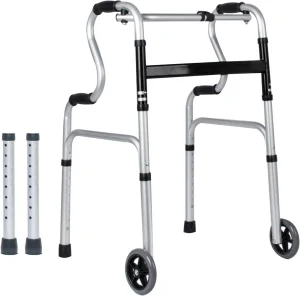
Wholesale Medical Rehabilitation 3-in-1 stand-up assist folding Walker assists support narrow-lane walkers for seniors up to 440 pounds Manufacturer, Factory
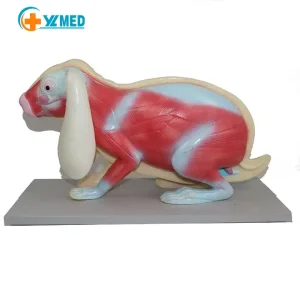
Wholesale Medical anatomy teaching advanced PVC rabbit model Rabbit anatomical model Factories, Quotes
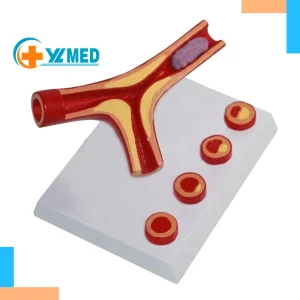
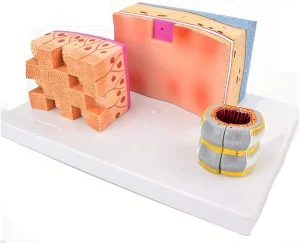
China Medical Science Human Arterial Thrombosis and Sclerosis Teaching Model Atherosclerosis Model Manufacturer, Quotes
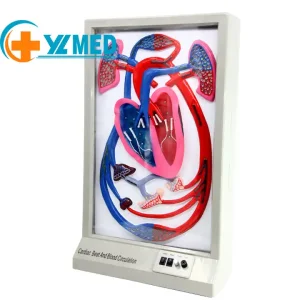
ODM Medical science teaching imported materials with clear structure, manual hydraulic blood circulation simulator Factory, Service
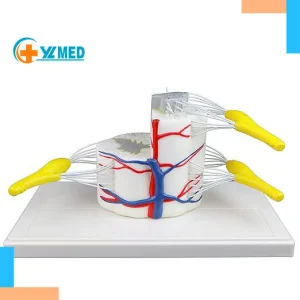
China Medical Science YULIN YL-235 5x Life Size Vertebral Partial Spinal Cord Longitudinally Cross Section Biology Model Showing Grey Factory, Quotes
ODM Laryngeal Tracheal Bronchial Anatomy Model-Human Trachea and Larynx Organ Structure for Medical Research & Teaching Manufacturer, Pricelist
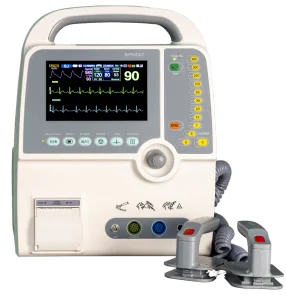
ODM Multiparameter Defibrillator Monitor Emergency Cardiac Arrest Response Device Plastic Metal Construction Electricity Machinery Manufacturer, Manufacturers
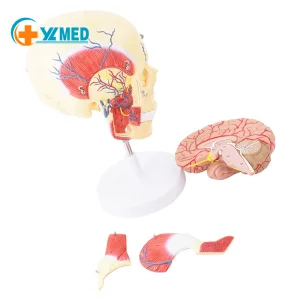
OEM Human anatomical model of the maxillofacial anatomy of masticatory muscles Masseter temporalis trigeminal nerve Manufacturer, Factory
Buyer FAQ
Frequently Asked Questions From Singapore Importers and Training Institutions
Direct answers to the technical, commercial and logistical questions that arise most often during first-order evaluation.
Is Yulin Medical a manufacturer or a trading company?
We are a manufacturer. Henan Yulin Edu. Project Co., Ltd. was founded in 1958 and operates its own factory in Xinxiang, Henan, China, with more than 200 professional staff. For one-stop orders, we also coordinate a stable network of long-term partner factories, which allows a Singapore buyer to consolidate simulation consumables, anatomical models, hospital equipment and rehabilitation aids into a single shipment with one point of contact.
What quality certification do you hold?
Our quality management system has been ISO 9001 certified since 2008. Product-specific documentation can be provided on request to support tenders, importer registration and internal quality review in your country. Where a Singapore buyer requires material declarations or batch traceability records, these are prepared as part of the standard export documentation pack.
Do you support OEM, private label and custom packaging?
Yes. Our in-house design team develops private-label packaging and product presentation for distributors, helping increase shelf appeal and resale value in your market. For suture pads and kits specifically, OEM scope typically covers kit composition, pad dimensions, wound geometry, tray layout, brand printing and multilingual labelling.
How do I choose the right CPR training manikin?
Start with the learner group: adult, child or neonatal. Then check that real-time feedback covers compression depth, compression rate and ventilation volume; confirm alignment with current AHA resuscitation guidelines; and decide whether your courses need AED trainer integration. For advanced life-support programmes, an ACLS simulator with embedded scenarios offers far more assessment value than a basic torso.
How are suture pads positioned relative to clinical devices?
Suture pads and kits supplied for education and skills practice are training simulators, not wound-closure devices intended for patient care. Clear intended-use labelling matters commercially as well as ethically: it lets a Singapore importer route the goods through the correct internal review process without ambiguity, and it protects the distributor's brand if the product is later resold into the region.
What should a Singapore distributor specify in a first purchase order?
Specify five things: the learner level and assessment context; the required pad size and wound geometry; whether the kit must include instruments and suture material; the expected annual volume so scheduled replenishment can be costed; and the packaging or private-label requirements. Providing these upfront usually reduces quotation cycles from several rounds to one.
Can suture training stock be shipped together with furniture and models?
Yes, and this is one of the most common Singapore order patterns. Consumables, anatomical models, ward furniture and rehabilitation equipment can be consolidated into a single mixed container. The benefits are administrative and financial: one set of shipping documents, one arrival schedule, one customs event and one supplier accountable for the whole consignment.
How quickly will I receive a reply and a quotation?
Our export team is online seven days a week and typically replies within 24 hours with catalogs, specifications and shipping options. For straightforward suture pad and kit enquiries with clear volumes and packaging requirements, indicative pricing is usually returned in the same response.
Can we evaluate samples before committing to a framework agreement?
Yes. Sample evaluation before bulk production is a standard step in our process and is strongly recommended for suture pads, where tactile realism, tissue drag and wound-site durability cannot be judged from a photograph. Institutions typically distribute samples across several instructors and score them against their own assessment rubric before confirming a specification.
What is the recommended reorder rhythm for a simulation centre?
For a centre cycling several hundred learners annually through suturing stations, quarterly replenishment with a modest buffer stock generally balances working capital against stockout risk. Because assessment calendars are fixed, a stockout is not merely inconvenient — it can force a reschedule of an examination. Scheduled replenishment removes that exposure entirely.
Start Your Singapore Supply Programme
Request Wholesale Pricing, Specifications and Sample Kits
Tell us your learner volumes, assessment context and packaging requirements. Our export specialists will return matched specifications, indicative wholesale pricing and a consolidated freight plan — usually within 24 hours.