General Teaching Models Manufacturer & Factories
Factory-direct biology, geography, astronomy, and STEM teaching models for schools, distributors, and education tenders—supported by a manufacturer founded in 1958 and ISO 9001 certified since 2008.
Factory-Direct General Teaching Models for Global Education Procurement
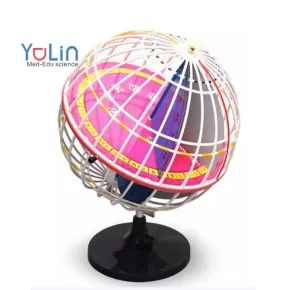
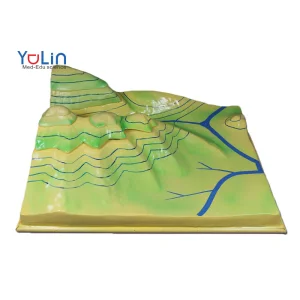
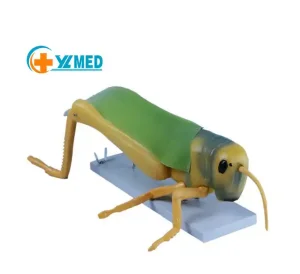
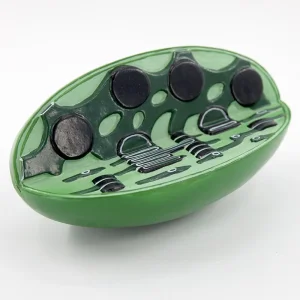
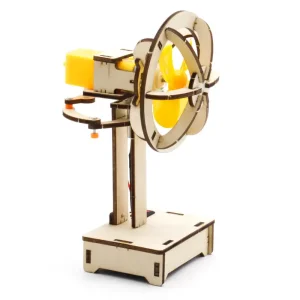
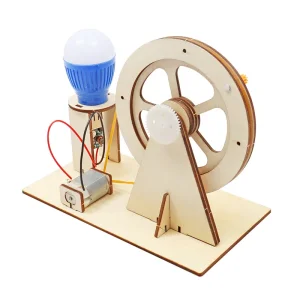
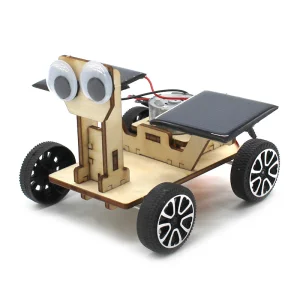
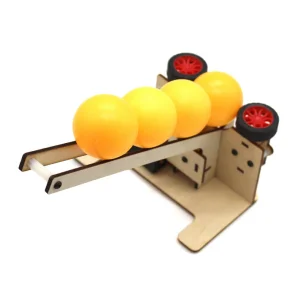
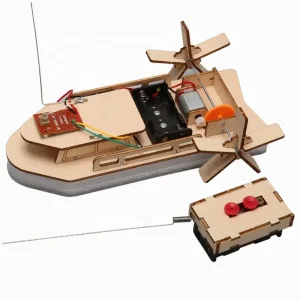
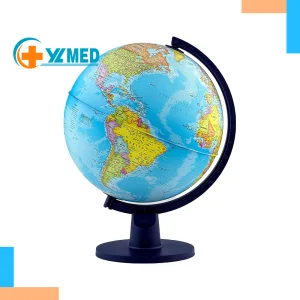
General teaching models are a high-mix, low-volume procurement category. A single school tender may combine a locust anatomy model, a chloroplast section, a hand generator, a tellurion, a seismograph, and a 3D contour map. Distributors and education ministries need a manufacturer that can supply these items consistently, document them for inspection, and keep packaging and labels aligned with local requirements. The factory behind this page—Henan Yulin Edu. Project Co., Ltd., founded in 1958 and ISO 9001 certified since 2008—has spent more than six decades building educational and medical training equipment from Xinxiang, Henan, China. With more than 200 professional staff, registered capital of RMB 120 million, and 10 product lines, its role is not simply to make models; it is to reduce the coordination cost of a complete teaching-equipment programme. The eight models below are the first half of the factory portfolio retained from the original product list. Each link leads to the original product page, and each image is displayed in full with its natural 1:1 ratio preserved.
Procurement Demand: Why General Teaching Models Matter Now
Global demand for general teaching models is being reshaped by three forces. First, inquiry-based science curricula ask students to observe, compare, and explain phenomena rather than memorise diagrams. Second, education buyers are consolidating suppliers to reduce freight, inspection, and documentation overhead. Third, tender authorities increasingly ask for material declarations, labelling, spare components, and after-sales evidence. The result is a procurement decision that looks like a product purchase but behaves like a supply-chain decision. A low unit price can become expensive when a model arrives without a replacement part, a teacher guide, or the correct packaging for a humid climate.
Curriculum Fit and Teacher Adoption
The strongest model is the one a teacher can use in a 40–45 minute lesson without extra preparation. Buyers should check grade level, scale, labels, colour coding, detachable parts, and whether the model supports demonstration, group work, or individual inspection. Classroom usability is a higher-value metric than catalogue size.
Tender Readiness and Documentation
Public tenders may require dimensions, material composition, packing lists, warranty terms, and multilingual labels. A manufacturer with ISO 9001 process control and a stable document workflow is easier to audit than a trader assembling mixed sources. Ask for the exact certificate scope and product-specific paperwork before quoting.
Distributor Economics and Repeat Orders
Distributors need a catalogue that covers biology, geography, astronomy, and STEM without creating dead stock. Mixed-category orders, private-label packaging, barcodes, and consistent carton marks improve sell-through. Repeat orders should match the approved sample in colour, dimensions, and packing.
Macro Industry Solutions: Using One Manufacturer Across Multiple Programmes
General teaching models sit inside broader programmes. The same factory portfolio can support four common programmes, each with different success criteria. Buying them together reduces supplier management effort, improves container utilisation, and gives distributors a more coherent catalogue for schools, colleges, and tender authorities.
K–12 Science and STEM Labs
Use chloroplast, locust, hand generator, oscillating fan, shaking-head fan, and energy-driving kits to connect life science and physical science. The buyer’s KPI is not the number of SKUs but the percentage of lessons with a hands-on demonstration.
Geography and Earth Science Labs
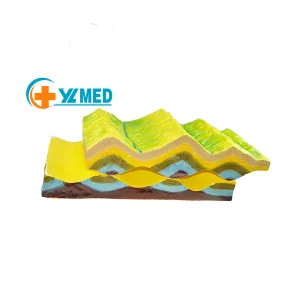
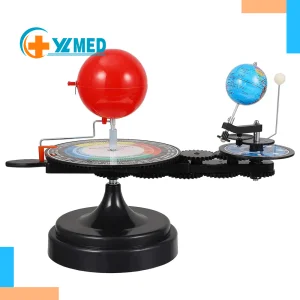
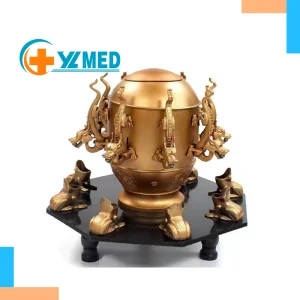
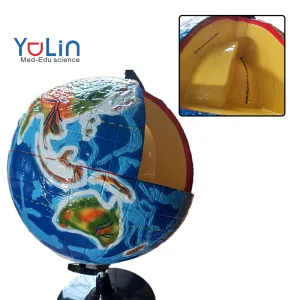
Use tellurion, rotating globe, plate tectonics, seismograph, 3D contour, and earth internal structure models to make abstract processes visible. Check scale, rotation smoothness, label accuracy, and repair access.
Astronomy and Space Science Corners
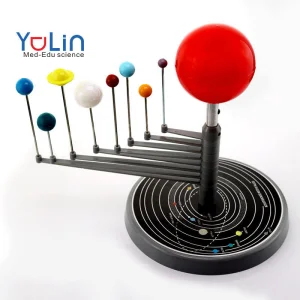
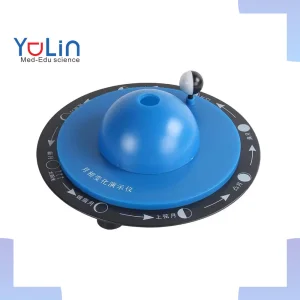
Sun-earth-moon orbital kits, eight-planet models with light, and moon-phase demonstrators work best when students can manipulate the model. Ask for protective packing, printed instructions, and replacement bulbs for illuminated products.
Distribution and Tender Programmes
Mix categories in one container, use barcodes and private labels, and keep a repeatable carton plan. For resellers, a manufacturer that can quote a coherent programme is more valuable than a marketplace listing with a low sample price.
Technical Roadmap and Future Outlook: From Static Models to Hybrid Learning
Static models will not disappear, but their value will be defined by how well they connect to the curriculum and to service. The following roadmap is a practical way for buyers to evaluate a manufacturer’s medium-term capability—not just its current price list. The goal is to buy models that remain teachable, repairable, and tender-ready across several school cycles.
Material and Safety Evolution
Durable ABS, treated wood, PVC, and non-toxic coatings are becoming baseline expectations. Ask for material declarations, odour control, edge finishing, and packaging tests relevant to your market. For classroom use, small parts, magnets, and illuminated components need clear handling guidance.
Modularity and Repairability
Replaceable gears, bulbs, magnets, stands, and printed labels extend service life. A modular design also lowers the cost of after-sales support for distributors. Models that cannot be opened or repaired often become disposable items after one damaged part.
Hybrid Physical-Digital Learning
QR-linked lesson notes, video assembly guides, and digital labelling can add value without turning every model into an electronic device. AR/VR should support the physical model, not replace it. Buyers should ask whether digital content is optional, localisable, and accessible without a paid subscription.
Market Localisation and Compliance
Language, curriculum terminology, packaging, and compliance documentation vary by country. A supplier that can maintain a localisation file reduces rework for importers. Future tenders are likely to reward suppliers who can produce consistent labels, barcodes, and safety paperwork on repeat orders.
Future outlook: procurement teams should expect more requests for mixed containers, lower MOQs on newly introduced SKUs, and documented material compliance. The winning manufacturer will be the one that can prove repeatability—same dimensions, same colours, same packing, and same teaching outcome—across repeat orders. For complex products such as the eight-planet solar system model with light or the 3D contour map, serviceability matters as much as the first sample. Information gain in this category comes from verified total cost of ownership, not from a longer catalogue.
Global Commercial and Industrial Status: What Buyers Should Know
The global education-equipment market is highly fragmented. Buyers can source from local traders, regional assemblers, or factory clusters in China. China’s advantage is not only cost; it is the depth of component suppliers, mould makers, printing, and export logistics that support rapid iteration. That depth matters for general teaching models, where a single order may combine wood, plastic, metal, printed labels, and small electrical parts. For overseas distributors, the practical question is whether the factory can convert that cluster depth into predictable quality and documentation.
Cluster Depth and Component Availability
A mature manufacturing base allows faster sampling, more packaging options, and better access to replacement components. It also supports mixed-category orders that combine biology, geography, astronomy, and STEM products in one shipment.
From SKU Buying to Programme Buying
Schools and distributors increasingly prefer a single accountable supplier for a programme rather than ten small orders. Programme buying reduces inspection costs, simplifies freight consolidation, and makes after-sales communication clearer.
Replenishment and Tender Cycles
Tender schedules are unforgiving. Stable factories with documented processes, repeatable carton marks, and predictable lead times are more valuable than suppliers that win on sample price but fail on repeat orders.
Industry signals support this shift. The 5th Henan Provincial Educational Equipment Expo, themed “Digital Leading Innovation and Development”, reached a record 50,000 m² with 600+ brands and 10,000+ products on display, according to the original company news retained for this article. For buyers, the lesson is clear: product discovery is easy; supplier verification, documentation, and repeatability are the scarce advantages. Henan Yulin Edu. Project Co., Ltd. fits this context as a factory founded in 1958, ISO 9001 certified since 2008, with more than 200 professional staff, registered capital of RMB 120 million, and 10 product lines. The company motto is “quality first, service first”.
Localisation Support and Compliance Assurance
Localisation is often treated as translation. In education equipment, it is a wider compliance and adoption issue: teachers must understand the model, customs must accept the packaging, and tender reviewers must find the required document in the required language. Compliance assurance should therefore be discussed before production, not after the goods are packed.
Documentation for Tenders
Prepare packing lists, dimensions, material descriptions, warranty terms, and product images in the format required by the tender. For public procurement, consistency between the quotation, sample, and final shipment is essential.
Language and Packaging
Private-label packaging, local-language labels, barcodes, and carton marks improve shelf appeal and reduce handling errors. Distributors should approve label artwork and carton marks before mass production.
Material and Safety Declarations
Where CE, RoHS, REACH, or local school-equipment rules apply, confirm the responsible party and document scope in writing. ISO 9001 certifies a quality management system; it is not a substitute for product-specific market approvals.
After-Sales and Spare Parts
Clarify warranty duration, spare-part availability, and response time. For illuminated astronomy models, small generators, and mechanical demonstrations, a simple spare-part list can prevent a minor fault from taking a model out of service.
Complete Sourcing Beyond General Teaching Models
General teaching models are one part of a wider educational and medical equipment portfolio. The original company structure covers ten product lines, allowing distributors and institutions to consolidate mixed orders with one point of contact. The category links below are retained from the original site structure.
Quality Process for Repeatable Orders
A transparent process reduces surprises for overseas buyers. The following six-step workflow expands the original five-step service process with a final improvement stage for distributors who place repeat orders.
Share Requirements
Send product types, quantities, target market, age group, packaging needs, and any tender or compliance requirements.
Catalog and Proposal
Receive matched models, specifications, packaging options, and shipping suggestions based on the full programme.
Sample Evaluation
Test samples with instructors or clinicians before confirming bulk production. Check labels, moving parts, and carton protection.
Production and QC
Manufacturing and inspection follow the ISO 9001 quality management system, with product-specific checks agreed before production.
Export and Support
Protective export packing, delivery coordination, and responsive after-sales support keep the order moving after dispatch.
Reorder and Improvement
Record approved samples, label artwork, and packing details so repeat orders match the original specification.
Technical Review and Experience Signals
This guide was prepared for B2B education-equipment buyers by the Yulin Medical product engineering and export team. Henan Yulin Edu. Project Co., Ltd. operates from No. 8, Daoqing Road, Industry Park, Hongqi District, Xinxiang, Henan, China. The company was founded in 1958, has been ISO 9001 certified since 2008, employs more than 200 professional staff, and holds registered capital of RMB 120 million. Its stated motto is “quality first, service first”. For one-stop orders, it coordinates a stable network of long-term partner factories.
This matters for E-E-A-T because general teaching models are not a pure commodity: the buying decision depends on demonstrated category experience, factory process control, export documentation, and the ability to support a tender after the quotation is issued. The original product list, factory history, certification date, and contact channels have been retained so that buyers can verify the supplier rather than rely on a generic marketplace description.
What this means for buyers: one accountable manufacturer for anatomy models, nursing simulators, lab slides, general teaching models, and hospital equipment—consolidated into a single shipment and backed by an ISO 9001 quality system.
Frequently Asked Questions from Importers
Straight answers to the questions procurement managers ask most before placing a first order or responding to a school-equipment tender.
Is Yulin Medical a manufacturer or a trading company?
What quality certification do you hold?
Do you support OEM, private label and custom packaging?
How do I choose the right general teaching models for a school tender?
How do I choose the right CPR training manikin?
How quickly will I receive a reply?
Need Specifications, a Price List or a Tender Package? We Reply Within 24 Hours.
Tell us your target market, quantities, age group, and certification requirements. Our product specialists will recommend suitable models, share detailed specifications, and propose an economical shipping plan for your order.
Bottom Product Showcase: Eight More General Teaching Models
The final eight models complete the 16-item portfolio retained from the original list. They are especially relevant for geography, earth science, astronomy, and STEM programmes. Every image below keeps its original proportions; every product URL remains live so buyers can request specifications, packaging details, or a quotation directly.