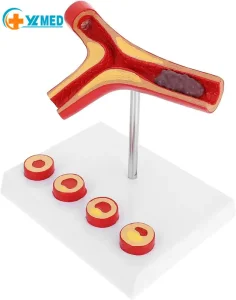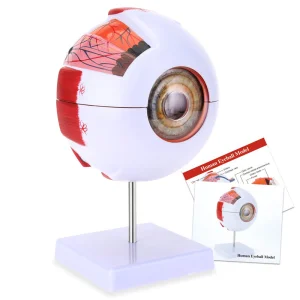
✦ Banner Product Showcase · 8 Selected Models
Factory-Direct Anatomy Models for Quote-Ready Sourcing
Review eight representative models from the anatomy range: eye, torso, muscular system, head and neck, brain artery, ear, and skin. Each original product URL is retained for specifications, MOQ, OEM options, and quotation requests.
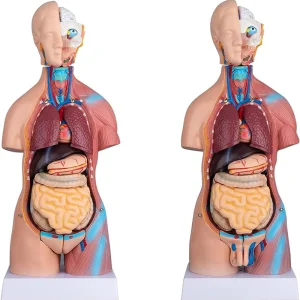
ODM 23 Parts Human Body Torso Model 45Cm Anatomy Model Unisex Removable Parts with Heart Brain for School Science Medical Education Pricelist, Quotes
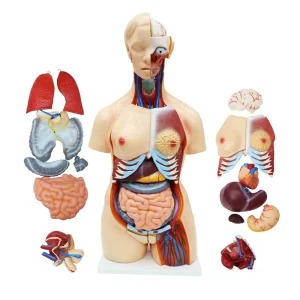
ODM Anatomical Medical Torso Model 23 Parts, 85cm Life Size Model with Removable Organs for Class, Students, Teaching Supplies Manufacturer, Manufacturers
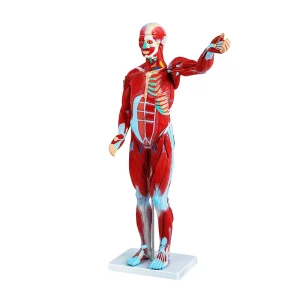
China 27 parts 80cm human muscle human model Pricelist, Service
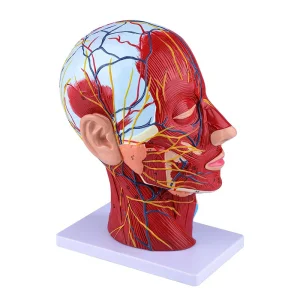
ODM Human Half Head & Neck Anatomy Model Superficial Neurovascular Model Manufacturer, Pricelist
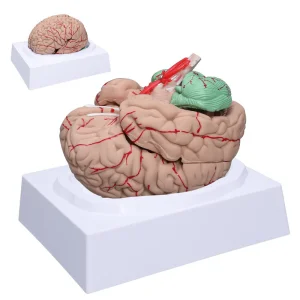
OEM Medical Human Brain Artery Detachable Adult Size Brain Artery Anatomy Model Pricelist, Quotes
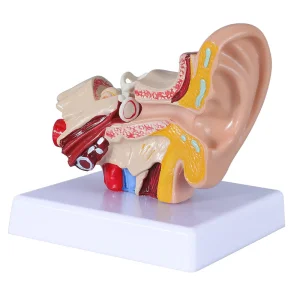
ODM Medical teaching 1.5 times adult ear anatomy model Manufacturers, Pricelist
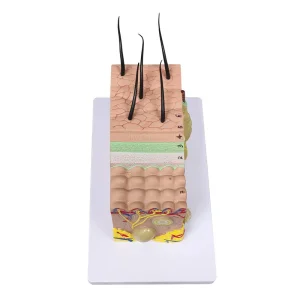
China 35X enlarged human anatomical skin model Manufacturers, Pricelist
🧬 White Paper Perspective
Anatomy Models Factory & Quotes: A Buyer’s Framework for Accuracy, Documentation, and Total Cost
Anatomy models are not ordinary catalogue items. They are long-life teaching assets that must survive repeated handling, remain anatomically readable, and support consistent instruction across classrooms and campuses.
Anatomy models are often described as teaching aids, but in practice they are infrastructure for competency-based medical education. A single multi-part torso can support lectures on the respiratory, digestive, cardiovascular, and reproductive systems. A life-size heart model can be used in cardiology orientation, nursing skills, patient consent conversations, and distributor demonstrations. An enlarged eye or ear model can make a difficult three-dimensional structure understandable in minutes. Because the same physical asset serves many audiences, the purchase decision is rarely only about price. It is about anatomical readability, part fit, paint durability, replacement availability, and whether the factory can supply the same specification again next year.
The search phrase Anatomy Models Factory & Quotes describes that decision well. The buyer wants a factory with proven moulding and finishing capability, and a quote that can be compared line by line against competing offers. When two quotations both say “23-part torso,” they may differ in wall thickness, organ retention, numbering depth, base design, packaging, language, documentation, and after-sales support. Information gain begins with making those differences visible before an order is placed.
Henan Yulin Edu. Project Co., Ltd. operates from Xinxiang, Henan, China, at No. 8 Daoqing Road, Industry Park, Hongqi District. Founded in 1958, the company has grown into an ISO 9001-certified manufacturer with more than 200 professional staff and registered capital of RMB 120 million. Its work spans 10 product lines, including anatomy models, biology prepared slides, dental tools and equipment, general teaching models, hospital furniture and equipment, hospital machines and tools, medical apparatus and instruments, medical nursing models, skeleton models, and suture pads and kits. The company motto, “quality first, service first,” is relevant to anatomy models because quality is visible in the details: clean moulding, stable colour, accurate numbering, consistent fit, safe packaging, and responsive documentation. Yulin Medical’s export team typically replies within 24 hours and supports OEM, private-label packaging, and mixed-category orders for distributors and institutions.
60+Years of Manufacturing History
200+Professional Staff
¥120MRegistered Capital (RMB)
2008ISO 9001 Certified Since
10Product Lines
24hTypical Reply Commitment
What this means for buyers: a strong anatomy model quote should connect the model to the learning objective, the handling environment, the packaging route, and the documentation required for import or tender review. The lowest unit price is not necessarily the lowest total cost when replacement parts, damage rates, and specification mismatches are included.
🎓 Teaching Value
Why Anatomy Models Matter More Than Ever in Medical Education
The shift from passive lectures to competency-based learning has increased demand for models that can be handled, explained, and assessed repeatedly.
Spatial Understanding and Safe Rehearsal
Students need to understand how structures relate in three dimensions. A removable-organ torso or sectional head and neck model allows repeated demonstration without the time, ethical, and facility constraints of cadaveric material.
Standardized Teaching Across Campuses
Multi-campus programmes need a common visual language. When every lab uses the same numbered model family, instructors can share diagrams, assessment stations, and student handouts with fewer inconsistencies.
Patient Communication and Informed Consent
Clinicians increasingly use anatomical models to explain diagnoses, procedures, and risks. A clear heart, uterus, brain, or airway model can improve patient understanding in minutes and support more respectful consent conversations.
For buyers, this changes the evaluation criteria. A model that only looks impressive in a catalogue photo may be less useful than one with clear numbering, removable parts that tolerate repeated handling, and a base that keeps the model stable during demonstration. The best anatomy model is not the one with the most parts; it is the one that matches the learning objective, the learner’s level, and the teaching environment.
🌍 Global Landscape
Global Commercial and Industrial Landscape
The anatomy model sector follows the direction of healthcare education and public procurement rather than consumer fashion. Demand is steady in established markets and expanding in regions investing in new medical universities, nursing colleges, and simulation centres.
Education Expansion and Accreditation
New health professions programmes require lab equipment that can support accreditation visits and measurable learning outcomes. Models with clear anatomy, durable finishes, and teaching documentation are easier to justify in curriculum planning.
Procurement Consolidation and Supply Resilience
Distributors prefer fewer suppliers who can consolidate anatomy models with related teaching products into one shipment. Factories with stable moulding, repeatable painting, and reliable packaging reduce supplier management and inventory risk.
Tender Documentation and Local Compliance
Public tenders often ask for specifications, material declarations, packing details, and after-sales commitments. A manufacturer that provides structured documentation can shorten bid preparation and reduce clarification cycles.
Industrial implication: competitive advantage is moving from “we have a torso model” to “we can document, customize, and support the torso model across its lifecycle.” Buyers should evaluate the quote and the factory system behind it, not only the product photo.
🔮 Five-Year Signals
Industry Trends That Affect Anatomy Model Sourcing
Several trends are likely to shape anatomy model sourcing over the next five years. They matter to distributors planning catalogue updates and to institutions preparing multi-year lab budgets.
Modularity and Replacement Parts
Institutions increasingly ask which organs, vessels, or sections can be replaced separately. Modular design lowers lifecycle cost and allows a lab to expand a model family without replacing the entire set.
Material Traceability and Surface Durability
PVC, ABS, silicone, and composite finishes each have different handling characteristics. Buyers now request material details, paint standards, cleaning guidance, and evidence that numbering will remain legible after repeated use.
Hybrid Physical–Digital Learning
QR-linked resources, AR overlays, and LMS-compatible images can extend a physical model into self-study. The model remains the anchor, while digital content adds labels, quizzes, and multilingual explanations.
Localization of Packaging, Language, and SKU Mix
Export markets differ in language, curriculum level, and tender requirements. Private-label packaging, bilingual key cards, and region-specific model mixes help distributors compete without changing the core mould.
None of these trends requires every buyer to choose the most advanced option. They do, however, change the questions in an RFQ. Instead of asking only “How many parts?”, procurement teams should ask “Which parts are replaceable?”, “What material is documented?”, “Can labels be localized?”, and “What digital support is included?”
📍 Localized Applications
Localized Application Scenarios
Anatomy models do not perform the same job in every market. A model that works well in a university dissection lab may be too complex for a secondary school, while a highly simplified torso may disappoint a nursing college preparing students for OSCE stations.
Universities and Teaching Hospitals
Used as an adjunct to prosection and imaging review. High-part-count torsos, regional head and neck models, and organ-specific models support lectures, small-group tutorials, and practical examinations.
Nursing, Allied Health, and OSCE Centres
Models help students explain anatomy, locate landmarks, and practise communication before clinical placement. Durable finishes and simple numbering are often more important than extremely high part counts.
Hospitals, Clinics, and Patient Communication
Heart, brain, uterus, airway, and eye models support informed consent, pre-operative explanation, and patient education. Lightweight models with stable stands are easier to use in consultation rooms.
Schools, STEM Labs, and Public Education
Simplified torso, eye, ear, skin, and organ models make biology tangible for younger learners. Local-language labels and age-appropriate detail levels improve adoption in classrooms and science outreach.
Market fit also includes language and packaging. In some export markets, a bilingual key card or local-language organ labels can increase classroom adoption; in others, neutral English labels are preferred for multi-country distribution. Distributors should define the end user before choosing the SKU, because the same mould can be packaged and documented for different customer segments.
🗺️ Technology Roadmap
Technology Roadmap and Future Outlook
The following roadmap is a planning framework rather than a claim that every feature is necessary today. It helps buyers align a five-year lab plan with supplier capability.
Documentation-First Manufacturing
Digital product passports, QR-linked specification sheets, batch photos, and standardized quote templates become differentiators. Buyers can compare models with less ambiguity and prepare tender documents faster.
Modular Customization at Scale
Factories organize models into replaceable modules, regional label sets, and packaging variants. Distributors can localize a product line without investing in new tooling for every market.
Hybrid Physical–Digital Learning
AR overlays, LMS-compatible images, and optional sensor points can connect physical anatomy models to guided self-study. The aim is not to replace the model but to make its teaching value easier to scale.
Personalization and Circular Materials
Imaging-derived models, bio-based or recyclable material options, and take-back programmes may become more visible in procurement discussions. Cost, durability, and regulatory acceptance will determine adoption speed.
For procurement, the practical lesson is to buy for the current curriculum while asking suppliers how future add-ons will be supported. A modular model family with documented replacement parts is often a lower-risk investment than a closed product that cannot be updated.
🏗️ Macro Solutions
Macro Industry Solutions: From Single Model to Program-Level Supply
Most institutions do not buy a single anatomy model in isolation. They equip a lab, refresh a catalogue, respond to a tender, or support a multi-campus programme. These scenarios call for different supply solutions.
Anatomy Lab Programme Kits
A mixed model set can cover introductory anatomy, regional systems, pathology, and patient communication. Programme kits reduce specification time and help institutions avoid buying overlapping SKUs.
Distributor OEM and Private-Label Programme
Factory support can include brand labels, packaging design, language variants, and product photography. This helps distributors build a local catalogue without managing multiple manufacturers.
Tender Documentation Pack
Specification sheets, material descriptions, packing lists, and compliance statements should be prepared before a tender deadline. Clear documentation reduces bid clarification and supports import registration.
Lifecycle and Replenishment Planning
Anatomy models are handled frequently. A supplier that plans replacement parts, touch-up materials, and future batch consistency protects the institution’s investment beyond the first delivery.
E-E-A-T note: this guide reflects the manufacturing and export perspective of Henan Yulin Edu. Project Co., Ltd., a company founded in 1958 and ISO 9001 certified since 2008. Product-specific claims should always be confirmed against the final specification sheet and sample approval.
📊 Quote Intelligence
Factory & Quote Intelligence: How to Compare Anatomy Model Suppliers
Price comparison is useful only when the underlying specifications match. For anatomy models, a well-structured quote should separate product cost, customization, packaging, testing, documentation, and freight assumptions.
What a Complete Quote Should Include
- Model number, dimensions, weight, and part count
- Material, finish, paint standard, and numbering method
- Removable organs, joints, magnets, and base design
- Packaging, carton size, and drop-test expectations
- MOQ, sample policy, lead time, and Incoterms
- OEM labels, language cards, and private packaging
- Available certificates and product documentation
Factory Audit Signals
- Clean moulding with no visible flash or sink marks
- Consistent paint edges and legible anatomical numbering
- Parts that fit securely after repeated assembly
- Orderly assembly, packing, and inspection areas
- Sample retention and batch traceability
Total Cost of Ownership
- Replacement part availability and unit cost
- Carton volume and freight efficiency
- Damage rate after international transit
- Instructor training and digital support materials
- Future catalogue expansion within the same model family
Common Red Flags
- Vague material descriptions with no finish standard
- No close-up photos of numbering or joints
- No replacement parts or after-sales plan
- Quotes that ignore packaging and freight assumptions
- Specifications that change without a revision record
Quote Clarity Scorecard
Use these categories to score incoming quotations. A low score does not always mean a poor supplier, but it should trigger a clarification request.
Illustrative buyer checklist, not a market statistic.
❓ Buyer FAQ
Frequently Asked Questions About Anatomy Models Factory & Quotes
Direct answers to common procurement, customization, and quality questions from distributors, schools, and hospitals.
Is Yulin Medical a manufacturer or a trading company?
Henan Yulin Edu. Project Co., Ltd. is a manufacturer founded in 1958, operating its own factory in Xinxiang, Henan, China, with more than 200 professional staff. For one-stop orders, the company also coordinates a stable network of long-term partner factories.
What quality certification does Yulin Medical hold?
The quality management system has been ISO 9001 certified since 2008. Product-specific documentation can be provided on request for tenders, import registration, and buyer quality review.
Do you support OEM, private label, and custom packaging?
Yes. In-house design support can cover private-label packaging, product presentation, language variants, and distributor brand materials. Customization scope should be confirmed against the selected model and order quantity.
How do I request anatomy model quotes efficiently?
Provide the model name or URL, target quantity, destination country, preferred packaging, label language, and any tender or certification requirement. A clear brief allows the export team to recommend suitable options and prepare a comparable quote rather than a single price line.
Which anatomy model is best for medical schools versus schools?
Medical schools usually need higher part counts, accurate regional detail, and durable removable organs for repeated teaching. Schools and STEM labs often benefit from simplified models with clear labels and age-appropriate detail. Nursing and allied health programmes may prioritize landmark identification, patient communication, and OSCE-friendly models.
Can labels, key cards, and packaging be localized?
Localization options depend on the model and order volume. Typical options include bilingual key cards, local-language labels, private-label boxes, and market-specific instruction sheets. These details should be written into the quotation and sample approval process.
How are anatomy models protected during export packing?
Packing should match the model’s fragility, removable parts, and shipping route. Buyers should confirm inner protection, carton strength, part separation, and any drop-test or inspection requirement before bulk production. Packaging is part of the specification, not an afterthought.
What should I check when approving an anatomy model sample?
Check anatomical readability, part fit, paint coverage, numbering legibility, base stability, surface finish, and ease of cleaning. Compare the sample with the approved specification sheet and take photos for future batch reference. If the model will be used in assessment, ask instructors to review it before mass production.
How quickly will I receive a reply?
The export team is online 7 days a week and typically replies within 24 hours with catalogues, specifications, and shipping options. Complex tender packages or custom projects may require additional technical review.
✦ Bottom Product Showcase · 8 Additional Models
More Anatomy Models Available for Factory Quotes
The second group covers magnetic heart, female reproductive anatomy, neurovascular head with muscles, nose and throat, pathological uterus and ovary, scientific heart, stomach, and atherosclerosis models. Original product links are preserved for direct quotation requests.
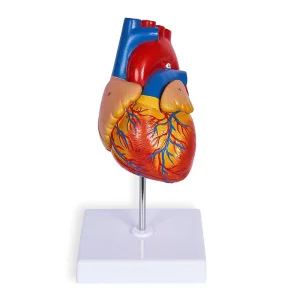
Wholesale Life-size two-part magnetic heart anatomy model Factories, Service
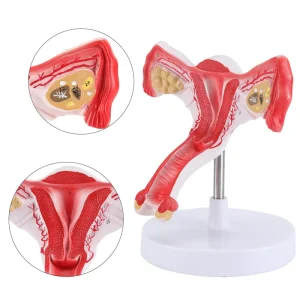
China Anatomical model of female uterus with ovary Manufacturer, Quotes
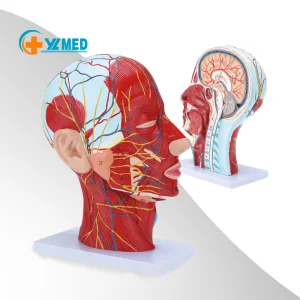
Wholesale Medical anatomical model human head neurovascular model with muscles teaching resource Manufacturer, Factory
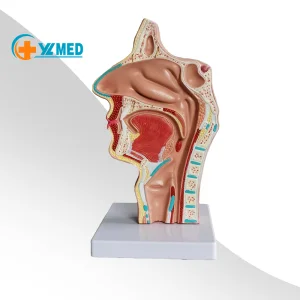
ODM Medical Science Human nose and throat anatomy medical model human anatomy throat model medical mannequins Factories, Service
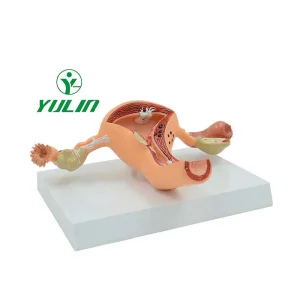
ODM The medical school teaches the human model of pathological changes of female reproductive uterus and ovary Manufacturer, Factory
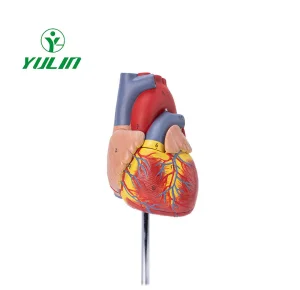
OEM Life Size Human Scientific Heart Model anatomical human heart model for medical students rubber heart model Factories, Quotes
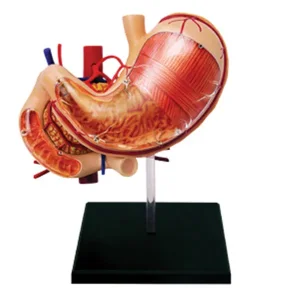
ODM Medical teaching model DIY popular science educational equipment human stomach organ anatomical model Manufacturer, Service