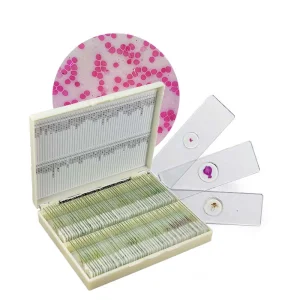
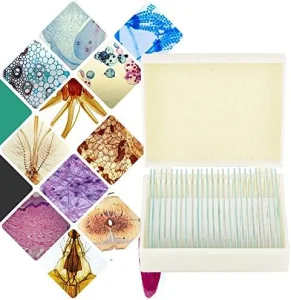
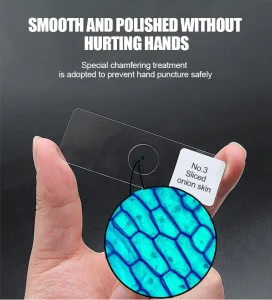
Biology Prepared Slides and Accessories Manufacturers & Factory
Factory-direct prepared microscope slides for biology, histology, pathology, microbiology, zoology and classroom STEM programs — with OEM/ODM packaging, curriculum-matched sets, batch consistency and export support from Henan Yulin Edu. Project Co., Ltd.
Biology Prepared Slides and Accessories: 8 Factory-Direct Sets for Global Buyers
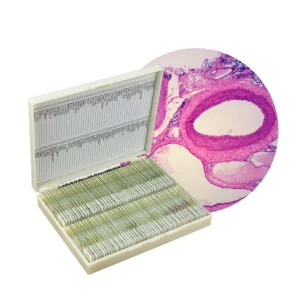
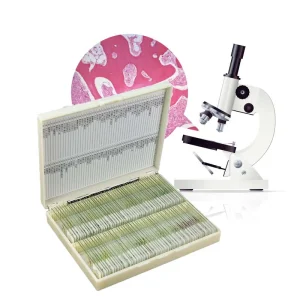
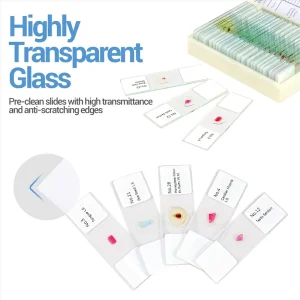
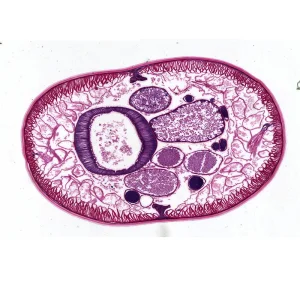
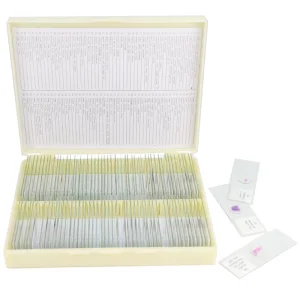
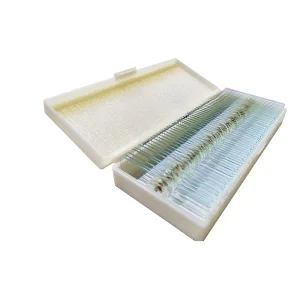
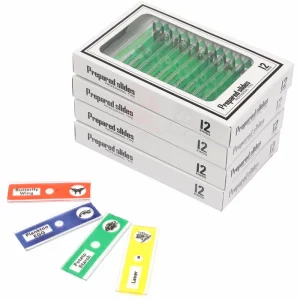
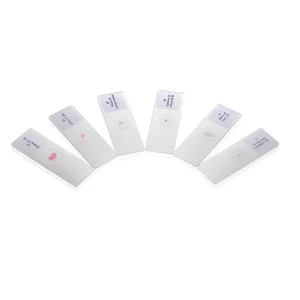
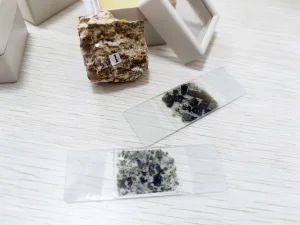
These eight product families cover middle school science, undergraduate zoology and parasitology, microbiology, human pathology, histology, kids’ plastic slides and mineral grinding slides. Product URLs and images are preserved for straightforward specification and quotation requests.
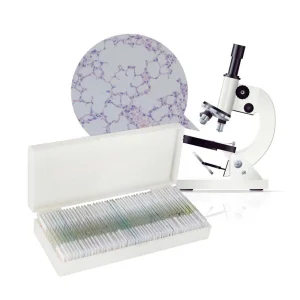
Biology Prepared Slides and Accessories: A Manufacturer’s Guide to Better Microscopy Procurement
Biology prepared slides are teaching instruments, not commodity glass. A professionally prepared slide combines a correctly identified specimen, controlled sectioning, a suitable stain, clean mounting, a coverslip and a durable label. When these variables are managed together, students can compare plant and animal tissues, recognise parasite structures, study human histology and build microscope confidence from one lesson to the next. When they are not managed, a laboratory session becomes a cycle of refocusing, replacing broken slides and explaining why the image does not match the textbook.
Accessories are part of the same system. Storage boxes protect glass edges and keep sets organised by curriculum. Slide trays support safe handling. Labels help teachers confirm specimen names quickly. Packaging must survive international freight, warehouse handling and classroom storage. For distributors, the commercial value lies in a complete, repeatable kit: the right specimen list, the right packaging, the right documentation and the right replenishment plan.
For global buyers, the challenge is rarely finding a slide supplier. It is finding a supplier that can repeat the same specimen list, stain, orientation, labelling and packaging across seasons and tender batches. Henan Yulin Edu. Project Co., Ltd. — known as Yulin Medical — has manufactured educational and medical training products since 1958 and has held ISO 9001 certification since 2008. Our biology prepared slides and accessories range sits alongside anatomy models, nursing simulators, dental tools and hospital equipment, allowing mixed-category sourcing from one accountable manufacturer.
What information gain should a serious buyer demand?
Ask for a specimen list with recognised names, not generic descriptions. Confirm stain type where relevant — for example H&E for general histology, Giemsa for selected smears, or other stains suited to the learning objective. Agree on section orientation, because a transverse section of a stem and a longitudinal section of a root teach different structures. Confirm slide dimensions, cover glass format, label language, packaging quantity and replacement policy. These details may appear small, but they determine whether a slide set performs in a real classroom or only in a catalogue photograph.
Prepared slides for education are not diagnostic products. They are designed for teaching, demonstration and laboratory training. Where human tissue slides are supplied, buyers should state the intended educational use and request appropriate documentation. This distinction protects distributors, schools and manufacturers alike, and it is a useful test of whether a supplier understands the category beyond price per box.
Factory facts at a glance
- Manufacturer founded in 1958 in Xinxiang, Henan, China
- ISO 9001 quality management system certified since 2008
- More than 200 professional staff and RMB 120 million registered capital
- 10 product lines for medical education, simulation and hospital use
- OEM, ODM, private-label packaging and mixed-category consolidation
- Export team typically replies within 24 hours
- Email: [email protected]
- Phone: 0086-13503800666
- Address: No. 8, Daoqing Road, Industry Park, Hongqi District, Xinxiang, Henan, China
The Global Procurement Picture: Why Buyers Are Consolidating Slide Suppliers
Global demand for biology prepared slides and accessories is being shaped by curriculum modernisation, laboratory capacity building, health-science enrolment and the professionalisation of public tenders. Buyers increasingly want fewer suppliers, stronger documentation and predictable quality across repeat orders.
In many education systems, practical microscopy has moved from teacher demonstration to student-led investigation. That shift increases the number of slides consumed per class, raises the importance of durable packaging and makes replacement planning part of the purchasing decision. Universities and medical schools are also expanding histology, pathology, parasitology and microbiology teaching, where specimen clarity and consistency matter even more than in general science. At the same time, distributors face pressure from schools to provide curriculum-ready kits rather than loose assortments that require local repacking.
The result is a market split between low-cost generic sets and specification-driven supply. Generic sets can work for introductory awareness, but serious buyers usually need a documented list, stable labelling, a known stain protocol and packaging that protects glass during export. That is why supplier consolidation is accelerating: a distributor can reduce inspection workload by working with a manufacturer that understands the end use, not only the unit price.
K–12 STEM and Middle School Distributors
Need safe, durable sets, clear labels and age-appropriate specimens. Plastic slide sets and 25-piece general science kits reduce breakage risk while giving students a first experience of microscopy.
University Biology Departments
Look for zoology, parasitology, botany and microbiology sets that align with laboratory manuals. A 50-slice set often balances curriculum coverage with budget and storage space.
Medical and Health Science Schools
Require human histology, pathology, oral histology and selected smears for teaching and learning. Documentation, specimen identification and batch consistency are central.
Veterinary, Agriculture and Food Science
Use comparative anatomy, animal histology and parasitology slides for applied training. Custom lists help educators connect microscopy to animal health and agricultural practice.
Tender Agents and Government Projects
Need stable specifications, professional packaging, traceable batches and responsive documentation. A manufacturer’s quality system matters when deadlines are fixed and inspection is strict.
Private-Label and E-Commerce Brands
Want product differentiation through packaging, barcodes, instructions and high-quality product images. OEM/ODM support helps them build a local brand rather than compete only on price.
Six Trends Reshaping Biology Prepared Slides and Accessories
These trends explain why prepared slides are becoming a specification-led category rather than a simple consumable purchase.
1. Curriculum alignment replaces random assortment
Schools increasingly buy slides mapped to specific learning outcomes: plant tissues, animal tissues, mitosis, parasitology, microbiology, human histology or pathology. A curated set with a clear specimen list is easier to adopt, teach and reorder than a mixed box with unclear labels.
2. Batch traceability becomes a procurement requirement
Distributors and tender agents need to know that the second order matches the first. Batch records, label standards, inspection photos and sample approval help reduce complaints and protect institutional buyers from mid-term supply changes.
3. Digital microscopy complements glass slides
Smartphone adapters, digital microscopes and shared screens are expanding classroom access, but physical slides remain essential for teaching focus, specimen orientation and practical microscope skills. The best suppliers support both glass slides and accessory integration.
4. Safety and durability shape product design
Glass edges, storage boxes, coverslip protection and export packaging all affect classroom safety and replacement cost. Plastic slides for younger learners and robust storage systems for universities are growing segments within the category.
5. Private label creates differentiation
OEM and ODM programs allow distributors to customise box design, label language, instruction cards, barcodes and set composition. This raises perceived value and helps local brands compete beyond price alone.
6. Resilient supply chains outperform lowest-price sourcing
After several years of freight volatility, buyers value predictable production, consolidated shipments and responsive communication. A manufacturer that can combine biology slides with anatomy models, simulators and hospital equipment reduces supplier management cost.
China Factory 4.0: Supply Chain Resilience, Not Just Lower Cost
In practical sourcing terms, Factory 4.0 means converting a buyer’s specification into a repeatable batch with predictable quality, packaging and documentation. It is less about a single machine and more about process control, information flow and supplier coordination.
China’s education equipment supply chain benefits from deep industrial clusters, mature packaging services, frequent export consolidation and experienced quality-control teams. For prepared slides, that ecosystem matters: specimen sourcing, staining, mounting, labelling, box production and export packing must work together. A delay in one step can hold an entire school-term shipment. A manufacturer with long-term partner factories and standardised inspection can absorb those shocks more effectively than a trading intermediary assembling products after an order is confirmed.
Yulin Medical combines more than six decades of manufacturing history with an ISO 9001 quality system, in-house design support and a coordinated partner supply chain. Our location in Xinxiang, Henan, supports efficient access to production resources and export logistics. Buyers can consolidate biology prepared slides and accessories with anatomy models, CPR manikins, suture kits, dental teaching equipment and hospital furniture — reducing the number of suppliers, inspections and shipments they manage.
Process control and batch consistency
Standardised inspection, label checks and sample approval reduce variation between production runs and make repeat orders easier to plan.
Packaging and private-label capability
In-house design support helps distributors localise box artwork, labels, language and product presentation for their market.
Mixed-category consolidation
Combine prepared slides with anatomy models, nursing simulators, dental tools and hospital equipment in one coordinated order.
Responsive export communication
A seven-day export team typically replies within 24 hours with specifications, quotations and shipping options.
Global Commercial Landscape: What Distributors and Institutions Are Buying Now
Demand varies by market, but four commercial realities are consistent across regions.
Curriculum refresh and practical assessment
Education authorities are placing more emphasis on practical skills and observable evidence. A slide set that supports a named laboratory activity is easier to sell than a generic assortment. Suppliers that can map products to curriculum levels gain an advantage in distributor catalogues and tender responses.
Localisation of labels and packaging
English labels are not always enough. Distributors may need local-language labels, barcodes, instruction cards and packaging that fits local storage systems. OEM/ODM capability turns a factory product into a market-ready item without requiring the buyer to repack locally.
Documentation as a competitive advantage
Public institutions increasingly ask for certificates, inspection records, sample approval and clear product descriptions. A supplier that can provide organised documentation reduces the buyer’s administrative risk and shortens the approval cycle.
Fewer suppliers, deeper relationships
Procurement teams are consolidating suppliers to reduce freight, inspection and communication costs. One manufacturer that can supply prepared slides, storage accessories and adjacent teaching equipment creates a stronger long-term partnership than a series of disconnected low-price orders.
Localised Application Scenarios: Matching Slide Sets to Real Teaching Workflows
The same product family can serve different markets when the specimen list, packaging and documentation are aligned with local teaching practice.
General middle school science
Use a 25-piece prepared slide set to introduce plant, animal and human tissue basics. Clear labels and sturdy storage help teachers manage larger classes with limited technician support.
Undergraduate zoology and parasitology
A 50-slice teaching set can cover representative phyla, parasite life stages and comparative structures. Reusable slides reduce replacement pressure across multiple laboratory groups.
Microbiology and applied biology
Bacteria and fungi slide sets support observation of microbial morphology. Combine them with microscopy accessories and safe storage for food science, agriculture and general microbiology labs.
Human histology and pathology teaching
Medical schools often require human tissue, oral histology, advanced histopathology and selected smears. The specimen list should match the curriculum, and documentation should state educational use.
Earth science and mineralogy
Ground mineral slides help students observe optical properties and rock-forming minerals. They are a useful cross-selling category for distributors serving comprehensive science departments.
Early STEM and museum outreach
Plastic prepared slides with animal, insect and plant specimens are practical for young learners, travelling exhibitions and outreach programmes where glass breakage is a concern.
How to Specify a Slide Set That Fits Your Market and Survives Daily Classroom Use
A strong purchase specification prevents costly surprises. Use this checklist when comparing suppliers or preparing a tender package.
Start with the learning objective, not the box quantity. A 100-slide set is not automatically better than a 20-slide set if half the specimens are outside the curriculum. Define the specimens in recognised terminology, state whether sections should be transverse, longitudinal or whole-mount, and confirm the stain where it affects the learning outcome. For human tissue and pathology products, specify that they are for education and training, and request appropriate documentation.
- Learning level: middle school, high school, undergraduate, medical or professional training
- Specimen list: taxon names, tissue types, life stages and selected smears
- Orientation: transverse, longitudinal, whole mount or comparative set
- Staining: general histology stain, Giemsa or other agreed protocol
- Slide format: standard microscope compatibility and cover glass condition
- Labelling: language, print durability, barcode and set numbering
- Packaging: classroom storage box, export carton, private-label artwork
- Documentation: batch code, inspection record, sample approval and pre-shipment photos
Do not overlook the handling chain. A slide may be well made but arrive damaged if the inner box does not hold it securely. Ask how the supplier tests packaging for export and how replacement sets are managed if a school reports breakage. For distributors, the total cost of a damaged or mislabelled carton is far higher than the unit price difference between two quotations. That is why sample evaluation should include unpacking, label inspection, microscope viewing by an instructor and a check that the set matches the buyer’s catalogue description.
A useful rule for buyers: approve the specimen, the label and the packaging as one product. If any one of those is wrong, the classroom experience and the resale value both suffer.
Quality, Reliability and E-E-A-T: What Evidence Should a Buyer Request?
Experience, expertise, authoritativeness and trustworthiness are easier to verify when a supplier can show process evidence rather than only product photographs.
Prepared slide quality depends on careful specimen selection, controlled sectioning, appropriate staining, clean mounting and consistent labelling. Because the final user may be a student, safety and clarity matter as much as technical sophistication. A responsible manufacturer should be able to explain how it controls these variables and how it separates educational products from diagnostic products. At Yulin Medical, ISO 9001 certification since 2008 provides the quality management framework, while more than 60 years of manufacturing experience informs practical product decisions.
ISO 9001 certificate and scope
Request the current certificate and confirm that the scope covers the products you are buying. This is a basic indicator that quality processes are documented and reviewed.
Batch traceability and labels
Ask how batch codes, labels and packaging are controlled. Traceability supports complaint handling, repeat orders and internal quality review.
Specimen and staining documentation
Obtain a written specimen list and stain protocol where relevant. This reduces ambiguity during sample approval and tender evaluation.
Dimensional and visual checks
Confirm microscope compatibility and check for clean mounting, visible bubbles, label alignment and cover glass condition on approved samples.
Packaging and handling records
Review inner box protection, carton strength and any drop-test or pre-shipment inspection records that are relevant to export orders.
Pre-shipment photos and sample approval
Keep an approved sample specification and request photos before shipment. This is especially useful for private-label orders and multi-batch projects.
OEM, ODM and Private Label: Turning Prepared Slides into a Local Brand
For distributors, the product is not only the slide inside the box. It is the catalogue entry, the packaging, the label, the instruction card and the confidence that the next order will look the same.
OEM packaging
Apply your brand, artwork, label text and barcodes to selected slide sets. This helps distributors build local recognition without investing in production equipment.
ODM set composition
Adapt set size, specimen list and packaging format to a curriculum, tender or market segment. A manufacturer with category experience can suggest practical combinations.
Local-language presentation
Customise labels, instruction cards and product descriptions for the target market. Clear language reduces teacher questions and improves resale value.
Mixed-category orders
Consolidate biology slides with anatomy models, CPR manikins, suture kits, dental tools and hospital furniture, with one point of contact and one shipment plan.
Need a curriculum-matched quotation or private-label proposal?
Tell us the learner group, target market, quantities, label language and certification needs. Our export team typically replies within 24 hours.
Frequently Asked Questions from Global Buyers
Direct answers for procurement managers, distributors and educational institutions evaluating biology prepared slides and accessories.
Is Yulin Medical a manufacturer or a trading company?
We are a manufacturer. Henan Yulin Edu. Project Co., Ltd. was founded in 1958 and operates its own factory in Xinxiang, Henan, China, with more than 200 professional staff. For one-stop orders, we also coordinate a stable network of long-term partner factories. This structure allows buyers to source prepared slides, anatomy models, nursing simulators, dental tools and hospital equipment through one accountable contact.
What quality certification and documentation do you provide?
Our quality management system has been ISO 9001 certified since 2008. Product-specific documentation can be provided on request for tenders, import registration and distributor due diligence. Depending on the order, this may include specifications, inspection records, packaging details and pre-shipment photos. Buyers should state their documentation requirements at the quotation stage so that the correct package can be prepared.
Can you customise a prepared slide set for our curriculum or tender?
Yes. OEM and ODM support covers set composition, label language, packaging artwork, barcodes, instruction cards and private-label presentation. For tenders, share the required specimen list, quantity, delivery schedule, certification needs and packaging format. Our team will review feasibility and propose a suitable configuration. If a specimen is outside our standard range, we will explain the available alternatives clearly rather than assume approval.
How do you control slide quality and batch consistency?
Quality is managed through supplier selection, written specifications, sample approval, process inspection and pre-shipment checks within our ISO 9001 framework. For prepared slides, important checkpoints include specimen identification, section orientation, staining appearance, mounting cleanliness, label accuracy and packaging protection. Repeat orders are easier to control when the buyer keeps an approved sample and a written specification. We recommend approving the specimen, label and packaging as one product before bulk production.
What is the difference between histology, pathology, microbiology and parasitology slides?
Histology slides focus on normal tissue structure and are commonly used in biology, anatomy and medical foundation courses. Pathology slides show abnormal tissue changes for teaching and learning. Microbiology slides present microorganisms such as bacteria and fungi. Parasitology slides cover parasites and related life stages. Each category serves a different learning objective, so the specimen list and documentation should be matched to the course rather than mixed without explanation.
Do you support private-label packaging and mixed-category orders?
Yes. Our in-house design team supports private-label packaging and product presentation for distributors. We can also consolidate mixed-category orders — for example, biology prepared slides, anatomy models, CPR manikins and hospital furniture — into one shipment plan. This reduces supplier management workload and can improve freight efficiency. MOQ, artwork requirements and lead time are confirmed against the specific product mix.
Are human tissue slides intended for clinical diagnosis?
No. Human tissue and pathology slides supplied for education are intended for teaching, demonstration and laboratory training, not for clinical diagnosis. Buyers should confirm the intended use and any local regulatory requirements before import. Where required, we can provide appropriate product descriptions and documentation to support the stated educational purpose. This responsible distinction is important for schools, distributors and manufacturers.
How quickly can I receive a quotation, catalog or sample arrangement?
Our export team is online seven days a week and typically replies within 24 hours with catalogues, specifications, quotation guidance and shipping options. To speed up the process, include your target market, learner level, required specimen list, estimated quantity, label language and any tender deadline. Sample arrangements are confirmed according to product availability and destination.
More Biology Prepared Slides and Accessories: 8 Additional Factory-Direct Products
These additional prepared slide sets support advanced histopathology, medical parasitology, microbiology, oral histology, zoology, tissue sections and bone marrow smear teaching. Product images and URLs are preserved for direct product review and quotation.