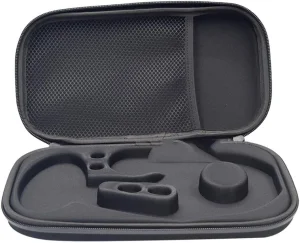
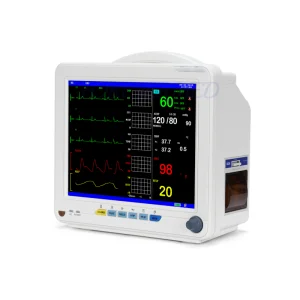
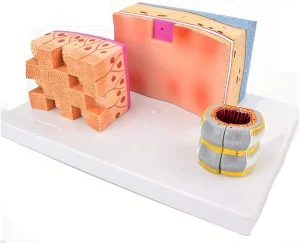
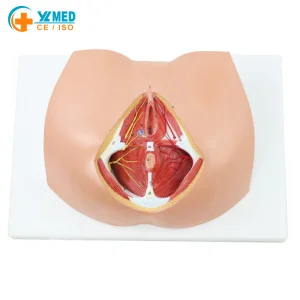
Featured Wholesale Medical Equipment from the Same Manufacturing Ecosystem
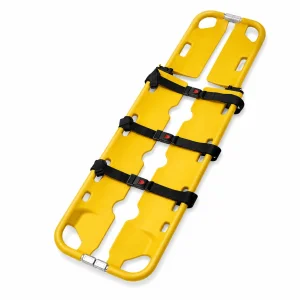
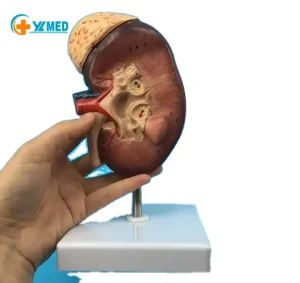
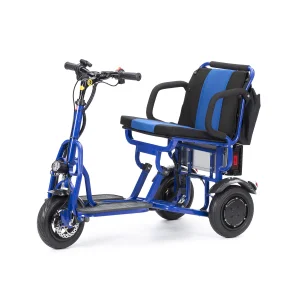
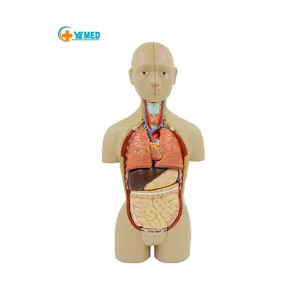
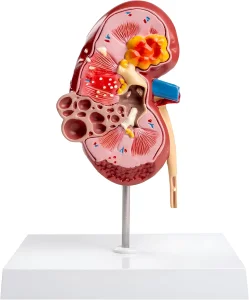
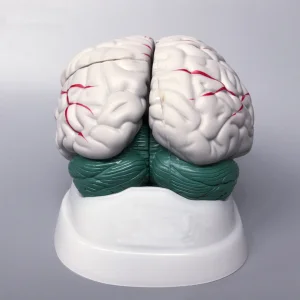
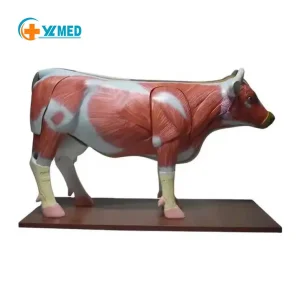
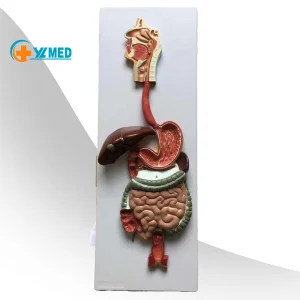
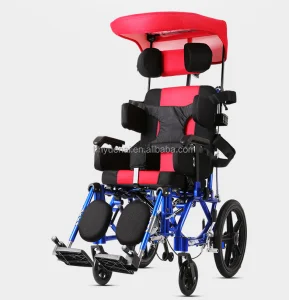
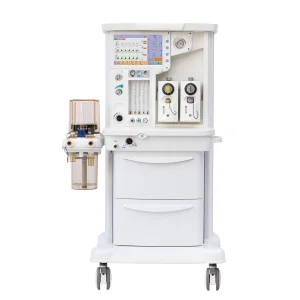
The eight products below retain their original product-page links and images. They illustrate the breadth of the catalog that international buyers can consolidate with a double bottle suction machine order — medical teaching models, hospital equipment, rehabilitation products and clinical training devices.
What a Double Bottle Suction Machine Really Does in a Clinical Workflow
A double bottle suction machine — also called a twin-bottle medical suction unit — uses two collection canisters with a shared vacuum pump, independent shut-off valves and an overflow-protection system. The design is not simply “two jars instead of one.” It changes workflow continuity, infection-control practice, staff training and the total cost of ownership.
In an operating room, intensive care unit or emergency department, suction is a critical utility rather than an accessory. When one collection bottle reaches its limit, the second bottle allows the clinical team to switch collection paths with minimal interruption. That matters during long surgical cases, emergency airway management, trauma resuscitation and procedures where blood, irrigation fluid or secretions must be removed continuously.
For procurement teams, the important question is not whether a unit has two bottles. The real question is whether the two-bottle architecture is clinically usable: Are the bottles independently valved? Are scale markings clear under low light? Can the bottles be autoclaved or fitted with disposable liners? Is there a hydrophobic filter and a mechanical float to stop fluid reaching the pump? Does the unit maintain vacuum when one bottle is changed? These details separate a reliable hospital-grade twin-bottle suction unit from a low-cost unit that creates hidden service costs.
A responsible wholesale pricelist should therefore be configuration-based. Voltage, bottle volume, bottle material, motor duty cycle, noise level, alarm package, mobility, warranty and documentation can move the delivered cost significantly. Buyers who compare only the headline unit price often discover that spare bottles, filters, tubing, packaging and after-sales support were excluded from the first quotation.
Continuous Drainage
Two-bottle routing reduces downtime during long procedures, high-volume irrigation and emergency resuscitation.
Infection Control
Independent collection paths, filters and autoclavable or disposable components support cleaner changeovers.
Capacity Planning
Bottle volume should match the procedure mix: theater, ICU, dental, veterinary, obstetric or home care.
Total Cost of Ownership
Filters, bottles, seals, casters and service labour often matter more than a small difference in unit price.
Why China’s Double Bottle Suction Machine Factories Are Built for Global Procurement
China’s advantage in medical suction equipment is no longer just labour cost. It is the density of component suppliers: vacuum pumps, motors, medical-grade plastics, canister moulds, valves, filters, tubing, casters, wiring harnesses, printed manuals and export packaging are all available within a mature supplier ecosystem. For buyers, that density translates into faster sampling, flexible configuration and better ability to consolidate mixed orders.
Mature Component Ecosystem
Moulded canisters, valves and medical motors can be sourced at scale, shortening development cycles for distributors who need private-label configurations.
Flexible OEM / ODM
Private-label cartons, manuals, voltage plates, plug types, colour schemes and accessory kits can be planned before mass production.
Quality Discipline
A serious factory uses incoming inspection, vacuum leak testing, run-in testing and final inspection rather than relying on visual checks only.
One-Stop Medical Sourcing
Hospitals and distributors can combine suction machines with anatomy models, CPR manikins, hospital furniture and rehabilitation products in one shipment.
Henan Yulin Edu. Project Co., Ltd. — known as Yulin Medical — has operated from Xinxiang, Henan, China since 1958. Its quality management system has been ISO 9001 certified since 2008. The company motto is “quality first, service first,” and its export team supports distributors, medical universities, nursing colleges and hospitals with catalogues, specifications, packaging options and shipping coordination.
Before You Request a Pricelist, Verify These Specifications
Wholesale double bottle suction machine quotations become comparable only when the same technical questions are asked in the same way. The checklist below is written for procurement managers, biomedical engineers and distributors who need to compare offers from multiple China manufacturers without being misled by headline specifications.
| Specification | Why It Matters | Question to Ask the Factory |
|---|---|---|
| Working vacuum and free-air flow | Peak vacuum alone does not show performance under real tubing resistance. Clinical suction depends on stable vacuum at the point of use. | Can you provide vacuum-flow data at the working inlet, not only a single maximum value? |
| Bottle volume and material | Two 1000 mL bottles, two 2000 mL bottles and mixed configurations serve different procedure mixes. Material affects cleaning, breakage risk and autoclave compatibility. | Are the bottles PC, PSU, glass or another material? Are they autoclavable? Are disposable liners available? |
| Overflow protection and filtration | Fluid reaching the pump is one of the most common causes of premature failure. Mechanical floats, check valves and hydrophobic filters must be serviceable. | What happens if one bottle overfills? Which parts are single-use, and what is the replacement interval? |
| Motor duty cycle and thermal protection | Theatre, ICU and emergency use may require longer continuous operation. Intermittent-duty motors can overheat in extended procedures. | Is the motor rated for continuous duty? What thermal protection and service life data are available? |
| Noise, mobility and braking | Noise affects patient comfort and staff communication. Casters and brakes affect safety in crowded clinical spaces. | What is the measured noise level at one metre? Are the casters lockable and rated for hospital floors? |
| Voltage, plug and battery options | Global buyers need localized voltage, plug type and labelling. Battery backup may be required for transport, EMS or unstable power environments. | Can you supply the target voltage and plug standard? Is a battery version available with runtime data? |
| Documentation package | Tenders, import registration and hospital acceptance often require more than a product photo. | Can you provide an IFU, service manual, spare-parts list, test report, packing list and declaration of conformity status? |
Industry Trends Reshaping Twin-Bottle Suction Demand
Demand for double bottle suction machines is being shaped by infection-control expectations, staff shortages, emergency preparedness and the digitalization of hospital equipment service. These trends affect not only product design but also the documentation and after-sales model that global distributors must provide.
Closed and Disposable Systems
Hospitals increasingly prefer closed suction systems, disposable liners and easy-to-replace filters to reduce cross-contamination risk and simplify staff training. For manufacturers, this means canister interfaces and accessory kits must be designed for both reusable and single-use workflows.
Battery-Ready Portability
Emergency teams, ambulatory surgery centres and mobile clinics want compact twin-bottle units with reliable battery backup. In markets with unstable power, battery runtime and motor efficiency can be decisive buying criteria.
Digital Serviceability
Alarm logs, filter-life indicators, vacuum sensors and remote diagnostics are moving from premium equipment into mainstream hospital devices. Distributors should ask whether service data can be exported and whether spare-part codes remain stable across production batches.
Where Double Bottle Suction Machines Are Specified Around the World
“Hospital grade” is not one universal requirement. A twin-bottle suction unit specified for a German university hospital may differ from one selected for a district clinic in Southeast Asia, a mobile emergency service in the Middle East or a veterinary practice in Latin America. The scenarios below show how localization changes the buying specification.
Operating Rooms & Recovery
Long procedures require stable vacuum, low noise and quick bottle changeover. Buyers often prioritise high-capacity canisters, serviceable filters and casters that lock securely on theatre floors.
ICU & Critical Care
Continuous airway and wound suction demand cleanable surfaces, clear alarms and reliable overflow protection. In many tenders, documentation and spare-parts availability are as important as technical performance.
Emergency & Ambulance
Compact dimensions, battery backup, secure bottle mounts and vibration resistance matter more than large canister capacity. Export markets with hot climates also need heat-tolerant motors and robust tubing.
Dental & Oral Surgery
Dental clinics usually prefer compact, quiet units with easy-to-clean tubing and low maintenance. Private-label packaging and local-language manuals help distributors serve small-clinic chains.
Veterinary Clinics
Veterinary buyers value robust suction, interchangeable canisters and simple servicing. Large-animal and mixed practice segments may require higher volume and stronger mobility than companion-animal clinics.
Obstetrics & Neonatal Care
Delivery rooms and neonatal units require precise suction control, hygienic collection and staff-friendly changeover. Training materials and clear labelling are essential for safe use across shift teams.
From a Single Suction Unit to Hospital-Wide Standardization
Global buyers increasingly prefer suppliers who can support a broader equipment programme. A double bottle suction machine order may begin as a trial, but it can grow into a hospital furniture package, a training-centre setup or a distributor’s private-label catalogue. Yulin Medical’s ten product lines — including anatomy models, nursing simulators, hospital furniture and medical apparatus — create a practical platform for mixed-category sourcing.
Hospital Project Packages
Combine twin-bottle suction units with examination couches, stretchers, walkers, patient monitors and anesthesia trolleys for new wards, clinics and renovation projects.
Distributor OEM Program
Private-label cartons, manuals, product photography and accessory kits can be developed for distributors who want a consistent brand across suction, rehabilitation and teaching products.
EMS & Mobile Care
Emergency services can bundle compact suction units with scoop stretchers, spinal boards, extrication splints and first-aid training equipment for fleet-standardized procurement.
Medical Education Campuses
Universities and simulation centres can source CPR manikins, anatomy models, suture kits and hospital equipment alongside clinical suction units for a complete skills laboratory.
Global Enterprise Procurement Requirements
Large buyers rarely purchase a double bottle suction machine as an isolated item. They need supplier qualification, regulatory clarity, packaging validation, localized labelling and a service plan. The strongest manufacturer is not always the one with the lowest initial quotation; it is the one that can provide a complete, repeatable supply package.
Certification & Technical File
Confirm the regulatory status for your market before placing a bulk order. Request ISO 9001 evidence, model-specific test reports, declarations, IFU drafts and labelling artwork for review.
Export Packaging
Bottles, casters and control panels need protective packing for sea freight or air freight. Ask for drop-test evidence, inner carton design, moisture protection and spare-bottle packaging.
Localization
Voltage, plug type, fuse rating, language of the manual, warning labels and packaging text should be agreed before production. This is especially important for distributors serving multiple countries.
Service & Spare Parts
Request a spare-parts list with part numbers, recommended stock levels and warranty terms. For hospital groups, a defined service response path is more valuable than a vague promise of quality.
How to Read a Wholesale Double Bottle Suction Machine Pricelist
A reliable pricelist should separate the product configuration from commercial terms. Buyers need to know what is included in the ex-works or FOB price, what is optional, and what will be charged later for spare bottles, filters, tubing, manuals, packaging and after-sales support. The matrix below is a practical way to compare quotations without reducing the decision to a single low number.
| Configuration Tier | Best For | Main Price Drivers | Pricelist Questions |
|---|---|---|---|
| Entry mobile twin-bottle unit | Small clinics, dental rooms, veterinary practices and distributor trial orders. | Motor type, bottle size, caster quality, tubing set, packaging and plug standard. | Is the price for one unit or a carton? Are spare bottles and filters included? |
| Standard hospital twin-bottle unit | General wards, emergency rooms, outpatient surgery and ICU overflow. | Continuous-duty motor, overflow protection, noise control, alarm package, documentation. | What is the warranty? Can you supply a service manual and spare-parts list? |
| High-capacity theatre / ICU model | Operating theatres, recovery, critical care and high-volume procedure rooms. | Large canisters, stronger vacuum, low-noise design, braking casters, filter system, test reports. | Can you provide vacuum-flow data and a bottle-change procedure for clinical review? |
| OEM / private-label programme | Distributors, hospital groups, tender specialists and brand owners. | Tooling, printed cartons, manuals, label artwork, accessories, minimum order quantity and inspection plan. | Which elements are customizable? What is the sample lead time and mass-production lead time? |
What a useful quote should show
- Model number, configuration and included accessories
- Unit price, carton quantity, carton dimensions and gross weight
- MOQ, sample policy, production lead time and shipping terms
- Warranty, spare-parts pricing and recommended maintenance kit
- Packaging artwork, manual language and voltage/plug confirmation
What often sits outside the headline price
- Extra bottles, filters, tubing sets and replacement seals
- Private-label printing plates and packaging setup
- Third-party inspection, certification support and translations
- Air freight, insurance and destination customs clearance
- Installation training, biomedical calibration or extended warranty

Six Decades of Production Discipline
Yulin Medical was founded in 1958 and has grown into an educational and medical equipment supplier that integrates research, production and sales. With registered capital of RMB 120 million, more than 200 professional staff and an ISO 9001 quality management system certified since 2008, the company supports distributors, medical universities, nursing colleges and hospitals from its base at No. 8 Daoqing Road, Industry Park, Hongqi District, Xinxiang, Henan, China.
For international buyers, experience matters because it shows up in the less visible parts of a quotation: incoming inspection routines, packaging decisions, spare-parts planning and the ability to coordinate mixed-category orders. Yulin Medical’s ten product lines include anatomy models, biology prepared slides, dental tools, general teaching models, hospital furniture, hospital machines and tools, medical apparatus, nursing models, skeleton models and suture pads. This breadth supports one accountable supplier relationship for buyers who prefer consolidated shipments.
Share Requirements
Tell us the target market, application, quantity, voltage, documentation needs and any tender requirements.
Receive a Match
Our team proposes suitable configurations, packaging choices and a pricelist structure for comparison.
Sample & Validate
Evaluate samples with clinical or technical stakeholders before confirming bulk production and artwork.
Produce & Export
Production, inspection and export packing follow the agreed specification, with coordination for consolidated orders.
Frequently Asked Questions from Global Buyers
These answers combine the original manufacturer FAQ with additional procurement questions for double bottle suction machine buyers and mixed-category medical equipment importers.
Is Yulin Medical a manufacturer or a trading company?
What quality certification does Yulin Medical hold?
Do you support OEM, private label and custom packaging?
How do I choose the right double bottle suction machine?
How do I choose the right CPR training manikin?
What is the MOQ and lead time for a wholesale order?
Can I combine suction machines with anatomy models, CPR manikins and hospital furniture?
How can I verify quality before shipment?
How quickly will I receive a reply?
How do I request a configuration-specific pricelist?
Request a Configuration-Specific Double Bottle Suction Machine Pricelist
Tell us your target market, quantity, clinical application, voltage, bottle capacity and documentation requirements. We will recommend suitable models, prepare a comparable quotation and advise on mixed-category consolidation with anatomy models, CPR manikins, hospital furniture and rehabilitation products.
More Wholesale Medical Products from the Original Catalogue
These eight products complete the original product list. Their images and product URLs are preserved so distributors, hospitals and training institutions can evaluate mixed-category orders alongside double bottle suction machine requirements.