OEM Infusion Pump Manufacturers & Quotes
A procurement-ready whitepaper for distributors, hospitals and biomedical engineering teams comparing infusion pump OEM capability, technical roadmaps, local compliance, China Factory 4.0 supply-chain resilience and quote quality.
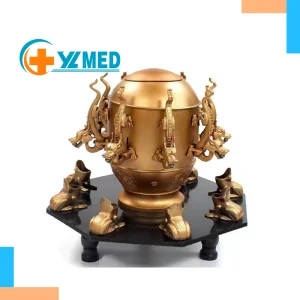
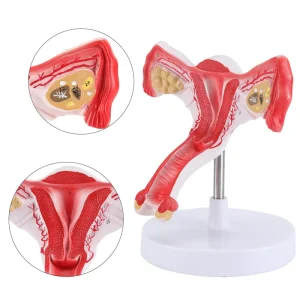
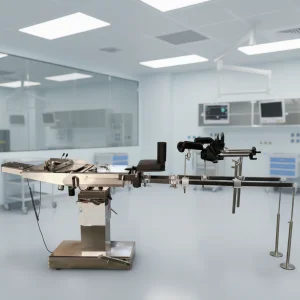
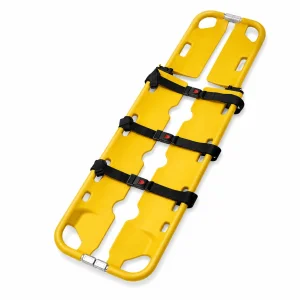
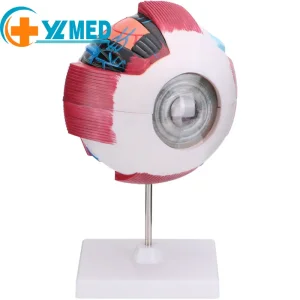
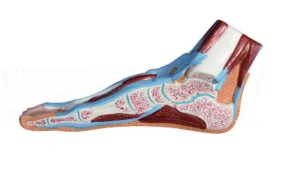
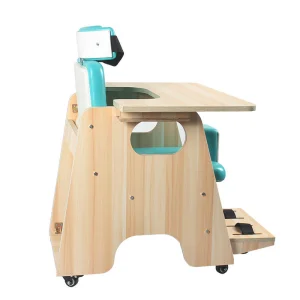
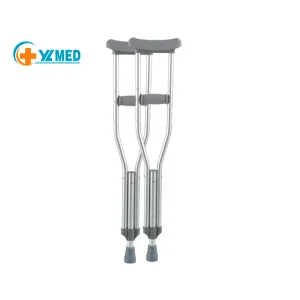
OEM Product Evidence from the Broader Medical & Hospital Portfolio
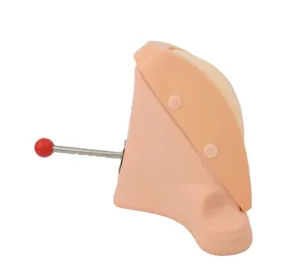
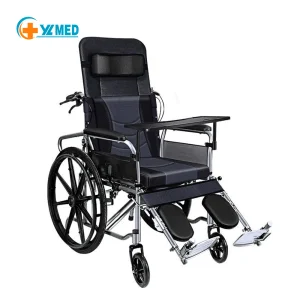
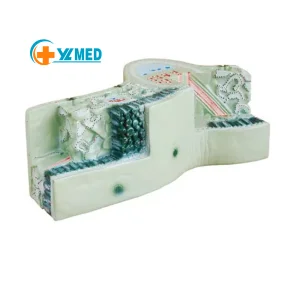
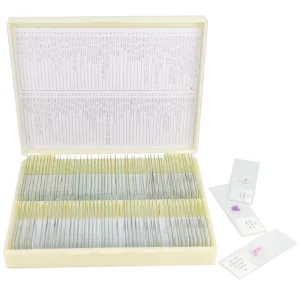
The supplied catalog includes adjacent OEM medical, teaching and hospital equipment that supports distributor consolidation. For infusion-pump-specific projects, combine these documented product records with the qualification framework below and request a project-specific quote.
Why an OEM Infusion Pump Quote Is a Clinical-Risk Document, Not a Price List
Infusion pumps deliver fluids, medications, nutrition and anesthesia support at controlled rates. A volumetric pump, syringe pump, patient-controlled analgesia pump, enteral pump or ambulatory infusion pump can be safe and effective only when the device, drug library, consumables, software, training and service model work together. That is why a serious OEM infusion pump quotation should be evaluated as a clinical-risk document, not as a commodity price sheet.
A low unit price can conceal expensive assumptions: unverified tooling, undeclared software ownership, ambiguous regulatory responsibility, missing cybersecurity documentation, weak incoming inspection, uncertain battery qualification or no local spare-parts plan. For distributors and hospital groups, the real comparison is total landed cost plus lifecycle risk. The quote should identify the exact configuration, optional accessories, disposable sets, packaging, MOQ, sample cost, tooling/NRE, validation deliverables, lead time and the party responsible for regulatory submissions.
Yulin Medical’s own long manufacturing record — founded in 1958, ISO 9001 certified since 2008, more than 200 professional staff and a broad hospital equipment portfolio — provides a useful baseline for supplier due diligence. Infusion pump programs, however, require product-specific evidence such as ISO 13485 quality management, IEC 60601 series testing, software lifecycle records, risk management files, usability validation and market-specific registration support. Buyers should request this evidence before awarding an OEM contract.
This whitepaper is designed to create information gain for procurement teams: it explains what to ask, how to compare answers and where hidden lifecycle costs appear. It also preserves the original manufacturer profile, product categories, product records and buyer FAQ from the supplied catalog so that sourcing teams can review adjacent medical and training equipment in one place.
- Compare quotes on clinical evidence, not only unit price.
- Confirm who owns the design file, software, tooling and labeling.
- Require a lifecycle service plan before the first production order.
Use these numbers as a starting point for supplier verification. For infusion pumps, add ISO 13485, product-specific test reports, clinical evidence and cybersecurity documentation to the audit checklist.
What Qualified OEM Infusion Pump Manufacturers Must Prove
Before discussing price breaks, an OEM buyer should verify the manufacturer’s design controls, manufacturing controls and post-market controls. The following six evidence areas separate a credible infusion pump OEM program from a trading-only offer.
Quality System and Design Controls
Request ISO 13485 certification, the quality manual, design-control procedures, device master record structure and change-control workflow. For U.S. projects, confirm 21 CFR 820 readiness; for Europe, map EU MDR technical documentation and post-market surveillance obligations.
Infusion-Specific Standards
Evaluate evidence for IEC 60601-1, IEC 60601-1-2, IEC 60601-2-24, IEC 62304 software lifecycle, ISO 14971 risk management and IEC 62366 usability engineering. Ask for the exact standards list, test laboratory reports and unresolved deviations.
Software, Cybersecurity and Interoperability
A modern pump is a connected medical device. Require secure boot, signed firmware, role-based access, audit logs, SBOM, vulnerability disclosure, patch policy, penetration-test summaries and HL7/FHIR or IHE PCD integration evidence where closed-loop medication management is required.
Verification, Calibration and Reliability
Ask how flow accuracy, occlusion alarms, air-in-line detection, battery runtime, drop resistance and alarm audibility are verified. Review calibration traceability, test fixtures, sampling plans, burn-in procedures and accelerated life-test data.
Clinical, Human Factors and Training
Confirm summative usability testing, IFU clarity, clinician training materials, service manuals and simulation scenarios. For pediatric, neonatal or oncology use, require evidence that the drug library, dose limits and accessories match the target clinical workflow.
Traceability and Supply-Chain Control
Review UDI plans, lot traceability, supplier qualification, incoming inspection, component provenance, shelf-life control, change notification and PCN procedures. Critical components such as sensors, batteries, pumps and wireless modules should have documented second-source or safety-stock strategies.
Infusion Pump Technology Roadmap and Future Outlook
OEM buyers should not source only for today’s tender. A pump platform selected in 2025 may remain in service for a decade, so the manufacturer’s roadmap must support interoperability, cybersecurity patching, serviceability and local regulatory updates. The strongest OEM programs are modular: the same safety architecture can serve volumetric, syringe, PCA, enteral and ambulatory configurations.
Closed-Loop Medication Management
Future tenders increasingly require barcode scanning, auto-programming, drug-library synchronization, smart-pump interoperability and audit-ready infusion data. The OEM platform should expose a documented integration path, not a proprietary dead end.
Interoperability and Edge Intelligence
HL7, FHIR and IHE PCD profiles allow pumps to exchange status, alerts and programming data with EHRs and nurse-call systems. Edge analytics can detect occlusion trends, battery degradation and training gaps, but only when cybersecurity and data governance are designed in from the start.
Cybersecurity by Design
Expect zero-trust access, secure boot, encrypted storage, signed updates, SBOM transparency and coordinated vulnerability disclosure. The OEM quote should specify who supplies security patches, how long a model is supported and how field updates are validated.
Miniaturization and Ambulatory Care
Home infusion, wearable pumps and ambulatory chemotherapy demand lighter devices, longer battery life, simple patient interfaces and remote serviceability. OEM platforms that reuse safety architecture across hospital and home versions reduce validation cost.
Sustainability and Serviceability
Modular assemblies, replaceable batteries, repairable drive trains and recyclable packaging reduce total cost of ownership. Hospitals increasingly ask for environmental documentation and end-of-life plans alongside clinical performance.
Predictive Maintenance and Digital Twins
Sensor data can support predictive occlusion alerts, preventive battery replacement and remote diagnostics. Digital-twin validation helps manufacturers test firmware changes and interoperability scenarios before releasing updates to hospitals.
What this means for OEM quotes
Ask for a platform lifecycle statement: expected model support period, firmware release cadence, cybersecurity patch commitment, interoperability roadmap and end-of-life notification policy. A quote that includes these commitments is more valuable than a lower price with no future support. The best OEM partners will also document which features are standard, which are optional and which require market-specific certification.
Hospital, ICU, Oncology, Pediatric and Home-Infusion Solutions
Infusion pump OEM strategy should begin with the care setting, not the device enclosure. Each setting has different flow ranges, alarm priorities, accessories, data integration, training and service requirements. Macro-level solution design helps distributors win hospital-wide tenders instead of single-department orders.
Hospital-Wide Infusion Fleet
Standardize pump platforms, drug libraries, accessories, biomed training and spare-parts pools across departments. A fleet solution should include asset tagging, preventive-maintenance schedules, firmware governance and dashboard reporting.
ICU and Anesthesia
High-acuity care requires precise low-rate delivery, rapid occlusion response, syringe-pump accuracy and clear alarms. Consider MRI-compatible configurations, target-controlled infusion workflows and integration with anesthesia information systems.
Oncology and Pharmacy Compounding
Chemotherapy delivery demands dose accuracy, hazardous-drug handling, closed-system transfer compatibility, clear labeling and robust event logs. OEM packages can include drug-library templates, oncology-specific accessories and training documentation.
Pediatrics and Neonatology
Micro-flow accuracy, small-volume delivery, low dead-space tubing and gentle alarm limits are essential. Human-factors validation should include neonatal nurses, parents in home-care settings and biomedical engineers responsible for calibration.
Emergency and Ambulatory Transport
Rugged housings, long battery runtime, fast boot-up, pole clamps and vibration resistance matter in EMS and inter-facility transport. Quote comparisons should include battery replacement cost and drop-test evidence.
Home and Alternate-Site Infusion
Home infusion requires simplified patient interfaces, remote troubleshooting, localized service and clear escalation paths. OEM buyers should verify warranty terms, loaner programs, patient training materials and cybersecurity support for home networks.
Localization Support and Compliance Assurance for Global OEM Buyers
Localization is not only translation. It covers regulatory pathway, labeling, language, electrical configuration, drug-library content, service infrastructure and post-market surveillance. A manufacturer that cannot support these areas will shift hidden costs and delays to the distributor.
Regulatory Pathway Mapping
Clarify the pathway for the United States, European Union, United Kingdom, Canada, Australia, Brazil, China, Japan, South Korea and other target markets. Expected evidence may include 510(k) support, EU MDR technical documentation, UKCA, Health Canada, TGA, ANVISA, NMPA, PMDA or MFDS submissions.
Labeling, Language and Configuration
Confirm IFU language, symbols, packaging claims, plug/voltage options, measurement units, alarm-language libraries and drug-library terminology. Localized labels must match the approved regulatory version, not a generic export version.
Local Service and Clinical Training
Define spare-parts stocking, biomed training, warranty terms, response-time SLAs, loaner units and escalation. For hospital tenders, serviceability evidence can be as important as device specifications.
Post-Market Surveillance
Require complaint handling, CAPA, vigilance reporting, field safety corrective action procedures and cybersecurity incident response. A mature OEM partner provides trend reports and change notifications throughout the product lifecycle.
Supply-Chain Resilience and Efficiency Advantages
China’s strongest medical-device factories have moved beyond low-cost assembly. Factory 4.0 capability means digital batch records, automated test fixtures, supplier qualification, dual sourcing, environmental control and rapid engineering change. For OEM infusion pump buyers, this is the difference between a sample that works and a program that ships consistently.
Digital QMS and MES
Electronic device history records, batch traceability, calibrated test stations and controlled change flow reduce human error. Buyers should ask how nonconforming units are segregated and how CAPA trends are reviewed.
Automated Manufacturing and Test
SMT lines, injection molding, laser marking, leak testing, calibration benches and burn-in rooms improve repeatability. For pumps, flow-accuracy test fixtures and alarm verification should be part of routine production testing.
Dual Sourcing and Buffer Stock
Critical sensors, batteries, motors, valves and wireless modules should have qualified alternates or strategic inventory. Ask for supplier risk maps, lead-time dashboards and allocation procedures during global shortages.
Export Logistics and Documentation
Protective packaging, drop-test evidence, Incoterms, customs data, UDI and regulatory documents should be ready before shipment. A predictable documentation package speeds tender delivery and customs clearance.
What Distributors and Hospitals Ask Before They Sign
Global procurement teams compare more than product features. They evaluate tender documentation, total cost of ownership, local service, supply continuity, private-label flexibility and exit risk. A quote that answers these commercial questions is more likely to survive committee review.
Tender-Ready Documentation
Specifications, declarations, test reports, IFU, labeling artwork, packaging files, certificates and country-of-origin documents should be available in a controlled document set.
Total Cost of Ownership
Include infusion sets, accessories, batteries, preventive maintenance, calibration, training, spares and software updates. The lowest device price is not always the lowest five-year cost.
MOQ, Private Label and Packaging
Confirm MOQ by configuration, artwork approval, master-carton design, IFU printing and product branding. Private-label programs should include a clear change-control process.
Supply Continuity and PCN
Ask for lead-time commitments, safety-stock policy, component obsolescence management and product change notification timelines. Supply resilience is a contract term, not a promise.
Device configuration
Pump type, flow range, drug library, battery, wireless, accessories, language and mounting options.
Validation deliverables
Design history file access, test reports, risk file, usability evidence, software documentation and cybersecurity package.
Tooling and NRE
Molds, fixtures, test software, packaging artwork, labeling translation and engineering-change hours.
Regulatory responsibilities
Who prepares, submits, holds and maintains the registration in each target market.
Commercial terms
MOQ, price breaks, Incoterms, payment schedule, warranty, spares kit and training package.
Lifecycle commitments
Patch cadence, model support period, end-of-life notice, service documentation and loaner policy.
Medical Teaching Models, CPR Manikins & Hospital Equipment Manufacturer Since 1958
Henan Yulin Edu. Project Co., Ltd. (Yulin Medical) has built educational and medical training equipment in Xinxiang, China, for more than six decades. Our quality management system has been ISO 9001 certified since 2008, and our motto is simple: quality first, service first. Every order is produced and inspected so that distributors, medical universities, nursing colleges and hospitals receive consistent, well-documented products on every batch.

Founded in 1958, Henan Yulin Edu. Project Co., Ltd. has grown into a well-known educational and medical equipment supplier that integrates scientific research, production and sales. With registered capital of RMB 120 million and more than 200 professional employees, we manage product development, manufacturing, inspection and export from our base at No. 8 Daoqing Road, Hongqi District, Xinxiang.
Our goal is to fully satisfy every customer through dependable quality and attentive service, while continuously developing the skills of our team so that each project is handled by experienced people.
What this means for buyers: one accountable manufacturer for anatomy models, nursing simulators, lab slides and hospital equipment — consolidated into a single shipment and backed by an ISO 9001 quality system. For infusion-pump-specific projects, request product-specific regulatory and quality evidence before ordering.
- Factory-direct supply across 10 product lines, from anatomy models to hospital furniture
- Private-label packaging and product design that raises your resale value
- Mixed-category orders consolidated into one shipment with one point of contact
Why distributors and institutions partner with Yulin Medical
24/7 Responsive Service: Our team is online 24 hours a day, 7 days a week. Whatever your time zone, you receive a detailed answer as quickly as possible — typically within 24 hours.
Design & Packaging Team: In-house specialists deliver professional product design and private-label packaging that strengthens your brand and increases the added value of every unit you sell.
Professional Expertise: Our vision is to provide the most professional educational and medical training products from mainland China, built under ISO 9001 process control and decades of category knowledge.
60+ Years of Supply Stability: A factory with over 60 years of history and a deeply integrated partner supply chain lets us meet one-stop demands and keep lead times predictable on repeat orders.
Complete Sourcing for Medical Education & Clinical Use
Ten specialised product lines let procurement teams source simulation, lab and hospital equipment from one accountable manufacturer instead of managing multiple suppliers. These original category links are preserved for buyer navigation.
Anatomy Models
Torso, organ, heart, brain and muscle models with numbered structures for lectures and patient education.
View range 02Biology Prepared Slides and Accessories
Histology, botany and zoology prepared slides plus storage and microscope accessories for biology labs.
View range 03Dental Tools and Equipment
Dental teaching models, clinic lights, LED whitening units and endodontic instruments for training and practice.
View range 04General Teaching Models
Science demonstration models for primary schools, secondary schools and education equipment tenders.
View range 05Hospital Furniture and Equipments
Stainless steel examination couches, stretchers, walkers and shower chairs built for daily clinical use.
View range 06Hospital Machine and Tools
Diagnosis and treatment devices and practical tools for wards, clinics and emergency departments.
View range 07Medical Apparatus and Instruments
Emergency splints, extrication devices, cervical traction and rehabilitation instruments.
View range 08Medical Nursing Model
Adult, child and neonatal CPR manikins, ACLS simulators and AED trainers for skills assessment.
View range 09Skeleton Models
Life-size and desktop skeletons, skulls, spines and joint models for osteology teaching.
View range 10Suture Pads and Kits
Realistic skin suture pads and complete instrument kits for surgical and wound-closure practice.
View rangeA Transparent 5-Step Process for Overseas Buyers
From first conversation to delivery, every stage has a named contact and clear documentation, so you can plan stock, tenders and training schedules with confidence.
Share Requirements
Send product types, quantities, target market and any tender or certification needs.
Catalog & Proposal
Receive matched models, specifications, packaging options and shipping suggestions.
Sample Evaluation
Test samples with your instructors or clinicians before confirming bulk production.
Production & QC
Manufacturing and inspection follow our ISO 9001 quality management system.
Export & Support
Protective export packing, delivery coordination and responsive after-sales service.
News & Practical Insights from Our Specialists
Exhibition updates and hands-on guidance written by the team that designs and builds our products.

Do You Really Know How to Observe Biological Prepared Slides?
Many plant and animal cell structures can only be studied under a microscope, which makes prepared biological slides essential in every biology lab. Yet many users never get the full value from them. Our specialists explain how to handle, focus and store slides correctly so students see clearer detail and your slide sets last for years.

The 5th Henan Provincial Educational Equipment Expo Concludes Successfully
Themed “Digital Leading Innovation and Development”, the expo reached a record 50,000 m² with 600+ brands and 10,000+ products on display, showcasing the latest educational equipment.

Inside Our Product Showroom
A look at the medical teaching models and training equipment buyers can inspect in person when visiting our Xinxiang facility.
Featured CPR, Emergency & Rehabilitation Equipment
Best-selling simulation manikins, first-aid devices and mobility aids requested by training centres, ambulance services and healthcare distributors.












Original Facility, Product and Event Imagery
These original visual assets are retained for buyer verification and brand continuity across the supplied catalog.
 Medical teaching models and training equipment
 Anatomy and skeleton models
 CPR manikins and nursing simulation
 Hospital furniture and medical equipment
 Global export service
 Anatomy and teaching model collection
 Nursing and clinical skills models
 Hospital equipment and instruments
 Headquarters and factory, Xinxiang
 Production workshop
 Bulk orders ready for exportBiology prepared slides guideEducational Equipment ExpoProduct showroomYulin Medical brand mark
Frequently Asked Questions from Importers
Straight answers to the questions procurement managers ask most before placing a first order, plus infusion-pump-specific due-diligence questions.
Is Yulin Medical a manufacturer or a trading company?
We are a manufacturer. Henan Yulin Edu. Project Co., Ltd. was founded in 1958 and operates its own factory in Xinxiang, Henan, China, with more than 200 professional staff. For one-stop orders, we also coordinate a stable network of long-term partner factories.
What quality certification do you hold?
Our quality management system has been ISO 9001 certified since 2008. Product-specific documentation can be provided on request to support tenders and import registration in your country.
Do you support OEM, private label and custom packaging?
Yes. Our in-house design team develops private-label packaging and product presentation for distributors, helping increase shelf appeal and resale value in your market.
How do I choose the right CPR training manikin?
Start with the learner group: adult, child or neonatal. Then check that real-time feedback covers compression depth, compression rate and ventilation volume; confirm alignment with current AHA resuscitation guidelines; and decide whether your courses need AED trainer integration. For advanced life-support programmes, an ACLS simulator with embedded scenarios offers far more assessment value than a basic torso.
How quickly will I receive a reply?
Our export team is online 7 days a week and typically replies within 24 hours with catalogs, specifications and shipping options.
What should an OEM infusion pump quote include?
It should state pump type, flow range, accessories, drug-library scope, software and cybersecurity deliverables, packaging, MOQ, tooling/NRE, samples, validation documents, lead time, warranty, regulatory responsibilities and lifecycle support. Ask for price breaks by annual volume and a five-year total-cost model.
Which certifications should infusion pump OEM buyers verify?
At minimum, verify ISO 13485 for the manufacturing site, IEC 60601-1, IEC 60601-1-2, IEC 60601-2-24, ISO 14971, IEC 62304 and IEC 62366 evidence as applicable. Market-specific approvals may include FDA 510(k), EU MDR CE, UKCA, Health Canada, TGA, ANVISA, NMPA, PMDA or MFDS. Confirm the exact scope of each certificate.
Can infusion pumps be localized for my market?
Yes, localization can include IFU and label language, alarm-language sets, plug and voltage configuration, measurement units, drug-library terminology, packaging artwork, local service documentation and registration support. Each localized variant must remain consistent with the approved regulatory file.
What MOQ and lead time should we expect?
MOQ and lead time depend on configuration, tooling ownership, regulatory status and component lead times. A new OEM program typically requires engineering, sample validation and pilot production before commercial shipment. Request a milestone schedule with sample approval, design freeze, pilot build, document release and mass-production dates.
How should cybersecurity be protected in an OEM agreement?
The agreement should define secure development, SBOM delivery, vulnerability intake, patch cadence, supported software versions, incident response, field-update validation and end-of-support notice. Hospitals also need a clear process for reporting suspected vulnerabilities without disrupting clinical use.
How do I compare total cost of ownership?
Add the device, disposable sets, accessories, batteries, preventive maintenance, calibration, training, software updates, spare parts, freight, duties and inventory carrying cost. Then compare assumed device life, failure rates and service response. The lowest purchase price may not be the lowest lifecycle cost.
Can Yulin Medical support an infusion pump OEM project?
Yulin Medical’s ISO 9001 factory and export desk can support adjacent hospital equipment, training products and supplier coordination. Infusion-pump-specific manufacturing capability, ISO 13485 scope, product certifications and regulatory responsibilities must be confirmed project by project before a quote is treated as final.
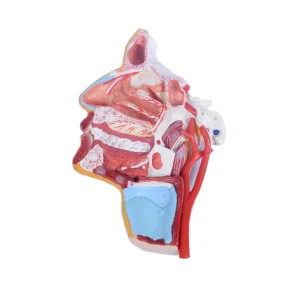
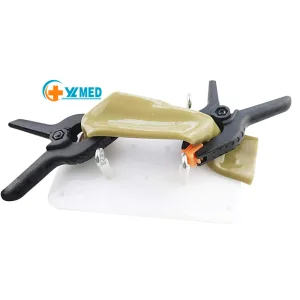
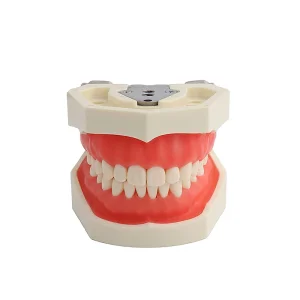
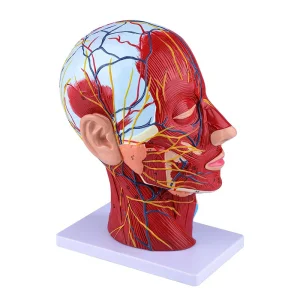
Verified Product Records 9–16 from the Supplied Catalog
These original product records complete the 16-item supplied product set. Each link is preserved with its original product URL and presented as a buyer-ready button.
Need Specifications, a Price List or a Tender Package? We Reply Within 24 Hours.
Tell us your target market, quantities and certification requirements. Our product specialists will recommend suitable models, share detailed specifications and propose the most economical shipping plan for your order. For infusion pump OEM programs, include pump type, flow range, drug-library scope, cybersecurity requirements and registration pathway so we can route the request correctly.