
Equipment Frequently Quoted Alongside ICU Infusion Pump Projects
Buyers consolidating a ward upgrade usually add beds, monitors, teaching models and laboratory items to the same purchase order. These eight items are the most requested pairings.
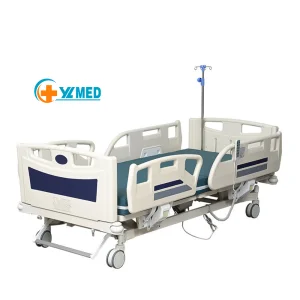
ODM ICU bed electric 5 function intensive care bed hospital nursing home lift multi-function thrombolytic bed Factories, Quotes
View Quote & Specs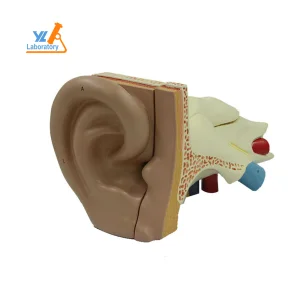
ODM Life Size Human Ear Anatomical Model, Professional Medical Model for Hospital Use Pricelist, Quotes
View Quote & Specs
China Factory medical teaching biology tissue section histology preparation specimen microscope slide Quotes, Service
View Quote & Specs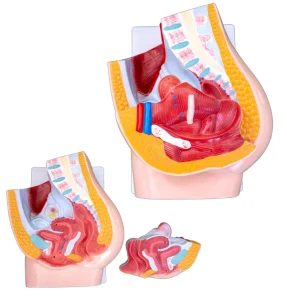
OEM Medical teaching, Female human sagittal anatomical model (2 pieces) Manufacturer, Factories
View Quote & Specs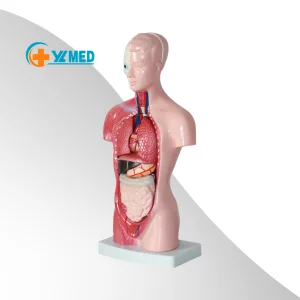
China Human body 28cm medical trunk model Anatomy doll 15 detachable parts Education organs Teaching learning class student model Factories, Service
View Quote & Specs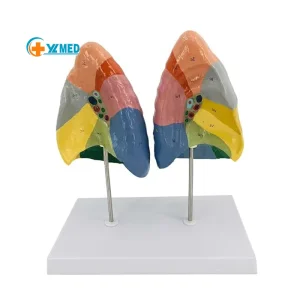
ODM Human Lung Model Respiratory System Lung Segment Anatomical Model Pulmonary Medical School Nursing Class Course Lab CE/ISO Factory, Factories
View Quote & Specs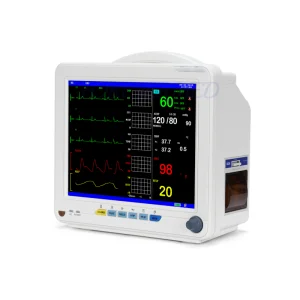
China Cheap Price Portable Adult Neonatal Children Cardiac Monitor Multi Parameters Vital Signs Patient Monitor Manufacturer, Factories
View Quote & Specs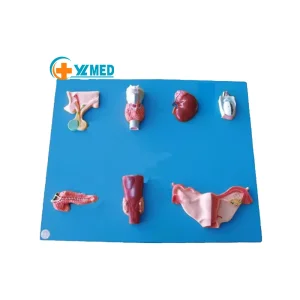
ODM Educational Adhesive Medical Science Anatomical Model Human Endocrine Organ Hypophysis Thyroid Testis Science Demonstrations Manufacturers, Quotes
View Quote & SpecsOEM ICU Infusion Pump Procurement, Explained
A practical briefing on what a serious OEM infusion pump quotation should contain — written for hospital groups, tender committees and import distributors.
An infusion pump inside an intensive care unit is not a commodity. In a single ICU bay, anywhere from eight to twenty pumps may be running at once, delivering vasopressors, sedation, insulin, electrolytes and maintenance fluid — each one holding a programmed rate for hours or days while clinicians juggle half a dozen other patients. When a hospital group or a national distributor asks for OEM ICU infusion pump quotes and service, four things are actually being evaluated: the dose accuracy the device delivers unit by unit, the consistency between production batches, what the quoted price genuinely includes, and who stands behind the equipment once it clears customs and before a nurse ever touches the keypad.
Henan Yulin Edu. Project Co., Ltd. has manufactured medical and educational equipment in Xinxiang, Henan, since 1958, has held ISO 9001 certification since 2008, employs more than 200 professional staff and operates with registered capital of RMB 120 million. The portfolio spans ten product lines — anatomy and skeleton models, biology prepared slides, dental tools, nursing simulators, suture pads, hospital furniture, medical apparatus and patient monitoring devices — a breadth that lets distributors consolidate mixed-category orders into one shipment, one inspection report and one point of contact. The OEM infusion pump programme is built on that same manufacturing foundation: quotation, documentation, spares planning and training are packaged together rather than sold as separate line items.
This briefing is organised the way an evaluation committee actually thinks: first the clinical problem, then the market context, then the operating details that determine whether a supplier can still support the fleet in year five.
From Single-Unit Purchasing to Programme-Level Supply
Hospital networks rarely buy one pump. They buy a standard, a service model and a document set that must survive audit. Three elements determine whether an OEM programme scales.
Platform Standardisation
Sourcing ICU, high-dependency and general-ward pumps from a single OEM platform shortens nurse familiarisation, reduces the number of spare-part and battery SKUs held in stores, and simplifies the annual demand forecast. A distributor that standardises also gains a cleaner quotation structure, because volume tiers apply across every department rather than being negotiated separately.
Total Cost of Ownership
A pump keeps generating cost long after the invoice is paid: battery replacement, administration-set consumption, calibration cycles, repair turnaround and refresher training. A well-built OEM quotation lists these components across a multi-year horizon so the tender committee compares real lifetime cost instead of being anchored on the lowest headline unit price.
Tender-Ready Documentation
Public procurement and hospital tenders typically demand product-specific test reports, declarations of conformity, technical files and label or language samples. Building an OEM programme around those deliverables from the first shipment avoids the scenario where commercial terms are agreed quickly and then held up for weeks by an incomplete document set.
The Global Commercial and Industrial Landscape for Infusion Devices
Demand for infusion pumps in 2025 is shaped by six structural forces. Understanding how they stack explains why the same device is quoted differently in different regions.
- Intensive-care capacity expansion. Health systems that added ICU beds during recent public-health emergencies are now replacing temporary equipment with permanent, standardised fleets.
- Ageing populations and chronic disease burden. Longer treatment regimens for oncology, cardiology and renal care push infusion volumes into day-treatment and outpatient settings.
- Shift to outpatient and ambulatory infusion. Chemotherapy suites and home infusion programmes require lighter pumps with longer battery life and clearer alarms.
- Procurement consolidation. Group purchasing organisations and ministry-level framework agreements replace unit-by-unit purchasing, concentrating volume into fewer, longer contracts.
- Rising regulatory complexity. EU MDR, US FDA premarket pathways and national registration regimes each impose their own technical file and post-market surveillance obligations.
- Digitalisation and interoperability. Wireless connectivity, bidirectional EHR integration and dose-error-reduction software are moving from premium features to baseline expectations.
Europe & UK
MDR-driven technical documentation, notified-body involvement and open public tenders dominate. Buyers weight evidence quality and post-market surveillance heavily against unit price.
North America
FDA clearance and Joint Commission expectations set the bar. Dose-error-reduction software, drug libraries and EHR interoperability are usually mandatory rather than optional.
Middle East & Africa
Large hospital construction projects and ministry tenders drive volume. Spare-part logistics, on-site training and multi-year service cover often decide the award as much as price.
Asia-Pacific & Latin America
Price sensitivity is high, but so is growth. Distributors increasingly seek local assembly, local documentation and regional service hubs to shorten downtime.
Yulin Medical in Numbers
Verified operating facts that procurement teams can reference in a supplier qualification file.
Where ICU Infusion Pumps Actually Run
An OEM platform is only useful if it can be configured for the department that receives it. These six environments drive the majority of configuration decisions.
Adult ICU & Coronary Care
Vasopressor and sedation infusion at low flow rates demands fine resolution and a stable occlusion-alarm profile. Multi-channel stacking and central-station visibility are usually specified.
NICU & Paediatric ICU
Micro-volume delivery, anti-free-flow protection and weight-based dosing libraries matter more than maximum flow rate. Alarms must be distinguishable in a high-noise nursery.
Oncology Day Units
Long chemotherapy cycles favour battery endurance, quiet operation and programmable secondary infusion. Drug libraries reduce programming errors across rotating nursing staff.
Operating Theatre & PACU
Anaesthesia and post-anaesthesia recovery require rapid priming, fast bolus delivery and clear large-format displays that remain readable from a distance across the table.
Emergency & Observation Wards
Rapid deployment, robust pole clamps and dependable battery runtime during inter-departmental transfer take priority over advanced networking features.
Outpatient & Home Infusion
Portability, simplified menus and caregiver-friendly alarms dominate. Localised user interfaces and regional language manuals become a regulatory as well as a usability requirement.
Technology Route Map and Future Outlook
Infusion technology is converging with hospital IT. The four-phase roadmap below reflects where OEM programmes are heading between now and the end of the decade.
Hardened Core Platform
Mechanical precision, occlusion detection, air-in-line sensing and battery management remain the fundamentals. Buyers this cycle focus on reliability data, service intervals and consumable compatibility.
Connectivity & Interoperability
Wireless fleet management, bidirectional EHR integration and automatic programming move from premium option to expected baseline. Cybersecurity documentation becomes part of the tender file.
Dose-Error Reduction at Scale
Drug libraries, hard and soft dose limits, and analytics dashboards that report near-misses become standard. Procurement asks suppliers to demonstrate measurable error reduction, not just features.
Adaptive & Closed-Loop Systems
Sensor-driven titration, predictive occlusion alerts and closed-loop delivery for selected therapies move toward clinical use, with regulatory pathways evolving alongside the technology.
What Localised Support Actually Means in Practice
Compliance is not a certificate on a wall. It is a folder of documents, a spare-parts plan and a training calendar that survive the first audit after installation.
Quality System & Registration Files
ISO 9001 has underpinned our process control since 2008. Product-specific declarations, test summaries and technical documentation can be prepared on request to support tender submission and import registration in the destination market.
Spare Parts & Service Logistics
Battery packs, pole clamps, administration-set interfaces and key consumables are scheduled alongside the main shipment so that a distributor is not forced to place emergency airfreight orders during the warranty period.
Training & Clinical Onboarding
Train-the-trainer materials, quick-reference cards and troubleshooting guides can be localised into the language of the destination market, so biomedical engineers and nursing educators can run their own sessions after handover.
Packaging, Labelling & Language
Private-label packaging, localised IFUs, language-specific labelling and carton marking are handled by an in-house design team — which matters when a distributor needs the shipment to look and read like a domestic product rather than an import.
How OEM ICU Infusion Pump Quotes & Service Are Delivered
Five stages, each with a named contact and a defined deliverable, so stock planning and tender deadlines stay predictable.
Requirement Capture
Share target departments, annual volume, destination market, registration status and any tender specification that must be matched line by line.
Quotation & Configuration
Receive a structured quote covering unit, accessories, spares, packaging and documentation, with volume tiers clearly separated.
Sample Evaluation
Biomedical engineers and clinical educators test samples against their own protocols before a bulk commitment is made.
Production & Inspection
Manufacturing and outgoing inspection follow the ISO 9001 quality management system, with batch records available for review.
Export & After-Sales
Protective export packing, consolidated shipping documentation and a response commitment that keeps the fleet running after handover.
Frequently Asked Questions from Procurement Teams
The questions that come up most often before a first OEM infusion pump order is placed.
Does Yulin Medical manufacture infusion pumps directly, or source them through partners?
Henan Yulin Edu. Project Co., Ltd. is a manufacturer founded in 1958 with its own factory in Xinxiang, Henan, employing more than 200 professional staff. For one-stop orders covering categories outside our core production lines, we coordinate a stable network of long-term partner factories and take responsibility for inspection, consolidation and export documentation. That means a single purchase order can cover ICU infusion pumps alongside beds, monitors and teaching models.
What does an OEM ICU infusion pump quotation typically include?
A properly structured quote separates the pump unit, mounting hardware, power and battery options, administration-set specification, spare-part kit, private-label packaging and the documentation package. Volume tiers should be shown explicitly so the buyer can model cost at 50, 200 and 500 units. Consumables and service items are usually quoted separately because their annual volume differs from the capital purchase.
Which certifications and documents can be supplied for tenders?
Our quality management system has been ISO 9001 certified since 2008. Product-specific documentation — including declarations, test summaries and technical files — can be prepared on request to support tenders and import registration in the destination country. Buyers should confirm their national requirements at the enquiry stage so the correct document set is assembled before the shipment, not after.
Can packaging, manuals and labelling be localised for my market?
Yes. Our in-house design team develops private-label packaging, localised instructions for use and language-specific labelling. For distributors this matters for two reasons: regulatory compliance in markets that mandate the local language, and commercial positioning, because a product that reads like a domestic brand commands better shelf appeal and resale value.
How is the pump specification matched to a specific ICU protocol?
Start with the therapy, not the device. Confirm the flow-rate range and resolution required for the lowest-dose vasoactive infusions, the maximum rate needed for rapid fluid replacement, the required occlusion-alarm sensitivity, and whether dose-error-reduction libraries must be preloaded with a local formulary. Then check whether the department requires central-station visibility or EHR integration. Only after those answers are settled should the model configuration be fixed.
What is the lead time and how are spare parts planned?
Lead time depends on configuration, order volume and the documentation package; the export team confirms a schedule with the quotation. Spare parts — particularly battery packs and pole-clamp assemblies — are recommended at a ratio to the installed base and shipped with the main order, so the distributor is not exposed to emergency airfreight during the warranty period. Mixed-category orders are consolidated into one shipment with one point of contact.
Do you support tender packages and mixed-category orders?
Yes. Ten product lines — anatomy models, biology prepared slides, dental tools, general teaching models, hospital furniture, hospital machines and tools, medical apparatus, nursing models, skeleton models and suture kits — allow a single supplier to fill a broad hospital or medical-school tender line by line. Consolidating into one shipment also simplifies customs clearance and reduces freight cost per unit.
How quickly will I receive a reply?
Our export team is online seven days a week and typically replies within 24 hours with catalogues, specifications, quotation structure and shipping options. For urgent tender deadlines, include the submission date in the first message so the documentation package can be prioritised.
Hospital, Laboratory and Teaching Equipment for Mixed Orders
Additional lines commonly bundled into the same container as an infusion pump programme — useful for distributors building a complete catalogue.
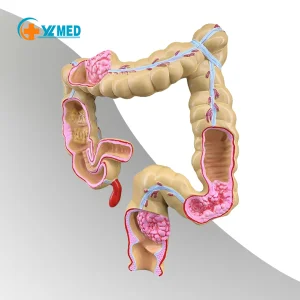
China Large intestine rectum pathology medical anatomical model Medical teaching used human pathological colon model Manufacturer, Factory
View Quote & Specs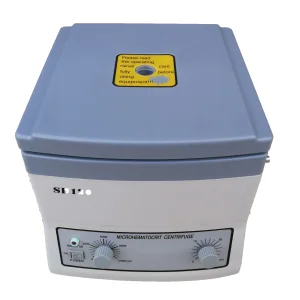
OEM Hot Sale Good Quality Laboratory Normal Speed Centrifugal Fans Centrifuge Machine Manufacturer, Quotes
View Quote & Specs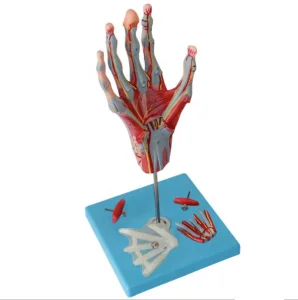
OEM Human Hand Anatomical Model with Muscles & Blood Vessels, Medical Teaching Equipment Manufacturer, Manufacturers
View Quote & Specs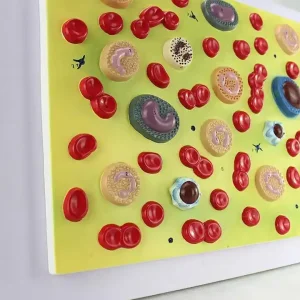
ODM Human medical blood cell model Anatomical blood cell model research display teaching medical model Pricelist, Quotes
View Quote & Specs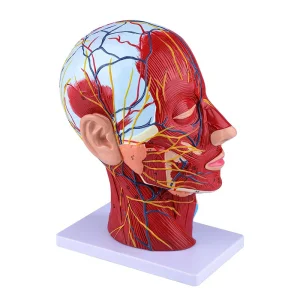
ODM Human Half Head & Neck Anatomy Model Superficial Neurovascular Model Manufacturer, Pricelist
View Quote & Specs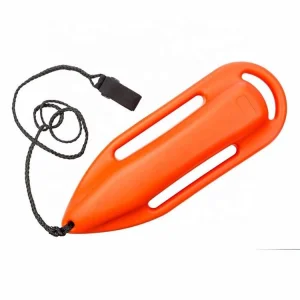
ODM Cheap Water Lifesaving Floating Rescue Freedive Float Rescue Tube Can Swimming Life Safety Buoy Manufacturers, Pricelist
View Quote & Specs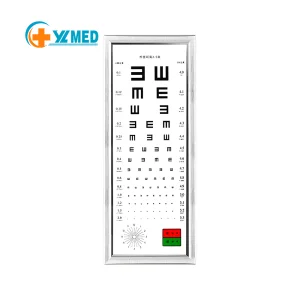
Wholesale LED eye chart light box international standard kindergarten E-logarithm eye measure vision Manufacturers, Quotes
View Quote & Specs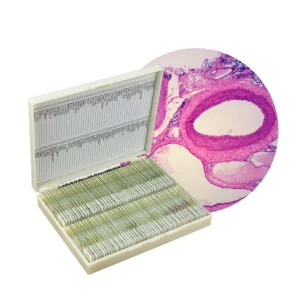
China Teaching advanced human histopathology slides wholesale, university standard, factory direct sales Factory, Service
View Quote & SpecsRequest an OEM ICU Infusion Pump Quotation
Tell us the target departments, annual volume, destination market and any tender specification that must be met. Our specialists will match the configuration, assemble the documentation package and propose the most economical shipping plan for a consolidated order.
Henan Yulin Edu. Project Co., Ltd. · No. 8, Daoqing Road, Industry Park, Hongqi District, Xinxiang, Henan, China · ISO 9001 certified since 2008 · Export team online 7 days a week with a 24-hour reply commitment.