OEM Nursing & Clinical Training Products from Our Factory
Eight production lines that sit alongside our child nursing CPR programme, allowing distributors and teaching hospitals to consolidate mixed-category orders into a single, inspected shipment.
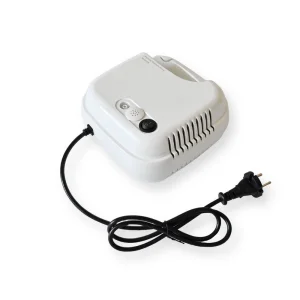
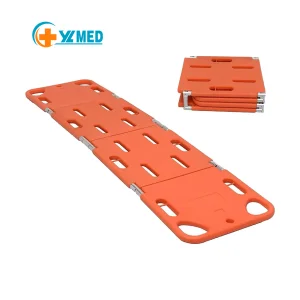
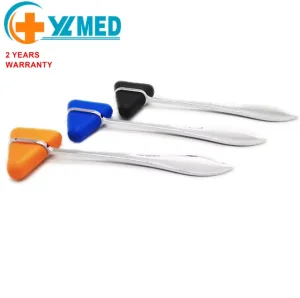
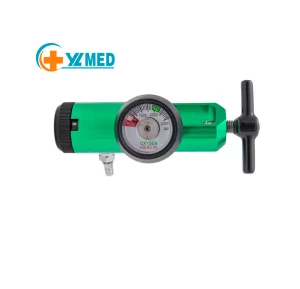
The Global Commercial Landscape of Child Nursing CPR Training
Why paediatric resuscitation simulators have become a standalone procurement category rather than a variation of adult CPR manikins.
Paediatric and infant cardiopulmonary resuscitation is not a scaled-down version of adult resuscitation. For a child, the target compression depth is approximately one third of the anteroposterior chest diameter — roughly 5 cm — while for an infant it is about 4 cm. Resuscitation guidelines from the AHA, ILCOR and the ERC recommend a compression-to-ventilation ratio of 15:2 for both single and two-rescuer paediatric resuscitation, and 3:1 for newborns receiving positive-pressure ventilation. Because these figures deviate so sharply from the 30:2 rhythm taught in adult courses, child nursing CPR training has evolved into its own discipline, its own curriculum, and its own hardware category.
That divergence has commercial consequences. Hospitals, nursing colleges, ambulance services, childcare regulators and community first-aid programmes all need models whose anatomy, chest compliance and feedback electronics reflect paediatric physiology rather than adult physiology. A distributor who tries to serve a paediatric programme with a repurposed adult torso inevitably loses credibility with instructors within a single training cycle.
Demand is further amplified by recertification cycles. Basic life support and paediatric advanced life support credentials typically require renewal every two years, and instructor courses require their own practice manikins. This creates a recurring consumable-style rhythm in a category that many buyers mistakenly treat as one-time capital equipment: airways, lung bags, face skins, chest springs and feedback sensors all wear out and must be reordered.
| Patient group | Compression depth | Ratio | Recommended training model |
|---|---|---|---|
| Adult | 5–6 cm | 30:2 | Full-body adult CPR / AED trainer |
| Child (1 yr – puberty) | ~5 cm (1/3 AP diameter) | 15:2 | Child ACLS / child nursing CPR manikin |
| Infant (< 1 yr) | ~4 cm (1/3 AP diameter) | 15:2 | Infant CPR manikin with depth feedback |
| Newborn (delivery room / NICU) | ~4 cm | 3:1 with PPV | Neonatal resuscitation simulator |
Why Chinese OEM Factories Dominate Child Nursing CPR Supply
Four structural efficiencies that make a factory-direct programme faster, cheaper and more controllable than importing through a trading intermediary.
Vertically Integrated Production
Mould making, silicone and PVC injection, sensor assembly, PCB soldering, foam packing and export cartoning sit inside one supply chain. That removes the hand-off delays that break delivery schedules when a manikin's electronics and its soft components are made by different vendors.
Rapid Prototype Iteration
An OEM project rarely ends at the first sample. Chest stiffness, airway resistance, torso weight and display layout usually need two or three rounds of tuning. Proximity between the mould shop and the assembly line compresses that loop into days rather than weeks.
Predictable Lead Times
A factory that has produced the same 10 product lines for more than six decades has trained its workforce on repeatable cycles. For distributors running tender schedules or seasonal training seasons, predictable 20–35 day production windows matter as much as unit price.
Documentation & Compliance Support
ISO 9001 certification has been held since 2008. Test reports, material declarations, instruction manuals and packaging artwork can all be supplied for import registration and public tender submissions, which is precisely what public-sector buyers require.
China's medical education equipment cluster — concentrated in Henan, Jiangsu and Guangdong — benefits from a density of component suppliers that no single factory could replicate alone. A child nursing CPR manikin is a composite product: medical-grade PVC skin, polyurethane foam chest, stainless springs, silicone lung bags, a pressure sensor, a microcontroller and a display module. When all of these are within a short drive of the assembly hall, the cost of coordination drops and the cost of quality failure drops with it.
For overseas buyers, the practical result is a lower minimum order quantity at a comparable specification level. A European distributor can start with a 50-unit private-label run to test a market, then scale to multiple containers once the school year begins. That flexibility is very difficult to obtain from a domestic contract manufacturer in Western Europe, where tooling amortisation usually forces minimums into the thousands.
Localised Applications of Child Nursing CPR Models
The same manikin platform is configured very differently depending on who trains, where they train, and what evidence the regulator expects afterwards.
Nursing & Medical Colleges
Paediatric nursing modules require infant and child manikins that survive high student-to-unit ratios. Reinforced chest assemblies, replaceable face skins and quick-swap lung bags determine total cost of ownership far more than headline price.
Paediatric Wards, PICU & NICU
In-service training for ward nurses must be repeatable, short and measurable. Manikins with real-time depth, rate and ventilation feedback let a nurse educator score a cohort in a single afternoon without an external examiner.
Red Cross & First-Aid Centres
Community first-aid programmes train large volunteer cohorts on tight budgets. Portable, low-maintenance infant manikins that pack into a carry bag and require no external power are the specification of choice for outreach use.
Kindergartens & Childcare
Regulators in several markets now expect childcare staff to hold a current paediatric first-aid certificate. That has created sustained, low-volume but highly repeatable demand from nursery chains and early-years training providers.
Ambulance & Pre-Hospital Teams
Paramedic refresher courses need paediatric scenarios that integrate with airway management and immobilisation equipment — which is why factories supplying both CPR manikins and spine boards win the larger framework contracts.
Distributor Private Label
OEM buyers typically rebrand packaging, manuals and carry cases for their own catalogue. Colour-matched shells and market-specific language on the display are also achievable at modest volumes.
Six Forces Reshaping Child Nursing CPR Manufacturing
Where OEM specifications are moving between now and the next guideline revision cycle.
Data-Driven Skills Assessment
Instructors increasingly expect objective evidence rather than subjective observation. Depth, rate, recoil, ventilation volume and hands-off time are now routinely logged, exported and stored against learner records, which pushes sensor accuracy from a feature into a baseline requirement.
Guideline Alignment as a Buying Filter
Tenders now ask explicitly whether a manikin's feedback thresholds match current AHA, ERC or ILCOR parameters. A factory that can demonstrate alignment — and update firmware when guidance changes — holds a decisive advantage over a static catalogue supplier.
Infection Control by Design
Post-pandemic procurement places heavy weight on removable and disinfectable airways, individual face shields and single-use lung bags. Modular hygiene components also create a recurring revenue stream that distributors value highly.
Hybrid Simulation & Digital Content
Physical manikins are increasingly bundled with scenario software, instructor dashboards or augmented-reality overlays. Buyers now evaluate a supplier on the training ecosystem, not just the plastic torso in the box.
Longevity and Serviceability
Institutions are shifting from cheapest-unit purchasing to total cost of ownership. Manikins engineered so that chest springs, sensors and skins can be replaced by the customer's own technician are favoured in multi-year framework agreements.
Supply-Chain Regionalisation
Many distributors now dual-source between a primary Chinese factory and a secondary regional warehouse. Factories respond by holding buffer stock of high-turnover paediatric models and by offering consolidated mixed-category containers.
What Global Buyers Actually Demand From a CPR Factory
Four evaluation dimensions that repeatedly decide whether an OEM purchase order is placed or dropped.
Technical & Regulatory Files
Material safety declarations, calibration reports, instruction manuals in destination languages and ISO 9001 evidence. Public tenders will not proceed without them, and retrospective documentation requests are the single biggest cause of delivery delay.
Consumables & Spare Parts
A manikin without a supply of face skins and lung bags is a liability. Buyers ask for a spare-parts list, unit pricing and lead times at the quotation stage, and increasingly request a starter kit of consumables inside the first shipment.
Freight & Carton Efficiency
Carton dimensions, master-case quantities and pallet configuration directly affect landed cost. A factory that redesigns an inner carton to reduce volumetric weight can save a distributor more than a marginal unit-price negotiation.
Commercial Terms & Response Speed
Quotation turnaround is a genuine competitive variable. Buyers who receive specification-matched quotations within 24 hours, with shipping options attached, place repeat orders. Buyers who wait a week for a price usually move on.
There is also a regional dimension to purchasing behaviour. Distributors in the Gulf and Southeast Asia typically prioritise multi-language manuals and consolidated mixed containers. European buyers ask more often about material declarations and recyclability. North American buyers focus on guideline alignment and the ability to supply replacement parts within a defined service window. Latin American buyers frequently combine CPR manikins with hospital furniture in a single tender, which rewards a supplier able to quote across categories.
Understanding this variation is where factory-direct experience pays off. Henan Yulin Edu. Project Co., Ltd., founded in 1958 with registered capital of RMB 120 million and more than 200 professional staff, has supported export programmes across these regions for decades, and its product catalogue spans ten lines — from anatomy and skeleton models to hospital furniture and emergency equipment.
A Transparent Five-Step OEM Workflow
Each stage has a named contact, a documented output and a defined approval point, so stock planning and tender deadlines stay under control.
Share Requirements
Send target learner group, model quantities, destination market and any tender or certification conditions.
Specification Proposal
Receive matched models, technical parameters, packaging options and the most economical shipping plan.
Sample Evaluation
Have instructors test compression depth, chest recoil, ventilation resistance and feedback accuracy before bulk approval.
Production & QC
Manufacturing and inspection follow the ISO 9001 quality management system, with pre-shipment inspection reports.
Export & After-Sales
Protective export packing, delivery coordination and responsive technical support with spare-part supply.
Frequently Asked Questions from Importers
Direct answers to the questions procurement managers raise most often before a first child nursing CPR order.
Is Yulin Medical a manufacturer or a trading company?
What quality certification does the factory hold?
Do you support OEM, ODM, private label and custom packaging?
How do I choose between a child, infant and neonatal manikin?
What feedback parameters should a paediatric CPR manikin report?
What is your typical sample lead time and production lead time?
Can I consolidate CPR manikins with other product categories in one order?
How quickly will I receive a reply, and how do I request a price list?
More OEM Products from the Same Production Base
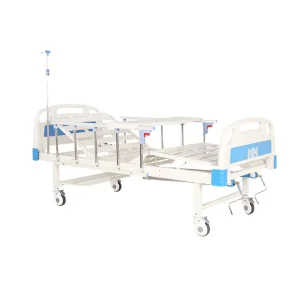
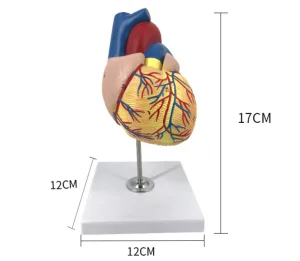
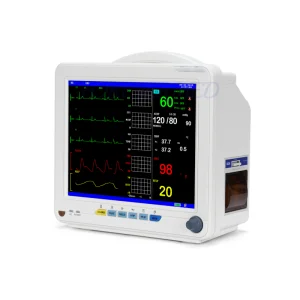
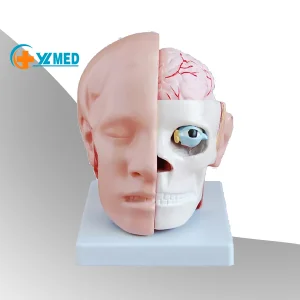
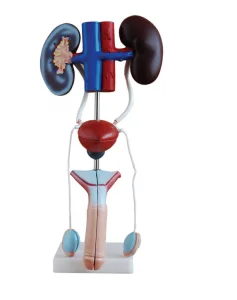
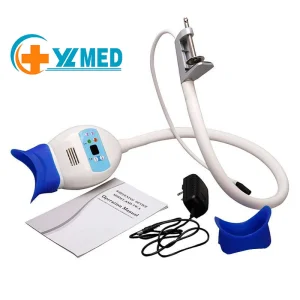
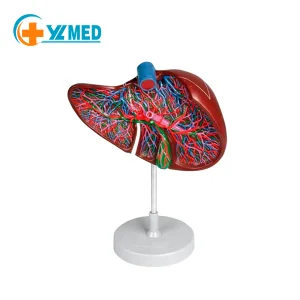
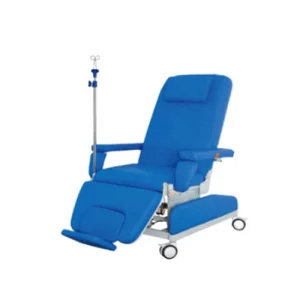
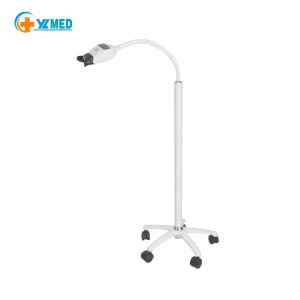
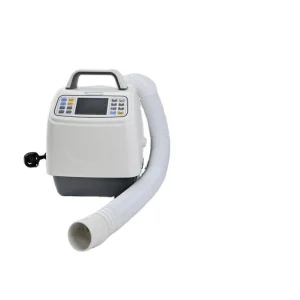
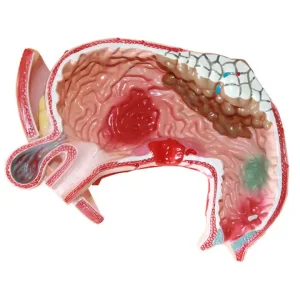
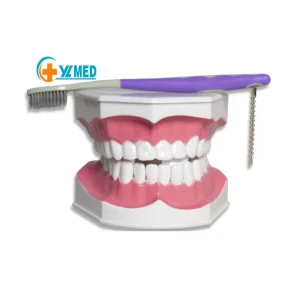
Anatomy models, monitoring equipment, hospital furniture and dental devices that ship alongside child nursing CPR manikins in a single consolidated order.