Henan Yulin Edu. Project Co., Ltd. · Medical & Educational Equipment Manufacturer Since 1958
Eight OEM Emergency, Training & Clinical Products for Immediate Sourcing
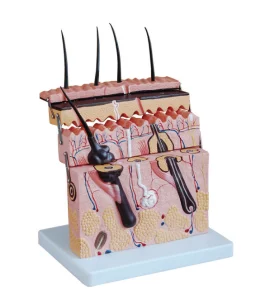
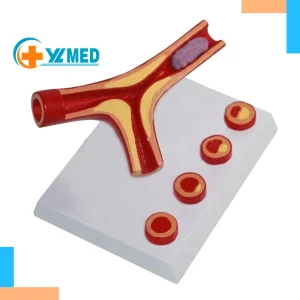
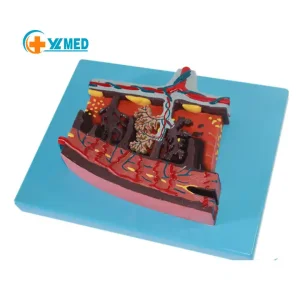
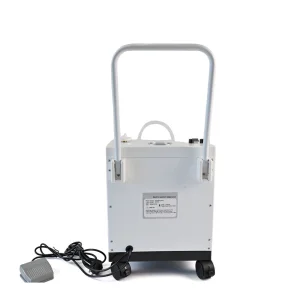
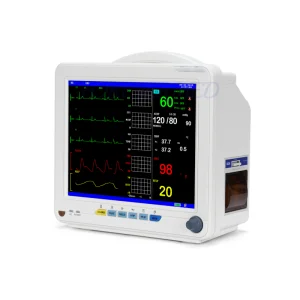
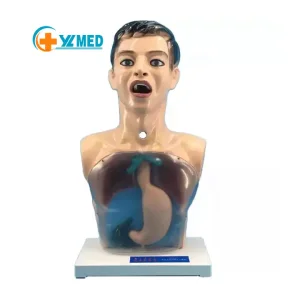
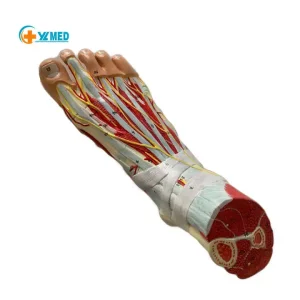
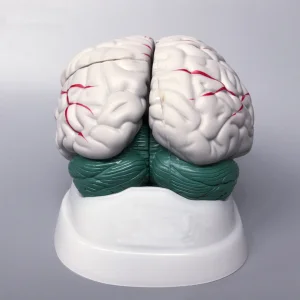
These eight partner-ready products are displayed directly below the banner. Every original image and product URL is retained, and each product title link is styled as a clear, mobile-friendly button for fast distributor review.
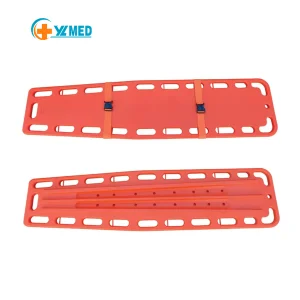
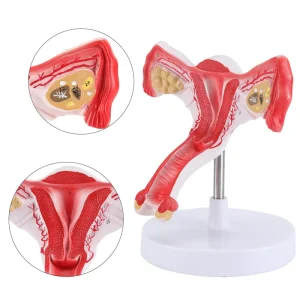
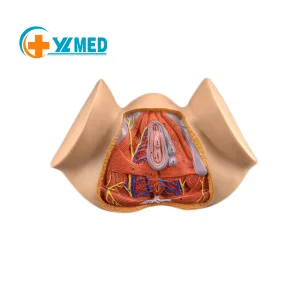
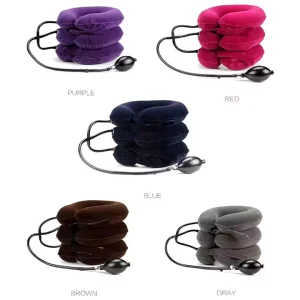
The remaining eight sourced products are presented in the final bottom showcase, so the page preserves all sixteen supplied product images and product URLs in two balanced groups of eight.
Medical Teaching Models, CPR Manikins & Hospital Equipment Manufacturer Since 1958
Henan Yulin Edu. Project Co., Ltd. (Yulin Medical) has built educational and medical training equipment in Xinxiang, China, for more than six decades. Our quality management system has been ISO 9001 certified since 2008, and our motto is simple: quality first, service first. Every order is produced and inspected so that distributors, medical universities, nursing colleges and hospitals receive consistent, well-documented products on every batch.
- Factory-direct supply across 10 product lines, from anatomy models to hospital furniture
- Private-label packaging and product design that raises your resale value
- Mixed-category orders consolidated into one shipment with one point of contact



Where OEM AED Programs Meet Real Training and Clinical Environments
A product is only useful when it fits the environment where people train, respond and recover. These original Yulin Medical scenes show the manufacturing and training context behind the OEM AED and service discussion.

Medical teaching and training equipment manufacturing

Anatomy and skeleton models for medical schools

CPR manikins and nursing simulation models

Hospital furniture and medical equipment

Global export service for overseas distributors
OEM AED Manufacturing & Service: The Global Business and Industrial Reality
An automated external defibrillator is no longer viewed as a simple standalone purchase. It is part of a readiness system that connects equipment, training, maintenance, registration, replacement consumables and post-incident review. That shift is changing how distributors, governments, hospitals and training providers evaluate an OEM AED manufacturer and service partner.
Sudden cardiac arrest is a time-critical event. Public access defibrillation programmes, workplace safety policies, school campus response plans, transport hubs, sports facilities and community first-responder networks all depend on the same chain of survival logic: early recognition, early CPR, early defibrillation and early advanced care. For procurement teams, the commercial consequence is clear. Buying an AED or AED trainer is only one step. The larger question is whether the supplier can support a repeatable programme across multiple sites, languages, regulations and budget cycles.
Globally, the AED industry runs on two connected commercial engines. The first is clinical deployment, where the product must meet the applicable medical device regulations of the destination market and be supported by validated consumables, battery management and service documentation. The second is training and simulation, where AED trainers, CPR manikins and teaching models help instructors build the confidence that turns an installed device into a usable response. A serious OEM partner must understand both engines, because distributors increasingly sell the complete bundle: training manikin, AED trainer, first-aid equipment, replacement pads, signage and refresher support.
Industrial competition is also changing. Buyers no longer compare unit price alone. They compare regulatory readiness, documentation quality, packaging, label localisation, lead-time stability, spare-part availability, mixed-category consolidation and the credibility of the factory behind the brand. This is especially important for private-label distributors. Their reputation depends on product consistency, not just on the first sample. An ISO 9001 quality system, a traceable production process and clear communication before and after the order are therefore commercial advantages, not paperwork.
Service is the next competitive frontier. AED programmes require pad and battery lifecycle planning, replacement reminders, inspection logs, firmware or software updates where applicable, and a clear escalation path when a unit is damaged or withdrawn. For training products, service means curriculum alignment, replacement parts, consumable supplies and model durability. The strongest procurement teams now ask for a total programme view: device, training, consumables, documentation and local support in one commercial map.
This white-paper page does not replace regulatory advice. Any live clinical AED deployment should be checked against the destination market requirements, including product registration, electrical safety, labelling, language, post-market surveillance and technical file availability. Training devices and live clinical devices must never be treated as interchangeable. Yulin Medical's role in this discussion is to connect more than six decades of medical education manufacturing experience with a practical OEM and service framework for global buyers.
Illustrative Procurement Weighting Model
Created by the Yulin Medical export and engineering teams for early-stage sourcing discussions. It is a planning model, not a regulatory certification.
Why China Factory Efficiency Is Now a Quality and Service Advantage
Low-cost production is no longer the main story. The real advantage comes from engineering depth, supplier density, process control, packaging design and the ability to consolidate mixed-category orders without losing documentation discipline.
Engineering-to-Production Integration
From anatomy model tooling to AED trainer housing, packaging and labels, the project moves through a controlled path from requirement review to sample validation and batch production.
Dense Supplier Cluster
Xinxiang and the wider Henan manufacturing base give access to mature moulding, metalwork, electronics, textiles, packaging and logistics suppliers, shortening coordination cycles for mixed orders.
QC & Documentation Discipline
ISO 9001 process control since 2008 supports incoming inspection, in-process checks, final inspection, export packing verification and product-specific documents for tender and import discussions.
Export Consolidation
One factory point of contact for anatomy models, CPR manikins, AED trainers, first-aid equipment, hospital furniture and lab items reduces supplier friction and freight complexity.
Henan Yulin Edu. Project Co., Ltd. was founded in 1958 and operates from No. 8, Daoqing Road, Industry Park, Hongqi District, Xinxiang, Henan, China. With registered capital of RMB 120 million and more than 200 professional employees, the company integrates development, production, inspection and export support. For OEM AED and service-related projects, this matters in three practical ways: product and packaging can be aligned to the distributor's brand; mixed-category shipments can be planned around one export schedule; and after-sales communication can remain with one accountable team instead of fragmenting across many small suppliers.
Where AED, Training and Emergency Equipment Programmes Actually Live
Different buyers need different bundles. A transport authority, a nursing college and a rural clinic may all ask for AED-related support, but their specifications, training plan and service expectations are not the same.
Transport Hubs & Public Access
Airports, rail stations, bus terminals and ferry buildings need high-visibility placement, clear signage, trained staff and a maintenance log. OEM buyers often request language-specific labels, wall cabinets, training AED trainers and compact CPR manikins for staff refreshers.
Workplaces & Industrial Sites
Factories, warehouses, construction sites and remote operations add AED readiness to occupational safety. Procurement frequently bundles first-aid stretchers, cervical collars, suction apparatus and training models with the emergency response plan.
Schools, Universities & Training Centres
Education buyers need a teaching loop: anatomy and biology models, CPR manikins, AED trainers, suture pads and assessment accessories. A private-label package can be designed around course levels, class size and storage constraints.
Hospitals & Clinics
Hospitals and clinics source training simulators, patient monitors, suction machines, examination furniture and emergency immobilisation products. Documentation quality and consistent replacement supply are often more important than a one-time discount.
Sports, Leisure & Hospitality
Gyms, stadiums, golf clubs, hotels and event venues require visible response equipment and staff confidence. Distributors can combine AED trainers, first-aid supplies and branded storage solutions into an annual safety package.
Community, Rural & EMS Programmes
Public buildings, volunteer responder groups and mobile clinics need rugged, easy-to-train equipment. Mixed shipments can include rescue stretchers, cervical collars, suction units, training manikins and educational models for local instructors.
What Global Buyers Are Changing in 2025 and Beyond
The purchasing conversation is moving from product-centric quotations to programme-centric evaluation. This creates opportunities for suppliers who can document, customise and support the full lifecycle.
Connected Readiness
Remote monitoring, battery and pad expiry alerts, inspection dashboards and device registration mapping are becoming part of public access AED tenders. For training devices, digital course records and instructor resources are also growing in importance.
Training and Clinical Integration
Distributors want one supplier for training manikins, AED trainers, first-aid equipment and service items. Bundling reduces procurement overhead and improves course-to-deployment consistency.
Localisation & Documentation
Language-specific manuals, labels, packaging, plug or battery configurations and tender-ready documentation are now expected in serious OEM requests. Regulatory classification must be clarified early in the RFQ stage.
Lifecycle & Sustainability
Buyers increasingly evaluate battery and pad replacement cycles, packaging waste, spare-part availability and end-of-life planning. A transparent total cost of ownership model is becoming a competitive differentiator.
Five Requirements That Separate a Reliable OEM Programme from a Basic Quotation
Specification clarity
State whether the project is for training, public access, clinical use, or a mixed training-and-deployment programme. This one clarification prevents most compliance and expectation errors.
Regulatory dossier
Ask for product-specific classification, test reports, labelling, manuals, language requirements and registration support that apply to the destination market. Do not accept general marketing claims as a substitute.
Sample validation
Test physical quality, packaging, instructions, trainer feedback features and replacement-part fit before bulk production. A documented sample approval protects both buyer and factory.
Commercial model
Compare MOQ, private-label costs, packaging, payment terms, warranty, spare-part pricing and replenishment lead time. The lowest unit price can be the most expensive choice after two reorder cycles.
Logistics & after-sales
Confirm export packing, carton marking, consolidation rules, freight terms, spare-part kits and the named service contact. A clear escalation path is part of product quality.
A Five-Layer OEM AED Sourcing Framework for Distributors and Tender Teams
This framework is the practical information gain of this white-paper page: a way to structure an OEM AED and service enquiry so that commercial, training and regulatory issues are visible before the order is placed.
Use-case layer
Define whether the buyer needs a live clinical AED, an AED training device, a CPR training ecosystem, or a mixed programme. Clarify adult, paediatric and neonatal training requirements where relevant.
Regulatory layer
List the destination market, required registration route, language, labelling, technical file expectations and any tender documentation format. The factory response should be product-specific.
Training layer
Match equipment to the curriculum, instructor model, class size, assessment method and storage environment. Consider manikins, AED trainers, consumables, replacement parts and teaching models together.
Service layer
Plan warranty, spare parts, consumable replacement, inspection routines and escalation contacts. For public access programmes, include readiness checks and user training in the same budget discussion.
Supply layer
Evaluate production capacity, QC evidence, packaging, carton marking, lead time, mixed-order consolidation and total cost transparency. Request a sample and a reorder scenario, not only a first-order quotation.
For distributors, this five-layer framework can be sent directly to suppliers as an RFQ structure. It also improves internal decision-making. A public access programme, for example, may need a different service layer from a school CPR course that mainly uses AED trainers. A hospital tender may care more about technical documentation and replacement-part continuity than about a highly customised retail box. By separating the layers, procurement teams can compare suppliers fairly and avoid mixing a training quotation with a clinical-device requirement.
For manufacturers, the framework reveals where information gain can be created. A supplier that can explain regulatory distinctions, recommend the right training bundle, provide private-label packaging and document the service path is more valuable than a supplier that only sends a price list. This is particularly relevant for semantic search and modern B2B buying journeys, where procurement managers search using long, intent-rich phrases such as “OEM AED manufacturer and service”, “AED trainer supplier for training centres” or “China medical teaching equipment factory for distributors”. The answer must be useful, specific and credible.
RFQ checklist for OEM AED programmes
- Destination country and regulatory route for the exact product type.
- Live clinical device or training device, stated separately.
- Target quantity, annual volume and reorder expectation.
- Training manikins, AED trainers, consumables and accessories required.
- Private-label logo, manual language, label and packaging requirements.
- Sample approval process, QC documents and warranty terms.
- Spare parts, replacement pads or batteries and service escalation path.
- Shipping plan, consolidation needs and tender delivery deadline.
Complete Sourcing for Medical Education & Clinical Use
Ten specialised product lines let procurement teams source simulation, lab and hospital equipment from one accountable manufacturer instead of managing multiple suppliers.
Anatomy Models
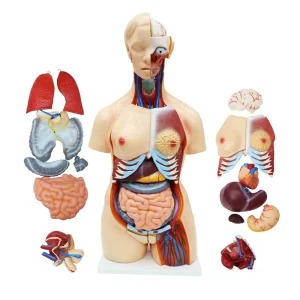
Torso, organ, heart, brain and muscle models with numbered structures for lectures and patient education.
View rangeBiology Prepared Slides and Accessories
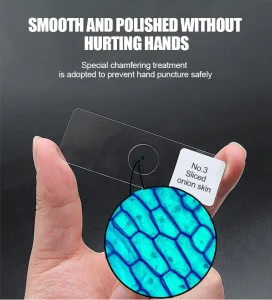
Histology, botany and zoology prepared slides plus storage and microscope accessories for biology labs.
View rangeDental Tools and Equipment
Dental teaching models, clinic lights, LED whitening units and endodontic instruments for training and practice.
View rangeGeneral Teaching Models
Science demonstration models for primary schools, secondary schools and education equipment tenders.
View rangeHospital Furniture and Equipments
Stainless steel examination couches, stretchers, walkers and shower chairs built for daily clinical use.
View rangeHospital Machine and Tools
Diagnosis and treatment devices and practical tools for wards, clinics and emergency departments.
View rangeMedical Apparatus and Instruments
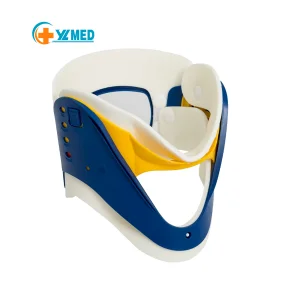
Emergency splints, extrication devices, cervical traction and rehabilitation instruments.
View rangeMedical Nursing Model
Adult, child and neonatal CPR manikins, ACLS simulators and AED trainers for skills assessment.
View rangeSkeleton Models
Life-size and desktop skeletons, skulls, spines and joint models for osteology teaching.
View rangeSuture Pads and Kits
Realistic skin suture pads and complete instrument kits for surgical and wound-closure practice.
View rangeFeatured CPR, Emergency & Rehabilitation Equipment
Best-selling simulation manikins, first-aid devices and mobility aids requested by training centres, ambulance services and healthcare distributors.












Need Specifications, a Price List or a Tender Package? We Reply Within 24 Hours.
Tell us your target market, quantities and certification requirements. Our product specialists will recommend suitable models, share detailed specifications and propose the most economical shipping plan for your order.



A Six-Decade Manufacturer Trusted by Educators and Clinicians
Founded in 1958, Henan Yulin Edu. Project Co., Ltd. has grown into a well-known educational and medical equipment supplier that integrates scientific research, production and sales. With registered capital of RMB 120 million and more than 200 professional employees, we manage product development, manufacturing, inspection and export from our base at No. 8 Daoqing Road, Hongqi District, Xinxiang.
Our goal is to fully satisfy every customer through dependable quality and attentive service, while continuously developing the skills of our team so that each project is handled by experienced people.
Why Distributors and Institutions Partner with Yulin Medical
Four strengths overseas buyers consistently cite when they move long-term orders to our factory.
24/7 Responsive Service
Our team is online 24 hours a day, 7 days a week. Whatever your time zone, you receive a detailed answer as quickly as possible — typically within 24 hours.
Design & Packaging Team
In-house specialists deliver professional product design and private-label packaging that strengthens your brand and increases the added value of every unit you sell.
Professional Expertise
Our vision is to provide the most professional educational and medical training products from mainland China, built under ISO 9001 process control and decades of category knowledge.
60+ Years of Supply Stability
A factory with over 60 years of history and a deeply integrated partner supply chain lets us meet one-stop demands and keep lead times predictable on repeat orders.
A Transparent 5-Step Process for Overseas Buyers
From first conversation to delivery, every stage has a named contact and clear documentation, so you can plan stock, tenders and training schedules with confidence.
Share Requirements
Send product types, quantities, target market and any tender or certification needs.
Catalog & Proposal
Receive matched models, specifications, packaging options and shipping suggestions.
Sample Evaluation
Test samples with your instructors or clinicians before confirming bulk production.
Production & QC
Manufacturing and inspection follow our ISO 9001 quality management system.
Export & Support
Protective export packing, delivery coordination and responsive after-sales service.
News & Practical Insights from Our Specialists
Exhibition updates and hands-on guidance written by the team that designs and builds our products.

Do You Really Know How to Observe Biological Prepared Slides?
Many plant and animal cell structures can only be studied under a microscope, which makes prepared biological slides essential in every biology lab. Yet many users never get the full value from them. Our specialists explain how to handle, focus and store slides correctly so students see clearer detail and your slide sets last for years.

The 5th Henan Provincial Educational Equipment Expo Concludes Successfully
Themed “Digital Leading Innovation and Development”, the expo reached a record 50,000 m² with 600+ brands and 10,000+ products on display, showcasing the latest educational equipment.

Inside Our Product Showroom
A look at the medical teaching models and training equipment buyers can inspect in person when visiting our Xinxiang facility.
Frequently Asked Questions from Importers
Straight answers to the questions procurement managers ask most before placing a first order, plus additional Q&A for OEM AED and service programmes.
Is Yulin Medical a manufacturer or a trading company?
What quality certification do you hold?
Do you support OEM, private label and custom packaging?
How do I choose the right CPR training manikin?
How quickly will I receive a reply?
What is the difference between an AED trainer and a live AED?
Can Yulin Medical support OEM or private-label AED-related programmes?
Which documents should distributors request for an AED tender?
How do you control quality across mixed-category orders?
What should a buyer plan for a public access AED programme?
Can training manikins, AED trainers and hospital equipment be shipped together?
How does Yulin Medical approach service after the order?

Henan Yulin Edu. Project Co., Ltd. — ISO 9001 certified manufacturer of medical teaching models, simulation manikins and hospital equipment.
Products
Contact
- No. 8, Daoqing Road, Industry Park, Hongqi District, Xinxiang, Henan, China
- 0086-13503800666
- [email protected]
- Sitemap
Eight Additional Products Matching the Given Sourcing List
The final eight products complete the supplied 16-product display. All images, titles and destination URLs are retained, and every product anchor is presented with a clear button style for mobile and desktop use.