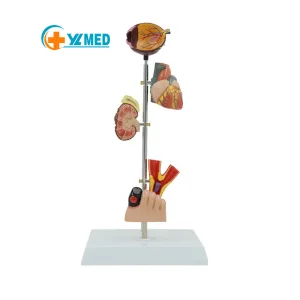
Related Medical Training & Hospital Products for Ostomy Care Programs
Procurement teams often combine ostomy education models with broader anatomy, nursing, emergency and hospital equipment. The eight products below are part of the Yulin Medical range and can be evaluated together with a custom ostomy training model project.
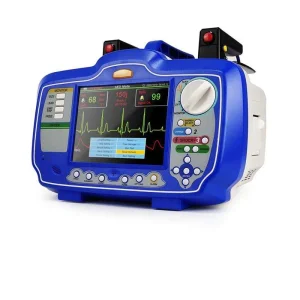
Wholesale High Quality Hospital Heart Pacemaker Portable Emergency Defibrillation Apparatus for ICU Manufacturer, Factories
View Product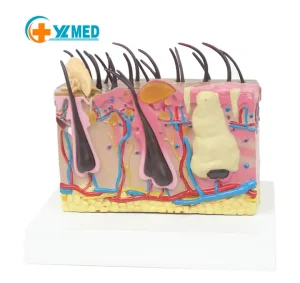
OEM Hot selling Animal skin anatomical model Canine skin insect bite pathological model for anatomy Manufacturers, Service
View Product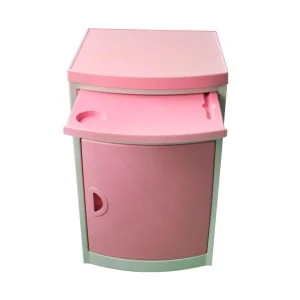
OEM On Sale Hospital Furniture ABS Beside Cabinet Locker Bedside Table With Casters in Stock Manufacturer, Service
View Product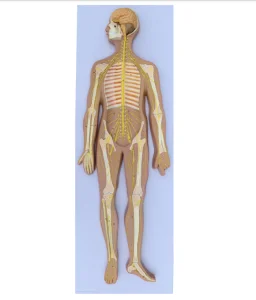
China Scientific Human Anatomy Educational Model, Central Nerve, Brain, Spinal Cord, Brain Anatomical Human Model Nervous System Cerebral-Medical Training Factories, Service
View Product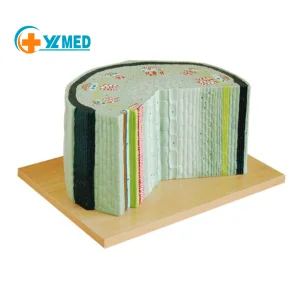
Wholesale Dicotyledonous plant stem model Factories, Service
View Product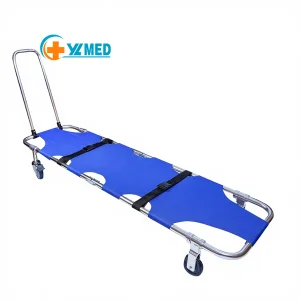
OEM Medical Aluminum 4-Wheel Foldable Stretcher Trolley Drawbar Emergency Portable Bearing 350 lb Capacity for Hospitals Sports Manufacturers, Factory
View Product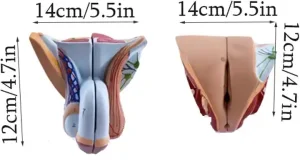
Wholesale Durable Educational Model Professional Version Male and Female Reproductive Structure Model Detachable Human Organ Anatomy Model Manufacturer, Factory
View Product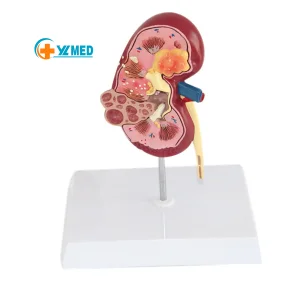
ODM Anatomy urology special renal lesion model human kidney anatomy model Manufacturer, Service
View ProductWhat a Professional Ostomy Training Model Must Solve
An ostomy training model is not simply an anatomical display item. It is a task trainer that helps learners practise pouch selection, skin protection, leakage management, peristomal assessment and patient communication. ODM manufacturing must therefore combine anatomical fidelity with repeatable, cleanable and replaceable training surfaces.
Stoma Type & Abdominal Anatomy
Buyers can define colostomy, ileostomy or urostomy configurations, stoma position, protrusion, abdominal contour and skin-fold detail. A well-designed model should support realistic pouch adhesion and removal without damaging the training surface.
Skin-Like Material & Cleanability
Material selection affects adhesive performance, cleaning time, colour stability and service life. We discuss soft-touch surfaces, latex-free options where appropriate, cleaning protocols and replacement modules before the prototype is approved.
Modularity & Serviceability
Replaceable stoma inserts, abdominal pads, pouch rings and repair parts reduce total cost of ownership. For distributors, modular design also simplifies spare-part stocking and after-sales support across multiple markets.
Training Workflow Alignment
Model features should map to actual teaching steps: assessment, measuring, skin protection, pouch fitting, emptying, leakage response and patient education. This makes the model easier to integrate into nursing curricula and hospital competency programs.
OEM / ODM Customization
Customization may include skin tone, stoma layout, model base, carry case, instruction inserts, barcode labels, private-label packaging and multilingual user guides. Our in-house design team supports product presentation for distributor brands.
Documentation & Quality Control
Yulin Medical has held ISO 9001 certification since 2008. Product-specific inspection reports, material declarations and tender documents can be discussed on a project basis, with clear scope before quotation.
Why Buyers Are Adding Ostomy Care Simulators to Long-Term Programs
Demand is moving from one-off classroom purchases toward repeatable training programs. Hospitals, distributors, universities, home-care organizations and public health tenders need consistent models, stable documentation and localizable packaging rather than isolated sample purchases.
The commercial opportunity is not limited to the stoma product itself. Ostomy education intersects with nursing simulation, patient education, home care, surgical recovery and community health. For a distributor, a custom ostomy training model can become a differentiated SKU that complements anatomy models, CPR manikins, hospital furniture and consumables training aids.
Procurement teams increasingly evaluate suppliers on total program reliability. They ask whether the training surface will survive repeated pouch adhesion, whether replacement parts can be supplied, whether the model can be cleaned between learners, whether packaging supports retail or tender distribution, and whether the supplier can provide consistent batches over several years. These questions shift the buying decision from unit price alone to total cost of ownership and training outcome support.
For ODM projects, the most valuable information gain is often early specification clarity. A buyer should define the learner group, stoma types, expected weekly usage, cleaning method, language requirements, packaging format and regulatory route before tooling. This reduces rework, protects launch schedules and makes the quotation more comparable. Yulin Medical’s role is to translate these requirements into a manufacturable model, recommended material set, sampling plan and export-ready packaging solution.
Public tenders and private-label programs also require documentation discipline. Model dimensions, material descriptions, packing quantities, carton sizes, gross weight, warranty scope and spare-part lists should be agreed in writing. When documentation is incomplete, distributors face delays at customs, in hospital procurement review or during clinical evaluation.
Procurement Checklist for Ostomy Training Models
- Define stoma types, abdominal contour and learner level.
- Confirm cleaning method, adhesive compatibility and expected lifespan.
- Plan replaceable modules and spare-part stocking.
- Specify packaging, language, barcode and private-label requirements.
- Map the local regulatory route and required documentation.
- Request sample evaluation, lead time and mixed-order options.
From Classroom to Home Care: Where Ostomy Training Models Create Value
Different buyers need different levels of realism, portability and documentation. A medical school may prioritize repeatable skills assessment, while a distributor needs catalogue differentiation and export-ready packaging. A hospital group may need localized in-service training supported by replacement parts.
Nursing Schools & Simulation Centers
Models support skills labs, OSCE stations and stoma-care demonstrations. Multiple units help maintain learner-to-model ratios, reduce queue time and improve consistency between instructors.
Hospitals & Stoma Clinics
Clinical educators use task trainers for staff orientation, patient-family teaching and competency refresh. Durable surfaces and easy cleaning are critical when models are shared across departments.
Home Care & Community Programs
Portable models help community nurses and home-care teams explain pouch changes, leakage prevention and skin protection in patient homes or outreach settings.
Medical Distributors & Private Label Brands
ODM models can be branded with private-label packaging, instructions and product photography. This helps distributors build a local catalogue without developing tooling from zero.
NGOs & Public Health Tenders
Training programs supported by public funding often require predictable specifications, export packing and documented batch consistency. Clear scope and photo-based inspection records reduce risk.
Patient Support & Device Companies
Brands that provide patient education can pair training models with pouching demonstrations, caregiver education and train-the-trainer kits to improve patient confidence after discharge.
A Buyer-Led Technology Roadmap for Ostomy Simulation
Technology should solve a training problem, not create maintenance complexity. Our ODM roadmap is organized around four practical stages: anatomical fidelity, modular task training, feedback-enabled learning and sustainable localization.
Phase 1 · Anatomical Fidelity
Refine abdominal shape, stoma protrusion, skin texture and anatomical landmarks. The target is credible handling during pouch fitting, not visual realism alone.
Phase 2 · Modular Training
Develop replaceable stoma inserts, abdominal pads and skin-protection layers. Modularity improves serviceability and allows one base platform to serve multiple course levels.
Phase 3 · Feedback-Enabled Learning
For advanced programs, QR-linked instructions, checklists or optional sensor concepts can be evaluated. We only add electronics when cleaning, durability and after-sales support are clearly defined.
Phase 4 · Sustainable Localization
Material efficiency, recyclable packaging, local language inserts and regional spare-part planning can lower total program cost while improving the buyer’s local service reputation.
Future demand will likely be shaped by three forces: more distributed clinical training, stronger patient education requirements and greater scrutiny of healthcare procurement documentation. A model that is easy to clean, easy to repair and easy to explain has an advantage over a complex simulator that sits unused because instructors lack time or spare parts.
For distributors, the best roadmap is often a staged catalogue: an entry-level model for demonstrations, a standard ODM model for nursing programs and a modular advanced platform for hospital groups. This approach lets buyers test demand before committing to larger tooling or inventory. Yulin Medical supports this staged route with sampling, packaging design, production planning and export coordination.
Manufacturing Reality Behind an ODM Ostomy Training Model
Medical training models combine hand assembly, moulding, surface finishing, colour matching, packing and documentation. The industrial challenge is not only making one sample, but keeping repeat orders consistent while managing freight volume, spare parts and private-label packaging.
Supply Chain Visibility
Raw material, component and packing suppliers must be coordinated before launch. Buyers should ask for a bill of materials summary, packing dimensions and inspection plan.
MOQ & Private Label
MOQ depends on material, packaging, custom colour and logo method. Early agreement on private-label artwork, instructions and barcode format avoids late-stage changes.
Logistics & Consolidation
Mixed-category orders can be consolidated with anatomy models, CPR manikins, hospital furniture or dental tools. One shipment and one contact point simplify import planning.
Pricing & Total Cost
The purchase price is only one factor. Cleaning time, replacement frequency, carton volume and after-sales support also affect the landed cost and long-term margin of a program.
Localization Is More Than Translation
For global distributors, localization covers language, packaging, storage conditions, regulatory classification, spare parts and training support. Clear scope protects both the buyer’s brand and the end user’s training experience.
Language & Labeling
Private-label labels, instruction sheets and marketing copy can be prepared in agreed languages. Buyers remain responsible for final local claims, translations and regulatory wording approval.
Packaging & Storage
Packaging can be designed for distributor warehousing, retail display or tender delivery. Carton strength, humidity protection, barcode placement and drop-test requirements should be specified early.
Regulatory Mapping
Training models may be classified differently by market and intended use. Buyers should confirm import classification, labeling and claims with local regulatory specialists before launch.
Quality Management
Our quality management system has been ISO 9001 certified since 2008. Inspection records, material information and product-specific documents can be discussed for tender and import review.
Spare Parts & Service
Agree which modules are replaceable, how they are ordered and what useful life is expected. A simple spare-part plan can prevent expensive whole-unit replacement in training centers.
Clinical Feedback Loop
Instructor feedback should be captured during sampling: adhesion behaviour, cleaning difficulty, handling comfort, storage and learner comprehension. These observations guide final production.
Yulin Medical: A Six-Decade Manufacturer for Global Buyers
Henan Yulin Edu. Project Co., Ltd. has built educational and medical training equipment in Xinxiang, China, since 1958. Our motto remains simple: quality first, service first. With ISO 9001 certification since 2008 and more than 200 professional staff, we support distributors, medical universities, nursing colleges, hospitals and procurement teams with documented production and export coordination.
24/7 Responsive Service
Our export team is online seven days a week and usually replies within 24 hours with catalogues, specifications, packing data and shipping options.
Design & Packaging Team
In-house specialists support private-label packaging, product presentation and distributor branding to increase resale value and shelf appeal.
Professional Expertise
We integrate scientific research, production and sales for educational and medical training products, with practical knowledge across anatomy, nursing, dental and hospital categories.
60+ Years of Supply Stability
A long factory history and a stable partner supply network help meet one-stop demands and keep repeat-order lead times predictable.
From Requirement to Export: How Your Ostomy Training Model Project Runs
A clear process keeps sampling, tooling, packaging and shipment aligned. Each stage should produce documented decisions so that both buyer and factory can plan with confidence.
Share Requirements
Send product type, stoma configuration, learner group, quantities, target market, packaging and documentation needs.
Catalog & Proposal
Receive matched models, specifications, customization options, packaging suggestions and shipping advice.
Sample Evaluation
Test the sample with instructors or clinicians for realism, cleaning, adhesion behaviour and training workflow.
Production & QC
Bulk manufacturing and inspection follow the agreed specification and our ISO 9001 quality management system.
Export & Support
Protective packing, delivery coordination, spare-part planning and responsive after-sales communication.
Complete Sourcing for Medical Education & Clinical Use
An ostomy training program may need anatomy models, nursing simulators, prepared slides, dental teaching tools or hospital equipment in the same purchase plan. Yulin Medical supports mixed-category sourcing from one accountable manufacturer.
Practical Guidance for Medical Training Equipment Buyers
Our specialists publish practical guides on using, choosing and maintaining educational and medical training products. These resources help procurement teams brief internal stakeholders more clearly.
Prepared Slide Observation Guide
Clarity matters in biology labs. Our article explains handling, focus and storage so prepared microscope slides deliver better learning value.
Visit Hot BlogExhibition & Product Showcase
Review updates from educational equipment expos and product showroom highlights to compare new training models before sourcing.
Read UpdatesGlobal Service & Export Support
Learn how our export team coordinates catalogues, samples, shipping advice and mixed-category orders for overseas buyers.
View Global ServiceFull Product Catalogue
Request specifications for anatomy models, nursing simulators, hospital equipment, dental tools and other categories.
Request CatalogFrequently Asked Questions About ODM Ostomy Training Models
Direct answers for distributors, educators and procurement managers evaluating a custom stoma care training model project.
Is Yulin Medical a manufacturer or a trading company?
What is an ODM ostomy training model?
Can we customize stoma type, skin tone, language and packaging?
What quality certification does Yulin Medical hold?
How do I choose the right model for my market or learner group?
What is the typical ODM process and lead time?
Do you support OEM, private label and mixed-category orders?
How quickly will I receive a reply?
Request an ODM Ostomy Training Model Quotation
Tell us your target market, learner group, stoma configurations, estimated quantity and packaging requirements. Our team will recommend a practical specification, share relevant product information and outline the next sampling steps.
More Medical Training & Hospital Products from Yulin Medical
These additional products support cross-category sourcing for medical schools, distributors, hospitals and training centers. All product images, titles and links are preserved for direct evaluation.
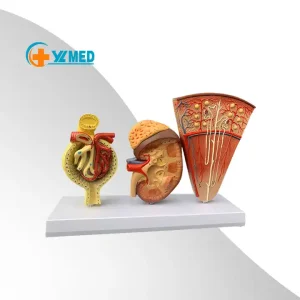
ODM Medical nephron glomerulus enlarged kidney anatomy Human kidney model urinary system endocrine analysis Medical model Pricelist, Service
View Product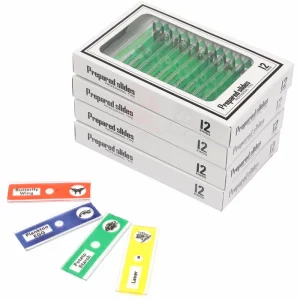
China 12pcs/set Plastic Prepared Microscope Slides Animals Insects Plants Flowers Sample Microscope Slides with Specimens for Kids Learning Pricelist, Service
View Product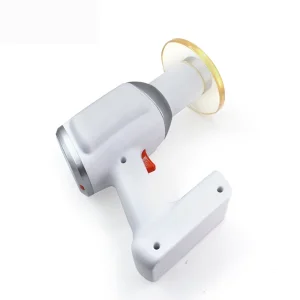
OEM New Packaging Medical Equipment Xray Dental Dental Imaging Portable X-ray Dental Xray Camera Machine Manufacturer, Quotes
View Product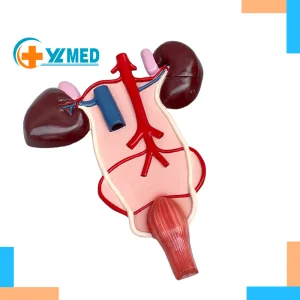
OEM Model of Horse Kidney and Urine Anatomy Teaching Aids Model of Horse Kidney Urinary Structure Model Factory, Pricelist
View Product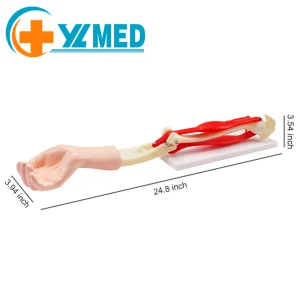
OEM Medical science elbow joint movement model can be used in school biology teaching equipment body elbow joint structure detail Factories, Quotes
View Product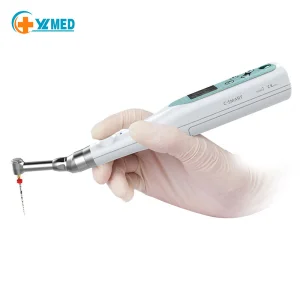
Wholesale Root canal length measuring instrument dental root measuring machine root canal expanding machine expands while measuring Factory, Service
View Product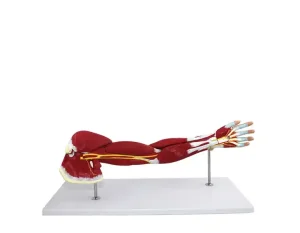
China Top Quality Anatomical Torso Model Human Medical Anatomical Model 7 Parts Muscle Arm Models Factories, Service
View Product