1 / 4
OEM Medical science elbow joint movement model can be used in school biology teaching equipment body elbow joint structure detail Factories, Quotes
Product Description
Product
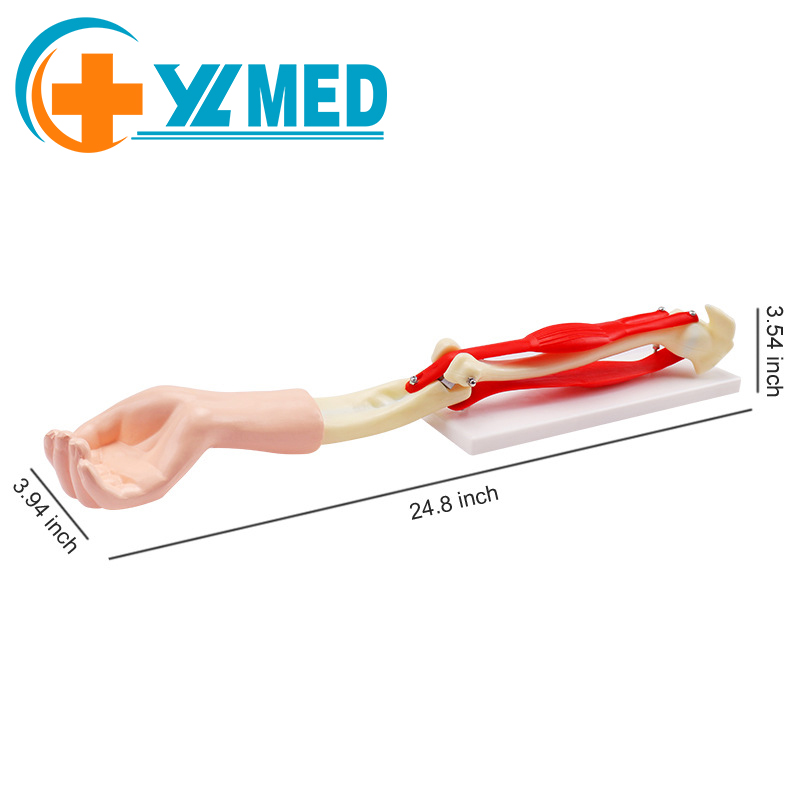
Elbow joint model
Size
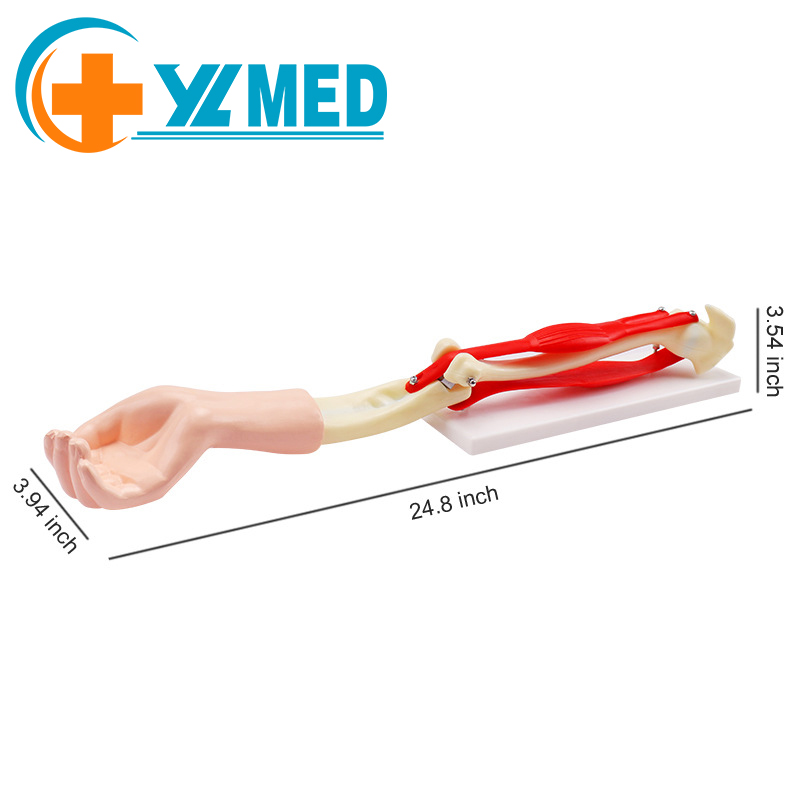
65 × 11 × 11 cm
Weight
2 kg
Application
Medical Training School
Teaching Content
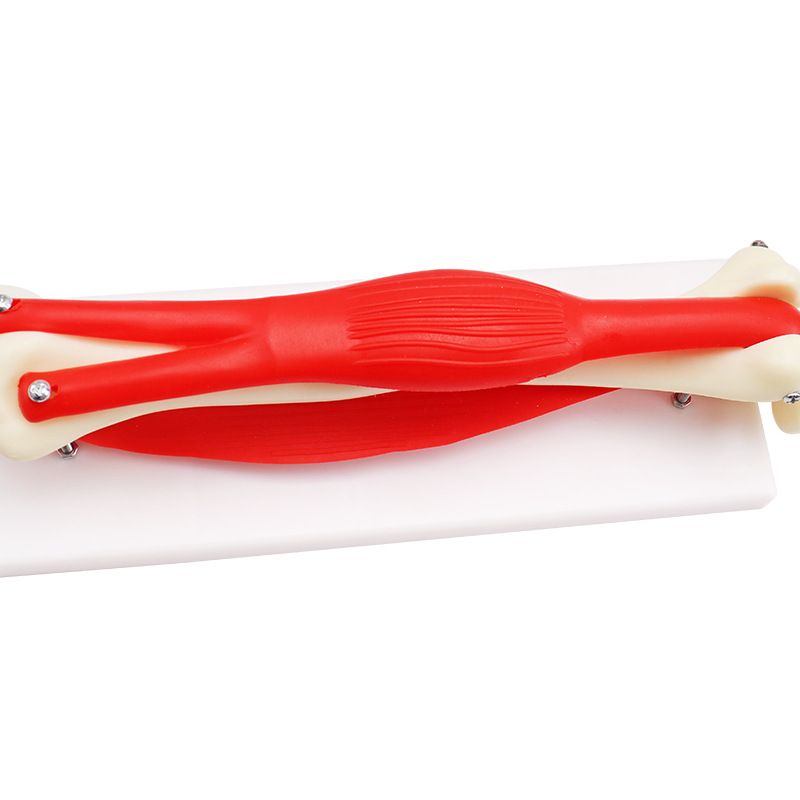
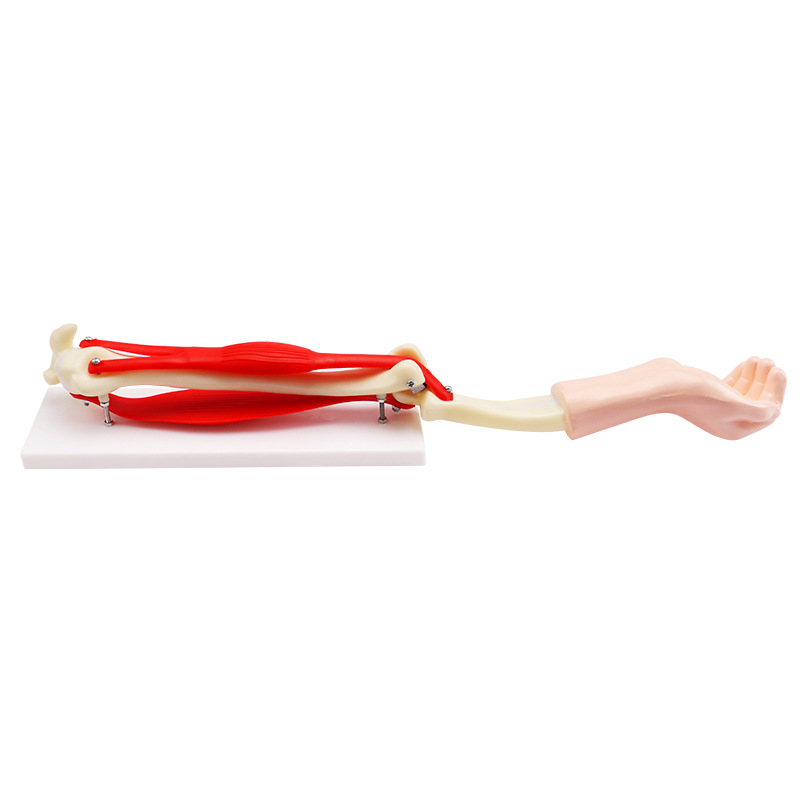
The demonstration helps students build a clearer understanding of the starting and ending points of the biceps and triceps. Because the muscles cross the elbow joint, students can see that elbow joint movement is relatively fixed at the elbow–humerus position and can mechanically understand the lever action that rotates around the axis to produce movement.
Presentation Method
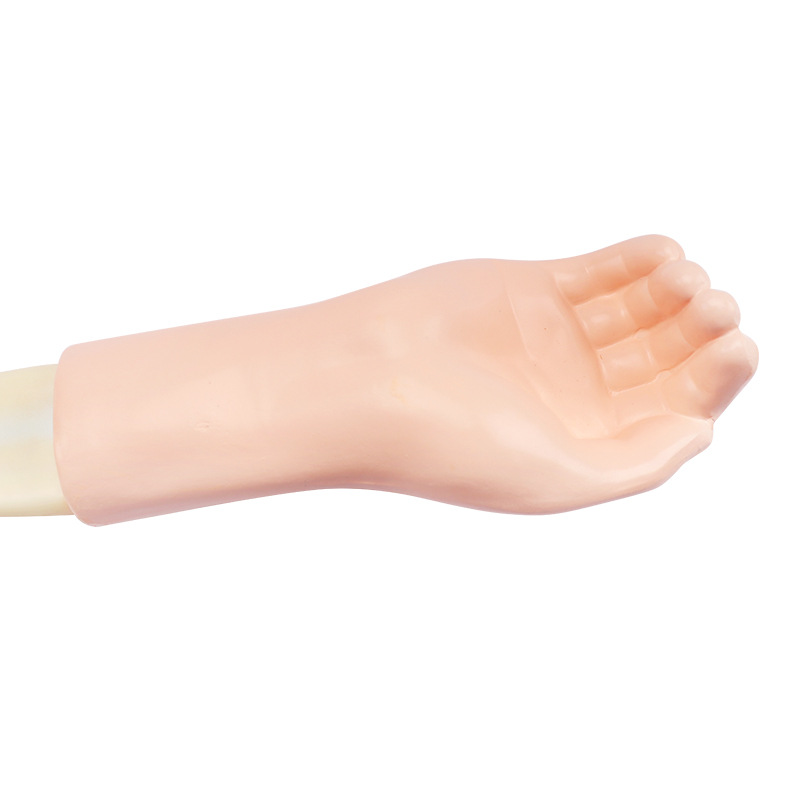
The skeleton model is mounted on the chassis support, with the upper and lower muscles hooked to fixed positions at the two ends of the model. To demonstrate, hold the dial with one hand and pull the model hand up and down with the other. This allows observation of the relationship between muscle relaxation and contraction in the biceps and triceps and the extension movement, and helps students understand the rotating lever action caused by rotation of the axis.
FAQ
What is this elbow joint model used for?
It is used for Medical Training School teaching and demonstrations. It helps learners understand elbow joint movement, the biceps and triceps, and the related lever action.
What are the model’s dimensions and weight?
The model measures 65 × 11 × 11 cm and weighs 2 kg.
Which muscles does the model demonstrate?
The model demonstrates the starting and ending points of the biceps and triceps and shows that these muscles cross the elbow joint.
How is the model set up for a demonstration?
The skeleton model is mounted on the chassis support, and the upper and lower muscles are hooked to fixed positions at the two ends of the model. The user holds the dial with one hand and pulls the model hand up and down with the other.
What can learners observe during the demonstration?
Learners can observe the relationship between the relaxation and contraction of the biceps and triceps and the extension movement. The demonstration also helps explain the rotating lever action caused by rotation of the axis.
Who is this model suitable for?
It is suitable for Medical Training School teaching and demonstration use.