 Yulin Medical · Since 1958
◈ Whitepaper · Export & Product Engineering Desk · Updated 2025
ODM Medical Syringe Pump Quotes & Service
OEM/ODM syringe pump sourcing with quote-ready specifications, compliance documentation, China Factory 4.0 supply-chain planning, and lifecycle service for distributors, hospital groups, tenders, and home-care operators.
◈ Factory-Direct Medical Equipment
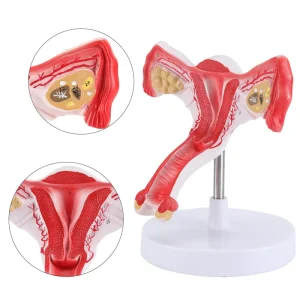
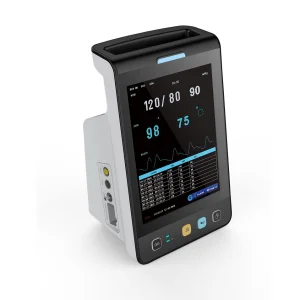
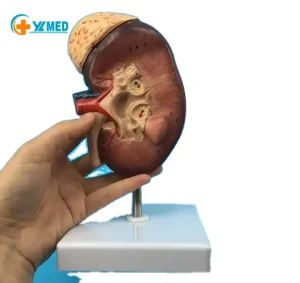
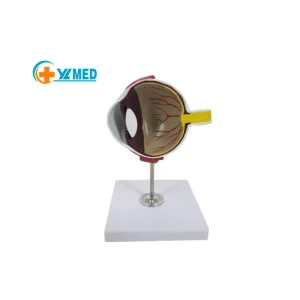
Featured Product Portfolio for ODM Programs: Set 1 of 2
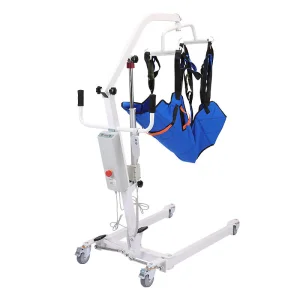
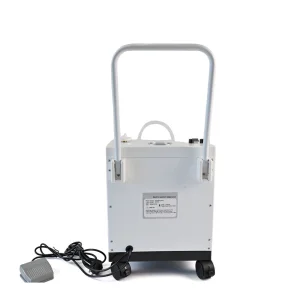
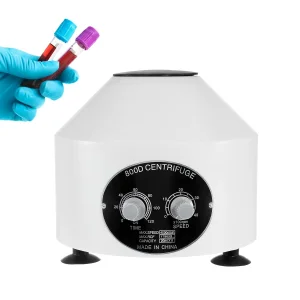
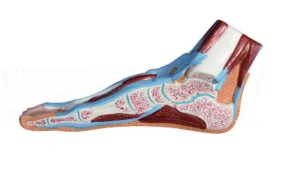
These eight items are part of Yulin Medical’s broader ODM medical equipment portfolio. They demonstrate the factory-direct discipline—private-label packaging, mixed-category consolidation, documented QC, and responsive export service—that global buyers also evaluate when requesting an ODM medical syringe pump quote or service proposal.
◈ Buyer Whitepaper
Why a Syringe Pump Quote Is a Clinical Risk and Lifecycle Decision
A syringe pump is not a commodity pump. It is a controlled infusion device whose accuracy, occlusion alarms, battery behavior, drug-library logic, and service history can affect patient safety. A serious ODM quote therefore answers price, performance, compliance, supply continuity, and after-sales responsibility together.
Medical syringe pumps are used for anaesthesia, analgesia, chemotherapy, neonatal nutrition, vasoactive drugs, and other high-alert infusions where small flow errors can become clinically meaningful. For procurement teams, the phrase “ODM medical syringe pump quotes” combines three different searches: a price request, a manufacturing capability audit, and a service-risk assessment. Suppliers that answer only the price question leave the buyer to discover accuracy, alarm logic, battery performance, drug-library control, cybersecurity, and spare-parts strategy later—often after a tender has been awarded.
The economic logic is equally important. The purchase price of a syringe pump is only one part of the lifecycle cost. Calibration, battery replacement, preventive maintenance, software updates, clinical training, spare parts, and downtime can outweigh the initial saving of a low-cost unit. A credible ODM quote should make these costs visible, or at least specify the assumptions behind warranty, service level, and spare-parts availability.
Yulin Medical’s role in this conversation is as a factory-direct medical equipment manufacturer and ODM coordination partner with a long manufacturing history. The company was founded in 1958, has operated an ISO 9001 quality management system since 2008, and manages 10 product lines from its Xinxiang base. For syringe pump projects, buyers should confirm device-specific regulatory status, software ownership, and service scope before committing; the same discipline used in its teaching-model, hospital-furniture, and instrument lines—documented QC, private-label packaging, and mixed-category export coordination—is the right benchmark for evaluating the ODM response.
Information gain for buyers: request a 12-point quote anatomy and a total-cost-of-ownership model before comparing unit prices. The lowest unit price is rarely the lowest lifecycle cost.
Enterprise buyers should also ask who is the legal manufacturer, which test standards are applied, how firmware changes are controlled, and what happens when a hospital’s biomedical department needs calibration support five years after installation. These questions turn a generic price list into an auditable service agreement.
Quote Anatomy: 12 Signals of a Serious ODM Supplier
- Intended use and clinical environment, including ICU, theatre, NICU, oncology, or home care.
- Flow range, bolus modes, KVO rate, and accuracy specification under defined test conditions.
- Occlusion, air-in-line, battery, alarm, and infusion-complete logic.
- Drug library, connectivity, interoperability, and cybersecurity documentation.
- Regulatory class, legal manufacturer, and market-specific registration pathway.
- Test standards, calibration method, and batch traceability records.
- Preventive maintenance plan and calibration interval.
- Spare-parts list, battery replacement policy, and wear-part pricing.
- MOQ, tooling/NRE, sample cost, lead time, and production capacity.
- Packaging, labels, manuals, language, and private-label artwork control.
- Incoterms, warranty, quote validity, payment terms, and currency assumptions.
- After-sales response time, training, and escalation path.
▣
Distributors & Private Label
They want defensible margins, reliable packaging, registration support, and a service story that protects their brand after the first shipment.
✚
Hospital Groups & Tenders
They compare clinical acceptance, cybersecurity, spare-parts depth, training, and total lifecycle cost—not only the landed unit price.
⌁
Home-Care Operators
They prioritize portability, battery runtime, simple interfaces, remote support, and durable accessories for community and home infusion.
◫
Biomedical Service Partners
They need calibration procedures, error-code documentation, spare-part availability, and training that keeps fleets running across regions.
◈ Market & Technology Trends
Medical Syringe Pump Industry Trends: What Changes the 2025–2030 RFQ
Syringe pump procurement is moving from isolated device purchasing toward connected infusion ecosystems. That shift changes the questions buyers ask during an ODM quote and increases the value of suppliers who can document design, software, calibration, and service control.
⚙
Closed-Loop Infusion Becomes a System Purchase
Hospitals increasingly expect syringe pumps to integrate with infusion management, electronic medical records, and dose-error-reduction software. ODM quotes must define interfaces, responsibilities, and validation boundaries.
⌘
Cybersecurity Moves into the RFQ
Network ports, firmware updates, password policy, logging, and vulnerability response are now tender questions. A device that cannot be maintained securely becomes a fleet liability.
⌂
Home and Ambulatory Infusion Expand
Decentralized care increases demand for lightweight pumps, long battery runtime, simple training, and remote troubleshooting for nurses and patients outside the hospital.
◈
Micro-Flow Accuracy and Pediatric Safety
NICU, pediatric, and high-alert drug delivery require precise low-flow performance, clear alarm escalation, and accessories that reduce setup error.
♻
Serviceability and Circular Design
Battery replacement, modular boards, repairable housings, and clear spare-part paths reduce waste and support long-term hospital maintenance budgets.
▤
Software Validation and Change Control
Firmware revisions affect validation, training, and regulatory files. Buyers should ask how software changes are documented, tested, and communicated after launch.
◈ Global Procurement Demand
Global Enterprise Procurement Demand: From Unit Price to Lifecycle Risk
Aging populations, chronic disease management, surgical volumes, oncology care, neonatal services, and home infusion all support long-term demand for infusion devices. At the same time, enterprise buyers are consolidating suppliers and asking for stronger documentation, local service, and supply continuity.
◆
North America & Europe
Replacement cycles, cybersecurity review, clinical evaluation, and service-network depth dominate. Buyers expect clear regulatory status, technical files, and lifecycle support.
▣
Middle East & Africa
Tender-driven projects value rugged accessories, training, spare-parts availability, and documentation that supports import and hospital acceptance.
⌁
Asia-Pacific
Volume growth, local assembly, home-care expansion, and registration support create demand for flexible ODM terms and regional service planning.
◫
Latin America
Distributor-led procurement often requires Spanish or Portuguese documentation, mixed-container shipping, registration support, and predictable lead times.
Buyer-Priority Index for ODM Syringe Pump Quotes
Clinical accuracy & alarm safety94
Regulatory documentation & traceability91
Service, calibration & spare parts88
Supply continuity & lead-time reliability86
This index is a qualitative planning tool for buyers, not a statistical market forecast. It reflects criteria commonly raised in hospital tenders, distributor due diligence, and ODM technical reviews.
◈ China Factory 4.0
China Factory 4.0: Supply Chain Resilience, Traceability, and Efficiency
China’s advantage in medical device manufacturing is no longer only labor cost. It is the combination of component ecosystems, engineering talent, quality systems, digital traceability, and export experience. For ODM syringe pump programs, Factory 4.0 means the ability to control change—not merely to produce volume.
1958Manufacturing heritage
2008ISO 9001 certified since
200+Professional staff
10Product lines
¥120MRegistered capital RMB
24hTypical reply commitment
▦
Digital Traceability
Batch records, incoming inspection, production history, test data, and packaging labels should be linked so a buyer can trace a device or accessory back to its quality record.
⌬
Automated Test & Calibration
Repeatable test fixtures reduce human variation in flow verification, alarm checks, leak testing, battery cycling, and final inspection.
⇄
Dual-Source BOM & Buffer Stock
Qualified alternates for critical components, buffer inventory for long-lead parts, and change-control discipline protect delivery schedules.
▣
Modular Assembly & Export Packing
Modular production supports private-label variants, mixed-category orders, and export packaging that protects calibration-sensitive devices in transit.
Factory 4.0 Readiness Levers in an ODM Medical Device Program
Batch-level traceabilityHigh
Test automation & calibration controlHigh
Supplier resilience & alternate BOMPlan
Private-label & packaging flexibilityHigh
◈ Commercial & Industrial Context
Global Commercial Reality: Cost, Tariff, Logistics, and Localization
Supply-chain diversification does not remove China from medical device sourcing; it changes how buyers structure risk. Many programs combine China-based component and device production with regional assembly, local documentation, and multi-country service partners.
§
Regulatory Complexity Is Rising
Registration pathways, clinical evidence, cybersecurity review, labeling, and post-market surveillance vary by market. Quotes should separate device cost from registration and local-service cost.
⇌
Incoterms and Tariffs Matter
EXW, FOB, CIF, and DDP choices change landed cost and risk. A transparent quote shows freight assumptions, packaging dimensions, and duty responsibility.
文
Localization Wins Tenders
Local-language manuals, labels, training materials, and service documentation improve hospital acceptance and reduce distributor support burden.
♻
Industrial Buyers Expect Sustainability
Recyclable packaging, repairable modules, battery take-back planning, and longer service life are becoming part of supplier evaluation.
◈ Localized Application Scenarios
Where Syringe Pump Specifications Are Really Tested
The same syringe pump can require very different configuration choices depending on care setting. ODM success depends on matching the device to the workflow, not simply copying a catalog model.
✚
ICU, Theatre & Anaesthesia
High-alert infusions require fast setup, clear alarms, drug-library control, and reliable battery performance during patient transport.
◈
NICU & Pediatric Care
Micro-flow accuracy, small syringes, low occlusion thresholds, and intuitive alarms are critical for neonatal and pediatric safety.
⌁
Oncology & Chemotherapy
Long-duration infusions, dose accuracy, hazardous-drug handling, and service reliability shape pump selection and accessory design.
⌂
Home Infusion & Palliative Care
Portable design, quiet operation, simple training, and remote support matter more than complex hospital-only features.
⚡
Emergency & Ambulance Use
Rugged housings, fast battery charging, vibration resistance, and easy mounting support pre-hospital and inter-facility transfer.
▤
Laboratory, Veterinary & Teaching
Research, veterinary, and simulation labs may need compact controls, calibration transparency, and cost-effective accessories for training.
◈ ODM Quote-to-Service Workflow
From RFQ to Long-Term Service: A 6-Stage Syringe Pump Program
Yulin Medical’s public export process emphasizes clear requirements, matched proposals, sample evaluation, production and QC, then export and support. A syringe pump ODM program adds deeper clinical, software, and regulatory checkpoints.
01
Clinical & Regulatory Brief
Define intended use, market, user profile, accuracy target, accessories, and documentation needs.
02
Engineering Review & BOM
Confirm technical feasibility, component strategy, private-label scope, tooling, MOQ, and target cost.
03
DFM & Prototype
Review design for manufacturing, housing, labels, user interface, packaging, and serviceability.
04
Verification & Validation
Agree test methods, alarm checks, calibration records, software validation, and technical-file responsibilities.
05
Pilot & Mass Production
Approve golden samples, pilot-lot inspection, packaging validation, and production traceability before scaling.
06
Calibration, Service & Lifecycle
Plan spare parts, battery replacement, training, service response, and documentation control for the installed fleet.
◈ Quality & Compliance
Quality, Compliance, and Tender-Ready Documentation
E-E-A-T for medical procurement depends on evidence. Buyers should see how quality is controlled, how records are retained, and how device-specific regulatory claims are supported.
✓
ISO 9001 Since 2008
Yulin Medical’s quality management system has been ISO 9001 certified since 2008, supporting documented process control and continuous improvement.
▤
Device-Specific Technical File
For syringe pump projects, confirm classification, test standards, risk management, software documentation, and the legal manufacturer for each market.
⌘
Traceability & Test Records
Batch records, calibration logs, inspection results, and label-control files should be retrievable for audits, tenders, and post-market investigations.
✚
Service & Calibration Plan
Define response times, spare-parts lists, calibration intervals, training, and firmware-update communication before the first shipment.
Important procurement note: syringe pumps are regulated medical devices in most markets. Buyers should confirm device classification, FDA 510(k), CE/MDR, local registration, cybersecurity documentation, and the exact legal manufacturer before placing an order. Yulin Medical’s ISO 9001 heritage supports manufacturing discipline; device-specific regulatory status must be verified for each ODM project.
◈ Company Authority
Why Yulin Medical Is a Credible ODM Coordination Partner
Henan Yulin Edu. Project Co., Ltd. (Yulin Medical) has built educational and medical training equipment in Xinxiang, China, since 1958. Its quality management system has been ISO 9001 certified since 2008, and its operating motto is “quality first, service first.”
◷
60+ Years of Manufacturing
Founded in 1958, the company combines long production experience with a stable export process for distributors, schools, and hospitals.
✓
ISO 9001 Since 2008
Documented quality management supports inspection, traceability, and repeat-order consistency across medical and educational product lines.
⇄
10 Product Lines, One Shipment
Mixed-category orders can be consolidated with one point of contact, reducing supplier-management cost for distributors and institutions.
⌁
24/7 Responsive Export Service
The export team is online 7 days a week and typically replies within 24 hours with catalogs, specifications, and shipping options.




Do You Really Know How to Observe Biological Prepared Slides?
Our specialists explain how to handle, focus, and store prepared slides correctly so students see clearer detail and slide sets last for years.
Visit Hot Blog
The 5th Henan Provincial Educational Equipment Expo Concludes Successfully
Themed “Digital Leading Innovation and Development,” the expo showcased new educational equipment across a record exhibition area.
Read Insights
Inside Our Product Showroom
A look at the medical teaching models and training equipment buyers can inspect in person when visiting our Xinxiang facility.
Global Service
◈ Related Manufacturing Portfolio
Explore Yulin Medical Product Categories
For distributors building a one-stop medical and educational equipment catalog, these ten product lines support mixed-category sourcing alongside ODM syringe pump program discussions.
◈ Visual Evidence
Yulin Medical Factory, Portfolio, and Related Equipment Visuals
Visual evidence helps overseas buyers evaluate product breadth, showroom presentation, and the manufacturing base behind the export service model.

Medical Teaching & Training Equipment
Factory showcase for medical education and simulation programs.

Anatomy & Skeleton Models
Models for lectures, labs, and patient education.

CPR & Nursing Simulation
Clinical skills training for hospitals and schools.

Hospital Furniture & Equipment
Practical equipment for wards, clinics, and training rooms.

Global Export Service
Support for distributors, tenders, and mixed-category orders.

Anatomy Model Collection
Product presentation for medical teaching portfolios.

Clinical Skills Models
Nursing and emergency training product display.

Hospital Equipment Display
Equipment and instruments for healthcare buyers.












◈ Buyer FAQ
ODM Medical Syringe Pump Quotes & Service: Frequently Asked Questions
Direct answers to the questions procurement managers, distributors, and biomedical teams ask before requesting a quote.
Is Yulin Medical a manufacturer or a trading company?+
Yulin Medical is a manufacturer. Henan Yulin Edu. Project Co., Ltd. was founded in 1958 and operates its own factory in Xinxiang, Henan, China, with more than 200 professional staff. For one-stop orders, the company also coordinates a stable network of long-term partner factories.
What quality certification does Yulin Medical hold?+
The quality management system has been ISO 9001 certified since 2008. Product-specific documentation can be provided on request for tenders and import registration. For syringe pump projects, buyers must separately confirm device-specific regulatory status, technical-file ownership, and the legal manufacturer.
What should an ODM syringe pump quote include?+
A serious quote should specify intended use, flow range, accuracy, bolus and KVO modes, alarm logic, battery runtime, drug-library and connectivity options, regulatory assumptions, test records, calibration method, spare-parts list, battery replacement policy, MOQ, tooling/NRE, lead time, packaging, Incoterms, warranty, quote validity, and after-sales response.
Do you support OEM, private label, and custom packaging?+
Yes. The in-house design team develops private-label packaging and product presentation for distributors to increase shelf appeal and resale value. For regulated devices, artwork, labels, manuals, and claims must align with the regulatory file and market-specific requirements.
How do buyers compare a low price with total lifecycle cost?+
Compare acquisition cost with calibration, battery replacement, preventive maintenance, software updates, clinical training, spare parts, freight, duties, and downtime. A low unit price can become expensive if the supplier cannot provide service documentation, spare parts, or firmware support after installation.
Can Yulin Medical support mixed-category orders?+
Yes. The company manages 10 product lines and can coordinate mixed-category orders into one shipment with one point of contact. This is useful for distributors that combine anatomy models, training equipment, hospital furniture, and other medical products in the same purchase.
How does Yulin Medical support supply continuity?+
A long manufacturing history, ISO 9001 process control, a deeply integrated partner supply chain, and export experience help keep lead times predictable on repeat orders. For syringe pump programs, buyers should also agree on critical-component change control, buffer stock, and service-parts planning.
How quickly will I receive a reply?+
The export team is online 7 days a week and typically replies within 24 hours with catalogs, specifications, and shipping options. For complex ODM projects, a technical review may require additional time after the initial response.
Can you support local registration and tender documentation?+
Documentation support depends on the product and target market. Buyers should provide the destination country, regulatory pathway, tender requirements, and language needs. The supplier can then confirm which technical, quality, labeling, and test documents are available; legal and regulatory review remains the buyer’s responsibility unless a separate agreement is made.
How should service and spare parts be planned?+
Plan calibration intervals, battery replacement, wearable parts, error-code documentation, training, and escalation contacts before launch. A fleet is easier to maintain when the supplier provides a clear spare-parts list, service manual, and firmware-change policy from the beginning.
◈ Talk to the Export Team
Need Specifications, Pricing, or a Tender Package?
Tell us your target market, quantities, certification requirements, and service expectations. The team will recommend suitable models, share specifications, and propose an economical shipping plan.
Email[email protected]
Phone0086-13503800666
WhatsApp+86 135 0380 0666
FactoryNo. 8, Daoqing Road, Industry Park, Hongqi District, Xinxiang, Henan, China
◈ Factory-Direct Medical Equipment
Featured Product Portfolio for ODM Programs: Set 2 of 2
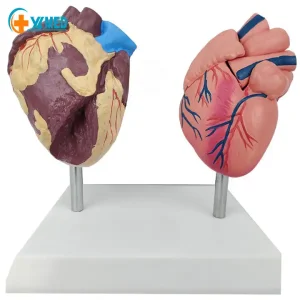
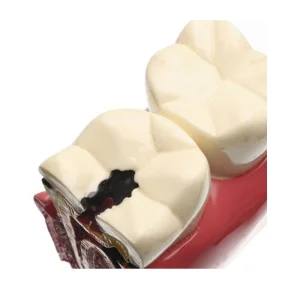
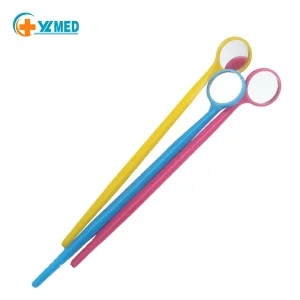
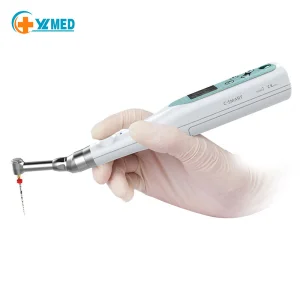
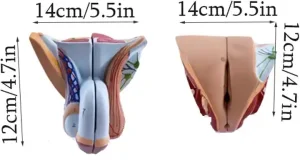
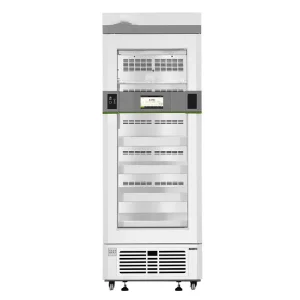
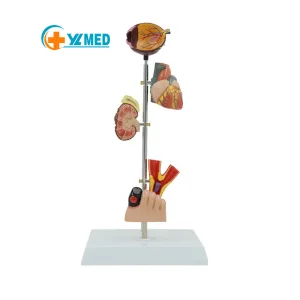
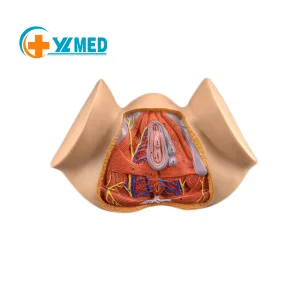
The second set continues Yulin Medical’s broader equipment portfolio. These products show the company’s capability in anatomical models, dental tools, medical display cabinets, and clinical teaching items—useful context for distributors sourcing ODM medical equipment alongside syringe pump program discussions.
For ODM medical syringe pump quotes and service, share your target market, clinical application, expected annual volume, regulatory pathway, and after-sales requirements. The Yulin Medical export team can then confirm suitable next steps, available documentation, and a practical quotation route.