
Featured ODM Product Lines
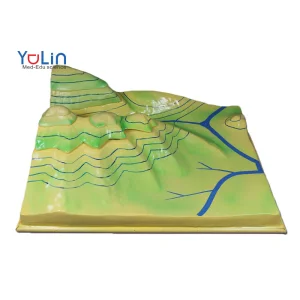
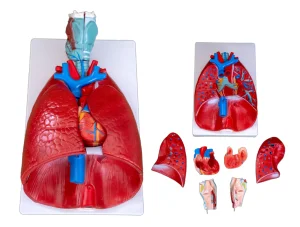
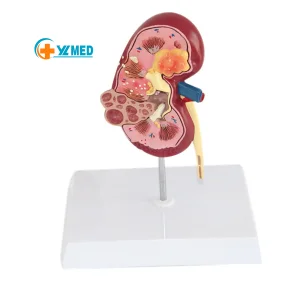
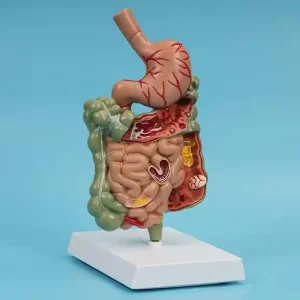
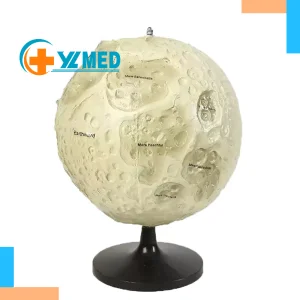
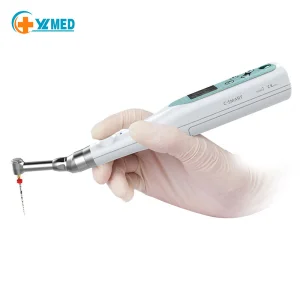
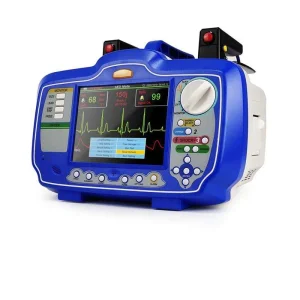
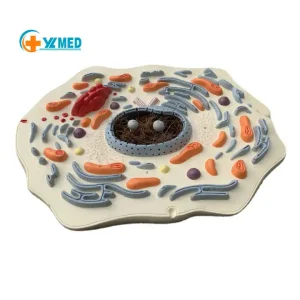
Eight ODM Anatomy & Clinical Models Ready for Private Label
Every item below can be supplied as an ODM configuration: your brand on the base, your language in the manual, your SKU on the export carton. Order a single sample for evaluation or a mixed-carton pilot batch before scaling.
Executive Summary
What Buyers Are Actually Purchasing in a Medical Anatomy ODM Project
A procurement-grade briefing for anatomy laboratory directors, nursing simulation coordinators, hospital education departments and medical equipment distributors.
When an institution buys an anatomy model, it is rarely buying a single object. It is buying anatomical fidelity, batch-to-batch consistency, and a supply chain that will not break in the middle of a tender cycle. Those three requirements are the reason ODM relationships have displaced pure spot purchasing in medical education procurement over the past decade.
This white paper is written for the people who sign off on those orders. It maps the global commercial and industrial reality of medical anatomy manufacturing, separates genuine factory ODM from repackaged trading activity, and sets out a ten-year technology roadmap against the localized deployment scenarios that actually determine model configuration, material grade, packaging standard and after-sales depth.
By the end of it, a procurement manager should be able to do five things with confidence: write an anatomy model specification that a factory can quote without ambiguity; verify whether a supplier owns tooling and assembly lines or merely brokers product; assemble a hybrid physical-digital teaching kit; model total cost of ownership rather than free-on-board price; and build a dual-source strategy that survives freight volatility, tariff shifts and regulatory change.
- Factory-direct supply across ten product lines, from anatomy models to hospital furniture — consolidated into one shipment with one accountable contact.
- Private-label packaging, manual localisation and product presentation that raises resale value in your own market.
- ISO 9001 process control since 2008, with the documentation package tenders and customs authorities expect.
Global Industry Landscape
The Global Medical Anatomy Industry: Commercial & Industrial Conditions
Where demand comes from, where supply is concentrated, and why the price gap between "school grade" and "specialty grade" is wider than most buyers expect.
The anatomical model industry sits at the intersection of two much larger systems: medical education and medical simulation. Demand is not driven by consumer fashion but by structural commitments — student intake quotas, accreditation requirements, hospital skills centres and public health training programmes. That makes the category unusually stable through economic cycles and unusually sensitive to policy change.
Three demand engines dominate. First, capacity expansion in health professions education: every new nursing cohort, every additional medical school seat and every new simulation laboratory generates a predictable multiplier of torso models, skeletons, organ models and training manikins. Second, competency-based accreditation: OSCE stations, AHA and ERC aligned life-support courses, and specialty residency programmes all require standardised, repeatable, replaceable equipment — the opposite of a single display piece. Third, patient education and informed consent: hospitals increasingly use physical and 3D-printed anatomical models at the bedside to explain procedures, which has created a secondary, non-academic demand channel that did not exist two decades ago.
On the supply side, central China — particularly Henan, Jiangsu and Guangdong — has become the world's anatomical model workshop. The cluster around Xinxiang in Henan concentrates PVC injection moulding, hand painting and finishing, metal stand fabrication, printing and export logistics within a road-transport radius of a few dozen kilometres. That density lowers unit cost, shortens prototyping cycles, and allows a mixed container to be consolidated without a middleman. Yulin Medical has operated inside that cluster since 1958, which is precisely why our model range spans both entry-level classroom pieces and specialty pathological models.
The market also operates in three distinct price bands. Entry level means simplified painting, thinner PVC wall, and a basic base — adequate for large-lecture demonstration. Teaching level means numbered structures, removable parts, painted arteries and nerves, and a printed key card — the standard for nursing and undergraduate medical programmes. Specialty level means pathological variation, flexible or dissectible construction, layered vascular detail, and frequently a bespoke configuration. Most procurement disputes originate here: buyers budget at entry level and write specifications at specialty level. A credible ODM factory will quote both bands and explain exactly which anatomical structures change between them.
One further structural point deserves attention. Educational anatomical models are generally not classified as regulated medical devices in the same way as implantable or diagnostic equipment. That reduces the regulatory burden, but it does not remove it: tenders still expect material safety documentation, packaging integrity evidence and proof of a functioning quality management system. ISO 9001 certification has become the de facto minimum entry ticket for institutional supply.
1958Founded
60+Years Manufacturing
200+Professional Staff
¥120MRegistered Capital
2008ISO 9001 Certified
24hReply Commitment
Sourcing Models Compared
OEM, ODM, White Label and Spot Buy: What Each Really Means
The four sourcing routes carry very different costs, timelines and risk profiles — and the wrong one will quietly erode your margin for years.
OEM — Your Design, Our Factory
You supply drawings, moulds or a proprietary structure and the factory produces to your specification. Highest control and highest upfront cost: tooling, sampling and validation all sit on your balance sheet. Best for distributors with a defensible product concept and sufficient annual volume to amortise tooling inside two seasons.
ODM — Our Design, Your Brand
The factory owns the sculpture, mould and finishing process; you select from the platform range and apply your brand, manual, packaging and SKU system. Lead times are short, tooling cost is shared across the factory's existing customer base, and the anatomical sculpt has usually already survived years of classroom scrutiny.
White Label — Packaging Only
The product is purchased unchanged and only the carton, label or manual changes. The fastest route to market and the lowest commitment, but differentiation is thin: your competitor can list an identical item next week. Frequently used as a pilot step before committing to an ODM private-mould programme.
Spot Buy — Price First
One-off purchase from catalogue stock. Excellent for urgent tender fulfilment and small institutional orders, but offers no protection on future availability, colour consistency or replacement-part supply. Use it to fill gaps, never to build a product line.
Industry Trends 2025–2035
Six Forces Reshaping Medical Anatomy Manufacturing
These are not predictions from a marketing deck. They are shifts already visible in specification documents, tender language and factory order books.
1. Digital Twin Pairing
Physical models are being linked to digital anatomy content through QR codes, NFC tags and AR overlay. A student scans the heart model and sees labelled chambers, flow direction and pathology notes on a phone. For ODM buyers this means specifying a content-ready base — a recessed tag pocket or printed code area — even if the digital layer launches a year later.
2. Additive Manufacturing
3D printing has moved from prototyping into production for patient-specific pathology and small-batch museum-grade pieces. Expect hybrid catalogues: injection-moulded standard organs for volume, printed patient-derived models for case-based teaching, priced and shipped separately but ordered on one purchase order.
3. Material Evolution
Phthalate-free soft PVC, recyclable ABS, low-odour paint systems and antimicrobial surface treatments are becoming explicit tender requirements in Europe and North America. Buyers should now request a material declaration sheet alongside the quotation — not after the order is placed.
4. Competency-Based Standardisation
OSCE stations, AHA and ERC aligned resuscitation training, and CBME frameworks all demand equipment that produces comparable performance data across cohorts. The practical consequence is that models must be dimensionally repeatable to the millimetre and replacement parts must remain available for the life of the curriculum.
5. Servitisation of Supply
Models are increasingly sold with a consumable and replacement programme — suture pads, airway components, skin covers, base plates — under an annual agreement. For distributors, this converts a single transactional sale into a recurring revenue line, and for institutions it simplifies budgeting.
6. Supply Chain Resilience
Dual sourcing, regional warehousing and partial assembly outside China are now standard elements of large institutional contracts. Ask any ODM supplier how they would respond to a six-week freight disruption — the answer separates a real manufacturer from a broker.
Localized Application Scenarios
How Anatomy Models Are Deployed Market by Market
The same model number can require three different finishes, two different manuals and completely different packaging depending on where it ships.
North America — Community Colleges & Skills Labs
High-volume, cohort-driven purchasing with a strong preference for numbered, painted models and durable replacement-part availability. Distributors typically hold local stock and expect factory support on private-label cartons and drop-shipping to campus addresses.
Europe — Public Tenders & Documentation
Framework agreements and public procurement dominate. Winning bids hinge on material declarations, packaging recycling compliance and traceable batch records as much as on price. Buyers should expect a full documentation package before award, not after delivery.
Middle East & North Africa — Mass Training
Large-scale first-aid and CPR public programmes generate sustained demand for torso manikins, AED trainers and CPR feedback devices. Ruggedised bases and high-volume packaging reduce damage rates across multi-site training fleets.
Southeast Asia — Private Medical Schools
Rapid expansion of private medical and nursing colleges creates demand for complete starter laboratories: skeletons, torsos, organ sets and histology slides purchased in a single package. Mixed-carton consolidation is the decisive value factor here.
Sub-Saharan Africa — Schools & CHW Training
Two distinct channels: secondary-school biology departments needing affordable cell, plant and human torso models, and community health worker programmes needing durable, low-maintenance training aids. Simplified painting and robust stands outperform high-detail finishes in these conditions.
Latin America & China — Distributor Brands
In Latin America, branded distributor catalogues dominate; in China, standardised residency training and hospital simulation centres drive demand. Both channels reward suppliers who can localise manuals, warranty cards and SKU barcodes rather than shipping generic packaging.
Technology Roadmap
A Four-Phase Route from Physical Models to Hybrid Simulation
A roadmap buyers can actually plan capital expenditure against — with the specification language each phase requires.
Material & Anatomical Refinement
Focus shifts to phthalate-free soft PVC, colour-fast paint systems and tighter sculpt tolerances. Deliverables: material declaration sheets, dimensional repeatability certificates and a documented replacement-part catalogue. Specification language to adopt: "supply must include a part-level BOM with replacement availability commitment of ten years."
Digital Overlay Integration
Physical models gain a standardised digital entry point — a printed QR field or an embedded NFC tag that resolves to hosted anatomy content. Deliverables: content-licensing terms, hosting responsibility, and a fallback physical key card so the model remains fully usable without a phone.
Instrumented & Responsive Models
Embedded sensors and feedback modules move from manikins into organ and procedural models: compression depth, ventilation volume, catheter insertion resistance. Deliverables: calibration protocol, firmware update policy and data-privacy statement for any learner data captured.
Biofidelic & Hybrid Construction
Composite tissue layers, perfusion simulation and patient-derived printed pathology converge into case-specific training assets. Deliverables: regulatory pathway analysis per market, since instrumented and bio-simulating products may cross into device classification territory.
Macro Industry Solutions
Four Turnkey Programmes for Institutional Procurement
Instead of quoting individual part numbers, Yulin Medical scopes complete programmes — equipment list, packaging, documentation and delivery sequencing.
Integrated Anatomy Laboratory
A full dissection and demonstration suite: life-size and desktop skeletons, torsos, regional organ sets, muscular and vascular models, plus storage trolleys. Delivered with an equipment checklist mapped to your curriculum hours, so nothing is bought twice and nothing critical is missing from the first intake.
Nursing OSCE Skills Centre
Adult, child and neonatal CPR manikins, AED trainers, suture pads, injection pads and wound-care models arranged into exam-station kits. Each station ships in a labelled tray with a printed checklist, which dramatically shortens set-up time between OSCE circuits.
Hospital Simulation & Patient Education
Department-level packages for emergency, ICU and outpatient education teams: defibrillation trainers, airway models, vascular access models and bedside patient-education anatomy sets. Combined with hospital furniture and examination equipment on a single consolidated order.
Distributor Private-Label Programme
Curated catalogue of 20–40 fast-moving SKUs, your brand on bases, manuals and cartons, agreed MOQ per item, and a rolling forecast arrangement. Includes artwork templates, barcode allocation guidance and a sample set for your own sales team training.
Complete Product Matrix
Ten Specialised Lines for One-Stop Sourcing
Ten product lines let procurement teams source simulation, laboratory and hospital equipment from one accountable manufacturer instead of managing multiple suppliers.
Quality, Compliance & Documentation
What a Credible ODM Factory Should Be Able to Prove
Certification is a starting point, not a conclusion. These are the artefacts an experienced buyer requests during evaluation.
Our quality management system has been ISO 9001 certified since 2008, and the factory has operated continuously since 1958 with more than 200 professional staff and registered capital of RMB 120 million. That history matters because institutional supply is ultimately a question of continuity: can the supplier still produce the same model and the same replacement parts when your curriculum renews in five years?
Beyond the certificate, four categories of evidence carry real weight in a tender evaluation. Material evidence covers raw-material declarations, soft PVC formulation notes and paint system specifications. Process evidence covers incoming inspection records, in-process checks at the painting and assembly stages, and pre-shipment sampling with photographic records. Packaging evidence covers carton drop-test results, inner foam configuration drawings and container load plans. Commercial evidence covers certificate of origin, packing list accuracy, harmonised system code classification and the warranty wording that will actually be honoured.
Yulin Medical supplies product-specific documentation on request to support tenders and import registration, and our in-house design team prepares private-label artwork, manuals and carton layouts for distributors. Requests for batch photographs, third-party inspection coordination or pre-shipment sample retention are handled as standard, not as exceptions.
Why Partner With Us
Why Distributors and Institutions Partner with Yulin Medical
Four strengths overseas buyers consistently cite when they move long-term orders to our factory.
24/7 Responsive Service
Our team is online 24 hours a day, 7 days a week. Whatever your time zone, you receive a detailed answer as quickly as possible — typically within 24 hours.
Design & Packaging Team
In-house specialists deliver professional product design and private-label packaging that strengthens your brand and increases the added value of every unit you sell.
Professional Expertise
Our vision is to provide the most professional educational and medical training products from mainland China, built under ISO 9001 process control and decades of category knowledge.
60+ Years of Supply Stability
A factory with over 60 years of history and a deeply integrated partner supply chain lets us meet one-stop demands and keep lead times predictable on repeat orders.
How We Work
A Transparent 5-Step Process for Overseas Buyers
From first conversation to delivery, every stage has a named contact and clear documentation, so you can plan stock, tenders and training schedules with confidence.
Share Requirements
Send product types, quantities, target market and any tender or certification needs.
Catalog & Proposal
Receive matched models, specifications, packaging options and shipping suggestions.
Sample Evaluation
Test samples with your instructors or clinicians before confirming bulk production.
Production & QC
Manufacturing and inspection follow our ISO 9001 quality management system.
Export & Support
Protective export packing, delivery coordination and responsive after-sales service.
Who We Are
A Six-Decade Manufacturer Trusted by Educators and Clinicians
Founded in 1958, Henan Yulin Edu. Project Co., Ltd. has grown into a well-known educational and medical equipment supplier that integrates scientific research, production and sales. With registered capital of RMB 120 million and more than 200 professional employees, we manage product development, manufacturing, inspection and export from our base at No. 8 Daoqing Road, Industry Park, Hongqi District, Xinxiang, Henan, China.
Our goal is to fully satisfy every customer through dependable quality and attentive service, while continuously developing the skills of our team so that each project is handled by experienced people. Our working motto has remained unchanged for decades: quality first, service first.
What this means for buyers: one accountable manufacturer for anatomy models, nursing simulators, laboratory slides and hospital equipment — consolidated into a single shipment and backed by an ISO 9001 quality system that has been in continuous operation since 2008.
60+Years of Manufacturing
200+Professional Staff
¥120MRegistered Capital (RMB)
2008ISO 9001 Certified
10Product Lines
24hReply Commitment
News & Insights
Practical Guidance from Our Specialists
Exhibition updates and hands-on guidance written by the team that designs and builds our products.

Lab GuideJune 28, 2023
Do You Really Know How to Observe Biological Prepared Slides?
Many plant and animal cell structures can only be studied under a microscope, which makes prepared biological slides essential in every biology lab. Yet many users never get the full value from them. Our specialists explain how to handle, focus and store slides correctly so students see clearer detail and your slide sets last for years.

ExhibitionJune 28, 2023
The 5th Henan Provincial Educational Equipment Expo Concludes Successfully
Themed “Digital Leading Innovation and Development”, the expo reached a record 50,000 m² with 600+ brands and 10,000+ products on display, showcasing the latest educational equipment.

Showcase
Inside Our Product Showroom
A look at the medical teaching models and training equipment buyers can inspect in person when visiting our Xinxiang facility.
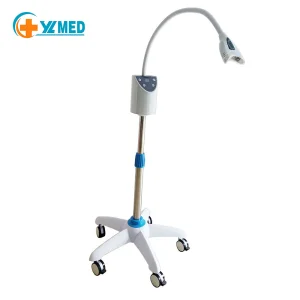
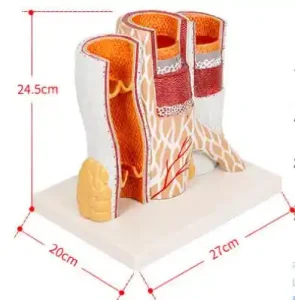
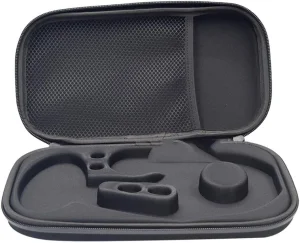
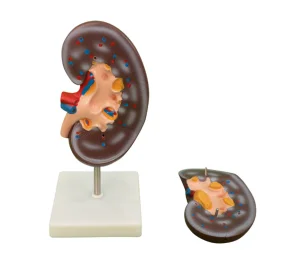
Additional ODM Lines
Eight More Models Available for ODM Customisation
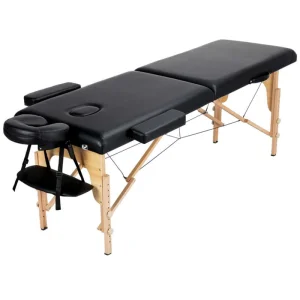
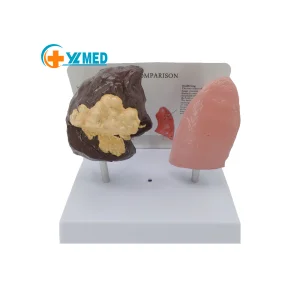
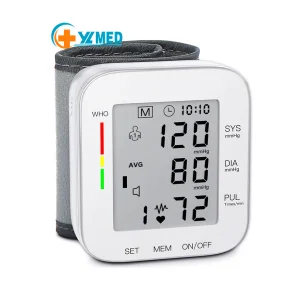
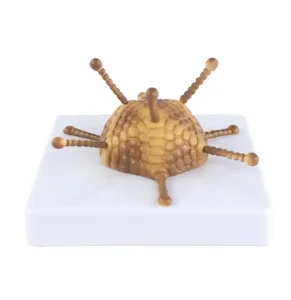
Pathology models, dental equipment, diagnostic devices and laboratory teaching aids — all configurable with your branding and packaging.
Buyer FAQ
Frequently Asked Questions from Importers
Straight answers to the questions procurement managers ask most before placing a first order.
Is Yulin Medical a manufacturer or a trading company?
We are a manufacturer. Henan Yulin Edu. Project Co., Ltd. was founded in 1958 and operates its own factory in Xinxiang, Henan, China, with more than 200 professional staff. For one-stop orders, we also coordinate a stable network of long-term partner factories.
What quality certification do you hold?
Our quality management system has been ISO 9001 certified since 2008. Product-specific documentation can be provided on request to support tenders and import registration in your country.
Do you support OEM, private label and custom packaging?
Yes. Our in-house design team develops private-label packaging and product presentation for distributors, helping increase shelf appeal and resale value in your market. Artwork templates, barcode allocation guidance and pre-production proofs are included in the standard ODM workflow.
How do I choose the right CPR training manikin?
Start with the learner group: adult, child or neonatal. Then check that real-time feedback covers compression depth, compression rate and ventilation volume; confirm alignment with current AHA resuscitation guidelines; and decide whether your courses need AED trainer integration. For advanced life-support programmes, an ACLS simulator with embedded scenarios offers far more assessment value than a basic torso.
How quickly will I receive a reply?
Our export team is online 7 days a week and typically replies within 24 hours with catalogs, specifications and shipping options.
What is the minimum order quantity for an ODM anatomy model?
MOQ depends on whether you select an existing ODM platform or request a new mould. For standard platform models with private-label packaging, mixed-carton pilot batches are possible so you can validate the product in your market before committing to volume. Custom sculpture and new tooling projects are quoted individually after a design review.
Who owns the tooling and the artwork?
Ownership terms are agreed in writing before production. Existing ODM platforms remain the factory's intellectual property and are licensed to you for branded resale; customer-funded custom moulds can be assigned to the buyer. Artwork, manuals and photography produced for your brand belong to you.
Can you provide a full tender package?
Yes. We routinely prepare specification sheets, material declarations, packing lists, certificates of origin, warranty wording and product photography sized for tender annexes. Tell us the tender format and closing date at the enquiry stage so documentation is prepared in parallel with the quotation.
Talk to Our Export Team
Need Specifications, a Price List or a Tender Package? We Reply Within 24 Hours.
Tell us your target market, quantities and certification requirements. Our product specialists will recommend suitable models, share detailed specifications and propose the most economical shipping plan for your order — whether that is a single evaluation sample or a consolidated container of mixed anatomy, nursing and hospital equipment.