Featured Equipment from the Yulin Medical Manufacturing Network
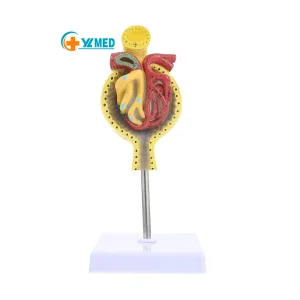
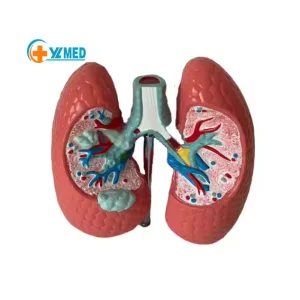
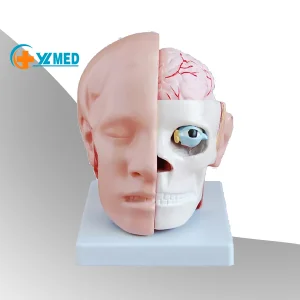
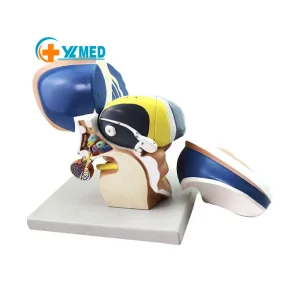
Yulin Medical combines a long-established factory base with a broad medical and educational equipment portfolio. For neonatal procurement teams, the same disciplines matter: controlled assembly, traceable components, documented inspection and export-ready packing. The eight supplied products below demonstrate the breadth of the network; each original product URL and image is retained.

What Buyers Really Mean When They Search for a China Trolley Infant Incubator Manufacturer
The query is commercial, but the intent is risk-managed. Distributors want a reliable factory; hospitals want clinical safety; tender teams want documented compliance; and NGOs or government programmes want predictable delivery. This white paper explains how to evaluate the manufacturing ecosystem behind trolley infant incubators and how Yulin Medical’s long-standing factory discipline fits into that evaluation.
A trolley infant incubator is a mobile closed-care environment that supports neonatal thermoregulation, humidity control, oxygen delivery, observation and emergency access. Unlike a simple warming device, it combines an infant compartment, a controlled heating and servo-control system, air circulation, filtration, alarms, a height-adjustable trolley and often a battery backup. For procurement teams, the product is therefore not only a piece of furniture or a warming box: it is a clinical workflow system that must survive daily cleaning, continuous use, power instability and transport between departments.
China has become a major source for neonatal care equipment because of deep supplier clusters, mature electronics manufacturing, fast tooling and competitive cost structures. However, the search phrase “manufacturer and factory” does not answer the more important question: which factory can demonstrate design control, inspection records, product-level certification and after-sales support for your market? That is where information gain matters. A credible supplier should explain its process, not only list a price.
How this white paper adds decision value
- Global procurement demand and buyer segments for trolley infant incubators.
- Macro solutions for NICU thermal chains, infection control and power resilience.
- Technology roadmap from servo-controlled platforms to connected, data-enabled neonatal care.
- Industrial status, regulatory routes and localization requirements in export markets.
- A practical verification framework using Yulin Medical’s original factory credentials and product network.
Yulin Medical factory context
Henan Yulin Edu. Project Co., Ltd. has manufactured in Xinxiang, China, since 1958, with ISO 9001 certification since 2008, more than 200 professional staff, registered capital of RMB 120 million and ten product lines. The company supports OEM, private label, custom packaging and mixed-category consolidation. For incubator-specific projects, buyers should request model-level test reports, declarations and registration documents for the target market.
For procurement decisions, always verify the exact incubator model, its intended use, its regulatory status and the factory’s quality records. A general ISO 9001 certificate supports process confidence but does not replace product-specific market authorization where required.
Why Trolley Infant Incubators Are a Strategic NICU and Distributor Investment
Demand is driven by neonatal survival programmes, hospital infrastructure upgrades, private NICU expansion and the replacement cycle of ageing equipment. Buyers are not only comparing price per unit; they are assessing uptime, training burden, spare-parts availability and the cost of regulatory delays.
NICU Capacity Expansion
Hospitals in fast-growing urban and regional health systems need flexible, mobile incubators that can support delivery rooms, NICUs, emergency departments and temporary neonatal units.
Distributor Portfolio Demand
Medical distributors add incubators to broaden their neonatal offering alongside phototherapy, resuscitation, monitoring and hospital furniture, improving account coverage and repeat-order value.
Tender and Donor Programmes
Public tenders, donor-funded maternal-child health projects and NGO procurement require traceable documentation, stable specifications, training plans and predictable shipping schedules.
Replacement and Transport Needs
Ageing fleets, higher patient acuity and inter-hospital transfer create demand for reliable trolley units, battery-backed operation and accessories that support safe neonatal movement.
The most successful buyers separate demand into three purchase cases. First, routine NICU expansion requires standardised models, training and service kits. Second, emergency and transport readiness requires battery endurance, secure trolley design and compatibility with ambulance workflows. Third, distributor resale requires private-label packaging, market-specific manuals and a reliable spare-parts policy. A China manufacturer that understands all three cases can reduce total cost of ownership far more effectively than a supplier that quotes only a unit price.
Designing a Safer Neonatal Thermal Chain Around the Trolley Incubator
The product should be evaluated as part of a thermal chain: delivery room, NICU, imaging, ward, theatre and transport. Each handover introduces risk. A well-designed trolley incubator reduces that risk through stable temperature, humidity control, clear alarms, easy cleaning and battery-supported mobility.
Servo-Controlled Thermoregulation
Skin and air temperature sensors, independent over-temperature protection, warm-up performance and alarm logic are central to neonatal safety. Buyers should ask how the controller responds to probe displacement, fan failure and ambient temperature swings.
Humidity, Oxygen and Air Quality
Servo humidity, filtered air circulation, oxygen inlet options and accessible humidifier chambers support preterm care. Cleaning and refilling workflows should be designed to reduce nurse workload and cross-contamination risk.
Infection Prevention by Design
Smooth internal surfaces, removable parts, sealed seams, drainage strategy and compatible disinfectants matter more than a single “antibacterial” claim. Request material and cleaning validation information.
Ergonomics and Clinical Access
Height adjustment, braking, hood access, portholes, X-ray tray compatibility and quiet alarm design influence daily use. The best incubator is not the most complex one; it is the one that supports safe handling without interrupting sleep and thermoregulation.
Power Resilience and Battery Backup
Hospitals with unstable power need battery runtime data, low-voltage behaviour, surge protection and generator compatibility. Clear battery alerts and replaceable packs protect uptime across the equipment lifecycle.
Transport Continuity
For inter-department and inter-hospital movement, the trolley must lock securely, protect the infant from vibration, support gas and monitoring accessories, and deliver a clear handover of temperature and battery status.
Technology Roadmap and Future Outlook for Neonatal Incubators, 2025–2030
The next generation of trolley infant incubators will be judged by clinical reliability first, then by data integration, serviceability and sustainability. The roadmap below is a practical procurement lens, not a marketing forecast.
2025: Modular Digital Platforms
Touch interfaces, digital temperature logs, modular sensor boards and replaceable battery packs become baseline expectations. Buyers should prioritise service access and software version control.
2025–2027: Connectivity and Remote Service
Optional Wi-Fi or wired data export supports preventive maintenance and service diagnostics. Cybersecurity, access control and local data-privacy requirements must be addressed before hospital network integration.
2027–2029: Clinical Decision Support
Trend analysis, predictive maintenance alerts and closed-loop oxygen support can reduce workload, but they require human-in-the-loop design, alarm validation and clear accountability. Buyers should avoid “AI” claims without evidence.
2029–2030: Sustainable and Interoperable Care
Lower-energy heating, recyclable housings, longer-life components, standardized data interfaces and circular service models will increasingly influence hospital tenders and distributor differentiation.
A disciplined manufacturer will separate proven features from development claims. For procurement, ask for verification: test reports for alarm thresholds, battery runtime curves, cleaning validation, software change control and a clear obsolescence policy for electronic components. This is where experienced factory documentation creates more value than a feature list.
China’s Neonatal Equipment Manufacturing Status and Export Reality
China’s advantage is not a single low-cost factory. It is an integrated ecosystem: electronics, sensors, injection moulding, metal fabrication, packaging, testing and export logistics. That ecosystem can shorten development cycles, but it also means buyers must verify the specific manufacturer rather than assume that all suppliers operate at the same level.
Manufacturing Maturity
Mature suppliers use incoming inspection, assembly fixtures, functional testing and batch traceability. For incubators, temperature calibration, electrical safety testing and alarm verification are key evidence points.
Regulatory Complexity
Depending on the market, buyers may need ISO 13485, IEC 60601-1, IEC 60601-2-19, CE MDR documentation, FDA clearance, local registration, UDI, labeling and language-specific instructions for use.
Logistics and Service Models
Export packing, container loading, spare-parts kits, installation guidance and training materials determine whether a low unit price remains low after delivery. Mixed-category consolidation can reduce freight complexity.
The commercial landscape is also shifting. Distributors increasingly request OEM and private-label programmes, local-language manuals, extended warranties and rapid spare-parts response. Hospitals and tender authorities increasingly request evidence of post-market surveillance and training. The winning China supplier is therefore not only a production line; it is a documentation and service partner. Yulin Medical’s 60+ years of factory history, ISO 9001 system since 2008, 200+ staff and ten product lines provide a stable base for buyers who value continuity and one-point coordination.
Localization Support and Compliance Assurance for Export Markets
Compliance is not a single certificate. It is a chain of design files, test evidence, labeling, language, traceability and post-market processes. For a trolley infant incubator, the buyer should verify the exact configuration and intended market before comparing quotations.
Power and Environmental Adaptation
Confirm voltage, frequency, plug type, battery charging behaviour, ambient temperature range and humidity specifications. For unstable grids, request surge and low-voltage test evidence.
Language, Labels and IFU
Local-language user manuals, warning labels, service guides and training decks reduce misuse. UDI/GS1, manufacturing dates, serial numbers and traceability labels should match the destination market’s rules.
Regulatory Dossier
Request product specifications, risk management summary, test reports, biocompatibility information for patient-contact materials, electrical safety evidence, EMC reports and software documentation where applicable.
Spare Parts and Serviceability
A practical spare-parts kit includes sensors, fuses, battery packs, door seals, filters, castors and control boards. Ask for recommended stock levels based on your fleet size and service response target.
Training and Clinical Handover
Installation checklists, cleaning protocols, alarm response training and daily inspection routines protect the equipment and the patient. Video and printed materials support distributor service teams.
Post-Market Surveillance
Define complaint handling, adverse event reporting, field corrections, service records and periodic maintenance. A reliable factory supports your local regulatory obligations after shipment, not only before payment.
Yulin Medical: A Six-Decade Manufacturer Behind the Product Network
Founded in 1958, Henan Yulin Edu. Project Co., Ltd. integrates scientific research, production and sales of medical and educational equipment. The company is based at No. 8, Daoqing Road, Industry Park, Hongqi District, Xinxiang, Henan, China, with ISO 9001 certification since 2008 and more than 200 professional employees.
Yulin Medical’s original strengths are directly relevant to buyers sourcing complex equipment: long manufacturing continuity, in-house design and packaging support, mixed-category consolidation and a documented quality system. The company motto remains quality first, service first. For distributors, this means a single accountable contact can coordinate products across teaching models, nursing simulation, hospital furniture, dental equipment, mobility aids and instruments.
For trolley infant incubator projects, use the same factory evaluation method: request the model-specific technical file, confirm the regulatory route, inspect alarm and calibration records, and test a sample against your clinical workflow. The factory profile is a starting point for due diligence, not a substitute for it.
What buyers can request from the export team
- Catalog, specifications and configuration comparison.
- OEM/private-label packaging and product presentation options.
- Sample evaluation before bulk production.
- Production and inspection updates aligned with ISO 9001 process control.
- Export packing, shipping coordination and after-sales support.



Share Requirements
Send product types, quantities, target market, voltage, language and tender or certification needs.
Catalog & Proposal
Receive matched models, specifications, packaging options and shipping suggestions.
Sample Evaluation
Test samples with instructors, clinicians or service engineers before bulk production.
Production & QC
Manufacturing and inspection follow the ISO 9001 quality management system.
Export & Support
Protective export packing, delivery coordination and responsive after-sales service.
Ten Specialised Product Lines for Distributors and Institutional Buyers
The original Yulin Medical product categories are retained below. They show the breadth that supports mixed-category orders and one-point export coordination.
Anatomy Models
View RangeBiology Prepared Slides and Accessories
View RangeDental Tools and Equipment
View RangeGeneral Teaching Models
View RangeHospital Furniture and Equipments
View RangeHospital Machine and Tools
View RangeMedical Apparatus and Instruments
View RangeMedical Nursing Model
View RangeSkeleton Models
View RangeSuture Pads and Kits
View RangeCompany News and Buyer Guidance from the Manufacturing Floor
Practical notes from Yulin Medical’s specialists help distributors and institutions plan training, accept equipment and use products correctly.

Do You Really Know How to Observe Biological Prepared Slides?
Many plant and animal cell structures can only be studied under a microscope, which makes prepared biological slides essential in every biology lab. Correct handling, focusing and storage help students see clearer detail and extend the life of slide sets.

The 5th Henan Provincial Educational Equipment Expo Concludes Successfully
Themed “Digital Leading Innovation and Development,” the expo reached 50,000 m² with 600+ brands and 10,000+ products, showcasing the latest educational equipment and training solutions.

Inside Our Product Showroom
A look at the medical teaching models and training equipment buyers can inspect in person when visiting the Xinxiang facility, including options for mixed-category sourcing.
Additional Equipment for Mixed-Container and Multi-Category Sourcing
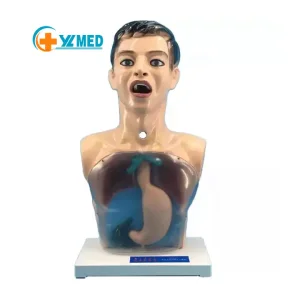
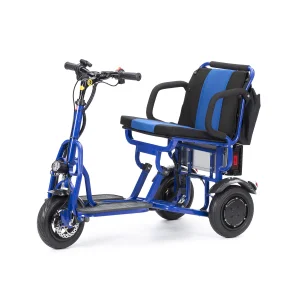
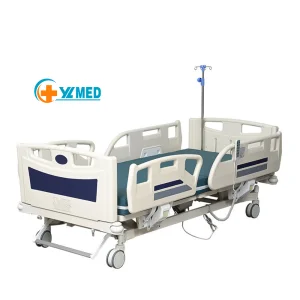
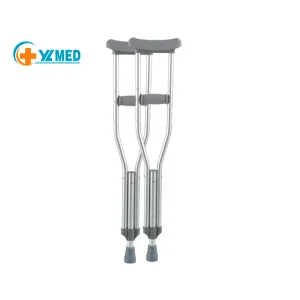
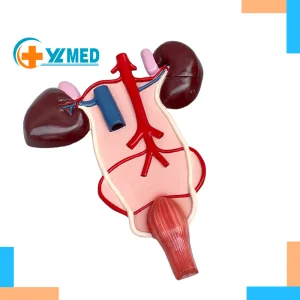
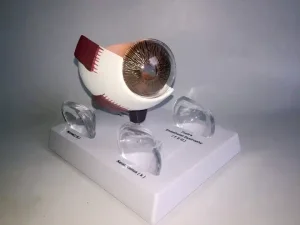
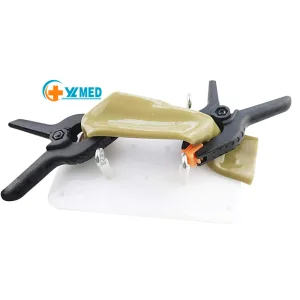
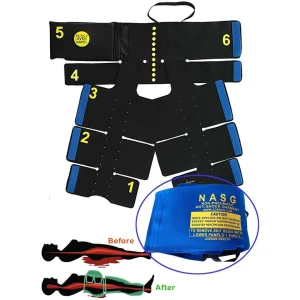
The second supplied product set is retained below with original images and URLs. These items illustrate how Yulin Medical coordinates hospital equipment, nursing models, rehabilitation aids and teaching products within one export programme.
Frequently Asked Questions from Importers, Distributors and Tender Teams
Straight answers to the questions procurement managers ask most before placing a first order or moving a new neonatal care model into a regulated market.
What is a trolley infant incubator and how is it different from a fixed incubator?
How can I verify a China trolley infant incubator manufacturer before ordering?
What certifications and documents should I request for export or tender submission?
Can Yulin Medical support OEM, private label and custom packaging?
What is a practical sample and production evaluation process?
How do you handle voltage, language, spare parts and local service support?
Is Yulin Medical a manufacturer or a trading company?
What quality certification does Yulin Medical hold?
How do I choose the right CPR training manikin?
How quickly will I receive a reply?

Need Specifications, a Price List or a Tender Package for a Trolley Infant Incubator Project?
Tell us your target market, quantities, clinical workflow and certification requirements. Our product specialists can recommend suitable configurations, share documented specifications and propose a practical shipping and service plan for your order.