
Human Body Anatomy Models You Can Quote Immediately
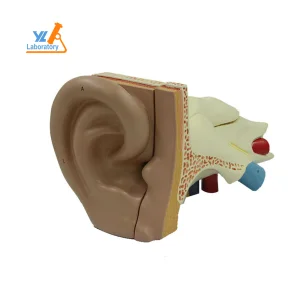
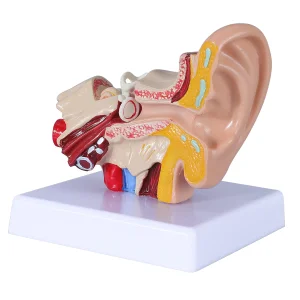
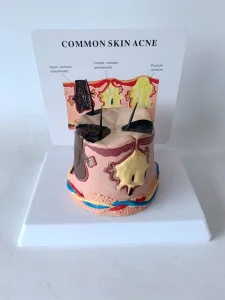
Eight best-selling anatomical models covering urology, neuroanatomy, dermatology, otolaryngology and clinical injection training — all produced in our own facility and available for private-label packaging.
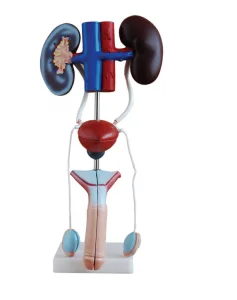
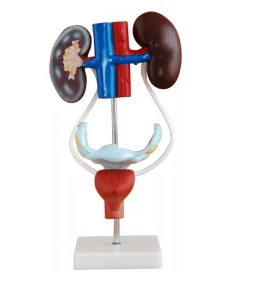
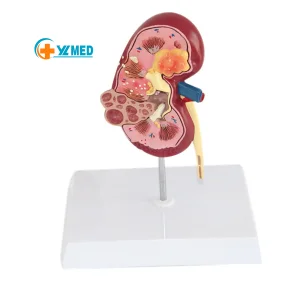
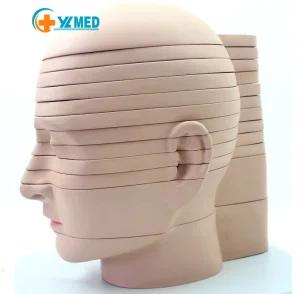
Why the Human Anatomy Model Market Is Being Re-Priced in 2025
A human anatomy model is no longer a decorative plastic specimen hanging quietly at the back of a classroom. Across nursing faculties, medical universities, hospitals and secondary schools, anatomy models are now treated as teaching infrastructure — assets that must demonstrate structural accuracy, repeatable tactile fidelity, replaceable modularity, documented material compliance and a measurable lifespan inside a specific curriculum.
That shift changes how procurement teams evaluate a China anatomy model human body manufacturer. Price is still a factor, but it is no longer the leading one. Buyers now ask for durometer and tensile data on soft-tissue simulators, for REACH and RoHS statements, for replacement-part availability five years after the original order, and for quote sheets that can be dropped straight into a tender document without rewriting.
This whitepaper is written by the education and manufacturing team at Henan Yulin Edu. Project Co., Ltd. — a manufacturer that has produced medical teaching models and hospital equipment in Xinxiang, Henan, since 1958 and has held ISO 9001 certification since 2008. It consolidates the patterns we observe across quotation requests, tender packages and classroom feedback from distributors in more than sixty countries into five practical chapters: industry trends, global procurement demand, macro-level solutions, localisation and compliance, and the technology roadmap ahead.
Our purpose is straightforward. Rather than repeating a product catalogue, this document is designed to give information gain — practical, verifiable detail that helps a procurement manager, a lab director or an education distributor make a better-informed sourcing decision and defend it internally.
Six Forces Reshaping the Human Anatomy Model Industry (2025–2030)
These six forces are changing what hospitals, medical universities and distributors expect from an anatomy model supplier — and what a manufacturer must be able to certify, document and ship.
1. 3D Printing and Patient-Specific Anatomy
Reconstructing anatomy from CT and MRI datasets is now routine in teaching hospitals. Mass-produced models still carry the foundation curriculum, while printed replicas handle rare pathology, pre-operative planning and informed consent. The practical consequence for buyers is that a supplier must now offer both a standard catalogue and a custom pathway — a factory that only sells stock models will increasingly lose university tenders.
2. Soft-Tissue Simulation in Silicone and Bio-Polymers
Silicone and engineered polymer blends now reproduce compression, tension and rebound far more faithfully than legacy rigid PVC. Buyers increasingly request Shore hardness values, tear strength and elongation data, and they link softness directly to tactile fidelity in suturing, injection and palpation exercises. Suppliers who cannot produce these numbers are quietly excluded from shortlists.
3. AR and VR as a Complement, Not a Replacement
The winning classroom format is hybrid: one physical model paired with a QR code that triggers an augmented-reality overlay of nerves, vessels or cross-sections. This reduces the parts count on the physical model while increasing the value of the digital content attached to it. For manufacturers this means quote packages increasingly include content licensing, print-ready labels and multi-language digital assets alongside the physical unit.
4. Modular, Detachable and Assessment-Ready Design
A 30-part torso or a 13-part leg is becoming the baseline expectation rather than a premium upgrade. Modularity cuts replacement cost dramatically: if a single organ is damaged during a practical exam, the institution replaces the insert rather than scrapping the whole model. It also supports OSCE-style scoring, where examiners need to remove and inspect individual structures quickly and consistently.
5. Material Compliance and Hygiene Requirements
REACH, RoHS and phthalate restrictions are now standard clauses in European tenders, and comparable frameworks are being adopted across the Middle East and Latin America. PVC and silicone formulations must be accompanied by test reports, declarations of conformity and, where relevant, statements on latex and animal-derived content. Compliance documentation is no longer administrative paperwork — it determines whether a bid is admissible at all.
6. Sustainable PVC and Green Manufacturing
Closed-loop PVC scrap recycling, water-based coatings and recyclable export packaging are appearing more frequently in supplier questionnaires. Several European and North American distributors now request a written environmental statement alongside the quality certificate. Manufacturers able to evidence these processes are better positioned for multi-year framework agreements, where sustainability criteria carry scoring weight.
What Distributors and Institutions Are Actually Asking For
Demand for human body anatomy models is not uniform. The requirements, documentation burden and price sensitivity differ sharply by region — and a manufacturer quoting with a single global price list will lose more tenders than it wins.
North America & EU — Compliance-Led
Tenders specify ISO 9001 as a minimum qualification and frequently request ISO 13485 or comparable declarations for clinical-adjacent products. Bidders are expected to supply material safety data sheets, BSE/TSE statements, phthalate-free confirmation and CE technical documentation. Accuracy documentation and consistent colour-coding matter as much as price.
MENA & GCC — Tender-Led
Ministry of Health frameworks typically bundle multiple categories into a single lot: torso models, injection arms, ear models and skeleton sets quoted together. Arabic labelling, spare-part schedules and defined incoterms are frequently mandatory. Winning bidders are usually those who can consolidate without splitting the order across several factories.
Asia-Pacific — Volume-Led
In K-12 STEM procurement and secondary-school biology upgrades, volume and landed cost dominate. Buyers accept simplified models provided structural accuracy remains defensible. Colour-fastness, drop resistance and packaging strength for sea freight matter more than advanced soft-tissue properties.
Latin America & Africa — Support-Led
Price sensitivity is high, but responsiveness decides repeat business. Local-language packaging, replaceable components, Spanish or Portuguese manuals and reliable after-sales communication often outweigh advanced material specifications. Distributors here value a single accountable contact more than a long catalogue.
Macro Industry Solutions for Institutional Buyers
Instead of selling individual models, we increasingly quote complete teaching packages that map to a curriculum, a room layout and a fixed budget. Four solution frameworks cover most institutional requests.
Medical School Integrated Anatomy Lab
A layered package combining a full-size skeleton, a multi-part torso, regional organ models, brain and head sections, and limb articulation models. Delivered with a structure index, colour legend and replacement schedule so the lab can plan a five-year consumable budget rather than a one-off purchase.
Nursing and Clinical Skills Laboratory
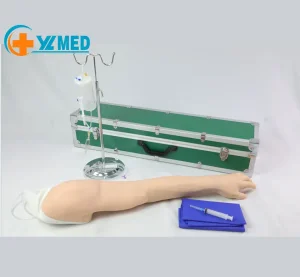
Injection arms, skin-suture trainers, urinary catheterisation models and supportive anatomical reference models, selected so that a single simulation room can run injection, infusion, catheterisation and wound-care stations concurrently without duplicate models competing for bench space.
K-12 and Tertiary Biology Teaching
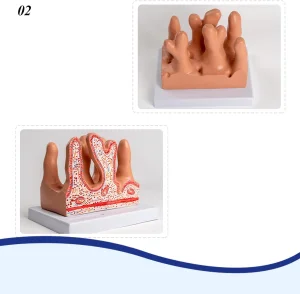
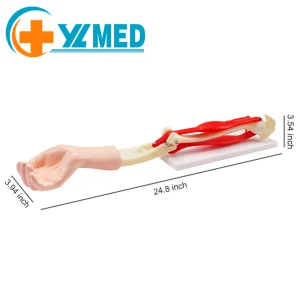
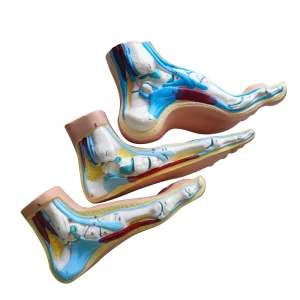
Durable, low-cost demonstration models for secondary biology: elbow joint movement models, foot and arch structures, villi tissue sections and compact organ models. Priced for classroom sets rather than single units, with packaging engineered for repeated handling by students.
Distributor OEM / ODM Branding Programme
Private-label packaging, custom colour schemes, branded manuals, barcode and carton marking, plus mixed-category consolidation into one shipment. Designed for distributors who want to build a product line under their own identity without building a factory of their own.
Technology Roadmap and Future Outlook (2023–2028)
A realistic view of what our production lines can deliver now, and what is being prepared for the next procurement cycle. Buyers planning multi-year framework agreements should treat this as a supplier capability forecast, not a marketing promise.
Standardised Baseline
Rigid PVC and moulded silicone anatomy models, hand-finished painting, 100% pre-shipment inspection and consistent structure numbering. Quality documentation and packaging stability were the priority, not electronics.
Modular Architecture
Detachable organ inserts with standardised mountings, QR-linked digital overlays and replaceable component kits. Institutions can now replace a single module instead of an entire model, lowering lifetime cost.
Patient-Specific 3D Printing
Scaled production of CT-derived pathology replicas alongside the standard catalogue, supported by a documented data-handling process. Targets teaching hospitals and specialist surgical training centres.
Sensor-Enabled Trainers
Low-cost sensorised injection and catheterisation models that log performance data for OSCE assessment, integrated with digital twin content. Positioned as assessment tools rather than demonstration models.
Localisation Support and Compliance Assurance
An anatomy model that cannot clear customs, satisfy a tender clause or survive a distributor's own audit is not a delivered product. Six support layers ensure the order lands and stays usable.
ISO 9001 Quality Management
Certified since 2008. Incoming material checks, in-process inspection and final pre-shipment verification are documented and traceable by batch, which is what most tender committees actually want to see.
Export Documentation and Destination Fit
Commercial invoice, packing list, certificate of origin, HS code guidance and product specification sheets matched to the destination market. Where a market requires additional declarations, the sales team flags it at quotation stage rather than at shipment.
Material Compliance: REACH, RoHS, Phthalates
Material declarations and available test reports for PVC and silicone components, including statements on phthalate content and latex-free construction. Product-specific documentation is issued on request to support import registration.
Language, Packaging and Brand Localisation
Manual text, structure labels, carton markings and product photography adapted to the target market. In-house design support handles private-label artwork, barcodes and retail-ready presentation for distributors building their own range.
Logistics, Incoterms and Order Consolidation
Mixed-category orders consolidated into a single shipment with one point of contact — anatomy models, nursing simulators, hospital furniture and teaching aids on the same bill of lading. FOB, CIF and other incoterms are quoted according to buyer preference.
After-Sales, Spare Parts and Training
Replacement component supply, colour-match guidance for repainting and instruction materials for instructors. The export team operates seven days a week and typically replies within 24 hours with specifications, packing details and shipping options.
More Human Body Anatomy Models and Teaching Aids from the Factory
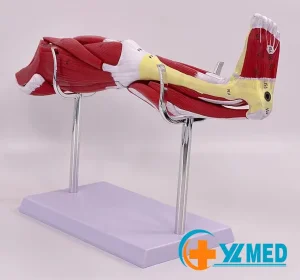
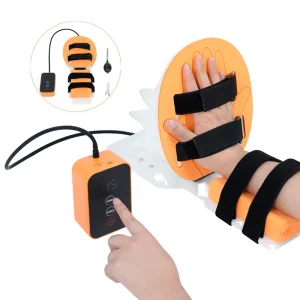
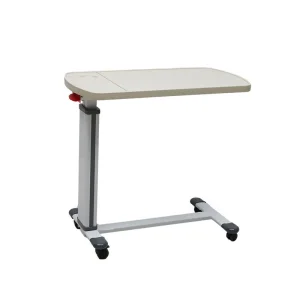
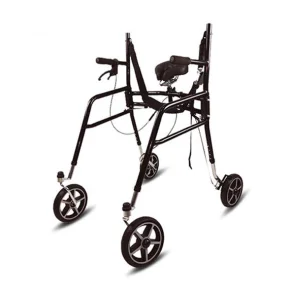
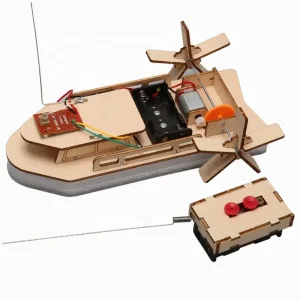
Limb and joint models, histological sections, rehabilitation and hospital equipment, plus a low-cost STEM teaching aid — all quotable from the same account manager and consolidatable into one shipment.
Anatomy Model Sourcing: Frequently Asked Questions
Direct answers to the questions procurement managers and lab directors raise most often before placing a first order for human body anatomy models from China.
Are you a China anatomy model human body manufacturer or a trading company?
How do I request a quotation, and what is the typical minimum order quantity?
What materials are the anatomy models made from, and are they safe for classroom use?
Do you support OEM, ODM, private label and custom packaging?
What compliance documentation can you provide for tenders?
How long does production take, and how is shipping arranged?
Can you supply a complete anatomy lab set rather than individual models?
How should anatomy models be stored and maintained to maximise lifespan?
Ready to Quote Human Body Anatomy Models for Your Market?
Send your model list, target quantities and certification requirements. Our export team will return matched specifications, private-label options and a consolidated shipping plan — typically within 24 hours, seven days a week.