Eight Factory-Direct Medical, Anatomy & Teaching Models
The product references below are retained from the original catalogue and connect directly to their product pages. They illustrate the wider Yulin Medical manufacturing ecosystem that supports neonatal nursing simulation, anatomy teaching, clinical skills training and hospital procurement.
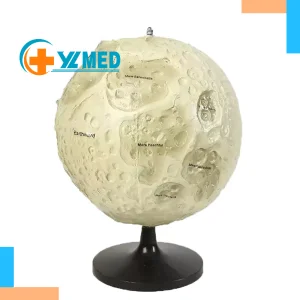
China Geography Teaching Home Craft Decoration Teaching Model of Lunar Structure Geographical Model of Lunar Surface Structure Factories, Pricelist
View Product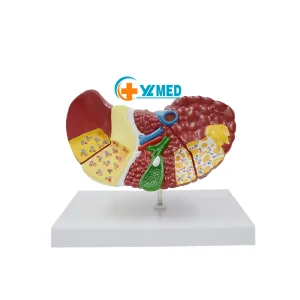
ODM Medical science experiment liver anatomy model with base doctor-patient communication model, human physical model Factory, Pricelist
View Product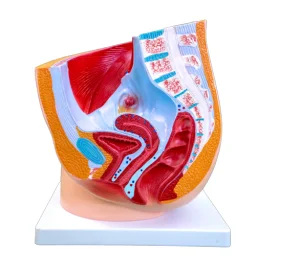
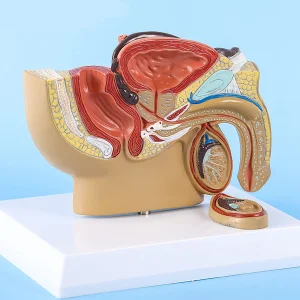
China Wooden or plastic box sets common zoology, botany, microscopes, microbiology, preparing slides for medical education Factory, Factories
View Product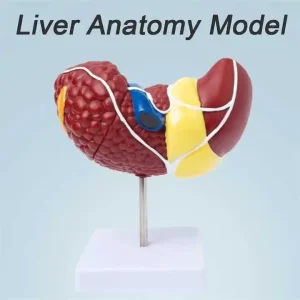
Wholesale Human Pathological Liver Model Anatomical Model Pathological Liver Features for Medical School Study and Research Factory, Pricelist
View Product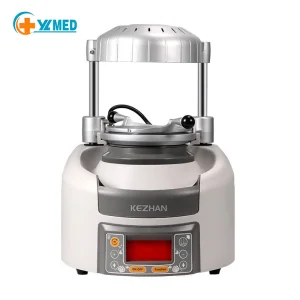
Wholesale Dental pressing machine Oral intelligent full-automatic vacuum forming machine Dental braces orthodontic retainer film pressing Manufacturers, Service
View Product
What Buyers Really Need From a China Advanced Neonate Umbilical Cord Nursing Model Manufacturer & Factory
A search for an advanced neonate umbilical cord nursing model is rarely a simple shopping query. It usually combines product discovery, supplier verification, curriculum fit, localization, compliance documentation and long-term supply reliability.
Sourcing teams that search for a China Advanced Neonate Umbilical Cord Nursing Model Manufacturer & Factory are generally trying to solve four connected problems. First, they need a training aid that is anatomically credible enough for nursing and midwifery teaching. Second, they need a manufacturer that can supply consistent quality, replacement parts and private-label packaging. Third, they need documentation that supports internal approvals, tenders and importation checks. Fourth, they need a partner that can localize the product presentation for the target market rather than treating every country as an identical catalogue destination.
This is where information gain matters. A page that simply repeats “high quality, low price, fast delivery” does not help a professional buyer. A useful manufacturer page should explain what “advanced” means in neonatal umbilical cord nursing simulation, how the model is used in training, what can be customized, how compliance support works, and how a Chinese factory can reduce supply-chain risk while preserving product quality. That is the practical standard of E-E-A-T: experience shown through process, expertise shown through detail, authority shown through verifiable company facts, and trust shown through transparent limitations.
An advanced neonatal umbilical cord nursing model is generally a task-training aid for demonstrating and practising cord stump assessment, cleaning, drying, infection-prevention steps, secure handling and parent education. It should not be presented as a clinical device or as a substitute for local neonatal care protocols. Buyers should clearly define whether their curriculum also requires clamping, cutting, vessel detail, removable cord inserts or integrated scenario assessment, because those requirements change the specification and the assessment value of the model.
Buyer Intent Snapshot
- Product intent: anatomical realism, cleanability, replaceable cord units and measurable learning outcomes.
- Supplier intent: factory verification, audit readiness, ISO 9001 process control and stable export packing.
- Localization intent: language, packaging, instructions, scenario cards and tender documentation.
- Commercial intent: MOQ, OEM/ODM, sample evaluation, lead time and mixed-category consolidation.
What Makes a Neonatal Umbilical Cord Nursing Model “Advanced”?
Advanced does not mean adding features that nobody uses. In professional education, an advanced model is defined by learning transfer: whether learners can perform the correct sequence, recognise risk, communicate clearly and repeat the skill without damaging the simulator.
Anatomical Credibility
A credible neonatal abdominal and umbilical presentation helps learners connect cleaning, assessment and infection-prevention steps to real anatomy. The umbilical stump should be visually clear, securely positioned and suitable for supervised return demonstration.
Cleanable, Skin-Like Materials
Training centres need surfaces that tolerate repeated handling, cleaning and storage. Material selection should balance tactile realism, colour stability, seam integrity and compatibility with common training-room cleaning routines. Material declarations can be requested for internal review where applicable.
Replaceable Cord Units
Consumable or replaceable cord components reduce the total cost of ownership in high-volume skills labs. A modular design allows institutions to refresh worn components without replacing the entire trainer and supports predictable budgeting across semesters.
Workflow Compatibility
The model should fit the way institutions actually teach: demonstration, paired practice, OSCE stations, competency checks, remediation and parent-education role-play. Stable tabletop positioning and easy cleanup make a measurable difference in busy simulation labs.
Assessment Value
Advanced models should support observable checkpoints: preparation, hand hygiene, cord assessment, cleaning technique, drying, escalation and documentation. When the trainer aligns with a checklist, faculty can assess competence rather than simply demonstrate a product.
Export-Ready Engineering
For global distributors, the product must survive freight, humidity and repeated handling. Protective packaging, replacement-part planning and clear labelling are part of the product, not an afterthought. Factory-direct supply should include practical export preparation.
Note: a neonatal umbilical cord nursing model is a teaching and demonstration aid. It should be used under qualified instruction and in alignment with the buyer’s local neonatal care, infection-prevention and simulation policies. It is not intended for clinical treatment or as a substitute for regulated medical devices.
Localized Support and Compliance Assurance for Global Buyers
Compliance is not a single certificate. It is a chain of evidence that begins with product design, continues through material selection and production control, and ends with labelling, instructions and documentation suitable for the destination market.
Quality Management Evidence
Yulin Medical’s quality management system has been ISO 9001 certified since 2008. For tender or distributor review, the export team can provide company-level quality documentation and product-specific records where available. Final regulatory classification remains the responsibility of the buyer and the destination authority.
Market-Specific Documentation
Buyers can request material declarations, packaging information, product images, dimensions, instruction drafts and third-party test reports where applicable. This supports customs review, hospital vendor onboarding, school procurement and internal compliance checks without making unsupported claims.
Language & Curriculum Localization
Localization can include English-language instructions by default, together with customized labels, packaging, scenario cards or training scripts for distributors. The in-house design team can support private-label presentation so the product fits local catalogue conventions and shelf appeal.
Tender-Ready Documents
For public procurement, buyers often need product descriptions, packing lists, warranty terms, company profiles and certificate copies in one package. A named export contact can consolidate these documents and answer technical questions within the project timeline.
Spare Parts & After-Sales Planning
Localized support means planning replacement components before the first order ships. Distributors can discuss spare-part ratios, storage recommendations and remote troubleshooting guidance so that end users can maintain training continuity.
Transparent Claims
Professional buyers value clear boundaries. A manufacturer should state what is certified, what is customizable, what requires third-party testing and what remains the buyer’s local registration responsibility. This transparency is a stronger trust signal than exaggerated compliance language.
Why a Chinese Factory Supply Chain Still Wins on Depth and Flexibility
China’s advantage in medical teaching models is not only unit cost. It is the maturity of the surrounding supply chain: mould development, polymer processing, silicone and PVC know-how, painting and finishing, metal and furniture fabrication, packaging design, inspection and export consolidation. For buyers, this depth translates into faster customization and broader one-stop sourcing.
Henan Yulin Edu. Project Co., Ltd. was founded in 1958 and operates from Xinxiang, Henan, China. The company integrates scientific research, production and sales, with registered capital of RMB 120 million and more than 200 professional staff. Its product ecosystem covers ten lines, from anatomy models and nursing simulators to biology prepared slides, dental tools, hospital furniture, medical apparatus and suture kits. That breadth is useful when a distributor wants to add a neonatal umbilical cord nursing model to a larger mixed-category order.
Factory-direct supply can reduce supplier-management cost, improve batch consistency and simplify communication. However, professional buyers should still evaluate samples, inspect packaging, confirm lead times and verify the exact specification. The strongest supply relationship is built on documented expectations, not price alone.
Supply-Chain Advantages Buyers Can Use
- Consolidated sourcing: mix neonatal training models with anatomy, CPR, nursing, dental and hospital products in one shipment.
- OEM / ODM support: private-label packaging and product presentation for distributors building local brands.
- Stable quality system: ISO 9001 certified since 2008, with production and inspection managed inside the factory ecosystem.
- Export experience: protective packing, documentation support and responsive communication for overseas orders.
- Long-term continuity: 60+ years of manufacturing history and a deeply integrated partner supply chain.
Global Procurement Requirements: What Distributors and Institutions Actually Ask
Whether the buyer is a medical school, a hospital group, a government tender authority or an education-equipment distributor, the RFQ usually comes down to six practical questions. Answering them early shortens the evaluation cycle and reduces sample rounds.
Specification & Anatomy
What is the size, structure, material and umbilical cord configuration? Does the model support the exact teaching sequence required by the curriculum? Are replaceable inserts available?
Material & Cleanability
What cleaning agents are compatible? How is colour stability controlled? Can material declarations or test reports be supplied for internal review where applicable?
Branding & Packaging
Is OEM/private label available? Can the manual, label, scenario card and master carton be localized? What is the minimum order quantity and packaging cost?
Compliance & Tender Pack
Which documents can be provided for import, tender or hospital vendor onboarding? What claims are supported by evidence, and what must be handled locally?
Lead Time & Logistics
What is the sample lead time, production lead time and recommended Incoterm? Can mixed-category orders be consolidated to reduce freight complexity?
Total Cost of Ownership
Compare not only the unit price, but replacement parts, packing volume, training downtime, damage risk and after-sales response. This is especially important for high-use simulation labs.
Neonatal Simulation, Localization and Traceability: Where the Market Is Moving
Procurement expectations are shifting. Buyers increasingly compare training value, documentation quality and long-term serviceability rather than treating teaching models as disposable catalogue items.
Competency-Based Education
Nursing and midwifery programmes are moving toward observable competencies, OSCE stations and repeatable assessment. Models that support checklists and return demonstration have stronger curriculum value than display-only anatomy pieces.
Maternal-Child Health Focus
Neonatal care, infection prevention and parent education remain priority areas for hospitals, community programmes and NGOs. Localized training aids help standardize demonstration quality across different sites and instructor backgrounds.
Modular, Replaceable Design
High-use labs prefer replaceable cord units, detachable components and consistent spare parts. Modularity lowers long-term cost and reduces waste when one component wears out before the rest of the trainer.
Localization Without Fragmentation
Distributors want local language, local packaging and local tender documents while keeping a single reliable manufacturing source. Manufacturers that support controlled customization are better positioned for multi-country distribution.
Evidence-Driven Search
Semantic search rewards pages that answer buyer intent in depth. Procurement teams search by application, material, compliance and supplier capability, not only by product name. Rich, accurate content has a measurable competitive advantage.
Durability & Sustainability
Institutions increasingly consider packing volume, replaceable parts and storage life. Durable products with planned consumables can reduce total waste and support better budget predictability across academic years.
Data View: What Procurement Teams Weight Most
Indicative buyer-priority visualisation for procurement planning. Actual weighting varies by market, tender and institution.
Localized Application Scenarios for Advanced Neonatal Umbilical Cord Training
The same model can create different value depending on where it is used. Localization is therefore not only a language issue; it is a curriculum-fit issue.
Nursing & Midwifery Schools
Use the model for demonstration, supervised practice and assessment of cord care routines. Pair it with local checklists so students learn the exact documentation and escalation steps expected in clinical placement.
Hospital Neonatal Units
Simulation labs can use the trainer for refresher training, onboarding and competency checks. Replaceable cord units keep high-use stations available without waiting for a full replacement model.
Community Health Programmes
For decentralized training, durable and easy-to-clean models help standardize demonstration quality across community health workers, midwives and outreach trainers, especially where instructor time is limited.
Distributor Demonstration
Distributors can use the model in showroom demonstrations, tender evaluations and train-the-trainer sessions. Localized packaging and manuals increase confidence when presenting to hospital committees.
NGO & Maternal-Child Projects
Programmes focused on newborn care and infection prevention often need clear, repeatable teaching aids. A modular model with planned spare parts supports multi-site training and reduces replacement friction.
Parent Education & Discharge Teaching
Trainers can use the model to demonstrate hygiene, cord assessment and when to seek care. Localized parent-education cards help health workers communicate consistently with families.
A Six-Decade Manufacturer Trusted by Educators and Clinicians
For professional buyers, trust is not created by a slogan. It is created by verifiable history, stable quality systems, relevant product breadth and clear communication channels.
Henan Yulin Edu. Project Co., Ltd. (Yulin Medical) was founded in 1958 and has grown into a well-known educational and medical equipment supplier that integrates scientific research, production and sales. With registered capital of RMB 120 million and more than 200 professional employees, the company manages product development, manufacturing, inspection and export from its base at No. 8, Daoqing Road, Industry Park, Hongqi District, Xinxiang, Henan, China.
Our motto is simple: quality first, service first. Our quality management system has been ISO 9001 certified since 2008, and our export team supports distributors, medical universities, nursing colleges and hospitals with catalogues, specifications, samples and shipping options. For one-stop orders, we also coordinate a stable network of long-term partner factories. This allows buyers to consolidate anatomy models, nursing simulators, dental tools, hospital furniture and other medical teaching products within one accountable supply relationship.
Experience is demonstrated by 60+ years of manufacturing history. Expertise is demonstrated by ten product lines and in-house design support. Authority is supported by long-term operation, registered capital and a broad product ecosystem. Trust is supported by documentation, sample evaluation, export packing and a 24-hour reply commitment. These are practical E-E-A-T signals that procurement teams can verify before placing an order.
A Transparent Five-Step Process for Overseas Buyers
From first inquiry to delivery, every stage should have a named contact, clear documentation and an opportunity to correct specification mismatches before bulk production.
Share Requirements
Send product type, quantity, target market, learner group and any tender or compliance needs.
Catalog & Proposal
Receive matched models, specifications, packaging options and shipping suggestions.
Sample Evaluation
Test samples with instructors or clinicians before confirming bulk production.
Production & QC
Manufacturing and inspection follow the ISO 9001 quality management system.
Export & Support
Protective export packing, delivery coordination and responsive after-sales service.
Ten Product Lines That Support Mixed-Category Procurement
Distributors and institutions can combine neonatal nursing simulation with adjacent teaching and hospital categories to reduce supplier fragmentation and shipping complexity.
Practical Insights From the Yulin Medical Team
Useful sourcing decisions come from applied knowledge. These short updates reflect the kind of product-education content that supports distributors and training institutions.
Do You Really Know How to Observe Biological Prepared Slides?
Many plant and animal cell structures can only be studied under a microscope, which makes prepared biological slides essential in every biology lab. Yet many users never get the full value from them. Our specialists explain how to handle, focus and store slides correctly so students see clearer detail and your slide sets last for years.
The 5th Henan Provincial Educational Equipment Expo Concludes Successfully
Themed “Digital Leading Innovation and Development”, the expo reached a record 50,000 m² with 600+ brands and 10,000+ products on display, showcasing the latest educational equipment and practical teaching solutions.
Inside Our Product Showroom
A look at the medical teaching models and training equipment buyers can inspect in person when visiting our Xinxiang facility, including anatomy, nursing simulation and hospital equipment categories.
Frequently Asked Questions From Importers and Institutions
Straight answers to the questions procurement managers, distributors and educators ask most before placing an order.
Is Yulin Medical a manufacturer or a trading company?
What quality certification does Yulin Medical hold?
Do you support OEM, private label and custom packaging?
How do I choose the right Advanced Neonate Umbilical Cord Nursing Model?
What localized support can distributors request?
How do I request compliance documentation?
How do I choose the right CPR training manikin?
How quickly will I receive a reply?
Need Specifications, a Price List or a Tender Package for Neonatal Nursing Simulation?
Tell us your target market, learner group, quantities and certification requirements. Our export team will recommend suitable models, share detailed specifications and propose a practical shipping plan for your order.
Eight More Factory-Direct Medical, Emergency & Teaching Models
These original product references complete the catalogue view and show the breadth of supply available for distributors, schools, hospitals and emergency-care training centres.
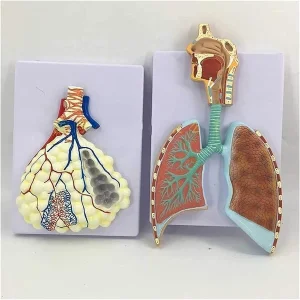
ODM Medical teaching with human respiratory system human alveolar enlargement model Manufacturer, Service
View Product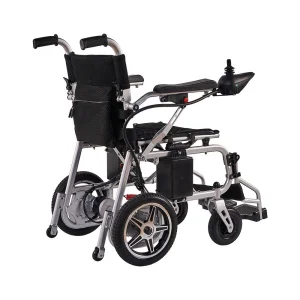
Wholesale High Power Lightweight Carbon Steel Electric Wheelchair Disc Brake Class II Adjustable Foldable Walker Rollator-Factory Direct Manufacturers, Factories
View Product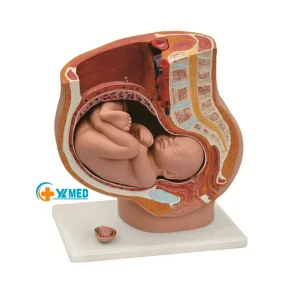
ODM Human Female Pelvic Section Pregnancy Anatomical Model Nine Months Baby Fetus Model Life Size with Removable Organs 4-Parts Manufacturer, Manufacturers
View Product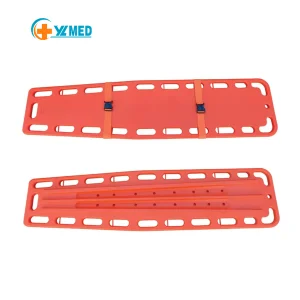
China Portable Emergency Steel & Metal Furniture ABS Water Floating Stretcher Foldable Rescue Board for Wounded Patients Hospital Use Manufacturer, Service
View Product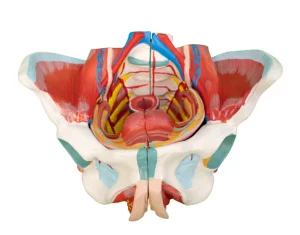
China Life Size Human Female Pelvis Model with Pelvic Floor Muscles, Vessels Nerves & Reproductive, 4 Parts Removable Organs, for the teaching of physiology and hygiene in the teaching of anatomy schools Factories, Quotes
View Product