
Start with the Four Product Lines Most Often Requested in Indonesia Sourcing Conversations
This opening product row keeps the original product images and URLs intact while adding an Indonesia procurement lens. It covers anatomy teaching, patient transfer, rehabilitation mobility and tactile simulation models — four categories that often travel together in distributor, hospital and school tenders.
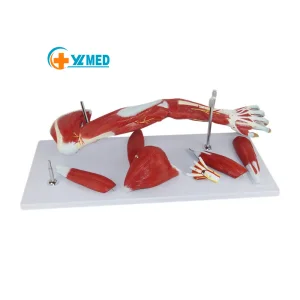
Useful for Jakarta nursing schools, Surabaya clinical skills laboratories and distributor catalogues that need upper-limb anatomy with vascular and nerve detail for repeated classroom demonstration.
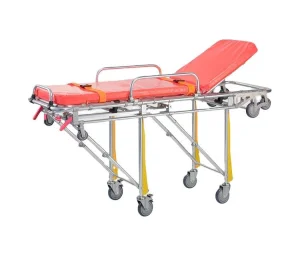
A practical fit for ambulance services, emergency departments and regency hospitals that need storable transfer equipment and straightforward spare-part planning across Indonesia.
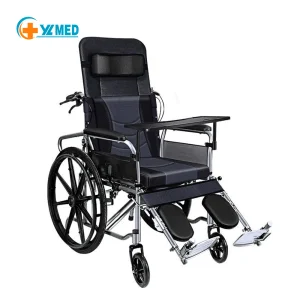
Designed for home-care dealers and rehabilitation distributors that need compact, storable mobility products suitable for island-wide last-mile delivery.
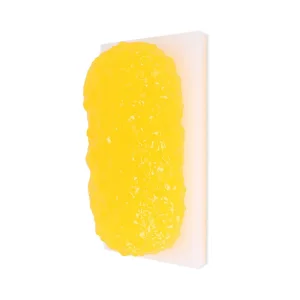
Supports school training, nursing simulation and public health education where silicone gel tactility and repeated handling matter more than decorative presentation alone.
Why Indonesia Is a High-Priority Market for Suture Pads, Kits and Simulation Supply
Indonesia’s healthcare education and service network is diverse: public and private universities, nursing and midwifery academies, hospital training centres, emergency care providers, private clinics and a growing home-care distribution channel. This diversity creates a procurement pattern that differs from single-channel markets. A Jakarta distributor may need a mixed container for hospital, laboratory and school customers, while a university in Sumatra may prioritise structured skills assessment, local-language labelling and reliable replacement consumables. A hospital group in Sulawesi may care more about documentation, after-sales response and consistent quality across repeat orders.
Suture pads and kits sit at the intersection of education, clinical simulation and consumable planning. Buyers are not simply comparing a price per piece. They are comparing cost per competent learner: how many practice attempts a pad supports, whether the skin layers feel realistic enough to teach correct needle angle, whether the instruments remain usable, and whether replacement pads can be reordered without renegotiating the entire catalogue. That is why supplier information gain matters. A manufacturer that can explain material behaviour, layer construction, kit configuration, packaging resilience and documentation readiness is easier to trust than a supplier that only lists item numbers.
For Indonesia, the most successful sourcing strategy is usually modular. A distributor starts with pads and instruments, then adds anatomy and nursing models, then moves into private-label packaging or local-language instruction. Hospitals and training institutions can phase purchases around accreditation cycles, trainer availability and classroom throughput. This phased approach protects cash flow while building a dependable supply relationship.
Academic Institutions
Medical, nursing, midwifery and health-science programmes need predictable teaching outcomes, visible assessment criteria and durable products for repeated student use.
Hospitals & Clinics
Clinical skills labs, emergency departments and private clinics value kit completeness, infection-control routines, instrument quality and responsive replacement supply.
Distributors & OEM Brands
Importers and private-label brands need mixed-category orders, packaging flexibility, MOQ discipline and specification sheets that can support tender submissions.
What a Professional Suture Pad and Kit Should Contain
A useful suture pad is an engineered training surface, not a decorative block of silicone. The strongest kits are specified by learning outcome: correct instrument grip, needle entry angle, tissue resistance, suture placement, knot security and wound-closure confidence.
Layers, materials and handling
High-quality training pads usually combine a skin-like top layer, a simulated dermis or fat layer, a reinforcing mesh and a stable base. The top layer should accept a needle without excessive tearing, provide realistic drag and hold sutures under modest tension. Softer gel pads are helpful for early learners, while firmer multi-layer pads are better for advanced closure practice, deep-wound simulation and instrument coordination.
Material selection also affects storage and repeat use. Latex-free formulations are easier to position for institutional procurement. Silicone gel can offer tactile realism, but the exact firmness, colour and thickness should match the training level. A kit intended for nursing fundamentals may prioritise a forgiving surface and simple wound patterns; a surgical skills lab may require deeper layers, curved wounds, anchoring points and replaceable inserts.
Instrument quality is often overlooked. A complete kit may include a needle holder, tissue forceps, suture scissors, a scalpel handle, sterile or non-sterile practice sutures, needles, a tray and a storage case. For Indonesia, humidity-resistant packaging, clear model identification and replacement consumables are especially important because reorders may travel through multiple islands before reaching the final training centre.
Specification anatomy buyers should verify
- Skin-like top layer with realistic needle drag and suture retention.
- Dermis, fat or muscle simulation depending on the training level.
- Reinforcing mesh or anchoring points to prevent premature tearing.
- Latex-free material declaration and colour-fast, non-toxic construction.
- Replaceable pads or refill packs to reduce long-term cost.
- Instrument set matched to wound-closure curriculum requirements.
- Clear labelling, model number, lot information and storage guidance.
- Export packing suitable for humid, hot and multi-leg shipping routes.
Example evaluation weighting
Illustrative buyer weighting, not a statistical claim. Use it as a discussion framework with your clinical or academic stakeholders.
Localization, Compliance and Commercial Support in Indonesia
Indonesia is not a single handover point. Goods may move from a port or international warehouse to a licensed importer, then to a Jakarta distributor, then to a university in Sumatra or a hospital group in Sulawesi. Each handover increases the value of clear labelling, robust packaging and documentation that can be understood quickly.
Documentation Package
Prepare product specifications, material declarations, packing lists, model photos, QC references and instruction sheets for the importer’s tender and customs teams.
Registration Awareness
Where products are positioned as medical devices, registration is normally handled by a licensed Indonesian importer in coordination with Ministry of Health requirements. Training models must be positioned accurately.
Climate-Ready Packaging
Humidity, heat, salt air and multi-leg transport call for sealed inner bags, desiccant where appropriate, anti-mould protection and cartons tested for stacking and drops.
After-Sales Support
Distributors benefit from product photos, short training videos, spare-part lists and an English-speaking export contact who can answer specification questions quickly.
Labeling and language
For a serious Indonesia launch, English-only packaging is often not enough for distributor confidence. Product names, model numbers, storage conditions, warning statements and instruction summaries should be discussed with the importer. Where Bahasa Indonesia labelling is required or commercially useful, agree the exact text, label position and packaging artwork before mass production. This reduces rework and helps the local distributor present the product professionally to hospitals and schools.
It is equally important to keep product claims precise. Training pads, anatomical models and simulation kits are educational or training products unless they are registered and positioned for clinical use. Clear positioning protects the importer, supports tender compliance and avoids unnecessary registration friction.
Logistics and commercial flow
Typical Indonesia orders benefit from consolidation: anatomy models, suture pads, prepared slides, dental models, ECG machines and hospital furniture can be packed into one shipment and shipped through a major gateway before regional distribution. A single commercial invoice, coherent packing list and consistent model naming make the importer’s work easier. For first orders, request photos of export packing and confirm carton dimensions before booking freight. For repeat orders, lock a specification sheet so that future batches remain comparable even when packaging artwork changes.
Global Procurement Demand: Why Information Gain Beats Catalogue Parity
Across Europe, the Middle East, Africa, Latin America and Asia-Pacific, institutional buyers are under pressure to show transparent sourcing decisions. Distributors want product specifications that can be submitted to universities or hospitals. Hospital groups want supplier consistency and a clear escalation path. OEM brands want packaging that supports their own market positioning. The common thread is documentation behind the product, not just the product photo.
Henan Yulin Edu. Project Co., Ltd. is positioned to support this shift because the factory combines a long manufacturing history with a broad catalogue. Founded in 1958 and ISO 9001 certified since 2008, the company manages more than 200 professional staff and RMB 120 million in registered capital, with production and export coordination from Xinxiang, Henan. For an Indonesia distributor, this means suture pads and kits can be sourced alongside anatomy models, nursing simulation models, prepared slides, dental teaching models, ECG machines and hospital furniture. Mixed-category consolidation reduces the administrative burden of managing many small suppliers.
Global buyers increasingly ask for material declarations, packaging photographs, model-level specifications and replacement-part clarity. A supplier that can provide these items quickly is more likely to become a repeat partner. The commercial benefit is clear: fewer surprises, faster tender responses and a stronger local resale story.
Send Inquiry NowOne accountable manufacturer, multiple product lines
Procurement teams can consolidate suture pads and kits with anatomy models, CPR and nursing simulators, skeleton models, dental teaching equipment, biology prepared slides, hospital furniture and medical instruments. This reduces supplier-management load while keeping a single point of contact for specifications and export packing.
- Private-label and OEM packaging discussion for distributors.
- Export packing coordination and mixed-category consolidation.
- ISO 9001 quality management system since 2008.
- Product documentation support for tenders and import registration discussions.
From a Single Suture Pad Order to a Simulation-Programme Solution
Institutions often begin with a small suture pad purchase and later ask for a complete skills laboratory solution. A well-designed supplier response connects products to curriculum, room layout, trainer workload and consumable replacement. This is where a manufacturer with broad medical education experience adds practical value.
Standardized Skills Assessment
Define the competency checklist before choosing a pad. If learners must demonstrate instrument grip, suture spacing, knot security and wound apposition, the kit should support repeatable assessment rather than one-off demonstration.
Multi-Station Laboratory Planning
Calculate pad quantity by station, cohort size, sessions per semester and replacement frequency. This prevents over-ordering expensive instruments while ensuring enough consumables for assessment days.
Infection Prevention & Clean-Up
Training laboratories need cleanable work surfaces, clear storage and a simple disposal routine for practice consumables. Non-sterile training kits should be clearly distinguished from clinical products.
Blended Learning Content
Short videos, labelled photos and trainer guides help Indonesian institutions maintain consistency when multiple instructors teach the same skills module.
Phased Procurement
Start with core pads and instruments, then add refill packs, advanced wound patterns, anatomy models and simulation manikins as the programme matures.
Local Distributor Enablement
Product photos, specification sheets, packaging options and replacement-part guidance help the Indonesian distributor sell beyond the first tender.
Technical Roadmap and Future Outlook for Suture Training Products
The next stage of medical simulation will be shaped by material realism, modular replacement, digital learning support and procurement transparency. Buyers do not need to wait for every new technology before purchasing; they can specify a roadmap-friendly kit today and expand as training requirements mature.
Material Realism
Multi-layer silicone and gel surfaces with controlled needle drag, stronger suture retention and clear differentiation between basic, intermediate and advanced wound patterns.
Refill & Modularity
Replaceable pad inserts, modular wound kits and separate instrument sets reduce waste and let institutions scale laboratory capacity without replacing the whole kit.
Digital Content Support
QR-linked instruction sheets, Bahasa Indonesia training notes and short assessment videos can support trainers across multiple campuses and islands.
Sensor-Assisted Feedback
Emerging sensorized pads may provide feedback on needle depth, angle and suture tension. Early buyers should prioritise a supplier that can offer both conventional and roadmap-ready formats.
Factory Credentials and Localized Support from Henan Yulin Edu. Project Co., Ltd.
Henan Yulin Edu. Project Co., Ltd. has built educational and medical training equipment in Xinxiang, China, for more than six decades. Our quality management system has been ISO 9001 certified since 2008, and our operating principle is simple: quality first, service first. Registered capital is RMB 120 million, with more than 200 professional staff involved in product development, manufacturing, inspection and export coordination.
For Indonesian buyers, this history matters because it supports supply stability. A distributor does not want to explain a product change to a hospital every six months. A university does not want a laboratory stocked with products that cannot be replenished. A private-label brand does not want packaging that fails on arrival. The factory’s experience across anatomy models, nursing simulators, laboratory slides, dental teaching models and hospital equipment helps anticipate these practical issues before they reach the end user.
Address: No. 8, Daoqing Road, Industry Park, Hongqi District, Xinxiang, Henan, China.
Email: [email protected]
Phone: 0086-13503800666
A transparent five-step process for overseas buyers
01 · Share Requirements
Send product types, target learner group, quantities, destination city or port, packaging expectations and any tender or registration context.
02 · Catalogue & Proposal
Receive matched models, specifications, photos, packaging options, replacement-part guidance and shipping suggestions.
03 · Sample Evaluation
Evaluate materials, instrument quality and kit completeness with instructors or clinicians before confirming bulk production.
04 · Production & QC
Manufacturing and inspection follow the ISO 9001 quality management system, with clear communication on specifications.
05 · Export & After-Sales
Protective export packing, shipment coordination and responsive after-sales support for distributors and institutions.
24/7 Responsive Service
Our team is online 24 hours a day, 7 days a week. Whatever the time zone, buyers receive a detailed answer as quickly as possible, typically within 24 hours.
Design & Packaging Team
In-house specialists support product presentation, private-label packaging and artwork communication that helps distributors increase resale value.
Professional Expertise
Decades of category experience across medical teaching models, nursing simulation, laboratory slides and hospital equipment support practical product selection.
60+ Years of Supply Stability
A long factory history and integrated partner supply chain support one-stop orders, repeat supply and predictable communication for overseas distributors.
Ten product lines available for mixed-category Indonesia sourcing
Frequently Asked Questions from Indonesian Buyers
These answers reflect the questions most often raised by distributors, universities, hospital procurement teams and private-label brands preparing a first or repeat order.
Q. Is Yulin Medical a manufacturer or a trading company?
We are a manufacturer. Henan Yulin Edu. Project Co., Ltd. was founded in 1958 and operates its own factory in Xinxiang, Henan, China, with more than 200 professional staff. For one-stop orders, we also coordinate a stable network of long-term partner factories.
Q. What quality certification do you hold?
Our quality management system has been ISO 9001 certified since 2008. Product-specific documentation can be provided on request to support tenders, supplier qualification and import registration discussions in Indonesia.
Q. Can you support Indonesia product registration?
We can provide product specifications, material information, photos and packaging details to support registration discussions. Where a product is positioned as a medical device, the registration process is normally managed by a licensed Indonesian importer in coordination with Ministry of Health requirements. We recommend confirming the exact regulatory pathway before placing a clinical-use order.
Q. Do you support OEM, private label and custom packaging?
Yes. Our in-house design and packaging team can discuss private-label packaging, product presentation, label content and carton artwork for distributors. Packaging artwork should be confirmed together with the local importer to ensure it meets market expectations.
Q. How do I choose the right suture pad kit?
Start with the learner outcome. For basic wound closure, choose a forgiving pad with clear layers and simple wound patterns. For advanced surgical skills, specify deeper tissue layers, stronger anchoring, curved wounds and a more complete instrument set. Always compare replacement cost, pad durability and instrument quality, not only the initial unit price.
Q. How are products shipped to Indonesia’s different islands?
We support export packing suitable for multi-leg transport. Many buyers consolidate mixed-category orders and ship through a major gateway before regional distribution. Provide the destination port, city and order mix so that packing and shipping options can be reviewed from the outset.
Q. What is the minimum order quantity and lead time?
MOQ and lead time depend on the product mix, packaging requirements and whether OEM artwork is involved. Mixed-category orders may combine several product lines. Send your target quantities, destination and required delivery date so the export team can propose a practical schedule.
Q. Can we evaluate a sample before a bulk order?
Yes. Sample evaluation is recommended. Ask your instructors or clinicians to assess needle drag, tissue layer feel, suture retention, instrument grip and kit completeness. For Indonesia, also review packaging, labelling and storage recommendations before confirming the bulk specification.
Q. Are your products suitable for both training and clinical use?
Product positioning matters. Anatomy models, training pads and simulation kits are generally used for education and training. Clinical-use claims should only be made after confirming the applicable regulatory status with the licensed importer. Keeping training and clinical-use catalogues clearly separated is the safest approach.
Q. How quickly will I receive a reply?
Our export team is online 7 days a week and typically replies within 24 hours with catalogues, specifications, packaging options and shipping suggestions. For urgent tender deadlines, include the submission date and required documents in your first message.
Need a Suture Pad and Kit Price List, OEM Proposal or Mixed-Category Indonesia Shipment Plan?
Tell us your target market, learner level, quantities, packaging expectations and destination city or port. Our team will recommend suitable suture pad and kit options, share specifications and propose a practical consolidation plan with other medical teaching and hospital products.
Bottom Product Grid: Eight More Lines for Indonesian Distributors, Schools and Hospitals
These eight products complete the original product set and support mixed-category orders across anatomy teaching, dental demonstration, laboratory slides, beauty and massage furniture, ECG monitoring and classroom models. Each image and product URL is retained for direct sourcing.
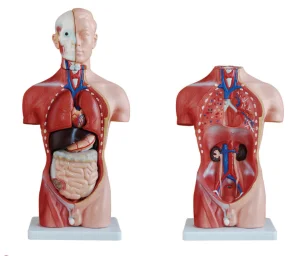
Useful for secondary schools, nursing academies and distributor catalogues that need visible organ relationships for classroom demonstration.
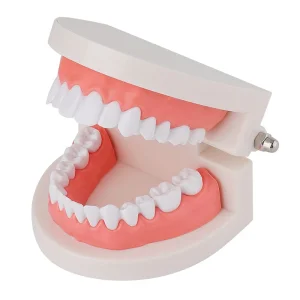
Supports school health education, dental clinics and public health campaigns with a clear visual demonstration format.
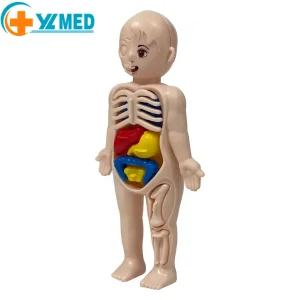
An engaging option for school groups, science corners and educational distributors serving younger learners.
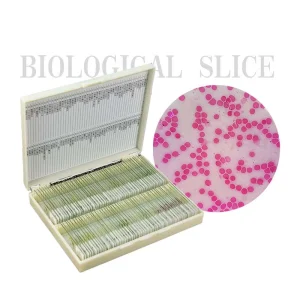
Fits biology laboratories, university practical classes and school science departments requiring organised slide sets.
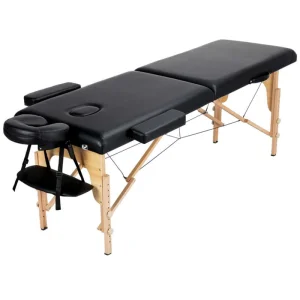
For beauty-salon suppliers, spa distributors and wellness equipment dealers seeking practical furniture options.
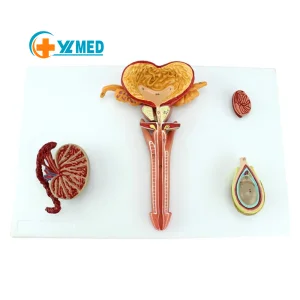
Appropriate for structured anatomy lessons, school health education and training departments requiring clear anatomical demonstration.
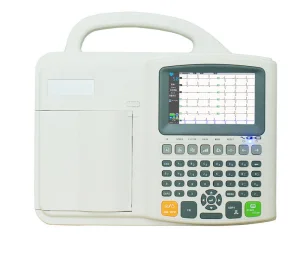
For clinic equipment distributors and hospital suppliers looking to add portable diagnostic devices to a broader medical catalogue.
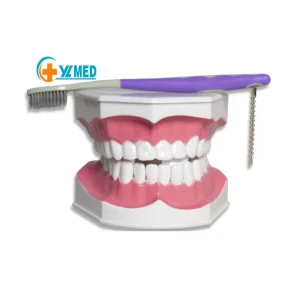
Useful for dental schools, demonstration clinics and distributors supporting dental assistant training programmes.