
ISO 9001 Quality System · Factory Since 1958 · Poland-Ready Documentation
Wholesale Dental Tools and Equipment Manufacturer & Factory in Poland
Factory-direct LED dental lights, whitening units, dental models, radiography equipment, instruments and clinic accessories for Polish distributors, dental laboratories, clinics and universities — supported by CE documentation guidance, Polish-language labelling support, 230 V / 50 Hz configurations and consolidated EU shipping.
Featured Poland-Ready Dental Products
Four High-Demand Lines for Polish Clinics, Labs and Distributors
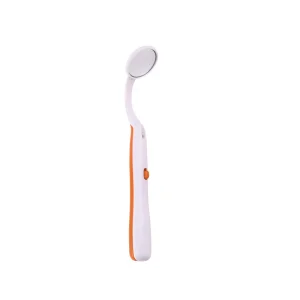
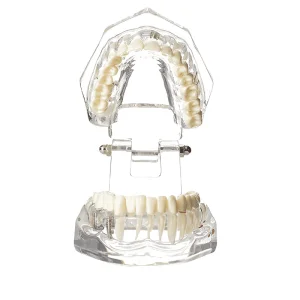
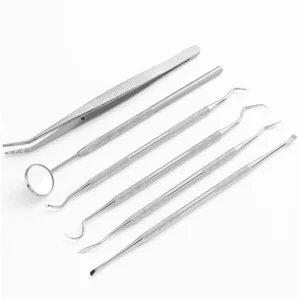
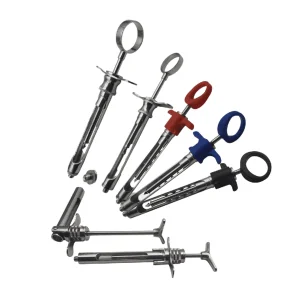
These four product families appear most often in Polish project briefs: surgery and examination lighting, implant demonstration models, stainless-steel instrument sets and aspiration syringes. Every item links to its full specification page and can be quoted with Polish-language documentation support and 230 V / 50 Hz options where applicable.
Executive Summary
Why Poland Is a Strategic Market for Wholesale Dental Tools and Equipment
Poland is one of the European Union’s most active dental markets, and it is unusually dependent on private spending. Care is delivered through a dense network of private practices, group-owned clinics, dental laboratories, university hospitals and public providers. For a wholesale buyer, that structure creates a specific sourcing problem: demand is fragmented across thousands of decision-makers, while the compliance and service expectations are those of a single, highly regulated EU market.
This page is written for that buyer. It is not a catalogue in disguise. It explains how dental tools and equipment are actually procured in Poland, which documentation the importer must hold, how 230 V / 50 Hz localisation changes product configuration, where Chinese factory-direct supply creates genuine cost and speed advantages, and where it does not. Our aim is information gain: to answer the questions that decide a project before a purchase order is ever discussed.
Three forces are reshaping the opportunity. First, private practice growth and aesthetic dentistry have increased demand for LED lighting, whitening devices, aspiration equipment and high-turnover instruments. Second, the dental laboratory sector continues to invest in CAD/CAM, 3D printing and finishing workflows, which pulls through models, suction, cleaning and sandblasting equipment. Third, dental faculties and simulation centres are upgrading teaching infrastructure, creating steady demand for demonstration models and hygiene training products.
At the same time, the compliance bar has risen. EU MDR is not a paperwork formality, and a Polish distributor cannot place a device on the market without a technical file, a declaration of conformity, an identified economic operator and instructions in Polish. The suppliers who win long-term business in Poland treat regulatory documentation, spare parts and language localisation as part of the product — not as an afterthought to the container.
Private-Practice Density
Poland has a broad base of private dental practices, which means frequent, smaller purchases and a strong service sensitivity. Wholesalers who can replenish fast and supply spare parts win repeat orders.
Dental Laboratories & CAD/CAM
Polish laboratories continue to invest in milling, 3D printing and finishing equipment. That investment pulls through models, suction units, sandblasting tools and cleaning equipment.
Education & Simulation
Dental faculties, technician schools and simulation centres require demonstration models, hygiene training products and durable teaching aids that survive daily student use.
Market Landscape
The Polish Dental Industry Landscape: Where Demand Actually Sits
Poland is not one market; it is a network of regional dental economies with different patient flows, purchasing power and cross-border dynamics. A supplier that understands this geography can plan stock, service coverage and distributor support far more accurately.
Regional demand centres
Mazowieckie (Warsaw) concentrates corporate dental groups, importers, tender agents and aesthetic clinics. It is the most likely location for a national distributor’s head office and for English-speaking procurement teams.
Małopolskie (Kraków) combines a strong university dental faculty, private clinics and dental tourism. Laboratories here often buy finishing and demonstration equipment alongside clinical consumables.
Wielkopolskie (Poznań) has a manufacturing and distribution base, making it a natural location for warehouse and service partners serving western Poland.
Dolnośląskie (Wrocław) benefits from cross-border patients from Germany and Czechia, supporting private clinics that invest in premium equipment and patient experience.
Pomorskie (Gdańsk, Gdynia) is both a patient market and a logistics gateway. The Baltic container terminals make it a practical first point of entry for sea freight.
Śląskie (Katowice), Lubelskie and Podlaskie add dense urban populations, industrial health services and price-sensitive practices near the eastern border. Here, value engineering and reliable consumables matter more than premium branding.
Regulatory Map
Regulatory Compliance and Localisation: What “Poland-Ready” Actually Means
Dental equipment entering Poland must satisfy EU medical device law, electrical safety, environmental rules and Polish language requirements. The table below is a practical map for importers, distributors and clinic groups, not a substitute for legal advice from a qualified regulatory consultant.
| Requirement area | What it covers | Practical action for the importer |
|---|---|---|
| EU MDR 2017/745 | Device classification, conformity assessment, CE marking, technical documentation, post-market surveillance and vigilance. | Confirm the class with your notified body or regulatory adviser. Keep a model-specific declaration of conformity and technical file. |
| Economic operators | Manufacturer, authorised representative, importer and distributor responsibilities, including the PRRC requirement. | Name the importer on the label. Appoint an EU authorised representative where the manufacturer is outside the EU. |
| Polish authority | URPL supervises medicinal products and medical devices in Poland; market surveillance and incident reporting apply. | Keep Polish contact details and a documented route for vigilance and field safety corrective actions. |
| Language and labelling | Instructions for use, labels and safety information in Polish, with applicable symbols and traceability data. | Budget for professional translation and in-country review before artwork approval. Do not leave this to the printer. |
| UDI and EUDAMED | Basic UDI-DI, device registration, single registration number and data consistency across labels and databases. | Align UDI data with the technical file and the artwork. Check that the importer’s details match across all documents. |
| Electrical safety | Low Voltage Directive 2014/35/EU, EMC Directive 2014/30/EU and the EN / IEC 60601-1 series for medical electrical equipment. | Request test reports for the exact model and voltage variant. A report for a similar model is not interchangeable. |
| Dental standards | EN ISO 7494 for dental units, EN ISO 9680 for operating lights, EN 13060 for small steam sterilizers, EN ISO 3630 for endodontic instruments. | Match the standard cited in a tender specification to the test evidence you can actually provide. |
| Environment | RoHS, WEEE, batteries and packaging extended producer responsibility. | Register as a producer where applicable and keep material declarations for electronic equipment. |
| Whitening claims | Cosmetic Regulation (EC) No 1223/2009 versus medical device claims; hydrogen peroxide concentration limits apply. | Confirm the legal route before printing marketing claims. A whitening lamp can be a cosmetic device or a medical device depending on its intended use. |
| Software and data | MDR software lifecycle, cybersecurity and GDPR where patient data is processed. | Complete a data protection assessment with the clinic if the device stores or transmits patient information. |
A CE mark is a legal claim, not a sticker. For private-label orders, agree in writing who is the legal manufacturer, whose name and address appear on the label, who owns the technical file and who handles vigilance. A factory that supplies a valid technical package is more valuable than one that simply offers the lowest quotation.
Localisation & Support
Localisation and Local Support: The Difference Between a Container and a Clinic-Ready Delivery
Polish buyers rarely reject a product because it is made in China. They reject it when it arrives without the right plug, the wrong voltage, an English-only manual, no spare-parts plan or a technical file that cannot be produced during an inspection.
Electrical Configuration
Poland uses 230 V / 50 Hz with Type E sockets. Export versions should use CE-compliant power supplies, correctly rated fuses, suitable cord length and factory-fitted plugs. Adapters are tolerated by some buyers; a moulded plug and a declared voltage variant are far easier to defend in a tender.
Polish Language Pack
Instructions for use, label text, a quick-start guide and service documentation can be prepared in Polish. A short native-speaker review prevents the errors that turn a minor translation issue into a compliance finding or a clinic complaint.
Spare Parts and Service
A recommended spare-parts kit, a 12-month warranty baseline, a documented dead-on-arrival replacement policy and an RMA workflow matter more to a dealer than a marginal price difference. Service response is the real product in the aftermarket.
Logistics and Customs
Quotations can be prepared as EXW, FOB, CIF, DAP or DDP. Expect EORI registration, a 23% VAT rate, Intrastat reporting and HS classification to be confirmed with your customs broker. Sea freight into Gdańsk or Gdynia, rail via Małaszewicze and air freight into Warsaw or Katowice each serve a different urgency and budget.
Indicative Transit Windows to Poland
Transit windows are indicative, excluding customs clearance and seasonal port congestion. They are provided for planning, not as contractual transit times.
Factory Economics
China Factory Supply-Chain Advantages for Dental Equipment
The advantage of a Chinese factory is not simply a lower hourly rate. It is the depth of the supplier ecosystem, the speed of tooling and rework, and the ability to consolidate a mixed dental order that would otherwise require five purchase orders across Europe.
Dental equipment draws on several Chinese industrial clusters at once. Electronics, LED drivers, sensors and control boards come from the Pearl River Delta and the Yangtze River Delta. Stainless-steel fabrication, furniture-grade components and moulded plastics come from specialist suppliers in Guangdong, Zhejiang and Jiangsu. Educational and medical training models come from established manufacturing bases in Henan, including Xinxiang, where our own factory has operated since 1958.
That geographic depth shortens the path from a sample request to a production-ready product. When a Polish distributor asks for a custom label, a Polish-language manual, a different plug or a modified packaging configuration, the change can be handled inside one supply chain rather than negotiated between unrelated traders.
Factory-direct sourcing also changes the quality conversation. A manufacturer that controls incoming inspection, in-process checks, functional testing and final packing can provide evidence of what was tested and when. That evidence is exactly what an EU importer needs when a customer or a market surveillance authority asks a difficult question.
For mixed orders, consolidation is a major hidden saving. A single container or a single consolidated air shipment can combine dental lights, models, instruments, whitening units and clinic accessories. One set of export documents, one inspection report and one point of contact reduce administrative cost and the risk of partial deliveries.
60+Years of Manufacturing
200+Professional Staff
10Product Lines
2008ISO 9001 Certified
¥120MRegistered Capital
24hReply Target
01Design brief
02Tooling & samples
03Production
04Functional testing
05Packing & artwork
06Consolidation
Buyer Structures
Global Procurement Demand: How Professional Buyers Structure Dental Equipment Orders
Different buyers need different things from the same factory. A national distributor cares about documentation and service coverage; a dental school cares about curriculum fit; a tender agent cares about deadlines and paper. Our quotation process is structured around these differences.
| Buyer type | Typical basket | Decision drivers |
|---|---|---|
| National dental distributor | LED lights, whitening units, instruments, models, chair accessories | Documentation completeness, margin, spare parts, training, delivery reliability, private-label packaging |
| Regional dealer | High-turnover instruments, aspiration products, consumables | Fast replenishment, low MOQ, local service support, clear price list |
| Clinic group / DSO | Standardised lighting, equipment kits, training models | Consistency across sites, warranty terms, installation and maintenance plan |
| Dental faculty or school | Demonstration and hygiene models, teaching aids, clinic equipment | Durability, curriculum alignment, replacement parts, budget-cycle timing |
| Dental laboratory | Sandblasting, cleaning, models, suction and finishing tools | Throughput, noise, maintenance intervals, compatibility with existing workflow |
| Public hospital or tender | Lights, radiography, clinic equipment and accessories | Formal compliance package, test reports, delivery schedule, warranty statement |
| E-commerce seller | Compact models, whitening devices, small instruments | Packaging quality, product photography, barcode and label data, low damage rate |
2025–2030 Outlook
Dental Equipment Trends Reshaping Wholesale Demand
The direction of travel is clear: more digital workflows, more aesthetic dentistry, more infection-control discipline and more scrutiny of the total cost of ownership. Each trend changes what a Polish buyer puts on a purchase order.
Digital Dentistry and Interoperability
Intraoral scanners, CAD/CAM and 3D printing increase demand for compatible models, curing lights and workspace accessories. Buyers now ask about file formats, firmware updates and software support, not just hardware specifications.
LED and Cold-Light Aesthetics
Whitening and aesthetic treatments continue to grow in private practice. The winning products combine stable output, comfortable patient experience and a clear regulatory pathway for the claims made in each market.
Infection Prevention
Autoclavable surfaces, removable components and single-use accessories are increasingly specified. Equipment that is difficult to clean creates a clinical risk and a support burden, no matter how attractive the price.
Ergonomics and Light Quality
Dental lights are judged on colour rendering, shadow control, heat management and adjustability. Clinicians notice the difference immediately, which makes light quality a differentiator for distributors selling into premium practices.
Sustainability and Repairability
EU buyers increasingly ask about packaging reduction, spare-part availability and product lifespan. A repairable device with a documented parts list has a lower lifetime carbon footprint and a better commercial case than a sealed disposable unit.
Connected Devices and Cybersecurity
Where equipment connects to practice software or stores patient data, cybersecurity and GDPR become procurement criteria. Suppliers need to document software versions, update mechanisms and data flows before a clinic will sign.
Dual sourcing is now standard practice. Many Polish distributors keep an EU brand for premium tenders and a carefully documented factory-direct line for price-sensitive private practices. The two portfolios can coexist when the documentation and service model are credible.
Application Scenarios
Localised Application Scenarios Across Poland
The same product can require a different configuration depending on where it is used. These are the scenarios that most often appear in Polish enquiries, and the configuration points that decide whether a delivery is accepted without friction.
University Dental Clinics
Faculties in Warsaw, Kraków, Poznań, Wrocław, Gdańsk, Lublin and Białystok run simulation and clinical training programmes. They need durable demonstration models, hygiene training products and equipment that can tolerate continuous student use.
Private Practices and Aesthetic Dentistry
Private clinics invest in patient experience, which makes lighting, whitening and comfort-related accessories attractive. Documentation must match the claims made in marketing materials, especially for whitening products.
Dental Laboratories and CAD/CAM Centres
Laboratories buy sandblasting, cleaning, suction, model systems and finishing tools. Compatibility with existing workflows, noise levels and maintenance intervals are often more important than a small price difference.
Public Hospitals and NFZ-Contracted Facilities
Public procurement requires formal compliance packages, delivery schedules and warranty statements. Timelines are often fixed by budget cycles, so suppliers who can produce documentation quickly have a real advantage.
Mobile and Outreach Dentistry
Mobile units and outreach programmes need compact, robust equipment with simple power requirements and protective transport cases. Weight, set-up time and tolerance of vibration during transport become design criteria.
Whitening Studios and Beauty Salons
Beauty-sector buyers are price-sensitive and move quickly, but the regulatory boundary between cosmetic and medical claims is strict. Confirm the legal route before supplying equipment intended for consumer treatments.
Sourcing Playbook
A Five-Step Sourcing Playbook for Polish Buyers
This sequence reduces the risk of a costly first order and creates the documentation trail that a distributor needs for its own customers, tenders and audits.
01
Define the Regulatory Route
Decide whether each item is a medical device, a cosmetic product or a general consumer product. Confirm the class, the claims and the economic operator before discussing price.
02
Build the Specification
Write down voltage, plug type, language, standards, packaging, warranty, spare parts and acceptance criteria. A precise specification prevents most disputes.
03
Validate Samples and Documents
Test the sample with the people who will use it. Review the declaration of conformity, test reports and label artwork in parallel with the hardware.
04
Run a Pilot Order
Start with a realistic but modest order. Check packing, transit damage, customs documents and the first service cases before scaling.
05
Scale with Stock and Service
Agree a replenishment plan, a spare-parts kit and a named service contact. Growth comes from repeat orders, not from a single container.
One Accountable Manufacturer
Complete Sourcing Under One ISO 9001 System
Dental tools and equipment sit within a wider portfolio of medical teaching models, hospital equipment and emergency training products. Polish distributors can consolidate several categories into a single order, a single inspection report and a single point of contact.
01
Anatomy Models
View range → 02Biology Prepared Slides and Accessories
View range → 03Dental Tools and Equipment
View range → 04General Teaching Models
View range → 05Hospital Furniture and Equipment
View range → 06Hospital Machines and Tools
View range → 07Medical Apparatus and Instruments
View range → 08Medical Nursing Models
View range → 09Skeleton Models
View range → 10Suture Pads and Kits
View range →Lab Guide: Do You Really Know How to Observe Biological Prepared Slides?
Exhibition: The 5th Henan Provincial Educational Equipment Expo Concludes Successfully
Inside Our Product Showroom: medical teaching models and training equipment available for inspection in Xinxiang.
Buyer FAQ
Frequently Asked Questions from Polish Importers and Clinics
Straight answers to the questions that decide whether a first shipment becomes a long-term programme.
Is Yulin Medical a manufacturer or a trading company?
We are a manufacturer. Henan Yulin Edu. Project Co., Ltd. was founded in 1958 and operates its own factory in Xinxiang, Henan, China, with more than 200 professional staff. For one-stop orders, we also coordinate a stable network of long-term partner factories, which allows dental equipment, teaching models and hospital products to be consolidated without losing accountability.
What quality certification does Yulin Medical hold?
Our quality management system has been ISO 9001 certified since 2008. Product-specific documentation, test reports and declarations of conformity can be provided on request to support tenders, import registration and customer audits in Poland and elsewhere in the EU.
Do you support OEM, private label and custom packaging?
Yes. Our in-house design team develops private-label packaging and product presentation for distributors, helping increase shelf appeal and resale value in your market. We can also support Polish-language label artwork, instruction manuals and product photography for your catalogue and e-commerce listings.
What documentation do I need to import dental equipment into Poland?
At a minimum, expect a declaration of conformity, a technical file, risk management documentation, test reports for the applicable electrical and EMC standards, labelling and instructions in Polish, UDI data and the identity of the importer or authorised representative. Medical devices also require post-market surveillance and vigilance arrangements. The exact package depends on the device classification and intended use, so confirm it with your regulatory adviser before placing a bulk order.
Can you supply 230 V / 50 Hz versions with Type E plugs?
Yes. Poland uses 230 V / 50 Hz and Type E sockets. We can configure export versions with CE-compliant power supplies, correctly rated fuses, suitable cord length and factory-fitted plugs. Please specify the destination market on the enquiry so the quotation reflects the correct electrical variant.
How do you handle CE marking for private-label dental equipment?
CE marking is a legal claim that must be supported by a technical file, conformity assessment and a responsible economic operator. For private-label projects, agree in writing who is the legal manufacturer, whose name and address appear on the label, who owns the technical file and who handles vigilance. We can prepare the manufacturing and test documentation and coordinate with your EU regulatory partner, but we do not treat CE marking as a sticker applied after production.
Are LED whitening devices medical devices or cosmetic products in Poland?
It depends on the intended use and the claims made. Products intended to treat or prevent disease, or to alter physiology, may fall under EU MDR, while cosmetic whitening products are governed by the Cosmetics Regulation. Hydrogen peroxide concentration limits also apply, and higher concentrations used in dentistry are restricted to dental practitioners. Confirm the legal route and the permitted claims with a qualified EU regulatory consultant before printing packaging or advertising.
What are typical lead times and shipping routes to Poland?
Samples are typically prepared in 5–10 working days. Production usually runs 20–35 days depending on the product and customisation. Sea freight to Gdańsk or Gdynia is commonly 35–45 days, rail to Małaszewicze around 18–24 days, and air freight to Warsaw or Katowice about 5–9 days. These are indicative windows excluding customs clearance and seasonal congestion.
What is the MOQ and can I mix different products?
Minimum order quantities depend on the product and the level of customisation. Standard catalogue items can often be combined into a mixed order so that a distributor tests several categories in one shipment. Share your target basket and quantities, and we will propose a practical configuration rather than a rigid single-product MOQ.
Do you provide spare parts, service training and warranty support?
Yes. We can supply a recommended spare-parts kit, service documentation, video-based training and a 12-month warranty baseline. Dead-on-arrival cases and warranty claims are handled through a documented RMA process so that the distributor has a clear route for customer support.
Can you support a Polish public tender or an EU-funded clinic project?
We can prepare a tender support package covering specifications, declarations, test reports, warranty statements, spare-parts lists and delivery schedules. Public procurement has strict formal requirements and fixed deadlines, so early engagement is important. We work with your tender team to match evidence to the specification rather than promising documents we cannot provide.
How quickly will I receive a reply?
Our export team is online seven days a week and typically replies within 24 hours with catalogues, specifications, documentation lists and shipping options.
Do you also supply CPR training manikins and medical teaching models?
Yes. Our wider portfolio includes CPR and nursing simulation manikins, anatomy and skeleton models, suture pads, hospital furniture and emergency equipment. When choosing a CPR training manikin, match it to the learner group (adult, child or neonatal), check that real-time feedback covers compression depth, rate and ventilation, confirm alignment with current AHA resuscitation guidelines, and decide whether AED trainer integration is required. For advanced life-support programmes, an ACLS simulator with embedded scenarios offers more assessment value than a basic torso.
Wholesale Programme
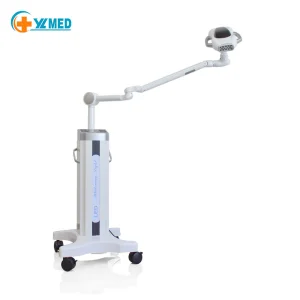
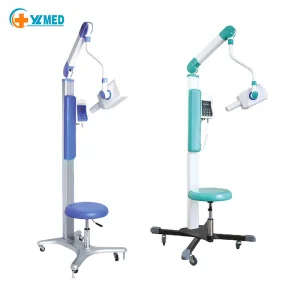
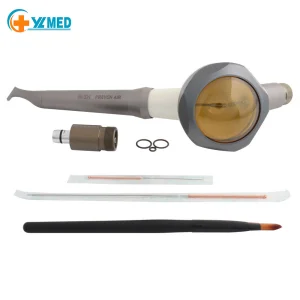
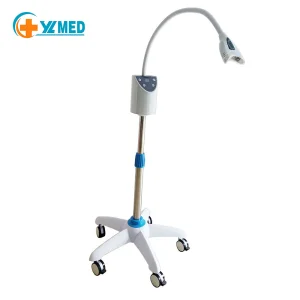
Eight More Dental Tools and Equipment Lines for Polish Wholesale Programmes
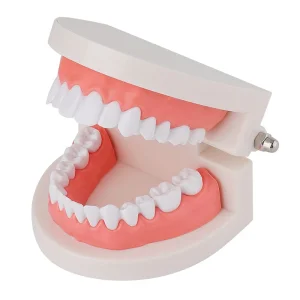
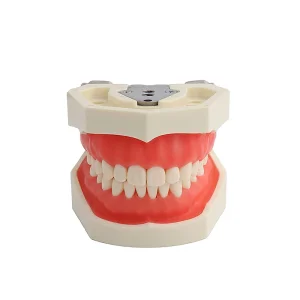
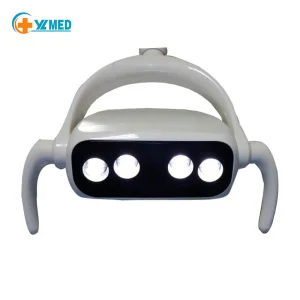
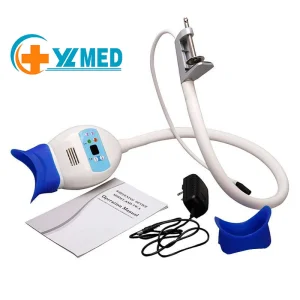
Training models, chair lighting, whitening instruments, radiography and cleaning equipment complete a practical dental portfolio for distributors, clinics, laboratories and schools.
Talk to the Export Team
Request a Poland-Specific Quotation and Documentation Package
Tell us the product lines, target quantities, voltage and plug requirements, Polish-language documentation needs and whether the order is for a distributor, clinic group, laboratory, university or public tender. We will respond with suitable models, a documentation checklist and a practical shipping plan.