
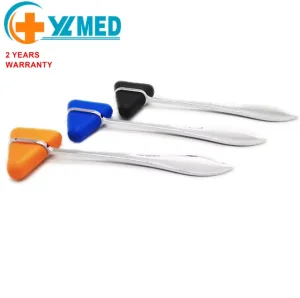
ODM Wholesale Professional Surgical Reflex Hammer — Medical Neurological Reflex Hammer (Quotes & Service)
Stainless steel neurological hammer used in exploración neurológica practice sessions, OSCE stations and physiotherapy labs.
Send Inquiry NowThese four items are the fastest-repeat lines for Spanish distributors serving medical faculties, nursing schools, Formación Profesional health programmes and hospital clinical-skills units. Every product page is live and quotable — the product title itself is the button.
Stainless steel neurological hammer used in exploración neurológica practice sessions, OSCE stations and physiotherapy labs.
Send Inquiry Now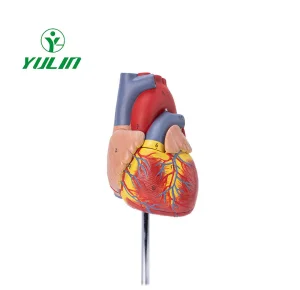
Life-size, flexible rubber heart with numbered structures — a standard item for Anatomía and nursing degree labs.
Send Inquiry Now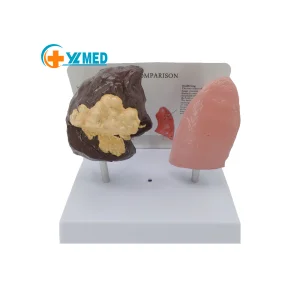
Dual-lung comparison model widely requested by Spanish atención primaria smoking-cessation and health-promotion campaigns.
Send Inquiry Now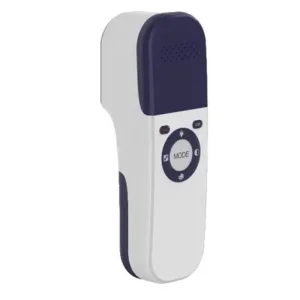
Portable near-infrared vein visualisation for paediatrics, elderly care and emergency departments; supports training ROI.
Send Inquiry NowSpain is not a single market — it is seventeen autonomous communities with seventeen procurement rhythms, plus a national health system that sets the clinical tone. Anyone supplying skeleton models, anatomical models and clinical teaching equipment to Spain has to understand both layers. Universities award their own degrees and control their own laboratory budgets; vocational training centres are funded regionally through Formación Profesional programmes; and public hospitals buy through structured tender platforms under Ley 9/2017 de Contratos del Sector Público (LCSP), with notices published on PLACSP and mirrored on regional portals such as those of Madrid, Cataluña, Andalucía and the Comunitat Valenciana.
That structure has a direct commercial consequence: very few Spanish institutions buy skeleton models directly from a foreign factory. Typical orders arrive through an importador-distribuidor that holds the commercial relationship, handles Spanish-language documentation, and — where applicable — acts as the EU economic operator. This is exactly the channel a factory should build for, not compete against. Repetitive demand is concentrated in:
Demand is structurally supported by demographics: Spain has one of the oldest populations in the European Union, which keeps pressure on nursing, physiotherapy, geriatric care and rehabilitation education year after year. It is also a highly competitive reseller market — margins for Spanish distributors depend on packaging quality, documentation speed and delivery reliability far more than on unit price alone.
Positioning tip for Spanish distributors: lead with teaching value and documentation, not with the lowest price. Public-sector evaluators score technical merit and after-sales support heavily, and a complete documentation pack is often what separates a winning bid from a disqualified one.
Across Europe, the Gulf, Latin America and Southeast Asia, the purchasing brief for anatomical and skeleton models has converged. Buyers no longer evaluate a single item; they evaluate a supply system. In practice, the same seven requirements appear in nearly every RFQ we receive:
ISO 9001 certificate, material declarations, conformity statements where applicable, and Spanish-language instructions are requested in the first email, not the last.
One container carrying skeletons, torsos, CPR manikins, hospital furniture and lab consumables — one invoice, one bill of lading, one contact person.
Distributor branding on the box, the base plate and the instruction leaflet — the single highest-value differentiator for resellers.
Repeat buyers plan academic years and tender windows in advance; a stable 25–40 day production cycle is worth more than a 5% discount.
Replacement stands, joints, mounting rods and interchangeable organs. Educational models take abuse; buyers check serviceability first.
Company profile, factory audit records, production capacity, testing protocol and packing specification in one PDF pack.
Institutions that order skeleton models item by item end up with a fragmented, mismatched catalogue. Our recommended macro-level solution is a three-tier architecture that can be quoted as a single consolidated programme and rolled out over several academic years.
Full-size articulated skeletons, desktop skeletons, skulls, spine and joint sets, 42 cm torsos and single-organ models. This tier defines the teaching baseline for every health-science faculty.
CPR and nursing manikins, airway and laryngoscope trainers, suture pads, vein finders, patient-education models. This tier converts anatomy knowledge into procedural competence.
Lab layout planning, labelling and storage systems, QR-linked digital guides, replacement-part programmes and staff training material. This tier protects the investment over a 5–10 year horizon.
For distributors, the same architecture becomes a catalogue strategy: a compact core range for stock, a confirmed-order range for tenders, and a seasonal promotional layer. Consolidating all three tiers with one manufacturer reduces inspection costs, harmonises packaging and, critically, removes the risk of mixed-quality lots arriving from multiple small workshops.
The category is quietly moving from “cast and paint” to engineered teaching assets. Four workstreams matter for buyers planning multi-year contracts.
High-durability PVC remains the workhorse, but low-migration and phthalate-free formulations are increasingly requested for classrooms. Impact-resistant base plates and stainless mounting hardware extend service life in high-turnover labs.
CT/MRI segmentation and photogrammetry of real specimens allow realistic reproduction of pathological anatomy — fractures, tumours, congenital variants — that traditional moulds cannot economically deliver at low volume.
Physical models linked to web-based anatomical content via a printed QR code: no app installation, works on any student smartphone, and keeps printed documentation in Spanish market-ready.
Unique device identification where the product scope requires it, digital documentation packs, recyclable or reduced packaging, and modular design so a single damaged part does not scrap a whole model.
A practical implication for Spanish buyers: specify repairability and part availability in the contract, not just the model count. A skeleton that cannot be re-strung or re-based is a five-year consumable, not a capital asset.
Anatomical and skeleton model manufacturing is a mature, fragmented industry undergoing consolidation. Three structural forces are reshaping it:
1. Consolidation of the supply base. The historic model was hundreds of small regional workshops, each with a narrow catalogue. Procurement teams now prefer fewer, auditable suppliers who can deliver anatomy, simulation and hospital equipment together — because every additional supplier adds an audit, a payment cycle and a traceability gap.
2. Manufacturing concentration in China, with quality stratification. Production clusters concentrated in Henan, Hebei, Jiangsu and Guangdong serve most of the world's education and medical-training demand. The important distinction is not country of origin but process discipline: factories with an established quality management system, documented inspection and stable material sourcing perform very differently from assembly workshops that re-sell finished goods.
3. De-risking without de-sourcing. European buyers increasingly pursue supplier diversification and dual-sourcing rather than exit. In practice this means keeping a primary Asian manufacturer but adding contractual safeguards: documented quality systems, third-party inspection access, staged shipments and EU-based stock for fast-moving lines.
For Spain specifically, the winning model is a factory-to-distributor chain with a clear division of labour: the manufacturer owns tooling, quality control and documentation; the Spanish distributor owns the customer relationship, tender response, Spanish-language support and last-mile logistics.
Compliance is where most first shipments to Spain lose time. The following framework is the one we apply when supporting Spanish importers, and it separates clearly between teaching models and medical devices — a distinction that is frequently mishandled.
Anatomical and skeleton models sold purely for education and demonstration generally fall outside the medical device definition. Where a product carries a clinical claim, or is intended for diagnosis, prevention, monitoring or treatment, EU Regulation 2017/745 (MDR) applies and a CE marking route with a notified body is required. The intended purpose stated on the label and in the instructions determines the classification — it must be agreed in writing before production.
Under EU rules an importer established in the Union carries defined obligations. For Spain, that importer is normally your distributor, whose details must appear on the labelling where required. Establishing this in the supply agreement — rather than after the container has sailed — avoids customs and post-market issues.
Instructions, assembly guides, structure legends and warranty terms translated into Spanish. Medical terminology must match Spanish academic usage (columna vertebral, cráneo, tórax, pelvis) rather than a literal machine translation, or evaluators will mark the tender response down.
Teaching and demonstration models are typically classified under HS 9023 00, a heading with a favourable EU duty position — always confirm the final classification with your customs broker. Wooden packaging must comply with ISPM 15; documents should include commercial invoice, packing list, certificate of origin and, where requested, a conformity declaration.
Valencia, Barcelona, Algeciras and Bilbao are the main entry points for education and medical cargo. Ocean transit from Chinese ports is typically measured in weeks rather than days; FOB is the most common starting point, with DAP quotations for buyers who prefer a landed figure to the Spanish warehouse.
A named after-sales contact, a spare-part schedule, and a documented process for transit damage. For public-sector buyers, the ability to replace a broken articulation within a defined window is often a scored criterion.
We provide documentation packs on request to support tenders and import registration. Compliance responsibilities are shared: the manufacturer supplies technical documentation and accurate labelling; the EU importer confirms market placement requirements for its own territory.
Yulin Medical has manufactured educational and medical training equipment in Xinxiang, Henan, China since 1958. The quality management system has been ISO 9001 certified since 2008. With registered capital of RMB 120 million and more than 200 professional staff, we control product development, manufacturing, inspection and export from a single base at No. 8 Daoqing Road, Hongqi District, Xinxiang.
Our operating motto is straightforward: quality first, service first. In practice that means factory-direct supply across ten product lines, in-house design and private-label packaging that raises distributor resale value, and mixed-category orders consolidated into a single shipment under one point of contact.
Ten specialised product lines allow Spanish procurement teams to source simulation, laboratory and hospital equipment from one accountable manufacturer instead of managing multiple suppliers:
Product types, quantities, target market, tender specification and any documentation or labelling requirement.
Matched models, technical specifications, packaging options, spare-part list and shipping suggestions.
Physical samples reviewed by your instructors or clinicians before any bulk commitment is placed.
Manufacturing and inspection executed under the ISO 9001 quality management system, with photographic reporting.
Protective export packing, delivery coordination to your chosen Spanish port or warehouse, and responsive after-sales support.
These lines are typically combined with skeleton and anatomy models to fill a single container and complete a tender package — laboratory equipment, ENT and airway training instruments, patient-education models and rehabilitation aids.
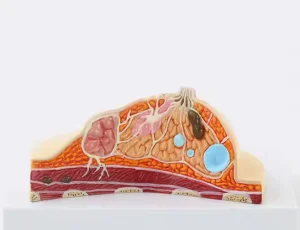
A staple for prevención and screening campaigns run by primary care and local health authorities.
Send Inquiry Now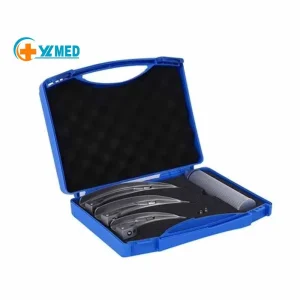
Airway-management training hardware for anaesthesia, intensive care and emergency medicine programmes.
Send Inquiry Now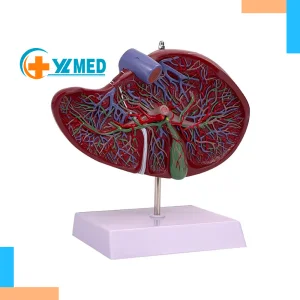
Single-organ model that pairs naturally with a torso or full skeleton in a laboratory starter pack.
Send Inquiry Now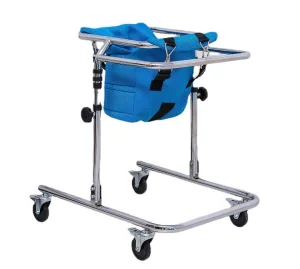
Paediatric mobility equipment for rehabilitation centres, specialised schools and home-care distributors.
Send Inquiry Now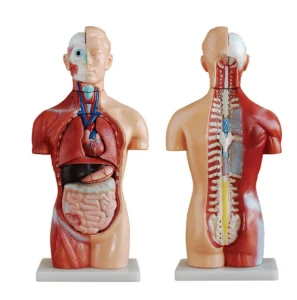
Compact desktop torso range suited to secondary schools, vocational training centres and outreach teaching.
Send Inquiry Now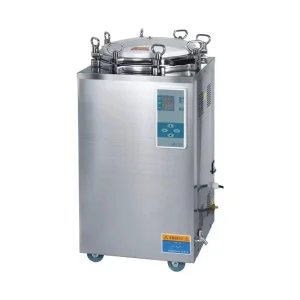
Laboratory and clinic sterilisation unit that frequently ships alongside teaching models and lab consumables.
Send Inquiry Now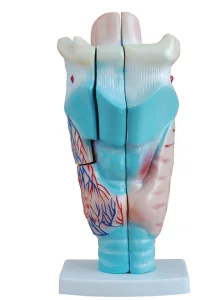
Detailed laryngeal anatomy for speech therapy, ENT and respiratory care programmes in Spanish universities.
Send Inquiry Now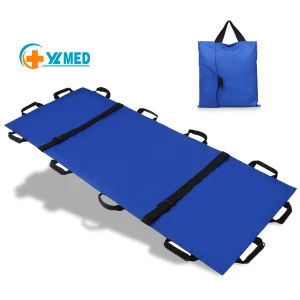
Foldable casualty stretcher for civil protection, event medical cover and pre-hospital training.
Send Inquiry NowWe are a manufacturer. Henan Yulin Edu. Project Co., Ltd. was founded in 1958 and operates its own factory in Xinxiang, Henan, China, with more than 200 professional staff. For one-stop orders we also coordinate a stable network of long-term partner factories, which is how we can consolidate ten product lines into a single shipment.
Our quality management system has been ISO 9001 certified since 2008. Product-specific documentation — material declarations, inspection records and conformity statements where applicable — can be provided on request to support tenders and import registration in Spain.
Yes. Our in-house design team develops private-label packaging, base-plate branding and Spanish-language instruction leaflets for distributors, which helps increase shelf appeal and resale value in the Spanish market.
It depends on intended purpose, not on the object itself. Anatomical and skeleton models supplied purely for education, demonstration and training generally fall outside the medical device definition. Where a product is intended for diagnosis, prevention, monitoring or treatment, EU Regulation 2017/745 applies and the appropriate conformity route is required. We recommend confirming the intended purpose in writing before ordering, and we supply the technical documentation needed for that assessment.
Spanish-language assembly guides, structure legends and warranty terms are available on request and are strongly recommended for public-sector tenders. Terminology is adapted to standard Spanish anatomical usage (for example columna vertebral, cráneo, tórax) rather than machine-translated, because evaluators assess technical documentation as part of the technical score.
Valencia, Barcelona, Algeciras and Bilbao are the most common entry points. Mixed-category orders — skeleton models, torsos, CPR manikins, lab equipment and hospital furniture — are consolidated into one shipment with one invoice and one bill of lading. FOB and DAP quotations are both available; your customs broker should confirm the final HS classification, as teaching models are typically assessed under HS 9023 00.
Start from the customer, not the catalogue. Health-science faculties need one full-size articulated skeleton plus a desktop skeleton per teaching table and a skull set for practical exams. Vocational training centres need durable, low-cost torsos and desktop skeletons with high student-to-model ratios. Hospitals need patient-education models. A distributor that stocks three tiers — entry, academic and premium — covers most public and private tenders without over-extending working capital.
Our export team is online 7 days a week and typically replies within 24 hours with catalogues, specifications, spare-part lists and shipping options.
Tell us your target market, quantities, tender specification and certification requirements. Our product specialists will recommend suitable models, share detailed specifications and propose the most economical shipping plan to Spain or your chosen EU warehouse.