OEM Suture Pads and Kits Pricelist & Quotes for New York
Factory-direct OEM production, private-label kitting, responsive quotes and New York-focused logistics planning from an ISO 9001 manufacturer established in 1958.
New York-Focused OEM Product Shortlist: Four Original Yulin Medical Items
The four items below are retained from the original product selection. Their canonical product URLs, original images and original titles are preserved. For New York distributors, these items can be combined with suture pads and kits into a mixed-category quotation, a private-label programme or a single consolidated shipment.
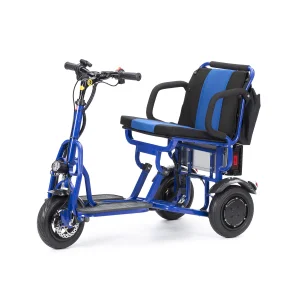
OEM Stacked Foldable 3 Wheels Electric Mobility Scooter for Elderly and Disabled Manufacturers, Service
Request New York quote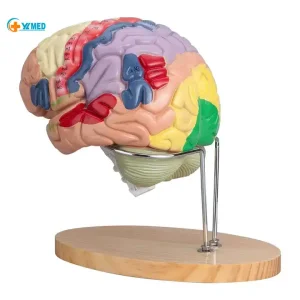
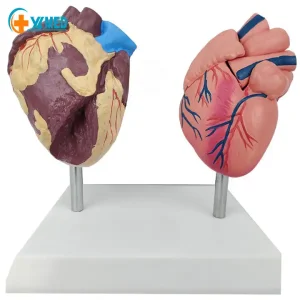
ODM Human Anatomy Heart Model 2parts PVC teaching models Heart health and sick compare heart model Factory, Pricelist
Request New York quoteWhy a New York Suture Pad Quote Is Really a Training-Continuity Decision
Price is the starting point. Continuity, specification control and documentation are what make a quotation usable.
Search demand for “OEM suture pads and kits pricelist” and “quotes for New York” usually comes from a buyer working against a deadline: a simulation lab needs to restock before a semester, a distributor is responding to a hospital or school tender, or a clinical skills centre is preparing a new curriculum. The visible question is unit price. The deeper question is whether the selected pad, needle, suture, instrument set, packaging and documentation can produce repeatable practice without creating replenishment risk. That is why a useful New York pricelist must go beyond a table of prices.
Yulin Medical approaches this category as a manufacturer rather than a trading intermediary. Henan Yulin Edu. Project Co., Ltd. was founded in 1958 and has operated an ISO 9001 quality management system since 2008. The original company information is retained on this page: a factory in Xinxiang, Henan, more than 200 professional staff, registered capital of RMB 120 million, ten product lines and a 24-hour response commitment. For a New York buyer, those facts matter because they support sample consistency, reorder discipline and private-label execution.
Information gain, in practical terms, is the difference between a list of SKUs and a decision-ready brief. This page adds local-market interpretation, total-cost logic, technical roadmap, application scenarios and FAQ answers that procurement teams can use in internal reviews. It also preserves the original product URLs so that a buyer can move from market context to product detail without losing traceability.
Total landed cost
Unit price, packaging, carton dimensions, freight, customs clearance, warehouse handling and replacement-part availability all affect the real cost of a New York delivery.
Sample validation
New York instructors often evaluate pad firmness, skin-layer realism, needle resistance and instrument usability before a bulk order is approved.
Documentation
Public institutions and larger distributors may require product specifications, material information, packaging data, country of origin and quality-system evidence.
Replenishment
A kit that cannot be restocked component-by-component becomes dead inventory. Consumable design and refill planning are part of the quotation.
The New York Market: Dense Demand, High Accountability and Micro-Markets
New York is not one market. It is a set of borough, suburban and tri-state micro-markets with different purchasing behaviours.
Manhattan and parts of Brooklyn contain a high concentration of academic medical centres, simulation laboratories, specialty societies and continuing-education providers. Long Island and Westchester include hospital systems, private schools, distributor warehouses and outpatient networks. The Bronx, Queens and community-care organisations often prioritise practical, repeatable and cost-accessible training. Buyers in New Jersey and Connecticut also use New York distribution and training hubs, which means a New York-focused quotation may support a tri-state programme rather than a single site.
The commercial ecosystem is equally layered. National distributors, regional medical education suppliers, group purchasing organisations, integrated delivery networks, private-label brands and specialist simulation resellers may all be involved in a single procurement. Suture pads and kits are consumables, so purchasing often moves from a sample order to a semester-based or annual blanket agreement. A supplier must be able to support SKU rationalisation, kit assembly, replacement components and predictable replenishment.
Industrial and logistics context matters. The Port of New York and New Jersey is a major gateway for international freight, while JFK and Newark airports support urgent samples and small parcel shipments. Warehouse space, unloading appointments, last-mile accessibility and seasonal congestion can influence the landed cost of a training consumable. Most suture-training items do not require cold-chain handling, but packaging must protect the pad surface, needles and instruments from compression and moisture. A New York quotation should clearly separate product cost, packaging, freight terms and warehouse-delivery assumptions.
Academic density
Medical, nursing, PA, EMS and allied-health programmes create recurring demand for standardised skills practice. The buyer is often a programme director or lab manager rather than a single clinician.
Consumable reorders
Suture pads are used repeatedly and replaced as surfaces wear. Demand is more predictable than durable manikin purchases, but it requires reliable lead times and clear refill SKUs.
Procurement depth
Larger New York institutions often request samples, specification sheets, packaging details, lead-time commitments and evidence of quality-system discipline before awarding a contract.
Port and last mile
Port arrival is not final delivery. Carton labelling, appointment scheduling, dock restrictions and appointment windows can affect the cost of supplying a Manhattan or borough-based facility.
Global Commercial and Industrial Context: From Durable Trainers to Consumable Programmes
Medical education is moving toward competency-based practice, which increases the value of repeatable consumables such as suture pads and modular kits.
Globally, the medical simulation and surgical education sector continues to expand because training systems face clinical-placement constraints, patient-safety requirements and the need for objective skills assessment. Suture pads and kits are relatively low-cost compared with complex electronic simulators, yet they support high-frequency deliberate practice in instrument handling, wound closure, knot tying and layered-tissue technique. That makes them attractive to schools, hospitals and distributors that need to equip many learners within a controlled budget.
On the supply side, Asia remains a major manufacturing base for training consumables and anatomical models. Buyers increasingly balance landed cost against supply-chain resilience. Nearshoring and dual sourcing are discussed more often, but many institutions still require the breadth, customisation and price structure available from experienced OEM factories. For New York importers, the practical question is not simply “which country is cheapest?” but “which supplier can provide consistent specifications, documentation, packaging control and a realistic replenishment plan?”
Commercial demand is also shifting toward private label. Distributors want their own brand, packaging and instruction sheets, while institutions want neutral or customised kits for their own simulation programmes. At the same time, sustainability expectations are rising: buyers ask about material choices, packaging reduction, recyclable cartons, product durability and replacement-part availability. A low unit price can quickly be erased by expedited freight, damaged cartons or a split shipment that arrives after a course begins.
Note: the index above is an illustrative planning model for procurement discussion, not a published market statistic. It is intended to help New York buyers frame questions for suppliers.
Localised Application Scenarios Across New York City and the Tri-State Area
Different learners need different kits. A high school health-science programme and a surgical residency programme may both use suture pads, but they do not need the same specification.
Academic nursing and medical schools
Students in the New York metro need repeated, standardised practice in instrument handling, suturing, knot tying and wound closure. Suture pads allow deliberate practice with immediate instructor feedback and less dependence on clinical case availability.
Surgical residency and PA programmes
Simulation laboratories often require layered tissue feel, consistent needle resistance and modular replacement surfaces. Kits can be configured around curriculum milestones and assessment rubrics.
EMS and first-responder training
Field-care programmes may combine wound-closure practice with airway, trauma and extrication training. Durable packaging and clear labelling become more important when kits are transported between training sites.
Outpatient clinics and urgent care
Clinical educators can use suture pads for onboarding, competency refreshers and procedure demonstrations. The buyer may prefer compact kits that fit a small skills room.
High-school and CTE health science
Career and technical education programmes need safe, non-clinical practice materials supported by clear instructions. Age-appropriate packaging and instructor guides can improve classroom adoption.
Home health and community organisations
Community training networks often need low-resource, repeatable kits for staff orientation. Private-label packaging and bilingual instructions can support diverse New York communities.
OEM and Private-Label Suture Kit Architecture for New York Distribution
A strong quotation defines the kit architecture before it defines the price. The more precisely the components are specified, the fewer surprises remain at sample approval and bulk production.
| Kit layer | Typical options | New York buyer considerations |
|---|---|---|
| Practice pad | Single-layer or multi-layer skin simulation; different firmness; pad thickness; replaceable insert. | Match realism to learner level. Confirm whether the pad is intended for repeated use or single-station assessment. |
| Suture and needle | Suture gauge, needle type, thread length and absorbability options for training use. | Ensure the selected materials are appropriate for supervised education and that instructors understand the learning objectives. |
| Instrument set | Needle holder, scissors, forceps, scalpel handle, disposable or reusable instruments. | Consider storage, replacement and safe handling. For schools, simple and durable sets often outperform specialised kits. |
| Tray and packaging | Rigid tray, zip pouch, carton, compartment layout and private-label sleeve. | Check carton dimensions, protection, retail readiness and warehouse handling. Packaging affects landed cost. |
| Labels and instructions | English labels, bilingual inserts, custom brand artwork, QR-linked guides. | Confirm intended audience, storage guidance and replacement instructions. Avoid clinical claims that exceed documented intended use. |
| Quality documents | Product specifications, material descriptions, packing list, country of origin and quality-system information. | Prepare a document pack for tenders, onboarding and internal procurement review. Ask for document formats early. |
| Replenishment | Pad-only refills, suture refills, instrument replacement and mixed pallet programmes. | Plan a semester-based replenishment rhythm instead of ordering complete kits when only the pad has worn out. |
For New York distributors, a modular kit architecture supports brand differentiation without creating unnecessary complexity. A distributor can offer an entry-level classroom kit, a professional skills kit and a custom institutional kit from the same production platform. For schools and hospitals, the same logic allows curriculum-specific assembly while retaining a single quality and documentation pathway.
Technology Roadmap and Future Outlook for Suture Training Products
The industry is moving toward more realistic materials, modular consumables and better digital support. The roadmap below describes development direction, not a claim that every feature is currently standard.
Near term: 0–12 months
Better multi-layer pad realism, more consistent needle resistance, standardised kit labels, QR-linked instruction sheets and improved carton protection for export. For New York buyers, the priority is repeatable quality between the sample and the bulk order.
Mid term: 1–3 years
Modular refill cartridges, reduced packaging, material disclosure and private-label programme management. Distributors may request semester-based subscription kits, campus delivery planning and barcoded inventory labels.
Longer term: 3–5 years
The broader industry is exploring sensor-enabled feedback, digital assessment records and augmented-reality guidance. These features may complement physical pads, but they should not replace sound curriculum design or instructor oversight.
Industry watch
Watch material composition, recycling pathways, freight volatility and U.S. procurement expectations. A supplier that can document changes and maintain stable specifications is more valuable than a supplier that offers a low price only once.
A Macro Sourcing Solution for Institutions, Distributors and Training Networks
Use a six-step programme approach instead of treating the purchase as an isolated transaction. This is especially important for New York buyers coordinating multiple campuses, departments or distributor customers.
Curriculum-led specification
Start with learning objectives, learner volume, available instructor time and assessment method. The kit should follow the curriculum, not the other way around.
Sample validation
Ask instructors to test pad firmness, needle feel, instrument grip and packaging. Record approval criteria so that the bulk order can be compared with the sample.
Private-label branding
For distributors, define logo placement, carton artwork, instruction sheet layout and SKU naming. Private label should reduce sales friction, not create new quality ambiguity.
Quality documentation
Confirm the document pack required by the buyer, including specifications, material descriptions, packing data and quality-system evidence. Keep a master file for future tenders.
Logistics and replenishment
Model sea freight, air freight and warehouse delivery separately. Decide whether complete kits or refill components should be stocked in New York or shipped to order.
Outcome measurement
Review wear rate, learner feedback, replacement demand and delivery performance after the first semester. Use that data to refine the next purchase order.
Ready-to-Ship vs Contracted OEM Programme: A Practical Comparison for New York Buyers
The right model depends on urgency, volume, branding requirements and the level of documentation the buyer needs.
| Decision factor | Ready-to-ship or standard kit | Contracted OEM programme |
|---|---|---|
| Best fit | Trial orders, urgent replenishment, standard classroom use. | Distributor branding, multi-campus supply, tender packages and recurring demand. |
| Minimum order | Usually lower and more flexible. | Higher MOQ may apply because packaging and labels are customised. |
| Unit cost | Useful for budget testing. | Can improve at volume, but the comparison must include packaging, documentation and freight. |
| Lead time | Often shorter if stock is available. | Requires sample approval, artwork, production and quality inspection before shipment. |
| Customisation | Limited to available configurations. | Pad specification, components, packaging, labels and instructions can be aligned to the buyer. |
| Risk control | Lower commitment, but less control over long-term specification. | Higher commitment, but better continuity if the programme is documented and managed. |
For New York distributors, a hybrid approach often works best: start with a small standard order to test demand, then move high-repeat SKUs into a contracted OEM programme with locked specifications and seasonal replenishment. For schools and hospital networks, the equivalent is a sample evaluation followed by a semester-based agreement that includes refill components and a clear delivery schedule.
Manufacturing Authority: Yulin Medical Since 1958
A price list is only credible when the manufacturer behind it has a documented history, a quality system and a practical export process.

Henan Yulin Edu. Project Co., Ltd.
Founded in 1958, Henan Yulin Edu. Project Co., Ltd. has grown into a well-known educational and medical equipment supplier that integrates scientific research, production and sales. With registered capital of RMB 120 million and more than 200 professional employees, the company manages product development, manufacturing, inspection and export from its base at No. 8 Daoqing Road, Industry Park, Hongqi District, Xinxiang, Henan, China.
The original company motto remains central: quality first, service first. The quality management system has been ISO 9001 certified since 2008. An in-house design and packaging team supports private-label development, while the export team aims to reply within 24 hours with catalogues, specifications and shipping options.

- Factory-direct supply across ten product lines
- Private-label packaging and product presentation support
- Mixed-category orders consolidated into one shipment
- Responsive export team online seven days a week
Complete Original Product Categories for Mixed-Category Sourcing
New York distributors often combine suture pads with anatomy models, nursing simulators, dental tools and hospital equipment. The original category links are retained below.
Anatomy Models
View range →Biology Prepared Slides and Accessories
View range →Dental Tools and Equipment
View range →General Teaching Models
View range →Hospital Furniture and Equipments
View range →Hospital Machine and Tools
View range →Medical Apparatus and Instruments
View range →Medical Nursing Model
View range →Skeleton Models
View range →Suture Pads and Kits
View range →Practical Insights from the Team That Builds and Ships the Products
Buyer education is part of product quality. These original insight areas show how the team supports laboratory use, exhibitions and product inspection.

Do You Really Know How to Observe Biological Prepared Slides?
Many plant and animal cell structures can only be studied under a microscope, which makes prepared biological slides essential in every biology lab. Correct handling, focusing and storage help students see clearer detail and protect slide sets for years.

The 5th Henan Provincial Educational Equipment Expo Concludes Successfully
Themed “Digital Leading Innovation and Development”, the expo reached a record 50,000 m² with 600+ brands and 10,000+ products on display, showcasing the latest educational equipment.

Inside Our Product Showroom
A look at the medical teaching models and training equipment buyers can inspect in person when visiting the Xinxiang facility.
FAQ: OEM Suture Pads, New York Quotes and Procurement Details
Straight answers for distributors, schools, hospitals and procurement teams preparing a first or repeat order.
Is Yulin Medical a manufacturer or a trading company?
We are a manufacturer. Henan Yulin Edu. Project Co., Ltd. was founded in 1958 and operates its own factory in Xinxiang, Henan, China, with more than 200 professional staff. For one-stop orders, we also coordinate a stable network of long-term partner factories.
What quality certification does Yulin Medical hold?
Our quality management system has been ISO 9001 certified since 2008. Product-specific documentation can be provided on request for tenders, onboarding and import registration requirements.
Do you support OEM, private label and custom packaging?
Yes. Our in-house design team develops private-label packaging and product presentation for distributors to increase shelf appeal, resale value and customer recognition.
How do I choose the right CPR training manikin?
Match the manikin to the learner group: adult, child or neonatal. Check that real-time feedback covers compression depth, rate and ventilation; confirm alignment with current resuscitation guidelines; and decide whether AED training integration is required. For advanced life-support programmes, an ACLS simulator with embedded scenarios offers more assessment value than a basic torso.
What should a New York suture pad pricelist include?
A useful pricelist should separate pad options, kit components, packaging, instrument sets, custom-label costs, MOQ, lead time and shipping terms. It should also state what documentation is available and whether replacement components can be ordered separately.
Can we order sample kits before a bulk order?
Yes. Sample evaluation is recommended before bulk production, especially for private-label kits. New York instructors can test pad firmness, needle resistance, instrument usability and packaging before confirming specifications.
How should we plan shipping to New York?
Compare sea freight, air freight and courier options. Confirm whether delivery is to a port, a warehouse or a final institution. For larger orders, plan around the Port of New York and New Jersey, customs brokerage, carton dimensions and any unloading restrictions at the destination.
Are these products intended for clinical use or training?
Unless a product is expressly specified and documented for another use, these items are intended for education and training. Buyers should confirm intended use, labelling and regulatory requirements with their own compliance advisers before clinical deployment.
Can packaging and labels be localised for the U.S. market?
Private-label packaging and English or bilingual instruction sheets can be developed for the U.S. market. The final wording should avoid unsupported clinical claims and should match the documented intended use of the product.
How quickly will I receive a reply?
Our export team is online seven days a week and typically replies within 24 hours with catalogues, specifications and shipping options.
Request a New York OEM Pricelist, Sample Kit or Tender Package
Tell us your target learners, estimated annual volume, preferred kit components, private-label requirements and delivery destination in New York or the tri-state area. Our team can recommend suitable models, prepare a quotation and outline the most practical shipping plan.
Send Inquiry NowEight Additional Original Yulin Medical Products for Complete New York Sourcing
The remaining eight original products are retained below in a two-row grid. All original product images, titles and canonical URLs are preserved. These items can be combined with suture pads and kits in a mixed-category New York quotation.
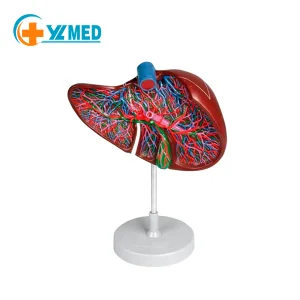
ODM Medical anatomy Human liver anatomical model Manufacturer, Factory
Request New York quote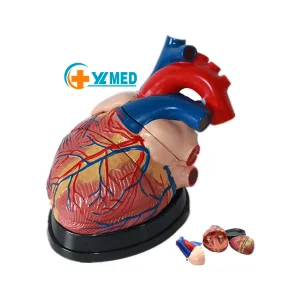
ODM Teaching model 3x enlarged human heart anatomy model Human organ heart research Educational medical model Quotes, Service
Request New York quote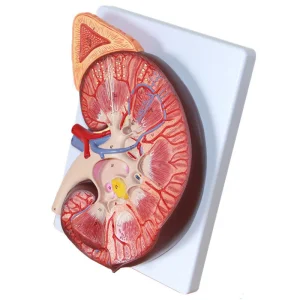
Wholesale A novel magnifying model of renal anatomy Quotes, Service
Request New York quote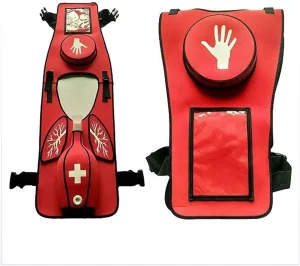
OEM Adult Anti Choking Obstruction Heimlich Wearable Vest for First Aid Training Manufacturers, Quotes
Request New York quote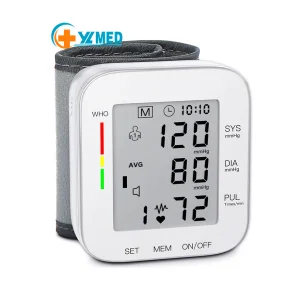
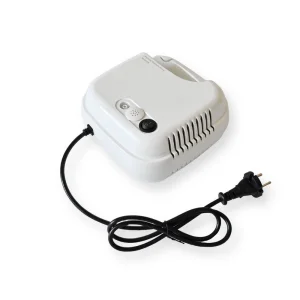
ODM Household Medical Portable Nebulizer Machine for Compressor Baby Inhalator Manufacturer, Quotes
Request New York quote