
Tokyo-Ready Anatomy and Laboratory Training Products from the Original Range
The first four original product selections below are retained for Tokyo buyers who consolidate anatomy models, histology slides and simulation supplies with suture pads and kits. This mixed-category approach reduces supplier administration, shortens sampling time and supports one coordinated export shipment to Japan.
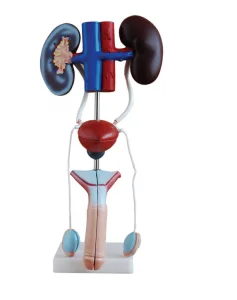 Tokyo urology and nursing training
China An anatomical model of the male urogenital system Manufacturers, Factories
View product & request a Tokyo quote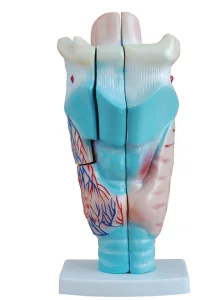 Tokyo airway and ENT teaching
ODM An anatomical model of the larynx Manufacturer, Factory
View product & request a Tokyo quote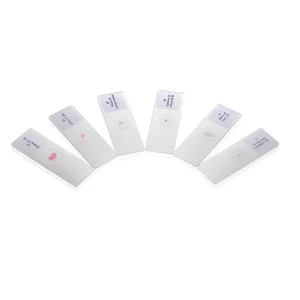 Tokyo histology and biology labs
China Biology teaching human histology for instructional and educational use in the preparation of microscope slides Manufacturers, Service
View product & request a Tokyo quote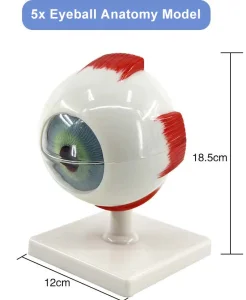 Tokyo ophthalmology simulation
ODM Medical Science Human Anatomical Simulation Eyeball Structural eye anatomical model 3 times larger 6 part eye anatomy model Manufacturer, Factories
View product & request a Tokyo quoteWhy Tokyo Procurement Teams Need a More Precise OEM Suture Pad Supply Chain
Tokyo is not a generic export destination for suture training products. It is one of Asia’s most concentrated medical education markets, where university hospitals, nursing colleges, dental programmes, veterinary schools, simulation centres and specialist distributors buy in different rhythms but expect the same standard of repeatability.
Within a short train ride, procurement teams may be working with university hospitals around Hongo and Shinanomachi, nursing colleges in Bunkyo, dental training facilities, private simulation centres and distributors serving clinics across Kanto. A hospital department may need 40 pads for a monthly suturing workshop; a distributor may need several thousand private-label kits for a nationwide course; a university may request mixed cartons containing suture pads, anatomical models, prepared slides and nursing simulators to reduce supplier administration.
Japanese buyers are exacting for good reasons. They ask about repeatable haptic feedback, skin-layer colour, needle drag, suture retention, packing cleanliness, barcode labels, Japanese-language instructions and lot identification. Price matters, but inconsistency is more expensive than a slightly higher unit cost because it disrupts training and damages the distributor’s local reputation. A pad that feels different from the last batch can invalidate an OSCE station or make a workshop’s assessment less comparable.
Yulin Medical approaches this as a manufacturer, not a catalogue intermediary. Founded in 1958 and ISO 9001 certified since 2008, we operate from Xinxiang, Henan, with more than 200 professional staff and RMB 120 million registered capital. Our export team supports OEM and ODM projects across ten product lines, allowing Tokyo distributors to consolidate suture pads and kits with anatomy models, CPR manikins, dental tools, prepared slides and hospital equipment.
Information gain for Tokyo buyers: the productive discussion is not simply “what is your price per pad?” It is “which pad construction, wound pattern, kit configuration, packaging standard and documentation set will make your training programme repeatable?” This page is structured around that buying question.
Tokyo’s Local Clinical Simulation and Training Landscape
Tokyo’s density of teaching hospitals, specialist centres and private training providers creates a demand pattern that rewards suppliers able to support both small repeat orders and documented bulk programmes.
The Tokyo metropolitan area supports a dense network of university hospitals, medical schools, nursing colleges, dental training institutions, veterinary education providers and commercial simulation centres. Many of these organisations run recurring skills sessions, objective structured clinical examinations and continuing professional development workshops. Suture pads and kits are consumables in these settings: they are repeatedly loaded, cut, sutured, inspected and replaced. The practical buying question is therefore not only whether a pad looks realistic on a photograph, but whether the hundredth pad in the carton behaves like the first.
Japan’s regulatory environment is managed by the MHLW and PMDA, and product classification depends on intended use and claims. Many suture pads and kits are training aids rather than implantable devices, but the distinction must be clear in catalogues, labels and tender documents. We recommend that Tokyo buyers define the intended use before artwork approval: training-only, demonstration-only or part of an accredited simulation programme. Clear wording protects the distributor and helps the end user select the correct product.
Local procurement patterns also differ from other markets. Tokyo buyers often begin with a sample evaluation and a small trial order before moving to scheduled repeat purchase. They value responsive English communication, stable packaging, barcode readiness and the option to add Japanese-language inserts. Because storage space in central Tokyo can be expensive, compact kits and mixed-SKU cartons are attractive. A distributor can hold one pallet of assorted training consumables rather than several pallets of slow-moving single items.
For Yulin Medical, this means OEM suture pad projects for Tokyo are usually a collaboration between product specification, packaging and logistics. A standard pad may be suitable for a basic workshop, but a private-label programme often requires specific wound patterns, colour matching, kit contents, barcodes, instruction cards and carton marking. The earlier these details are agreed, the smoother the production and import process becomes.
Global Commercial and Industrial Status: From Single Pads to Complete Training Kits
Worldwide, medical simulation has moved from demonstration toward competency assessment. The commercial consequence is a growing preference for complete, repeatable training kits rather than isolated low-cost pads.
In North America and Europe, simulation centres and surgical skills laboratories increasingly align consumables with validated curricula. Buyers ask for documentation, consistent materials, private-label packaging and the ability to reorder the same specification year after year. In Japan, the same trend appears through a more detail-oriented procurement style: buyers want to know how the pad is constructed, how the wound pattern is reproduced, how the kit is packed and how the lot is identified. In Southeast Asia, the Middle East and Latin America, distributors often look for factory-direct supply and mixed containers that combine multiple product categories.
The global sourcing pattern is consolidating. Instead of managing one supplier for silicone pads, another for instruments, another for packaging and another for teaching models, distributors prefer a smaller number of accountable manufacturing partners. This reduces communication cost and improves quality control because the final kit can be checked as one product. A suture kit may include a pad, suture materials, needle holder, forceps, scissors, tray, instruction card, outer box and barcode label. If these components are coordinated by one factory, the buyer has fewer handover points and fewer excuses when something is missing.
Another global shift is the demand for realistic but affordable training. High-fidelity virtual simulators have their place, but low-cost physical models remain essential for repeated practice. Suture pads are particularly suitable because they allow learners to repeat incision closure, instrument handling, knot tying and tissue approximation without ethical or biological constraints. As a result, buyers are asking for multi-layer pads, varied wound geometry and kits tailored to specialties such as emergency medicine, dentistry, veterinary surgery and aesthetic practice.
Global procurement teams now evaluate supplier resilience as carefully as unit price: mould ownership, material traceability, quality records, artwork control, packaging consistency and the ability to scale repeat orders. For Tokyo distributors, this resilience is especially important when a course date cannot move. A late shipment is not simply a logistics problem; it can cancel a workshop.
China Factory Efficiency Advantage for Tokyo Distributors
Factory-direct manufacturing in Henan is not only a cost advantage. It compresses the sample loop, reduces rework and allows packaging, inspection and export preparation to be coordinated in one supply chain.
Henan’s industrial base has mature suppliers in silicone, engineering plastics, textiles, metal instruments, printing and export packaging. A single OEM suture kit may combine silicone pads, mesh reinforcement, plastic trays, stainless-steel instruments, sutures, labels, instruction cards and cartons. Producing or coordinating these components within one industrial cluster reduces lead time, freight and the risk of mismatched specifications. It also makes mixed-category orders practical: a Tokyo distributor can combine suture kits with anatomical models, nursing simulators, microscope slides or dental tools in a planned shipment.
Efficiency does not mean rushing production. Our quality process separates material inspection, pad surface and layer bonding checks, wound pattern consistency, kit completeness, barcode and artwork verification, and carton protection review. For Tokyo buyers, we can plan mixed-SKU cartons and private-label assembly to reduce local repacking. If a distributor sells to multiple course providers, we can help organise item codes and packaging so that each kit is easy to identify in a warehouse or training centre.
Factory-direct communication shortens the sample loop. Artwork changes, material adjustments and packaging revisions are handled with production and quality control in the same conversation rather than passed through multiple trading layers. This matters for Japanese private-label programmes, where a small label change can affect approval, photography, web listings and distributor confidence.
OEM and ODM Customisation Matrix for Suture Pads and Kits
The right specification depends on the learner group, the course format and the distributor’s packaging strategy. The matrix below shows the main decisions Tokyo buyers usually review before sampling.
Pad architecture and haptics
Single-layer and multi-layer silicone constructions can be reviewed with mesh reinforcement, wound depth, skin thickness and surface texture. The aim is repeatable needle drag and suture retention for the intended learner level.
Skin tone and wound realism
Multiple skin tones, wound patterns and incision styles can be discussed for local teaching preferences. Tokyo distributors may request a range that reflects the learner population and the specialties served.
Kit configuration
Kits can be planned with trays, instruments, sutures, gloves, instruction cards and carry packaging. Buyers can choose a consumable-only pad programme or a complete ready-to-use workshop kit.
Japanese market packaging
Private-label artwork, Japanese and English labels, barcodes, lot codes, QR codes, shelf-ready cartons and language inserts can be coordinated during the OEM process.
Specialty modules
Different specialties need different practice geometry. Buyers may request modules for emergency wound closure, dental access, veterinary layered closure, fine suturing or general surgical skills.
Documentation and QC evidence
ISO 9001 process control, inspection records, artwork proofs, packing lists and product photographs can support tender preparation, distributor catalogues and import communication.
Localised Application Scenarios in Tokyo
A suture pad for a first-year nursing student is not the same product as a fine-suturing module for a dermatology workshop. The cards below show how Tokyo buyers often segment demand.
University hospital skills labs
Residents practise instrument handling, wound closure, knot tying and layered suturing under supervision. Pads should provide consistent resistance across batches.
Nursing colleges and OSCE
Standardised assessment benefits from pads with repeatable wound geometry, clear edges and stable skin tension so that candidates are compared fairly.
Dental and oral surgery
Limited-access suturing and delicate tissue handling can be rehearsed with compact pads and fine instruments for dental training programmes.
Veterinary surgery training
Layered closure, tissue apposition and knot security are relevant for veterinary education. Durable pads can support repeated practice with different suture materials.
Emergency and disaster medicine
Portable kits support field wound-closure workshops, first-aid courses and pre-hospital training where tables, lighting and storage are limited.
Aesthetic and dermatology training
Fine suturing, scar-conscious technique and instrument control can be practised on pads with finer wound patterns and delicate skin surfaces.
Private-label programmes
Distributors can build recurring course-kit revenue with own-brand labels, item codes, carton markings and Japanese-language instructions.
CME and conference workshops
Compact, pre-packed kits help organisers distribute materials quickly, reduce on-site preparation and provide a consistent learner experience.
Yulin Medical Product Ecosystem: One Factory for Mixed Tokyo Orders
Although this page focuses on OEM suture pads and kits for Tokyo, many buyers consolidate categories. The original product ecosystem is retained below with direct links.
Anatomy Models
Torso, organ, heart, brain and muscle models with numbered structures for lectures and patient education.
View range →Biology Prepared Slides and Accessories
Histology, botany and zoology prepared slides plus storage and microscope accessories for biology labs.
View range →Dental Tools and Equipment
Dental teaching models, clinic lights, LED whitening units and endodontic instruments for training and practice.
View range →General Teaching Models
Science demonstration models for primary schools, secondary schools and education equipment tenders.
View range →Hospital Furniture and Equipments
Stainless steel examination couches, stretchers, walkers and shower chairs built for daily clinical use.
View range →Hospital Machine and Tools
Diagnosis and treatment devices and practical tools for wards, clinics and emergency departments.
View range →Medical Apparatus and Instruments
Emergency splints, extrication devices, cervical traction and rehabilitation instruments.
View range →Medical Nursing Model
Adult, child and neonatal CPR manikins, ACLS simulators and AED trainers for skills assessment.
View range →Skeleton Models
Life-size and desktop skeletons, skulls, spines and joint models for osteology teaching.
View range →Suture Pads and Kits
Realistic skin suture pads and complete instrument kits for surgical and wound-closure practice.
View range →Quality, Compliance and Tender-Ready Documentation
Tokyo distributors and institutions need confidence before they place repeat orders. Quality communication should start before sampling and continue through every batch.
Our quality management system has been ISO 9001 certified since 2008. Product-specific documentation can be provided on request for tenders and import registration communication. We do not claim that every training product carries the same regulatory status in every market. Instead, we help buyers assemble the documents needed for their own local evaluation, including product specifications, packing lists, material statements, photographs and agreed labelling information.
For suture pads and kits, the inspection discussion usually covers pad thickness, surface finish, wound pattern consistency, colour, bonding, kit completeness and packaging. Training products should be clearly labelled as training aids where applicable and should not be presented as sterile clinical products unless a specific programme and documentation set has been agreed. This clarity is especially important in Japan, where distributors must protect their professional reputation as well as their commercial margin.
ISO 13485 or PMDA-related questions may arise depending on how a product is positioned. We support the buyer’s local regulatory work with available manufacturing and product information, while final classification, import registration and market claims remain the responsibility of the local importer or distributor. This is the most reliable way to support Tokyo partners without overstating compliance.
Incoming material review
Materials and components are checked against agreed specifications before production planning.
Pad consistency checks
Surface, colour, wound geometry and bonding are reviewed against approved samples.
Kit completeness
Instrument, suture, tray, instruction and packaging contents are checked as a complete set.
Artwork and carton control
Labels, barcodes, lot codes, language inserts and export carton markings are verified before shipment.
A Transparent Five-Step Sourcing Workflow for Tokyo Buyers
From the first enquiry to export, each stage has a clear purpose. This helps distributors plan stock, tender submissions and training schedules with fewer surprises.
Share requirements
Send product types, quantities, target market, packaging needs and any tender or certification questions.
Catalog and proposal
Receive matched models, specifications, packaging options and shipping suggestions for Tokyo.
Sample evaluation
Test samples with instructors or clinicians before confirming bulk production and artwork.
Production and QC
Manufacturing and inspection follow the agreed specification and ISO 9001 quality process.
Export and support
Protective export packing, delivery coordination and responsive after-sales communication.
Global Purchasing Demand and Industry Trends to Watch
Tokyo buyers are part of a wider shift toward structured simulation, private-label consumables and documentation-led procurement.
Competency-based training
OSCE stations and skills assessments require repeatable consumables so that learners are judged against a consistent task.
Private-label recurring revenue
Distributors increasingly want own-brand pads and kits, with item codes and packaging that can be reordered without redesign.
Higher realism and multi-layer pads
Buyers are moving beyond simple flat pads toward layered surfaces that better simulate tissue resistance and closure.
Kits instead of single items
Complete kits reduce course preparation time and make procurement easier for training centres with limited storage.
Documentation and traceability
Lot identification, barcode readiness and consistent artwork are becoming standard expectations in professional distribution.
Sustainable and consolidated supply
Buyers seek less excess packaging and fewer suppliers, while still requiring stable quality and mixed-category shipments.
Tokyo Buyer Checklist: What to Confirm Before You Order
A good OEM conversation prevents expensive assumptions. Use this checklist to prepare a request for quotation or sample evaluation.
Define intended use: training aid, demonstration model or part of an accredited simulation programme.
Confirm pad size, thickness, skin tone, wound pattern, layer construction and haptic expectation.
List kit contents: instruments, sutures, tray, gloves, instruction card, outer packaging and barcode.
Decide language requirements: English only, Japanese inserts, bilingual labels or distributor-specific wording.
Review MOQ, sample lead time, production lead time and whether mixed-SKU cartons are possible.
Agree documentation: specifications, packing list, ISO 9001 reference, artwork proof and lot identification.
Plan logistics: courier samples, air freight to Narita or Haneda, sea freight to Tokyo or Yokohama, and Incoterms.
Confirm after-sales expectations for reorders, packaging revisions, replacement review and future product expansion.
Company Authority: Henan Yulin Edu. Project Co., Ltd. Since 1958
A six-decade manufacturing history, ISO 9001 quality system and broad product ecosystem allow Yulin Medical to support both specialist suture pad programmes and mixed medical education orders.

Headquarters & factory, Xinxiang

Production workshop

Bulk orders ready for export
Founded in 1958, Henan Yulin Edu. Project Co., Ltd. has grown into a well-known educational and medical equipment supplier that integrates scientific research, production and sales. With registered capital of RMB 120 million and more than 200 professional employees, we manage product development, manufacturing, inspection and export from our base at No. 8 Daoqing Road, Industry Park, Hongqi District, Xinxiang, Henan, China.
Our goal is to fully satisfy every customer through dependable quality and attentive service, while continuously developing the skills of our team so that each project is handled by experienced people. For Tokyo buyers, this means one accountable manufacturer for anatomy models, nursing simulators, lab slides, suture pads and hospital equipment — consolidated into a single shipment and backed by an ISO 9001 quality system.
Original Yulin Medical Visual Archive: Factory, Products and Exhibition Media
The original visual assets from the Yulin Medical page are retained below for product reference, buyer review and factory evidence. All images are displayed with contain fitting to preserve proportions.























Buyer FAQ: OEM Suture Pads and Kits for Tokyo
Straight answers to the questions procurement managers ask most before placing a first order or moving to a private-label programme.
Is Yulin Medical a manufacturer or a trading company?
We are a manufacturer. Henan Yulin Edu. Project Co., Ltd. was founded in 1958 and operates its own factory in Xinxiang, Henan, China, with more than 200 professional staff. For one-stop orders, we also coordinate a stable network of long-term partner factories.
What quality certification does Yulin Medical hold?
Our quality management system has been ISO 9001 certified since 2008. Product-specific documentation can be provided on request for tenders and import registration communication. Market classification and local registration remain the responsibility of the importer or distributor.
Do you support OEM, private label and custom packaging for Tokyo distributors?
Yes. Our in-house design and export team develops private-label packaging and product presentation for distributors, helping increase shelf appeal and resale value. We can discuss Japanese and English labels, barcodes, lot codes, carton markings and instruction cards.
How do I choose the right CPR training manikin?
Start with the learner group: adult, child or neonatal. Then check that real-time feedback covers compression depth, compression rate and ventilation volume; confirm alignment with current AHA resuscitation guidelines; and decide whether your courses need AED trainer integration. For advanced life-support programmes, an ACLS simulator with embedded scenarios offers far more assessment value than a basic torso.
How quickly will I receive a reply?
Our export team is online 7 days a week and typically replies within 24 hours with catalogues, specifications and shipping options.
Can you customise suture pads for a Tokyo training programme?
Yes. We can review pad size, thickness, skin tone, wound pattern, layer construction, kit contents and packaging. The most efficient process is to share the course format, learner level and target quantity, then approve a sample before bulk production.
What is your MOQ and production lead time?
MOQ and lead time depend on the pad specification, kit contents, packaging artwork and order mix. A trial order can be discussed after sample evaluation. For repeat Tokyo distribution programmes, we plan production slots and packaging materials in advance to reduce delays.
Can you supply Japanese-language packaging and barcode labels?
We can coordinate bilingual labels and packaging artwork with your approved text. The buyer remains responsible for final language accuracy, local claims and barcode content. Artwork proofs are reviewed before production.
Are suture pads sterile or intended for clinical use?
Most suture pads and kits in this category are training aids. They should not be presented as sterile clinical products or used on patients unless a specific product specification and regulatory pathway have been agreed. Clear intended-use wording is essential for Tokyo distribution.
How do you ship samples and bulk orders to Tokyo?
Samples are usually sent by international courier. Bulk orders can be planned by air freight to Narita or Haneda, or by sea freight to Tokyo or Yokohama, depending on volume, timing and Incoterms. Our team will propose packing and shipping options with the quotation.
More Tokyo-Ready Products from the Original Range
The final eight original product selections are retained below in a two-row grid for buyers who need a consolidated medical teaching and training order alongside OEM suture pads and kits.
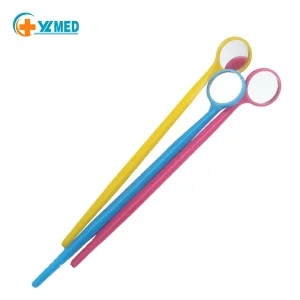 Tokyo dental training supply
ODM 100 pieces of disposable dental mirror Oral care lens Dental mirror with adjustable knife individually packaged Pricelist, Service
View product & request a Tokyo quote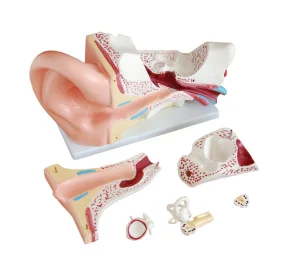 Tokyo ENT and audiology teaching
OEM A new anatomical model of large ear Quotes, Service
View product & request a Tokyo quote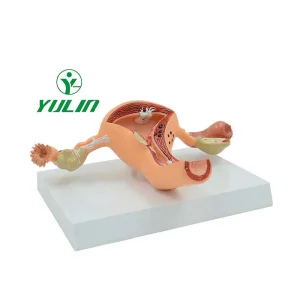 Tokyo women’s health teaching
ODM The medical school teaches the human model of pathological changes of female reproductive uterus and ovary Manufacturer, Factory
View product & request a Tokyo quote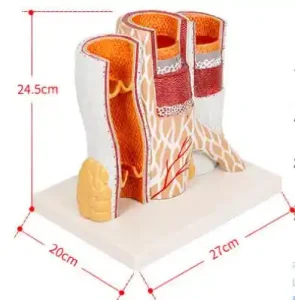 Tokyo vascular anatomy training
ODM Arterial vein blood vessel dissection model human blood vessel dissection enlarged model blood vessel section model Manufacturer, Factories
View product & request a Tokyo quote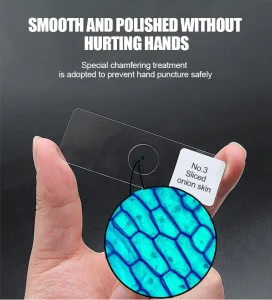 Tokyo histology and haematology labs
OEM 1pcs human bone marrow smear Giemsa Stain, wholesale prepared microscope slides Factories, Pricelist
View product & request a Tokyo quote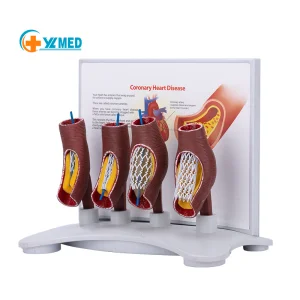 Tokyo vascular and stent teaching
ODM Medical science vascular stent model Human vascular model Medical human teaching pathological vascular anatomy model Factory, Factories
View product & request a Tokyo quote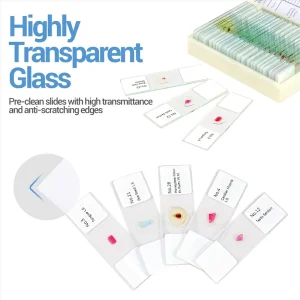 Tokyo microbiology teaching
China 50pcs microbiology slides prepared for microscope, include bacteria and fungi Manufacturer, Service
View product & request a Tokyo quote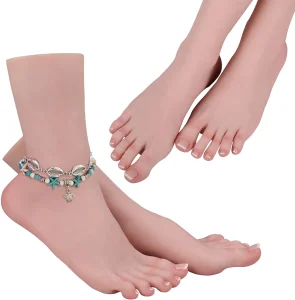 Tokyo display and practice supply
Wholesale Realistic silicone feet 1:1 life-size silicone female foot mannequin jewelry display tattoo practice art collection Manufacturer, Quotes
View product & request a Tokyo quoteRequest OEM Suture Pad Samples for Tokyo
Tell us your learner group, target quantity, wound patterns, kit contents, packaging language and delivery timing. Our export team will recommend suitable specifications, confirm sample options and propose a practical shipping plan for Tokyo.