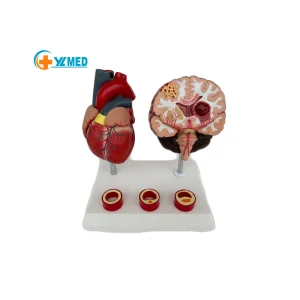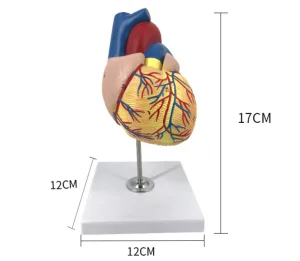
Yulin Medical · ISO 9001 Certified · Since 1958
OEM Medical Nursing Model Manufacturer & Factories in the Nagoya market
Factory-direct anatomy, nursing simulation and clinical training models for Nagoya distributors, nursing colleges, hospitals and rehabilitation providers — engineered for private-label programmes, mixed-category orders and evidence-ready procurement.
Nagoya Buyer Shortlist
◈Four OEM Medical Nursing Models for Immediate Nagoya RFQ
The following four lines are frequently requested by Japanese distributors and training institutions that need private-label packaging, mixed-category shipment and clear anatomical specifications. Each product URL is preserved for direct inquiry.
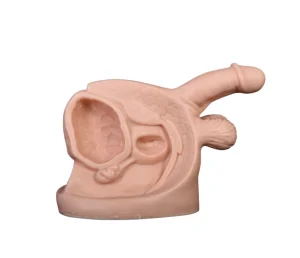
Nagoya OEM Supply — OEM Model of advanced male internal and external genitalia Factories, Pricelist
View Nagoya Model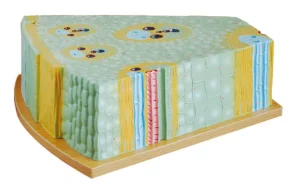
Nagoya OEM Supply — China Monocotyledonous plant stem model Manufacturers, Factories
View Nagoya Model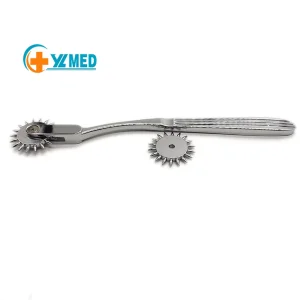
Nagoya OEM Supply — China Advanced acupuncture roller percussion hammer physical gear nerve hammer pain button massage hammer Factory, Factories
View Nagoya Model
Nagoya Market White Paper
◎Why Nagoya Is a Strategic Market for OEM Medical Nursing Models
Nagoya is not only an automotive and aerospace centre. It is also a dense healthcare, university and rehabilitation ecosystem where procurement teams evaluate training models as clinical assets — not disposable classroom supplies.
Nagoya and the wider Aichi region combine teaching hospitals, nursing colleges, rehabilitation centres, medical-device distributors and precision manufacturers. That combination creates a specific kind of demand: medical nursing models that survive frequent handling, support competency assessment and fit into Japanese-style procurement documentation. A Nagoya distributor may ask for anatomical landmark accuracy, material declarations, replacement-part planning, Japanese-language labels and packaging that withstands humidity and multi-leg logistics.
The local industrial culture matters. Aichi’s automotive and aerospace supply chains have normalised kaizen, just-in-time replenishment, visual quality control and supplier scorecards. These expectations migrate into healthcare procurement. Price is important, but it is rarely the only criterion. Institutions want a manufacturer that can repeat a specification across batches, answer technical questions quickly and provide evidence for incoming inspection.
Yulin Medical, operated by Henan Yulin Edu. Project Co., Ltd., has manufactured educational and medical training equipment since 1958. Its quality management system has been ISO 9001 certified since 2008. The factory in Xinxiang, Henan, employs more than 200 professional staff, holds registered capital of RMB 120 million and manages ten product lines, from anatomy models and nursing simulators to hospital furniture and rehabilitation aids. For Nagoya buyers, that breadth is useful because a single programme may need a heart model, a respiratory system model, a skin model, a CPR trainer and a walking aid under one purchase order.
The information gain for Nagoya buyers is this: the best OEM medical nursing model factory is not the one with the largest catalogue, but the one that can translate clinical requirements into stable specifications and repeatable packaging. That is the difference between a one-off online order and a supply relationship that survives audits, tenders and academic-year deadlines.
- OEM and private-label supply for Japanese distributors and training centres.
- Mixed-category consolidation across anatomy, nursing, rehabilitation and hospital equipment.
- ISO 9001 process control, batch documentation and export packing discipline.
- Responsive export communication for time-zone-sensitive procurement teams.
What “Nagoya-ready” means in practice
A Nagoya-ready medical nursing model is not simply a product with a Japanese shipping address. It is a model with predictable materials, stable colour matching, cleanable surfaces, legible labels, replacement parts and packaging that protects fragile anatomical structures. It must also be backed by an enquiry process that can return specifications, lead times and customisation options quickly.
For distributors, this reduces rework and customer complaints. For hospitals and nursing colleges, it protects training schedules. For procurement officers, it creates an auditable trail from sample approval to final delivery.
1958Manufacturing Since
2008ISO 9001 Certified
200+Professional Staff
¥120MRegistered Capital
10Product Lines
24hTypical Reply
Local Context
⌁Nagoya’s Local Medical, Academic and Industrial Context
Local demand is shaped by three intersecting realities: advanced manufacturing, an ageing society and a strong culture of skills-based education.
⚙
Precision Manufacturing Culture
Nagoya’s automotive, aerospace, robotics and machine-tool base supports a procurement culture that values tolerances, visual standards and repeatability. Medical training models benefit from this mindset: joints should move predictably, organ sections should fit, printed labels should remain legible and replacement parts should be available.
✚
Academic and Hospital Simulation
Nagoya-area universities, nursing colleges and hospital simulation centres run skills labs for anatomy, basic life support, advanced life support, patient care, obstetrics, paediatrics and rehabilitation. These labs need durable models in multiple sizes, with clear documentation and practical storage requirements.
◉
Ageing and Community Care
Aichi’s ageing population and community-based care model increase demand for home-care education, fall prevention, rehabilitation and self-examination models. A breast cancer self-exam model, a standing frame or a four-wheeled rollator can support patient education far beyond the classroom.
Industry Trends
◈Industry Trends Reshaping Medical Nursing Model Demand
The market is moving from static demonstration pieces towards durable, modular and documented training assets that support measurable learning outcomes.
01
Competency-Based Simulation
Nursing and medical curricula increasingly assess observable competencies. Models must support repeatable practice in injection, catheterisation, airway management, CPR, patient handling and anatomy recognition. Feedback-ready or task-specific models are preferred over generic display pieces.
02
Ageing-Care and Home-Care Training
Japan’s ageing society is driving demand for rehabilitation aids, mobility products, self-examination models and patient-education tools. Training is moving into community settings, so products must be portable, cleanable and easy to explain to non-specialists.
03
Hybrid Learning and Portability
Blended learning has increased demand for lightweight anatomical models and compact trainers that can move between classrooms, labs and clinical sites. Packaging and storage become part of the product experience, especially for distributors serving multiple institutions.
04
Modularity and Total Cost of Ownership
Buyers are calculating the cost of replacement parts, consumables and storage over several academic years. A modular model with replaceable skin, organs or joints can be more economical than a lower-priced model that must be replaced entirely.
05
Documentation and Traceability
Procurement teams increasingly request material information, model numbers, batch references and packaging details. Documentation supports tenders, import registration and incoming inspection. It also reduces disputes when a repeat order must match an earlier sample.
06
Private-Label Differentiation
Distributors want their own brand, packaging and instruction materials. OEM private label allows a Nagoya distributor to build local trust while sourcing from a factory with broad category experience and export capacity.
Global Procurement Demand
◎Global Procurement Demand: From Catalogue Buying to Supplier Consolidation
Distributors and institutions are consolidating suppliers to reduce freight, inspection, customs and after-sales complexity. This favours factories that can manage mixed-category OEM orders.
Globally, a nursing school may buy anatomy models from one vendor, CPR manikins from another, furniture from a third and rehabilitation aids from a fourth. That fragmentation increases freight, customs, inspection and after-sales costs. The alternative is a mixed-category OEM order from a manufacturer that can consolidate quality files and export packing. This is especially relevant in Japan, where incoming inspection is detailed and storage space can be limited.
At the same time, buyers are diversifying supply chains. “China+1” is a risk strategy, not a rejection of China. For high-mix, low-volume medical training products, China still offers a dense ecosystem of mould makers, material suppliers, printers, metal fabricators and packaging specialists. A factory with ISO 9001 and flexible production can serve as the core supplier while a second source covers selected SKUs. Nagoya buyers should therefore ask for model-level documentation, not just a company certificate.
International tender demand is also changing. Public and private institutions want clear specifications, stable lead times, English or Japanese instructions, and packaging that can survive multiple handling points. A supplier that can answer these requirements in the first quotation is more likely to become a long-term partner.
| Buyer Expectation | What It Means |
|---|---|
| Anatomical accuracy | Landmarks, labels and sectioning must match teaching references. |
| Batch consistency | Repeat orders should match the approved sample in colour, material and finish. |
| Mixed-category efficiency | Multiple product lines consolidated into one shipment and one quality file. |
| Private-label readiness | Custom packaging, model numbers and language options. |
| Responsive communication | Fast answers for samples, lead times and tender documentation. |
Factory 4.0
⚙China Factory 4.0: Supply Chain Resilience and Efficiency Advantages
For medical nursing models, Factory 4.0 is less about robots and more about process discipline: stable materials, repeatable moulds, batch traceability, visual QC and flexible mixed-category production.
Factory 4.0 is often presented as automation and dashboards. In medical training equipment, it is more practical. A model may combine PVC, foam, ABS, metal, paint, printed labels and packaging. If one component changes, the entire training experience can change. Process discipline protects consistency.
Supply chain resilience comes from depth: long-term material and component partners, stable moulds, replacement-part planning and a broad in-house product line. Yulin Medical’s 60+ years of manufacturing history and partner network allow mixed-category orders to be consolidated. The factory can coordinate anatomy models, nursing models, rehabilitation equipment and hospital furniture in one shipment, reducing supplier audits and shipping complexity.
Efficiency advantages include one commercial contact for multiple categories, combined quality documentation, packaging that protects fragile anatomical parts and production planning that supports repeat orders. For Nagoya buyers using just-in-time principles, these advantages reduce the risk of stockouts before a semester or a tender delivery.
Illustrative Buyer Evaluation Weighting
Illustrative weighting based on common institutional and distributor evaluation criteria; actual priorities vary by tender and product category.
Localized Applications
⌁Localized Application Scenarios in Nagoya
A single factory range can support multiple Nagoya buyer groups, from nursing colleges to home-care providers and private distributors.
Nursing Colleges & Skills Labs
Heart, respiratory, skin and smooth muscle models support anatomy and patient-care teaching. Durable materials and clear labelling reduce replacement frequency.
Hospital Simulation Centres
CPR manikins, AED trainers, ACLS simulators and emergency models help teams practise team-based response, compression quality and airway management.
Elderly Care & Rehabilitation
Four-wheeled rollators, standing frames and mobility aids support rehabilitation, fall prevention and daily-living training in community facilities.
Community Nursing & Patient Education
Breast self-exam models and cerebral vascular disease models help nurses explain risk, symptoms and self-care in accessible language.
Biology & Life-Science Teaching
Monocotyledonous plant stem models and anatomy models support secondary, college and university laboratory teaching.
Acupuncture & Physiotherapy
Acupuncture roller percussion hammers and physical therapy tools serve clinics, training schools and rehabilitation product distributors.
Dental & Specialty Training
Dental teaching models, instruments and clinic equipment support practical training and distributor catalogues.
Distributor Private Label
OEM packaging, Japanese-language labels, model numbers and instruction inserts help Nagoya distributors build local brand value.
Complete Sourcing
◈Complete Sourcing for Medical Education & Clinical Use
The original Yulin Medical product categories are retained for Nagoya buyers who want one accountable manufacturer across multiple product lines.
01
Anatomy Models
Torso, organ, heart, brain and muscle models with numbered structures for lectures and patient education.
02Biology Prepared Slides and Accessories
Histology, botany and zoology prepared slides plus storage and microscope accessories for biology labs.
03Dental Tools and Equipment
Dental teaching models, clinic lights, LED whitening units and endodontic instruments for training and practice.
04General Teaching Models
Science demonstration models for primary schools, secondary schools and education equipment tenders.
05Hospital Furniture and Equipments
Stainless steel examination couches, stretchers, walkers and shower chairs built for daily clinical use.
06Hospital Machine and Tools
Diagnosis and treatment devices and practical tools for wards, clinics and emergency departments.
07Medical Apparatus and Instruments
Emergency splints, extrication devices, cervical traction and rehabilitation instruments.
08Medical Nursing Model
Adult, child and neonatal CPR manikins, ACLS simulators and AED trainers for skills assessment.
09Skeleton Models
Life-size and desktop skeletons, skulls, spines and joint models for osteology teaching.
10Suture Pads and Kits
Realistic skin suture pads and complete instrument kits for surgical and wound-closure practice.
Original Range Preserved
✚Featured CPR, Emergency & Rehabilitation Equipment
Beyond the Nagoya shortlist, the original Yulin Medical range includes CPR manikins, emergency transfer devices, hospital furniture and mobility aids. These items are often combined with nursing models in distributor orders.

Nagoya Training Range — Advanced Full-Body CPR Training Manikin with 8" Color Feedback Display
View Product Range
Nagoya Training Range — AED Automated External Defibrillator Trainer for CPR Courses
View Product Range
Nagoya Training Range — 5-Year-Old Child ACLS Emergency Simulation Manikin
View Product Range
Nagoya Training Range — Neonatal ACLS Training Manikin Aligned with AHA 2020 Guidelines
View Product Range
Nagoya Training Range — Adjustable Rescue Scoop Stretcher with 3 Safety Straps
View Product Range
Nagoya Training Range — Portable Kendrick Extrication Device (KED) Body Splint
View Product Range
Nagoya Training Range — Non-Pneumatic Shock-Absorbing Emergency Splint & Tension Bandage
View Product Range
Nagoya Training Range — Stainless Steel Clinic Examination Bed & Patient Couch
View Product Range
Nagoya Training Range — Height-Adjustable Aluminum Folding Walker with Front Wheels
View Product Range
Nagoya Training Range — Foldable Shower Chair for Elderly and Home Care
View Product Range
Nagoya Training Range — Lightweight Aluminum Foldable Standard Walker
View Product Range
Nagoya Training Range — Inflatable Cervical Neck Traction Device for Home Use
View Product Range
About Yulin Medical
◎A Six-Decade Manufacturer for Nagoya Partnerships
Founded in 1958, Henan Yulin Edu. Project Co., Ltd. integrates research, production and sales of educational and medical training equipment.

With registered capital of RMB 120 million and more than 200 professional employees, Yulin Medical manages product development, manufacturing, inspection and export from its base at No. 8 Daoqing Road, Industry Park, Hongqi District, Xinxiang, Henan, China. Its quality management system has been ISO 9001 certified since 2008.
The company’s goal is to satisfy every customer through dependable quality and attentive service while continuously developing the skills of its team. For Nagoya buyers, this means a manufacturer that understands long-term supply, not just one-off transactions.
Our export team supports catalogues, specifications, samples, private-label packaging, tender documentation and shipping coordination. For one-stop orders, we also coordinate a stable network of long-term partner factories.
- Factory-direct supply across anatomy, nursing, rehabilitation and hospital equipment.
- Private-label packaging and product presentation support.
- Mixed-category orders consolidated into one shipment with one point of contact.











Why Partner
◉Why Nagoya Distributors Partner with Yulin Medical
Four strengths overseas buyers consistently cite when they move long-term orders to our factory.
24
24/7 Responsive Service
Our team is online 24 hours a day, 7 days a week. Whatever your time zone, you receive a detailed answer as quickly as possible — typically within 24 hours.
✎
Design & Packaging Team
In-house specialists deliver professional product design and private-label packaging that strengthens your brand and increases the added value of every unit you sell.
✓
Professional Expertise
Our vision is to provide professional educational and medical training products from mainland China, built under ISO 9001 process control and decades of category knowledge.
60
60+ Years of Supply Stability
A factory with more than 60 years of history and a deeply integrated partner supply chain lets us meet one-stop demands and keep lead times predictable on repeat orders.
How We Work
⌁A Transparent 5-Step Process for Nagoya Buyers
From first conversation to delivery, every stage has a named contact and clear documentation, so you can plan stock, tenders and training schedules with confidence.
01
Share Requirements
Send product types, quantities, target market and any tender or certification needs.
02
Catalog & Proposal
Receive matched models, specifications, packaging options and shipping suggestions.
03
Sample Evaluation
Test samples with your instructors or clinicians before confirming bulk production.
04
Production & QC
Manufacturing and inspection follow our ISO 9001 quality management system.
05
Export & Support
Protective export packing, delivery coordination and responsive after-sales service.
Company News
◎News & Practical Insights from Our Specialists
Exhibition updates and hands-on guidance written by the team that designs and builds our products.

Do You Really Know How to Observe Biological Prepared Slides?
Many plant and animal cell structures can only be studied under a microscope. Our specialists explain how to handle, focus and store slides correctly so students see clearer detail and your slide sets last longer.

The 5th Henan Provincial Educational Equipment Expo
Themed “Digital Leading Innovation and Development,” the expo reached a record 50,000 m² with 600+ brands and 10,000+ products on display, showcasing the latest educational equipment.

Inside Our Product Showroom
A look at the medical teaching models and training equipment buyers can inspect in person when visiting our Xinxiang facility. The showroom supports sample review and private-label discussions.
Buyer FAQ
?Q&A: OEM Medical Nursing Models for Nagoya Buyers
Straight answers to the questions procurement managers ask most before placing a first order.
Is Yulin Medical a manufacturer or a trading company?
We are a manufacturer. Henan Yulin Edu. Project Co., Ltd. was founded in 1958 and operates its own factory in Xinxiang, Henan, China, with more than 200 professional staff. For one-stop orders, we also coordinate a stable network of long-term partner factories.
What quality certification does Yulin Medical hold?
Our quality management system has been ISO 9001 certified since 2008. Product-specific documentation can be provided on request for tenders and import registration. Buyers should always confirm the exact documentation required by their institution or customs authority.
Do you support OEM, private label and custom packaging?
Yes. Our in-house design team develops private-label packaging and product presentation for distributors to increase shelf appeal and resale value. We can discuss model numbers, instruction inserts, label text and carton marking based on your market requirements.
How do I choose the right CPR training manikin?
Match the manikin to the learner group (adult, child or neonatal), check that real-time feedback covers compression depth, rate and ventilation, confirm alignment with current AHA resuscitation guidelines, and decide whether AED training integration is required. For advanced life-support programmes, an ACLS simulator with embedded scenarios offers more assessment value than a basic torso.
Why is Nagoya a priority market for medical nursing models?
Nagoya combines nursing colleges, teaching hospitals, rehabilitation providers and a strong industrial procurement culture. Buyers value anatomical accuracy, batch consistency, documentation and reliable delivery. The ageing population also increases demand for community-care, rehabilitation and patient-education models.
Can you support Japanese-language packaging and documentation?
We can discuss Japanese-language label text, packaging inserts and model naming as part of an OEM project. Final artwork and regulatory wording should be reviewed by the buyer’s local team to ensure compliance with Japanese market requirements.
How do you reduce damage during international shipping?
Fragile anatomical parts are protected with suitable inner packing, carton reinforcement and product-specific cushioning. For mixed orders, we plan carton dimensions and packing methods to reduce movement and handling risk. Buyers can request packaging photos before shipment.
Can you consolidate mixed-category orders?
Yes. A Nagoya distributor may combine anatomy models, nursing trainers, rehabilitation aids and hospital equipment in one order. Consolidation reduces supplier audits and shipping complexity, but it requires early planning of quantities, carton sizes and lead times.
What does Factory 4.0 mean at Yulin Medical?
For us, it means process discipline rather than a single automation label: standard work instructions, mould maintenance, incoming material checks, batch traceability, visual QC, flexible changeovers and export packing engineering. These practices support repeat orders and mixed-category production.
Can we request samples before a Nagoya tender?
Yes. Sample evaluation is a standard step for OEM and institutional projects. Share your target model, quantity, packaging needs and evaluation criteria, and our export team will recommend a practical sample and quotation process.
How quickly will I receive a reply?
Our export team is online 7 days a week and typically replies within 24 hours with catalogs, specifications and shipping options.
Talk to Our Export Team
Need a Nagoya-Specific OEM Quotation or Tender Package?
Tell us your target market, quantities, packaging requirements and certification needs. Our product specialists will recommend suitable models, share detailed specifications and propose an economical shipping plan for your order.
Bottom Product Selection
◈Eight More OEM Medical Nursing Models for Nagoya Factories and Distributors
These eight original product lines complete the Nagoya sourcing set. They are presented in two full rows for efficient comparison, with original images and product URLs preserved.
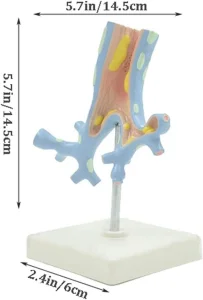
Nagoya OEM Supply — Wholesale Medical School Human Anatomy Respiratory System Model Educational PVC Stand Made China Model Number Human Respiratory System Manufacturers, Factories
View Nagoya Model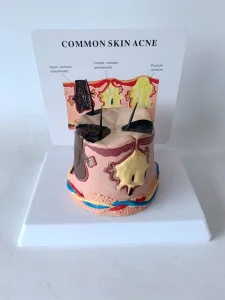
Nagoya OEM Supply — Wholesale Best Selling Anatomical Human Structure Skin Model for Teaching Model Quotes, Service
View Nagoya Model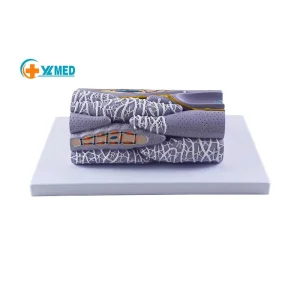
Nagoya OEM Supply — OEM Human Anatomy Human Smooth Muscle Model Medical Teaching Tools Toys Educational Training Auxiliary Anatomy Biology Manufacturer, Quotes
View Nagoya Model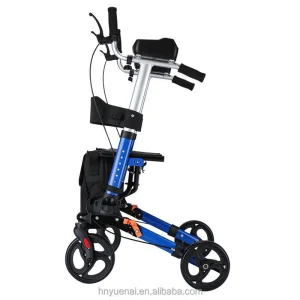
Nagoya OEM Supply — Wholesale Emergency Medical Supplies Four-Wheeled Rollator for Elderly Hot Sale Shopping Cart Good Price Rehabilitation Equipment Manufacturer, Factories
View Nagoya Model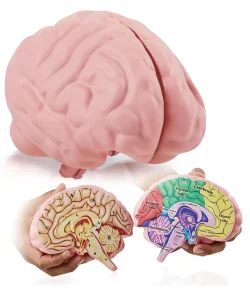
Nagoya OEM Supply — OEM Cross Section Foam Brain Model, Great Educational Tool for Learning & Teaching Human Anatomical Function, Psychology, Biology or Science, Easy to Use & Includes 2 Half Pieces Labeled with Figures Factories, Pricelist
View Nagoya Model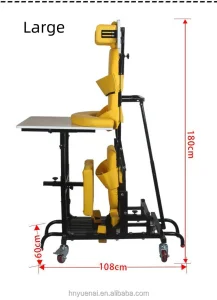
Nagoya OEM Supply — OEM Cerebral palsy rehabilitation training equipment, standing frame, adult multi-functional standing frame, emergency use Manufacturers, Pricelist
View Nagoya Model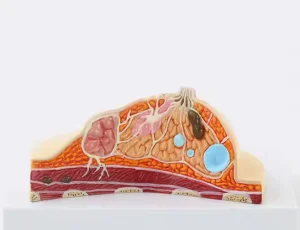
Nagoya OEM Supply — China Medical Science High Quality and Best Price Human Breast Cancer Self-Exam Model 3401 Factory, Quotes
View Nagoya Model