
Mumbai Medical Teaching
Anatomy models are not bought in isolation. A single Mumbai procurement decision may need to satisfy an anatomy department, a nursing skills laboratory, a hospital education team, a distributor private-label catalogue, a tender committee and an import clearance team. The strongest buying decision compares programme value, not only per-piece price.
Mumbai and the wider Mumbai Metropolitan Region combine a dense network of medical colleges, nursing schools, dental institutes, physiotherapy programmes, hospital chains, diagnostic centres, emergency training providers and education distributors. These buyers search for OEM anatomy models pricelist information because they need a repeatable commercial framework: model specifications, sample approval steps, private-label artwork, packaging standards, documentation for institutional purchase, shipping schedules and after-sales support for replacement parts.
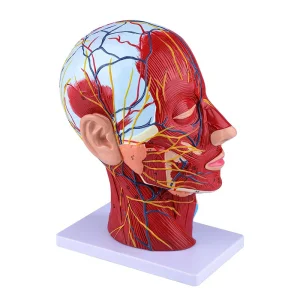
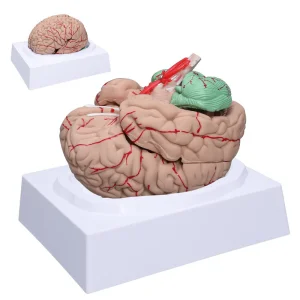
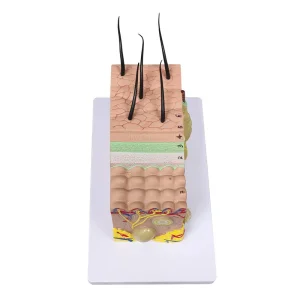
Yulin Medical approaches a pricelist as a working document rather than a static PDF. The commercial useful question is not “What is the lowest price?” but “What exactly is included at each price point?” A 45 cm torso model, an 85 cm life-size torso with removable organs, a 27-part muscle model, a detachable brain-artery model and a 35X enlarged skin model can sit in the same order, yet each has different tooling, finishing, packing and inspection requirements. Buyers who understand those variables negotiate better, reduce rework and receive documents that hold up inside a college, hospital or tender review.
This page provides an information-gain layer for Mumbai buyers: local commercial context, global procurement demand, macro sourcing solutions, pricelist logic, technical roadmap, localisation support, compliance documentation, factory authority and practical Q&A. The product links below preserve the original model pages so procurement teams can request specifications for the exact catalogue item they are reviewing.
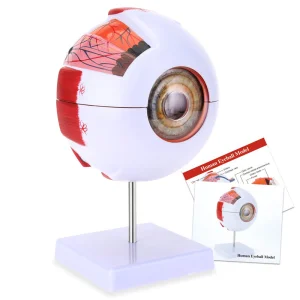
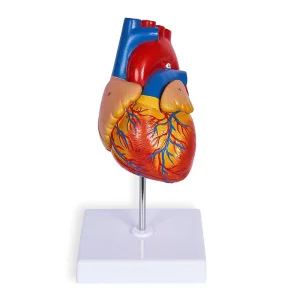
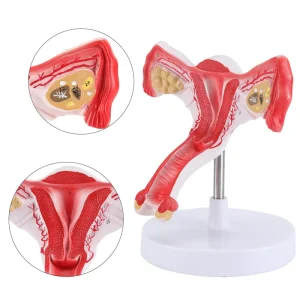
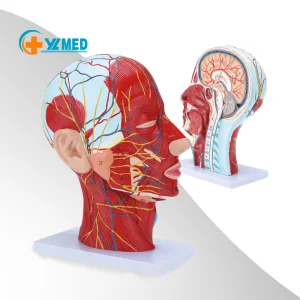
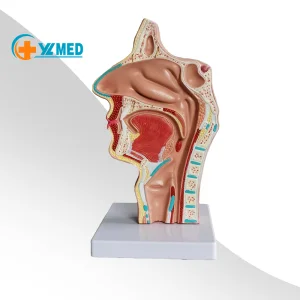
The first four catalogue items below are especially useful for anatomy laboratories, classroom demonstration and hospital patient-education programmes. Each link opens the original product page and preserves the original product image and URL.
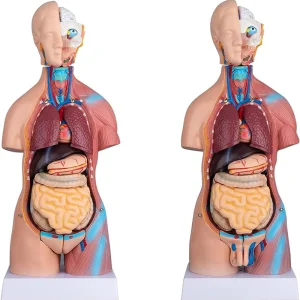
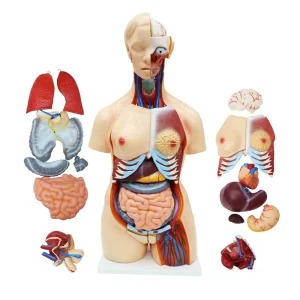
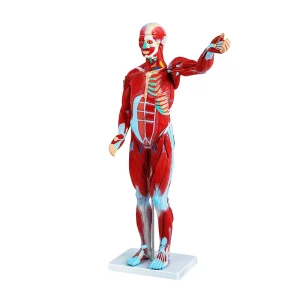
Mumbai is both a major consumption market and a distribution gateway. The local opportunity is strongest when suppliers combine product breadth with documentation, responsiveness and a plan for after-sales support.
Mumbai’s academic medical ecosystem includes undergraduate and postgraduate medical colleges, nursing institutions, dental and physiotherapy programmes, allied health schools, hospital-based simulation units, emergency medical training providers and corporate health teams. Around the Mumbai Metropolitan Region, expansion in private hospitals, diagnostic facilities and specialist clinics creates continuous demand for patient-education aids and clinical-skills teaching models. Medical tourism also encourages hospitals to use clear physical models when explaining procedures to international patients and families.
For distributors, the commercial reality is different from that of an individual college. A Mumbai distributor may need a private-label catalogue that covers anatomy, nursing simulation, skeleton models, dental teaching equipment and hospital furniture in one consolidated order. The distributor wants predictable packaging, English product labels, reliable spare-part availability and marketing-ready images. An institutional buyer, in contrast, may prioritise tender specification language, delivery scheduling, sample approval, warranty terms and document completeness. A hospital group may ask for standardisation across several campuses so that trainers see the same organ colours and part numbering everywhere.
The Mumbai logistics setting adds another layer. Buyers frequently evaluate sea freight through Nhava Sheva or Mumbai Port, air freight through Chhatrapati Shivaji Maharaj International Airport, and local warehousing or distributor stock in the MMR. Monsoon humidity means packaging design matters: models should be protected from moisture, pressure and handling shock, and inner packing should keep removable organs secure. Clear carton labelling, item-level packing lists and spare-part identification help importers, warehouse teams and service technicians work faster.
Colleges and hospital training centres increasingly expect anatomy models to support case-based teaching, skills stations and competency assessment, not only static display.
Mumbai distributors use OEM packaging, product labelling and catalogue design to build local brand equity and avoid direct price comparison with generic listings.
Institutional procurement values clear specification sheets, packing lists, ISO certificates and consistent batch quality as much as the model itself.
Monsoon-season storage and multi-stop distribution require moisture-conscious packaging, secure cartons and spare-part labelling that supports local service.
Removable organs, magnets and display stands should be replaceable or serviceable so that a teaching asset stays in use across academic years.
Buyers increasingly ask about finish durability, cleaning guidance, odour control and packaging waste reduction, especially for school and hospital environments.
Across Asia, Africa, the Middle East, Europe and the Americas, buyers are shifting from one-off product purchases to programme-based supply. The winning model is fewer suppliers, clearer specifications and stronger local support.
Global demand for anatomy models is being shaped by three forces. First, healthcare workforce expansion and accreditation pressure are increasing the number of nursing, medical, dental, physiotherapy and emergency-care programmes that require repeatable teaching assets. Second, public and private institutions are standardising equipment across campuses, which creates demand for consistent colours, part numbering, packaging and documentation. Third, distributors are adding private-label teaching ranges to capture higher-value education budgets. These forces make a broad OEM partner more valuable than a single-product trader.
A macro solution for Mumbai procurement is to treat anatomy models as a managed programme: select a core platform, validate samples with instructors, approve private-label packaging, confirm documentation for tender use, plan mixed-category shipments and set a spare-parts and replacement rhythm. This approach reduces emergency buying, improves curriculum alignment and lowers the total cost of ownership across the product lifecycle.
| Procurement challenge | Macro solution | Mumbai execution |
|---|---|---|
| Fragmented suppliers across anatomy, nursing models, skeleton models, dental teaching and hospital furniture. | One manufacturer or coordinated supply programme with mixed-category consolidation. | Consolidate an OEM catalogue for Mumbai distributors and hospital training teams; request one quotation covering all categories. |
| Inconsistent product quality between the sample and repeat batches. | ISO 9001 process control, specification freeze, pre-production sample approval and batch inspection. | Keep approved samples with buyer, supplier and local distributor; define colour and part-number tolerances before production. |
| Tender documentation gaps that delay institutional approval. | Standard document pack: product data sheets, packing list, proforma invoice, certificate of origin, ISO certificate and care instructions. | Prepare a Mumbai tender folder with English specifications, carton dimensions and shipping mode options. |
| Long replacement cycles for removable organs, magnets or stands. | Modular construction and spare-part identification where applicable. | Ask for a recommended spare-parts list and local service workflow before confirming the first bulk order. |
This illustrative model helps a buyer compare total programme value. Weights should be changed for each Mumbai college, hospital group or distributor.
Illustrative procurement weighting only. It is not a market statistic; adjust weights for each buyer.
A professional pricelist should explain the commercial variables, not merely list a number. For anatomy models, the most important variables are model complexity, removability, finish, packaging, branding, documentation and shipment mode.
Part count, life-size versus desktop scale and removable-organ complexity directly affect tooling, assembly time and inspection.
Surface durability, colour consistency, cleaning guidance and odour control are relevant to schools, colleges and hospital training rooms.
Magnetic or removable organs need secure retention, clear numbering and a practical replacement plan for busy teaching schedules.
Private-label boxes, manuals, labels, barcodes and master-carton design create distributor value and reduce local relabelling work.
Data sheets, ISO 9001 evidence, packing lists, certificate of origin and tender text should be quoted as a clear service scope.
MOQ, sample charges, production lead time, carton dimensions and sea/air options to Mumbai must be stated before order confirmation.
To receive a relevant quotation, share the learner group, model list, target quantity, private-label requirement, packaging preference and any tender document format. If the requirement is still at an early stage, ask for a sample comparison sheet and a recommended mixed-container plan. This allows Yulin Medical’s export team to respond with clearer specifications instead of a generic PDF.
A disciplined roadmap protects the buyer, the distributor and the teaching institution. It also creates room for future upgrades such as QR-linked learning content and modular part replacement.
Define learner groups, model list, expected teaching outcomes, storage conditions and tender requirements.
Confirm dimensions, part counts, removable organs, colours, numbering, packaging and documentation.
Instructors and procurement reviewers compare samples for clarity, durability, storage and curriculum fit.
Approve private-label artwork, labelling, cartons and inspection criteria before scaling.
Coordinate mixed-category production, export packing, spare-parts planning and repeat-order consistency.
The next stage of anatomy teaching will combine physical models with digital learning layers. A QR code on a model stand can connect students to labelled anatomical content, care instructions or assessment questions. Modular magnetic parts can lower long-term replacement costs. Where suitable, 3D-printed anatomy can support rare or patient-specific training, while lower-impact materials and recyclable packaging are becoming part of responsible procurement conversations.
For Mumbai institutions, the practical move is to future-proof the current purchase: request consistent part numbering, keep approved sample records, specify packaging for humidity, ask for spare-part identification and keep a digital file of data sheets and tender documents. These small steps reduce friction when a department expands, a distributor changes packaging or a new campus is added.
Compliance is a shared responsibility. Yulin Medical provides manufacturing and product documentation; the Mumbai importer should confirm the final regulatory, customs and institutional requirements that apply to the specific product and end use.
Commercial invoice, packing list, proforma invoice, certificate of origin, ISO 9001 certificate and product data sheets can be prepared for order discussion.
English model descriptions, dimensions, part counts, material notes, care guidance and carton data help colleges and hospital committees compare offers.
Private-label packaging, label text, product images and catalogue-ready specifications support a Mumbai distributor’s local marketing.
Care instructions, spare-part identification and replacement coordination help teaching assets remain usable across academic terms.
For Mumbai logistics, discuss whether the shipment should move by sea through Nhava Sheva or Mumbai Port, by air through Chhatrapati Shivaji Maharaj International Airport, or through a distributor’s consolidated stock. Ask for carton dimensions, gross weight, packing marks and a recommended inspection point before dispatch. For tender supply, confirm the exact name of the purchasing institution, required document order and whether samples must be retained by the committee.
Yulin Medical’s quality management system has been ISO 9001 certified since 2008. Product-specific documents can be provided on request to support tender and import registration discussions. Regulatory classification, local registration, tax treatment and port clearance remain the responsibility of the importer and should be verified with the relevant Indian authorities and a qualified local adviser.
The remaining eight catalogue items complete a broader quotation package for anatomy labs, nursing schools, hospital education teams and OEM distributors. All original product links and images are retained.
The value of an OEM anatomy catalogue increases when products are combined around a teaching outcome rather than purchased as isolated items.
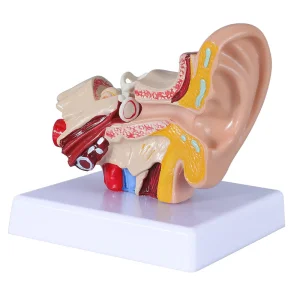
Combine an 85 cm 23-part torso, 6x adult eye, 1.5x ear, detachable brain-artery model and half head/neck model. This creates a coherent station-based anatomy lab with different scales for lecture, group study and close inspection. Request consistent part numbering and a data sheet pack for internal committee approval.
Use magnetic heart, muscle, neurovascular head and torso models for patient conversations, nursing orientation and continuing education. Hospital buyers should prioritise easy cleaning, secure removable parts and a simple replacement plan for frequently handled components.
Build a catalogue covering anatomy, skeleton models, nursing models, dental teaching equipment, hospital furniture and suture kits. Private-label packaging, English manuals, product images and mixed-category shipment planning create a more complete offer for colleges, hospitals and tender agents.



E-E-A-T is built on verifiable experience. Henan Yulin Edu. Project Co., Ltd. has manufactured educational and medical training equipment in Xinxiang, Henan, China since 1958.
Founded in 1958, Henan Yulin Edu. Project Co., Ltd. has grown into an educational and medical equipment supplier integrating scientific research, production and sales. With registered capital of RMB 120 million and more than 200 professional employees, the company manages product development, manufacturing, inspection and export from its base at No. 8 Daoqing Road, Industry Park, Hongqi District, Xinxiang, Henan, China.
Our quality management system has been ISO 9001 certified since 2008. The guiding motto is simple: quality first, service first. Every order is produced and inspected so that distributors, medical universities, nursing colleges and hospitals can receive consistent, well-documented products on every batch. Our vision is to provide professional educational and medical training products from mainland China, built under controlled processes and decades of category knowledge.
For Mumbai buyers, the combination matters: a factory history that supports supply stability, an in-house design and packaging team for private label, more than ten product lines for consolidated sourcing, and an export team that replies with catalogues, specifications and shipping options. The company also maintains a stable network of long-term partner factories for one-stop orders when a buyer needs categories outside the core production range.
Buyer education is part of a trustworthy supply relationship. These practical insights help Mumbai procurement teams use products correctly and evaluate supplier capability.

Many plant and animal cell structures can only be studied under a microscope, which makes prepared biological slides essential in every biology lab. Correct handling, focusing and storage help students see clearer detail and help slide sets last for years.

Themed “Digital Leading Innovation and Development”, the expo reached 50,000 m² with 600+ brands and 10,000+ products on display, showcasing the latest educational equipment for schools and training institutions.

Buyers visiting the Xinxiang facility can inspect medical teaching models and training equipment in person. For Mumbai distributors, showroom photos and live video reviews can support catalogue planning before a full order.
Straight answers to the questions Mumbai distributors, colleges, hospitals and tender buyers ask before requesting a quotation.
We are a manufacturer. Henan Yulin Edu. Project Co., Ltd. was founded in 1958 and operates its own factory in Xinxiang, Henan, China, with more than 200 professional staff. For one-stop orders, we also coordinate a stable network of long-term partner factories.
Our quality management system has been ISO 9001 certified since 2008. Product-specific documentation can be provided on request for tenders and import registration discussions.
Yes. Our in-house design team develops private-label packaging and product presentation for distributors to increase shelf appeal and resale value. Share your logo, label copy, barcode requirements and preferred carton format so the team can prepare a practical artwork and packaging proposal.
Price depends on model complexity, size, part count, removable organs, finish, packaging, private-label requirements, documentation, order quantity and shipping mode. A useful quotation should break down what is included so the buyer can compare total programme value rather than only unit price.
Start with the learner group and teaching outcome. For general anatomy, torso models and half head/neck models are useful. For ENT teaching, the eye, ear, nose and throat models are more targeted. For cardiology or patient education, the magnetic heart and detachable brain-artery models are relevant. For physiotherapy, the muscle model is often requested. Then confirm whether life-size or desktop scale, removable parts and English labelling are required for Mumbai classrooms.
We can prepare product data sheets, commercial invoice, packing list, proforma invoice, certificate of origin, ISO 9001 evidence and care instructions for order discussion. The buyer should confirm the tender’s exact document list, whether samples must be submitted and any local registration or compliance requirements that apply to the specific product.
Buyers commonly evaluate sea freight through Nhava Sheva or Mumbai Port, air freight through Chhatrapati Shivaji Maharaj International Airport, or consolidated stock through a local distributor. The export team can provide carton dimensions, gross weight and packing marks so the importer can compare freight and clearance options.
Request a sample of the exact model, finish and removability. Have instructors review anatomical clarity, part fit, colour and storage. Record an approved sample or photo set, freeze the specification, and confirm private-label packaging before bulk production. This is especially important for multi-campus college orders and repeat distributor catalogues.
Spare-part support depends on the specific model. Before ordering, ask for a recommended spare-parts list, part identification photos and a replacement workflow. For frequently handled teaching models, a small local buffer of commonly replaced parts can reduce downtime for Mumbai colleges and hospital training teams.
Our export team is online seven days a week and typically replies within 24 hours with catalogues, specifications and shipping options. For faster matching, include the model names or URLs, target quantities, buyer type and any tender deadline in your inquiry.
Product labelling and packaging can be discussed for OEM orders. For SEO and procurement clarity, the original product URLs remain the reference point on this page. Buyers can request English label text, private-brand packaging and catalogue descriptions that fit their local market while keeping the factory specification consistent.
Compliance is a shared responsibility. The manufacturer provides product and quality documentation; the Mumbai importer should verify the final regulatory classification, customs treatment, local registration and institutional requirements with the appropriate Indian authorities and qualified advisers. This page is commercial and technical information, not legal or regulatory advice.
Tell us your target models, quantities, buyer type and any tender, packaging or documentation requirements. Our team will recommend suitable models, share specifications and propose a practical shipping plan for Mumbai.