
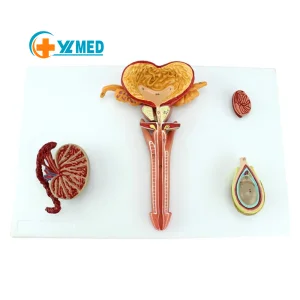
Featured Medical Nursing Models
Medical Nursing Models Selected for Hamburg Nursing & Clinical Training Programmes
These four product families are the repeat-order items most frequently requested by nursing schools, skills laboratories and medical distributors across Hamburg and the wider Hamburg metropolitan region. Every unit is produced in-house by Henan Yulin Edu. Project Co., Ltd., can be supplied with private-label packaging, and ships with a technical specification sheet plus compliance documentation on request.
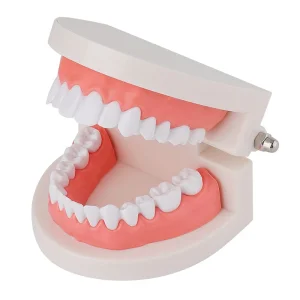
Standard Tooth Brushing Demonstration Model — Hamburg Dental Practices & Prevention Education
View Product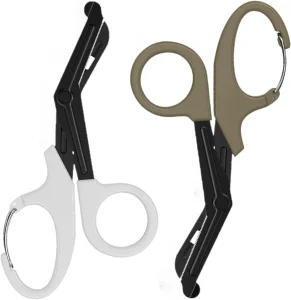
Trauma Shears with Carabiner — Stainless Steel Nursing Scissors for Hamburg Emergency & Ambulance Crews
View Product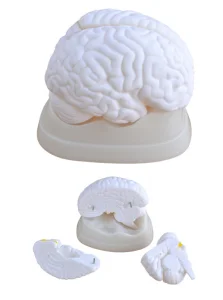
White Human Brain Anatomy Model — Hamburg Neuroanatomy & Clinical Skills Teaching
View ProductAll 12 featured SKUs can be combined into a single consolidated sea shipment discharged at the Port of Hamburg.
Market Intelligence
Why Hamburg Is a Strategic Market for Medical Nursing Model Manufacturers
Hamburg is not only Germany's second city-state — it is one of Northern Europe's densest clusters of healthcare delivery, nursing education, simulation-based training and medical trade. For a medical nursing model manufacturer, that density translates into a buyer base that orders repeatedly and evaluates suppliers on documentation, consistency and delivery reliability.
With roughly 1.9 million residents and a metropolitan region of more than five million people, Hamburg concentrates an unusually broad mix of purchasers inside a small geographic footprint: a flagship university medical centre, several academic and vocational nursing schools, hospital-group training academies, emergency medical services, dental clinics, rehabilitation providers and outpatient care organisations. A single field visit to the city can therefore cover procurement conversations that would otherwise span three or four German federal states.
The Universitätsklinikum Hamburg-Eppendorf (UKE) anchors clinical education and research in the city, while the surrounding academic landscape — including HAW Hamburg and the MSH Medical School Hamburg — feeds a steady pipeline of nursing, midwifery, emergency-care and physiotherapy graduates who need hands-on practice before they ever touch a patient. Alongside them, a network of public and private Pflegeschulen trains nursing apprentices under the requirements of the German Nursing Professions Act (Pflegeberufegesetz), which reshaped the curriculum from 2020 onward and pushed practical competency assessment into the foreground.
That curriculum shift has a direct procurement consequence. A generalist nursing programme of roughly 4,600 hours combines theoretical instruction with more than 2,500 hours of supervised practice, and schools are expected to prepare learners for that practice in skills laboratories. Anatomy models, injection and catheterisation trainers, CPR torsos, patient-care manikins and clinical skills simulators are no longer optional teaching aids — they are the infrastructure through which competencies are demonstrated and assessed.
Regulation adds a second layer of scrutiny. Nursing and anatomy models placed on the EU market may fall inside or outside the scope of the Medical Device Regulation (EU) 2017/745, depending on intended purpose and claims, and Hamburg buyers routinely ask suppliers to clarify classification, state the applicable conformity route, and supply technical documentation alongside the commercial offer. German procurement practice — including tenders governed by the UVgO and VgV frameworks — also expects documented quality systems, reproducible specifications and traceable batch records.
Logistics complete the picture. The Port of Hamburg is one of Europe's largest universal ports and handles more than eight million TEU per year, with direct container services from Chinese ports and dense onward connections into Scandinavia, Poland and the Benelux. For a Chinese manufacturer, Hamburg is not simply a delivery address — it is the natural European distribution gateway behind which a Northern German customer base can be served economically.
The practical conclusion for procurement teams is straightforward: the Hamburg market rewards manufacturers who can pair a competitive factory price with European-grade documentation, stable lead times through a well-served port, and the flexibility to consolidate several product categories into a single shipment.
China Factory Advantage
The China Factory Advantage: What Hamburg Buyers Actually Gain
Offshoring is only an advantage when the supply chain behind it is transparent. Yulin Medical has manufactured educational and medical training equipment in Xinxiang, Henan, since 1958, and has held ISO 9001 certification since 2008 — a combination that lets Hamburg customers buy at factory economics without accepting factory risk.
Most Hamburg distributors and institutions do not buy a single product; they buy a catalogue. A nursing school might order anatomy models, a CPR trainer set, wound-care simulators and emergency splints in the same procurement cycle. A hospital group might add examination furniture and diagnostic devices. Working with a manufacturer that owns ten product lines removes the coordination cost of juggling four or five suppliers, each with its own Incoterms, packaging standard and lead time. Orders can be inspected together, packed together and shipped together — one bill of lading, one customs entry, one point of accountability.
The second advantage is engineering and tooling depth. Because models are designed and moulded in-house, structural changes — a different anatomical structure highlighted for a German curriculum, a bilingual label set, a reinforced base for a heavily used skills lab — can be handled inside a normal production cycle rather than through a third-party trading layer. Private-label programmes follow the same logic: packaging artwork, instruction inserts and carton markings are developed by an in-house design team so that a Hamburg distributor can present the range under its own brand with credible, market-ready presentation.
60+Years of manufacturing heritage
200+Professional staff
2008ISO 9001 certified since
¥120MRegistered capital (RMB)
10Integrated product lines
24hInquiry reply commitment
Consolidated Loading for Hamburg
Mixed-category orders are packed to a single loading plan and shipped on regular Hamburg-bound services, reducing per-unit freight cost and simplifying customs handling for German importers.
Documentation That Survives an Audit
Batch records, inspection reports, material declarations and specification sheets are retained and released on request — the paper trail that German procurement teams and tender evaluators expect to see.
Private Label Built for German Retail
From carton design to instruction leaflets, our design team prepares distributor-branded packaging so the same model can be sold credibly to schools, clinics and online channels in Northern Germany.
Industry Trends
Six Trends Reshaping Nursing Education and Simulation in Northern Germany
Procurement specifications written three years ago look different from the ones arriving today. These six developments explain why Hamburg buyers are placing more emphasis on documentation, modularity and total lifecycle cost.
Competency-Based Curricula Are Now the Default
Since the Nursing Professions Act came into force, nursing schools assess observable competencies rather than memorised theory. That pushes demand toward models that allow repeatable demonstrations, structured peer assessment and objective sign-off during practical examinations.
Mixed-Fidelity Simulation Is Replacing Single-Room Labs
Skills centres increasingly combine low-fidelity anatomical models for foundational drills with high-fidelity manikins for scenario work. Manufacturers who can supply both tiers from one catalogue simplify equipment standardisation across multiple campuses.
Real-Time Feedback and Learner Data
Compression depth, rate and ventilation volume are now recorded rather than estimated. CPR trainers with integrated feedback displays give instructors defensible assessment evidence and help reduce variability between teaching groups.
Hygiene and Cleaning Requirements Tightened
Shared training equipment must withstand frequent disinfection. Smooth, non-porous surfaces, removable airway components and clearly documented cleaning procedures are increasingly written directly into German tender specifications.
Digital and Physical Teaching Are Converging
Anatomical models remain central but are increasingly paired with digital courseware, QR-linked learning content or augmented-reality overlays. Suppliers who can offer a physical model plus structured digital reference material deliver higher information value.
Lifecycle Cost and Green Procurement
Public and institutional buyers now weigh total cost of ownership: durability, spare-part availability, packaging waste and repairability. A model that survives a decade of classes is cheaper than three that fail early — and far easier to justify in a sustainability report.
Localised Applications
Localised Application Scenarios Across Hamburg
The same catalogue serves very different buyers. Matching a model to the environment it will actually live in — a lecture hall, a skills lab, a dental chair-side conversation or an ambulance — is what determines whether the investment delivers value.
University Medical Centres & Simulation Labs
Academic simulation centres around Hamburg run scenario-based training for medical and nursing students. Full-body CPR and ACLS manikins with feedback displays, airway management trainers and anatomical models support team-based drills and structured debriefing.
Nursing Schools & Practical Assessments
State-recognised nursing schools need durable, easily cleaned training aids that survive daily class rotation. Injection pads, catheterisation trainers, wound-care simulators and anatomical models of the reproductive, urinary and nervous systems form the core practical kit.
Elderly Care & Outpatient Services
Home-care providers and outpatient nursing services across Hamburg rely on mobility and transfer equipment: folding wheelchairs, height-adjustable walkers, shower chairs and cervical traction devices that reduce caregiver strain and support patient independence.
Dental Practices & Prevention Education
Hamburg dental practices use demonstration tooth models and mobile cold-light whitening units both clinically and for patient education. Oversized brushing models are especially effective in school outreach and paediatric prophylaxis programmes.
Emergency Services & First-Aid Training
Fire services, ambulance operators and aid organisations in the Hamburg region run continuous first-aid and ACLS refresher courses. AED trainers, trauma shears, scoop stretchers, extrication splints and shock-absorbing emergency splints form the consumable-and-equipment backbone.
Port, Shipping & Occupational Medicine
A working port city needs maritime and industrial medical training. Emergency splints, cervical traction, resuscitation trainers and portable diagnostic devices support on-board first-aid training and company occupational-health programmes across Hamburg's logistics and shipbuilding workforce.
Macro Solutions
Macro-Level Industry Solutions for Hamburg Procurement Teams
Individual products solve individual problems. These six solution frameworks solve programme-level problems — the kind that appear when a school, hospital group or distributor needs an entire training environment delivered, documented and supported.
Turnkey Clinical Skills Laboratory
We plan a complete lab fit-out — anatomical models, CPR and ACLS manikins, injection and wound-care trainers, emergency splints, examination furniture and storage — matched to the number of learners, the curriculum and the room layout.
One-Stop Sourcing & Consolidated Freight
Ten product lines under one roof mean one purchase order, one inspection report and one container. Cartons are marked to your warehouse plan, and documentation is bundled so customs clearance in Hamburg proceeds without back-and-forth.
OEM, ODM & Private-Label Programmes
Distributors can launch a house brand without owning a factory. We handle artwork, colourways, instruction inserts, barcodes and carton specifications, then produce to the agreed standard across repeat orders.
Regulatory & Technical Documentation Pack
For every tender or first shipment we can assemble specification sheets, material declarations, inspection records and conformity-related documentation, so that German buyers can review classification and market-access questions before signing.
Trainer Enablement & Teaching Resources
Equipment is only half of a training programme. We provide structured product guidance, suggested practice sequences and model-specific handling notes that help newly appointed instructors use the kit consistently from day one.
Spare Parts, Consumables & Lifecycle Support
Airway components, lungs, skins, pads and connectors are available as spares, so a ten-year-old manikin can remain in service. Long-term supply of consumables protects the total cost of ownership across a school's equipment budget.
Global Procurement Demand
What Global Corporate Buyers Really Evaluate in a Nursing Model Manufacturer
Whether the buyer sits in Hamburg, Rotterdam or Singapore, the evaluation criteria converge. These are the eight questions that decide whether a supplier moves from first inquiry to a framework agreement.
Specification and Interchangeability
Dimensioned drawings, material grade, weight and anatomical detail must be documented so that a model ordered in 2025 matches the one ordered in 2029 and still fits existing storage and mounting.
Quality Evidence
ISO 9001 certification, process discipline aligned with DIN EN ISO 13485 principles, and batch-level inspection records that demonstrate consistency rather than promising it.
EU Market Access Clarity
A clear statement of intended purpose, MDR classification reasoning and the supporting documentation package — so the German importer knows exactly what obligations sit where.
Packaging and Transit Protection
Export-grade cartons, internal cushioning, pallet patterns and carton marking designed for a long sea voyage and for direct put-away into a Hamburg warehouse without repacking.
MOQ and Sample Turnaround
Mixed-category trial orders, sample dispatch within a defined window, and a clear path from a small evaluation order to a container-volume framework order.
Lead Time and Hamburg Routing
Production scheduling that accounts for Chinese New Year, realistic sea transit to Hamburg, and proactive notification when a sailing or consolidation plan changes.
After-Sales and Spare Parts
Documented warranty terms, an available spare-part list and a named contact who responds when a lung bag, airway component or connector needs replacing mid-semester.
Commercial Terms
FOB, CIF and DDP options, transparent freight quotations and payment structures that scale from a first trial shipment to a rolling twelve-month supply agreement.
More Medical Nursing Models
Additional Medical Nursing Models & Equipment for Hamburg Clinics and Distributors
A further eight product families complete the range: neuroanatomy and midwifery models for teaching, diagnostic and dental equipment for clinics, mobility and rehabilitation aids for outpatient care, and emergency immobilisation devices for first-responder training. Each item carries the original manufacturer specification and can be included in a consolidated Hamburg shipment.
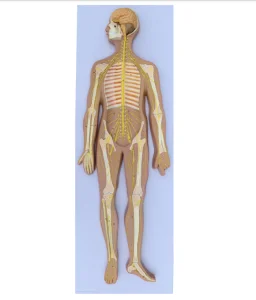
Central Nerve, Brain & Spinal Cord Anatomical Model — Hamburg Neuroscience & Emergency Teaching
View Product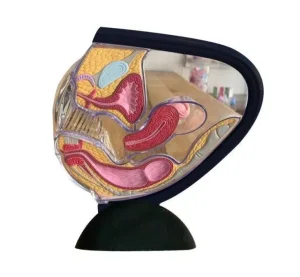
Transparent Female Uterus, Pelvic Cavity & Rectum Teaching Model (Black) — Hamburg Midwifery Training
View Product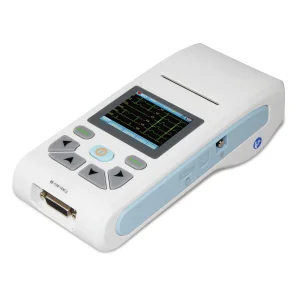
Handheld 2.8" 3/6/12-Lead ECG90A Electrocardiograph — Hamburg Clinic & Ambulance Diagnostics
View Product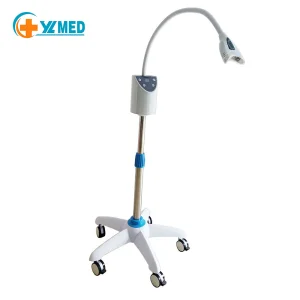
Mobile Dental Cold-Light Column Whitening Instrument — Hamburg Dental Clinic Equipment
View Product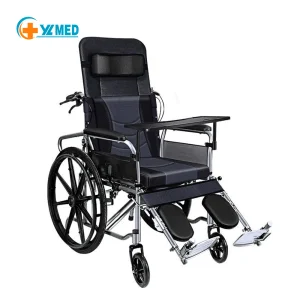
Folding Portable Semi-Lying Wheelchair — Hamburg Home Care & Rehabilitation Transport
View Product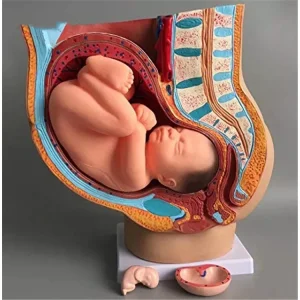
Female Human Sagittal Anatomical Model (4 Pieces) — Hamburg Medical School Anatomy Courses
View Product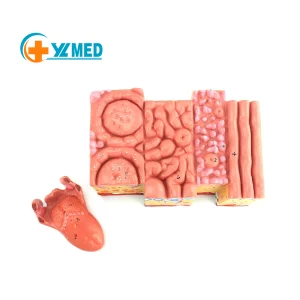
Human Tongue Anatomy Model — Hamburg Speech Therapy & Biology Teaching
View Product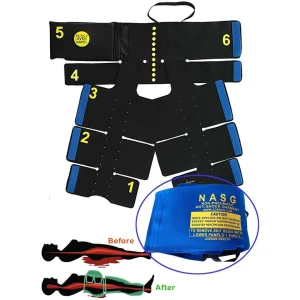
Elastic Resistance Band & Non-Pneumatic Shock-Absorbing Emergency Splint — Hamburg First-Aid Kits
View ProductAdd a Reliable Manufacturer to Your Hamburg Supplier Shortlist
Send us your product list, quantities and any tender or documentation requirements. Our export team will reply with matched models, specifications, packaging options, available compliance documentation and a delivered-cost proposal for the Port of Hamburg — typically within 24 hours.
Buyer FAQ
Frequently Asked Questions from Hamburg and EU Importers
Direct answers to the questions procurement managers, nursing school administrators and distributors ask most often before placing a first order.
Is Yulin Medical a manufacturer or a trading company?
We are a manufacturer. Henan Yulin Edu. Project Co., Ltd. was founded in 1958 and operates its own production facility in Xinxiang, Henan, China, with more than 200 professional staff and a registered capital of RMB 120 million. For one-stop orders we also coordinate a stable network of long-term partner factories, so mixed-category shipments can still be consolidated under one contract.
How do you specifically support customers in the Hamburg market?
Hamburg orders are handled through a dedicated export workflow: specification matching against German curriculum requirements, documentation preparation for the German importer, private-label packaging preparation, and consolidation onto container services routed to the Port of Hamburg. We also schedule shipments around school intake cycles and semester start dates so equipment arrives before training begins.
Can your nursing and anatomy models be placed on the German and EU market?
Many of our teaching models are supplied as educational demonstration products, while others may fall within the scope of the Medical Device Regulation (EU) 2017/745 depending on intended purpose and claims. We provide specification sheets, material information and available conformity-related documentation so that the EU importer can confirm the classification, the applicable conformity route and its own obligations before the order is confirmed.
How long does an order take to reach the Port of Hamburg?
Standard production runs typically take a few weeks depending on model complexity and order volume, followed by sea transit from Chinese ports to Hamburg. Express and air options are available for urgent sample or pilot orders. Exact timelines are confirmed at quotation stage, and we notify buyers proactively if a sailing or consolidation plan changes.
Do you offer OEM, private label and custom packaging?
Yes. Our in-house design team develops private-label packaging, instruction inserts, carton markings and product presentation for distributors. This lets a Hamburg partner sell the range under its own brand, with consistent artwork across repeat orders and packaging tailored to German retail and institutional expectations.
What is the minimum order quantity for a nursing school or hospital in Hamburg?
Minimum quantities depend on the specific model and whether a private-label programme is involved. We regularly support trial orders that combine several product categories into one evaluation shipment, and we can scale the same configuration into a container-level framework order once the school or distributor has validated the products in use.
How are the products packed for a sea shipment to Hamburg?
Products are packed in export-grade cartons with internal cushioning appropriate to the model, palletised where required and marked according to the buyer's instructions. Fragile anatomical models receive additional protection, and cartons are labelled to support straightforward put-away in a German warehouse without repacking.
Can I combine different product lines in one shipment?
Yes, and this is one of the main reasons buyers work with us. Anatomy models, nursing and CPR simulators, dental teaching equipment, hospital furniture, rehabilitation aids and emergency splints can all be consolidated into a single loading plan, reducing freight cost and simplifying customs entry in Hamburg.
What warranty and spare-part support do you provide?
Product warranty terms are stated in the quotation and order confirmation. Consumable and wearing components — lungs, airway parts, skins, pads and connectors — are available as spares, so an existing manikin can remain in service for years rather than being replaced as a unit.
How should a Hamburg nursing school choose the right CPR training manikin?
Start with the learner group: adult, child or neonatal. Then confirm that real-time feedback covers compression depth, compression rate and ventilation volume, and that the training content aligns with current resuscitation guidance. For advanced life-support programmes, an ACLS simulator with embedded scenarios and defibrillation support offers far more assessment value than a basic torso.
Do you provide specification sheets, drawings or tender documentation?
Yes. Specification sheets, dimensioned drawings, material descriptions and inspection records can be supplied for tender preparation. If a Hamburg institution is responding to a public procurement procedure under UVgO or VgV, tell us the required document format at inquiry stage and we will prepare the pack accordingly.
How quickly will I receive a reply?
Our export team is online seven days a week and typically replies within 24 hours with catalogues, specifications, packaging options and shipping estimates. For urgent tender deadlines, include the submission date in your first message so we can prioritise the documentation.
Start the Conversation
A Manufacturer, a Documentation Partner and a Hamburg Supply Route in One
Henan Yulin Edu. Project Co., Ltd. combines more than six decades of manufacturing experience, an ISO 9001 quality management system in place since 2008, ten integrated product lines and a working understanding of what German procurement teams need to see. Whether you are equipping a single skills laboratory, refreshing a nursing school's practical kit or building a private-label catalogue for the Northern German market, our export team will help you specify, document and deliver it.