
ISO 9001 since 2008
Factory since 1958
Sweden-focused manufacturer, pricelist and export desk
Medical Apparatus and Instruments Manufacturers & Pricelist Serving Sweden
Factory-direct medical apparatus, hospital equipment, diagnostic instruments and rehabilitation aids for Swedish distributors, hospitals, clinics, dental practices, home-care providers, medical schools and emergency-training organisations.
Sweden-ready shortlist
Four Medical Apparatus & Instrument Products for Swedish Buyers
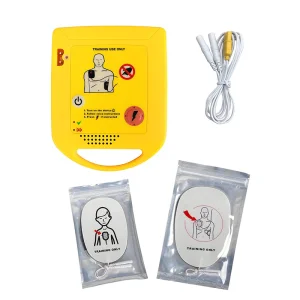
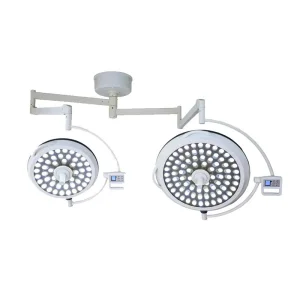
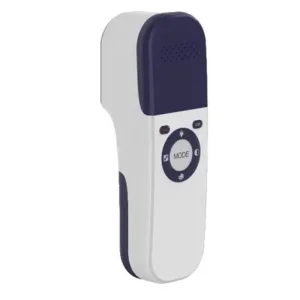
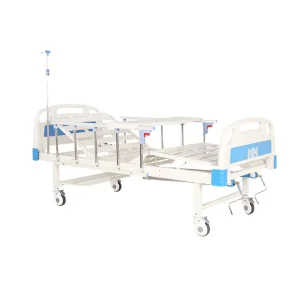
A practical starting point for Swedish distributors and institutions: AED training, surgical lighting, vein visualisation and ward beds. Product images and original product-page URLs are retained so buyers can verify specifications before requesting a Sweden-specific pricelist.
Sweden market intelligence
What Swedish Procurement Teams Expect from Medical Apparatus Manufacturers
Sweden is not a single buying centre. Regional hospitals, municipal care, private clinics, dental practices, schools and distributors each evaluate equipment differently — yet they share a demand for documented quality, predictable lifecycle support and low clinical disruption.
21Swedish regions responsible for hospitals and primary care
290Municipalities shaping elderly care, home care and social services
EU MDRProduct-specific regulatory planning where medical-device claims apply
24hTarget response for catalogs, specifications and pricelist requests
Sweden’s healthcare and social-care system is highly decentralised and evidence-led. Regional councils fund and organise hospital and primary care, while municipalities operate much of the elderly care, home care and rehabilitation support. For a supplier, this means that a product can be evaluated by a hospital biomedical department, a municipal procurement officer, a home-care manager, a private dental clinic, a medical school and an importing distributor — all within the same market. The buying conversation therefore moves quickly from “What is the unit price?” to “Can you prove consistent specifications, supply replacement parts, support mixed-category orders and provide the documentation our tender team needs?”
An ageing population increases demand for patient handling, mobility, rehabilitation, ward furniture, diagnostics and first-aid preparedness. At the same time, Sweden’s long geography and sparse rural areas make home-care logistics demanding. Equipment must survive cold-weather transport, storage in distributed depots and daily use by mobile care teams. In larger regions such as Stockholm, Västra Götaland and Skåne, framework agreements and supplier qualification processes reward manufacturers that can maintain traceability across repeat orders. In smaller municipalities, buyers often value a practical, responsive supplier that can consolidate several categories into one shipment.
This is why a Sweden-serving medical apparatus pricelist should not be treated as a single price sheet. It should connect the product configuration, intended use, documentation package, packaging, delivery term and after-sales path. A low headline price can become expensive if the product lacks the correct label, cannot be combined with other equipment, arrives with damaged packaging or requires weeks of clarification during a tender. Our export desk therefore encourages buyers to share their intended use, quantities, destination, compliance requirements and target delivery window before asking for final pricing.
Key takeaway: in Sweden, the strongest offer is usually the one that reduces clinical, regulatory and procurement risk — not simply the one with the lowest initial unit price.
Buying trends
Three Procurement Trends Shaping Medical Apparatus Supply in Sweden
These trends appear repeatedly in distributor inquiries, tender preparation and hospital equipment planning across the Nordics.
Documented quality over generic claims
Buyers increasingly ask for product-specific declarations, test evidence, batch traceability and clear intended-use statements. A generic ISO 9001 certificate is useful for factory qualification, but it is not a substitute for the documents required for a medical device or an electrical product.
Consolidation of suppliers and shipments
Distributors want fewer handoffs. A single shipment that combines hospital furniture, rehabilitation aids, training products and diagnostic instruments can reduce freight administration, customs complexity and warehouse workload while improving stock availability.
Lifecycle support and repeatability
Healthcare buyers care about what happens after delivery: spare parts, consistent packaging, English and where required Swedish labelling, product training and a clear point of contact. Repeatability is a competitive advantage when a hospital expands a ward or a municipality reorders for home-care teams.
Global procurement context
Global Buyers Are Looking for Suppliers Who Can Absorb Complexity
Across Europe, the Middle East, Africa, Latin America and Asia-Pacific, medical distributors face the same pressure: their customers expect broader product ranges, faster quotations and stronger documentation, but they do not want to manage dozens of small factories. Global procurement teams increasingly evaluate a manufacturer’s ability to consolidate product lines, maintain consistent quality between batches, provide private-label packaging and support tender documentation.
At the same time, freight volatility, currency movements and regulatory fragmentation have made supply-chain resilience a board-level topic. A distributor may need a mixed container that includes emergency training aids, patient beds, walkers, stethoscopes, diagnostic sets and dental equipment. If each item comes from a different supplier, the administrative burden rises sharply. Manufacturers that can coordinate multiple categories — while keeping one accountable export contact — become more valuable than suppliers that compete only on a narrow product price.
This is also where information quality matters. A serious global buyer checks whether the supplier can match the same specification on the second order, whether packaging can survive ocean and rail transport, whether labels can be adapted for the importer, and whether product-specific documents can be produced for tender review. Supply resilience is therefore built from operational discipline, not from a slogan on a catalogue cover.
China Factory 4.0
Supply-Chain Resilience and Efficiency from a Six-Decade Manufacturing Base
Factory 4.0 is most useful when it improves reproducibility for the buyer: the same specification, the same label, the same packaging and the same inspection discipline on every repeat order.
Henan Yulin Edu. Project Co., Ltd. — trading as Yulin Medical — was founded in 1958 and has grown into an educational and medical equipment supplier integrating research, production and sales. With registered capital of RMB 120 million and more than 200 professional employees, the company operates from No. 8, Daoqing Road, Industry Park, Hongqi District, Xinxiang, Henan, China. Its quality management system has been ISO 9001 certified since 2008, and the operating motto remains simple: quality first, service first.
For Swedish buyers, “Factory 4.0” should not be interpreted as a promise that every process is fully automated. Its practical value lies in digital control of product information, modular production planning, standardised inspection points and packaging engineering that reduces transit damage. When a distributor combines anatomy models, CPR and nursing training products, hospital furniture, diagnostic instruments and rehabilitation aids in one order, the factory must coordinate bills of material, labels, carton marks and documents across multiple product families. That coordination is a supply-chain capability in its own right.
China’s mature medical-equipment and teaching-supplies ecosystem gives manufacturers access to specialist component suppliers, moulding and metalworking partners, printing and packaging services, and experienced export logistics. A manufacturer with a long operating history can use this ecosystem to plan buffer stock for standard parts, qualify alternative component sources, schedule production around mixed orders and protect delivery windows during peak tender seasons. The result is not a promise of unlimited capacity; it is a more disciplined way to absorb complexity.
Yulin Medical combines its own manufacturing with a stable network of long-term partner factories for one-stop orders. This allows buyers to source across ten product lines while keeping a single export contact for specifications, samples, packaging and shipment planning. For Sweden, that can mean a distributor receives one consolidated quotation covering ward beds, walkers, diagnostic sets, training products and hospital furniture, with a coordinated packing list and document set. Factory 4.0, in this context, means fewer surprises between the approved sample and the repeat order.
Process discipline: defined inspection points for incoming materials, assembly, packing and final documentation.
Mixed-category consolidation: one shipment and one point of contact across multiple product families.
Private-label packaging and product presentation support for distributors serving Sweden.
Responsive export communication, with a typical reply target within 24 hours, seven days a week.
Sweden localisation
Localised Application Scenarios Across Sweden
The same product can serve very different buyers depending on setting, user group and documentation. These scenarios help Swedish buyers specify the right configuration before requesting a pricelist.
CPR and AED training in schools, workplaces and sports clubs
Swedish municipalities, employers and voluntary organisations run first-aid and CPR training. A compact AED trainer supports repeated classroom use and helps instructors demonstrate defibrillation steps without using a live clinical device. Buyers should specify training-only status, battery arrangement and replacement consumables.
LED shadowless lighting, five-function beds and patient handling
Regional hospitals and municipal care facilities need cleanable surfaces, stable braking systems, side rails and serviceable components. Electrical products require destination-appropriate voltage, plug and documentation planning. For mixed ward projects, beds can be combined with examination furniture and rehabilitation aids in one order plan.
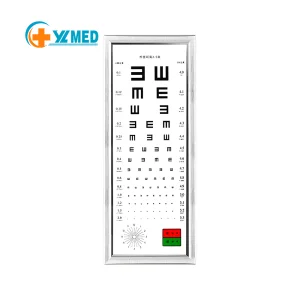
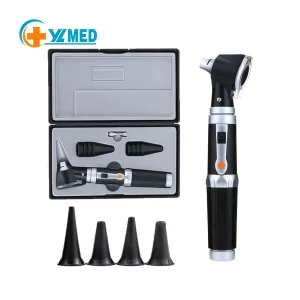
Vein finder, stethoscope, otoscope, ophthalmoscope and eye chart
Private clinics, dental practices and primary-care centres value compact diagnostic equipment that is easy to clean and simple to train. For optometry and school-health screening, LED eye-chart light boxes should be specified with the required chart standard, viewing distance and language preference.
Walkers, stand-up assist aids and narrow-lane mobility support
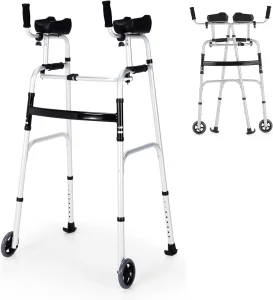
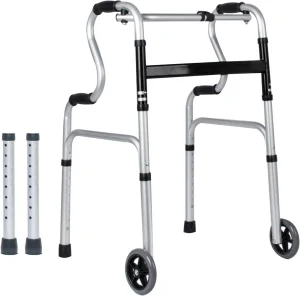
Municipal home-care teams work in apartments, corridors and sometimes outdoor conditions. Lightweight aluminium walkers, foldable designs, height adjustment and weight capacity are practical selection criteria. Swedish buyers should also consider spare ferrules, handgrips and packaging that allows depot-level distribution.
Anatomy charts, teaching models and simulation support
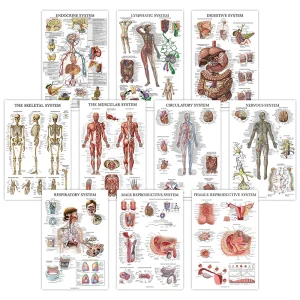
Medical universities, nursing colleges and simulation centres benefit from durable anatomical teaching aids and wall-chart sets. Bilingual presentation, surface durability and replacement availability can matter more than novelty features. Training products should be clearly described as educational items, not clinical devices.
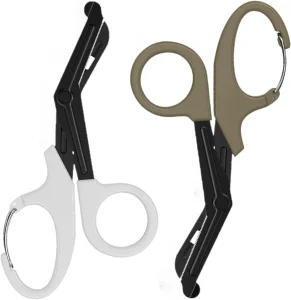
Trauma shears, bandage scissors and practical ward instruments
Nurses, emergency teams and dental assistants require instruments that are easy to identify, store and clean. Carabiner designs can reduce loss during field use. Buyers should confirm the intended use, material specification and cleaning instructions before choosing a configuration for Swedish distribution.
Complete sourcing ecosystem
Ten Yulin Medical Product Lines That Can Support a Swedish Catalogue
A distributor does not need to buy every category at once, but having one accountable manufacturer network makes it easier to build a coherent medical and educational equipment catalogue.
Anatomy Models
Torso, organ, heart, brain and muscle models for lectures and patient education.
Biology Prepared Slides
Histology, botany and zoology slides plus lab storage and microscope accessories.
Dental Tools & Equipment
Dental teaching models, clinic lights and instruments for training and practice.
General Teaching Models
Science demonstration models for schools and education-equipment tenders.
Hospital Furniture
Examination couches, stretchers, walkers and shower chairs for daily use.
Hospital Machines & Tools
Diagnosis and treatment devices and practical tools for wards and clinics.
Medical Apparatus & Instruments
Emergency splints, extrication devices, traction and rehabilitation instruments.
Medical Nursing Models
Adult, child and neonatal CPR manikins, ACLS simulators and AED trainers.
Skeleton Models
Life-size and desktop skeletons, skulls, spines and joint models for osteology.
Suture Pads & Kits
Realistic skin suture pads and complete kits for wound-closure practice.
Pricelist planning
What Drives a Medical Apparatus Pricelist for Sweden?
A reliable quotation reflects configuration, compliance documentation, packaging, freight and after-sales planning. These are the six cost drivers buyers should compare before choosing a supplier.
1. Specification and configuration
Bed functions, frame material, light intensity, walker weight capacity, diagnostic set contents, chart standard and instrument finish can change both cost and lead time.
2. Order volume and mix
Single-SKU orders and mixed-category containers have different planning requirements. Consolidating several lines can improve freight efficiency, but each SKU still needs clear labelling and packing instructions.
3. Documentation and testing package
Product-specific declarations, test reports, labelling and traceability requirements should be confirmed before final pricing. Generic certificates may not satisfy a Swedish tender or importer review.
4. Private label and packaging
Artwork, language, barcodes, carton marks, inner packing and retail presentation all affect the production plan. Good packaging reduces transit damage and dealer complaints.
5. Freight, Incoterms and destination
Whether the buyer chooses EXW, FOB, CIF or another term changes the quotation scope. Port, warehouse, customs clearance and last-mile delivery should be discussed early.
6. Spare parts and after-sales
Replacement ferrules, handgrips, bulbs, labels or service components can be included in the initial order to reduce future downtime and small-order freight costs.
RFQ checklist for faster pricing: product name and product URL, intended use, target quantity, destination city or port, required documentation, label language, packaging preference, Incoterms, preferred delivery window and whether a sample is required.
For Swedish buyers, the most efficient first message usually includes both the clinical or operational setting and the commercial model. Are you a distributor building a catalogue, a hospital preparing a tender, a municipality refreshing home-care equipment, or a training centre upgrading its CPR programme? Each model changes the recommended configuration. The more context you provide, the more useful the pricelist becomes.
Compliance & quality
Quality, Documentation and Regulatory Risk Controls for Sweden
Product-specific compliance is a shared responsibility between manufacturer, importer and distributor. These checks help procurement teams ask better questions before placing an order.
Sweden is part of the European Union, so products that qualify as medical devices must be placed on the market in accordance with applicable EU medical-device rules, including the EU Medical Device Regulation where relevant. Depending on classification and product type, this may involve CE marking, a declaration of conformity, technical documentation, unique device identification and language requirements for instructions and labelling. Importers and authorised representatives may also have obligations. Training aids that are not intended for clinical use should be clearly described and labelled as training products, so that they are not confused with devices intended for patient care.
Electrical products require additional attention. Swedish mains power is generally 230 V / 50 Hz, and plug type, fuse specification, EMC and electrical-safety documentation should be confirmed before shipment. Furniture and mobility products may not be medical devices in every configuration, but buyers still expect cleanable materials, safe edges, stability, load ratings and spare-part availability. Do not rely on a generic “CE certificate” image; request the document that matches the exact product, model and intended use.
Confirm whether the item is a medical device, a training aid, or a general-care product.
Request product-specific declarations, instructions, labels and test documents where applicable.
Verify voltage, plug, EMC and packaging requirements for Sweden before production.
Define who acts as EU importer or responsible economic operator for the specific shipment.
Review labelling language, barcodes, batch traceability and storage conditions.
Plan sample evaluation and first-article inspection before a tender commitment.
Yulin Medical’s quality management system has been ISO 9001 certified since 2008. This supports factory-level process control, but it should be read together with product-specific documentation. Buyers are welcome to request the documents relevant to their target products and intended market. Clear questions at the quotation stage are far cheaper than corrective work after delivery.
Manufacturer credibility
A Six-Decade Manufacturing Base with Export-Focused Support
Founded in 1958, Yulin Medical integrates research, production and sales from its base in Xinxiang, Henan, China. The company serves distributors, medical schools, hospitals and training organisations with a broad catalogue and a single export contact.
Henan Yulin Edu. Project Co., Ltd. has grown with a clear operating philosophy: dependable quality and attentive service, supported by continuous team development. With registered capital of RMB 120 million and more than 200 professional employees, the company manages product development, manufacturing, inspection and export from No. 8, Daoqing Road, Industry Park, Hongqi District, Xinxiang, Henan. Its quality management system has been ISO 9001 certified since 2008.
60+Years of manufacturing history
200+Professional staff
¥120MRegistered capital (RMB)
2008ISO 9001 certified since
10Product lines available for one-stop sourcing
24hTypical reply target
24/7 Responsive Service
Our team is online 24 hours a day, 7 days a week. Wherever you are, you receive a detailed answer as quickly as possible — typically within 24 hours.
Design & Packaging Team
In-house specialists support product design and private-label packaging that strengthens your brand and increases resale value in the Swedish market.
Professional Expertise
Our vision is to provide professional educational and medical training products from mainland China, supported by ISO 9001 process control and decades of category knowledge.
60+ Years of Supply Stability
A factory with more than six decades of history and an integrated partner supply chain helps meet one-stop requirements and keep lead times more predictable on repeat orders.
How we work
A Transparent Five-Step Process for Overseas Buyers
01
Share Requirements
Send product types, quantities, target market and any tender, certification or delivery requirements.
02
Catalog & Proposal
Receive matched models, specifications, packaging options and shipping suggestions.
03
Sample Evaluation
Test samples with your instructors, clinicians or procurement team before confirming bulk production.
04
Production & QC
Manufacturing and inspection follow our ISO 9001 quality management system and agreed specifications.
05
Export & Support
Protective export packing, delivery coordination and responsive after-sales service.
Factory, export & field notes
Inside the Manufacturing, Showroom and Learning Ecosystem
Practical insight from the factory floor, export packing, showroom and educational-equipment exhibitions.

Headquarters and manufacturing base
A six-decade operating base supporting production, inspection, export coordination and product development.

Production workshop discipline
Modular production and defined inspection points help maintain consistency from sample approval to repeat orders.

Bulk orders ready for export
Export-safe packing and carton marking help protect products through long-distance transport and distributor warehouses.

Inside our product showroom
Buyers can review medical teaching models, training equipment and selected product families during a factory visit.

The 5th Henan Provincial Educational Equipment Expo
Themed “Digital Leading Innovation and Development”, the expo highlighted new educational equipment across a large showcase of brands and products.

Do you really know how to observe biological prepared slides?
Prepared slides are essential for studying plant and animal cell structures. Correct handling, focusing and storage help students see clearer detail and extend slide life.
Buyer FAQ
Frequently Asked Questions from Swedish and International Importers
Straight answers to the questions procurement teams ask most before requesting a pricelist, sample or tender package.
Is Yulin Medical a manufacturer or a trading company?
We are a manufacturer. Henan Yulin Edu. Project Co., Ltd. was founded in 1958 and operates its own factory in Xinxiang, Henan, China, with more than 200 professional staff. For one-stop orders, we also coordinate a stable network of long-term partner factories.
What quality certification does Yulin Medical hold?
Our quality management system has been ISO 9001 certified since 2008. Product-specific documentation can be provided on request for tenders and import registration. ISO 9001 supports factory quality management, but it does not replace the product-specific regulatory documents that may be required under EU rules.
Do you support OEM, private label and custom packaging?
Yes. Our in-house design team develops private-label packaging and product presentation for distributors to increase shelf appeal and resale value. Buyers can discuss artwork, label language, barcode placement, carton marks and packaging protection requirements.
How do I choose the right CPR training manikin?
Match the manikin to the learner group: adult, child or neonatal. Check that real-time feedback covers compression depth, rate and ventilation, confirm alignment with current resuscitation guidelines relevant to your training programme, and decide whether AED training integration is required. For advanced life-support programmes, a simulator with embedded scenarios may offer more assessment value than a basic torso.
How quickly will I receive a reply?
Our export team is online 7 days a week and typically replies within 24 hours with catalogs, specifications and shipping options.
Can you provide a Sweden-specific pricelist?
Yes. Please share the product URL or name, intended use, quantity, destination city or port, required documentation, label language and preferred delivery window. We will prepare a quotation and pricelist based on the correct configuration rather than a generic headline price.
Do your products meet EU MDR and CE requirements?
Compliance depends on the exact product, its intended use and its classification. Products that qualify as medical devices must meet applicable EU requirements. Please request product-specific declarations and documents before ordering. Training aids and non-clinical products are not presented as substitutes for medical devices intended for patient care.
Can you consolidate medical apparatus with other product lines?
Yes. Yulin Medical supports mixed-category sourcing across ten product lines, including anatomy models, nursing models, hospital furniture, medical apparatus, dental tools, biology slides and suture kits. Consolidation can reduce supplier administration and improve freight efficiency, subject to packaging and documentation requirements.
What shipping terms and documents can you support?
Shipping terms and documents depend on the order and destination. Common discussions include EXW, FOB, CIF and other agreed Incoterms, commercial invoice, packing list, certificate of origin where applicable and product-specific documents. Buyers should confirm customs and import requirements with their local freight forwarder.
Can you support English or Swedish labelling?
Language requirements should be confirmed product by product. For medical devices, instructions and labelling may need to meet applicable EU and Swedish market requirements. We can discuss label artwork and packaging adaptation, but the final regulatory review remains with the responsible economic operator and importer.
What are typical lead times and sample arrangements?
Lead time depends on product family, order quantity, customisation and current production planning. Sample evaluation is strongly recommended before bulk production, especially for training models, furniture, diagnostic sets and private-label packaging. Share your target date and we will propose a realistic schedule.
How do we start a sample evaluation or tender discussion?
Use the Send Inquiry Now button to contact our export team. Include your company profile, target products, expected volume, tender deadline if any, documentation requirements and delivery destination. We will respond with recommended models, specification questions and the next practical step.
More Sweden-relevant products
Eight Additional Medical Apparatus & Instrument Products for Swedish Distribution
These eight products complement the shortlist above and support medical education, dental clinics, primary care, elderly care, rehabilitation, vision screening, diagnostics and emergency nursing. Original images and product URLs are retained for verification and inquiry.

Talk to the export team
Need a Sweden-Focused Pricelist, Specification Sheet or Tender Package? Send Inquiry Now.
Tell us your target products, quantities, intended use, destination, documentation requirements and delivery window. Our product specialists will recommend suitable models, clarify configuration options and propose a practical supply plan for your Swedish or international project.