General Teaching Models Manufacturers & Factories in the New Zealand Market
A deep-dive procurement and localization guide for New Zealand schools, kura, STEM distributors, science centres, education suppliers, and tender teams. It covers local demand, application scenarios, global buying behaviour, China Factory 4.0 supply-chain resilience, OEM packaging, and practical questions to ask before you place a mixed-model order.
General Teaching Models That Fit New Zealand Science, Geography & STEM Classrooms
For New Zealand importers and school suppliers, the strongest first order is usually a compact mix of highly visual models that support inquiry-based teaching, survive repeated classroom handling, and ship efficiently. The four models below are practical starting points for primary, intermediate, secondary, and teacher-training programmes.
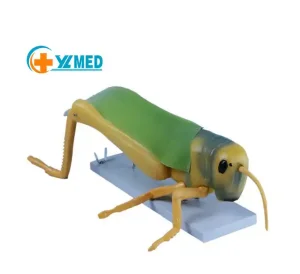
Enlarged Locust Structure Animal Model for New Zealand Nature Study
An enlarged locust structure model for classroom observation, insect anatomy discussion, and comparative biology. Useful where teachers need a durable visual aid for nature study, ecology, and adaptation topics.
View Product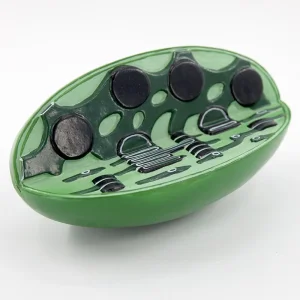
Plant Anatomical Microscopic Chloroplast Model for School Teaching
A three-dimensional teaching aid for explaining chloroplast structure, photosynthesis, and plant cell function. A good fit for junior science, senior biology, and hands-on laboratory demonstrations.
View Product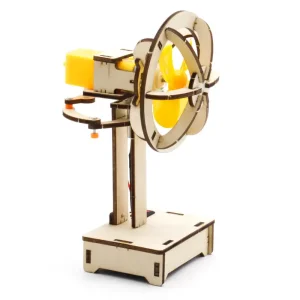
Oscillating Fan Small Experiment Kit for New Zealand 4–7 Year Old Learners
A hand-assembled classroom experiment for younger students, introducing movement, energy transfer, simple mechanisms, and safe observation through playful construction.
View Product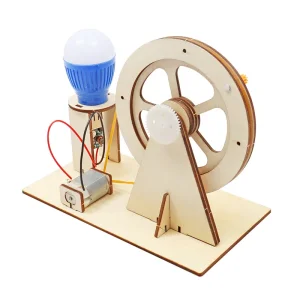
Wooden Hand Generator DIY Science Kit for New Zealand Physics Classes
An assemble-and-test wooden generator kit for exploring energy conversion, circuits, and simple engineering. Suitable for classroom challenges, science fairs, and after-school STEM sessions.
View ProductWhy New Zealand Needs a Dedicated General Teaching Models Supply Strategy
New Zealand is a high-trust, relationship-led education market with a relatively small population, long international supply lines, and a strong emphasis on inquiry, local context, and practical learning. Generic catalogues rarely answer the real procurement questions.
A successful General Teaching Models Manufacturer & Factory relationship for the New Zealand market is not simply a matter of finding the lowest unit price. Schools, kura, intermediates, secondary colleges, science centres, and distributors need teaching aids that survive repeated handling, align with the local curriculum context, pack efficiently for long-haul freight, and arrive with clear labelling, replacement parts, and reliable documentation.
This is where information gain matters. A supplier that understands New Zealand’s geography, earthquake and volcano context, bilingual learning considerations, school budget cycles, and biosecurity requirements can reduce risk before the first carton leaves the factory. A supplier that only quotes a product name and price shifts avoidable work back to the buyer.
China remains a major source for teaching models because it combines broad product depth, mature education-equipment clusters, flexible OEM capability, competitive tooling, and export experience. For New Zealand buyers, the winning model is not “China versus local”. It is a resilient mixed-source strategy: local stock for fast-moving lines, factory-direct OEM for differentiated ranges, and consolidated shipments for slower-moving geography, astronomy, and geology models.
- Design a first order around classroom use, storage, safety, and teacher time, not only unit cost.
- Request mixed-category consolidation to reduce freight, customs, and supplier-management workload.
- Ask for tender-ready photographs, dimensions, material notes, packaging marks, and carton data.
- Plan spares, replacement components, and bilingual label options before private-label production.
Manufacturer Credibility Matters
Henan Yulin Edu. Project Co., Ltd. has manufactured educational and medical training equipment since 1958, operates an ISO 9001 quality system certified since 2008, and supports overseas distributors, schools, universities, and hospitals with factory-direct supply.
Local Business, Education & Industrial Realities Behind Teaching Model Demand
New Zealand’s education sector is diverse: early childhood centres, primary and intermediate schools, secondary colleges, kura kaupapa Māori, special education settings, universities, polytechnics, private training establishments, museums, science centres, and home-education families. Procurement behaviour reflects that diversity.
Distributed Buying & School-Led Choice
Many New Zealand schools purchase through appointed education suppliers, syndicated procurement arrangements, or school-led decisions. A distributor therefore needs products that are easy to explain, photograph, store, and support across many small accounts.
Local Context & Cultural Fit
New Zealand classrooms value place-based learning, science capabilities, local geology, and respectful inclusion of mātauranga Māori where appropriate. Models should support teacher explanation without imposing cultural claims. Bilingual labels can be requested for suitable products, subject to review.
Import Dependence & Local Supply Gaps
New Zealand’s domestic manufacturing base for specialised teaching models is limited by scale and distance. Imported science kits, astronomy models, geology displays, and anatomy teaching aids are common. Distributors compete on availability, after-sales support, and curriculum relevance.
Freight, Biosecurity & Packaging
Long-haul sea freight, port variability, customs clearance, GST, and biosecurity rules all affect landed cost. Wooden products and packaging require attention to ISPM 15 expectations, moisture protection, carton strength, and clear product labelling.
Sustainability, Safety & Repairability
New Zealand schools increasingly consider durability, waste, packaging reduction, and repairability when selecting classroom resources. For manufacturers, this means designing models with replaceable parts, stable bases, rounded edges, low-odour finishes, and packaging that protects the product without excessive plastic.
Product-specific safety documentation should always be requested for tenders. Suppliers should be able to explain materials, small parts, recommended age ranges, and safe use conditions clearly.
Teacher Workload & Ready-to-Use Resources
A teaching model earns its place in a New Zealand classroom when it saves preparation time. Clear assembly instructions, labelled structures, quick storage, and simple demonstration steps often matter more than extra features. For distributors, ready-to-use packaging and concise teaching notes can become a genuine competitive advantage.
This is especially relevant for primary and intermediate teachers covering multiple science topics across a busy term.
Eight Trends Shaping General Teaching Models Procurement in New Zealand
The New Zealand market is small but sophisticated. Buyers want practical innovation, not novelty for its own sake. These trends are visible across school suppliers, STEM programmes, science centres, and export-oriented distributors.
1. Hands-On Science Capabilities
Teachers increasingly look for models that support observation, questioning, explanation, and investigation rather than passive display.
2. Compact Classroom Kits
Schools value kits that fit limited storage and can be moved between classrooms, rather than large permanent installations.
3. Earth Science Relevance
Geology, plate tectonics, seismographs, and astronomy models connect directly with New Zealand’s physical environment.
4. Private Label for Distributors
Local suppliers want packaging, product names, and instruction sheets that fit their brand and resale positioning.
5. Tender-Ready Content
Specification sheets, carton dimensions, material declarations, and high-quality images reduce procurement friction.
6. Sustainability & Repair
Durable materials, replaceable parts, and reduced packaging waste are becoming part of supplier evaluation.
7. Freight Resilience
Buyers plan larger buffer stock, mixed shipments, and supplier diversification to absorb shipping volatility.
8. Reliability & After-Sales
Fast answers, spare components, consistent batches, and clear export communication matter as much as product range.
Where General Teaching Models Deliver Value Across New Zealand
Application clarity is a powerful SEO and sales advantage. Instead of listing products in isolation, map each model to the teaching moment, learner group, and procurement context it supports.
Primary & Intermediate Science
Simple fan kits, hand generators, energy-driving models, and buoyancy boats introduce force, motion, energy, and design thinking through safe, repeatable classroom experiments.
Secondary Geography
Tellurions, plate tectonics displays, surface morphology models, and seismograph models help explain Earth systems, tectonic processes, and natural hazards in a New Zealand context.
Astronomy & Space Topics
Sun-Earth-Moon orbital models and eight-planet solar system models support day/night, seasons, eclipses, planetary order, and observational astronomy lessons. Local astronomy contexts such as Matariki can be introduced with appropriate cultural guidance.
Biology & Microscopy
Chloroplast models and enlarged animal structures support cell structure, photosynthesis, adaptation, and classification discussions. They pair well with prepared slides and microscope work.
Physics & Engineering Challenges
Oscillating fans, shaking-head fans, energy models, and generator kits make abstract principles visible. They are ideal for design challenges, science fairs, and cross-curricular technology projects.
Teacher Training & Professional Learning
Demonstration models help teacher educators show how to scaffold explanation, questioning, and formative assessment. Durable, clearly labelled models reduce preparation time during workshops.
Science Centres, Museums & Holiday Programmes
Interactive displays and compact kits suit public engagement, family science days, holiday programmes, and outreach events where robustness and quick setup are essential.
Distributors & Private-Label Ranges
New Zealand education suppliers can build a curated catalogue using OEM packaging, local product naming, mixed-model cartons, and consistent supplier communication.
What Global Buyers Now Expect from Teaching Model Manufacturers & Factories
Across education supply chains, procurement teams are consolidating suppliers, demanding better product content, and reducing risk. The same expectations are reaching New Zealand distributors and institutions.
Global commercial and industrial demand for educational models remains resilient because STEM education, teacher training, public science engagement, and healthcare simulation all depend on physical demonstration. Budgets are tighter, but buyers still need tangible resources that improve comprehension and reduce teacher preparation.
At the same time, the supplier landscape has matured. Buyers compare factories on more than price: they evaluate sampling speed, specification clarity, packaging quality, carton optimization, compliance documentation, private-label capability, and communication. For New Zealand, distance amplifies the cost of a weak supply-chain partner because mistakes are expensive to correct after a container has sailed.
China’s manufacturing clusters continue to offer broad component availability, skilled assembly, mature export logistics, and customization. Many international buyers are adopting a “China plus one” or multi-origin strategy, but for many teaching models, China remains the primary source because the category requires a wide bill of materials and flexible small-batch production.
Procurement Shift
Buyers increasingly reward suppliers who provide information gain: real specifications, application guidance, packaging data, and export-ready content. A catalogue of images alone is no longer enough.
| Procurement priority | What a strong factory should provide | Why it matters for New Zealand |
|---|---|---|
| Tender documentation | Dimensions, materials, age guidance, packing data, product photos, and model variations. | Helps distributors respond quickly to school and institutional requests. |
| Sampling speed | Pre-production samples, clear revision cycles, video inspection, and packaging mock-ups. | Reduces risk before committing to a mixed container or private-label order. |
| Mixed-category consolidation | One contact, combined cartons, consistent labelling, and shipment coordination. | Lowers freight complexity and improves stock planning for smaller markets. |
| Quality system | ISO 9001 process control, inspection records, and product-specific documents on request. | Supports tender evaluation and repeat-order consistency. |
| Localization | New Zealand English labels, neutral graphics, and bilingual label options where appropriate. | Improves classroom usability and resale value for local distributors. |
| After-sales support | Spare parts, replacement components, clear instructions, and responsive communication. | Protects long-term customer relationships in a relationship-led market. |
Supply-Chain Resilience & Efficiency Advantages of Modern Chinese Factories
Factory 4.0 is not only about robots. In teaching model manufacturing, it means digital product development, disciplined process control, flexible mixed-model production, and export-ready documentation.
Modern educational model factories combine CAD/CAM design, laser cutting, 3D-printed prototypes, mold development, injection molding, woodworking, metal fabrication, painting, assembly, and packaging. This integrated capability allows buyers to move from a reference image to a sample and then to a repeatable batch with fewer hand-offs.
For New Zealand buyers, the resilience advantage comes from three areas. First, supply-chain depth: access to materials, components, printing, and packaging within mature clusters. Second, flexibility: the ability to combine different models, quantities, labels, and cartons in one order. Third, communication: photo and video updates, digital specifications, pre-shipment inspection, and a single point of contact.
Yulin Medical’s operating base in Xinxiang, Henan, supports these advantages through long-standing manufacturing experience and an ISO 9001 quality management system certified since 2008. The company’s 10 product lines allow distributors to consolidate general teaching models with anatomy, nursing, laboratory, dental, hospital furniture, and other education and medical equipment in one relationship.
Resilience in Practice
- Multi-tier material planning for recurring export orders.
- Pre-production sample approval before bulk manufacturing.
- In-process inspection and pre-shipment quality checks.
- Protective export packing for long ocean freight.
- Consolidated mixed-model shipments to reduce handling.
- Factory-direct design support for private-label ranges.




Founded in 1958, Henan Yulin Edu. Project Co., Ltd. has grown into an educational and medical equipment supplier that integrates scientific research, production, and sales. With registered capital of RMB 120 million and more than 200 professional employees, the company manages product development, manufacturing, inspection, and export from its base at No. 8 Daoqing Road, Hongqi District, Xinxiang, Henan, China.
Its quality management system has been ISO 9001 certified since 2008. The company’s stated motto is quality first, service first, supported by a 24-hour response commitment for international buyers. For one-stop orders, Yulin Medical also coordinates a stable network of long-term partner factories.
What this means for New Zealand buyers: one accountable manufacturer can consolidate general teaching models, anatomy models, nursing simulators, lab slides, and hospital equipment into a single shipment with one point of contact and consistent documentation.
Send Inquiry NowE-E-A-T Snapshot
- Experience: manufacturing history since 1958.
- Expertise: 10 product lines across education and medical training.
- Authoritativeness: ISO 9001 system certified since 2008.
- Trust: factory-direct communication, documented specifications, and export support.
Ten Product Lines That Support Mixed Education & Medical Orders
General teaching models sit within a broader supply ecosystem. For New Zealand distributors, this breadth can reduce supplier count, simplify shipping, and improve tender coverage.
Anatomy Models
Medical and biology teaching models for schools, universities, and training centres.
Biology Prepared Slides
Prepared slides and accessories for microscopy and biology laboratories.
Dental Tools & Equipment
Dental teaching models, instruments, and clinic support equipment.
General Teaching Models
Science, geography, astronomy, and STEM demonstration models.
Hospital Furniture
Clinical furniture and equipment for healthcare and training environments.
Hospital Machines & Tools
Practical devices and tools for wards, clinics, and emergency care.
Medical Apparatus
Instruments for emergency care, rehabilitation, and clinical training.
Medical Nursing Models
CPR manikins, nursing simulators, and emergency training models.
Skeleton Models
Life-size and desktop skeletons for anatomy and osteology teaching.
Suture Pads & Kits
Realistic suture practice pads and instrument kits for clinical skills.
A Transparent 5-Step Process for New Zealand Buyers
A repeatable process reduces risk on long-distance orders and supports better planning for school terms, distributor stock, and tender deadlines.
Share Requirements
Send product types, quantities, target learner groups, packaging needs, and any tender or labelling requirements.
Catalog & Proposal
Receive matched models, specifications, packaging options, and shipping suggestions for New Zealand delivery.
Sample Evaluation
Test samples with teachers, distributors, or trainers before confirming bulk production or private label.
Production & QC
Manufacturing and inspection follow the ISO 9001 quality management system, with updates before shipment.
Export & Support
Protective export packing, delivery coordination, documentation, and responsive after-sales communication.
Practical Guidance from the Team That Builds Teaching Resources
Product selection improves when buyers understand handling, storage, classroom use, and exhibition trends. These insights reflect the practical side of educational equipment sourcing.



Frequently Asked Questions from New Zealand Importers & Institutions
These answers combine original buyer questions with New Zealand-specific sourcing considerations for general teaching models.
Is Yulin Medical a manufacturer or a trading company?
What quality certification does Yulin Medical hold?
Do you support OEM, private label and custom packaging?
How do I choose the right CPR training manikin?
How quickly will I receive a reply?
Which general teaching models suit New Zealand schools best?
How should New Zealand buyers plan freight, biosecurity and packaging?
Can labels be adapted for New Zealand English or bilingual contexts?
Can I combine different teaching models in one order?
How do samples and tender documentation work?
Need a New Zealand-Ready Catalogue, Price List or Tender Package?
Tell us your target learner groups, product mix, quantities, packaging needs, and delivery schedule. Our product specialists can recommend suitable general teaching models, confirm available specifications, and propose a practical shipping plan for your order.
Bottom Product Selection: General Teaching Models for Mixed New Zealand Orders
These eight models complete the 12-model selection from the original range. They are suited to distributors building a broad STEM, geography, astronomy, and earth science catalogue for New Zealand schools and education programmes.
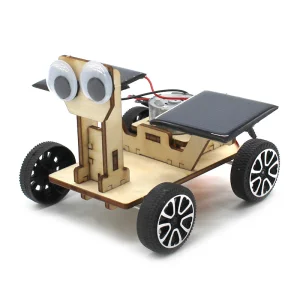
Shaking-Head Fan No. 2 Scientific Experiment Model for NZ STEM Projects
A handmade wooden technology model for demonstrating motion, mechanism, and simple production. Suitable for classroom challenges and design-based learning.
View Product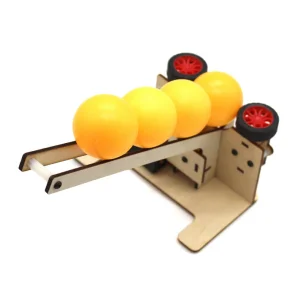
Energy-Driving STEM Movement Model for New Zealand Primary & Secondary Schools
A fun science small-production model for exploring movement, energy transfer, and engineering principles. Useful for project-based learning and science fairs.
View Product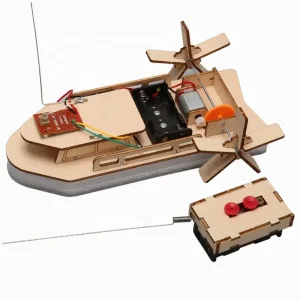
Self-Made Electric Remote-Control Buoyancy Boat for NZ Science Challenges
A primary-school science invention model that introduces buoyancy, electric drive, control, and hands-on problem solving through an engaging build-and-test activity.
View Product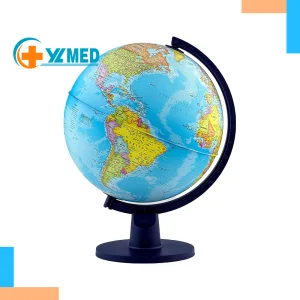
32cm Rotatable World Earth Tellurion with PP Support for NZ Geography Lessons
A geography teaching globe with rotatable earth map and pedestal support for classroom demonstration, map reading, and Earth-Sun relationships.
View Product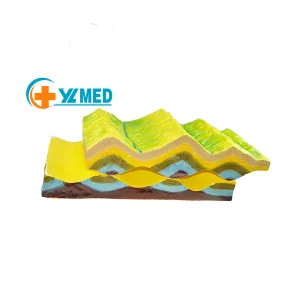
Wooden Plate Tectonics & Surface Morphology Display for NZ Earth Science
A geology teaching resource for plate structure, surface morphology, tectonic movement, and natural hazard discussions in New Zealand classrooms.
View Product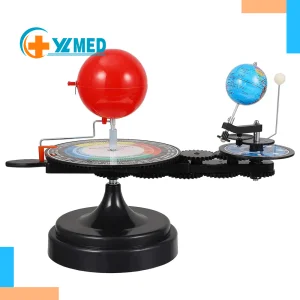
Sun–Earth–Moon Orbital Model Kit for New Zealand Astronomy Lessons
An astronomical science educational kit for explaining orbits, seasons, moon phases, and eclipse concepts through a tangible demonstration model.
View Product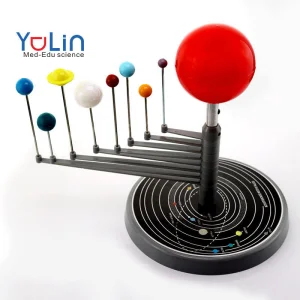
Eight-Planet Solar System Model with Light for NZ Geography & Astronomy Labs
A geography and astronomy laboratory display for planetary order, relative motion, and visual engagement in space-themed lessons and public programmes.
View Product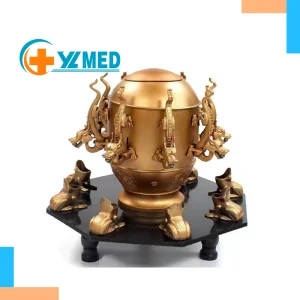
Primary Science Seismograph Model for New Zealand Earthquake Education
A geography teaching model that supports discussion of seismic activity, recording movement, and community preparedness in a New Zealand context.
View ProductGeneral Teaching Models Manufacturers & Factories in the New Zealand Market · Factory-direct sourcing for schools, distributors, science centres, and tender teams.