
Anatomy Models Pricelist & Service Serving the Panama Market
Factory-direct anatomy teaching models, Spanish-ready quotation support, private-label packaging, and consolidated shipping for Panamanian universities, hospitals, clinics, distributors, and training centers. Manufactured by Henan Yulin Edu. Project Co., Ltd. since 1958.
Four Anatomy Models for Immediate Panama Quotation
These four models are frequently requested as a starter set for distributors, nursing schools, science departments, and hospital education teams because they cover high-frequency teaching topics: eye anatomy, full-body organization, muscular anatomy, and removable-organ study. Each product link below is preserved for direct quotation, specification review, and sample discussion.
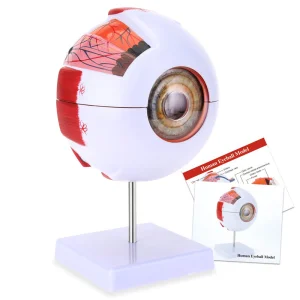
China Medical teaching 6x adult eye anatomy model Manufacturers, Service
Panama quotation note: ideal for optometry, ophthalmology, and general anatomy demonstrations. The enlarged 6x structure supports Spanish-language explanation of the orbit, lens, retina, and optic nerve.
View Pricelist & Service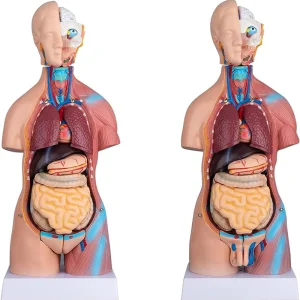
ODM 23 Parts Human Body Torso Model 45Cm Anatomy Model Unisex Removable Parts with Heart Brain for School Science Medical Education Pricelist, Quotes
Panama quotation note: a compact unisex torso with removable parts for school science, nursing labs, and clinic patient education where bench space is limited.
View Pricelist & Service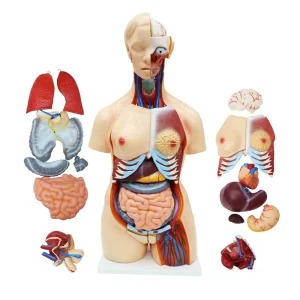
ODM Anatomical Medical Torso Model 23 Parts, 85cm Life Size Model with Removable Organs for Class, Students, Teaching Supplies Manufacturer, Manufacturers
Panama quotation note: a life-size 23-part torso with removable organs for classroom demonstrations, clinical anatomy review, and distributor showroom use.
View Pricelist & Service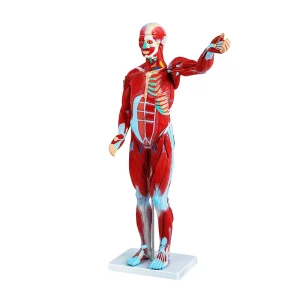
China 27 parts 80cm human muscle human model Pricelist, Service
Panama quotation note: an 80cm, 27-part muscular anatomy model for physiotherapy, sports science, and anatomy lectures. Helps explain muscle groups, attachment points, and movement.
View Pricelist & ServiceAnatomy Models Are Education Infrastructure, Not a Commodity
For Panama, the right anatomy model program is not simply a low-price purchase. It is a teaching asset that must survive daily handling, support Spanish-language instruction, pass tender review, and remain serviceable after delivery.
In Panama, buyers across the public and private sectors are increasingly evaluating anatomy models by total teaching value rather than unit price alone. A medical school may need numbered structures for first-year anatomy; a nursing college may need removable organs for practical demonstrations; a hospital education unit may need models for patient consent, staff refresher training, and community health outreach. These use cases require different specifications, packaging, and after-sales support.
Panama also combines a dual healthcare system, a growing private education sector, and one of the world’s most important logistics corridors. Public procurement through MINSA, the Caja de Seguro Social (CSS), universities, and municipal programs can be documentation-intensive, while private clinics and distributors often prioritize fast replenishment, showroom-ready packaging, and flexible mixed orders. A supplier that understands both realities can help reduce delays and specification mismatches.
As an ISO 9001 certified manufacturer founded in 1958, Henan Yulin Edu. Project Co., Ltd. approaches the Panama market through a practical framework: accurate anatomy, durable construction, Spanish-ready documentation, and predictable export logistics. This guide explains how to build a Panama-ready pricelist and service package, what local buyers typically request, and how Chinese factory advantages can be translated into lower total landed cost without sacrificing quality.
What a strong Panama program delivers
- Teaching fit: model scale, removable parts, and labels align with the course level.
- Tender readiness: product photos, specifications, packing data, and certificates are prepared in advance.
- Localization: Spanish legends, bilingual manuals, and private-label packaging can be coordinated for qualified orders.
- Service continuity: spare parts, replacement components, and reorder support protect long-term use.
Panama’s Healthcare, Education, and Logistics Landscape
The strongest anatomy model pricelist is built around the buyer’s operating environment. In Panama, that means public and private healthcare, university expansion, tropical humidity, U.S. dollar pricing, and access to both Atlantic and Pacific shipping routes.
A dual healthcare system with continuous training demand
Panama’s Ministry of Health (MINSA) and the Caja de Seguro Social (CSS) operate major care networks, while private hospitals and clinics serve insured and self-pay patients. Across both systems, anatomy models support nursing education, medical resident review, patient communication, informed consent, and continuing professional development. A torso model in a hospital education room may be used differently from a model in a university anatomy lab, which is why configuration matters.
Academic buyers need sets, not single objects
Panama’s universities, nursing schools, dental programs, physiotherapy departments, and emergency medical training centers usually purchase in small sets. One model may support lectures, but a set of eye, torso, muscle, heart, brain, ear, skin, and head-and-neck models supports a full module. Distributors that can offer a coherent series—with consistent labeling, packaging, and replacement parts—are better positioned for repeat orders and tender participation.
Logistics advantages reduce friction for importers
Panama’s Canal, Balboa, Colón Free Zone, and Tocumen International Airport create practical options for sea and air freight. Panama also uses the U.S. dollar, which simplifies price comparison and reduces currency friction for importers. At the same time, tropical humidity and multi-handling shipments require moisture-resistant packaging, corner protection, and clear carton labeling. A factory that exports regularly can prepare packaging that protects paint, joints, and small removable parts.
Spanish documentation and tender preparation matter
Public and institutional buyers often require Spanish product descriptions, clear packing lists, warranty terms, and specification sheets that match the quotation. For anatomy models, labels should use consistent anatomical terminology. Our export team can coordinate bilingual product descriptions and Spanish legends for qualified projects, while the importer remains responsible for confirming local registration and import requirements.
Illustrative Panama buyer priority index
This index is an illustrative weighting based on common anatomy-model quotation requests and export project reviews. It is not a statistical survey of the Panamanian market.
What Panama Buyers Ask For Before They Approve an Anatomy Model Order
Whether the buyer is a distributor, university, hospital, or government program, approval usually depends on six practical questions. Answering them clearly in the quotation can shorten the decision cycle.
Is the anatomy accurate and teachable?
Buyers check numbered structures, consistent scale, correct spatial relationships, and clear color differentiation. A model must support the lesson, not merely look impressive in a catalog.
Will removable parts survive daily use?
Hinges, magnets, pegs, and organ inserts must remain secure after repeated assembly. We review part fit and packaging protection before shipment for anatomy models with removable components.
Is the base stable and safe?
Stable bases and non-tip stands matter in classrooms and clinics. Buyers also ask about paint adhesion, non-toxic materials, and safe edges for student handling.
Can labels and manuals be in Spanish?
Spanish legends or bilingual manuals help instructors, students, and patients. For qualified orders, we can coordinate localized product descriptions and packaging information.
Are tender documents ready?
Specification sheets, product photos, packing data, HS code suggestions, warranty terms, and certificate copies should be available before the tender deadline, not after.
Can mixed models be consolidated?
Distributors often order eye, torso, muscle, heart, brain, ear, skin, and head models together. Mixed-SKU consolidation reduces freight cost and simplifies customs documentation.
Why a China Factory—Not a Trading Company—Can Reduce Risk for Panama Orders
A factory relationship gives buyers more control over specifications, packaging, private label, inspection, and reorder consistency. That control matters when anatomy models are sold under a distributor’s brand or submitted in a public tender.
Henan Yulin Edu. Project Co., Ltd. was founded in 1958 and operates from Xinxiang, Henan, China. With more than 200 professional staff and an ISO 9001 quality management system certified since 2008, we manage product development, production, inspection, packaging, and export coordination in one organization. For Panama buyers, this means fewer handoffs between a sales office and an unknown workshop.
Our factory advantage is not only cost. It is the ability to keep a product series consistent across repeat orders. Anatomy models require controlled molds, careful painting, reliable joints, and stable packaging. When a distributor reorders an eye model or torso model six months later, the color scheme, removable parts, and labeling should match the original shipment. Direct factory communication makes that consistency easier to protect.
We also support OEM and private-label programs. A Panamanian distributor may want its logo on the color box, a Spanish sticker on the base, or a custom instruction sheet for local instructors. Our in-house design and packaging team can develop presentation options that improve shelf appeal and resale value. For project orders, we can consolidate anatomy models with other product lines—such as skeleton models, nursing models, suture pads, dental teaching tools, or hospital equipment—into one shipment with one point of contact.
- Direct specification control: discuss materials, size, parts, labels, and packaging with the manufacturing team.
- ISO 9001 process discipline: incoming material checks, assembly review, and pre-shipment inspection support repeat-order confidence.
- Private-label capability: logo, packaging, manuals, and product presentation can be customized for qualified orders.
- Mixed-category consolidation: source multiple teaching and medical product lines from one accountable manufacturer.
Factory facts Panama buyers can verify
Company: Henan Yulin Edu. Project Co., Ltd.
Founded: 1958
Quality system: ISO 9001 certified since 2008
Base: No. 8, Daoqing Road, Industry Park, Hongqi District, Xinxiang, Henan, China
Registered capital: RMB 120 million
Team: 200+ professional staff
Export support: English and Chinese communication; Spanish documentation can be coordinated for qualified projects.
Send Inquiry NowIndustry Trends Reshaping Anatomy Model Sourcing, 2025–2030
Anatomy models remain physical teaching tools, but the procurement conversation is changing. Buyers now expect models to fit into simulation programs, digital content, multilingual instruction, and lifecycle service plans.
Simulation-based education and outcome assessment
Medical and nursing programs increasingly link anatomy models to competency checks. A torso or heart model may be used alongside case scenarios, student observation, and practical examinations. Suppliers that provide clear structure lists and teaching notes add value beyond the physical product.
Hybrid digital and physical learning
QR codes, AR-friendly markers, and digital anatomy platforms are becoming common complements to physical models. While the model remains the core, bilingual product pages and downloadable diagrams help instructors integrate it into blended courses.
Modularity and replacement parts
Institutions prefer models with replaceable components rather than discarding an entire unit when one part is damaged. Modular design reduces long-term cost and supports sustainability goals in public procurement.
Material durability for tropical climates
Panama’s humidity makes packaging and material stability important. Buyers increasingly ask about paint adhesion, moisture protection, carton strength, and storage recommendations for anatomy models in coastal or non-air-conditioned environments.
Localized kitting and Spanish packaging
Distributors want products that are ready for local resale, not just products in generic cartons. Spanish labels, local contact information, and curriculum-aligned model sets can increase adoption and reduce support requests.
Compliance-driven procurement
Universities and public buyers increasingly ask for traceability, warranty terms, and clear documentation. Even where a product is classified as educational equipment, a complete paperwork package helps procurement teams compare offers and justify decisions.
Localized Application Scenarios Across Panama
Anatomy models are used differently across Panama’s institutions. The following scenarios help distributors and procurement teams match model specifications to real teaching environments.
Medical and nursing schools
Full-body torsos, muscle models, and organ models support lectures, practical labs, and examination review. Life-size and compact options allow different classroom sizes.
Public hospital training units
Hospital education teams use anatomy models for staff refresher courses, patient consent discussions, and community health education, especially for chronic disease and surgical explanations.
Private clinics and patient education
Eye, heart, uterus, and throat models help clinicians explain diagnoses, procedures, and follow-up care in plain language. Small models are suitable for consultation rooms.
Dental and maxillofacial training
Head, neck, neurovascular, and muscle models support dental anatomy, local anesthesia instruction, and maxillofacial study. Detailed structure labeling is important for student comprehension.
EMS and first-responder training
Airway, head, and torso models help first responders review anatomy related to trauma, airway management, and patient assessment. Models should be robust enough for repeated handling.
Physiotherapy and rehabilitation
Muscle and joint-focused models are useful in physiotherapy programs, sports science courses, and rehabilitation clinics to explain movement, posture, and injury recovery.
STEM and public health outreach
Schools and community programs use anatomy models to make biology and health education more visible. Durable, easy-to-clean models are preferred for mobile outreach and classroom sharing.
Distributor showrooms and tenders
Distributors need demonstration units with clean packaging, strong product photography, and clear specifications. A complete model series can be presented as a program rather than a single item.
A Program-Level Anatomy Lab Blueprint for Panama
Instead of buying isolated models, institutions can plan an anatomy learning lab that matches curriculum, storage, maintenance, and future expansion. The following five-step blueprint is designed for universities, hospitals, distributors, and donor-funded education projects.
Step 1: Define learning outcomes and learner groups
Start with the courses or training programs the lab will support. A nursing school may prioritize torso, heart, brain, and muscle models; a dental program may prioritize head, neck, and neurovascular models; an optometry program may prioritize the eye model. Defining outcomes first prevents overbuying and reduces the risk of models that are impressive but rarely used.
Step 2: Build a model mix with room for expansion
A practical starter set might include four priority models for daily teaching, followed by eight additional models for deeper coverage. This phased approach allows the buyer to test instructor acceptance, storage requirements, and student feedback before committing to a full lab. The four priority models shown above are a natural first phase; the eight models at the bottom of this page form a logical second phase.
Step 3: Localize content and packaging
Spanish labels, bilingual structure legends, and locally branded packaging make the program easier to teach and resell. For distributors, a locally branded box and Spanish quick-start sheet can improve perceived value. For institutions, a clear structure list helps instructors prepare quizzes and practical exams.
Turnkey package components
- Model selection matrix by course and learner level
- Spanish or bilingual structure legends for qualified orders
- Private-label cartons and product photography for distributors
- Consolidated export packing and carton marking
- Spare-part list and reorder schedule
- Pre-shipment inspection photos and packing list
Needs mapping
Define courses, student numbers, storage, and budget cycle.
Model mix
Select priority and expansion models with clear teaching functions.
Localization
Prepare Spanish legends, manuals, and packaging options.
Delivery
Consolidate production, inspect, pack, and ship to Panama.
Lifecycle
Plan spare parts, reorders, and instructor feedback.
Global Enterprise Procurement Requirements and Our Response
Professional buyers evaluate suppliers against a repeatable checklist. The following alignment shows how we approach common requirements for Panama and other international projects.
Specification control
Buyer requirement: exact model size, parts, labels, and packaging.
Our response: written specification confirmation before production, sample review for qualified orders, and pre-shipment inspection photos.
Certification and documentation
Buyer requirement: quality system evidence and tender paperwork.
Our response: ISO 9001 certification since 2008, product photos, packing data, warranty terms, and certificate copies where applicable.
OEM and private label
Buyer requirement: local brand packaging and product presentation.
Our response: in-house design and packaging support for logo, carton, manual, and label customization on qualified orders.
Mixed-SKU consolidation
Buyer requirement: one shipment across multiple product lines.
Our response: consolidate anatomy models with skeleton models, nursing models, suture pads, dental tools, and other teaching equipment where available.
Delivery and Incoterms
Buyer requirement: predictable shipping to Balboa, Colón, Tocumen, or a designated freight forwarder.
Our response: export packing, carton marking, shipping coordination, and Incoterms 2020 discussion based on the order.
After-sales and reorders
Buyer requirement: spare parts and consistent repeat supply.
Our response: replacement-part planning, reorder documentation, and responsive export communication within a 24-hour target.
How to Build a Reliable Anatomy Models Pricelist for Panama
A useful pricelist is not a single number copied into a spreadsheet. It is a repeatable configuration that reflects the model, quantity, packaging, documentation, shipping terms, and service level required by the buyer.
For Panama buyers, we recommend structuring the quotation around five cost drivers. Model complexity affects mold, assembly, painting, and part count. Order quantity and mix influence material planning and packaging efficiency. Customization such as private label, Spanish legends, or special cartons adds setup and production steps. Documentation for tenders may require additional photos, certificates, or translated materials. Shipping and Incoterms determine who pays for freight, insurance, customs clearance, and final delivery.
Because these factors vary by project, we quote after reviewing the buyer’s target application, required models, quantities, delivery city or port, branding needs, and tender timeline. This approach avoids hidden assumptions and helps distributors compare total landed cost rather than factory unit price alone.
What to include in your inquiry
- Teaching applicationMedical school, nursing, dental, physiotherapy, EMS, patient education, or distributor resale.
- Model list and quantitiesUse the product links on this page or request a recommended starter set.
- Localization needsSpanish labels, bilingual manuals, private label, or special carton marking.
- Delivery destinationPanama City, Colón, David, Santiago, Balboa, Tocumen, or your freight forwarder.
- Commercial termsTarget Incoterm, preferred shipping method, and required delivery window.
- Tender or compliance requirementsSpecification format, certificate copies, warranty, and documentation language.
Service options for Panama distributors
Quotation support: product matching, specification sheets, and export packing data.
Sample coordination: sample availability review and courier arrangement for qualified opportunities.
Private label: logo, packaging, and manual customization for approved order volumes.
Mixed shipments: combine anatomy models with other teaching and medical equipment lines.
After-sales: replacement-part planning and reorder support.
Send Inquiry NowQuality Assurance, Compliance, and Risk Management
Anatomy models are educational products, but they still require disciplined quality control. Buyers need to know that structures are accurate, materials are safe for intended use, packaging protects the product, and documentation supports local procurement.
Our quality management system has been ISO 9001 certified since 2008. For anatomy models, production reviews typically cover incoming materials, molded parts, paint and finish, joint fit, removable-part function, base stability, label accuracy, and final packaging. For repeat orders, we compare the new batch against approved specifications to reduce variation.
Before shipment, our team can provide packing lists, carton dimensions, gross and net weight, product photos, and inspection records for qualified orders. These details help importers calculate freight, prepare customs documentation, and confirm that the delivered configuration matches the quotation. Where applicable, we share certificate copies and product-specific documentation.
Regulatory classification and import registration requirements can vary by product and destination. We support buyers with available documentation, but the importer or local regulatory advisor remains responsible for confirming that the product meets Panama’s import and labeling requirements. This clear division of responsibility protects both parties and supports a durable commercial relationship.
Risk controls built into the order
- Specification sign-off: model, size, parts, and packaging confirmed before production.
- Pre-shipment inspection: appearance, assembly, and packing review.
- Moisture-aware packaging: suitable protection for humid transit and storage.
- Traceable documentation: packing list, weights, photos, and quotation reference.
- Spare-part planning: reduce downtime when removable parts need replacement.
Using Panama’s Logistics Hub for Smarter Anatomy Model Supply
Panama’s geography supports multiple supply strategies. The right choice depends on urgency, order size, and whether the buyer is a project-based institution or a distributor building local stock.
For larger orders, sea freight to Balboa or Colón is usually the most economical choice. Distributors can request full-container or shared-container options depending on volume and mix. For urgent tender samples or small trial orders, air freight to Tocumen International Airport may be appropriate. The Colón Free Zone can support regional distribution strategies for qualified importers that hold stock for Panama and neighboring markets.
Packaging should match the route and climate. Anatomy models with removable parts need internal protection to prevent movement, paint abrasion, and joint stress. Cartons should be clearly marked with model codes, quantities, and handling instructions. For distributors, consistent carton design also improves warehouse efficiency and reorder accuracy. We can discuss Incoterms 2020 options, shipping documents, and consolidation with other product lines according to the project.
Discuss Shipping & Send Inquiry NowReference Scenario: A Panama Distributor’s 12-Model Anatomy Portfolio
The following scenario is an illustrative planning model, not a claim about a specific client. It shows how a Panamanian distributor or institutional buyer could phase a 12-model portfolio using the products on this page.
Phase 1: Priority teaching set
Start with the four priority models: 6x eye, 45cm torso, 85cm torso, and 80cm muscle model. These cover high-demand conversations with nursing schools, science departments, physiotherapy programs, and clinics. Use them for sales demonstrations, sample evaluation, and first quotations.
Phase 2: Expanded anatomy coverage
Add the eight additional models: half head and neck, brain artery, ear, skin, magnetic heart, uterus with ovary, head neurovascular with muscles, and nose and throat. This creates a broader catalog for universities, hospitals, dental programs, and ENT-related training.
Phase 3: Localized service portfolio
Introduce private-label packaging, Spanish quick-reference sheets, showroom photography, and a spare-part plan. If volume justifies it, evaluate local stock in Panama or the Colón Free Zone to shorten delivery times for repeat orders and tender demonstrations.
This phased approach reduces initial inventory risk while building credibility with local buyers. It also gives the distributor time to collect instructor feedback, understand which models receive repeat inquiries, and refine the pricelist before expanding to a full anatomy catalog. For institutions, the same logic can be used to equip one lab or one course module first, then expand across departments.
Experience, Expertise, Authority, and Trust Behind This Panama Guide
This page is prepared by the export and product team at Henan Yulin Edu. Project Co., Ltd., a manufacturer of medical teaching models and educational equipment founded in 1958.
Our team works with anatomy models, skeleton models, nursing training models, suture pads, dental teaching tools, biology slides, and hospital equipment across international markets. This guide reflects practical export experience: how buyers compare quotations, which documentation is requested before tenders, how packaging affects product condition, and why repeat-order consistency matters more than a one-time low price.
We do not present this page as a substitute for local legal, customs, or regulatory advice. Instead, we aim to give procurement teams, distributors, and educators a useful working framework for selecting anatomy models for Panama. We encourage sample evaluation, third-party inspection where appropriate, and direct communication with our export team before placing an order.
For buyers who need a starting point, the four priority models on this page can be quoted as an initial set. For buyers who need a broader catalog, the eight additional models below complete a 12-model portfolio. Every product link is preserved so your team can review the specific item and request current pricing, packaging details, and delivery options.
Send Inquiry NowFrequently Asked Questions: Anatomy Models Pricelist and Service in Panama
These are the questions procurement teams, distributors, and educators most often ask before requesting a formal quotation.
Can you provide an anatomy model pricelist for Panama?
Do you offer Spanish labels or bilingual manuals?
What is the minimum order quantity?
Can you support public tenders or university procurement?
How do you ship anatomy models to Panama?
Can we combine anatomy models with other product lines?
Do you support OEM and private-label packaging?
How do you control anatomy model quality?
What about spare parts and after-sales support?
How quickly will I receive a reply?
Eight Additional Anatomy Models for Panama Pricelist & Service
These eight models complete the broader anatomy catalog for universities, hospitals, distributors, and specialized training programs. All original product images and URLs are retained for direct review and quotation.
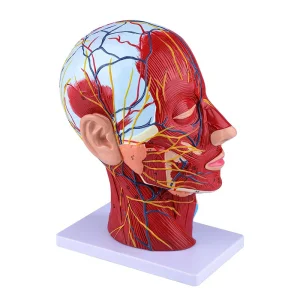
ODM Human Half Head & Neck Anatomy Model Superficial Neurovascular Model Manufacturer, Pricelist
For neurology, ENT, nursing, and anatomy demonstrations. Superficial neurovascular structures support detailed classroom explanation.
View Pricelist & Service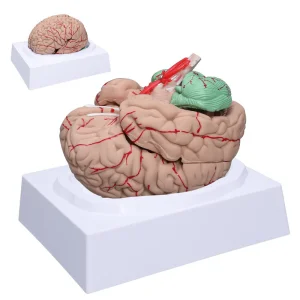
OEM Medical Human Brain Artery Detachable Adult Size Brain Artery Anatomy Model Pricelist, Quotes
For neuroanatomy, stroke awareness, and patient education. Detachable adult-size brain artery structure helps explain circulation.
View Pricelist & Service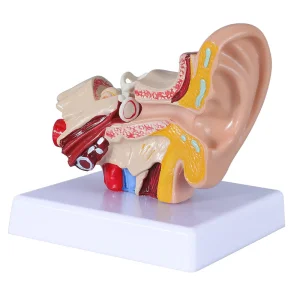
ODM Medical teaching 1.5 times adult ear anatomy model Manufacturers, Pricelist
For audiology, ENT, and nursing training. The enlarged 1.5x adult ear model supports clearer explanation of ear structures.
View Pricelist & Service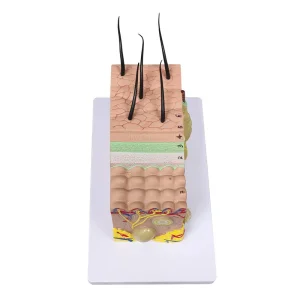
China 35X enlarged human anatomical skin model Manufacturers, Pricelist
For dermatology, wound care, biology, and patient education. The 35X enlarged skin model helps show layered anatomy clearly.
View Pricelist & Service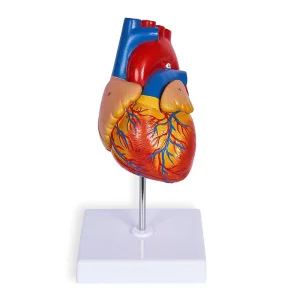
Wholesale Life-size two-part magnetic heart anatomy model Factories, Service
For cardiology basics, nursing education, and patient consent. The two-part magnetic design supports repeated demonstration.
View Pricelist & Service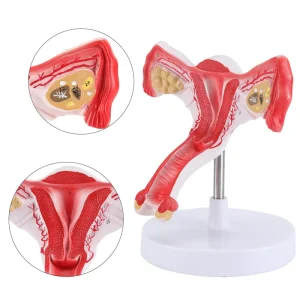
China Anatomical model of female uterus with ovary Manufacturer, Quotes
For OB/GYN, midwifery, nursing, and patient education. Supports clear explanation of female reproductive anatomy.
View Pricelist & Service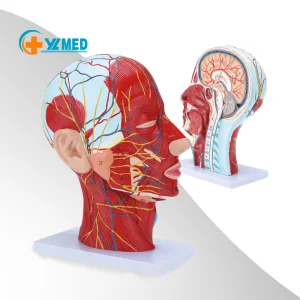
Wholesale Medical anatomical model human head neurovascular model with muscles teaching resource Manufacturer, Factory
For dental, ENT, physiotherapy, and advanced anatomy study. Muscles and neurovascular detail support multi-course use.
View Pricelist & Service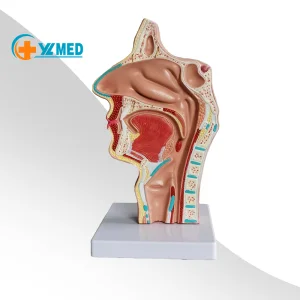
ODM Medical Science Human nose and throat anatomy medical model human anatomy throat model medical mannequins Factories, Service
For ENT, respiratory therapy, speech therapy, and nursing. Nose and throat anatomy supports airway and swallowing discussions.
View Pricelist & ServiceReady to Build Your Panama Anatomy Models Pricelist?
Tell us your target models, quantities, delivery destination, Spanish documentation needs, and tender timeline. Our export team will reply with specifications, quotation guidance, and practical next steps.