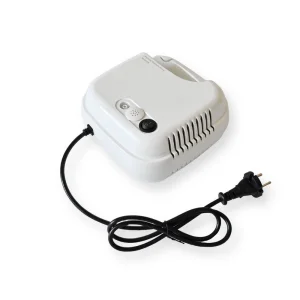
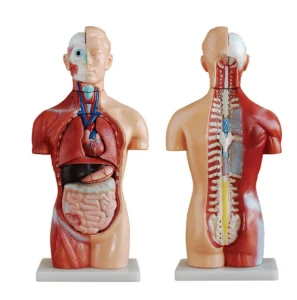
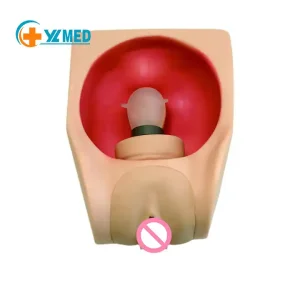
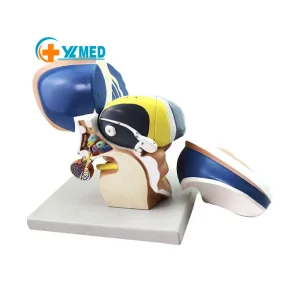
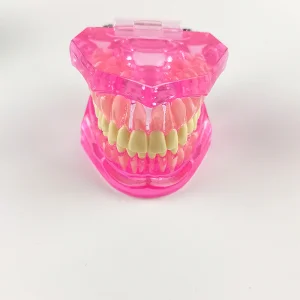
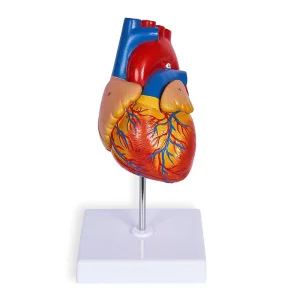
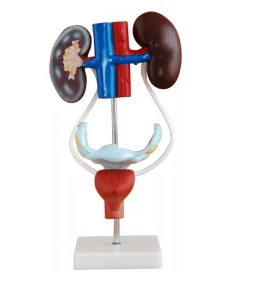
Banner Product Showcase: Models Available for Pricelist & Quote Review
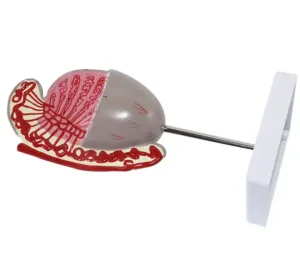
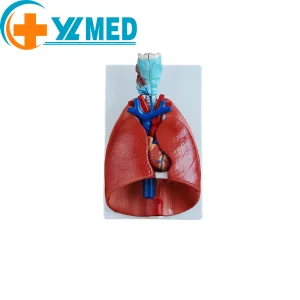
These eight selected teaching and clinical models reflect the mixed-category sourcing environment that distributors and institutions often manage. Each item links to its original product page for specifications, quotation requests and factory service details.
What “Wholesale Teaching Female Anatomical Model Pricelist & Quotes” Really Means
Semantic search has changed how medical education buyers discover suppliers. A procurement officer rarely types only “female anatomical model”; the query usually combines product specificity, channel intent and commercial urgency. The phrase wholesale teaching female anatomical model pricelist and quotes signals a buyer who is comparing factory-direct options, checking MOQ logic, verifying documentation and preparing a total landed cost calculation.
Commercial intent sits behind every word
“Wholesale” points to resale, tender supply, institutional purchasing or distributor stocking. “Teaching” indicates that the model must communicate anatomy clearly to students, trainees or patients, not merely sit on a shelf. “Female anatomical model” narrows the search to pelvic, uterine, breast, contraceptive and genitourinary structures. “Pricelist” and “quotes” reveal that the buyer is moving from general browsing into negotiation, sampling and supplier comparison.
For SEO and for real buyers, a useful supplier page should answer the questions that a price list alone cannot. Does the quote include removable parts, numbering, painted details and a display base? Is the material rigid PVC, soft TPE, silicone-like compound or a mixed construction? Can the model be customized for a local curriculum, language label or private-label box? What documentation can be issued for a tender file? How are fragile anatomical structures protected during export?
At Yulin Medical, the information-gain principle is straightforward: give procurement teams enough technical and commercial context to compare offers responsibly. That means separating unit price from specification, packaging, tooling and freight variables, while also explaining where customization is practical and where validation is required.
What a Strong Quote Should Clarify
- Model code, dimensions, weight, material and structure count
- Removable organs, magnets, hinges, stand and base type
- Hand-painted detail, numbering system and language options
- MOQ, sample cost, tooling policy and price validity
- ISO 9001-related documentation, packing list and inspection record
- Lead time, Incoterm, consolidation plan and after-sales path
Price Transparency
A professional price list should explain what changes the price: size, part count, material, painting, packaging and order volume. Buyers should never have to guess whether a quote includes a display base or export carton.
Application Fit
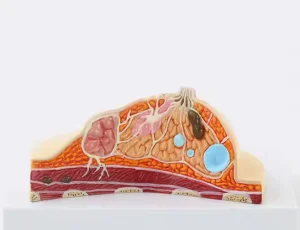
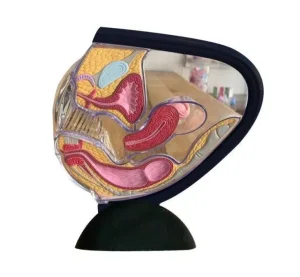
A breast self-exam model, transparent uterine model and female genitourinary model solve different teaching problems. Quote evaluation should start with learning objectives, not with the lowest unit price.
Documentation & Risk
For tenders and import registration, product-specific documents may be requested. A quote should identify what can be provided, what depends on the destination market and what must be verified locally before submission.
Why Female Anatomical Models Matter in Modern Teaching and Patient Communication
Female anatomical models are not interchangeable teaching aids. They support anatomy lectures, clinical skills laboratories, midwifery training, breast health education, contraceptive counselling, patient consent discussions and public health programmes. The most useful wholesale range therefore needs multiple levels of detail and several price points rather than a single generic torso.
Pelvic Anatomy
Layered pelvic models help learners visualise the relationship between the reproductive organs, bladder, rectum and pelvic floor. Clear spatial relationships improve retention in anatomy and clinical examination courses.
Uterine & Cervical Anatomy
Uterus models with transparent or cut-away sections are useful for demonstrating the uterine cavity, cervix and surrounding structures. They support nursing, midwifery and gynaecology teaching when detail is visible from multiple angles.
Breast Health Education
Breast self-exam models can help educators demonstrate palpation areas and abnormal tissue simulation in a controlled training environment. They are especially valuable for community health programmes and patient education.
Contraceptive Practice
Female intrauterine contraceptive simulators and contraceptive practice models allow trainees to rehearse counselling and device placement concepts without using patient volunteers. Realism, component replacement and hygiene are key buying criteria.
Genitourinary System
A female genitourinary system model supports integrated teaching across anatomy, urology, gynaecology and primary care. Buyers should compare organ representation, colour coding, removable parts and storage practicality.
Clinical Communication
Physical models give clinicians a shared reference during informed consent, family planning discussions and patient counselling. For distributors, durable paint, cleanable surfaces and replaceable components directly influence long-term satisfaction.
How a Wholesale Female Anatomical Model Price Is Built
A responsible pricelist cannot be reduced to one headline number. The cost of a teaching female anatomical model is shaped by tooling, material grade, structure count, hand-finishing, magnets and hinges, display base, packaging, documentation and freight. The visual below shows relative influence in custom projects; the actual share changes with model complexity and order volume.
Unit price is only one layer of the commercial decision
For a first sample, a buyer may focus on the quoted unit cost. For a repeat wholesale programme, the more important number is total landed cost per usable training station. A model that arrives with damaged small parts, inconsistent paint or missing numbering creates replacement friction, administrative cost and reputational risk for the distributor.
That is why Yulin Medical encourages buyers to define the learning scenario before requesting a final quote. Is the model intended for lecture demonstration, small-group anatomy, nursing skills assessment, patient counselling or exhibition display? Will it be shipped as a single sample or as a mixed-category container? Does the buyer require private-label packaging, local-language labels, a barcode or tender-specific documentation?
When these inputs are clear, the quotation can separate base model cost, customization, sample charge, tooling, packaging, testing, freight and insurance. This makes comparison between suppliers more rational and reduces the risk of a low headline price hiding important exclusions.
Relative Cost Influence
The bars indicate relative planning influence, not a fixed percentage of every quotation.
Model Scope
Single organ, pelvic section, torso or multi-part training set. Structure count is the first price driver.
Customization
Numbering, language labels, colour scheme, base design, logo and private-label packaging can change cost.
Order Volume
MOQ, repeat-order stability and mixed-SKU consolidation affect material planning and production efficiency.
Documentation & Delivery
Inspection records, packing requirements, Incoterms and destination compliance add value and cost.
Where Teaching Female Anatomical Models Are Heading
Industry innovation is moving from static display towards modular, guided and data-enhanced learning. The roadmap below reflects practical directions for anatomical teaching models: clearer modular construction, replaceable pathology inserts, QR-linked learning content, selective sensor integration and more sustainable materials. Each direction must still respect affordability, cleanability and classroom durability.
Modular Anatomy Architecture
More models will be designed around replaceable organ modules, magnetic connections and common bases. For distributors, this reduces SKU complexity while allowing schools to expand from a core pelvic model to pathology variants over time.
Embedded Training Feedback
Selective sensing may be integrated into procedure simulators, including contraceptive practice and examination trainers. The goal is not to turn every anatomy model into electronics, but to add feedback where it improves assessment and repeat practice.
AR & QR Guided Learning
QR-linked instructions, labelled anatomy and AR overlays can connect a physical model to local-language digital content. This is especially relevant for distributors who need to support schools with limited instructor time or multi-language classrooms.
Sustainable & Circular Materials
Longer-life components, lower-VOC finishing and recyclable packaging are becoming procurement criteria. Future ranges can combine durable teaching performance with clearer material declarations and replaceable-part service models.
One Product Category, Multiple Institutional Buying Contexts
Female anatomical models are purchased through different budgets, approval processes and delivery schedules. A distributor may need a sellable catalogue range, while a university may need curriculum-aligned models and a hospital may need patient-education tools. The same factory capability can support all three when the specification is clear.
Medical Universities
Anatomy departments need accurate spatial relationships, numbered structures and durable models for repeated demonstrations. Larger pelvic and organ models complement dissection and imaging teaching.
Nursing & Midwifery Colleges
Skills laboratories value models that support communication, contraception counselling, uterine anatomy and genitourinary assessment. Replaceable parts and easy cleaning are practical priorities.
Hospitals & Patient Education
Clinicians use physical models to explain procedures, contraception, breast health and pelvic anatomy. Clear colour coding and patient-friendly handling matter as much as anatomical precision.
Distributors & Private Label
Distributors need a coherent range, stable repeat quality, private-label packaging and sellable product photography. Mixed-category consolidation reduces administrative load and shipping fragmentation.
Government & NGO Tenders
Tender projects require model codes, quantity schedules, documentation, packaging marks and delivery reliability. Suppliers must be able to support reasonable bid preparation without overpromising approvals.
Public Health Programmes
Community health teams need portable, understandable teaching aids for breast health, family planning and maternal care. Low-complexity models can be paired with high-detail references for trainer use.
Supporting Importers Beyond the Unit Price
International buyers need more than a product photograph. They need a supplier that understands labelling, paperwork, packaging and after-sales realities. Compliance is destination-specific, so the correct approach is to define the market, the product classification and the documents required before mass production begins.
Documentation Pack
ISO 9001 certification background, product specifications, packing lists, inspection records and material declarations can be discussed for tender and import preparation. Product-specific documents are provided on request where available.
Language & Labelling
Private-label artwork, local-language anatomical labels, user instructions, barcodes and carton marks can be planned with the buyer. Artwork approval is completed before production to avoid rework.
Tender & Import Support
We can organize technical data, model codes and quotation schedules for procurement teams. Import registration and regulatory approval remain the responsibility of the importer and local regulatory pathway.
After-Sales & Training
Distributors can request product training materials, care instructions, replacement-part planning and responsive export communication. Clear after-sales information strengthens resale value and end-user trust.
A Six-Decade Manufacturing Base Behind the Product Range
China Factory 4.0 is not a slogan for a catalogue page; it is the practical ability to coordinate design, tooling, molding, painting, assembly, inspection, packing and export around real buyer requirements. Henan Yulin Edu. Project Co., Ltd. (Yulin Medical) was founded in 1958 and operates from Xinxiang, Henan, with more than 200 professional staff and registered capital of RMB 120 million. The quality management system has been ISO 9001 certified since 2008.
The advantage for wholesale buyers is not simply lower cost. It is the ability to consolidate anatomy models, nursing simulators, slides, dental teaching items and hospital equipment within one accountable supply relationship. Mixed-category orders can be planned together, reducing the administrative burden of managing many small suppliers and helping distributors maintain a complete catalogue.
Supply-chain resilience comes from repeatable process control, long-term partner coordination and experience with mixed export orders. For female anatomical models, this means attention to small details: whether a removable organ seats correctly after packing, whether paint survives handling, whether a base is stable, whether labels match the approved artwork, and whether replacement parts can be planned for future orders.
Efficiency is improved through production planning, consolidated inspection and one point of contact for multiple categories. Buyers can request samples, compare specifications, confirm packaging and then scale into repeat orders with a clearer expectation of batch consistency. The company motto remains quality first, service first, with the goal of fully satisfying every customer through dependable products and attentive support.



A Transparent Five-Step Process for Overseas Buyers
Enterprise buyers need more than a low unit price. They need a predictable path from RFQ to sample, production, inspection, export and repeat supply. The process below is designed to keep procurement teams informed while protecting the technical details that determine whether a teaching model performs in the classroom.
Share Requirements
Send product types, quantities, target market, learning objectives and any tender or certification needs.
Catalog & Proposal
Receive matched models, specifications, packaging options and shipping suggestions for review.
Sample Evaluation
Test samples with instructors or clinicians before confirming bulk production and approved artwork.
Production & QC
Manufacturing and inspection follow the ISO 9001 quality management system and approved specification.
Export & Support
Protective export packing, delivery coordination and responsive after-sales communication.
RFQ Checklist for a Faster, More Accurate Quote
- Model name or reference; if unknown, describe the anatomical region and training task.
- Estimated annual quantity, first-order quantity and whether mixed SKUs will be consolidated.
- Customization needs: logo, private label, local-language labels, base design, numbering and packaging.
- Destination port or door delivery address, preferred Incoterm and required delivery window.
- Documentation required for tender, import review or internal vendor onboarding.
More Product Categories for One-Stop Medical Education Procurement
Buyers sourcing female anatomical models often also need anatomy torsos, skeleton models, biology slides, nursing simulators, dental teaching items, suture kits and hospital equipment. Consolidating multiple categories with one manufacturer reduces supplier-management friction and supports a more coherent catalogue.
Experience, Expertise, Authority and Trust in Practice
For medical education products, trust is built through verifiable details rather than marketing language. Yulin Medical’s experience comes from a manufacturing history dating to 1958. Its expertise is demonstrated through a broad teaching-model range and long-standing work with educational and medical equipment buyers. Authority is supported by ISO 9001 certification since 2008 and a factory base in Xinxiang, Henan. Trust is strengthened by clear communication about what is standard, what is optional and what depends on the destination market.
Experience
Since 1958, the company has operated through changing materials, curricula and export requirements. That history provides practical knowledge of what survives classroom use and international shipping.
Expertise
Product specialists can discuss model structure, material choice, numbered labelling, removable parts, packaging and mixed-category orders. The aim is to match the model to the learning task, not to push a single SKU.
Trust
Buyers can request specifications, sample evaluation, packing details and product-specific documentation. Transparent scope and documented approval points protect both sides before mass production.
Frequently Asked Questions About Wholesale Female Anatomical Models
Straight answers to the questions procurement managers, distributors and teaching institutions ask most before requesting a price list or placing a first order.
Is Yulin Medical a manufacturer or a trading company?
What quality certification do you hold?
Do you support OEM, private label and custom packaging?
How do I choose the right CPR training manikin?
What is included in a wholesale female anatomical model quote?
Can female anatomical models be customized for a local curriculum?
How are fragile anatomical models protected during export?
How quickly will I receive a reply?
Need a Pricelist, Specification Sheet or Tender Package? Send Your RFQ.
Tell us your target market, quantities, preferred model types and any certification or labeling requirements. Our product specialists will recommend suitable models, share detailed specifications and propose a practical shipping plan for your order.
Direct Channels
More Wholesale Models for Pricelist & Quote Requests
These eight additional products support the broader medical education, nursing, dental, emergency and hospital equipment catalogue. Use the product links to review specifications or request a quotation for your market.