Wholesale Steam Sterilizer Manufacturers & Factory
A whitepaper-depth procurement guide for distributors, hospital groups, dental chains and laboratory suppliers evaluating autoclave engineering, compliance, localized support and China Factory 4.0 supply resilience.
Wholesale medical and educational products that bundle with sterilization programmes
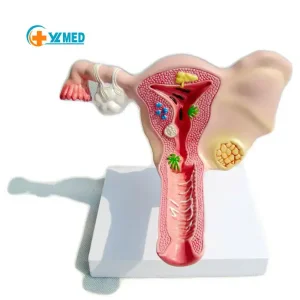
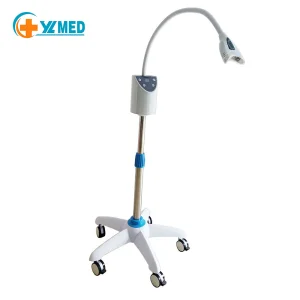
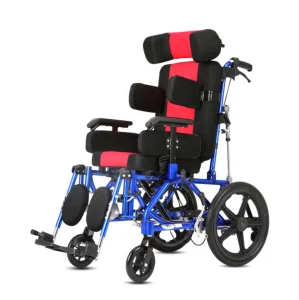
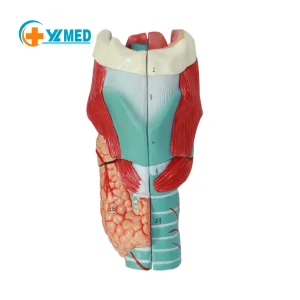
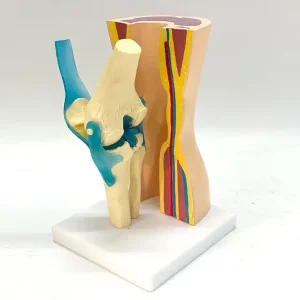
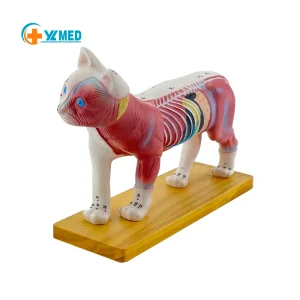
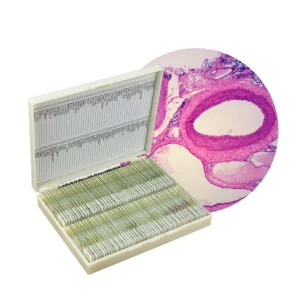
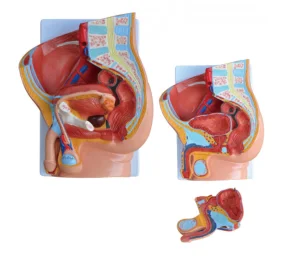
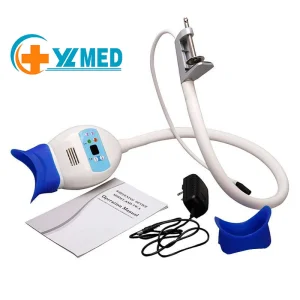
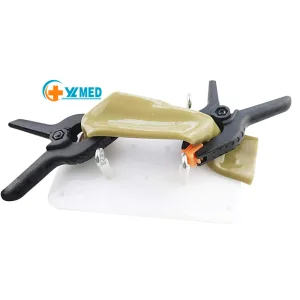
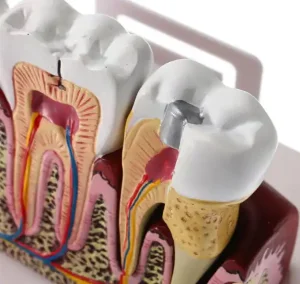
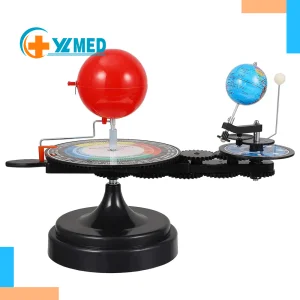
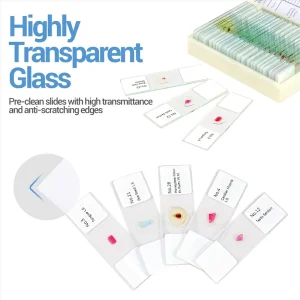
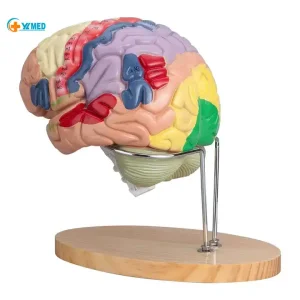
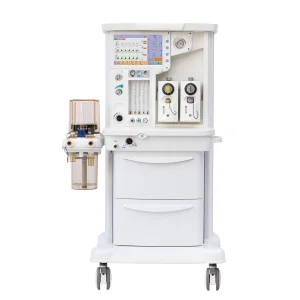
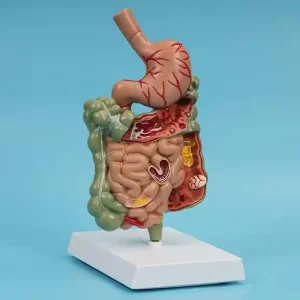
Steam sterilizer projects rarely travel alone. Distributors often consolidate autoclaves with anatomy models, dental teaching equipment, prepared slides, nursing simulators and hospital items. The eight products below preserve the original factory image, product title and destination URL, giving procurement teams a practical starting point for mixed-category orders.
The wholesale steam sterilizer question: what are you actually buying?
The query “wholesale steam sterilizer manufacturers & factory” carries mixed commercial and transactional intent. A buyer wants a supplier, but also wants proof of pressure-vessel discipline, cycle repeatability, documentation and local support. This page adds decision frameworks beyond catalog copy.
A steam sterilizer is a pressure vessel, thermal process and regulated medical device at the same time. For a distributor, the real product is not the stainless-steel chamber; it is a repeatable cycle that can be installed, validated, serviced and audited in the destination market. That is why wholesale sourcing should begin with the manufacturer’s evidence system, not with a chamber-size list.
This guide is prepared by the export and engineering team at Henan Yulin Edu. Project Co., Ltd. (Yulin Medical), an ISO 9001 certified manufacturer founded in 1958 in Xinxiang, Henan, China. Yulin Medical operates ten product lines for medical education, nursing simulation, dental training, laboratory teaching and hospital equipment. We use that manufacturing experience to explain how global buyers can evaluate steam sterilizer factories with greater precision.
Before comparing quotations, apply three filters. First, ask whether the supplier is a manufacturer with traceable production records or a reseller assembling incomplete documents. Second, match the cycle to the load: wrapped instruments, porous loads, hollow instruments and liquids require different validation logic. Third, confirm localization: voltage, language, spare parts, installation support and market-specific regulatory evidence.
What this whitepaper adds
- Indicative cycle benchmarks for gravity, Class B pre-vacuum and rapid small-chamber routes.
- A localization and compliance checklist for EU, UK, North America, GCC, Asia and Latin America.
- A China Factory 4.0 audit lens covering traceability, automation and supply resilience.
- A five-step global procurement process and total cost of ownership scorecard.
- E-E-A-T evidence from Yulin Medical’s 60+ year manufacturing history and ISO 9001 system.
Factory evidence beyond the catalog
Request material certificates, pressure test records, welding inspection notes, calibration logic and serial-number traceability. ISO 9001 discipline matters, but product-specific evidence matters more at tender stage.
Cycle fit to the load
Class B pre-vacuum, gravity displacement and rapid small-chamber designs solve different problems. The load mix, packaging, drying requirement and validation standard must define the chamber and control system.
Support in the destination market
Voltage, frequency, language, spare kits, service manuals and installation planning are not after-sales details. They are part of localization and determine whether the equipment can be commissioned without delay.
Steam sterilizer technology roadmap and future outlook, 2025–2030
Future competitiveness will be shaped by energy efficiency, digital batch evidence, serviceability and regulatory readiness. Use this roadmap to separate current requirements from optional future-proofing.
2025 baseline: Class B reliability
Pre-vacuum cycles, validated 134°C and 121°C programmes, HEPA air filtration, chamber temperature uniformity and drying performance remain the baseline for wrapped goods and hollow loads.
Efficiency: water, steam and power
Heat recovery, optimized vacuum pumps, water reuse, insulation and smart stand-by modes are becoming purchasing criteria where utilities are expensive or uptime is critical.
Digital validation and traceability
Batch records, sensor diagnostics, remote support and audit-ready exports reduce investigation time. In regulated markets, review data integrity and access control before accepting “smart” features.
Future outlook: modular and predictive
Predictive maintenance, modular cassettes, closed-loop water management and validation-support software are expected to move from premium options to mainstream factory capabilities.
Indicative cycle-time benchmarks for early supplier comparison
Indicative only. Load mass, packaging, chamber size, vacuum performance and the applicable standard can change cycle time. Always validate against the actual load.
Where wholesale steam sterilizers create measurable operational value
Different buyer types need different chamber sizes, cycle logic, documentation and service models. The same autoclave platform can be specified very differently for a dental chain, a hospital CSSD or a veterinary distributor.
Hospital CSSD and central processing
Double-door pass-through designs, load tracking, chamber utilization, emergency backup and validation records dominate. Procurement should score uptime and documentation as highly as purchase price.
Dental clinics and multi-site chains
Compact Class B autoclaves, fast turnaround, water quality, handpiece load and simple operator training matter most. For chains, standardized models and spare-part kits reduce training variance.
Laboratory and research environments
Media preparation, glassware, waste treatment and contamination control require precise programmes and documentation. Buyers should confirm validation support and compatibility with local biosafety procedures.
Veterinary and animal care
Mixed instrument and textile loads, robust construction and fast service response are often more valuable than advanced data features. Voltage flexibility and training simplicity support distributors.
Pharmaceutical and medical device
IQ/OQ/PQ, calibration, change control, data integrity and cycle reproducibility are central. Buyers should evaluate the supplier’s ability to support qualification protocols, not only the hardware.
Medical education and simulation
Teaching hospitals and simulation centres sterilize reusable instruments, laboratory items and training accessories between classes. Combined orders with anatomy models and CPR manikins improve logistics efficiency.
Compliance is a localization programme, not a certificate PDF
Market access depends on evidence, language, power configuration, service readiness and the ability to keep documents current. Ask for configuration-specific certificates in writing before deposit.
EU, UK and regulated markets
Review the applicable standard, CE/UKCA pathway, EN 285 or EN 13060 evidence, electrical safety, EMC, language requirements and post-market documentation. Confirm the exact model covered.
North America and tender markets
Clarify FDA status where applicable, UDI and labeling needs, 208–240V/60Hz options, installation requirements and after-sales documentation. Tenders often require signed declarations and traceable serials.
Asia, GCC and Latin America
Registration support, voltage and plug variants, local-language manuals, spare-part kits and installation planning often determine whether a distributor can resell confidently.
Documents to request before deposit
- Current ISO 9001 or ISO 13485 certificate with scope and validity.
- Pressure-vessel test and inspection reports for the serialized unit.
- Material certificates for chamber and piping where offered.
- Electrical safety, EMC and relevant performance test reports.
- Validation protocol, calibration method and maintenance schedule.
- Label artwork, UDI plan, language review and packaging specification.
- Spare-parts list, lead times, warranty terms and response commitments.
- Installation guide, operator manual and training material.
Localization matrix for global distributors
EU / UK: 230V or 400V options, applicable standard evidence, local-language labels, service documentation and post-market traceability.
North America: 208–240V / 60Hz, plug and breaker alignment, UDI and labeling review, installation checklist and spare kit.
GCC / Asia / Latin America: tender document pack, voltage and water-quality adaptation, registration support, training materials and spare-part stocking.
Supply-chain resilience and efficiency advantages inside the modern Chinese factory
China’s medical equipment supply chain is no longer defined only by scale. The strongest factories combine automated fabrication, digital traceability, component dual-sourcing and export-ready modular design.
Automated fabrication
CNC cutting, laser welding, robotic polishing and repeatable leak testing improve chamber tolerances and reduce variation between production batches.
Digital traceability
MES records, QR-coded components and serialized inspection histories make it easier to investigate service issues and support audits after delivery.
Dual-source resilience
Qualified second sources for valves, sensors, pumps and gaskets, plus buffer stock for long-lead items, help protect delivery schedules during demand spikes.
Modular export engineering
Container-friendly packaging, modular assemblies, private-label manuals and installation planning reduce damage risk and commissioning time in overseas markets.
A five-step sourcing process for wholesale steam sterilizer programmes
Move from inquiry to installation with a documented process. This structure improves supplier response quality and protects the buyer during audits, tenders and first-article approval.
Define load and market
State chamber volume, load type, cycle standard, destination market, voltage and annual quantity before asking for a price.
Qualify the factory
Request certificate scope, serial-number traceability, test reports, component brands and photos or video of the actual production line.
Validate a sample
Test the cycle with your real load. Confirm temperature uniformity, drying, cycle data, alarm logic and the manual in your language.
Lock production and QC
Approve BOM, label artwork, packaging drop test, inspection plan and pre-shipment photo/video checkpoints in writing.
Manage installation and lifecycle
Plan commissioning, operator training, spare kits, warranty response and a documented source for consumables and service parts.
RFQ checklist that improves supplier response quality
- Chamber volume, load mix and packaging: wrapped instruments, hollow loads, porous loads or liquids.
- Required cycle standard, validation protocol, drying expectation and documentation language.
- Installed voltage, frequency, water quality, drain and room layout constraints.
- Destination market, regulatory pathway and any tender-specific declarations.
- Annual volume, shipment schedule, spare-part kit and private-label packaging.
- Incoterms, packaging standard, lead time and pre-shipment inspection requirements.
- Warranty, response time, service manual, training and recommended spare-parts stock.
TCO formula: purchase price + validation + installation + energy and water + consumables + downtime risk + spare parts + compliance updates − resale value.
| Cost element | Price-only buyer | Lifecycle buyer |
|---|---|---|
| Purchase price | Lowest FOB | Balanced against specification |
| Validation | Underestimated | Protocol and support reviewed |
| Utilities | Ignored | Energy and water modelled |
| Downtime | Not quantified | Spares and response included |
| Compliance | Checked after purchase | Verified before deposit |
| Spare parts | Reactive buying | Recommended stock plan |
Why Yulin Medical is a manufacturer to audit, not a catalog to copy
Experience, expertise, authority and trust are demonstrated through operating history, quality systems, production evidence and consistent global communication.
Founded in 1958, Henan Yulin Edu. Project Co., Ltd. has grown into a well-known educational and medical equipment supplier that integrates scientific research, production and sales. Registered capital is RMB 120 million, and the company employs more than 200 professional staff. The factory is located at No. 8, Daoqing Road, Industry Park, Hongqi District, Xinxiang, Henan, China. The quality management system has been ISO 9001 certified since 2008, and the operating motto is “quality first, service first.”
Yulin Medical’s ten product lines help distributors consolidate anatomy models, nursing simulators, CPR manikins, dental teaching equipment, laboratory slides and hospital equipment into one shipment. For steam sterilization sourcing, the same document discipline applies: request configuration-specific certification, serialized test records and written confirmation of the exact factory and model quoted.
Why distributors and institutions partner with Yulin Medical
24/7 responsive service
Our team is online 24 hours a day, 7 days a week. Wherever your time zone, you receive a detailed answer as quickly as possible, typically within 24 hours.
Design and packaging team
In-house specialists support product presentation, private-label packaging and brand-ready manuals that strengthen resale value for distributors.
Professional expertise
Our vision is to provide professional educational and medical training products from mainland China, supported by ISO 9001 process control and decades of category knowledge.
60+ years of supply stability
A factory with more than 60 years of history and a deeply integrated partner supply chain supports one-stop orders and predictable lead times on repeat projects.
Ten specialised product lines from one accountable manufacturer
Anatomy Models
Torso, organ, heart, brain and muscle models for lectures and patient education.
Biology Prepared Slides
Histology, botany and zoology slides plus lab accessories.
Dental Tools and Equipment
Dental teaching models, clinic lights, whitening units and instruments.
General Teaching Models
Science demonstration models for schools and tender projects.
Hospital Furniture
Examination couches, stretchers, walkers and clinical-use furniture.
Hospital Machine and Tools
Diagnosis, treatment and practical tools for wards and clinics.
Medical Apparatus
Emergency splints, extrication devices, traction and rehabilitation items.
Medical Nursing Models
CPR manikins, ACLS simulators, AED trainers and skills models.
Skeleton Models
Life-size and desktop skeletons, skulls, spines and joint models.
Suture Pads and Kits
Realistic skin pads and complete instrument kits for surgical practice.








Company news and practical guidance from our specialists
Exhibition updates and hands-on guidance written by the team that designs, produces and exports medical education and training products.

Do You Really Know How to Observe Biological Prepared Slides?
Many plant and animal cell structures can only be studied under a microscope. Our specialists explain how to handle, focus and store slides correctly so students see clearer detail and slide sets last longer.
Visit Hot Blog
The 5th Henan Provincial Educational Equipment Expo Concludes Successfully
Themed “Digital Leading Innovation and Development,” the expo reached a record 50,000 m² with 600+ brands and 10,000+ products on display, showcasing the latest educational equipment.
Read insightsInside Our Product Showroom
A look at the medical teaching models and training equipment buyers can inspect in person when visiting our Xinxiang facility, from anatomy models to nursing simulation equipment.
Visit our factoryFrequently asked questions from global importers
Straight answers to the questions procurement managers ask most before placing a first order or preparing a tender response.
Is Yulin Medical a manufacturer or a trading company?
What quality certification does Yulin Medical hold?
Do you support OEM, private label and custom packaging?
How should I choose a steam sterilizer for wholesale distribution?
What documents should I request for a tender or import registration?
Can I combine steam sterilization procurement with medical teaching models?
How do I choose the right CPR training manikin?
How quickly will I receive a reply?
Need specifications, a price list or a tender package? We reply within 24 hours.
Tell us your target market, quantities, load profile and certification requirements. Our product specialists will recommend suitable models, share detailed specifications and propose an economical shipping plan for your order.
Direct channels and factory visits
Address: No. 8, Daoqing Road, Industry Park, Hongqi District, Xinxiang, Henan, China.
Additional wholesale medical products from the same manufacturing ecosystem
These eight product cards preserve the original images, product names and links. They support mixed-category purchasing for distributors who supply hospitals, universities, clinics and training centres.