
Wholesale Nursing Training Male Human Manikin Factory & Pricelist
Factory-direct male nursing training manikins, male anatomy models, CPR and clinical simulation equipment from Henan Yulin Edu. Project Co., Ltd. — a manufacturer serving distributors, nursing colleges, hospitals, EMS trainers and public-tender teams worldwide.
8 Wholesale Medical Training & Nursing Models from the Factory
Below are eight representative products from our medical teaching, nursing simulation, anatomy model and clinical training series. Prices in the wholesale pricelist are confirmed by final model configuration, quantity, private-label packaging, destination market and shipping plan. Use each product button to request current factory details and quotation support.
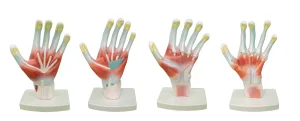
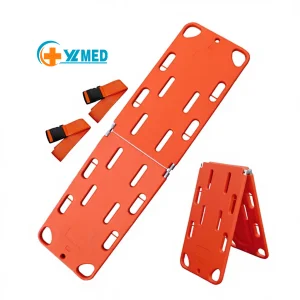
ODM Foldable Spine Board Stretcher with Backboard Straps for Patient Transport Factories, Quotes
View Product & Pricelist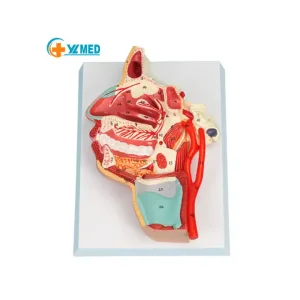
OEM Medical science high quality best price Hot selling head anatomical Model with CE certificate for teaching and learning model Manufacturers, Factory
View Product & Pricelist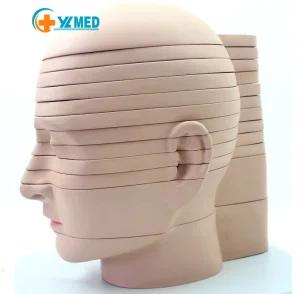
China Medical Science PVC Head Section Model Human Brain Sectional Anatomy Model CTMRI Medical Model for Medical Education Manufacturer, Factories
View Product & Pricelist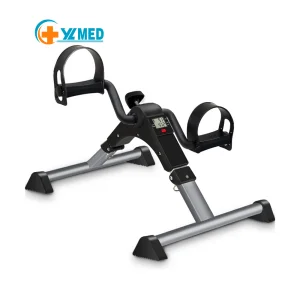
Wholesale Medical Rehabilitation Training Office Fitness, Trainings arm-und Bein übungen, Rehabilitation strain ings roller Manufacturers, Service
View Product & Pricelist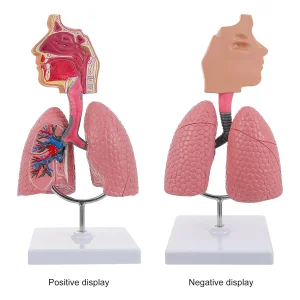
Wholesale Human Nasal Cavity Throat Anatomy Model Human Lung Model Respiratory System Lung Model Teaching Tool for Students Study Display Manufacturers, Factories
View Product & Pricelist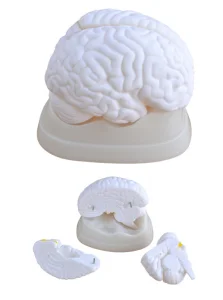
ODM White human brain anatomy model for medical teaching Factory, Service
View Product & Pricelist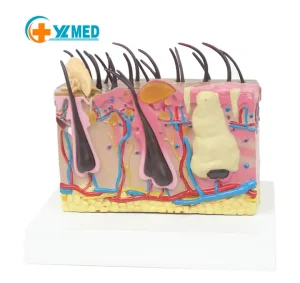
OEM Hot selling Animal skin anatomical model Canine skin insect bite pathological model for anatomy Manufacturers, Service
View Product & PricelistNeed a mixed-category quotation? Send your quantities, destination port, tender documentation requirements and private-label artwork. Our export team typically replies within 24 hours with model options, packing data and shipping suggestions.
Wholesale Nursing Training Male Human Manikin Factory & Pricelist: A 2025 Buyer’s Whitepaper
A wholesale nursing training male human manikin is not a single commodity SKU. It is a configurable training platform that may combine a full-body or torso simulator, male anatomy inserts, airway and CPR modules, injection and catheterization sites, wound-care components, sensor feedback, replacement skins, consumables, multilingual manuals and market-specific documentation. Buyers searching for a male human manikin factory are usually not only comparing unit prices; they are comparing teaching outcomes, replacement-part availability, batch consistency, compliance evidence, lead time and the supplier’s ability to support a tender or distributor catalogue.
This guide is written from the perspective of Henan Yulin Edu. Project Co., Ltd., a manufacturer founded in 1958 and ISO 9001 certified since 2008. Our product ecosystem includes anatomy models, skeleton models, nursing and CPR simulation models, dental teaching equipment, biology prepared slides, hospital furniture and clinical training equipment. For the phrase “male human manikin”, the right sourcing question is therefore: which tasks must the manikin support, which parts will be replaced most often, and what documentation must accompany the shipment?
Search Intent Mining: the four questions behind the keyword
Factory price or reseller price?
Distributors want to know whether the quotation comes from a production factory with in-house assembly, inspection and packaging support, or from an intermediary with limited control over replacement parts.
OEM, ODM or private label?
Nursing schools and distributors often need branded packaging, localized manuals, barcoded cartons, tender labels and product photographs for their own catalogues.
Which documents are available?
ISO 9001 system certificates, product test reports, CE documentation for applicable models, material declarations and packing lists are commonly requested in public tenders.
Can samples and spare parts ship quickly?
Serious training programmes need sample evaluation before bulk approval, and they need a spare-parts plan for airway bags, skins, joints, sensors and male anatomy inserts.
A manufacturer with a long product history can reduce procurement risk because the same quality system governs anatomy models, nursing models, emergency training devices and hospital equipment. For overseas distributors, this means fewer suppliers, one consolidated shipment and a clearer after-sales pathway when a school or hospital asks for replacement components three years after the original purchase.
Why Global Buyers Are Expanding Male Nursing Simulation Procurement
Demand is being driven by nursing workforce growth, simulation-based education, hospital competency programmes, ageing populations and the need to teach sex-specific care with dignity and clinical accuracy.
Demand signal dashboard
Illustrative weighting based on typical quotation requests handled by the export team. It is not a market forecast; it helps buyers benchmark the questions that usually determine project approval.
What this means for a wholesale pricelist
In mature markets, nursing programmes increasingly ask for male and female manikins so learners can practise catheterization, injection, hygiene care and patient communication in a respectful, anatomically appropriate way. In emerging markets, distributors often need a balanced catalogue that combines low-cost anatomy models with more advanced simulation units for reference hospitals and universities. Yulin Medical’s broad product range allows both strategies to be consolidated under one factory relationship.
One Manufacturer, Multiple Training Missions
Different buyers need different levels of realism. A procurement plan should match the manikin to the teaching task, then use anatomy models and clinical equipment to complete the training ecosystem.
Nursing schools and universities
Male nursing manikins support fundamental care, catheterization, injections, wound care, hygiene and communication skills. Combine them with anatomy models for classroom explanation and skills-lab assessment.
Hospital simulation centres
Competency teams need standardized, repeatable scenarios. Modular male anatomy inserts and replaceable skins help maintain hygiene and reduce downtime between training groups.
Hospitals and clinical orientation
New-nurse orientation, refresher training and patient-safety programmes benefit from realistic male anatomy models paired with CPR, airway, injection and patient-handling equipment.
EMS and pre-hospital training
Emergency training centres often request CPR and AED trainers, spine boards, extrication equipment and splints in the same order as nursing manikins to create complete first-aid programmes.
Education distributors
Distributors can build a complete catalogue around ten product lines, request private-label packaging and consolidate mixed containers to reduce landed cost and supplier-management workload.
Public tenders and NGOs
Tender buyers require stable specifications, packing lists, warranty terms, training documentation and predictable production lead times. Early technical clarification reduces bid risk.
Technical Roadmap and Future Outlook for Male Nursing Simulation
The next generation of nursing training manikins will be judged less by appearance alone and more by modularity, feedback quality, data interoperability and serviceability. A distributor buying for the next five years should ask whether the platform can accept new inserts, sensors and software without replacing the entire body. The technical route below reflects the practical direction of medical education equipment development; exact features depend on the specific model and market requirements.
Modular realism
PVC and silicone hybrid skins, replaceable male pelvic and genital inserts, task-specific torso modules, airway assemblies and sensor feedback for compression depth and rate.
Connected assessment
Multilingual digital interfaces, LMS-compatible scoring, student ID workflows, cloud reporting and offline training modes for regions with limited connectivity.
Assisted instruction
AR overlays, computer-vision posture checks, haptic feedback for catheterization or injection depth and predictive maintenance alerts for high-use skills labs.
Adaptive simulation
AI-driven scenario adaptation, digital twins for maintenance, local 3D-printed spare parts and more circular material strategies for high-volume institutional buyers.
For procurement teams, the most reliable future-proofing strategy is to require open spare-part availability, clear material declarations and a documented cleaning and disinfection routine. Do not assume that software features are automatically appropriate for every market. Data protection, clinical validation, electrical safety and medical-device classification can differ by country, so buyers should obtain written confirmation of the intended use and regulatory status before tendering.
How to Read the Global Supply Landscape for Nursing Manikins
Medical education equipment supply chains are global, but quality is local: it is built in moulds, material batches, assembly fixtures, inspection records and after-sales part lists.
Factory capability matters
Inspect the production model: in-house moulding, assembly, quality inspection, packaging and export documentation. A trading-only quotation may not protect long-term spare-part supply.
Price transparency
Material grade, sensor level, male insert complexity, private-label packaging and carton size all affect price. A factory should be able to quote each configuration clearly.
Mixed container efficiency
Distributors can combine anatomy models, CPR manikins, rehabilitation items, hospital furniture and dental training products to improve container utilization.
Tender documentation
Public buyers often require model numbers, product photos, dimensions, packing data, warranty statements and certification copies. Prepare these before bid submission.
Private-label brand value
In-house design support for labels, manuals, packaging and product presentation helps distributors raise resale value without operating their own factory.
After-sales planning
Ask for a recommended spare-parts kit at the first order. Skins, airway components, joints and male inserts are the parts most likely to need replacement.
| Procurement criterion | Buyer question | What to request from the factory | Why it reduces risk |
|---|---|---|---|
| Anatomical accuracy | Does the male anatomy support the tasks we teach? | Detailed photos, dimensions, insert list and replacement-part numbers. | Avoids buying a model that cannot support catheterization or male-specific care lessons. |
| Tactile realism | Are the materials appropriate for repeated student practice? | Material declaration, skin hardness, cleaning instructions and sample evaluation. | Improves learner confidence and protects the product under high-use conditions. |
| Feedback and assessment | Do we need compression, ventilation or procedural feedback? | Specification sheet and, where applicable, sensor demonstration or video. | Ensures the simulator matches BLS, ACLS or nursing skills assessment goals. |
| Modular repair | Can worn parts be replaced without replacing the whole unit? | Spare-parts list, recommended stock kit and repair guidance. | Lowers total cost of ownership and reduces lab downtime. |
| Compliance documents | What file set is needed for import or tender? | ISO 9001 certificate, product-specific test reports, CE documents for applicable models and packing list. | Supports customs, procurement and institutional approval workflows. |
Local Support and Documentation that Travel with the Product
A wholesale order is not complete when the container leaves the factory. Buyers need packaging, manuals, labels, spare parts and documentation that work in their own market.
Language and manuals
English manuals are standard for export orders; buyers can request localized language files, training notes and product presentation assets for instructors.
Compliance evidence
ISO 9001 system documentation and product-specific files can be provided on request. Regulatory classification and import registration remain the buyer’s responsibility and should be verified before tender.
Packaging and labels
Private-label cartons, barcodes, item codes, multilingual labels, protective foam and export pallets can be planned according to distributor requirements.
Spare parts and support
Our export team can recommend a first-order spare kit and provide after-sales coordination for repeat distributors, hospitals and training institutions.
Typical documents requested by buyers
Localization checklist for distributors
Inside Henan Yulin Edu. Project Co., Ltd.
Founded in 1958, Henan Yulin Edu. Project Co., Ltd. has grown into a well-known educational and medical equipment supplier integrating scientific research, production and sales. With registered capital of RMB 120 million and more than 200 professional employees, the company manages product development, manufacturing, inspection and export from its base at No. 8, Daoqing Road, Industry Park, Hongqi District, Xinxiang, Henan, China. Our quality management system has been ISO 9001 certified since 2008, and our operating motto is simple: quality first, service first.
For overseas buyers, this history matters because nursing and medical training products are often purchased in cycles: a school may start with a small skills lab, then add male and female manikins, anatomy models, CPR trainers and assessment equipment over several budget years. A long-established manufacturer with ten product lines can support that expansion without forcing the buyer to rebuild the supplier relationship each time. Our in-house design and packaging team also helps distributors develop private-label presentation that raises shelf appeal and resale value.



Product category ecosystem
Our ten specialised product lines allow procurement teams to source simulation, laboratory and hospital equipment from one accountable manufacturer instead of managing multiple suppliers.
Practical insights from our specialists
Prepared slide observation
Many plant and animal cell structures are best studied under a microscope. Correct handling, focusing and storage help students see clearer detail and extend the service life of prepared slide sets.
Educational equipment exhibitions
The 5th Henan Provincial Educational Equipment Expo, themed “Digital Leading Innovation and Development”, reached a record 50,000 m² with 600+ brands and 10,000+ products on display, reflecting the pace of change in teaching equipment.
Product showroom
Buyers visiting our Xinxiang facility can inspect medical teaching models, nursing training products and export packaging in person before confirming a long-term supply programme.
Why Distributors and Institutions Partner with Yulin Medical
Overseas buyers consistently cite four strengths when they move repeat orders to our factory.
24/7 responsive service
Our team is online 24 hours a day, 7 days a week. Whatever your time zone, you receive a detailed answer as quickly as possible, typically within 24 hours.
Design and packaging team
In-house specialists deliver professional product design and private-label packaging that strengthens your brand and increases the added value of every unit you sell.
Professional expertise
Our vision is to provide professional educational and medical training products from mainland China, built under ISO 9001 process control and decades of category knowledge.
60+ years of supply stability
A factory with more than 60 years of history and a deeply integrated partner supply chain helps meet one-stop demands and keep lead times predictable on repeat orders.
A Transparent 5-Step Process for Overseas Buyers
From first conversation to delivery, every stage has a named contact and clear documentation, so you can plan stock, tenders and training schedules with confidence.
Share requirements
Send product types, quantities, target market and any tender or certification needs.
Catalog & proposal
Receive matched models, specifications, packaging options and shipping suggestions.
Sample evaluation
Test samples with your instructors or clinicians before confirming bulk production.
Production & QC
Manufacturing and inspection follow our ISO 9001 quality management system.
Export & support
Protective export packing, delivery coordination and responsive after-sales service.
Q&A: Wholesale Male Human Manikin, Pricelist and Compliance
Straight answers to the questions procurement managers ask most before placing a first order.
Is Yulin Medical a manufacturer or a trading company?
What quality certification does Yulin Medical hold?
Do you support OEM, private label and custom packaging?
How do I choose the right male nursing training manikin?
Can I receive a wholesale pricelist immediately?
What is the minimum order quantity and can I mix products?
How quickly can samples and bulk orders ship?
How do you support distributors after delivery?
Are all products certified for every country?
8 Additional Wholesale Models for Nursing, Dental, Veterinary and Clinical Training
These products complete the second half of the supplied factory product series. They are often combined with male nursing training models, anatomy models and CPR equipment to create a fuller distributor catalogue or institutional skills laboratory.
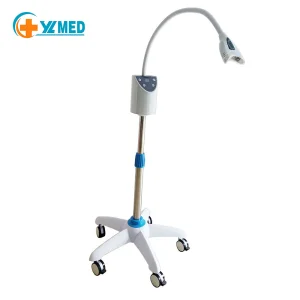
Wholesale Dental cold light column mobile tooth whitening instrument monochromatic blue light dental cleaner clinic equipment Manufacturers, Service
View Product & Pricelist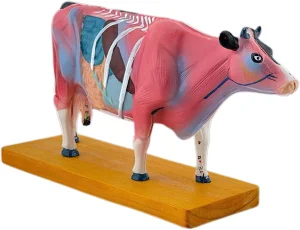
China Cow Anatomy Model for and Moxibustion Anatomical Cow Model Animal Anatomical Model for Veterinary Learning Cow Anatomy Model Anatomy Model Animal Anatomy Model Anatomy Model Cow Pricelist, Quotes
View Product & Pricelist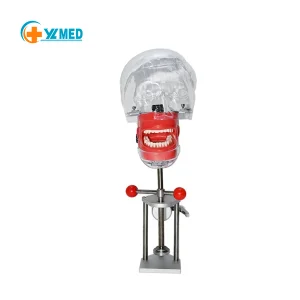
OEM Dental Phantom Head Model Manikin Resin Transparent Dental Training Model Dental School Student Practice Class Course Lab CE/ISO Manufacturers, Factories
View Product & Pricelist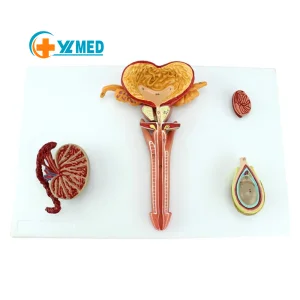
Wholesale High Standard PVC Manikin Medical Science Anatomical Model of the Male Reproductive System 1 Part for School Use Manufacturer, Factory
View Product & Pricelist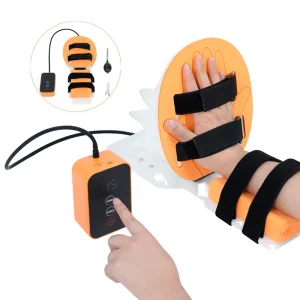
Wholesale New Stroke Rehabilitation Robotic Wrist Joint Trainer Hand Joint Hemiplegia Recovery Device for Rehabilitation Therapy Supplies Factory, Quotes
View Product & Pricelist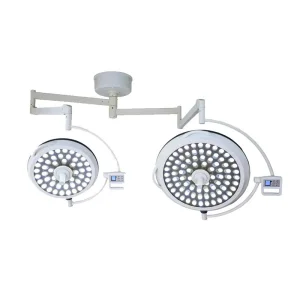
China Hospital with double head LED shadowless lamp Factories, Quotes
View Product & Pricelist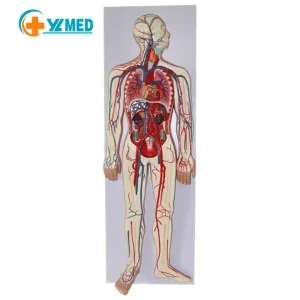
ODM High Quality Medical science Human Blood Circulation System Embossed Model human blood circulation anatomy model Manufacturer, Service
View Product & Pricelist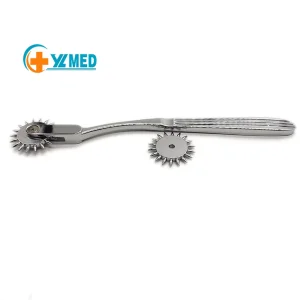
China Advanced acupuncture roller percussion hammer physical gear nerve hammer pain button massage hammer Factory, Factories
View Product & PricelistFor a complete distributor quotation, combine Batch A and Batch B products with CPR trainers, anatomy models and hospital equipment. We can prepare a mixed-category proposal, private-label artwork plan and suggested spare-parts list.
Request a Wholesale Pricelist, Sample Plan or Tender Package
Tell us your target market, quantities, required manikin functions, compliance documents and delivery deadline. Our product specialists will recommend suitable models, share detailed specifications and propose an economical shipping plan for your order.