
Wholesale Nursing Teaching Models Manufacturer & Factories
Factory-direct anatomical, nursing and clinical simulation models for distributors, medical schools, hospitals and government tenders — engineered in Xinxiang, China since 1958.
Eight Factory-Direct Nursing and Anatomy Teaching Models
High-intent buyers comparing a wholesale nursing teaching models manufacturer with factories usually need more than a product photograph. They need evidence that anatomy, material consistency, packaging, documentation and repeat-order lead time can survive tender review and distributor resale. This first set of eight references covers maternal-health demonstration, vascular anatomy, biology teaching, reproductive anatomy, female sagittal anatomy, skin magnification, hospital workflow and larynx anatomy. Each image and product-page URL is retained for direct evaluation.
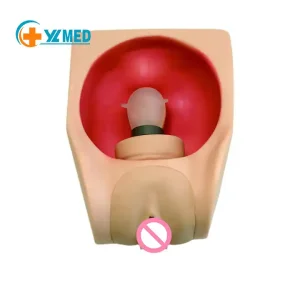 ODM Medical science teaching model general practitioner contraceptive practice simulator female intrauterine contraceptive model Manufacturer, Factories
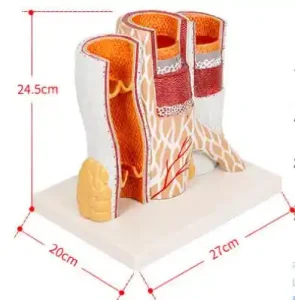 ODM Arterial vein blood vessel dissection model human blood vessel dissection enlarged model blood vessel section model Manufacturer, Factories
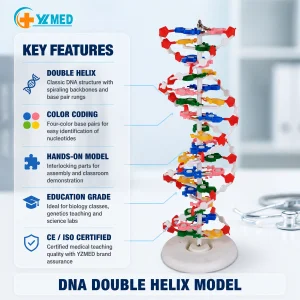 Wholesale Medical Experimental DNA Model/Biological Model Medical Teaching Biology Double Helix DNA Structure Model Manufacturer, Service
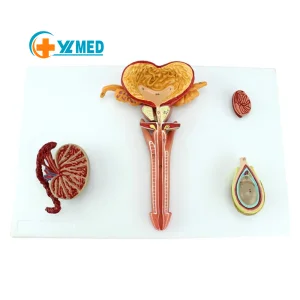 Wholesale High Standard PVC Manikin Medical Science Anatomical Model of the Male Reproductive System 1 Part for School Use Manufacturer, Factory
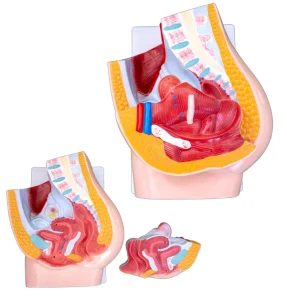 OEM Medical teaching, Female human sagittal anatomical model (2 pieces) Manufacturer, Factories
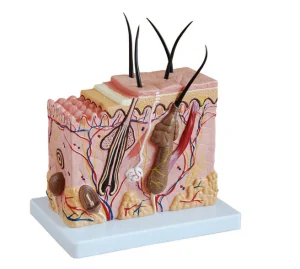 ODM Medium sized skin magnification model Factory, Service
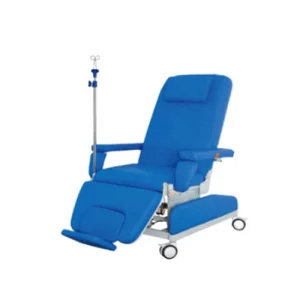 Wholesale Hospital Furniture Multifunctional Adjustable Medical Blood Donation Collection Electric Dialysis Chair Infusion Chair Factory, Service
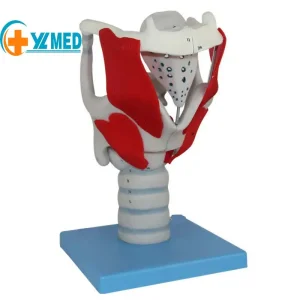 China Human organ education model anatomy discipline human larynx enlarged size anatomical model Factory, Service
The 2025 Wholesale Nursing Teaching Models Opportunity
Search behavior around the phrase “Wholesale Nursing Teaching Models Manufacturer & Factories” is not early-stage browsing. It is a bottom-of-funnel purchasing signal. The searcher is often a distributor, university procurement officer, hospital skills-lab manager, tender agent or education-equipment importer comparing direct factory capability with trading-company offers. They want evidence of production, not just a polished catalog. They need to know whether anatomy can remain consistent across repeat batches, whether packaging will survive multi-modal transport, whether documents support customs and tender files, and whether multiple product families can be consolidated into one shipment.
This guide uses a white-paper structure rather than a simple sales page. It combines company evidence — founded in 1958, ISO 9001 certified since 2008, more than 200 professional staff and RMB 120 million registered capital — with practical sourcing criteria. The aim is useful information gain: detail that helps a procurement team compare factories, reduce risk and brief internal stakeholders. That is more valuable than repeating the same “high quality, competitive price” statement that appears on every supplier page.
From SKU selection to supply-chain validation
A nursing teaching model is not a generic commodity. A uterus simulator, a sagittal section, a skin magnification model and a larynx model each solve a different teaching problem. The buying decision therefore has two layers. The first is clinical and educational fit: anatomy must be accurate, structures must be identifiable, and materials must support repeated classroom handling. The second is commercial resilience: the supplier must quote consistently, protect products in transit, provide replacement parts and keep documentation ready for inspections, tenders and distributor onboarding. When both layers are addressed, the lowest price is no longer automatically the best value.
Four Trends Reshaping Nursing Teaching Models
Nursing education is moving from “show and tell” to competency evidence. Models are no longer passive classroom props; they are part of repeatable assessment, skills-lab throughput and accreditation documentation. Four trends dominate buyer conversations and should be built into any wholesale sourcing brief.
Competency-based simulation
Accreditation bodies and hospital educators increasingly ask for observable performance: can the learner identify landmarks, perform a procedure and explain the decision? Models need clear structure IDs, realistic resistance, removable parts and consistent color coding so assessment is fair across groups.
Modular, repairable, consumable-light design
Schools want lower lifetime cost, not only a lower first invoice. Replaceable components, repairable joints, stable painting and practical storage reduce downtime. For distributors, a spare-part program and clear model naming make after-sales support easier and protect resale margins.
Hybrid physical-digital learning
Physical models increasingly sit beside digital lesson content, QR-linked guides, LMS images and scenario scripts. A manufacturer that can supply consistent product photography, structure names, packing lists and multilingual labels helps distributors integrate models into local curricula faster.
Localization and tender readiness
Localization is more than translation. Buyers ask for language-specific labels, curriculum alignment, durable export packaging, spare-part lists, declaration documents and mixed-category consolidation. These details decide whether a factory can support a serious tender rather than only a one-off online order.
What International Buyers Are Really Purchasing
Although the product category is nursing education, the purchase is usually a bundle of product, evidence and service. A distributor may need shelf-ready packaging and resale photography. A university may need samples, pilot training and curriculum mapping. A hospital may need replacement components and fast resupply. A tender agent may need documentation consistency and a clear country-of-origin file. The better a factory understands these variations, the more useful its quotation becomes.
North America & Europe
Buyers commonly emphasize accreditation evidence, clear labeling, traceability, English documentation and predictable product consistency. Private-label distributors also compare shelf presentation, model naming and spare-part support before adding a factory to an approved supplier list.
Middle East & Africa
Tender packages, durable materials, heat-and-humidity-conscious packing, mixed containers and practical training support are frequent requirements. A manufacturer that can coordinate several product families in one shipment reduces inspection points and communication risk for local importers.
Asia-Pacific
Rapid expansion of nursing colleges and skills labs creates demand for cost-performance models that can be replaced or expanded step by step. Local-language support, replacement components and the ability to combine anatomy, CPR and hospital lines are important selection factors.
Latin America & multi-country distributors
Spanish materials, consolidated shipping, spare-part planning and reliable carton marking help distributors serve several markets from one import order. A written specification and high-quality product photos also help their local sales teams quote confidently.
Procurement checklist before placing a wholesale order
- Verify factory identity, address, audit scope and whether production is in-house or coordinated through partner factories.
- Request product specifications, material descriptions, structure lists and dimension drawings for shortlisted models.
- Evaluate a sample with actual instructors, not only with a purchasing officer, and record what must be improved.
- Confirm export packaging, carton marks, moisture protection and the shipping method for mixed orders.
- Ask how labels, manuals, packing lists and product photos can be localized for your market.
- Compare total landed cost, not only FOB unit price, including freight, duties, inspection and inventory carrying cost.
- Check spare-part availability, repair guidance and the response path for after-sales issues.
- Build a repeat-order specification so future batches match the approved sample and documentation.
Why China’s Manufacturing Depth Still Matters
China’s education-equipment supply chain is often described as a cost advantage. For serious buyers, the more important advantage is coordinated manufacturing depth: mold making, material formulation, painting, assembly, inspection, packaging and export documentation can be developed within a mature industrial cluster. “Factory 4.0” in this sector is less about a fully lights-out plant and more about data discipline across those steps. The result should be shorter changeovers, fewer surprises, repeatable quality and better total cost for wholesale programs.
Digital process control
Batch records, inspection checkpoints, sample photos and packing checks make quality visible. This is especially important for anatomical models where color, structure and finish must match a previously approved sample across repeat orders.
Tooling and modular production
Mature tooling and modular assembly support efficient changeovers between anatomy, nursing, biology and hospital product lines. For buyers, this means better ability to customize labels, packaging and mixed-category orders without losing production rhythm.
Resilient supplier network
Supply-chain resilience comes from qualified material suppliers, alternate components and realistic production planning. A manufacturer with a long partner network can protect lead times when one component, color batch or packing material is delayed.
Export engineering
Protective packaging, moisture control, carton marks, product photos, packing lists and document packets reduce friction at destination. These details are not cosmetic; they influence damage rates, customs clearance and resale confidence.
Share requirements
Send product types, quantities, target market and any tender or certification needs.
Catalog & proposal
Receive matched models, specifications, packaging options and shipping suggestions.
Sample evaluation
Test samples with instructors or clinicians before confirming bulk production.
Production & QC
Manufacturing and inspection follow the ISO 9001 quality management system.
Export & support
Protective export packing, delivery coordination and responsive after-sales service.
From Price Shopping to Risk-Adjusted Sourcing
Three structural forces shape demand for medical teaching models: healthcare labor shortages, aging populations and the shift from lecture-based teaching to simulation-based competency. Universities are consolidating suppliers. Distributors are expanding beyond a single category. Hospitals are building in-house skills labs. Governments are linking equipment purchases to measurable training outcomes. At the same time, freight volatility and currency movements make total landed cost more important than a headline unit price.
Industrially, the market is becoming two-speed. Commodity models are easy to compare online, while curriculum-aligned and tender-specific packages require engineering support. This creates an opportunity for manufacturers with in-house design, documentation and packaging teams. China’s dense supplier ecosystem supports fast tooling and component access, but resilience depends on supplier qualification, inventory strategy and production planning — not simply location.
Procurement teams are also asking more questions about material declarations, recyclable packaging options, replacement-part availability and responsible sourcing statements. Suppliers should be transparent about what is certified and what is not. A clear answer builds more trust than an exaggerated claim.
What this means for your sourcing brief
- Define the learner group and assessment outcome before choosing a model.
- Ask for a specification that can be attached to a purchase order and repeated in future batches.
- Request photos or video of the actual production finish, not only studio renders.
- Plan packaging and mixed-container logic early to reduce landed cost.
- Confirm how labels, manuals and product titles will be localized.
- Keep an approved sample and document any agreed deviation.
- Evaluate supplier responsiveness during the sample stage; it predicts after-sales behavior.
Where Nursing Teaching Models Create Measurable Value
The same model can have different value in different markets. A distributor needs resale differentiation; a nursing school needs curriculum fit; a hospital needs repeatable in-service training. Localization therefore begins with the application scenario, not only the language on the box.
University nursing skills labs
Female sagittal anatomy, skin magnification, heart, larynx and vascular models support anatomy review, physical assessment and procedure explanation. Localization may include course-code labels, instructor guides and replacement-part lists for high-use stations.
Hospital clinical education & OSCE
Skills labs use blood vessel, eye, ear, head and heart models to standardize station briefs and assessment. A stable model specification helps examiners compare performance across cohorts and reduces variation between campuses.
Maternal and reproductive health training
Female intrauterine contraceptive, male reproductive system and female sagittal models support counseling practice, anatomy teaching and respectful patient communication. Clear external landmarks and durable finish matter for repeated demonstration.
Biology and STEM classrooms
DNA double helix, enteric villi, eye, larynx and heart models help secondary schools and colleges make abstract structures tangible. Distributors can bundle models with prepared slides, storage solutions and teacher-facing photographs.
Emergency and community first-aid programs
Emergency splints, immobilization supports and training models help community trainers demonstrate safe handling. For local programs, packaging and labels should match the language and protocol used by the responsible emergency service.
Distributor demo rooms and e-commerce
Importers need sellable assets: clean images, accurate titles, structure lists and pack dimensions. Private-label packaging and model naming help build a local catalog while keeping the factory’s production documentation aligned.
How to Compare a Wholesale Manufacturer, Not Just a Quotation
The following buyer-priority index is illustrative and qualitative. It is designed to help internal teams align on what matters before they compare factories. Weight each factor for your own market, tender rules and learner group.
Anatomical and clinical fit
92Check structure accuracy, scale, color coding, removable parts and whether instructors can teach the required procedure without ambiguity.
Documentation and tender readiness
96Ask for model specifications, packing data, material descriptions and the documents your tender or import process actually requires.
Total landed cost and packaging efficiency
88Compare carton cube, damage risk, mixed-order consolidation and freight strategy alongside the quoted unit price.
Supply-chain resilience and lifecycle support
90Review repeat-order consistency, spare-part access, response time and the manufacturer’s ability to coordinate multiple product lines.
Source note: company manufacturing data on this page reflects information supplied by Henan Yulin Edu. Project Co., Ltd. The evaluation index is a qualitative procurement framework, not a market forecast or third-party certification.
Why Yulin Medical Is Relevant to Nursing Teaching Model Buyers
Yulin Medical is the trading identity of Henan Yulin Edu. Project Co., Ltd., founded in 1958 and based at No. 8, Daoqing Road, Industry Park, Hongqi District, Xinxiang, Henan, China. The quality management system has been ISO 9001 certified since 2008. With more than 200 professional staff and RMB 120 million registered capital, the company integrates scientific research, production and sales across anatomy models, biology prepared slides, dental tools, general teaching models, hospital furniture, hospital machines, medical apparatus, nursing models, skeleton models and suture kits.
For wholesale buyers, the practical value is a single point of accountability. A distributor can source nursing models, anatomy models, hospital equipment and related teaching lines from one supplier relationship, reducing the number of purchase orders, inspections and email chains. For one-stop orders, the company also coordinates a stable network of long-term partner factories. This is especially useful when a tender requires a mixed package but the buyer does not want to manage five separate suppliers.
The company motto — quality first, service first — is useful only if it appears in process. That means keeping product naming, color, structure and packaging aligned across batches; making samples available for evaluation; preparing documents for tender review; and responding with clear specifications instead of vague sales language.



24/7 responsive service
The export team is online seven days a week and typically replies within 24 hours with catalogs, specifications and shipping options.
Design and packaging team
In-house specialists can develop private-label packaging and product presentation that strengthens distributor branding and resale value.
Professional category expertise
Decades of work across anatomy, nursing, biology, dental and hospital lines help the team match models to teaching scenarios rather than simply quote a SKU.
60+ years of supply stability
A factory history stretching back to 1958, supported by a long-term partner network, helps meet one-stop demand and keep repeat-order planning practical.
Ten Product Lines Under One Supplier Relationship
Wholesale buyers often start with nursing teaching models and then add anatomy, biology, dental, hospital furniture or emergency lines. Sourcing these families from one accountable manufacturer can simplify inspection, documentation and repeat-order planning.
Frequently Asked Questions About Wholesale Nursing Teaching Models
Procurement teams usually ask the same core questions before shortlisting a factory. Clear answers shorten the evaluation cycle and reduce the risk of a costly mismatch between catalog images and delivered products.
Is Yulin Medical a manufacturer or a trading company?
What quality certification does Yulin Medical hold?
Do you support OEM, private label and custom packaging?
How do I choose the right CPR or nursing training manikin?
How quickly will I receive a reply?
How should I compare a factory price with total landed cost?
Can you support tender documentation and localized labeling?
How should I plan a mixed order or sample evaluation?
Need a Catalog, Price List or Tender Package?
Send your target market, product shortlist, quantities and documentation requirements. The team can recommend suitable nursing teaching models, confirm specifications and propose a practical shipping plan for a mixed order.
Second 8 References: Eye, Ear, Heart, Tissue, ECG and Emergency Training
This second set expands the sourcing review into ocular anatomy, ear anatomy, enlarged heart anatomy, enteric villi tissue, portable ECG monitoring, frontal head section and emergency immobilization. For distributors, the combination demonstrates how nursing teaching models can sit beside diagnostic devices and emergency-care products in a broader medical education portfolio. All original images and product-page URLs are retained below.
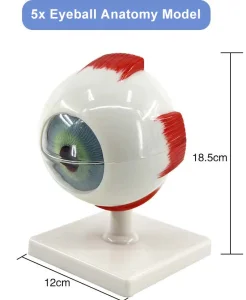 ODM Medical Science Human Anatomical Simulation Eyeball Structural eye anatomical model 3 times larger 6 part eye anatomy model Manufacturer, Factories
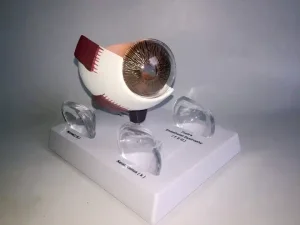 ODM Human eye structure teaching model Eye anatomy model Ocular lens disease demonstration teaching Factory, Quotes
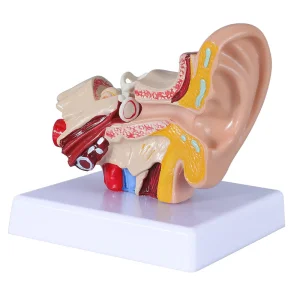 ODM Medical teaching 1.5 times adult ear anatomy model Manufacturers, Pricelist
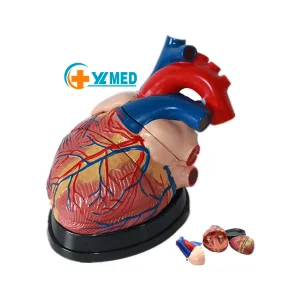 ODM Teaching model 3x enlarged human heart anatomy model Human organ heart research Educational medical model Quotes, Service
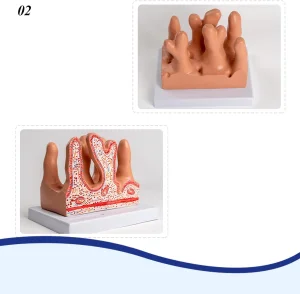 Wholesale Medical science enteric villi tissue model anatomical section of middle school student physical education instrument model Manufacturer, Service
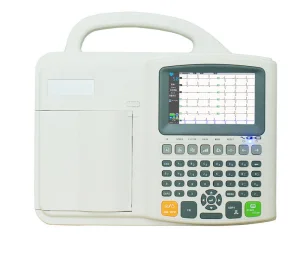 China 6 Channel ECG Machine Portable Ecg Monitoring Automatic Electrocardiograph 5'' Color LCD Screen ECG Machine Factories, Service
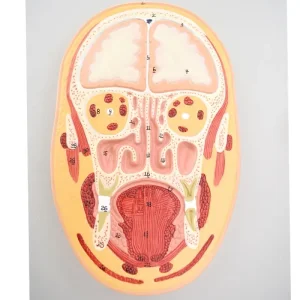 Wholesale Frontal section model of the human head Manufacturers, Pricelist
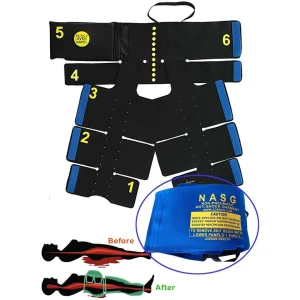 China An elastic resistance bandage with tension, non-pneumatic shock-absorbing splint, emergency splint, shock-absorbing support device Pricelist, Service
Next step for serious wholesale buyers
Shortlist by teaching outcome, request the exact specification and sample plan, and compare total landed cost with repeat-order support. A manufacturer that can document the model, protect the shipment and localize the presentation is usually a stronger long-term partner than a supplier that competes only on the first quotation.