
Yulin Medical · Semantic Sourcing White Paper · ISO 9001 Since 2008
Wholesale Medical Training Manikin Manufacturers & Pricelist
A factory-direct, 2025 sourcing guide for distributors, medical universities, hospitals, EMS providers and simulation centres. Compare global buyer demand, technical routes, compliance evidence, localisation support and the real variables behind a manikin pricelist — then shortlist export-ready models from an ISO 9001 certified manufacturer established in 1958.
Factory-direct since 1958
OEM & private label
10 product lines
24h export reply
First Buyer Shortlist · 8 Export-Ready Products
Wholesale Medical Training Manikins & Clinical Models: First 8 Buyer-Shortlisted Products
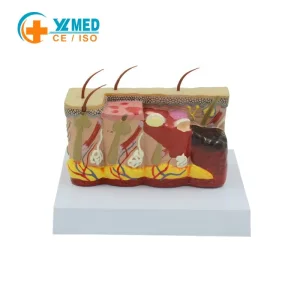
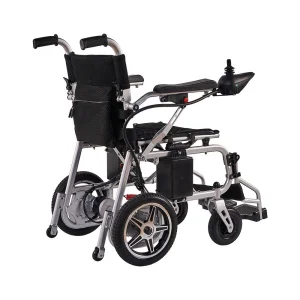
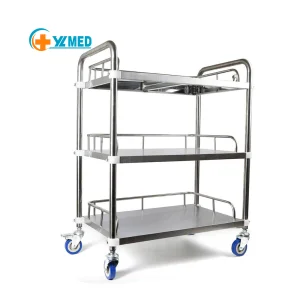
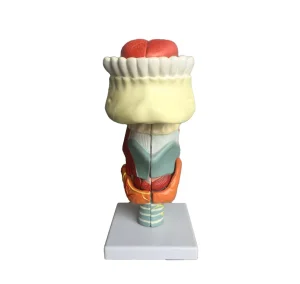
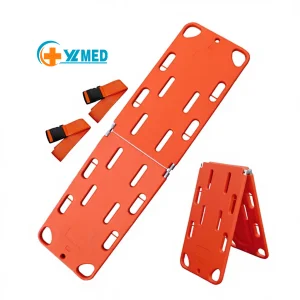
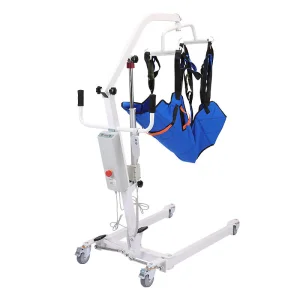
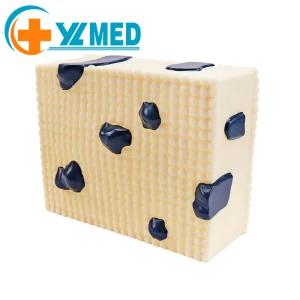
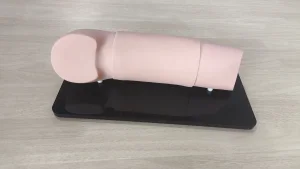
The first eight products below reflect real wholesale basket patterns: anatomical teaching models, nursing and contraception training aids, emergency transfer equipment, mobility support and hospital essentials. Each product title is the live catalogue anchor and is styled as a direct enquiry button, so procurement teams can move from semantic comparison to a specification request without losing context. Use this shortlist to test factory responsiveness, documentation depth, packaging quality and mixed-order capability before expanding into the full ten-line catalogue.

Auditable Manufacturing Base
A Factory-Direct Foundation That Procurement Teams Can Audit
Wholesale sourcing is an evidence exercise. Buyers need to know who owns the tooling, who controls batch inspection, who prepares export documentation and who answers after the container arrives.
Founded in 1958, Henan Yulin Edu. Project Co., Ltd. operates from No. 8, Daoqing Road, Industry Park, Hongqi District, Xinxiang, Henan, China. The company integrates research, production, inspection and export, with registered capital of RMB 120 million and more than 200 professional staff. Its quality management system has been ISO 9001 certified since 2008, and the operating motto remains quality first, service first. For overseas buyers, that history matters less as a slogan and more as an audit trail: stable tooling, repeatable batch inspection, trained export staff and a documented route from sample approval to shipment. Ten product lines also mean mixed-category orders can be consolidated into one shipment with one point of contact, reducing administrative load for distributors and tender teams.
60+Years of manufacturingFounded in 1958 in Xinxiang, Henan
200+Professional staffProduction, engineering, QC and export support
¥120MRegistered capitalRMB registered capital, integrated operations
2008ISO 9001 certified sinceQuality management system documentation




Search Intent Mining
From Search Intent to Purchase Order: What “Wholesale Medical Training Manikin” Really Means
A buyer searching this phrase is rarely looking for one manikin. The query usually blends three semantic clusters: clinical product fit, supplier verification and commercial terms. A useful manufacturer page must satisfy all three without hiding the specification details behind a generic contact form.
Product-fit intent
The buyer may need a CPR manikin, contraception arm, larynx or liver anatomy model, burn skin comparison model, cell membrane model or nursing skills trainer. They compare anatomical accuracy, part count, material, feedback features and replacement parts before they compare price.
Supplier-verification intent
Experienced buyers check whether the supplier is a manufacturer or trading company, what the ISO 9001 scope covers, where the factory is located, how samples are packed, who prepares tender documents and how spare parts are handled after delivery.
Commercial & tender intent
Pricelist requests often include MOQ, OEM packaging, private label, Incoterm, lead time, sample policy, documentation for import registration and mixed-category consolidation. The commercial answer must be specific enough for a tender file or distributor business case.
The strongest supplier page is not the one with the lowest headline price. It is the one that reduces specification risk, compliance risk and delivery risk at the same time.
A 100-point buyer scorecard for manikin and teaching-model RFQs
| Criterion | Starting weight | Evidence to request |
|---|---|---|
| Clinical realism and curriculum fit | 25% | Part list, anatomical landmarks, skills checklist, close-up photos or video, sample evaluation with instructors. |
| Material durability and repairability | 20% | Material declaration, wall thickness, joint construction, spare-parts list, wear parts, warranty and repair guidance. |
| Feedback and digital features | 15% | Sensor type, compression depth and rate feedback, ventilation measurement, calibration method, language support, data export. |
| Compliance documentation | 15% | ISO 9001 scope, test reports, material safety data where relevant, declaration of conformity where applicable, country of origin. |
| Localisation support | 15% | OEM packaging, manual language, plug and voltage adaptation, training content, barcode and carton marks, after-sales SLA. |
| Landed cost and lead time | 10% | Incoterm quote, packing dimensions and weight, MOQ tiers, production schedule, consolidation plan and spare-parts recommendation. |
These weights are a starting point, not a universal rule. A tender for nursing colleges may weight curriculum fit higher; a distributor may weight packaging and repairability higher; an EMS buyer may weight field ruggedness and rapid replenishment higher.
Global Procurement Demand
Global Procurement Demand: Why Manikin Orders Are Moving from Catalog Buying to Program Buying
The wholesale market is shifting from one-off equipment purchases to multi-year programme requirements. Buyers are not only asking “what does one manikin cost?” They are asking how a supplier can support cohorts, refresher training, replacement parts, documentation and mixed-category delivery.
Distributors & importers
They need a repeatable factory partner rather than a one-off quote: stable model families, private-label packaging, spare parts, mixed-category consolidation, predictable lead times and a single export contact for all ten product lines.
Medical universities & teaching hospitals
They compare anatomical accuracy, curriculum alignment, durability under repeated classroom use, teacher guides and the availability of replacement structures for high-use models.
Nursing colleges & skills labs
High utilisation drives demand for realistic feedback, cleanable surfaces, consumable-friendly designs, replacement skins and practical storage. Trainers want fewer interruptions and clearer debrief data.
Hospitals & simulation centres
They require standardised training, ACLS and BLS scenarios, obstetric and paediatric options, documentation for internal quality audits, and rapid access to spare parts when courses are scheduled.
EMS, fire & rescue
Field-realistic CPR and AED trainers, spinal boards, folding stretchers, splints and transfer equipment are bought together for pre-hospital programmes that need ruggedness and fast replenishment.
Government, NGO & tender buyers
Tenders reward documentation quality, batch consistency, delivery reliability and transparent Incoterms. The supplier must support specification compliance, packing marks, certificates and after-sales commitments.
Five structural drivers sit behind this shift. First, health workforce shortages continue to pressure education systems to train more learners with fewer instructors, which increases demand for standardised simulation. Second, accreditation and continuing professional development schemes increasingly expect documented skills practice, not only lectures. Third, infection prevention and cleanable materials influence product selection in shared skills labs. Fourth, emergency preparedness budgets fund CPR, AED and pre-hospital training equipment. Fifth, ageing populations and home-care programmes expand demand for mobility, transfer and daily-living support products. Digitalisation adds a sixth driver: buyers want training data, multilingual content and traceable service histories rather than isolated plastic models.
The procurement implication is clear. A pricelist should be read alongside a programme plan: how many learners will be trained per year, which consumables will be replaced, which spare parts should be stocked locally, which models must be available for refresher courses and which documentation will be requested at tender stage. The lowest unit price can become the highest programme cost if spares, training and documentation are missing.
Macro Industry Solutions
Build a Complete Clinical Skills Ecosystem Instead of Buying Isolated Models
Distributors and institutions gain more value when training products are specified as an ecosystem: basic life support, nursing skills, anatomy, maternal and paediatric care, emergency response and hospital support. This reduces supplier count, simplifies documentation and improves replenishment planning.
Basic life support & CPR/AED
Adult, child and neonatal CPR manikins, AED trainers, feedback displays and replacement airways. The right mix depends on course volume, feedback requirements and whether advanced life support is taught.
Explore nursing and CPR models →Nursing & clinical skills
Injection pads, suture pads, wound-care models, contraception arm models and patient-care trainers support repeatable practice with lower consumable waste and clearer assessment criteria.
View suture pads and kits →Anatomy, pathology & biology
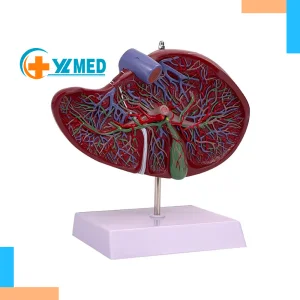
Torso, organ, skeleton, head-and-neck, larynx, liver, cell membrane and burn skin models help lecturers demonstrate structures and help students revise outside the laboratory.
Explore anatomy models →Maternal, neonatal & paediatric
Contraception arm models, neonatal and child simulators and maternal-care trainers support programmes that require realistic anatomy, gentle handling and age-specific assessment.
Review simulation manikins →Emergency & pre-hospital care
Spine boards, folding rescue stretchers, patient hoists, splints and transfer aids can be consolidated with training products for ambulance services and emergency response teams.
View emergency instruments →Dental & hospital support
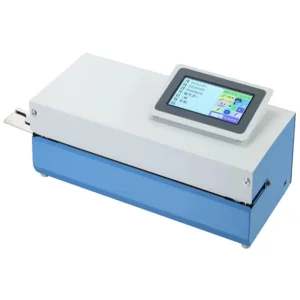
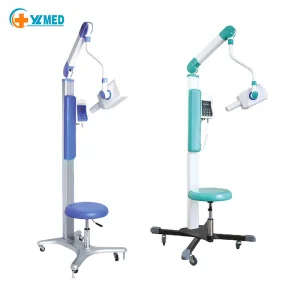
Dental sealing machines, mobile X-ray equipment, treatment trolleys, examination furniture and practical hospital tools complete the clinical environment beyond simulation.
Explore dental equipment →
Product Ecosystem
Ten Product Lines, One Accountable Manufacturer
Mixed-category sourcing reduces supplier administration, improves packaging consistency and helps distributors build a complete catalogue. These ten lines can be discussed in one RFQ and consolidated into one shipment plan.
Technical Route Map
Technology Roadmap 2025–2028: From PVC Models to Connected Simulation
A modern manikin is a material, mechanical and information product at the same time. The procurement challenge is to buy the right level of technology for the learning outcome, not the maximum number of features.
2025
Material realism & modular anatomy
PVC, silicone and TPE continue to improve in skin feel, tear resistance, colour stability and cleanability. Modular organs, replaceable joints and serviceable airway components reduce long-term replacement cost. Buyers should request material declarations and spare-part lists, not only photographs.
2026
Embedded sensing & objective feedback
Compression depth, rate, recoil, hand position, ventilation volume and airway handling become more accessible in mid-range trainers. The key questions are calibration, battery life, firmware support and whether feedback can be used without a proprietary tablet.
2027
Connected scenarios & multilingual coaching
QR/NFC access, web dashboards, offline scenario libraries and LMS-compatible exports simplify instructor administration. Localisation matters: manuals, voice prompts, packaging and assessment rubrics should match the language of the course, not only the language of the buyer.
2028
AI-assisted debriefing & lifecycle traceability
Computer vision and sensor fusion may support debriefing, anomaly detection and predictive maintenance. Adoption will depend on privacy, validation and instructor trust. Digital product passports, service histories and spare-part traceability will become stronger differentiators than isolated hardware features.
Procurement rule: buy technology only when it improves learning outcomes, reduces consumable waste or lowers total cost of ownership. Technology that cannot be maintained locally becomes shelfware.
The future outlook is not a simple race toward more electronics. It is a convergence of realistic materials, modular serviceability, objective feedback, multilingual content and documented lifecycle support. Distributors should ask whether a connected manikin can operate offline, whether assessment data can be exported, who owns the data, how firmware updates are handled and what happens when a sensor fails after the warranty period. Hospitals and universities should test the debrief workflow, not only the simulation itself. In parallel, sustainability requirements will push suppliers to document material content, packaging recyclability, repairability and spare-part availability.
A prudent technology roadmap therefore separates training-critical features from demonstration features. Compression feedback and airway realism may be training-critical for a BLS programme; animated anatomy may be useful for recruitment but less important for psychomotor assessment. By mapping technology to curriculum, buyers avoid paying for complexity that instructors will not use.
Commercial Landscape
Global Commercial and Industrial Landscape: How to Read the Wholesale Market
The wholesale market is not monolithic. Integrated manufacturers, trading companies and local assemblers solve different problems, and the right choice depends on order size, customisation, documentation and after-sales requirements.
China’s medical education and hospital equipment clusters offer deep supply chains for polymers, stainless steel, electronics, packaging and export logistics. Within that ecosystem, buyers encounter three common supplier models. An integrated manufacturer controls tooling, production and inspection; a trading company coordinates multiple factories; a local assembler buys components and kits them for a specific market. Each model can be legitimate, but the risk profile is different. For long-term distributor programmes, the integrated manufacturer usually provides stronger process control and documentation continuity. For small spot purchases, a trading company may offer faster catalogue access. For last-mile regulatory support, a local assembler may be essential.
| Supplier model | Strength | Hidden risk | Best-fit buyer |
|---|---|---|---|
| Integrated manufacturer | Owns tooling and QC, controls documentation, supports mixed-category consolidation and OEM packaging. | May require higher MOQ for deep customisation; communication must be structured. | Distributors, tender suppliers, universities and hospitals building repeat programmes. |
| Trading company | Broad catalogue, fast quotation and flexible sourcing across many factories. | Process control may be indirect; batch consistency and spare-parts continuity need verification. | Small trial orders, event purchasing and buyers testing multiple categories. |
| Local assembler | Local service, regulatory familiarity, kitting and rapid response. | Higher unit cost; component traceability depends on upstream suppliers. | Buyers needing local registration, local training or last-mile customisation. |
What actually changes a manikin pricelist?
Material grade
PVC, silicone, TPE and antimicrobial additives change cost, feel, tear resistance and cleanability. Ask for the material used in the skin, joints and internal structures.
Part count & electronics
Removable organs, articulated joints, airway systems, sensors and displays add tooling and assembly cost. A low price may hide fewer replaceable parts.
Packaging & branding
Private-label printing, foam inserts, master cartons, barcodes and language-specific labels affect unit cost and MOQ.
Order quantity & Incoterm
EXW, FOB, CIF and DDP produce very different landed costs. MOQ tiers and mixed-container discounts must be compared on the same basis.
Documentation & compliance
Tender files, test reports, declarations, certificates of origin and translation add administrative cost but reduce import risk.
Spares & training
Recommended spare-parts kits, instructor guides, videos and service support should be priced into the programme, not discovered after delivery.
Landed cost = unit price + packaging + freight + insurance + duties + local registration + training + spare parts + downtime. A pricelist without assumptions is not a pricelist; it is a starting point for an RFQ.
A high-quality RFQ should state the target market, learner group, annual training volume, required languages, certification or tender requirements, preferred Incoterm, delivery deadline, packaging expectations and whether spare parts should be shipped with the first order. Buyers should also ask for packing dimensions and gross weight, because volumetric weight can change the economics of air freight. For repeat programmes, a rolling forecast is more useful than a single large order: it allows the factory to plan materials, maintain batch consistency and schedule private-label packaging without overstocking the distributor.
Localisation & Compliance
Localisation Support and Compliance: What a Reliable Manufacturer Must Provide
Export supply is not finished at the factory gate. Language, packaging, voltage, spare parts and documentation determine whether the product can be sold, tendered and supported in the destination market.
Language & commercial localisation
Manual language, product labels, warning text, private-label packaging, barcodes, master-carton marks and distributor brand assets should be agreed before production. This is especially important for tender deliveries and retail-facing distributor catalogues.
Technical localisation
Voltage and plug adaptation, spare-parts kits, consumable recommendations, climate and storage guidance, setup videos and maintenance schedules help the product survive real use. For electronic trainers, ask about calibration and firmware support.
Regulatory & tender documentation
ISO 9001 scope, test reports, material declarations, packing lists, HS codes, certificates of origin and product-specific documents can support tenders and import registration. Requirements vary by market and product classification.
Compliance language must be precise. ISO 9001 certifies a quality management system; it is not, by itself, a product certification. CE marking, FDA clearance, UKCA or other market-specific approvals depend on the product, its classification and the destination country. A responsible supplier should provide written evidence where it exists and clearly state where the buyer must complete local registration. Buyers should be cautious of any supplier that promises regulatory approval without written scope, testing evidence or a clear legal entity. Yulin Medical can provide product-specific documentation on request to support tenders and import registration; final regulatory classification and market authorisation remain the buyer’s responsibility.
ISO 9001 certificate and scope
Material declarations and test reports where applicable
Packing list, gross weight and carton dimensions
HS code and certificate of origin support
Manual, label and packaging language review
Spare-parts list and after-sales contact
Localisation support is also a service design question. The export team should be online seven days a week, reply within 24 hours, consolidate mixed-category orders, coordinate private-label design and maintain one point of contact through production and shipment. For distributors, this reduces the hidden cost of chasing multiple factories. For hospitals and universities, it provides a clearer route for replacement parts, documentation and future programme expansion.
How We Work
A Six-Step Factory-Direct Sourcing Process for Overseas Buyers
From the first requirement brief to after-sales replenishment, each stage should produce a document, a decision or a sample result. This is how procurement teams keep control without micromanaging production.
01
Share the market brief
Send product types, learner group, target market, quantities, tender requirements, language needs and preferred delivery date. The clearer the brief, the fewer quotation revisions are needed.
02
Match models & pricelist
Receive matched models, specifications, packaging options, MOQ, lead-time assumptions and shipping suggestions. Compare alternatives on total programme cost, not one unit price.
03
Evaluate samples
Test anatomical accuracy, feedback, cleanability, replacement parts and instructor usability. Sample evaluation is especially valuable before a tender specification is frozen.
04
OEM, label & documentation
Approve artwork, manual language, carton marks, barcodes and private-label content. Confirm which certificates, test reports and declarations will be included with the shipment.
05
Production & quality control
Manufacturing and inspection follow the ISO 9001 quality management system. For mixed orders, consolidation planning should be confirmed before final packing.
06
Export & after-sales
Protective export packing, delivery coordination, spare-parts recommendations and responsive after-sales support keep the programme running after the container is unloaded.
For tender teams, start the process earlier than the deadline: sample approval, artwork review and documentation checks usually sit on the critical path, not production alone.
Buyer FAQ
Wholesale Medical Training Manikin FAQ
Direct answers to the questions procurement managers ask most before requesting a pricelist, sample or tender package.
Is Yulin Medical a manufacturer or a trading company?
We are a manufacturer. Henan Yulin Edu. Project Co., Ltd. was founded in 1958 and operates its own factory in Xinxiang, Henan, China, with more than 200 professional staff. For one-stop orders, we also coordinate a stable network of long-term partner factories so distributors can consolidate mixed categories.
What quality certification does Yulin Medical hold?
Our quality management system has been ISO 9001 certified since 2008. Product-specific documentation can be provided on request to support tenders and import registration. ISO 9001 is a quality management system certification, not a substitute for product-specific market approval.
Do you support OEM, private label and custom packaging?
Yes. Our in-house design team develops private-label packaging and product presentation for distributors, helping increase shelf appeal and resale value. Artwork, manual language, labels, barcodes and master-carton marks can be reviewed before production.
How do I choose the right CPR training manikin?
Start with the learner group: adult, child or neonatal. Then check whether real-time feedback covers compression depth, compression rate and ventilation volume; confirm alignment with current AHA resuscitation guidelines; and decide whether your courses need AED trainer integration. For advanced life-support programmes, an ACLS simulator with embedded scenarios offers more assessment value than a basic torso.
What is the typical MOQ and production lead time?
MOQ varies by model, material and customisation. Stock models may support small trial orders, while private-label packaging and custom colours usually require a higher quantity. Production lead time is normally confirmed after sample approval and deposit, and depends on order mix, season and packaging complexity. The export team should quote both MOQ and schedule in writing.
Can you supply tender documentation and import paperwork?
We can provide standard export documents and product-specific documentation on request, such as ISO 9001 evidence, packing lists, HS codes, certificates of origin and available test reports or material declarations. Buyers should confirm their local registration requirements in advance; final regulatory classification and market authorisation remain the buyer’s responsibility.
How are manikins and anatomy models protected during export shipping?
Depending on the product, packing may use foam, moulded inserts, protective bags, reinforced cartons or pallets. For mixed orders, carton marks and packing lists should be agreed before shipment. Buyers should request gross weight, carton dimensions and loading plan, especially for air freight or multi-drop distribution.
Do you provide spare parts and after-sales support?
Yes. We recommend a spare-parts kit based on course volume, high-wear components and local repair capability. For electronic trainers, confirm calibration, firmware and replacement-module availability before ordering. Our export team is online seven days a week and typically replies within 24 hours with specifications, shipping options and support guidance.
Talk to the Export Team
Need a Pricelist, Sample or Tender Package? We Reply Within 24 Hours.
Tell us your target market, learner group, quantities, certification requirements and delivery deadline. Our product specialists will recommend suitable models, share specifications and propose an economical shipping plan for mixed-category orders.
Second Buyer Shortlist · 8 More Products
More Wholesale Medical Training Manikins, Anatomy Models & Clinical Equipment
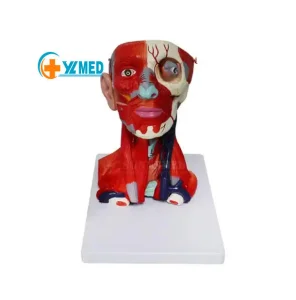
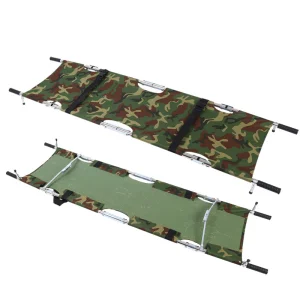
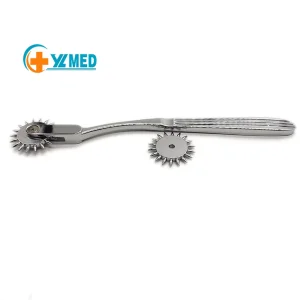
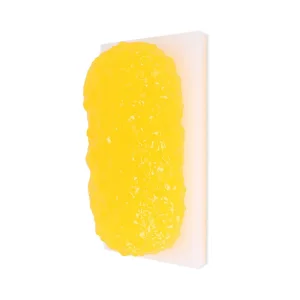
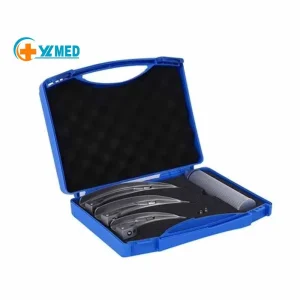
This second shortlist covers head-and-neck anatomy, emergency rescue stretchers, rehabilitation tools, silicone teaching models, liver anatomy, dental sealing, video laryngoscopy and dental radiography. It is designed for distributors and institutions that need to extend a basket beyond core CPR and nursing training, while keeping one factory contact, one inspection standard and one consolidated shipment plan.