
8 Factory-Direct Products for Infusion Programs and Hospital Procurement
Infusion pump projects rarely stand alone. Hospital groups and distributors often bundle pumps with patient transport, examination furniture, training models, sterilization and rehabilitation equipment. The selected products below retain their original product pages, images and factory service links.
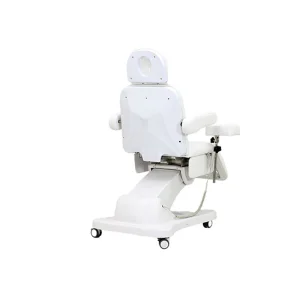
China Best Selling Factory Supply Professional 4 Motor Electric Gynecological Chair Obstetric Examination Medical Operation Bed Manufacturer, Service
View Product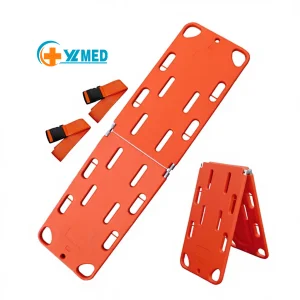
ODM Foldable Spine Board Stretcher with Backboard Straps for Patient Transport Factories, Quotes
View Product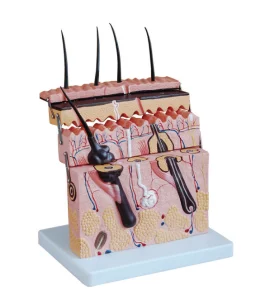
China Skin section model Factory, Quotes
View Product
ODM Human medical blood cell model Anatomical blood cell model research display teaching medical model Pricelist, Quotes
View Product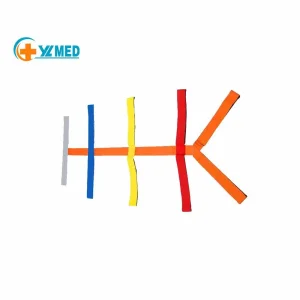
OEM Cross-Mirror Exclusive Spinal Board Emergency Bead Strap Binding Manual Power Source Special Safety Strap for Medical Training Manufacturers, Service
View Product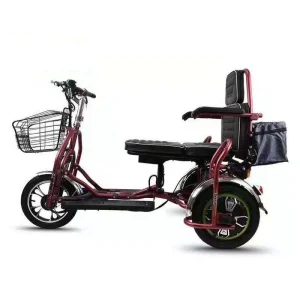
China China Foldable Electric Wheelchair for Adults Elderly Disabled 2-Passenger 30km/h 100-200kg Payload Manufacturers, Pricelist
View Product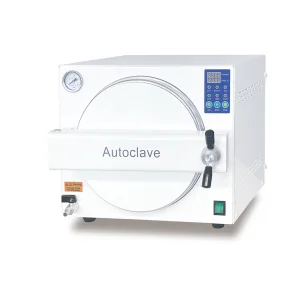
China Professional Small Capacity Clinic Desktop Dental Autoclave Table Top Steam Sterilizer Class N Autoclave Pricelist, Service
View Product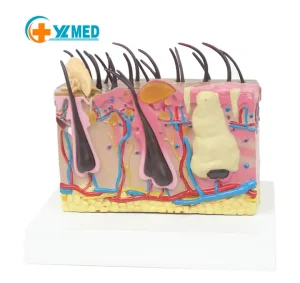
OEM Hot selling Animal skin anatomical model Canine skin insect bite pathological model for anatomy Manufacturers, Service
View ProductWhy Wholesale Medical Infusion Pump Factories & Service Must Be Evaluated as a Clinical System
The search for wholesale medical infusion pump factories and service is not a single price comparison. It is a clinical, regulatory and lifecycle decision that determines patient safety, tender acceptance and long-term distributor margin.
Global buyers use this phrase with several different intentions. A hospital group may be replacing a fleet and needs a factory that can supply volumetric pumps, syringe pumps, PCA devices and enteral pumps under one service contract. An importer may be building a new infusion-therapy category and needs private-label packaging, registration files and training. A tender agent may need a manufacturer with design control, traceability, calibration records and a local escalation path. A home-care provider may need lightweight ambulatory pumps, patient education and spare parts availability. These are different purchase journeys, but they share one requirement: the factory must be able to prove what it says.
Yulin Medical approaches this requirement from a manufacturing background. Henan Yulin Edu. Project Co., Ltd. was founded in 1958, has been ISO 9001 certified since 2008, and manages more than 200 professional staff from its base in Xinxiang, Henan, China. Our own portfolio covers medical teaching models, anatomy and skeleton models, CPR and nursing simulators, dental equipment, hospital furniture, emergency and rehabilitation equipment. Some products on this page are not infusion pumps; they are the adjacent medical and training products that distributors, hospitals and tender teams frequently purchase in the same program. For infusion pump projects, the practical value we provide is a documented sourcing and service framework informed by factory experience, plus the ability to coordinate related products, packaging and shipment planning.
Infusion pumps are high-consequence devices. A pump that is accurate in a catalogue but difficult to service in a rural hospital is not a low-cost device; it is a lifecycle risk. A pump with a modern screen but incomplete cybersecurity documentation may fail hospital IT review. A pump with a competitive unit price but no local spare-parts plan may create downtime that costs more than the original discount. This is why the strongest wholesale programs treat infusion pumps as a system: the device, drug library, training, accessories, biomedical service, software updates, regulatory file and post-market surveillance must all be evaluated together.
For search quality and procurement clarity, this white paper separates the decision into five layers: global demand, macro solution design, technology roadmap, industrial and compliance status, and localization support. Each layer contains practical questions that hospital procurement teams, distributors and tender agents can use during supplier qualification.
Global Procurement Demand for Medical Infusion Pumps
Demand is moving from single-device purchasing toward fleet standardization, interoperability and service-level accountability.
Hospitals and health systems
ICU, oncology, anesthesia, pediatrics and emergency departments require accurate flow control, occlusion alarms, air detection, drug libraries and fleet reports. Buyers increasingly demand EMR integration, barcode scanning and biomedical service records.
Distributors and importers
Exclusive distributors need a defensible brand package: private label, stable bill of materials, registration support, warranty policy, spare parts kits and marketing material that does not make unsupported clinical claims.
Tender and project buyers
Public tenders require documentation discipline: manufacturer authorization, ISO certificates, test reports, instruction manuals, labels, packing lists, warranty statements and, where applicable, local registration or import permits.
Home and ambulatory care
Ambulatory infusion pumps, elastomeric devices and home-care services require simple patient interfaces, long battery life, remote support, clear training and reliable replacement logistics.
Clinical training programs
Nursing schools and simulation centers require infusion pump trainers, anatomy models, CPR manikins and hospital furniture that help learners practise device handling before they touch a live patient.
Total cost of ownership
Purchase price is only one line in the business case. Batteries, drop sensors, administration sets, preventive maintenance, software updates, calibration, training and downtime must be modeled over five to eight years.
Macro Solutions: From Pump Hardware to an Infusion Ecosystem
A wholesale infusion pump factory becomes valuable only when its devices can be deployed, trained, integrated, maintained and audited across the buyer’s real clinical environment.
Clinical workflow mapping
Map every infusion point: ICU, ward, theatre, oncology day unit and home care. Define who programs the pump, who changes the set, who reviews alarms, who updates the drug library and who signs off after repair.
Fleet standardization
Standardizing models lowers training burden and spare-parts inventory. A mixed fleet may look cheaper at purchase, but it multiplies nursing protocols, service tools and consumable SKUs.
Drug library governance
Drug libraries reduce manual programming errors but require local ownership. The factory should provide configuration support, version control, change logs and clear instructions for clinical sign-off.
Training and competency
Wholesale programs need more than manuals. Provide train-the-trainer packages, competency checklists, alarm-response drills and refresher materials for biomedical and nursing teams.
Service and spares
Ask for mean time to repair, recommended spare-parts lists, battery replacement intervals, calibration procedures and escalation response times. Document these commitments in the contract.
Cybersecurity and updates
Connected pumps need security questionnaires, vulnerability disclosure processes, firmware update records and network segregation guidance. Hospital IT should review these before the first order is accepted.
Technology Roadmap and Future Outlook for Infusion Pump Factories
The next competitive advantage will not be a larger screen. It will be safer dose delivery, better interoperability, measurable service uptime and traceable software governance.
Safety sensing and drug libraries
Occlusion sensors, air detectors, anti-free-flow protection, battery management and configurable drug libraries remain the baseline for serious infusion pump suppliers.
Connectivity and fleet visibility
Wireless updates, barcode scanning, EMR integration and dashboards that show pump location, utilization and alarm patterns are becoming standard expectations.
Predictive service and AI guardrails
Remote diagnostics, battery health prediction and software guardrails can reduce unplanned downtime and help hospitals target training where errors cluster.
Closed-loop and zero-trust security
Closed-loop infusion with patient monitors and zero-trust device identity will require validation, audit trails and secure update infrastructure from the factory.
Contract the roadmap
Do not buy a promise. Require a software support policy, end-of-life statement, spare-parts horizon and cybersecurity response process in the supply agreement.
Technology evaluations should match the clinical setting. A basic ward pump and an ICU syringe pump have different requirements for flow accuracy, alarm hierarchy, battery runtime and data integration. A home-care provider may prioritize portability and patient training, while a large hospital system may prioritize central monitoring, firmware control and biomed reporting. The factory should be able to explain not only what the pump does, but how it will be supported after installation.
For distributors, the technology roadmap is also a commercial roadmap. Products with long service lives need stable accessory supply, clear version control and a warranty policy that survives changes in the manufacturer’s product line. Buyers should ask how long administration sets, batteries and service parts will remain available, and whether the factory can provide a written end-of-life notice period. These questions protect the distributor’s installed base and the hospital’s five-year capital plan.
What Global Buyers Should Know About Infusion Pump Manufacturing
The market includes strong specialist OEMs, regional assemblers and trading companies presenting as factories. Procurement quality depends on separating manufacturing capability from catalogue capability.
The global infusion pump supply chain includes precision fluidics, sensors, motors, batteries, injection-molded housings, electronic assemblies, firmware, clinical software and administration sets. A factory’s ability to assemble a pump is not the same as its ability to control the full quality system. Buyers should verify which processes are in-house, which are outsourced and how suppliers are audited. In a serious program, design controls, risk management, usability engineering and software lifecycle records are as important as the production line.
Regional manufacturing advantages vary. Some clusters offer mature electronics supply chains and experienced contract manufacturers. Others offer lower labor costs but may have longer regulatory pathways. The right sourcing decision depends on the destination market. A CE-marked pump under the European Medical Device Regulation requires a different technical file, clinical evaluation, post-market surveillance and authorized representative structure than a device prepared for a national registration in Asia, Africa, Latin America or the Middle East. U.S. marketing may require FDA clearance or approval depending on device class and claims. No single certificate covers every market.
Trade policy also affects landed cost. Tariffs, freight volatility, battery shipping restrictions, packaging requirements and currency movements should be modeled before a tender price is submitted. A distributor that wins a hospital contract based on a short-term factory quotation may lose margin when spare parts, warranty labor or a second shipment are added later. A better approach is to request a transparent cost breakdown covering unit price, accessories, packaging, documentation, freight, insurance, warranty reserve and service training.
Factory audits should include more than a showroom visit. Ask to see incoming inspection records, production test stations, calibration logs, nonconforming-material handling, complaint trends and corrective-action records. If the supplier claims ISO 13485, verify the scope and certificate validity. If the supplier presents ISO 9001 only, that is useful for general quality management but not automatically equivalent to medical-device-specific regulatory compliance. The buyer’s technical file should state exactly which standards, registrations and clinical claims apply.
Localization Support and Compliance Assurance
For wholesale programs, localization is not a translated brochure. It is the ability to support language, registration, training, service and post-market obligations in the buyer’s market.
Language and labeling
IFU, labels, quick-start cards, alarm messages and training slides should match the destination language and local regulatory format. Packaging must survive export handling and customs inspection.
Registration files
Provide technical files, test reports, declarations, certificates, labeling artwork and letters of authorization in a structured package so the importer can file without chasing missing documents.
Clinical training
Train-the-trainer sessions, competency checklists and refresher materials help distributors support nurses and biomedical engineers without depending on frequent factory visits.
Spare parts and tools
Recommended spare-parts kits, battery plans, calibration tools and service manuals reduce downtime. Define which parts are user-replaceable and which require trained biomedical service.
Field service escalation
Set response-time targets, remote-support hours, escalation contacts and repair-or-replace rules. For tender markets, local service commitments should be written into the contract.
Post-market surveillance
Complaint handling, adverse-event reporting, corrective actions and trend reviews protect the brand. Ask for complaint categories, CAPA examples and the process for firmware-related issues.
A Practical Due-Diligence Checklist for Wholesale Infusion Pump Factories
Use this checklist before signing a distribution agreement, accepting a tender sample or placing a repeat order.
Factory and quality system
- Verify legal entity, factory address and ownership structure.
- Check ISO 9001 or ISO 13485 scope, certificate number and validity.
- Review incoming inspection, production testing and calibration records.
- Confirm nonconforming-material and CAPA procedures.
Product and clinical evidence
- Request specifications, flow accuracy data and alarm test results.
- Review risk management, usability engineering and software lifecycle records.
- Confirm drug library configuration and cybersecurity documentation.
- Check compatibility of administration sets and accessories.
Regulatory and commercial file
- Map requirements for each destination market.
- Confirm labels, IFU language and registration support.
- Clarify warranty, spare-parts horizon and end-of-life policy.
- Model landed cost, service reserve and training costs.
Service and localization
- Define response times, escalation paths and remote diagnostics.
- Agree on spare-parts kits and battery replacement intervals.
- Plan train-the-trainer and biomedical service training.
- Document complaint handling and post-market surveillance duties.
How Yulin Medical Supports Wholesale Medical Equipment Programs
Founded in 1958 and ISO 9001 certified since 2008, Yulin Medical combines factory-direct manufacturing, OEM packaging and responsive export service for distributors, medical schools and hospitals.
Henan Yulin Edu. Project Co., Ltd. operates from No. 8, Daoqing Road, Industry Park, Hongqi District, Xinxiang, Henan, China. With registered capital of RMB 120 million and more than 200 professional employees, the company manages product development, manufacturing, inspection and export. Our stated motto, quality first, service first, is supported by an ISO 9001 quality management system and a product range that covers ten specialised lines.
For buyers assembling an infusion-therapy program, Yulin Medical can support the adjacent equipment list that often accompanies pumps: examination beds and chairs, patient transport stretchers, spine boards, hospital furniture, emergency splints, rehabilitation aids, sterilization equipment, anatomy models, CPR and nursing training models, dental teaching equipment and biology teaching resources. We can consolidate mixed-category orders, develop private-label packaging and coordinate one shipment with one point of contact.
Our team is online seven days a week and typically replies within 24 hours with catalogs, specifications and shipping options. For tenders, we can provide product documentation, packing details and commercial information so that procurement teams can evaluate the full package. We do not ask buyers to accept vague claims; we prefer to define the product, documentation and service scope clearly before the order is confirmed.
24/7 responsive service
Export support is available across time zones, with a typical reply within 24 hours for catalogs, specifications, samples and shipping questions.
Design and packaging team
Private-label packaging and product presentation help distributors increase shelf appeal, resale value and brand consistency in local markets.
Professional expertise
Six decades of manufacturing experience supports practical advice on product selection, packaging, tender documentation and mixed-category order planning.
Supply stability
A long-established factory and partner network help keep lead times predictable and support one-stop orders across medical education, hospital furniture and emergency care.
Ten Product Lines for Medical Education, Hospital and Tender Procurement
Source multiple categories from one accountable manufacturer instead of managing fragmented suppliers.
Anatomy Models
Torso, organ, heart, brain and muscle models with numbered structures for lectures and patient education.
Biology Prepared Slides and Accessories
Histology, botany and zoology prepared slides plus storage and microscope accessories for biology labs.
Dental Tools and Equipment
Dental teaching models, clinic lights, LED whitening units and endodontic instruments for training and practice.
General Teaching Models
Science demonstration models for primary schools, secondary schools and education equipment tenders.
Hospital Furniture and Equipments
Stainless steel examination couches, stretchers, walkers and shower chairs built for daily clinical use.
Hospital Machine and Tools
Diagnosis and treatment devices and practical tools for wards, clinics and emergency departments.
Medical Apparatus and Instruments
Emergency splints, extrication devices, cervical traction and rehabilitation instruments.
Medical Nursing Model
Adult, child and neonatal CPR manikins, ACLS simulators and AED trainers for skills assessment.
Skeleton Models
Life-size and desktop skeletons, skulls, spines and joint models for osteology teaching.
Suture Pads and Kits
Realistic skin suture pads and complete instrument kits for surgical and wound-closure practice.
A Transparent 5-Step Process for Overseas Buyers
From the first inquiry to export delivery, every stage has a clear contact, document set and decision point.
Share requirements
Send product types, quantities, destination market, target price and any tender or certification needs.
Catalog and proposal
Receive matched models, specifications, packaging options and practical shipping suggestions.
Sample evaluation
Test samples with your instructors, clinicians or biomedical team before confirming bulk production.
Production and QC
Manufacturing and inspection follow the documented quality management process, with order updates.
Export and support
Protective export packing, delivery coordination and responsive after-sales communication.
News and Practical Guidance from Our Specialists
Product knowledge, exhibition updates and buyer guidance written by the team that builds and supplies the products.
Do You Really Know How to Observe Biological Prepared Slides?
Many plant and animal cell structures can only be studied under a microscope, which makes prepared biological slides essential in every biology lab. Our specialists explain how to handle, focus and store slides correctly so students see clearer detail and slide sets last for years.
The 5th Henan Provincial Educational Equipment Expo Concludes Successfully
Themed “Digital Leading Innovation and Development”, the expo reached a record 50,000 m² with 600+ brands and 10,000+ products on display, showcasing the latest educational equipment and medical training resources.
Frequently Asked Questions About Infusion Pump Sourcing and Medical Equipment Programs
Direct answers for procurement managers, distributors and tender teams before a first order.
Is Yulin Medical an infusion pump factory?
How should I verify a wholesale infusion pump factory?
Which infusion pump types are most requested?
What compliance documents should global buyers request?
How does local service affect total cost of ownership?
Can Yulin Medical consolidate training models, hospital furniture and emergency equipment?
8 Additional Factory-Direct Products for Global Medical Buyers
The second product group completes the original wholesale showcase. All product images, titles and destination URLs are retained for direct evaluation.
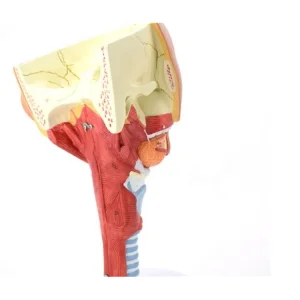
Wholesale Medical science Human anatomy teaching resources Plastic Human Head with Pharynx Muscles Anatomical Model Factory, Service
View Product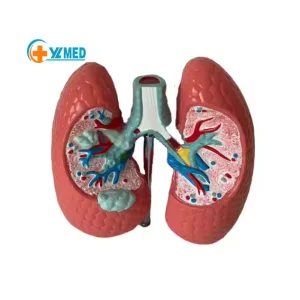
OEM Medical Science Human Healthy Lung Compared with Sick Lung Contrast Model Internal Organ Dissection Demonstration Teaching Factory, Service
View Product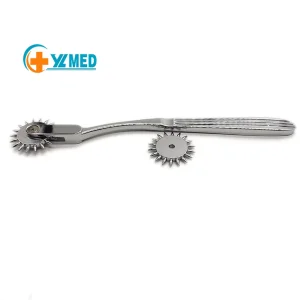
China Advanced acupuncture roller percussion hammer physical gear nerve hammer pain button massage hammer Factory, Factories
View Product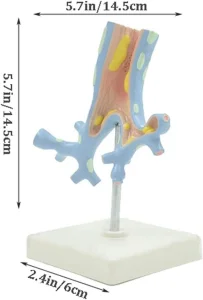
Wholesale Medical School Human Anatomy Respiratory System Model Educational PVC Stand Made China Model Number Human Respiratory System Manufacturers, Factories
View Product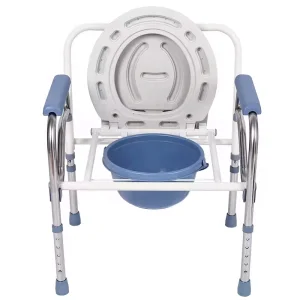
ODM High Quality Elderly Disabled Mobile Toilet Commode Chair Folding Stainless Steel 120kg Capacity Rehabilitation Therapy Supplies Manufacturers, Pricelist
View Product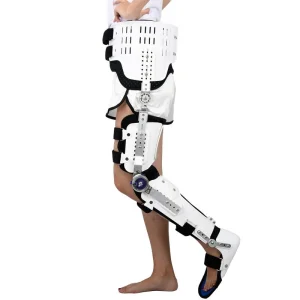
Wholesale Knee Ankle Foot Joint Fixation Brace Orthosis Adjustable Breathable Plastic Class II Lower Limb Thigh Leg Rehabilitation Device Pricelist, Service
View Product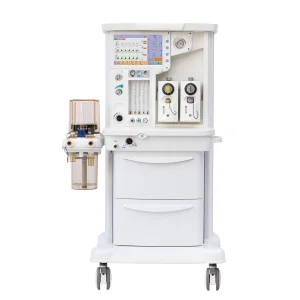
OEM Human Multifunctional Icu Anesthesia Machine General Anesthesia Machine Mobile Anesthesia Trolley Cart Manufacturer, Quotes
View Product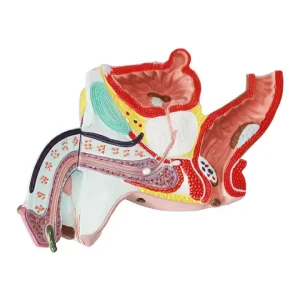
China Medical teaching students physiological learning model advanced male reproductive organs teaching model Manufacturers, Factory
View ProductNeed Specifications, a Price List or a Tender Package?
Tell us your target market, quantities and certification requirements. Our product specialists will recommend suitable models, share detailed specifications and propose a practical shipping plan for your order.