Wholesale Endotracheal Tube Manufacturer & Factories
Factory-direct airway sourcing, OEM/private-label programs, and a 60+ year manufacturing base for distributors, hospitals, medical schools and government tenders. Built on ISO 9001 process control since 2008 — documented, traceable and scalable.
8 Factory-Direct Products for Wholesale Buyers
The first eight catalog items are presented below with their original product URLs, images and descriptions. They give distributors a practical starting point for mixed-category sourcing alongside airway management and clinical training programs.
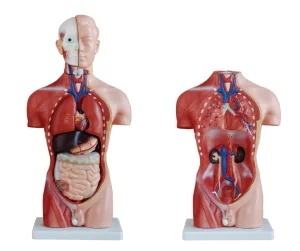
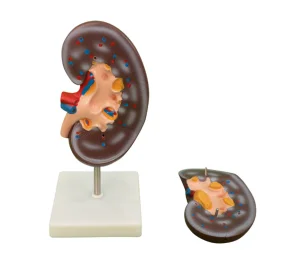
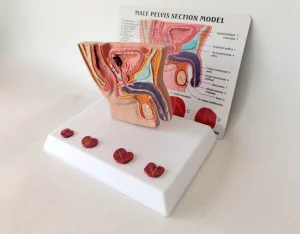
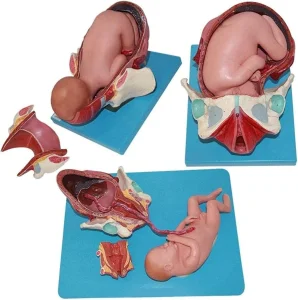
OEM Human Male Pelvis Cavity Sagittal Disease Anatomy 4 Stages Pelvic Cavity Medical Science Anatomical Model Factory, Quotes
View Product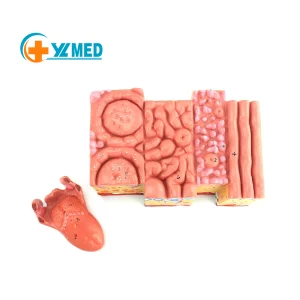
OEM Biological model teaching aids Human tongue anatomy model for medical science Factory, Service
View Product
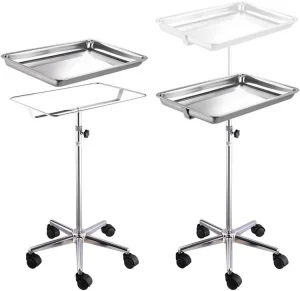
Wholesale Top Selling Adjustable Mayo Stainless Steel Tray Stand Mobile Trolley Medical Salon Equipment Tattoo 45lb Capacity Manufacturer, Factory
View Product
Why the Next Decade of Endotracheal Tube Sourcing Will Reward Documentation, Not Discounts
Endotracheal tubes are high-volume, safety-critical devices that are still treated by too many procurement teams as a commodity line item. That approach is changing. Hospitals are consolidating SKUs, regulators are demanding stronger traceability, and distributors are being asked to prove that every batch can be traced from raw material to patient use. The winning supplier will not be the one with the lowest headline unit price; it will be the manufacturer that can make quality visible.
Henan Yulin Edu. Project Co., Ltd. has operated in Xinxiang, Henan, China since 1958 and has held ISO 9001 certification since 2008. The company serves distributors, medical universities, nursing colleges, hospitals and government projects through a broad portfolio that includes medical teaching models, CPR manikins, anatomy models, hospital furniture and clinical support equipment. That same quality culture — quality first, service first — is the operating foundation for wholesale airway programs, OEM projects and mixed-category export orders.
For buyers searching for a wholesale endotracheal tube manufacturer and factories, the real question is not “Who can quote the cheapest tube?” It is “Who can provide a repeatable product, a complete technical file and a supply plan that survives audits, tenders and demand shocks?” This white paper answers that question with a buyer-centric framework covering technical roadmaps, macro industry solutions, local compliance, China Factory 4.0 resilience and global procurement strategy.
- Factory-direct supply across 10 product lines, from anatomy models to hospital furniture and clinical training equipment.
- Private-label packaging and product presentation designed to raise resale value in your market.
- Mixed-category orders consolidated into one shipment with one accountable point of contact.
- ISO 9001 process control, documented inspection and responsive export support.
Information gain for buyers: request device-specific evidence — not just a company certificate. Ask for the exact SKU, size matrix, sterilization method, shelf life, lot coding, IFU language, packaging format and change-control process before you compare prices.
The Wholesale Endotracheal Tube Market: From Commodity Purchasing to Clinical Infrastructure
Demand is rising for cuffed, uncuffed, reinforced, preformed, microcuff, subglottic suction and pediatric tubes. At the same time, buyers are under pressure to rationalize SKUs, improve traceability and prepare for infection-prevention audits.
Clinical Demand Is Broadening
Aging populations, ICU capacity, emergency preparedness and home ventilation are expanding the size matrix and design requirements for airway tubes. Distributors need a manufacturer that can support a complete range, not a narrow spot product.
Documentation Is Now a Sales Asset
Tenders increasingly ask for technical files, lot traceability, labeling samples, sterilization validation and declaration of materials. A supplier that cannot provide these items creates risk before the first shipment.
Supply Resilience Is a Board-Level Topic
Procurement teams are dual-qualifying suppliers, requesting buffer stock and mapping port alternatives. The factory relationship is becoming a risk-management decision as much as a purchasing decision.
What buyers mean when they search for “wholesale endotracheal tube manufacturer & factories”
That query usually signals a serious commercial intent: the buyer wants a direct factory, not a trading layer; a wholesale price schedule; OEM or private-label support; a complete size range; and evidence that the factory can meet regulatory and quality requirements. The best supplier response is therefore not a generic brochure, but a structured proposal that maps SKU, documentation, lead time and total landed cost.
For Yulin Medical, this means combining a broad medical product ecosystem with disciplined export communication. Our business is built on long-term relationships with distributors and institutions that value consistent quality, clear specifications and reliable follow-up. The same operational discipline that supports anatomical models and CPR manikins can support airway product programs, private-label packaging and mixed-category container planning.
Supplier Selection Weighting illustrative
Use this weighting as a discussion tool for your own RFP. Adjust it by market, clinical setting and regulatory exposure.
What a Qualified Wholesale Endotracheal Tube Manufacturer Should Provide
A credible factory proposal should make it easy for procurement, quality and regulatory teams to say yes. These are the six evidence areas that separate a true manufacturer from a price-only supplier.
Device-Specific Technical File
Request dimensional drawings, material declarations, biocompatibility information, sterilization validation summary, packaging validation and shelf-life rationale. Confirm applicable standards such as ISO 5361 where relevant.
Material & Design Transparency
Ask whether tubes are PVC, silicone, DEHP-free, latex-free or reinforced. Confirm cuff design, Murphy eye, radiopaque line, connector type, size markings and compatibility with common laryngoscopes and ventilators.
Lot Traceability & UDI Readiness
Every carton should allow lot, manufacturing date, expiry date and sterilization information to be traced. For enterprise buyers, request UDI/GS1 barcode readiness and a documented recall or field-action process.
OEM, Private Label & IFU Support
Factory-direct OEM should include artwork control, label review, multilingual instructions for use, packaging customization and change-control notification before any material or process change is implemented.
Supply & Logistics Resilience
Evaluate MOQ, lead time, buffer-stock options, carton configuration, container loading efficiency and alternative port plans. A good factory can explain how it protects your replenishment cycle during peak demand.
Post-Market & CAPA Discipline
Ask how complaints, adverse events, non-conforming product and corrective actions are handled. The quality system should generate records, not verbal assurances. This is where ISO 9001 process control becomes commercially useful.
Red flags to probe: a supplier that cannot name the actual manufacturing site; certificates that do not match the quoted product; no lot code structure; no change-control process; no sample retention policy; or a price that is materially below the market without a credible explanation.
Technical Roadmap: From Single-Use PVC to Smart Airway Systems
The endotracheal tube is a mature device, but the category is not static. Material science, infection prevention and digital traceability are creating a new technology ladder for wholesale buyers.
| Generation | Design Focus | Buyer Value | 2025–2030 Outlook |
|---|---|---|---|
| Gen 1 — Standard PVC | Single-use PVC tube, Murphy eye, radiopaque line, low-pressure high-volume cuff and standard 15 mm connector. | Reliable, cost-efficient and familiar to clinical teams; suitable for routine anesthesia and emergency airway management. | Remains the volume workhorse, but buyers will demand tighter dimensional consistency, cleaner packaging and stronger lot documentation. |
| Gen 2 — Reinforced & Specialized | Armored/reinforced tubes, preformed oral and nasal designs, microcuff technology, subglottic suction ports and pediatric/neonatal size matrices. | Improves procedural flexibility, reduces kinking risk in head and neck procedures, and supports ventilation-associated pneumonia prevention programs. | Growth area for distributor differentiation. Expect more mixed-size kits and procedure-specific packs for ICU and anesthesia customers. |
| Gen 3 — Material Innovation | DEHP-free and PVC-free options, silicone alternatives, antimicrobial surface research, reduced environmental footprint and low-friction coatings. | Supports hospital ESG goals, material compliance and patient-safety positioning. Particularly relevant for tenders in Europe and high-income markets. | Material declarations will become a standard RFP attachment. Suppliers without clear substance-of-concern data will be disadvantaged. |
| Gen 4 — Smart Airway Systems | Integrated cuff-pressure indicators, RFID or 2D code traceability, digital product passports and compatibility with connected ventilation and anesthesia workflows. | Enables data-driven inventory, automated replenishment, faster recall traceability and predictive maintenance of clinical supply chains. | The first commercial wins will likely be in high-value hospital systems and teaching hospitals, then spread to distributors as barcode and UDI expectations rise. |
Future outlook: what wholesale buyers should prepare for now
The next competitive advantage will come from data integrity around a mature product. A tube that is indistinguishable from a competitor in a catalogue becomes differentiated when the supplier can offer a digital product passport, a verified material declaration, a consistent UDI strategy and a change-control process that protects the buyer from silent specification drift.
Procurement teams should also prepare for sustainability questions. Even if your market does not yet mandate PVC-free devices, hospital groups increasingly ask for packaging reduction, recyclable secondary packaging, lower ethylene oxide exposure where possible, and a credible environmental roadmap. The supplier that can document progress will be better positioned in enterprise tenders.
Our recommendation is a three-horizon plan: stabilize the current SKU range and documentation in the next 12 months; introduce differentiated reinforced and subglottic options over the next 24–36 months; and pilot smart traceability with key hospital or distributor accounts as UDI and digital procurement requirements mature.
Next-Generation Buyer Priorities
Indicative buyer priorities. Validate with your own clinical, procurement and regulatory stakeholders.
Macro Industry Solutions: Airway Management Across the Care Continuum
A wholesale tube program must work in the real world: in ambulances, operating rooms, ICUs, pediatric wards and home-care settings. Each setting has a different failure mode and a different buying logic.
Emergency & Prehospital
Priorities: rapid access, clear size marking, durable packaging and compatibility with field airway kits. Solution: mixed-size emergency packs and distributor kitting.
OR & Anesthesia
Priorities: reinforced options, consistent cuff performance and procedure-specific tubes. Solution: SKU rationalization with a clear size and design matrix.
ICU & Ventilation
Priorities: subglottic suction, cuff-pressure management, traceability and VAP-prevention protocols. Solution: hospital-standardized bundles with training support.
Pediatrics & Neonatal
Priorities: small-diameter precision, low-trauma design and clear identification. Solution: dedicated pediatric range with color coding and separate inventory controls.
Home & Long-Term Care
Priorities: reliable replenishment, caregiver-friendly packaging and cost predictability. Solution: distributor-managed subscription or scheduled delivery programs.
Combine airway tubes with anatomy models, CPR manikins, emergency stretchers and hospital furniture in one mixed container. This reduces supplier management cost, improves container utilization and gives your sales team a broader catalog to present to hospitals, schools and emergency services.
Localized Support & Compliance Guardrails
Regulatory compliance is not a logo on a website. It is a chain of evidence that starts with the manufacturing site, continues through sterilization and packaging, and ends with the label and instructions for use that reach the clinician. For wholesale buyers, the most useful supplier is one that can make this chain visible and reviewable.
Yulin Medical’s quality management system has been ISO 9001 certified since 2008. For airway products, buyers should specify whether the target market requires ISO 13485, CE MDR, FDA 510(k), UKCA, NMPA or other registration evidence. Certificate scope must be verified for each SKU, because a company-level certificate does not automatically cover every product or manufacturing process.
- Label and IFU localization in the target language, with controlled artwork approval.
- UDI/GS1 barcode readiness, lot coding and expiry-date format aligned to your market.
- Sterilization method, validation summary, packaging integrity and shelf-life rationale.
- Material declarations, biocompatibility information and substance-of-concern review.
- Customs documents, certificate of origin and pre-shipment inspection support.
Compliance Evidence Map
This map is a buyer checklist, not a claim that every product carries every certification. Request current documents for the exact SKU and destination market.
China Factory 4.0: Supply-Chain Resilience & Efficiency Advantages
Factory 4.0 is not a lights-out factory. It is a closed-loop operating model where equipment, materials, process parameters and quality records are connected so that every batch is repeatable and every exception is visible.
China’s medical device supply chain combines deep component clusters, mature export logistics and increasingly sophisticated digital manufacturing. For endotracheal tubes, the critical efficiency gains come from four areas: precision extrusion, consistent cuff bonding, automated leak and flow testing, and packaging traceability. When these processes are connected to an MES or ERP system, the factory can reduce changeover time, shorten quality investigations and provide faster, more accurate documentation to overseas buyers.
Resilience is the second half of the story. A factory that relies on a single material source, a single port or a single inspection step is not truly efficient; it is fragile. Wholesale buyers should ask how the manufacturer dual-sources raw materials, maintains safety stock for critical components, plans alternative shipping routes and manages pre-shipment inspection during peak season. The strongest supplier is the one that can show you a plan, not just a promise.
Yulin Medical’s 60+ year operating history and 200+ staff base provide a stable platform for long-term OEM and distributor relationships. The company’s registered capital of RMB 120 million, ten product lines and ISO 9001 quality system support the kind of mixed-category, multi-market sourcing that global buyers increasingly prefer.
Audit tip: ask for the factory’s process flow diagram, critical-control-point list, equipment maintenance records and digital traceability demonstration. A short video walk-through of extrusion, assembly, testing and packing is often more informative than a static brochure.
Illustrative Audit Scorecard Weights
Adapt the weights to your product risk, market regulation and internal procurement policy.
Global Enterprise Procurement Needs: A New RFP Playbook
Enterprise buyers are not only purchasing tubes; they are designing a resilient clinical supply chain. The RFP should capture total cost, regulatory exposure, documentation quality and service capability.
| Procurement Lever | Questions to Ask | Evidence to Request |
|---|---|---|
| Product scope | Which sizes, cuff types, materials and special designs are available? Can you supply a complete size matrix from neonatal to adult? | Product catalogue, dimension drawings, size matrix, sample retention policy and current SKU list. |
| Regulatory readiness | Which certifications apply to the exact SKU and destination market? Who owns the technical file? | Certificate scope, test reports, IFU sample, labeling artwork, UDI plan and change-control procedure. |
| Total cost of ownership | What is the landed cost after freight, inspection, defects, inventory carrying and regulatory review? | Price schedule, packaging dimensions, container load plan, defect-rate history and lead-time data. |
| Supply resilience | How do you handle raw-material shortages, peak demand, port disruption and emergency replenishment? | Dual-sourcing plan, safety-stock policy, capacity statement, alternative port plan and escalation contact. |
| ESG & sustainability | Can you provide material declarations, packaging reduction options and a credible environmental roadmap? | Substance-of-concern statement, PVC/DEHP position, recycling or packaging plan and energy-efficiency initiatives. |
Hospitals
Standardize SKUs, require lot traceability and request clinical training support for new tube designs.
Distributors
Build a complete catalog, consolidate mixed-category containers and protect margin with private-label packaging.
Government & NGO Buyers
Prioritize documentation, tender compliance, predictable lead times and transparent post-award communication.
A Six-Decade Manufacturing Base Behind the Airway Program
Founded in 1958, Henan Yulin Edu. Project Co., Ltd. has grown into a well-known educational and medical equipment supplier that integrates scientific research, production and sales. With registered capital of RMB 120 million and more than 200 professional employees, we manage product development, manufacturing, inspection and export from our base at No. 8 Daoqing Road, Hongqi District, Xinxiang.
Our motto is simple: quality first, service first. Our quality management system has been ISO 9001 certified since 2008. Every order is produced and inspected so that distributors, medical universities, nursing colleges and hospitals receive consistent, well-documented products on every batch.
Our goal is to fully satisfy every customer through dependable quality and attentive service, while continuously developing the skills of our team so that each project is handled by experienced people. What this means for buyers is straightforward: one accountable manufacturer for anatomy models, nursing simulators, lab slides, hospital equipment and airway supply programs — consolidated into a single shipment and backed by an ISO 9001 quality system.



Complete Sourcing for Medical Education & Clinical Use
Ten specialised product lines let procurement teams source simulation, lab and hospital equipment from one accountable manufacturer instead of managing multiple suppliers.
Anatomy Models
Torso, organ, heart, brain and muscle models with numbered structures for lectures and patient education.
View RangeBiology Prepared Slides and Accessories
Histology, botany and zoology prepared slides plus storage and microscope accessories for biology labs.
View RangeDental Tools and Equipment
Dental teaching models, clinic lights, LED whitening units and endodontic instruments for training and practice.
View RangeGeneral Teaching Models
Science demonstration models for primary schools, secondary schools and education equipment tenders.
View RangeHospital Furniture and Equipments
Stainless steel examination couches, stretchers, walkers and shower chairs built for daily clinical use.
View RangeHospital Machine and Tools
Diagnosis and treatment devices and practical tools for wards, clinics and emergency departments.
View RangeMedical Apparatus and Instruments
Emergency splints, extrication devices, cervical traction and rehabilitation instruments.
View RangeMedical Nursing Model
Adult, child and neonatal CPR manikins, ACLS simulators and AED trainers for skills assessment.
View RangeSkeleton Models
Life-size and desktop skeletons, skulls, spines and joint models for osteology teaching.
View RangeSuture Pads and Kits
Realistic skin suture pads and complete instrument kits for surgical and wound-closure practice.
View RangeFeatured CPR, Emergency & Rehabilitation Equipment
Best-selling simulation manikins, first-aid devices and mobility aids requested by training centres, ambulance services and healthcare distributors.












Why Distributors and Institutions Partner with Yulin Medical
Four strengths overseas buyers consistently cite when they move long-term orders to our factory.
24/7 Responsive Service
Our team is online 24 hours a day, 7 days a week. Whatever your time zone, you receive a detailed answer as quickly as possible — typically within 24 hours.
Design & Packaging Team
In-house specialists deliver professional product design and private-label packaging that strengthens your brand and increases the added value of every unit you sell.
Professional Expertise
Our vision is to provide the most professional educational and medical training products from mainland China, built under ISO 9001 process control and decades of category knowledge.
60+ Years of Supply Stability
A factory with over 60 years of history and a deeply integrated partner supply chain lets us meet one-stop demands and keep lead times predictable on repeat orders.
A Transparent 5-Step Process for Overseas Buyers
From first conversation to delivery, every stage has a named contact and clear documentation, so you can plan stock, tenders and training schedules with confidence.
Share Requirements
Send product types, quantities, target market and any tender or certification needs.
Catalog & Proposal
Receive matched models, specifications, packaging options and shipping suggestions.
Sample Evaluation
Test samples with your instructors or clinicians before confirming bulk production.
Production & QC
Manufacturing and inspection follow our ISO 9001 quality management system.
Export & Support
Protective export packing, delivery coordination and responsive after-sales service.
News & Practical Insights from Our Specialists
Exhibition updates and hands-on guidance written by the team that designs and builds our products.

Do You Really Know How to Observe Biological Prepared Slides?
Many plant and animal cell structures can only be studied under a microscope, which makes prepared biological slides essential in every biology lab. Our specialists explain how to handle, focus and store slides correctly so students see clearer detail and your slide sets last for years.

The 5th Henan Provincial Educational Equipment Expo Concludes Successfully
Themed "Digital Leading Innovation and Development", the expo reached a record 50,000 m² with 600+ brands and 10,000+ products on display, showcasing the latest educational equipment.

Inside Our Product Showroom
A look at the medical teaching models and training equipment buyers can inspect in person when visiting our Xinxiang facility.
Frequently Asked Questions from Importers
Straight answers to the questions procurement managers and quality teams ask most before placing a first order.
Is Yulin Medical a manufacturer or a trading company?
What quality certification does Yulin Medical hold?
Do you support OEM, private label and custom packaging?
What sizes and types of endotracheal tubes can be sourced through a wholesale program?
How do I choose the right CPR training manikin?
What documents should I request before placing a wholesale airway order?
Can you provide samples before bulk production?
How do you protect supply continuity during peak demand?
How quickly will I receive a reply?
How can I reduce total landed cost without compromising quality?
Need Specifications, a Price List or a Tender Package? We Reply Within 24 Hours.
Tell us your target market, quantities and certification requirements. Our product specialists will recommend suitable models, share detailed specifications and propose the most economical shipping plan for your order.
8 Additional Factory-Direct Products for Complete Sourcing
The remaining eight catalog items are retained below with their original images and product URLs. Together with the first showcase, this preserves the full wholesale product list for buyers comparing mixed-category options.
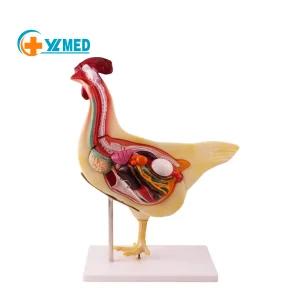
Wholesale Chicken Animal Custom Animal Anatomy Model Hen Biological Equipment for Medical School Experimental Tools and Teaching Resources Factory, Factories
View Product
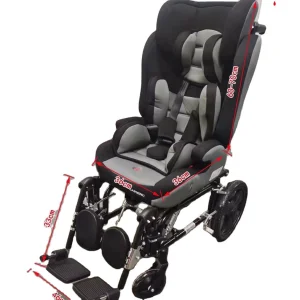
China High Quality Aluminum Alloy Frame Children's Wheelchair Cerebral Palsy 2-12 Years Old Purple Color Detachable Legrest Manual Pricelist, Quotes
View Product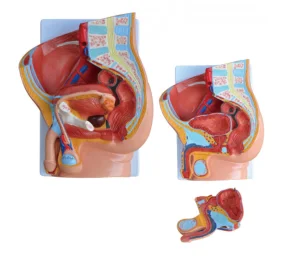
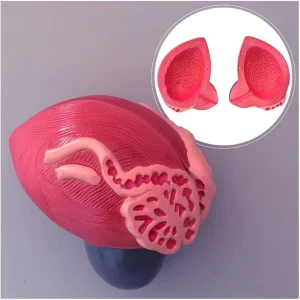
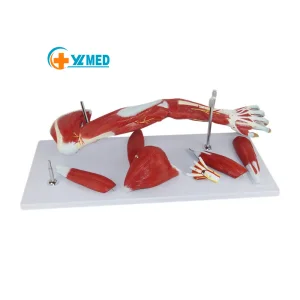
Wholesale Medical teaching Human upper limb muscle Detachable biceps anatomical model with vascular nerve human arm model Manufacturer, Pricelist
View Product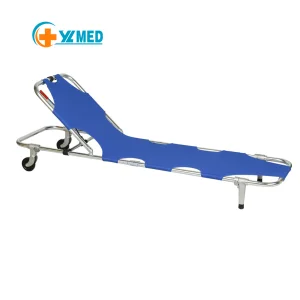
China Portable Folding Class I Medical Stretcher Cart 10s Quick Setup 350LB Capacity Emergency Rescue Patient Transport Hospitals Manufacturers, Service
View Product