Wholesale Electronic Syringe Pump Factory & Quotes
Factory-direct OEM/ODM supply, compliance-ready documentation and China Factory 4.0 efficiency for distributors, hospitals, tender teams and clinical engineering groups. Yulin Medical has manufactured medical and educational equipment since 1958 and has held ISO 9001 certification since 2008.
8 Medical & Training Products for Wholesale Quote Requests
Eight examples of hospital, simulation and training equipment currently available through our wholesale program. Product URLs and product imagery are retained for direct review and quote preparation.
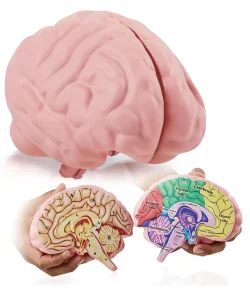
OEM Cross Section Foam Brain Model, Great Educational Tool for Learning & Teaching Human Anatomical Function, Psychology, Biology or Science, Easy to Use & Includes 2 Half Pieces Labeled with Figures Factories, Pricelist
View Product & Request Quote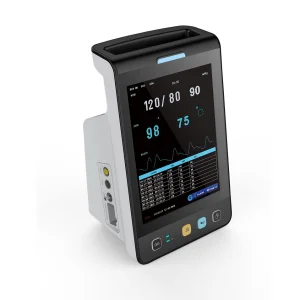
Wholesale 8 Inch Portable Anti-Fibrillation Vital Signs Monitor Professional Medical Device for ICUs Examination Therapy Equipments Factory, Factories
View Product & Request Quote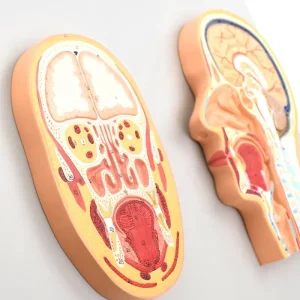
ODM Models of sagittal and frontal sections of the head Manufacturer, Quotes
View Product & Request Quote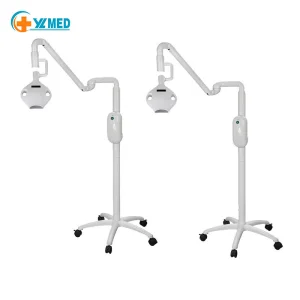
ODM Three-dimensional dental cold light tooth whitening instrument oral beauty tooth instrument beauty dental chair LED beauty tooth Manufacturers, Factory
View Product & Request Quote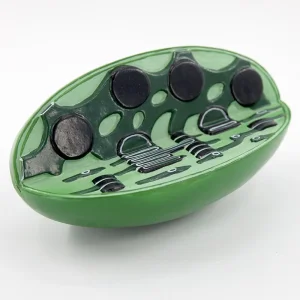
China Biological Teaching Model Plant Anatomical Microscopic Chloroplast Model for School Teaching Tool Factory, Factories
View Product & Request Quote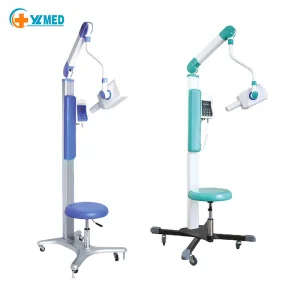
ODM Dental mobile X-ray machine dental radiography machine dental equipment Magnolia officinalis vertical X-ray machine Manufacturers, Factories
View Product & Request Quote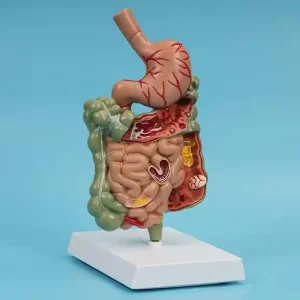
ODM Removable Teaching Model Human Stomach Anatomy Model Pathological Digestive System ModelStomach Section Model Factories, Service
View Product & Request Quote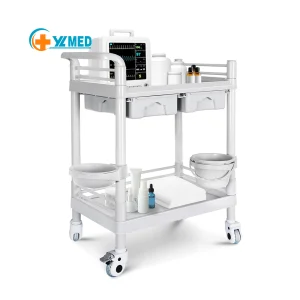
Wholesale Hospital Dental Clinic Medical 2 floor 2 drawer trolley, rotating wheels, heavy medical practical trolley Quotes, Service
View Product & Request QuoteWholesale Electronic Syringe Pump Factory & Quotes: The Buyer’s Briefing
A commercial search for “wholesale electronic syringe pump factory & quotes” usually comes from a distributor, hospital procurement team, tender agent or clinical engineering group comparing direct manufacturers, OEM/ODM capability, regulatory documentation and landed cost. A credible supplier should answer every dimension of that intent—not only unit price.
Quote transparency
Request a line-item quotation covering model, configuration, accessories, MOQ, tooling, packaging, testing, documentation, warranty, lead time and shipping terms. Vague “best price” answers rarely survive a tender review.
Clinical fit
Flow range, bolus and KVO behaviour, drug library, occlusion alarms, battery strategy, mounting, nurse-call interface and EMR connectivity must match the care setting before price can be compared fairly.
Lifecycle assurance
Training, spare parts, RMA workflow, firmware support and post-market documentation matter more than a one-time discount. Ask how the factory protects uptime after the first container ships.
Yulin Medical, formally Henan Yulin Edu. Project Co., Ltd., operates from its own base in Xinxiang, Henan, China, and coordinates a stable network of long-term partner factories for one-stop medical equipment orders. This model allows buyers to consolidate electronic syringe pump sourcing with anatomy models, CPR simulators, dental equipment, hospital furniture, rehabilitation aids and laboratory teaching products without losing a single point of accountability. For regulated markets, the exact product registration, certificate scope and clinical acceptance requirements should always be verified before purchase; our export team supports that verification with product-specific documentation rather than unverified claims.
For a wholesale program, the most useful quote is a decision package: a configured model matrix, target price by volume band, compliance checklist, realistic lead time, packaging proposal and after-sales plan. That package lets distributors compare factories on total value instead of headline price.
Inside the Electronic Syringe Pump: Clinical Value and Engineering Fundamentals
A syringe pump is a precision fluid-delivery system, not a commodity box. It combines mechanics, sensors, embedded software, alarm architecture, battery management and human-factor design. In ICUs and operating rooms, small flow-rate errors become clinically meaningful over time; in oncology, dose programming and barcode verification influence safety; in transport, ruggedness and battery behaviour determine usability.
Buyers comparing factories should ask for evidence, not slogans. A practical technical review covers the syringe recognition method, flow accuracy across syringe brands, bolus and purge modes, occlusion pressure detection, air-in-line sensing where applicable, alarm priority logic, event-log export, battery runtime and charging strategy, cleaning compatibility, drop resistance and electromagnetic compatibility. For international programs, the documentation conversation should align with IEC 60601-1, IEC 60601-1-2, IEC 60601-2-24, ISO 14971 risk management and applicable software lifecycle processes.
Precision & safety
Flow accuracy, low-rate stability, occlusion detection, anti-bolus behaviour and alarm escalation should be tested across the syringe sizes used in the destination market.
Smart programming
Drug libraries, barcode workflows, event logs and EMR interfaces reduce manual programming risk and create measurable value for hospital quality teams.
Human factors
Screen clarity, alarm audibility, menu depth, night mode and training burden affect real-world safety. A good factory can explain how clinician feedback shaped the interface.
Serviceability
Modular assemblies, accessible calibration points, spare-part kits and diagnostic procedures reduce downtime and make distributor service economically viable.
Technical Roadmap and Future Outlook for Electronic Syringe Pumps
The next procurement cycle will reward distributors who can offer future-ready platforms without overcomplicating clinical training. The strongest factory roadmaps connect safety architecture with hospital digital strategy.
Interoperability & closed-loop infusion
HL7/FHIR gateways, auto-programming from the EMR and bidirectional communication with medication-management platforms are moving from premium features to tender requirements in advanced markets.
AI-assisted medication safety
Drug-library analytics, alert-fatigue dashboards and deviation detection help hospitals refine protocols. The factory’s role is transparent data export and clinically validated logic—not opaque automation.
Cybersecurity by design
Secure boot, role-based access, signed firmware updates, audit logs and software bill of materials are becoming essential. Cyber due diligence should be part of the factory audit.
Home infusion & miniaturization
Hospital-at-home programs need quiet, lightweight pumps with simplified programming, remote support and robust training materials for non-specialist caregivers.
Specialty configurations
MRI-compatible, neonatal micro-volume, syringe-brand optimization and anesthesia configurations create differentiation for distributors serving specialist departments.
Sustainable lifecycle
Long-life batteries, replaceable modules, recyclable packaging and accessible service documentation support lower total cost of ownership and greener procurement scoring.
Macro Industry Solutions Across the Care Continuum
A single pump platform can serve multiple departments only when configuration, accessories, training and documentation are designed for the real environment of use.
ICU & critical care
Precise low-rate delivery for vasoactive drugs, stable alarms and clear trend logs. Multi-pump stacking and nurse-call integration are often decisive.
Operating room & anesthesia
Fast response to bolus needs, dependable occlusion management and a clear interface for high-pressure workflows. Specialty TCI configurations may be required.
Oncology & infusion centers
Drug-library control, barcode verification and event-log traceability help reduce dose-programming errors and support accreditation reviews.
Pediatrics & neonatal care
Micro-volume accuracy, small syringe compatibility and careful alarm design are essential. Training materials should match neonatal workflows.
Emergency & transport
Lightweight mounting, long battery runtime and vibration resistance support ambulance, inter-hospital transfer and field-hospital applications.
Hospital-at-home & specialty care
Simple programming, remote support options and durable accessories help providers expand infusion care beyond the hospital without compromising oversight.
Localization Support and Compliance Assurance for Global Buyers
Localization is not just a translated manual. It starts with the regulatory route, continues through labeling and power configuration, and ends with training and post-market support.
Because regulatory status varies by country, Yulin Medical does not present unverified certification claims. For each electronic syringe pump project, we assemble a document pack covering model specifications, available test reports, risk-management evidence, labeling artwork, packaging data, traceability records and shipping documents, then identify gaps before quotation. For the EU, US, ASEAN, Middle East, Africa and Latin America, the importer and manufacturer should agree early on the responsible economic operator, UDI expectations where applicable, post-market surveillance and incident-reporting workflow.
Regulatory dossier support
Specifications, available IEC 60601 test evidence, risk-management summaries, labels, packing lists and traceability records prepared for tender and registration review.
Language & labeling
Multi-language user interfaces, instructions for use, packaging artwork, market-specific units and private-label branding support distributors’ local market entry.
Power & environment
Voltage, plug type, battery strategy, EMC environment and cleaning protocols are matched to the destination. Site conditions should be confirmed during the RFQ stage.
Training & service
Biomedical training, service manuals, spare-part kits, RMA guidance and distributor certification pathways protect uptime after installation.
China Factory 4.0: Supply Chain Resilience and Efficiency Advantages
Factory 4.0 is meaningful only when it changes what a distributor can promise: shorter quotation cycles, traceable quality, more predictable lead times and better documentation.
Yulin Medical was founded in 1958 and operates as Henan Yulin Edu. Project Co., Ltd. from No. 8 Daoqing Road, Industry Park, Hongqi District, Xinxiang, Henan, China. With registered capital of RMB 120 million, more than 200 professional staff, ISO 9001 certification since 2008 and ten specialised product lines, the company combines long manufacturing experience with export-oriented service. For syringe pump programs, production coordination can be aligned with a qualified medical-device partner network where configuration, compliance route or component sourcing requires additional specialization.
Resilience comes from practical controls: dual-source options for critical motors and sensors where possible, incoming inspection, barcode traceability, calibrated test fixtures, controlled work instructions, buffer stock for long-lead components, modular platform design and export-grade packaging. These controls help buyers reduce schedule risk across mixed-category orders that include pumps, hospital furniture, training models and dental equipment in one shipment.
For global buyers, the operational advantage is consolidation. A distributor can place syringe pumps, CPR training manikins, anatomy models, hospital furniture and rehabilitation products under one project manager, receive one inspection plan and coordinate one shipment. That reduces communication overhead, lowers fragmented freight costs and makes after-sales responsibility clearer.












Global Enterprise Procurement Requirements: What to Put in an RFQ
A global enterprise RFQ should make comparison possible. The goal is not to collect many prices; it is to identify the supplier most likely to deliver a compliant, serviceable and commercially sustainable program.
Clinical configuration
Define department, syringe brands, flow range, drug library, connectivity, mounting and accessories. Require a configuration matrix, not a generic brochure.
Regulatory & quality package
Request available test reports, declarations, labels, risk documents, traceability, warranty terms and the exact certificate scope for your market.
Total cost of ownership
Compare accessories, consumables, service parts, training, freight, tariffs, warranty and expected downtime—not just FOB unit price.
Supply continuity
Ask for production capacity, component strategy, MOQ by model, lead time by volume band and contingency plans for long-lead electronics.
Cybersecurity & lifecycle
Require firmware update policy, access control, logging, vulnerability handling and end-of-life notification commitments.
How to Evaluate a Wholesale Electronic Syringe Pump Factory
Use a structured audit to separate a responsive sales team from a reliable manufacturing partner.
Factory and partner audit
Confirm who actually manufactures the pump, which lines are in-house, how partner factories are controlled and how traceability works across the supply chain.
Engineering review
Ask how requirements become specifications: alarm thresholds, drug library permissions, battery strategy, interface language and connectivity options.
Quality and test evidence
Look for incoming inspection, in-process checks, final calibration, alarm testing, burn-in where applicable, packing validation and nonconformance handling.
After-sales and lifecycle
Check training quality, spare-parts availability, RMA turnaround, technical documentation and the supplier’s commitment to long-term firmware support.
A Transparent 5-Step Process for Overseas Buyers
From first conversation to delivery, every stage has a named contact and clear documentation so you can plan stock, tenders and training schedules with confidence.
01 Share requirements
Send product types, quantities, target market, clinical application and any tender or certification needs.
02 Catalog & proposal
Receive matched models, specifications, packaging options and shipping suggestions with a clear quotation basis.
03 Sample evaluation
Test samples with your instructors, clinicians or biomedical team before confirming bulk production.
04 Production & QC
Manufacturing and inspection follow the agreed quality plan, with shipment documentation prepared before dispatch.
05 Export & support
Protective export packing, delivery coordination, training materials and responsive after-sales service.
Yulin Medical Product Ecosystem for Hospitals, Schools & Distributors
Ten specialised product lines support one-stop sourcing for medical education, clinical training, dental clinics, laboratories and hospital departments.
Anatomy Models
Torso, organ, heart, brain and muscle models with numbered structures for lectures and patient education.
View range → 02Biology Prepared Slides and Accessories
Histology, botany and zoology prepared slides plus storage and microscope accessories for biology labs.
View range → 03Dental Tools and Equipment
Dental teaching models, clinic lights, LED whitening units and endodontic instruments for training and practice.
View range → 04General Teaching Models
Science demonstration models for primary schools, secondary schools and education equipment tenders.
View range → 05Hospital Furniture and Equipments
Stainless steel examination couches, stretchers, walkers and shower chairs built for daily clinical use.
View range → 06Hospital Machine and Tools
Diagnosis and treatment devices and practical tools for wards, clinics and emergency departments.
View range → 07Medical Apparatus and Instruments
Emergency splints, extrication devices, cervical traction and rehabilitation instruments for clinical programs.
View range → 08Medical Nursing Model
Adult, child and neonatal CPR manikins, ACLS simulators and AED trainers for skills assessment.
View range → 09Skeleton Models
Life-size and desktop skeletons, skulls, spines and joint models for osteology teaching.
View range → 10Suture Pads and Kits
Realistic skin suture pads and complete instrument kits for surgical and wound-closure practice.
View range →More Products Frequently Ordered by Hospitals, Training Centers & Distributors
Best-selling simulation manikins, first-aid devices and mobility aids requested by training centres, ambulance services and healthcare distributors.

Advanced Full-Body CPR Training Manikin with 8" Color Feedback Display

AED Automated External Defibrillator Trainer for CPR Courses

5-Year-Old Child ACLS Emergency Simulation Manikin

Neonatal ACLS Training Manikin Aligned with AHA 2020 Guidelines

Adjustable Rescue Scoop Stretcher with 3 Safety Straps

Portable Kendrick Extrication Device (KED) Body Splint

Non-Pneumatic Shock-Absorbing Emergency Splint & Tension Bandage

Stainless Steel Clinic Examination Bed & Patient Couch

Height-Adjustable Aluminum Folding Walker with Front Wheels

Foldable Shower Chair for Elderly and Home Care

Lightweight Aluminum Foldable Standard Walker

Inflatable Cervical Neck Traction Device for Home Use
News & Practical Insights from Our Specialists
Exhibition updates and hands-on guidance written by the team that designs, sources and supports medical education and hospital equipment programs.

Do You Really Know How to Observe Biological Prepared Slides?
Many plant and animal cell structures can only be studied under a microscope, which makes prepared biological slides essential in every biology lab. Our specialists explain how to handle, focus and store slides correctly so students see clearer detail and your slide sets last for years.

The 5th Henan Provincial Educational Equipment Expo Concludes Successfully
Themed “Digital Leading Innovation and Development”, the expo reached a record 50,000 m² with 600+ brands and 10,000+ products on display, showcasing the latest educational equipment.

Inside Our Product Showroom
A look at the medical teaching models and training equipment buyers can inspect in person when visiting our Xinxiang facility. Use our blog for sourcing tips, product comparisons and industry news.
Frequently Asked Questions from Importers
Straight answers to the questions procurement managers ask most before placing a first order or comparing electronic syringe pump quotations.
Is Yulin Medical a manufacturer or a trading company?+
We are a manufacturer. Henan Yulin Edu. Project Co., Ltd. was founded in 1958 and operates its own factory in Xinxiang, Henan, China, with more than 200 professional staff. For one-stop orders, we also coordinate a stable network of long-term partner factories.
What quality certification do you hold?+
Our quality management system has been ISO 9001 certified since 2008. Product-specific documentation can be provided on request to support tenders and import registration in your country.
Do you support OEM, private label and custom packaging?+
Yes. Our in-house design team develops private-label packaging and product presentation for distributors, helping increase shelf appeal and resale value in your market.
How do I choose the right CPR training manikin?+
Start with the learner group: adult, child or neonatal. Then check that real-time feedback covers compression depth, compression rate and ventilation volume; confirm alignment with current AHA resuscitation guidelines; and decide whether your courses need AED trainer integration. For advanced life-support programmes, an ACLS simulator with embedded scenarios offers far more assessment value than a basic torso.
How quickly will I receive a reply?+
Our export team is online 7 days a week and typically replies within 24 hours with catalogs, specifications and shipping options.
What is included in a wholesale electronic syringe pump quotation?+
A serious quotation should list the model, configuration, accessories, MOQ, unit price by volume band, tooling or branding cost, packaging, available documentation, warranty, lead time and shipping terms. Ask for the document package to be itemised so tender and registration teams can review it efficiently.
Which compliance documents can you support for syringe pump imports?+
We can help assemble product-specific specifications, available IEC 60601 test evidence, risk-management summaries, labels, packaging data, traceability records and shipping documents. The exact certificate scope and registration route depend on the destination market; we recommend confirming these with your regulatory consultant before purchase.
How does Yulin support localization, training and after-sales?+
Support can include multi-language interfaces and manuals, market-specific power configuration, packaging artwork, biomedical training materials, spare-part kits, RMA guidance and firmware support policy. The final scope is agreed during quotation so distributors can plan service resources before launch.
Need Specifications, a Price List or a Tender Package? We Reply Within 24 Hours.
Tell us your target market, quantities, clinical application, registration requirements and packaging preferences. Our product specialists will recommend suitable models, share detailed specifications and propose the most economical shipping plan for your order.

8 More Wholesale Products for Quote Requests
The final product showcase preserves the remaining original product images and URLs for direct inquiry. Combine these items with electronic syringe pump sourcing for consolidated medical equipment orders.
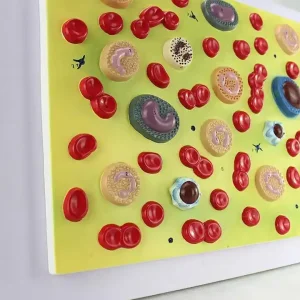
ODM Human medical blood cell model Anatomical blood cell model research display teaching medical model Pricelist, Quotes
View Product & Request Quote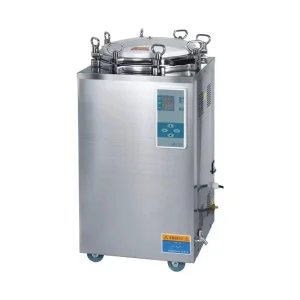
Wholesale Model 150 Liter Vertical Digital Autoclave Sterilizer With High Quality Factory, Quotes
View Product & Request Quote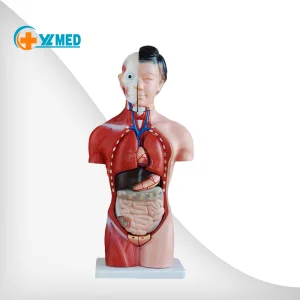
OEM Medical education 42CM female torso model 13 pieces Pricelist, Quotes
View Product & Request Quote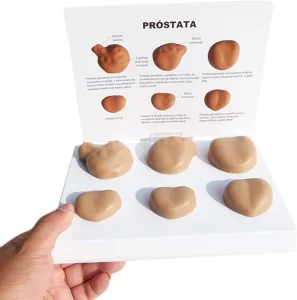
ODM Teaching Model,Human Prostate Model, Prostate Cancer Model, Prostate Mass Anatomical Structure Model Manufacturer, Factory
View Product & Request Quote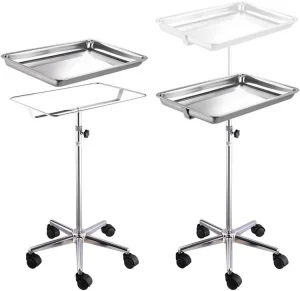
Wholesale Top Selling Adjustable Mayo Stainless Steel Tray Stand Mobile Trolley Medical Salon Equipment Tattoo 45lb Capacity Manufacturer, Factory
View Product & Request Quote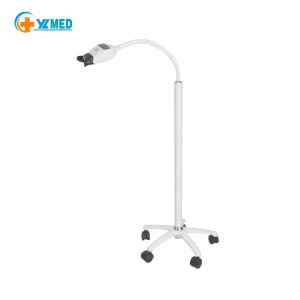
OEM Dental tooth whitening instrument dental clinic tooth beauty whitening machine cold LED tricolor lamp Manufacturers, Pricelist
View Product & Request Quote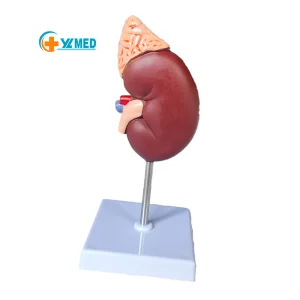
China Renal anatomy with adrenal gland model Factory, Factories
View Product & Request Quote