Featured Products for Global Medical Training & Clinical Sourcing
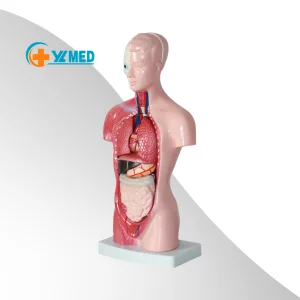
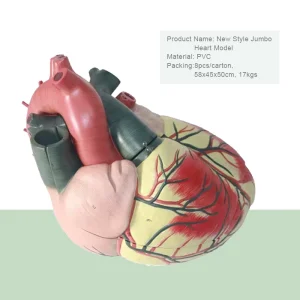
These eight products represent the wider medical teaching and hospital range that buyers frequently combine with baby CPR manikin orders. Every product link below is preserved for direct specification and quotation requests.
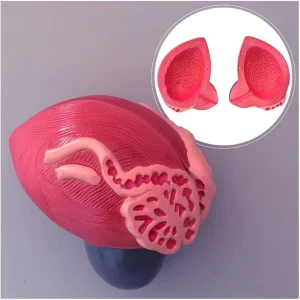
ODM Enlarging human bladder model for medical teaching Quotes, Service
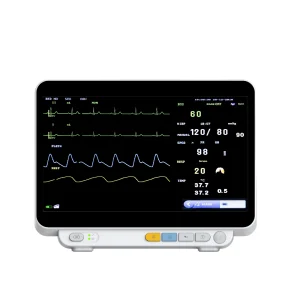
Wholesale Adjustable Medical Diagnostic Devices Portable 14" Multi-parameter Patient Monitors with Electric Power Source Manufacturers, Factories
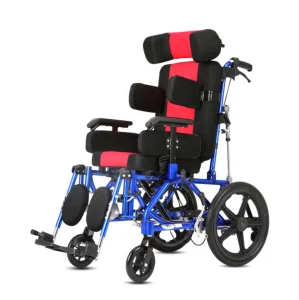
OEM High End Heavy Duty Children's CP Wheelchair Aluminum Alloy Manual Wheelchair for Cerebral Palsy Rehabilitation Therapy Supplies Manufacturer, Manufacturers
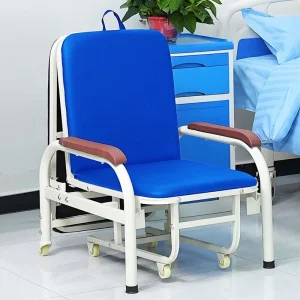
OEM Folding Hospital Accompany Chair Multifunctional Mobile Bed Chair for Ward Rest Manufacturers, Pricelist
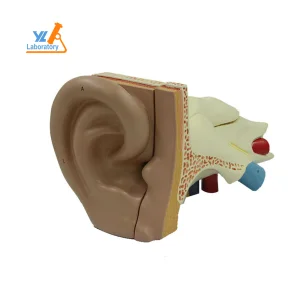
ODM Life Size Human Ear Anatomical Model, Professional Medical Model for Hospital Use Pricelist, Quotes
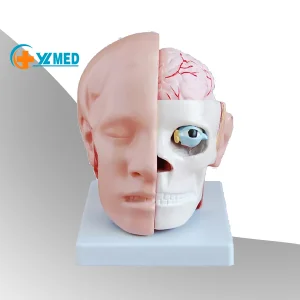
ODM Teaching human head anatomy with cerebral artery model Factory, Pricelist
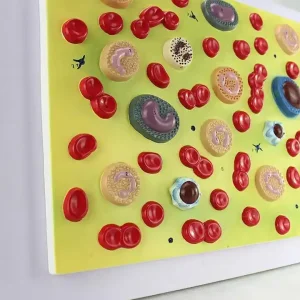
ODM Human medical blood cell model Anatomical blood cell model research display teaching medical model Pricelist, Quotes
 Yulin Medical
Factory-Direct Wholesale Baby CPR Manikins and Medical Teaching Models
Henan Yulin Edu. Project Co., Ltd. (Yulin Medical) has manufactured educational and medical training equipment in Xinxiang, Henan, China, since 1958. With more than 200 professional staff, registered capital of RMB 120 million and an ISO 9001 quality management system certified since 2008, the company supports distributors, universities, hospitals, clinics and training centres with consistent production, private-label packaging and export coordination.
The opportunity in baby CPR manikin wholesale is not simply a lower unit price. Serious buyers compare cost per training session, replacement-part availability, feedback accuracy, sanitation procedures, packaging durability and documentary support for tenders. A manufacturer that can combine baby CPR manikins with anatomy models, hospital furniture, diagnostic devices and general teaching models reduces supplier risk while improving inventory efficiency.
- One accountable manufacturer across 10 product lines, from CPR training models to hospital equipment
- OEM, ODM and private-label packaging that helps distributors build local resale value
- Mixed-category orders consolidated into one shipment with one export contact
1958Manufacturing Since
2008ISO 9001 Certified
200+Professional Staff
10Product Lines



Global Market Intelligence
The Global Baby CPR Manikin Market: Commercial and Industrial Status
Demand for infant and neonatal resuscitation training is no longer limited to medical schools. It now spans hospitals, emergency services, maternal-child health programmes, childcare networks and corporate first-aid training.
The global training manikin category is driven by three structural forces. First, resuscitation training has become a recurring compliance activity in healthcare systems, so institutions need durable manikins, replacement lungs, face skins and airway components rather than one-off purchases. Second, paediatric and neonatal emergency preparedness receives sustained attention from hospitals and public-health bodies because infant resuscitation requires different hand placement, compression depth, ventilation volumes and team coordination than adult CPR. Third, blended learning has increased the number of distributed training sites, which creates demand for portable, easy-to-clean and instructor-friendly models.
Commercially, the market is tiered. Premium simulation brands invest heavily in sensor electronics, scenario software and learning analytics. Volume manufacturers focus on repeatable moulding, durable materials, replaceable consumables, practical feedback and reliable export packing. For distributors, the most attractive wholesale programme usually combines entry-level infant torsos for high-volume community courses, mid-range feedback manikins for nursing schools and full-body or neonatal models for hospital simulation laboratories. For hospitals and tender buyers, documentation, spare-part continuity and alignment with current resuscitation guidance are often more important than a very low first price.
The industrial supply chain is concentrated in regions with mature mould-making, plastics, electronics, textiles and packaging ecosystems. China remains a major source for medical teaching models, anatomy models, CPR manikins and hospital equipment because suppliers can coordinate multiple product categories, support custom packaging and handle export documentation. Baby CPR manikin manufacturers and service providers are therefore evaluated less as simple factories and more as long-term supply partners: can they sustain replacement parts, protect quality across repeat batches, localize manuals and packaging, and respond quickly when a tender deadline moves?
For global buyers, the strongest sourcing strategy is to build a product ladder. A basic infant CPR trainer supports community and school programmes. A feedback-enabled baby CPR manikin supports certified BLS and paediatric courses. A neonatal or advanced simulator supports hospital simulation and team-based drills. The same wholesale partner should be able to supply all tiers, plus related anatomy models and hospital equipment, so the distributor can serve more than one customer segment without multiplying supplier risk.
Product Specification
What Separates a Professional Baby CPR Manikin from a Low-Cost Trainer?
Infant CPR training is a precision skill. The manikin must support correct technique, repeatable feedback and hygienic use across many learners.
Anatomy & Age Accuracy
Newborn, infant and child training models are not interchangeable. Landmarks, chest compliance, head tilt, airway resistance and body proportion should match the learner group and the local resuscitation protocol.
Feedback Quality
Compression depth, compression rate, recoil, hand position and ventilation volume are the core assessment data. Real-time feedback reduces instructor subjectivity and supports defensible certification records.
Durability & Hygiene
High-turnover training centres need easy cleaning, replaceable lungs, disposable airway components and stable skin materials. Consumable availability is part of total cost of ownership.
Service Ecosystem
Manuals, quick-start cards, curriculum mapping, repair guidance, warranty terms and spare-part lists turn a manikin into a trainable, maintainable programme asset.
When comparing quotations, ask whether the proposed baby CPR manikin is designed for one-rescuer and two-rescuer infant CPR training, whether the feedback covers both compression and ventilation, and whether the model aligns with current AHA or local resuscitation guidance. A responsible manufacturer will explain the specification clearly rather than rely on vague claims. It will also provide a recommended spare-parts ratio for training centres that run weekly or daily courses.
China Factory Efficiency
Why China Factory Scale, Integration and Supply Chain Depth Matter
For wholesale buyers, factory efficiency is not only about production speed. It is the ability to keep specifications stable, consolidate categories and protect delivery schedules across repeat orders.
China’s medical teaching equipment supply chain benefits from deep integration between mould making, injection moulding, soft PVC processing, electronics, packaging, printing and export logistics. A factory located in an established industrial park can coordinate these inputs with shorter communication loops and more predictable material planning. Henan Yulin Edu. Project Co., Ltd. operates from No. 8 Daoqing Road, Industry Park, Hongqi District, Xinxiang, Henan, and has developed its production and export capability over more than six decades.
The practical advantage for distributors is consolidated sourcing. A buyer may need baby CPR manikins for a nursing school, anatomical models for a biology department, hospital screens for a clinic project and suture pads for a surgical skills lab. Purchasing these from one accountable manufacturer reduces freight consolidation costs, inspection complexity, documentary errors and supplier-management time. It also improves replenishment planning because replacement parts and related products can be scheduled together.
OEM and private-label capability is another efficiency lever. An in-house design team can develop packaging and product presentation that fits the distributor’s brand, helping the distributor increase shelf appeal and resale value. For tender markets, consistent labels, model numbers, manuals and packing lists make it easier to prepare responsive documentation. For online distributors, clear product photography, specification sheets and spare-parts references reduce pre-sales friction.
Quality control matters as much as scale. Yulin Medical has held ISO 9001 certification since 2008 and maintains more than 200 professional staff. The company’s motto, quality first, service first, is supported by sample evaluation, production inspection and export packing coordination. The export team is online seven days a week and typically replies within 24 hours with catalogues, specifications and shipping options. For first orders, buyers should still approve samples, define inspection criteria and confirm the spare-parts list before bulk production begins.
60+Years of Manufacturing
¥120MRegistered Capital
24hTypical Reply Commitment
7dExport Team Online
Localized Applications
Where Baby CPR Manikins Create Real Training Value
The same infant CPR trainer may be configured very differently for a hospital simulation lab, a community health programme or a school first-aid course.
Hospitals & Neonatal Units
NICU, obstetric, paediatric and emergency departments use baby CPR manikins for in-service drills, competency checks and team-based neonatal resuscitation practice.
Medical & Nursing Schools
Skills labs use infant trainers for BLS, paediatric and neonatal modules, OSCE stations and objective assessment. Feedback models are valuable where large student cohorts must be evaluated consistently.
EMS & Fire Rescue
Pre-hospital teams need paediatric emergency confidence. Portable baby CPR manikins support station training, ambulance familiarization and refresher courses without requiring a full simulation centre.
Community & Maternal Health
Public-health programmes, NGOs, Red Cross teams and vaccination clinics use infant CPR trainers to teach parents and caregivers basic response skills in local languages.
Childcare & Schools
Childcare centres, schools, babysitting courses and workplace first-aid providers need compact, durable and easy-to-clean models that fit short training sessions.
Localization affects product selection. Buyers may need English, Spanish, French, Arabic or other language manuals; the correct power plug for electronic feedback models; packaging that survives local warehousing; and spare parts that can be replaced without specialist tools. For distributors, a localized baby CPR manikin programme is more competitive when the manufacturer can support private-label packaging, barcode labelling and tender documentation without disrupting production lead times.
Industry Trends
Trends Shaping the Next Generation of Baby CPR Manikins
Training technology is moving toward objective feedback, blended delivery and lower total cost of ownership. Wholesale product ranges should reflect that direction.
Feedback-Enabled Training
Compression depth, rate, recoil and ventilation feedback are becoming expected in professional courses. Real-time displays and post-session summaries help instructors standardize assessment and document learner performance.
Hybrid & Blended Learning
Online theory followed by hands-on practice increases the number of training locations. Portable manikins, quick-start guides and simple maintenance become more important than ever.
Infection-Control Design
Replaceable lungs, disposable faces, smooth skin surfaces and clear cleaning instructions are increasingly specified by hospitals and high-volume training centres.
Realism & Diversity
Buyers increasingly look for newborn, infant and child proportions, realistic airway resistance and diverse skin tones that reflect the populations being trained.
Modular & Sustainable Design
Replaceable components extend service life and reduce waste. Packaging efficiency, recyclable materials and consolidated shipments also align with procurement sustainability goals.
Compliance & Documentation
Tenders increasingly require clear specifications, ISO 9001 evidence, warranty terms, spare-parts lists and product-specific documents. Documentation quality is now a competitive feature.
Global Procurement
Global Procurement Requirements: What Distributors and Institutions Ask For
Successful sourcing balances clinical suitability, commercial terms and long-term service. The evaluation should begin before the first sample is ordered.
Technical Specification
Define age group, body type, airway system, feedback parameters, AED compatibility, carrying case, replacement parts and cleaning method. Ask for a model comparison rather than a single catalogue page.
Quality & Compliance
Request ISO 9001 evidence, product-specific documentation, material information, inspection records and warranty terms. Avoid suppliers who cannot explain how repeat batches remain consistent.
Commercial Terms
Clarify MOQ, sample cost, lead time, payment terms, Incoterms, packaging, carton dimensions and mixed-order rules. A transparent quotation makes total landed cost easier to compare.
Localization & After-Sales
Confirm manual language, labelling, power requirements, spare-part kits, repair guidance and replacement schedules. Service access is especially important for electronic feedback models.
Illustrative weighting model for buyer briefs in medical simulation and teaching-equipment procurement.
OEM / ODM Service
Private-Label Service: Turning a Wholesale Manikin into a Local Brand
For distributors, the product is not only the manikin. It is the packaging, documentation, training support and brand experience that reaches the end user.
Yulin Medical supports OEM, ODM and private-label packaging for distributors. The in-house design team can help develop product presentation that raises shelf appeal and resale value. This is particularly useful for distributors serving schools, hospitals and training centres that prefer a locally recognized brand. Custom manuals, model numbering, carton marking and promotional photography can be discussed during quotation so that the final supply package matches the target market.
A practical five-step process keeps the project transparent from enquiry to delivery. It starts with the buyer sharing product types, quantities, target market and certification requirements. The manufacturer then matches suitable models, specifications and shipping options. Samples allow instructors or clinicians to evaluate usability before bulk production. Bulk manufacturing and inspection follow the ISO 9001 quality management system. Export packing, delivery coordination and after-sales support complete the process.
01
Share Requirements
Send product types, quantities, target market, packaging needs and tender or certification requirements.
02
Catalog & Proposal
Receive matched baby CPR manikin models, specifications, spare-parts options and shipping suggestions.
03
Sample Evaluation
Test samples with instructors or clinicians before confirming bulk production and packaging artwork.
04
Production & QC
Manufacturing and inspection follow documented quality control and agreed acceptance criteria.
05
Export & Support
Protective export packing, delivery coordination and responsive after-sales communication.
E-E-A-T & Supplier Verification
How to Verify a Wholesale Baby CPR Manikin Manufacturer
Experience, expertise, authority and trust should be visible in documents, factory communication and product consistency — not only in marketing claims.
Yulin Medical’s experience is grounded in a long operating history: founded in 1958, more than 60 years of manufacturing, more than 200 professional staff and registered capital of RMB 120 million. Its authority comes from operating its own factory in Xinxiang, Henan, and serving a broad product portfolio across anatomy models, CPR and nursing simulators, skeleton models, suture kits, dental equipment, biology slides and hospital furniture. Its trust signal is the ISO 9001 quality management system certified since 2008, supported by an export team that responds seven days a week and typically within 24 hours.
Buyers should still perform standard due diligence. Ask for a business licence, factory address, production photos or video, sample inspection, product-specific documentation and warranty terms. For tenders, request the exact specification sheet, packing list, spare-parts list and certificate package before quotation. Confirm whether the baby CPR manikin is a stock model or a customized version, and whether replacement parts will remain available after the initial order. A reliable supplier will welcome these questions because they reduce disputes later.



Complete Sourcing
Beyond Baby CPR Manikins: Ten Product Lines for One-Stop Procurement
Distributors and institutions can consolidate medical teaching models, simulation supplies, laboratory items and hospital equipment into one purchase programme.
Anatomy Models
Explore range →Biology Prepared Slides and Accessories
Explore range →Dental Tools and Equipment
Explore range →General Teaching Models
Explore range →Hospital Furniture and Equipments
Explore range →Hospital Machine and Tools
Explore range →Medical Apparatus and Instruments
Explore range →Medical Nursing Model
Explore range →Skeleton Models
Explore range →Suture Pads and Kits
Explore range →Anatomy ModelsCPR ManikinsNursing SimulationSuture KitsDental EquipmentHospital FurnitureBiology Slides
Buyer FAQ
Frequently Asked Questions from Wholesale Buyers
Direct answers for distributors, medical schools, hospitals and procurement teams evaluating baby CPR manikins and related medical teaching products.
What is a baby CPR manikin and how is it used?
A baby CPR manikin is an infant-sized training model used to teach and assess resuscitation skills such as chest compressions, rescue breaths, airway positioning and team coordination. It is used in nursing schools, hospital orientation, paediatric and neonatal drills, community first-aid courses and childcare training. Professional models may include feedback for compression depth, rate, recoil and ventilation.
How do I choose the right infant CPR manikin for my market?
Start with the learner group and course level. Community programmes may need durable basic torsos, while hospitals and certification centres may require feedback-enabled infant or neonatal models. Confirm anatomical accuracy, replacement-part availability, cleaning method, manual language and alignment with current resuscitation guidance. For distributors, a product ladder covering basic, feedback and advanced models usually serves more customer segments.
Is Yulin Medical a manufacturer or a trading company?
Henan Yulin Edu. Project Co., Ltd. is a manufacturer founded in 1958, operating its own factory in Xinxiang, Henan, China, with more than 200 professional staff. For one-stop orders, the company also coordinates a stable network of long-term partner factories. This structure supports mixed-category sourcing across CPR manikins, anatomy models, hospital furniture and other medical teaching products.
Do you support OEM, private label and custom packaging?
Yes. The in-house design team develops private-label packaging and product presentation for distributors, helping increase shelf appeal and resale value. Custom manuals, labels, model numbers, carton markings and packaging artwork can be discussed during quotation. Buyers should approve samples and artwork before bulk production.
What quality certification does Yulin Medical hold?
The quality management system has been ISO 9001 certified since 2008. Product-specific documentation can be provided on request to support tenders and import registration. Buyers should specify the exact documents required by their market and confirm them before order placement.
Can I mix baby CPR manikins with anatomy models and hospital furniture in one order?
Yes. One of the main advantages of a multi-line manufacturer is consolidated sourcing. A distributor can combine CPR and nursing simulators, anatomy models, biology slides, suture kits, dental tools, hospital furniture and instruments into one shipment. This reduces freight complexity, inspection workload and supplier-management time, although final packing and lead time depend on the product mix.
How should I plan hygiene and replacement parts for high-volume training?
Ask for the recommended cleaning procedure, replacement lungs, disposable airway components, face skins and any other consumables. For daily or weekly courses, calculate the expected number of training sessions per year and order a spare-parts ratio that avoids course interruption. A simple maintenance guide and labelled spare parts make centre-level servicing easier.
How quickly will I receive a reply and quotation?
The export team is online seven days a week and typically replies within 24 hours with catalogues, specifications and shipping options. To speed up quotation, include product types, target quantities, destination market, language requirements, certification needs and any tender deadline.
Talk to the Export Team
Request a Wholesale Quotation for Baby CPR Manikins and Medical Teaching Models
Share your target market, quantities, preferred model level and certification requirements. The team can recommend suitable baby CPR manikin configurations, prepare a mixed-category proposal and suggest an economical shipping plan for your order.
Henan Yulin Edu. Project Co., Ltd. · No. 8, Daoqing Road, Industry Park, Hongqi District, Xinxiang, Henan, China
More Wholesale Products
Additional Medical Teaching, Hospital and Emergency Products
These eight products complete the current wholesale product series and can be combined with baby CPR manikin orders for consolidated export shipment.
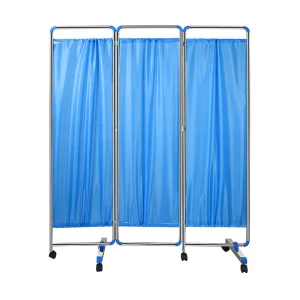
China Durable Medical Hospital Screen with Stainless Steel Hinge Waterproof Fabric and Blackout Feature Can Be Folded Manufacturer, Pricelist
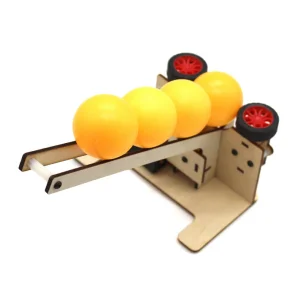
ODM Teaser Fun Science small production of primary and secondary school students stem education movement Energy driving model Manufacturers, Factory
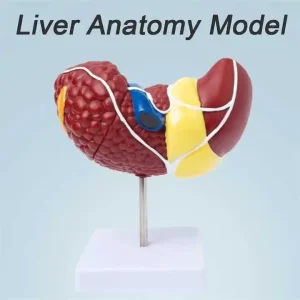
Wholesale Human Pathological Liver Model Anatomical Model Pathological Liver Features for Medical School Study and Research Factory, Pricelist
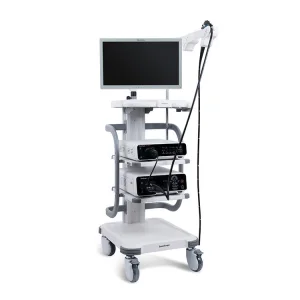
Wholesale High Definition Images Video Gastroscope / Colonoscope System with Trolley and Monitor Factories, Quotes
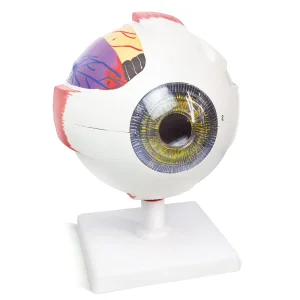
China 6X Enlarged Human Eye Anatomical Model, 6 Parts Eyeball Anatomical Model Showing Optic Nerve Cornea Iris Lens and Vitreous Body with Detachable Stand for Medical Classroom Teaching Research Manufacturer, Pricelist
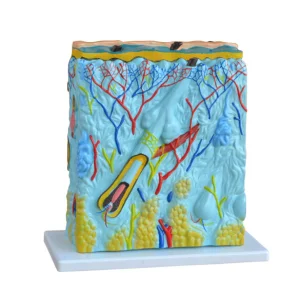
China Magnified skin model Manufacturer, Factory
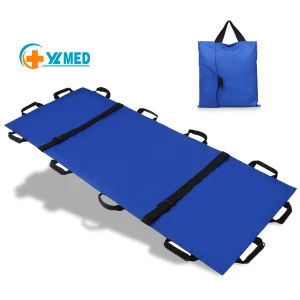
OEM Portable Class I Transport Stretcher 12 Rubber Handles Carrying Bag Dog/Gurney Animal Mover Emergency Casualty China Manufacturer, Quotes