
OEM Portable Suction Unit Factories & Quotes
Factory-direct sourcing intelligence for importers, distributors, EMS networks, hospitals and home-care brands comparing portable phlegm suction units, spare parts, regulatory documentation and scalable private-label programmes.
◈Portable Suction, Emergency Transfer & Respiratory Teaching Products
Eight products from the supplied Yulin Medical catalogue are shown first because they support portable suction programmes, airway training, patient transfer and respiratory anatomy education. Every product URL is retained so buyers can request model-specific quotes, MOQ, packaging and compliance documents.
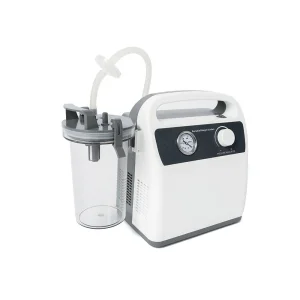
OEM Medical Sputum Aspirator Suction Unit Pump Portable Phlegm Suction Unit Manufacturer, Quotes
View product & request quote →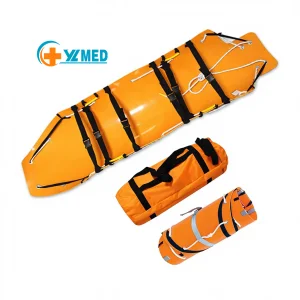
China Portable Folding Stretcher Aluminum Alloy Lightweight Foldable Design for Emergency Rescue and Ambulance Patient Transfer CE/ISO Manufacturer, Quotes
View product & request quote →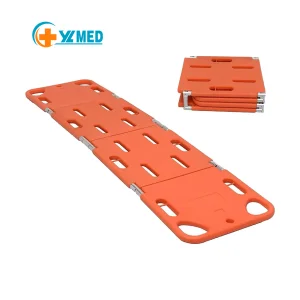
ODM Foldable Spine Board Stretcher Backboard for Patient, Transfer Backboard EMT Immobilization Portable Patient Transport Rescue Lightweight PE Plastics Ambulance Stretcher Factory, Factories
View product & request quote →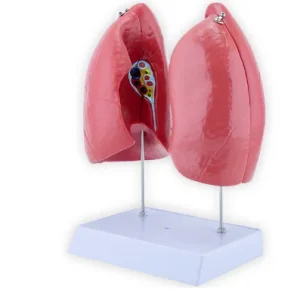
OEM The four-part model of human lung anatomy was demonstrated in medical teaching Manufacturer, Factory
View product & request quote →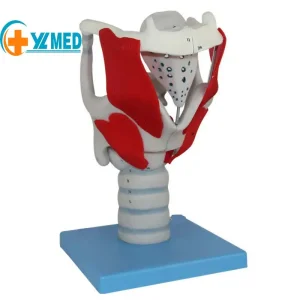
China Human organ education model anatomy discipline human larynx enlarged size anatomical model Factory, Service
View product & request quote →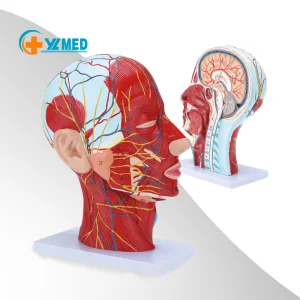
Wholesale Medical anatomical model human head neurovascular model with muscles teaching resource Manufacturer, Factory
View product & request quote →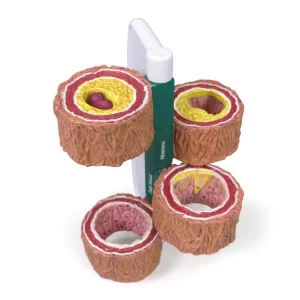
China Anatomicals - 4-Piece Artery Model, Replica of an Artery with Plaque for Human Anatomy and Physiology Education, Anatomy Model for Doctor's Offices and Classrooms, Medical Learning Resources Factory, Quotes
View product & request quote →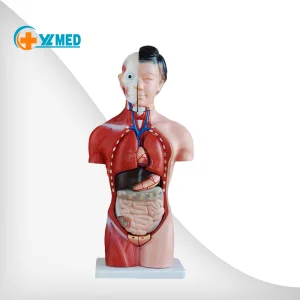
OEM Medical education 42CM female torso model 13 pieces Pricelist, Quotes
View product & request quote →◎Executive summary: the portable suction quote is a system, not a pump
Portable suction units sit at the intersection of airway management, infection prevention, transport medicine and home care. The buyer intent behind a search for OEM portable suction unit factories is rarely informational. It is commercial: shortlist a verified producer, compare an OEM quote, confirm canister and filter compatibility, and understand which documentation will be supplied before a tender or import registration.
The lowest unit price is a weak comparison. A reliable portable suction quote should expose the vacuum and flow performance at the stated voltage, battery chemistry and runtime, duty cycle, noise, canister type, overflow protection, tubing and filter specification, cleaning method, packaging, warranty and spare-parts plan. If those variables are missing, two quotes are not comparable.
Yulin Medical is a factory-based supplier founded in 1958 in Xinxiang, Henan, China, with ISO 9001 certification since 2008. Its catalogue spans ten medical and educational product lines, from anatomy models and nursing training items to hospital furniture, stretchers, spine boards and portable suction units. For distributors, that breadth can be useful: one commercial contact, consolidated inspection and mixed-category shipments.
This guide is written for procurement teams that need information gain, not another catalogue page. It explains demand patterns, macro solutions, technology direction, localisation, compliance evidence and the RFQ fields that make quotes comparable. It also keeps the supplied product images and URLs intact so a buyer can move from research to a model-specific request without losing the original product reference.
Quote comparison snapshot
- Maximum vacuum and free-air flow, with test conditions
- AC/DC input, battery runtime and recharge profile
- Canister volume, overflow shut-off and autoclavable parts
- Filter, tubing and catheter compatibility
- Noise, vibration, weight and carry configuration
- Label language, IFU, packaging and export carton
- Spare parts, warranty and response commitment
⌁Global procurement demand for portable suction units: four buyer realities
Demand is not one market. A portable suction unit bought for an ambulance, a nursing home and a dental clinic has a different job to do. The most useful RFQ starts with the clinical setting, because that setting determines the technical priority, documentation burden and commercial model.
Acute care, ICU and operating rooms
Hospitals compare vacuum stability, canister capacity, overflow protection, filter efficiency and cleaning protocols. They also need a spare-parts route and a clear answer on compatibility with existing tubing and wall suction systems.
EMS, ambulance and inter-hospital transport
Emergency services prioritise battery runtime, fast recharge, vibration resistance, vehicle mounting, 12 V or 24 V charging and a case that survives daily loading. Noise and weight become clinical issues during transport.
Home care, long-term care and palliative care
Home-care distributors look for quiet operation, simple controls, low carry weight, secure canister locks and packaging that survives parcel networks. Caregivers also need multilingual instructions and accessible training content.
Dental, veterinary and procedure rooms
Compact units are valued for splash resistance, disposable tip compatibility, quick changeover and easy cleaning. Veterinary buyers may need different canister sizes and a more robust housing for clinic use.
A fifth demand stream is preparedness and stockpiling: public health agencies, NGOs, military units and distributors build reserve stocks of suction units, canisters, tubing and filters. These buyers ask about shelf life, storage temperature, training material and whether spare parts remain available after the initial delivery.
Illustrative procurement priority signals
These bars are illustrative sourcing priorities based on common OEM RFQ criteria. They are not market-size estimates or clinical performance claims.
▣Macro industry solutions: from spot quote to repeatable OEM platform
Portable suction sourcing becomes expensive when every order is treated as a new project. The alternative is a repeatable platform: a qualified core unit, a defined accessory matrix and a documentation pack that can be localised for each market.
Factory-direct OEM programme
A factory-direct programme aligns the unit configuration, private label, packaging, manual language, barcode and master carton before the first production run. This is where an OEM portable suction unit factory adds more value than a trading intermediary: changes are controlled at the source.
Regional kit and localisation strategy
Buyers can import the core unit and localise selected consumables, power cords, manuals or service kits close to the market. This reduces freight on low-value accessories and helps distributors respond to tender specifications without redesigning the device.
Mixed-catalogue consolidation
Yulin Medical’s ten product lines allow distributors to combine portable suction units with anatomy models, CPR and nursing training products, hospital furniture, stretchers and spine boards. One inspection plan and one shipment can reduce total supplier management cost.
⌁Technology roadmap: what a 2025+ portable suction platform should include
The technical direction is clear: quieter pumps, smarter battery management, safer canisters, better filtration and serviceable modules. The exact specification should follow the clinical setting, not a generic “maximum power” claim.
Qualified core
Brushless motor options, dual AC/DC power, Li-ion battery pack, secure canister lock, overflow protection and a housing that can be cleaned between patients.
Clinical integration
Closed suction compatibility, hydrophobic filters, quiet exhaust, rail or vehicle mounting, and accessories that match existing hospital or EMS workflows.
Connected compliance
Run-hour logs, battery health indicators, service alerts and digital manuals can support fleet management without adding unnecessary complexity to the device.
Circular design
Replaceable battery packs, durable canisters, recyclable packaging and lower noise all contribute to lifecycle value and stronger tender scoring.
Motor, pump and suction performance
Buyers should ask for vacuum and free-air flow at the actual operating voltage, not only a headline number. Duty cycle, continuous-operation limits, altitude derating and canister fill rate matter in real use. A slightly lower headline vacuum with stable performance and lower noise may be the better clinical choice.
Battery and charging strategy
Battery runtime claims should be tied to a defined load and temperature. Fast charging can be valuable for EMS fleets, while home-care users may prefer a simple external charger and a battery that can be replaced without returning the whole unit. Lithium battery shipping rules also affect packaging, labels and freight choices.
Canister, tubing and infection control
Canister size affects carry weight, fill frequency and splash risk. Overflow protection, filter placement and ease of disassembly influence infection-control workflows. Single-use and reusable accessories should be specified separately so the quote reflects the true cost per procedure.
Human factors and serviceability
Controls should be usable with gloves. Units should be stable when placed on a trolley, easy to carry and simple to clean. Service access to fuses, tubing, filters and battery packs reduces downtime and supports local technical partners.
Future outlook: connected, quieter and more circular
- Service models that combine spare parts, filters and training
- Modular consumables that simplify regional approvals
- Lower noise and vibration for home care and transport
- Digital documentation and battery health tracking
- Sustainability criteria in hospital tenders
- Longer spare-parts availability commitments
◎Global commercial and industrial status: what buyers should expect in 2025
The global supply base for portable suction units is broad, but not uniform. Recent public-health pressure, home-care growth and emergency preparedness spending have increased demand for reliable, serviceable units and documented accessories. At the same time, buyers face wide quote dispersion because “similar” products may use different motors, batteries, canisters and filters.
China’s medical device supply base
China offers dense component and assembly clusters, mature export documentation and flexible MOQ for OEM programmes. The challenge is supplier vetting: not every workshop is a factory, and not every catalogue claim is supported by a product-specific file.
Quote dispersion and hidden cost
Quotes can vary widely for apparently similar portable suction units. Differences often sit in battery quality, pump life, canister seals, filter grade, packaging and whether spare parts are included. A low sample price can become expensive after landed cost and after-sales are added.
Logistics and battery rules
Lithium battery packs affect freight mode, labelling and carrier acceptance. Buyers should confirm battery capacity, package marking, drop-test packaging and whether the unit ships with the battery installed or separate. Air, sea and express options can change the delivered cost materially.
Yulin Medical’s long operating history and ISO 9001 system provide a useful baseline for vetting an OEM portable suction unit factory. The next step is always product-specific: request test reports, sample evaluation, label review and a written spare-parts list before placing a volume order. Strong suppliers welcome this process because it prevents disputes later.
✓Localisation support and compliance assurance
Compliance is not a sticker on a carton. It is a chain of design control, test evidence, labelling, instructions for use, packaging and post-market support. For portable suction units, the chain must also cover batteries, filters and accessories.
Regulatory file readiness
Request a documentation matrix before quoting: quality system certificate, product test reports, declarations, labels, IFU, packaging drawings and spare-parts list. Product-specific certification should always be verified for the destination market.
Label, IFU and language
Labels and manuals should use the required market language, symbols and warnings. A distributor may also need private-label branding, local importer details, barcodes and market-specific packaging claims.
Electrical and plug variants
Confirm input voltage, plug type, charger configuration and battery shipping state. A 100–240 V adapter may simplify inventory, but regional cords, fuses and language-specific chargers still need control.
Spares, training and after-sales
Filters, canisters, tubing, fuses, battery packs and seals should be quoted as service items. Training videos, troubleshooting sheets and response commitments help distributors support clinicians without guesswork.
Yulin Medical’s ISO 9001 certification since 2008 is a quality-management signal, not a substitute for product registration. Buyers should ask for product-specific documents and confirm the regulatory pathway for their market. This is especially important where a portable suction unit is classified as a medical device and where electrical safety, EMC or battery transport rules apply.
↗How to request OEM portable suction unit quotes
A good RFQ reduces back-and-forth and exposes differences between factories. Send the clinical use, target market, annual volume, accessory plan and documentation requirements in one package.
Define clinical use
State whether the unit is for ambulance, ICU, dental, veterinary, home care or stockpile use. Define required vacuum, flow, runtime, noise and weight targets.
Specify consumables
List canister size, tubing, filters, catheters, carry bag, charger and mounting options. Separate reusable and single-use items so pricing is transparent.
Request documentation
Ask for certificates, test reports, labels, IFU, packaging artwork and spare-parts list. Request the file matrix rather than a generic “CE available” statement.
Compare landed cost
Add packaging, freight, battery handling, duties, warranty reserve and spare-parts coverage. Evaluate sample quality with clinicians before approving volume production.
Send this RFQ checklist to Yulin Medical’s export team: target market and registration pathway; required vacuum, flow and runtime; canister and filter specification; voltage, plug and manual language; private-label packaging; annual volume and first-order quantity; sample date; delivery port; warranty and spare-parts requirements. The team is online seven days a week and typically replies within 24 hours with catalogs, specifications and shipping options.
◈Inside Yulin Medical: 60+ years of manufacturing for mixed medical catalogues
Henan Yulin Edu. Project Co., Ltd. (Yulin Medical) was founded in 1958 and operates from No. 8 Daoqing Road, Industry Park, Hongqi District, Xinxiang, Henan, China. Registered capital is RMB 120 million, with more than 200 professional staff. Its quality management system has been ISO 9001 certified since 2008, and the company’s stated motto is “quality first, service first”.
Yulin Medical integrates scientific research, production and sales across ten specialised product lines: anatomy models; biology prepared slides and accessories; dental tools and equipment; general teaching models; hospital furniture and equipment; hospital machines and tools; medical apparatus and instruments; medical nursing models; skeleton models; and suture pads and kits. Portable suction units and emergency transfer products sit naturally within this clinical and educational range.
For overseas distributors, the practical advantage is consolidation. A single order can combine portable suction units with stretchers, spine boards, anatomy models, CPR and nursing training products and hospital furniture. Private-label packaging, product presentation and one-stop coordination are available through the in-house design and export teams.
Buyers should still perform supplier due diligence: request samples, review product-specific documents, confirm battery and accessory specifications, and audit packaging before volume production. A long company history and ISO 9001 system reduce process risk, but they do not replace product-level verification.
Factory facts for procurement files
- Founded: 1958, Xinxiang, Henan, China
- Registered capital: RMB 120 million
- Team: 200+ professional staff
- Quality system: ISO 9001 since 2008
- Product scope: 10 medical and educational lines
- OEM: private label, packaging and presentation support
- Service: export team online 7 days a week
- Reply commitment: typically within 24 hours
?Q&A: OEM portable suction unit factories, quotes and verification
Straight answers for procurement managers comparing portable suction units and mixed medical catalogues.
Is Yulin Medical a manufacturer or a trading company?
We are a manufacturer. Henan Yulin Edu. Project Co., Ltd. was founded in 1958 and operates its own factory in Xinxiang, Henan, China, with more than 200 professional staff. For one-stop orders, we also coordinate a stable network of long-term partner factories.
What quality certification does Yulin Medical hold?
Our quality management system has been ISO 9001 certified since 2008. Product-specific documentation can be provided on request for tenders and import registration. Buyers should verify the exact certificate, scope and product-specific reports required for their market.
Do you support OEM, private label and custom packaging?
Yes. Our in-house design team develops private-label packaging and product presentation for distributors to increase shelf appeal and resale value. For portable suction units, OEM discussions can cover label artwork, manual language, barcode, master carton, accessories and sample approval.
How do I choose the right CPR training manikin?
Match the manikin to the learner group (adult, child or neonatal), check that real-time feedback covers compression depth, rate and ventilation, confirm alignment with current AHA resuscitation guidelines, and decide whether AED training integration is required. For advanced life-support programmes, an ACLS simulator with embedded scenarios offers more assessment value than a basic torso.
How quickly will I receive a reply?
Our export team is online 7 days a week and typically replies within 24 hours with catalogs, specifications and shipping options.
What affects a portable suction unit quote most?
Battery chemistry and runtime, pump specification, canister and filter type, accessories, packaging, documentation, MOQ, warranty and shipping method. A quote should state what is included and what is optional, especially for tubing, filters and spare canisters.
Can you supply spare parts, filters and canisters?
Spare-parts availability should be confirmed in the quotation. Request a list covering filters, tubing, canisters, seals, fuses, chargers and battery packs, together with recommended stocking quantities for your market.
How should we verify suction performance?
Ask for vacuum and flow test data at the stated voltage, then validate a sample under your own clinical protocol. Check continuous-operation behaviour, canister fill rate, noise, overflow protection and accessory compatibility. Do not rely on a single headline number.
Can you support local voltage, plug, label and manual requirements?
Yes, these should be defined in the RFQ. Provide the destination market, required language, plug type, input voltage, importer details and any labelling symbols required by your regulatory pathway.
How are lithium batteries handled for export?
Battery capacity, shipping state and package marking must be confirmed before booking freight. Carriers may require specific documentation or restrict air shipment. Yulin Medical’s export team can coordinate with your freight forwarder once the battery specification is fixed.
▦Additional OEM Teaching & Clinical Models from the Supplied Catalogue
These eight products complete the supplied product reference. Each image and product URL is retained for direct quotation, catalogue review and mixed-category sourcing.
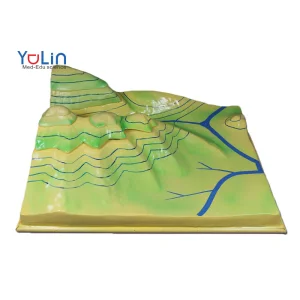
ODM 3D Contour Model Contour Lines on a Topographic Map Model Geographical Instrument Geography Equipment Teaching Home Office Manufacturer, Quotes
View product & request quote →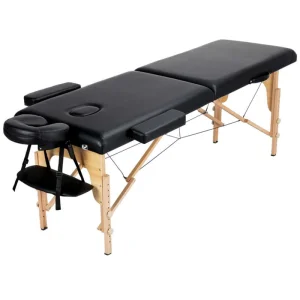
ODM Cheap Price Massage Beauty Table Beauty Salon Massage Bed Spa Massage Cover Bed Factory, Quotes
View product & request quote →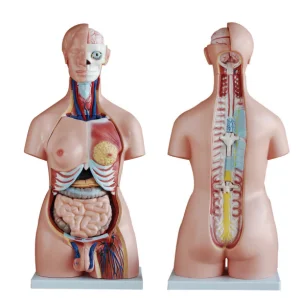
OEM 40 male and female 85CM trunk models Manufacturers, Service
View product & request quote →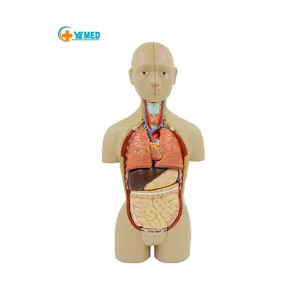
ODM 16 Part Torso Anatomical Model of Human Organs Assembled Trunk Model of Human Visceral Structure Human Torso Body Anatomy Model Factories, Service
View product & request quote →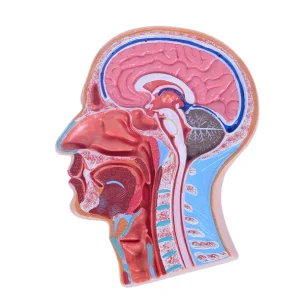
OEM Model of midhead section Factories, Service
View product & request quote →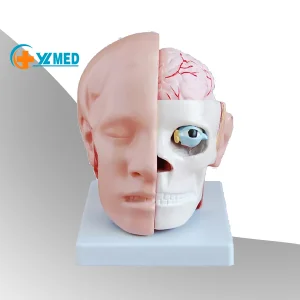
ODM Teaching human head anatomy with cerebral artery model Factory, Pricelist
View product & request quote →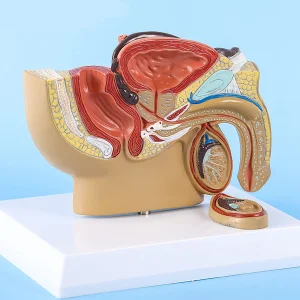
China Wooden or plastic box sets common zoology, botany, microscopes, microbiology, preparing slides for medical education Factory, Factories
View product & request quote →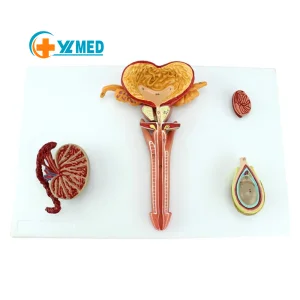
Wholesale High Standard PVC Manikin Medical Science Anatomical Model of the Male Reproductive System 1 Part for School Use Manufacturer, Factory
View product & request quote →↗Need a Factory Quote, Catalogue or Tender Package?
Tell us your target market, clinical use, annual volume and required documentation. The Yulin Medical export team will recommend suitable portable suction and mixed-catalogue models, share specifications and propose a shipping plan.