
OEM Portable Patient Monitor Quotes & Service
Factory-direct multiparameter monitoring for distributors, hospitals and tender teams — with 24-hour engineering response, full OEM/ODM flexibility and export-ready compliance documentation.
Complementary Products Distributors Bundle with Monitor Orders
Portable patient monitors rarely ship alone. Distributors and hospital groups consolidate monitors with teaching models, dental equipment and rehabilitation aids to fill containers and reduce landed cost per unit. Every listing below links to factory pricing and OEM terms from our Xinxiang base.
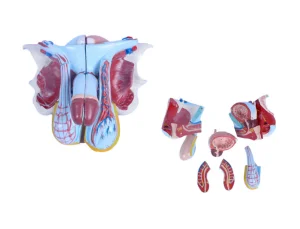
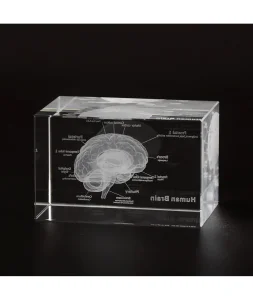
Wholesale Ultrassist 3D Human Brain Glass Model Laser Etched Anatomical Model for Home and Office Decoration Neurology Gifts Manufacturer, Service
Request Quote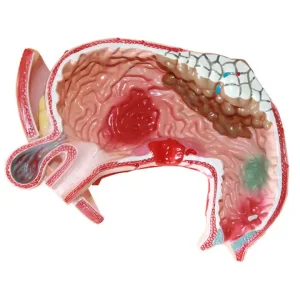
OEM Medical research stomach anatomical model pathological stomach and stomach disease model Manufacturers, Factories
Request Quote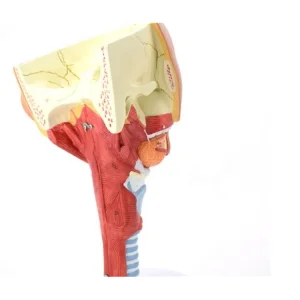
Wholesale Medical science Human anatomy teaching resources Plastic Human Head with Pharynx Muscles Anatomical Model Factory, Service
Request Quote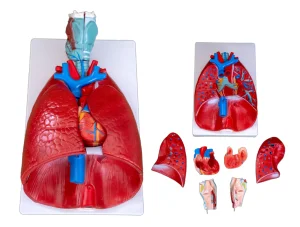
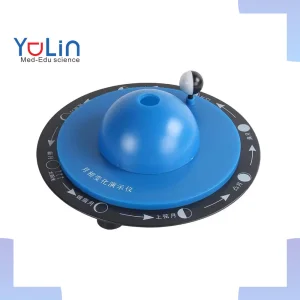
ODM Diameter 25cm Moon Phase Change Demonstration Instrument Environmental protection PVC Material Moon Phase Change Causes Manufacturer, Manufacturers
Request Quote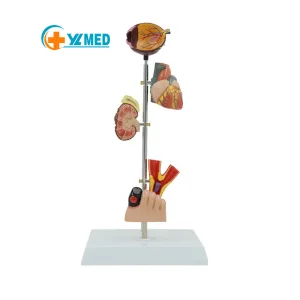
OEM Portable Patient Monitor Quotes & Service: A Procurement-Grade Buyer's Guide
Portable monitors have moved from niche accessory to core category in hospital procurement. This guide shows how to compare OEM quotes on engineering, compliance and lifecycle cost — not unit price alone.
Emergency departments, ambulance services, step-down wards, outpatient clinics and remote-monitoring programs all need compact multiparameter monitors that travel with the patient while keeping data continuous. For distributors, the category creates recurring revenue through accessories, batteries and service contracts. For hospital groups, it offers a route to standardize monitoring across departments at a predictable cost of ownership — provided the quote is read correctly.
This guide is published by Henan Yulin Edu. Project Co., Ltd. — a manufacturer founded in 1958 and ISO 9001 certified since 2008, operating from No. 8 Daoqing Road, Industry Park, Hongqi District, Xinxiang, Henan, China, with more than 200 professional staff and RMB 120 million in registered capital. It is written for procurement managers, biomedical engineering teams and distributor product managers who need every OEM portable patient monitor quote to be comparable on engineering and compliance, not just price. For one-stop orders we also coordinate a stable network of long-term partner factories, so monitor programs can be bundled with teaching, dental and hospital equipment.
- A parameter matrix: ECG leads, SpO2 technology, NIBP cuff sizes and EtCO2 options
- Certification evidence: ISO 13485, IEC 60601-1 and EMC reports matched to your market
- Battery runtime measured under continuous multiparameter use, not standby figures
- Warranty terms, spare parts list and biomedical service training options
- MOQ, lead time and Incoterms stated for the exact configuration quoted
- Packaging, labeling and IFU localization confirmed in writing before production
Key takeaway
A portable patient monitor quote is only comparable when the parameter set, software version and certification file are identical. Ask every supplier for the same matrix — then compare total landed cost, including probes, cuffs, batteries and freight, rather than the headline unit price.
Portable Patient Monitor Technology Roadmap: 2025–2030
The next five years of portable monitoring will be defined less by the box and more by the data pipeline behind it. Buyers signing quotes today should price the upgrade path in — because a monitor purchased in 2025 will be expected to interoperate with systems deployed in 2030.
Multiparameter Sensing
Low-perfusion SpO2 algorithms, motion-tolerant NIBP measurement and single-lead arrhythmia detection are becoming baseline expectations. OEM programs should specify sensor brands and firmware version locks so clinical performance is reproducible batch after batch.
Wireless Interoperability
Wi-Fi 6 and Bluetooth LE 5.x radios, combined with HL7 v2.x, FHIR and MQTT support, let portable monitors feed EMRs, central stations and cloud dashboards. For distributors, interoperability is now a tender-scoring item, not a nice-to-have.
AI-Assisted Decision Support
Edge AI is shifting from novelty to utility: early warning scores computed on-device, alarm-fatigue reduction through signal quality indices, and predictive battery or component health. Expect AI features to be bundled into firmware subscriptions rather than sold as separate hardware.
Power & Portability
Hot-swap battery architectures, USB-C PD charging and 8–12 hour runtime under continuous multiparameter use define the new portability benchmark. Weight targets below 2.5 kg for 10-inch class devices are already achievable in current-generation designs.
Cybersecurity by Design
IEC 81001-5-1 compliance, secure boot, signed firmware updates and encrypted data channels are entering procurement checklists. A monitor without a disclosed security patch policy is a liability in any hospital network — and an automatic disqualifier in many tenders.
Remote & Home Monitoring
Cellular-enabled monitors and remote patient monitoring (RPM) platforms extend surveillance beyond the ward. For OEM buyers this is the fastest-growing configuration request — and the one most dependent on regional telecom certification and local data rules.
Future outlook: 2028–2030
Expect convergence between portable monitors and wearable sensors, with the bedside device acting as a hub that aggregates ambulatory data, auto-escalates alarms and reconciles measurements with the EMR. Procurement teams that write upgrade clauses — firmware support windows, interface licenses and cybersecurity patch commitments — into today's OEM agreements will avoid premature replacement cycles later.
From Emergency Department to Home Care: Six Macro Solutions
One monitor platform rarely fits every setting. These six deployment scenarios shape the parameter mix, housing and certification route that should appear in your next quote.
Emergency Departments & EMS
Rugged housings, sunlight-readable displays, defibrillation-proof ECG front ends and fast cuff inflation define the EMS configuration. Pre-hospital monitors should log continuous trends for structured handover to ED teams.
ICU Step-Down & General Wards
Continuous surveillance with central-station connectivity, alarm escalation policies and 24–72 hour trend storage. Step-down units typically standardize on 10–12 inch screens with optional EtCO2 to cover higher-acuity overflow.
Operating Rooms & Recovery
Configuration adds invasive blood pressure channels, capnography and higher-resolution trending. OEM programs should support parameter licensing so one hardware platform can serve OR and general-ward channels without separate certification files.
Primary Care & Outpatient Clinics
Cost-optimized 5–8 parameter configurations with simplified UI, multilingual menus and low maintenance. These units are often the first monitoring device a clinic owns — so training materials and probe durability matter as much as price.
Disaster Response & Field Hospitals
Battery-first design, IP-rated enclosures, solar-compatible charging and minimal consumables. Field deployments also value interoperability with triage tags and mass-casualty documentation workflows.
Telehealth & Home Care Programs
Cellular or Wi-Fi enabled monitors paired with cloud dashboards enable remote patient monitoring reimbursement models. Home-use variants must meet IEC 60601-1-11 and remain operable by non-clinicians, including caregivers with limited training.
Localized Support & Compliance: What to Verify Before You Sign
A monitor is only exportable when its documentation matches the destination market. Two identical-looking units can carry very different regulatory status — verify the file, not the brochure.
Quality System: ISO 9001 & ISO 13485
Our quality management system has been ISO 9001 certified since 2008. Monitor programs run under ISO 13485 discipline with device history records, component traceability and CAPA — the documentary backbone every importer should audit.
Electrical Safety & EMC
IEC 60601-1 (general safety), IEC 60601-1-2 (EMC) and applicable particular standards form the technical file core. Test reports from accredited laboratories should be verifiable and current — check the issue date against the firmware version quoted.
Market Access: CE, UKCA, FDA, NMPA
Each jurisdiction demands different evidence. CE MDR (EU), UKCA (UK), FDA 510(k) (US) and NMPA (China) routes should be stated explicitly in the quote, and MDSAP readiness is increasingly requested in tenders across Asia-Pacific and the Americas.
Software & Security Documentation
IEC 62304 software lifecycle records and IEC 81001-5-1 security documentation are now requested by hospital IT departments alongside clinical certificates. Ask for the firmware support window and the vulnerability disclosure process in writing.
Localization: Language, Power, Culture
Language packs, 100–240 V power compatibility, regional plug standards and local date/time and unit conventions. UI language files are available for most major markets, and IFU translation can be prepared with the private-label program.
Service Infrastructure
Spare parts kits, board-level exchange programs, biomedical training and remote diagnostics. Ask for the spare parts price list with the first quote — availability two years after delivery matters more than a one-off discount.
Tender document checklist
China Factory 4.0: Supply Chain Resilience & Efficiency at Yulin Medical
Factory 4.0 is not about robots replacing people — it is about making quality measurable at every station. At our Xinxiang base, production, inspection and export documentation run as one digital workflow.
Digital Process Control
MES-driven work orders, automated optical inspection on SMT lines and serialized device records let us trace every monitor board to its component lot and test data — a prerequisite for hospital audits and MDR technical files.
Multi-Source Resilience
Critical semiconductors are dual-sourced, with strategic buffer stock for displays, batteries and sensors. This protects OEM customers from single-supplier shocks — the main cause of missed launch windows in monitoring programs.
Quality Gates & Burn-In
100% incoming inspection, in-process functional tests, aging runs and final safety testing before packing. Defect data feeds supplier scorecards monthly, so recurring issues are corrected at the source, not screened out at the end.
Consolidation & Export Engineering
Mixed-category orders are consolidated into one shipment with one point of contact — from monitors to training models and hospital furniture — using export-grade packaging designed for long sea routes and multi-leg inland delivery.
In-House Design Team
Private-label packaging, IFU localization and product presentation are developed in-house, so distributors receive market-ready goods instead of generic cartons. This is the same team that supports OEM monitor branding and boot-screen customization.
60+ Years of Supply Stability
A factory founded in 1958, RMB 120 million in registered capital and more than 200 professional staff, plus a long-term partner network, keep lead times predictable on repeat orders — the metric distributors care about most after year one.
Quotes, Tender Packages and Lifecycle Terms for Global Buyers
Global buyers evaluate OEM portable patient monitor quotes on five dimensions: configuration, certification, commercial terms, continuity and consolidation. Our five-step process documents each one.
Share Requirements
Send target market, parameter configuration, quantities and certification needs. Include the tender reference if applicable.
Quote & Proposal
Receive a specification-matched quote with certificates, packaging options and shipping scenarios, typically within 24 hours.
Sample Evaluation
Test pre-production samples against your clinical protocol before bulk confirmation, with your instructors or biomedical team.
Production & QC
Manufacturing and inspection follow ISO 9001-certified process controls with documented QC gates and device history records.
Export & Lifecycle
Export packing, shipping coordination, spare parts kits and responsive after-sales support across your warranty period.
Commercial terms, stated upfront
MOQ is quoted by configuration, with NRE applied only where custom tooling is required. Standard warranty runs 12–24 months, Incoterms include FOB, CIF and DDP, and spare-parts pricing is documented with the first order. Where tenders require bank guarantees or pre-shipment inspection, our export team prepares the full document set before production starts — so the shipment is never held for paperwork.
Additional OEM & ODM Lines for Consolidated Purchasing
Combine your next portable patient monitor order with these categories — produced under the same ISO 9001 quality system, packed for export and shipped through one point of contact.
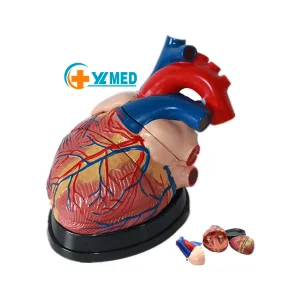
ODM Teaching model 3x enlarged human heart anatomy model Human organ heart research Educational medical model Quotes, Service
Request Quote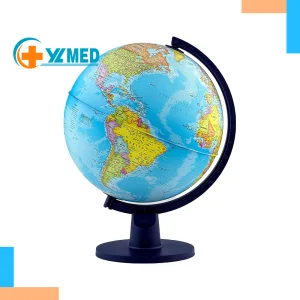
Wholesale 32cm Geography Teaching Equipment Factory Price World Earth Map Rotatable Tellurion with PP Support and Pedestal Globe Manufacturer, Pricelist
Request Quote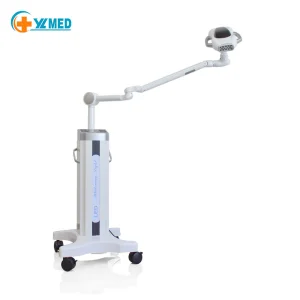
Wholesale Cold-light tooth whitening instrument for dentistry oral clinic beauty salon blue LED cold-light whitening instrument Quotes, Service
Request Quote
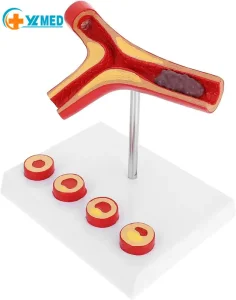
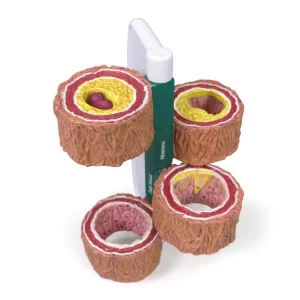
Wholesale Human Atherosclerosis Cardiovascular Medical Model Blood Vessel Anatomical Model Medical Teaching Supplies for School Students Pricelist, Quotes
Request Quote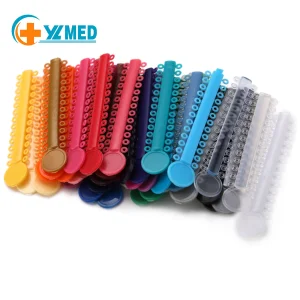
ODM Cross-border dental ligature ring Orthodontic ligature ring rubber band color mixed color transparent ligature ring set of 40 pieces Factory, Pricelist
Request Quote
FAQ: OEM Portable Patient Monitor Quotes & Service
Straight answers to the questions procurement managers and distributor product teams ask most before placing a first order.
Is Yulin Medical a manufacturer or a trading company?
We are a manufacturer. Henan Yulin Edu. Project Co., Ltd. was founded in 1958 and operates its own factory in Xinxiang, Henan, China, with more than 200 professional staff and RMB 120 million in registered capital. For one-stop orders, we also coordinate a stable network of long-term partner factories, so monitor programs can be bundled with teaching, dental and hospital equipment from one accountable supplier.
What quality certifications do you hold for monitoring products?
Our quality management system has been ISO 9001 certified since 2008, and monitor programs are documented to ISO 13485 discipline. Technical files are built around IEC 60601-1, IEC 60601-1-2 and applicable particular standards. Product-specific documentation — test reports, declarations and certificates — is provided on request to support tenders and import registration in your country.
Do you support OEM, private label and custom packaging?
Yes. Our in-house design team develops private-label packaging, IFU localization and product presentation for distributors, helping increase shelf appeal and resale value in your market. On monitor programs, OEM boot logos, firmware branding and multilingual UI packs are available at defined MOQs.
What is the MOQ and typical lead time for portable patient monitor orders?
Standard configurations typically start from small trial quantities and step down in unit cost at container volume; OEM branding and custom battery packs carry defined MOQs quoted per project. Sample lead time is usually 7–15 days, and bulk production commonly runs 20–35 days after sample approval, depending on configuration and seasonality.
How do you support service and spare parts in my country?
We ship spare parts kits with every OEM program — batteries, cuffs, SpO2 probes and power boards — and support board-level exchange to keep units in service. Biomedical training can be delivered at our factory or remotely through video sessions, and our export team answers service queries 7 days a week, typically within 24 hours.
How do I choose the right portable monitor configuration?
Start with the clinical setting: EMS needs rugged, defibrillation-proof units; step-down wards need central-station connectivity; clinics need cost-optimized basic parameters. Then confirm the certification route for your market, the battery runtime required per shift, and whether EtCO2 or IBP will be needed within the next 24 months — buying that capability upfront usually costs far less than retrofitting later.
How quickly will I receive a reply?
Our export team is online 7 days a week and typically replies within 24 hours with catalogs, specifications, certificate files and shipping options — whatever your time zone.
Request Your OEM Portable Patient Monitor Quote Today
Tell us your target market, quantities and certification requirements. Our product specialists will recommend suitable configurations, share detailed specifications and propose the most economical shipping plan — typically within 24 hours.
Email: [email protected] | Phone: 0086-13503800666 | WhatsApp: +86 135 0380 0666