
OEM Nursing Skills Training Dummies & Medical Training Products
Eight high-demand items from our nursing, anatomy, emergency and rehabilitation ranges. Every SKU below is available with private-label packaging, custom manuals and mixed-container consolidation.
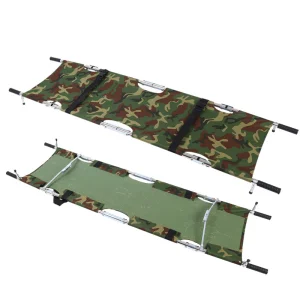
ODM Space-Saving Folding Rescue Stretcher,Patient Transport with Handles,Portable Stretcher for Emergency,160kg/352lbs Capacity Factories, Pricelist
View Details & Pricelist →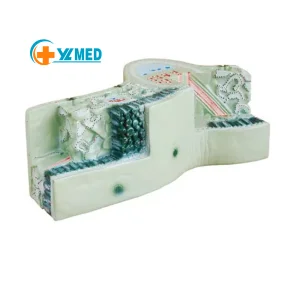
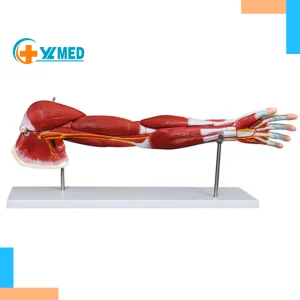
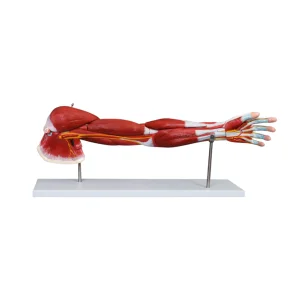
ODM life size arm model anatomy model scientific arm anatomical muscle 7 parts numbered shows muscles of the shoulder arm and hand Manufacturer, Pricelist
View Details & Pricelist →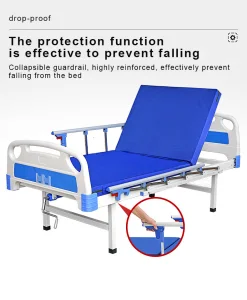
ODM Hospital outpatient bed nursing bed Hospital furniture sales of ordinary beds Manufacturer, Factory
View Details & Pricelist →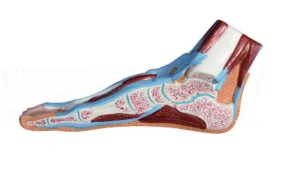
ODM Sagittal anatomical model of the natural great foot Manufacturers, Service
View Details & Pricelist →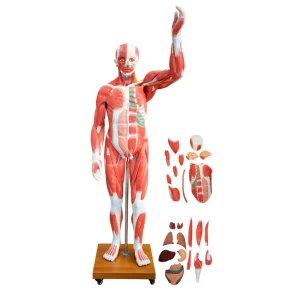
An OEM Nursing Skills Training Dummy Source Built Over Six Decades
Henan Yulin Edu. Project Co., Ltd. — trading as Yulin Medical — has manufactured educational and medical training equipment in Xinxiang, Henan, China since 1958. Our quality management system has been ISO 9001 certified since 2008.
For procurement teams sourcing a nursing skills training dummy, an OEM inquiry is rarely a single-line purchase. It is a programme: basic-life-support torsos that must survive hundreds of student cycles, airway management heads that need replacement parts in three years, IV and injection pads that consume consumables every term, anatomy models that must match a national curriculum, plus hospital beds, stretchers and mobility aids that ship in the same container. A manufacturer that can only supply one of those categories forces you into multi-supplier administration, inconsistent documentation and split shipments.
Our answer is a consolidated product architecture across ten specialised lines. Registered capital of RMB 120 million and more than 200 professional staff support product development, tooling, moulding, assembly, inspection and export under one roof, backed by a stable network of long-term partner factories for one-stop tenders. In-house designers produce private-label packaging and product presentation so that distributors increase resale value instead of competing on price alone.
We work from a simple operating principle: quality first, service first. Every batch is produced and inspected against documented criteria, and every export order is accompanied by the paperwork a buyer needs — specifications, packing lists, material declarations and, where required, market-access documentation.
What Institutional Buyers Actually Evaluate Before Ordering
Nursing education has become a high-throughput, auditable discipline. A programme enrolling thousands of students per semester cannot rely on two high-fidelity manikins — it needs a tiered equipment ecosystem, and procurement committees now score suppliers against criteria far beyond unit price.
Curriculum & Guideline Alignment
Buyers check whether a dummy supports the specific checkpoints their curriculum assesses — INACSL simulation standards, AHA or ERC resuscitation guidance, and national competency frameworks. A manikin that cannot be scored at the bedside is a liability, not an asset.
Throughput Versus Cost per Training Hour
Value is measured as cost per student-training-hour, not cost per unit. Class size, lab timetable, cleaning turnaround and wear-part replacement intervals all enter the equation before an order is signed.
Consumable & Spare-Part Ecosystem
Airway heads, face skins, injection pads, suture layers and IV discs are the recurring cost line. If a model's wear parts cannot be restocked, the unit becomes dormant inventory within three years — a point experienced buyers raise in the first meeting.
Objective Data & OSCE Scoring
Real-time feedback on compression depth, recoil, ventilation volume and hand position — with logs that can be exported for objective structured clinical examinations — has moved from premium feature to baseline expectation in secondary and tertiary education markets.
Total Landed Cost, Not FOB Price
Freight, duty, port handling, inland distribution, installation, teacher training, warranty repairs and downtime are consolidated into total cost of ownership. Suppliers who cannot model these numbers lose tenders even when their unit price is lower.
Compliance Files & Tender Readiness
Public tenders routinely demand ISO 9001 evidence, declarations of conformity, material and RoHS statements, safety data sheets and origin certificates. A supplier unable to produce these documents stalls the whole procurement cycle.
Configurations by Buyer Type — From Classroom to Field Response
The same manufacturing platform serves very different buyers. Below is how nursing skills training dummies, task trainers and support equipment are typically configured for each market segment.
Nursing & Health Vocational Colleges
High-volume foundation labs: bed-bath and patient-handling simulators, injection and IV practice pads, catheterisation trainers, basic-life-support torsos and nursing beds configured as ward bays. Durable, repairable and repeat-orderable are the deciding factors.
University Medical Schools & Interprofessional Simulation Centres
Mixed-fidelity ecosystems: adult, child and neonatal ACLS simulators, AED trainers, airway management heads, anatomical and skeleton models, plus emergency immobilisation equipment for pre-hospital modules. Interoperability with existing audio-visual and debriefing systems matters.
Hospital Nursing Education Departments
In-service competency verification, annual resuscitation refreshers and emergency preparedness drills. Compact task trainers that can be wheeled between wards — rather than full-body manikins locked in a single room — deliver the highest return in this segment.
Emergency, Ambulance & Community Care Services
Field-realistic equipment: folding rescue stretchers, scoop stretchers, Kendrick extrication devices, shock-absorbing splints, CPR feedback devices and AED training units — evaluated on weight, one-person deployability and cleanability under real conditions.
Workforce Reskilling & Recruitment Agencies
Standardised training kits for internationally recruited nurses: a fixed bundle of task trainers, consumables and assessment checklists so candidates reach the same competency benchmark regardless of training site. Packaging and manuals are localised to the destination market.
OEM Brand Owners & Regional Distributors
Private label across the full catalogue: your logo on the manikin, your artwork on the carton, your SKU coding in the barcode, your warranty wording in the card. Tiered SKU architecture lets distributors serve both premium teaching hospitals and budget-conscious vocational schools.
From Basic Torso to Connected Simulation: Four Development Layers
Simulation technology is converging with sensing, data and software at the same time. Our roadmap is deliberately staged so that each layer remains usable — and repairable — without discarding the equipment a buyer already owns.
Layer 01 — Material Engineering
Platinum-cured silicone skins with antimicrobial additives, recyclable TPE blends and modular replaceable neck, chest and genital sections. The goal is longer service life between rebuilds and lower annual consumable spend.
Layer 02 — Sensing & Feedback
Calibrated compression depth and recoil sensors, ventilation volume sensing, hand-position detection and visual cue displays, plus wireless integration with AED trainers for complete BLS and ACLS scenarios.
Layer 03 — Data & Reporting
Wireless log export, LMS-compatible report formats and multi-manikin classroom oversight so instructors can score an entire cohort in one session instead of recording results on paper.
Layer 04 — Assisted Intelligence
Computer-vision assistance for technique scoring, augmented-reality anatomical overlays, and predictive maintenance that tells a lab which consumable to reorder before a course begins.
The Structural Forces Shaping Nursing Simulation Demand
Demand for nursing skills training dummies is not cyclical consumer spending — it is tied to workforce policy, accreditation and hospital safety targets. Three structural forces dominate the current landscape.
1. A persistent global nurse shortage. The World Health Organization has projected a global shortfall of roughly 5.9 million nurses by 2030 under current trends. Every country responding to that gap expands nursing intake — and every additional cohort requires additional practice capacity, which is precisely what simulation equipment provides.
2. Accreditation-driven documentation. Regulators increasingly require evidence that graduates performed specific skills before licensure. That shifts demand from "a manikin in the lab" to "a manikin that generates a record", which raises the technical specification for every tender.
3. Supply chain regionalisation. Buyers now dual-source critical training equipment and prefer suppliers who can hold stock, localise packaging and provide spare parts without long lead times. Manufacturing depth — moulds, tooling, in-house assembly — has become a competitive criterion in its own right.
North America
Highest specification for outcome measurement and documentation. Mature distributor structures and strong preference for suppliers who can support evaluation, training and warranty service locally.
European Union & UK
Regulatory-first purchasing: conformity documentation, material declarations and traceability are prerequisites. Public tender cycles are long but predictable, and multi-year framework agreements are common.
Middle East & North Africa
Project-driven hospital and university procurement with strong tender culture. Bilingual English–Arabic documentation and clearly defined after-sales responsibility are decisive in evaluation.
Asia-Pacific
The fastest-expanding buyer base as nursing colleges scale and simulation laboratories are newly built. Wide budget stratification creates demand for both premium and entry-level tiers within one market.
Latin America
Importer-led purchasing where Spanish and Portuguese packaging and manuals add measurable value. Payment terms and financing structure often outweigh small differences in unit price.
Sub-Saharan Africa
Aid-funded and donated-equipment programmes dominate. Durability, low maintenance cost and guaranteed consumable availability over a five-year horizon carry more weight than optional electronic features.
Documentation, Language and After-Sales Support That Clear Customs and Tenders
Exporting a nursing skills training dummy is as much a documentation exercise as a manufacturing one. Our compliance package is built so that your purchasing officer, customs broker and clinical trainer all receive what they need.
ISO 9001 Quality System
Certified since 2008 and applied from incoming material inspection through moulding, assembly, functional testing and pre-shipment AQL sampling. Certificates and scope statements are provided for tender submission.
Market-Access Documentation
Support with CE technical files and EU MDR classification, FDA registration assistance, UKCA readiness, and EU REACH / RoHS material declarations — scoped to the actual product category you order.
Language & Label Localisation
Packaging, user manuals, warning labels and warranty cards in English, French, Spanish, Portuguese, Arabic and Russian. Technical terminology is checked against the clinical vocabulary used in your market.
Electrical & Plug Adaptation
110V or 220V builds, region-specific plug types and voltage labelling for powered simulators, LED examination lights and charging units — validated before shipment rather than adapted on arrival.
Logistics & Customs Readiness
HS classification, commercial invoice, packing list, certificate of origin, Form E documentation, safety data sheets and export-grade protective packing for sea, rail and air freight.
After-Sales & Spare Parts
12-month warranty, recommended spare-part kits shipped with the first container, video-guided maintenance and an arrival inspection checklist so that any transit issue is documented and resolved quickly.
Complete Sourcing for Medical Education & Clinical Use
Ten specialised product lines let procurement teams source simulation, laboratory and hospital equipment from one accountable manufacturer instead of managing multiple suppliers.
A Transparent Six-Step Process for Overseas Buyers
From first enquiry to container delivery, every stage has a named contact and clear documentation so you can plan stock, tenders and training schedules with confidence.
Share Requirements
Send product types, quantities, target market, accreditation context and any tender or certification conditions you must satisfy.
Product Matching & Proposal
Receive recommended models, full specifications, packaging options, MOQ guidance and the most economical shipping plan.
Sample Evaluation
Test samples with your instructors or clinicians, verify feedback accuracy and confirm the tier that fits your curriculum.
OEM Design & Packaging
Our in-house team develops your private-label artwork, manual, warranty card and SKU coding before production starts.
Production & Quality Control
Manufacturing and inspection follow our ISO 9001 quality management system, with pre-shipment sampling and photo reporting.
Export, Training & Support
Protective export packing, customs documentation, delivery coordination, video-based handover and responsive after-sales service.
Anatomy, Education & Clinical Training Models for OEM Programmes
Further items from the Yulin Medical catalogue — available individually, as mixed pallets, or bundled into a complete nursing laboratory package.
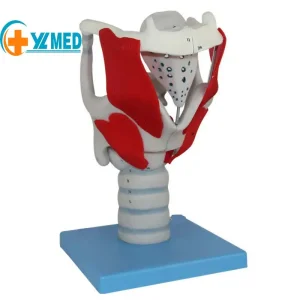
China Human organ education model anatomy discipline human larynx enlarged size anatomical model Factory, Service
View Details & Pricelist →
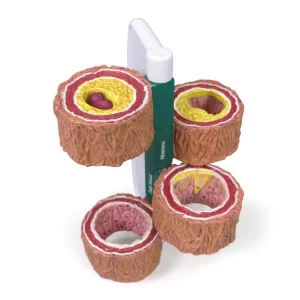
China Anatomicals - 4-Piece Artery Model, Replica of an Artery with Plaque for Human Anatomy and Physiology Education, Anatomy Model for Doctor's Offices and Classrooms, Medical Learning Resources Factory, Quotes
View Details & Pricelist →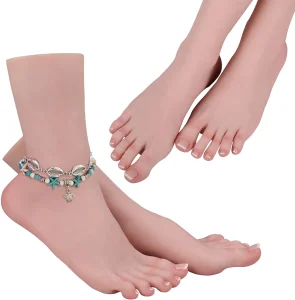
Wholesale Realistic silicone feet 1:1 life-size silicone female foot mannequin jewelry display tattoo practice art collection Manufacturer, Quotes
View Details & Pricelist →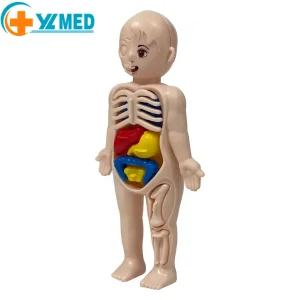
China 14PCS Educational 3D Model Scientific Blocks Model Building ToysEarly education human organ model Manufacturers, Factories
View Details & Pricelist →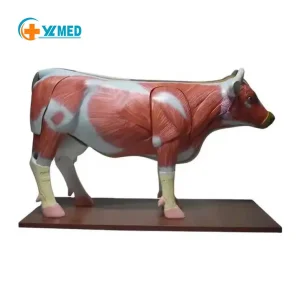
ODM Medical Teaching Cattle models Animal Bovine Anatomical Dissection Model Vet Animal Cow Anatomy Model muscles detachable organs Manufacturer, Quotes
View Details & Pricelist →
Frequently Asked Questions from Importers and OEM Buyers
Straight answers to the questions procurement managers ask most before placing a first order for nursing skills training dummies.
Is Yulin Medical a manufacturer or a trading company?
We are a manufacturer. Henan Yulin Edu. Project Co., Ltd. was founded in 1958 and operates its own factory in Xinxiang, Henan, China, with more than 200 professional staff. For one-stop orders that mix categories, we coordinate a stable network of long-term partner factories so a single container can carry anatomy models, nursing simulators, hospital furniture and laboratory supplies.
What quality certification do you hold?
Our quality management system has been ISO 9001 certified since 2008. Product-specific documentation — declarations of conformity, material statements, test reports and safety data sheets — can be provided on request to support tenders and import registration in your country.
Do you support OEM, private label and custom packaging?
Yes. Our in-house design team develops private-label packaging, product presentation, manuals and warranty cards for distributors. Typical OEM scope includes your logo on the product or carry case, your artwork on the carton, your barcode and SKU structure, and your language set for manuals and labels.
How do I choose the right nursing skills training dummy?
Start with the learner group — adult, child or neonatal — and the skills your curriculum assesses. Then verify that real-time feedback covers compression depth, recoil, compression rate, ventilation volume and hand position; confirm alignment with current AHA or ERC resuscitation guidelines; and decide whether AED trainer integration and OSCE log export are required. For advanced life-support programmes, an ACLS simulator with embedded scenarios delivers far more assessment value than a basic torso.
How are OEM projects priced, and what is the typical minimum order quantity?
Pricing is built from model, configuration, accessory set, packaging specification and order quantity. Mixed-category containers are welcome, and tiered pricing improves as volumes rise. Minimum order quantities vary by product line — task trainers and models can start at small quantities for trial, while full private-label packaging programmes carry higher thresholds to absorb tooling and print setup.
What is the normal production lead time?
Stock items typically move within a short window after payment confirmation. Customised or private-label production depends on moulding, printing and packaging requirements; your dedicated export contact will confirm a written schedule at order confirmation and provide progress updates with inspection photos before shipment.
Can you support public tender documentation?
Yes. We regularly supply specification sheets, ISO 9001 certificates, material declarations, packing details and origin documentation for public and institutional tenders. Send us the technical schedule and we will map our models to the required parameters and flag any deviation before you submit.
How quickly will I receive a reply?
Our export team is online seven days a week and typically replies within 24 hours with catalogues, specifications, packaging options and shipping suggestions for your destination market.
Need Specifications, an OEM Price List or a Tender Package? We Reply Within 24 Hours.
Tell us your target market, quantities, learner levels and certification requirements. Our product specialists will recommend suitable models, share detailed specifications, propose packaging and propose the most economical shipping plan for your order.