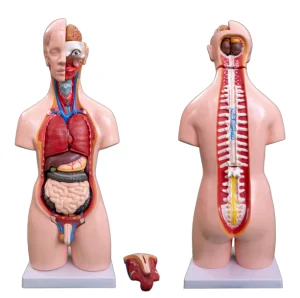
Nursing mannequins sit at the intersection of medical education, clinical safety and industrial design. A modern nursing mannequin may combine airway management, IV access, urinary catheterisation, wound care, CPR feedback, auscultation, maternal and neonatal scenarios, patient communication and OSCE-style assessment in one modular platform. For distributors and teaching institutions, the purchasing decision therefore goes far beyond “a torso with a skin cover”. It is a decision about curriculum alignment, repeatable quality, spare-part availability and long-term cost of ownership.
This is where a genuine OEM nursing mannequin manufacturer creates information gain. A trading company can quote a price, but a factory can explain tooling, material selection, sensor calibration, skin durability, airway resistance, packaging protection and import documentation. For global enterprises, those details determine whether a mannequin survives a full academic year, whether a tender package passes technical review and whether a distributor can build a defensible private-label range.
What “OEM” Should Mean in Nursing Simulation
OEM is often used loosely. In a professional simulation programme, it should cover private-label branding, custom packaging, language-specific manuals, selected skin tones, local clinical scenario cards, replacement-part kits and, where volume justifies it, modified anatomy or electronics. It should also include design-for-manufacturing feedback: which materials are appropriate for repeated disinfection, how a joint should be moulded for durability, how a sensor module should be protected from cleaning fluids and how a carton should be engineered for long-distance export.
Yulin Medical approaches OEM from a manufacturer’s perspective. Henan Yulin Edu. Project Co., Ltd. was founded in 1958 and has operated an ISO 9001 certified quality management system since 2008. With more than 200 professional staff and registered capital of RMB 120 million, the company manages product development, manufacturing, inspection and export from its base in Xinxiang, Henan. That operating history matters because simulation products are not pure commodities: they combine soft materials, rigid structures, mechanical joints, electronics, printed teaching graphics and packaging — all of which must work together.
China Factory Advantages That Buyers Can Verify
China’s advantage in nursing mannequin manufacturing is not simply labour cost. It is the density of specialist suppliers for medical-grade PVC, silicone, polyurethane, engineering plastics, sensors, small electronics, metal fittings, printing and export packaging. A factory located inside this ecosystem can iterate faster, source replacement components more reliably and control quality at more stages. In Henan and the wider central China manufacturing belt, suppliers for moulds, hardware, educational printing and medical training products are mature and competitive.
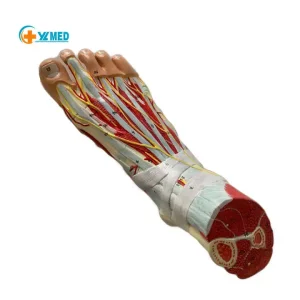
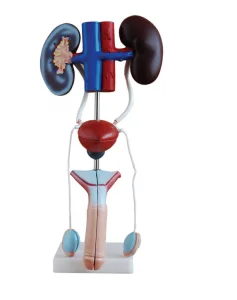
For overseas buyers, the practical advantages include factory-direct communication, consolidated mixed-category shipments, private-label packaging, stable repeat-order specifications and documentation support for tenders. When a distributor sources anatomy models, CPR manikins, hospital furniture and first-aid trainers from one accountable manufacturer, the number of inspection points, container-loading variables and after-sales issues falls sharply.
- Factory-direct supply across 10 product lines, from anatomy models and nursing simulators to laboratory slides, dental tools and hospital furniture.
- Private-label packaging and product design that raises resale value, improves shelf presentation and supports local distributor branding.
- Mixed-category orders consolidated into one shipment with one point of contact, one inspection cycle and one export document set.
- ISO 9001 process control since 2008, with product-specific documentation available on request for tenders and import registration.
The result is a more resilient supply model. Instead of chasing the lowest quotation for a single mannequin, buyers can build a programme: core CPR trainers for every classroom, advanced nursing mannequins for assessment labs, anatomy models for lectures, consumables for skills practice and hospital equipment for clinical rooms. That programme logic is exactly what global distributors and institutional procurement teams are asking for in 2025 and beyond.