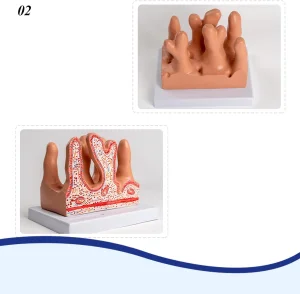
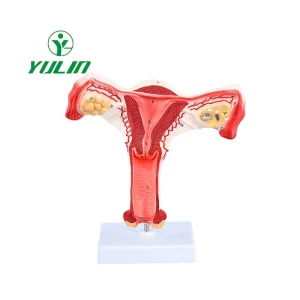
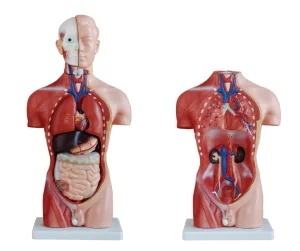
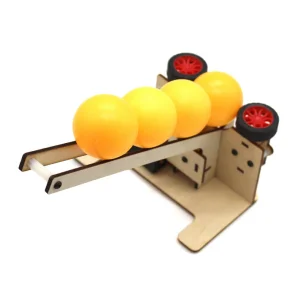
OEM Medicine Model Product Selection: First 8 Manufacturing Links
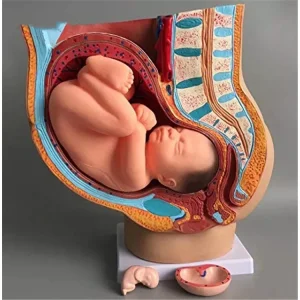
Each product card below preserves the original product image and product URL. These are practical examples of how an OEM medicine model factory can support gynaecology, anatomy, biology, STEM education, emergency care and clinical skills training from one accountable supply base.
OEM Medicine Model Factory & Service: What Buyers Are Really Procuring
An OEM medicine model is not a decorative object. It is a teaching interface, an assessment tool and a brand asset in the distributor’s catalogue.
Henan Yulin Edu. Project Co., Ltd. (Yulin Medical) has built educational and medical training equipment in Xinxiang, China, for more than six decades. Our quality management system has been ISO 9001 certified since 2008, and our working principle is simple: quality first, service first. Every order is produced and inspected so that distributors, medical universities, nursing colleges and hospitals receive consistent, well-documented products on every batch.
The commercial meaning of “OEM medicine model factory and service” is broader than moulding plastic. It includes anatomy research, structure simplification, colour matching, numbering systems, custom bases, private-label packaging, barcode and carton data, tender documentation, sample evaluation, mixed-category consolidation and responsive after-sales support. For a distributor, the real value is not simply a lower unit price; it is a reliable model range that can be sold repeatedly under the distributor’s own brand without repeated quality disputes.
- Factory-direct supply across 10 product lines, from anatomy models to hospital furniture, allowing mixed-category purchasing in one shipment.
- Private-label packaging and product design that raise resale value, shelf appeal and tender readiness in local markets.
- One accountable manufacturing contact for product development, inspection, export packing and after-sales follow-up.
Medicine Model Industry Trends: From Static Anatomy to Connected Simulation
The global market is moving away from “look-only” models toward products that support competency-based education, repeat practice and measurable learning outcomes.
Functional Realism
Buyers increasingly compare materials, tactile feedback, joint movement, detachable structures and cleanability. A model must survive classroom handling, repeated demonstrations and institutional cleaning routines while still communicating anatomy accurately.
Modular Teaching Kits
Anatomy, pathology and clinical skill models are being packaged as modular kits: one torso, multiple organ inserts, replacement parts and curriculum cards. Modularity improves stock rotation for distributors and lowers the cost of expanding a product line.
Localised Documentation
English is no longer enough for every market. Private-label catalogues, local-language labels, tender-ready specifications, packing lists and customs data are now part of the product itself. OEM service must therefore include documentation design, not only manufacturing.
Digital integration is another important direction. QR codes, curriculum links, online demonstration videos and AR-style learning assets can connect a physical model to a digital lesson. For a factory, the practical response is to design models with stable reference points, clear numbering and replacement planning, so that future digital content can be mapped to the same physical product over multiple production batches.
There is also a visible shift in public health and community training. CPR and first-aid programmes, school science education and patient education in clinics all require robust, easy-to-transport training aids. These buyers often prefer a complete programme: manikin, consumables, carry case, instruction sheet and branded packaging. This is where OEM medicine model service becomes a growth engine for distributors rather than a single-order transaction.
Global Enterprise Procurement Demand: What Distributors, Universities and Hospitals Specify
Procurement criteria differ by country, but the strongest buyers ask the same core questions about consistency, documentation, packaging and supply continuity.
Tender Documentation
Specifications, packing details, certification records, product photos and consistent model numbers are needed before a tender can be submitted. A manufacturer that understands public procurement reduces bid preparation time.
Batch Consistency
Anatomy colours, detachable parts, printed numbers and packaging must match the approved sample. Batch-to-batch stability protects the distributor’s reputation and reduces returns.
Mixed-Category Consolidation
Universities and hospitals often buy anatomy models, nursing simulators, slides, furniture and emergency equipment together. One consolidated shipment lowers freight complexity and administrative cost.
After-Sales Speed
Missing parts, damaged components and urgent replacement requests must be answered quickly. Export service quality is part of product quality because training schedules cannot wait for slow communication.
China Factory 4.0: Supply Chain Resilience and Efficiency Advantages
For overseas buyers, Factory 4.0 is less about visible robots and more about predictable interfaces between design, production, inspection, packaging and export.
China’s medical education equipment supply chain has matured around specialised clusters for moulding, printing, metal fabrication, textiles, packaging and electronics. For a manufacturer with more than 60 years of history, the advantage is not simply access to components; it is the ability to coordinate a stable network of long-term partner factories while keeping one quality standard, one communication channel and one export plan.
At Yulin Medical, our product development, manufacturing, inspection and export operations are coordinated from our base at No. 8 Daoqing Road, Hongqi District, Xinxiang. With registered capital of RMB 120 million and more than 200 professional employees, we manage anatomy models, nursing simulation products, biology slides, dental teaching equipment, hospital furniture and related lines under an ISO 9001 quality system. This structure allows a distributor to combine a first order of mixed items without becoming a project manager for ten different suppliers.
Supply chain resilience also means responding to risk. Raw-material substitution, carton strength, moisture protection, spare-part inclusion and shipment consolidation all reduce the probability of damaged goods and delayed training programmes. These details are not glamorous, but they are often the difference between a repeat OEM order and a lost account.
Efficiency Advantages That Buyers Can Measure
- Consolidated ordering across anatomy, nursing, laboratory and hospital product lines.
- Private-label packaging engineered for local catalogue presentation and logistics protection.
- Inspection checkpoints tied to approved samples and export documentation.
- Stable long-term supplier coordination for components, replacement parts and repeat batches.
- Responsive export service with a 24-hour reply commitment for specifications and order follow-up.
Global Business and Industrial Reality: Why Localisation Matters
Healthcare education budgets, import regulations and teaching cultures vary widely. A model that succeeds in one market may need packaging, labelling and curriculum context changes in another.
Europe and North America
Universities and hospitals often demand clear specifications, traceable quality documentation, consistent English terminology, durable materials and distributor-ready packaging. Replacement parts and long product life cycles matter.
Middle East and Africa
Tender-driven projects, new medical colleges and hospital modernisation programmes create demand for complete training laboratories. Mixed shipments of anatomy, nursing, emergency and furniture items are common.
Asia and Latin America
Fast-growing private education groups and distributor networks value cost-effective OEM programmes, private-label catalogues, science STEM kits and practical nursing models for large student cohorts.
Localisation is therefore not a translation task. It is a commercial design task. A catheterisation model sold to a nursing college may need local-language labels and a curriculum card; a skeleton model sold to a distributor may need a private-label base plate and barcode; a rescue stretcher sold to an emergency service may require a specific carton configuration and spare strap kit. The more clearly these requirements are captured at the OEM stage, the fewer problems appear after import.
Localised Application Scenarios: Where OEM Medicine Models Create Value
Different buyers use the same factory capability in different ways. The following scenarios show how an OEM model programme becomes a local commercial solution.
Medical and Nursing Schools
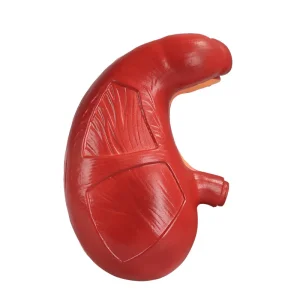
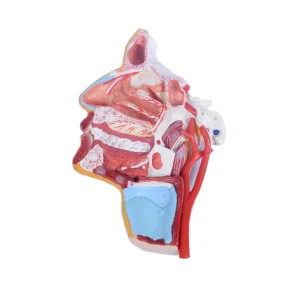
Anatomy models and nursing simulators support lectures, skills labs and objective structured clinical examinations. The stomach anatomy model and brain section model are examples of products that must be both visually accurate and robust enough for repeated classroom handling.
Clinical Skills Laboratories
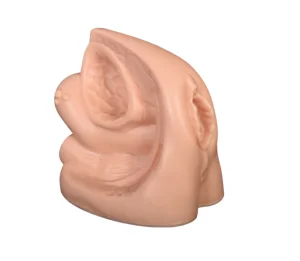
Catheterisation, injection, suture and emergency response training require realistic body landmarks and repeat-use materials. The female catheterisation model is a typical OEM product where labelling, packaging and replacement planning influence long-term satisfaction.
Hospitals and Patient Education
Hospitals use anatomical models for staff training and patient communication. Clear colour coding, removable parts and local-language leaflets help clinicians explain diagnoses, procedures and rehabilitation more effectively.
Emergency and Pre-Hospital Services
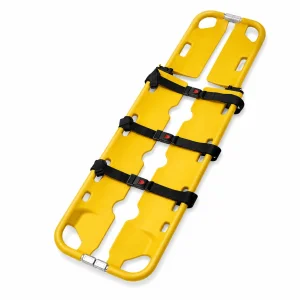
Ambulance services, rescue teams and first-aid trainers need durable products such as the rescue scoop stretcher. OEM service here includes safety straps, packaging protection and specification sheets for public tenders.
Primary and Secondary STEM Education
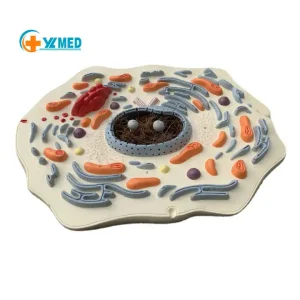
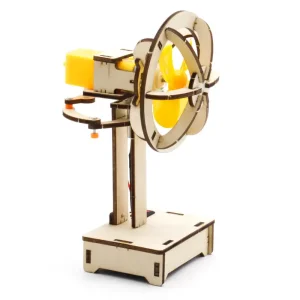
Science and technology classrooms require hands-on models that are safe, affordable and easy to assemble. Products such as the oscillating fan experiment and animal cell structure model can be branded as complete classroom kits for education distributors.
Distributor Private-Label Catalogues
Distributors need product images, consistent SKU naming, carton data, minimum order planning and replacement parts. A factory that supports these deliverables helps the distributor build a catalogue without carrying the full development risk alone.
Product Categories and OEM Service Coverage
Ten specialised product lines allow procurement teams to source simulation, laboratory and hospital equipment from one accountable manufacturer.
Anatomy Models
Torso, organ, heart, brain and muscle models with numbered structures for lectures and patient education.
02Biology Prepared Slides and Accessories
Histology, botany and zoology prepared slides plus storage and microscope accessories for biology labs.
03Dental Tools and Equipment
Dental teaching models, clinic lights, LED whitening units and endodontic instruments for training and practice.
04General Teaching Models
Science demonstration models for primary schools, secondary schools and education equipment tenders.
05Hospital Furniture and Equipments
Stainless steel examination couches, stretchers, walkers and shower chairs built for daily clinical use.
06Hospital Machine and Tools
Diagnosis and treatment devices and practical tools for wards, clinics and emergency departments.
07Medical Apparatus and Instruments
Emergency splints, extrication devices, cervical traction and rehabilitation instruments.
08Medical Nursing Model
Adult, child and neonatal CPR manikins, ACLS simulators and AED trainers for skills assessment.
09Skeleton Models
Life-size and desktop skeletons, skulls, spines and joint models for osteology teaching.
10Suture Pads and Kits
Realistic skin suture pads and complete instrument kits for surgical and wound-closure practice.
OEM / ODM Service Workflow: From Brief to Repeat Order
Every stage has a clear purpose, so you can plan stock, tenders and training schedules with confidence.
Share Requirements
Send product types, quantities, target market and any tender, certification or packaging needs.
Catalog & Proposal
Receive matched models, specifications, packaging options and shipping suggestions.
Sample Evaluation
Test samples with your instructors or clinicians before confirming bulk production.
Production & QC
Manufacturing and inspection follow our ISO 9001 quality management system.
Export & Support
Protective export packing, delivery coordination and responsive after-sales service.
Manufacturing Credentials: E-E-A-T Signals Buyers Can Verify
A six-decade manufacturer with documented quality management, clear production facts and practical export experience.



Founded in 1958, Henan Yulin Edu. Project Co., Ltd. has grown into a well-known educational and medical equipment supplier that integrates scientific research, production and sales. With registered capital of RMB 120 million and more than 200 professional employees, we manage product development, manufacturing, inspection and export from our base at No. 8 Daoqing Road, Hongqi District, Xinxiang.
Our goal is to fully satisfy every customer through dependable quality and attentive service, while continuously developing the skills of our team so that each project is handled by experienced people. The company’s quality management system has been ISO 9001 certified since 2008, and product-specific documentation can be provided on request for tenders and import registration.
Why Distributors and Institutions Partner with Yulin Medical
Four strengths overseas buyers consistently cite when they move long-term orders to our factory.
Responsive Service
Our team is online 24 hours a day, 7 days a week. Whatever your time zone, you receive a detailed answer as quickly as possible — typically within 24 hours.
Design & Packaging Team
In-house specialists deliver professional product design and private-label packaging that strengthens your brand and increases the added value of every unit you sell.
Professional Expertise
Our vision is to provide professional educational and medical training products from mainland China, built under ISO 9001 process control and decades of category knowledge.
Supply Stability
A factory with over 60 years of history and a deeply integrated partner supply chain lets us meet one-stop demands and keep lead times predictable on repeat orders.
Related Clinical, Emergency and Rehabilitation Equipment
Original featured equipment from our medical training, first-aid, hospital furniture and rehabilitation range. These products support a complete tender or distributor catalogue alongside medicine models.

Advanced Full-Body CPR Training Manikin with 8" Color Feedback Display

AED Automated External Defibrillator Trainer for CPR Courses

5-Year-Old Child ACLS Emergency Simulation Manikin

Neonatal ACLS Training Manikin Aligned with AHA 2020 Guidelines

Adjustable Rescue Scoop Stretcher with 3 Safety Straps

Portable Kendrick Extrication Device (KED) Body Splint

Non-Pneumatic Shock-Absorbing Emergency Splint & Tension Bandage

Stainless Steel Clinic Examination Bed & Patient Couch

Height-Adjustable Aluminum Folding Walker with Front Wheels

Foldable Shower Chair for Elderly and Home Care

Lightweight Aluminum Foldable Standard Walker

Inflatable Cervical Neck Traction Device for Home Use
News and Practical Insights from Our Specialists
Exhibition updates and hands-on guidance written by the team that designs and builds our products.

Do You Really Know How to Observe Biological Prepared Slides?
Many plant and animal cell structures can only be studied under a microscope, which makes prepared biological slides essential in every biology lab. Yet many users never get the full value from them. Our specialists explain how to handle, focus and store slides correctly so students see clearer detail and your slide sets last for years.
Read Buyer Guides
The 5th Henan Provincial Educational Equipment Expo Concludes Successfully
Themed “Digital Leading Innovation and Development”, the expo reached a record 50,000 m² with 600+ brands and 10,000+ products on display, showcasing the latest educational equipment.

Inside Our Product Showroom
A look at the medical teaching models and training equipment buyers can inspect in person when visiting our Xinxiang facility.
Need a tender-ready catalogue?
Our export team can combine product specifications, packing data, private-label options and shipping suggestions into one response. Use the contact section below to request a catalogue or discuss a mixed-category OEM order.
Buyer FAQ: OEM Medicine Model Factory & Service
Straight answers to the questions procurement managers ask most before placing a first order.
Is Yulin Medical a manufacturer or a trading company?
We are a manufacturer. Henan Yulin Edu. Project Co., Ltd. was founded in 1958 and operates its own factory in Xinxiang, Henan, China, with more than 200 professional staff. For one-stop orders, we also coordinate a stable network of long-term partner factories.
What quality certification do you hold?
Our quality management system has been ISO 9001 certified since 2008. Product-specific documentation can be provided on request to support tenders and import registration in your country.
Do you support OEM, private label and custom packaging?
Yes. Our in-house design team develops private-label packaging and product presentation for distributors, helping increase shelf appeal and resale value in your market. We can also discuss custom bases, labels, instruction sheets, carton marks and mixed-category packaging plans.
How do I choose the right CPR training manikin?
Start with the learner group: adult, child or neonatal. Then check that real-time feedback covers compression depth, compression rate and ventilation volume; confirm alignment with current AHA resuscitation guidelines; and decide whether your courses need AED trainer integration. For advanced life-support programmes, an ACLS simulator with embedded scenarios offers far more assessment value than a basic torso.
Can we combine anatomy models, nursing simulators, slides and hospital equipment in one order?
Yes. Mixed-category consolidation is one of our core service advantages. A consolidated shipment reduces the administrative burden of working with multiple suppliers and can simplify freight planning, documentation and after-sales communication for distributors and project buyers.
How can an anatomy model be localised for our market?
Localisation can include private-label bases, local-language labels, custom numbering, revised colour schemes, curriculum cards, replacement-part kits and packaging designed for your sales channel. The approved sample and specification sheet become the reference for repeat production.
What documentation can be provided for tenders?
Depending on the product and destination market, we can provide product specifications, model numbers, packing information, photographs, ISO 9001 certification information, commercial invoice and packing list data, and other order-specific documents. Please state your tender requirements at the enquiry stage so the export team can respond accurately.
How quickly will I receive a reply?
Our export team is online 7 days a week and typically replies within 24 hours with catalogs, specifications and shipping options.
Talk to the OEM Medicine Model Factory
Need specifications, a price list, a tender package or a private-label proposal? Tell us your target market, quantities and certification requirements. Our product specialists will recommend suitable models, share detailed specifications and propose an economical shipping plan.

Direct Channels
Original Resource Links
Use these paths to explore products, service information, buying guides and enquiry options.







OEM Medicine Model Product Selection: Final 8 Manufacturing Links
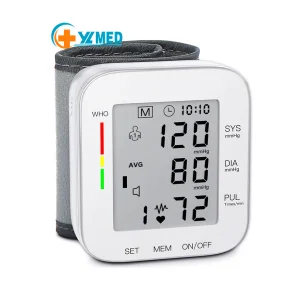
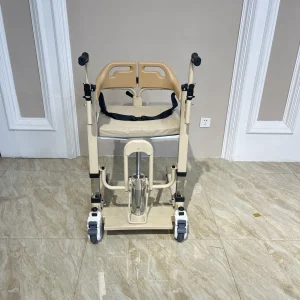
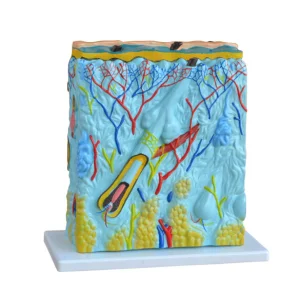
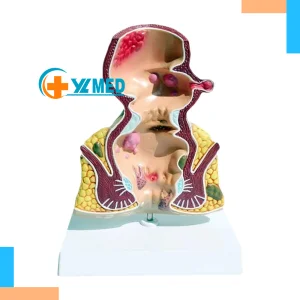
The final product set preserves all remaining original product images and URLs, covering histology, gynaecology, torso anatomy, STEM education, vital-sign monitoring, patient transfer, dermatology and pathology education.