
OEM Hospital Bed Manufacturer & Manufacturers
A procurement-focused guide for distributors, hospital groups, tender teams, and private-label buyers sourcing custom hospital beds, medical furniture, and clinical training equipment from one accountable factory.
Eight Fast-Moving Medical & Training Products for OEM Buyers
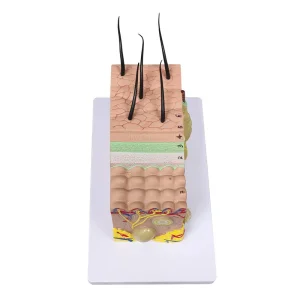
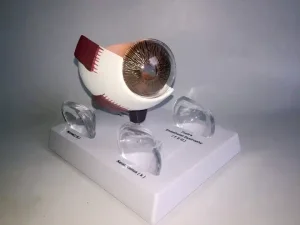
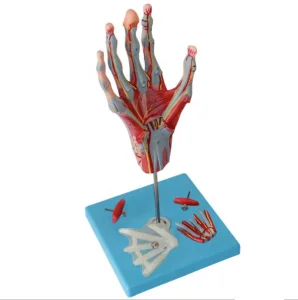
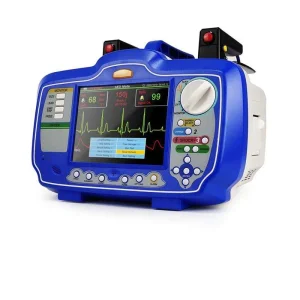
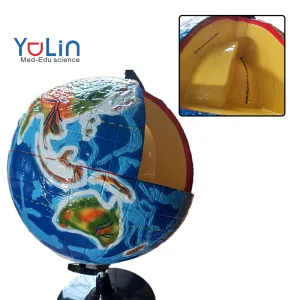
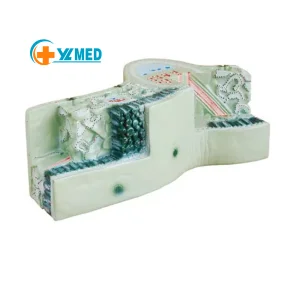
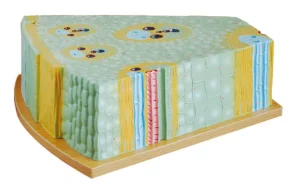
These original Yulin Medical product entries preserve their images, exact titles, and URLs. They illustrate the breadth of our OEM/ODM capability across anatomy, dental, rehabilitation, elderly care, and clinical training.
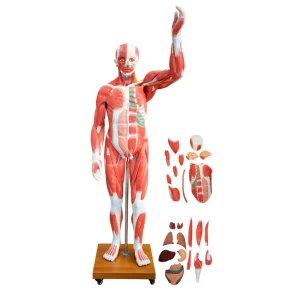
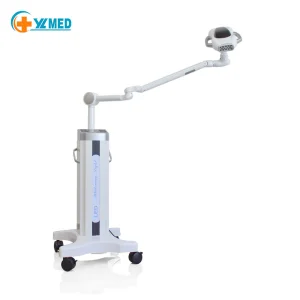
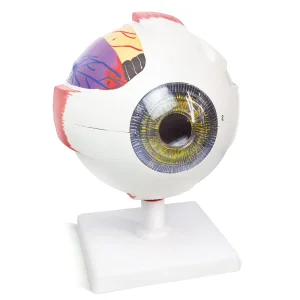
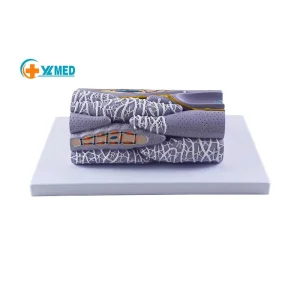
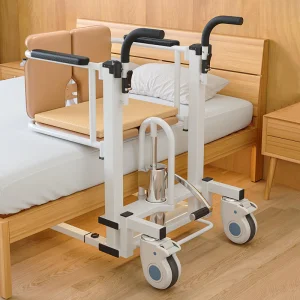
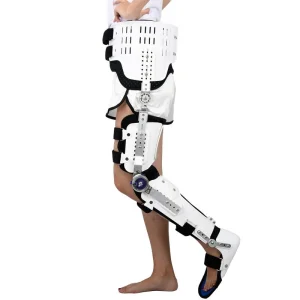
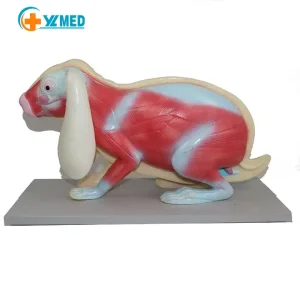
All original product titles, images, and URLs are preserved. For a consolidated quotation, send the target market, quantity, packaging direction, and tender date to our export team.
One Accountable Manufacturer for OEM Hospital Beds and Medical Training Equipment
Henan Yulin Edu. Project Co., Ltd. — trading as Yulin Medical — has manufactured educational and medical equipment in Xinxiang, Henan, China since 1958. Our quality management system has been ISO 9001 certified since 2008.
With registered capital of RMB 120 million, more than 200 professional staff, and 10 product lines, we support distributors, medical universities, nursing colleges, hospitals, and tender teams that need a single accountable source for medical furniture, clinical training products, and teaching models. Our motto is simple: quality first, service first. Every order is produced and inspected so that buyers receive consistent, well-documented products on every batch.
OEM hospital bed sourcing is different from buying a finished catalog item. The buyer is not simply choosing a frame and a mattress platform; they are choosing an engineering partner who can translate market requirements into drawings, validate components, prepare documentation, protect the brand, and keep spare parts available after the first shipment. That is why this page is organized as a working procurement guide rather than a product list. It combines market context, localization scenarios, a technical roadmap, an OEM specification framework, and a practical supplier checklist.
What this guide adds: information gain for serious buyers
- A three-layer OEM evaluation model covering commercial, technical, and compliance fit.
- A localized application matrix for wards, ICU, maternity, long-term care, and field hospitals.
- A technical roadmap from mechanical frames to connected care platforms.
- A 10-point manufacturer checklist and a search-intent map for procurement teams.
Why OEM Hospital Bed Manufacturing Is a Strategic Category for Global Distributors
Search demand for “OEM hospital bed manufacturer” usually comes from three buyer groups: distributors building a private-label furniture range, hospital groups standardizing procurement across sites, and tender agents who need documented specifications and reliable lead times. Their intent is not only “Who sells beds?” It is “Who can manufacture my bed, to my market’s requirements, with my brand, my packaging, and my compliance file?”
To answer that intent, a manufacturer must demonstrate three forms of fit. Commercial fit covers minimum order quantities, mixed-category consolidation, private-label packaging, export documentation, and spare-parts planning. Technical fit covers platform dimensions, actuator duty cycle, safe working load, battery backup, rail geometry, caster performance, and cleanability. Compliance fit covers quality-system records, product-specific test documentation, labeling, traceability, and the ability to support the buyer’s registration or tender file. A low unit price without these three forms of fit is not a low total cost.
Commercial Fit
MOQ, mixed containers, private label, packaging, export documents, and spare-parts planning. This is where a factory becomes a channel partner rather than a quotation desk.
Technical Fit
Frame geometry, actuators, controls, battery backup, casters, rails, mattress platform, and cleanability. The specification must match the clinical setting, not just the catalog photo.
Compliance Fit
ISO 9001 records, test reports, labeling, traceability, and registration support. A factory certificate is not the same as product market authorization; both must be discussed clearly.
Global Hospital Bed Market Landscape: Commercial and Industrial Signals
Several structural forces are reshaping the hospital bed industry. First, demand is broadening beyond acute-care hospitals. Aging populations, chronic-disease management, rehabilitation, and home care are creating demand for low-height beds, home-care beds, and convertible platforms. Second, labor shortages in hospitals and long-term care are increasing interest in electric positioning, bed-exit alerts, and ergonomic accessories that reduce caregiver strain. Third, infection prevention remains a design driver: smooth surfaces, removable panels, sealed actuators, and cleanable materials are now procurement criteria, not premium options. Fourth, digitalization is moving from pilot projects to specification discussions: nurse-call integration, load sensing, remote diagnostics, and data gateways are appearing in tender documents. Fifth, supply-chain diversification is encouraging buyers to qualify more than one manufacturing region and to ask for modular designs that can be assembled or configured locally.
At the industrial level, hospital bed manufacturing is becoming more modular. Platforms are standardized around common frame widths, actuator interfaces, and control protocols, while market-specific variations are pushed into rails, casters, controls, labels, and packaging. This reduces engineering cost, shortens lead time, and makes spare-parts management more predictable. For OEM buyers, the practical question is not whether a factory can weld a frame. It is whether the factory can manage the interface between mechanical parts, electrical components, software, documentation, and logistics.
Illustrative procurement-priority weighting
Our export team uses the following weighting as a discussion tool during early buyer workshops. The percentages are not market statistics; they help a buyer state what “best” means before quotations are compared.
Six Trends Shaping OEM Hospital Bed Design in 2025 and Beyond
These trends are not reasons to buy the most complex bed. They are ways to stage investment so that the platform fits the market, the reimbursement environment, and the clinical workflow.
Smart Sensing & Fall Prevention
Load cells, bed-exit mats, and angle sensors are moving into mainstream tenders. OEM implication: reserve a sensor bay, define the data protocol, and decide whether alerts go to a nurse-call system or a standalone gateway.
Modular Electric Platforms
Interchangeable actuators and control boxes reduce SKU complexity while allowing 2-function, 3-function, and 5-function variants. OEM implication: standardize the mounting interface and validate duty cycles for the target market.
Infection Prevention by Design
Removable headboards, smooth powder coatings, and sealed hand controls make cleaning easier. OEM implication: document cleanability and avoid seams that trap soil.
Home-Care Conversion
Low-height beds and soft side rails allow one platform to serve long-term care and home care. OEM implication: plan for dual-market labeling, packaging, and caregiver instructions.
Lightweight & Sustainable Materials
Aluminum frames, recycled polymers, and flat-pack designs can reduce freight and handling costs. OEM implication: check that weight reduction does not compromise safe working load or stability.
Interoperability & Data
Hospital beds are becoming data nodes. OEM implication: define cybersecurity ownership, data retention, and API support before a tender requires them.
From Mechanical Frames to Connected Care Platforms
A practical OEM hospital bed roadmap is staged, not speculative. Each stage should be tied to a market requirement, a price point, and a documentation package.
Mechanical Standardization
Platform dimensions, safe working load, rail geometry, caster braking, and mattress platform. Standardize the core frame before adding electronics.
Electromechanical Modularity
Actuators, control pendants, battery backup, CPR release, and nurse controls. Use validated duty cycles for the target ward intensity.
Sensing & Safety
Bed-exit, load sensing, fall-risk alerts, and nurse-call integration. Define alarm escalation and false-alarm management with clinicians.
Data & Interoperability
Gateways, APIs, remote diagnostics, and cybersecurity ownership. Decide who owns the data and who supports the firmware after shipment.
Circular Design & Serviceability
Replaceable modules, spare-parts kits, material documentation, and end-of-life planning. This protects resale value and long-term service cost.
The roadmap is deliberately staged. A distributor entering a price-sensitive market may begin with a manual or semi-electric platform and invest in documentation, packaging, and spare parts first. A hospital group replacing ICU beds may need five-function electric platforms, battery backup, CPR release, and nurse-call integration from the first order. The manufacturer’s job is to make the platform modular enough that both buyers can be served without creating a new product from zero.
Looking forward, three developments are likely to matter most. AI-assisted risk scoring will move from standalone pilots into bed-exit and fall-prevention workflows, but only where data governance is clear. Predictive maintenance will use actuator cycles and error logs to schedule service before failure. Circular design will push manufacturers to document material content, replaceable modules, and end-of-life recovery. Buyers should ask for a roadmap, not a promise: which features are available now, which are optional, and which require a new certification.
One Platform, Five Market Configurations
Hospital bed requirements change with the clinical setting, the regulatory pathway, and the caregiver workflow. The same core frame can be configured differently for each market.
General Ward / Med-Surg
Most volume lies here. Buyers typically prioritize cost, durability, easy cleaning, and simple maintenance. Common configurations include manual or semi-electric two-function beds, central-locking casters, and standard side rails. OEM variations: local voltage, mattress size, language on controls, and rail height.
ICU / HDU
Five-function electric beds, CPR release, battery backup, and nurse-call integration are common. Buyers should specify safe working load, lowest height, trendelenburg/reverse trendelenburg angles, and alarm behavior. OEM variations: X-ray translucent platform, integrated weighing, and infection-control features.
Maternity & Pediatric
Safety, low height, and easy cleaning are central. Pediatric wards may require smaller platforms and additional rail protection. OEM variations: color, cartoon labels where appropriate, and accessory bundles for caregivers.
Long-Term & Home Care
Low-height beds, soft rails, and furniture-style finishes help reduce fall risk and improve acceptance in home settings. OEM variations: packaging for parcel networks, simplified assembly, and caregiver training inserts.
Emergency & Field Hospital
Rugged manual beds, quick deployment, and low maintenance matter more than advanced electronics. OEM variations: corrosion-resistant finishes, spare-parts kits, and transport packaging validated for rough handling.
Hospital Bed OEM Engineering: What Buyers Should Specify Before Tooling
The difference between a commodity bed and a reliable OEM program is in the specification. The table below is a practical starting point for a buyer’s technical file.
| Specification Area | Typical OEM Options | Why It Matters |
|---|---|---|
| Safe working load | 150 kg / 200 kg / 250 kg / bariatric >250 kg | Matches patient population, market standard, and structural design. |
| Platform height | Low-low 30–40 cm; standard 45–60 cm; high 70–80 cm | Affects fall risk, caregiver ergonomics, and room layout. |
| Backrest / knee-break | Manual, electric, synchronized | Determines clinical positioning and patient comfort. |
| Side rails | Fixed, folding, split, soft-touch, integrated controls | Safety, entrapment risk, cleaning, and patient access. |
| Casters | 100 mm / 125 mm / 150 mm; central locking; directional lock | Mobility, braking, floor protection, and infection control. |
| Actuator duty cycle | 10% / 25% / custom | Prevents overheating and premature failure in heavy-use wards. |
| Battery backup | None / basic / extended | Supports transport and power interruption. |
| Control pendant | Basic / nurse control / lockout / integrated nurse call | Workflow, safety, and training. |
| Mattress platform | Slat / solid / X-ray compatible / integrated weighing | Pressure management, imaging, and monitoring. |
| Infection control | Smooth surfaces, removable panels, sealed controls | Cleanability and cross-contamination reduction. |
| Standards & documentation | IEC 60601-2-52, ISO 13485, CE MDR, FDA pathway where applicable | Market access and tender compliance. |
| Packaging | Export carton, foam, edge protection, drop test | Damage reduction and freight cost. |
Compliance note for procurement teams
Yulin Medical’s quality management system has been ISO 9001 certified since 2008. ISO 9001 is a quality-management certification, not a medical-device registration. Product-specific documentation, testing, and registration support depend on the destination market, the product claims, and the applicable regulatory pathway. We discuss these requirements openly during quotation so that buyers do not confuse a factory certificate with market authorization.
Consolidate Hospital Beds, Furniture, and Training Equipment with One Manufacturer
Hospital projects rarely buy a single category. A new wing may need beds, examination couches, stretchers, walkers, shower chairs, CPR manikins, anatomy models, and microscope slides. Sourcing these from multiple suppliers multiplies inspection, documentation, shipping, and after-sales work. Yulin Medical’s 10 product lines allow mixed-category orders to be consolidated into one shipment with one point of contact.
Hospital Furniture & Beds
OEM hospital beds, examination couches, stretchers, walkers, shower chairs, and mobility aids for wards, clinics, and long-term care.
Clinical Training & Simulation
CPR manikins, nursing models, AED trainers, and emergency simulation products for skills labs and hospital training centres.
Medical Teaching & Anatomy
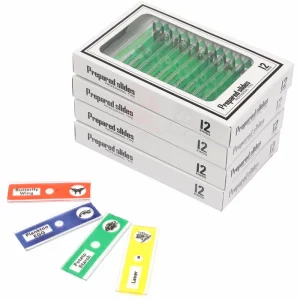
Anatomy models, skeleton models, prepared slides, and general teaching models for universities, schools, and education tenders.
Dental & Laboratory
Dental tools, whitening instruments, microscope slides, and lab accessories for clinics, schools, and distributors.
OEM, ODM, and Private Label: Choosing the Right Commercial Model
The right model can change by product. A hospital bed program may start as OEM because the frame, rail, and actuator specification are market-specific. A teaching model range may start as private label because the product is already proven and the buyer’s brand is the main differentiator.
| Model | Buyer Provides | Manufacturer Provides | Best For |
|---|---|---|---|
| OEM | Brand, specification, packaging direction | Engineering, tooling, production, QC, export documentation | Distributors with defined product requirements and tender specifications. |
| ODM | Market need, target price, channel strategy | Design, platform selection, compliance support, packaging | Buyers launching a range quickly with limited internal engineering. |
| Private Label | Brand assets, label copy, packaging artwork | Standard product, labeling, packaging, documentation | Fast market entry with proven products and a strong sales channel. |
Search Intent Map: What “OEM Hospital Bed Manufacturer” Really Means
Semantic search optimization starts with intent, not keywords. These four query patterns represent different stages of the buying journey.
| Query Pattern | Real Buyer Intent | Evidence to Request |
|---|---|---|
| OEM hospital bed manufacturer | Can this factory co-engineer and manufacture under my brand? | Factory audit, engineering workflow, tooling ownership, sample timeline, QC plan. |
| hospital bed manufacturers in China | Which suppliers are real factories with export experience? | Business license, factory photos, ISO 9001 certificate, export markets, references. |
| custom hospital bed supplier | Can the supplier adapt dimensions, functions, voltage, packaging, and labeling? | Customization matrix, MOQ, drawing approval process, packaging samples. |
| electric hospital bed OEM | Does the platform meet clinical and electrical requirements? | Actuator specifications, battery backup, duty cycle, control protocol, test reports. |
A 10-Point OEM Hospital Bed Manufacturer Evaluation Checklist
Use this checklist to compare suppliers on the same evidence. It is designed for distributors, hospital groups, and tender teams that need more than a price list.
1. Factory Ownership
Confirm the manufacturing site, founding year, registered capital, and whether production is in-house or coordinated through partner factories.
2. Quality System
Ask for the ISO 9001 certificate and the scope. Clarify which product-specific registrations or test reports are available for your market.
3. Customization Process
Require a drawing approval process, change-control procedure, and named engineer for your account.
4. Component Supply
Identify actuator, control box, caster, and rail suppliers. Ask about second-source options and spare-parts availability.
5. Inspection Records
Review incoming material inspection, in-process checks, final QC, and functional testing records.
6. Tender Documents
Request declarations, test reports, labeling artwork, and traceability records before you commit to a tender deadline.
7. Packaging Validation
Ask for packaging drawings, drop-test reports, container loading plans, and edge protection.
8. Spare Parts & Service
Agree on a spare-parts list, warranty terms, response time, and who owns troubleshooting.
9. Mixed-Category Order
If you also buy teaching models or training equipment, confirm that items can be consolidated into one shipment.
10. Communication
Check response time, production updates, inspection photos, and documentation handover before the balance payment.
Quality Assurance and a Transparent 5-Step Export Process
Manufacturing follows our ISO 9001 quality management system. The process below keeps specification, inspection, and documentation visible from the first inquiry to shipment.
Incoming Material Control
Raw materials, components, and actuators are checked against approved specifications before production release.
In-Process Inspection
Critical dimensions, welds, electrical connections, and assembly steps are checked during production.
Final Functional QC
Finished products are tested for function, safety, labeling, accessories, and packaging readiness before shipment.
Packaging & Drop Test
Export cartons, foam, edge protection, and loading plans are reviewed to reduce transit damage.
Documentation Handover
Specifications, inspection records, packing lists, and labeling artwork are prepared for the buyer’s file.
Spare Parts Planning
Recommended spare parts and consumables are listed with the quotation so that the buyer can plan service stock.
Share Requirements
Send product types, quantities, target market, voltage, packaging, and any tender or certification needs.
Catalog & Proposal
Receive matched models, specifications, packaging options, and shipping suggestions.
Sample Evaluation
Test samples with your instructors or clinicians before confirming bulk production.
Production & QC
Manufacturing and inspection follow our ISO 9001 quality management system.
Export & Support
Protective export packing, delivery coordination, and responsive after-sales service.
A Six-Decade Manufacturer Trusted by Educators and Clinicians
Founded in 1958, Henan Yulin Edu. Project Co., Ltd. has grown into a well-known educational and medical equipment supplier that integrates scientific research, production, and sales. With registered capital of RMB 120 million and more than 200 professional employees, we manage product development, manufacturing, inspection, and export from our base at No. 8 Daoqing Road, Hongqi District, Xinxiang.
Our goal is to fully satisfy every customer through dependable quality and attentive service, while continuously developing the skills of our team so that each project is handled by experienced people. For buyers, this means one accountable manufacturer for anatomy models, nursing simulators, lab slides, and hospital equipment — consolidated into a single shipment and backed by an ISO 9001 quality system.
Quality first, service first is not a slogan for the website. It is the operating rule that determines how drawings are approved, how inspections are recorded, and how after-sales questions are answered.



24/7 Responsive Service
Our team is online 24 hours a day, 7 days a week. Whatever your time zone, you receive a detailed answer as quickly as possible — typically within 24 hours.
Design & Packaging Team
In-house specialists deliver professional product design and private-label packaging that strengthens your brand and increases the added value of every unit you sell.
Professional Expertise
Our vision is to provide the most professional educational and medical training products from mainland China, built under ISO 9001 process control and decades of category knowledge.
60+ Years of Supply Stability
A factory with over 60 years of history and a deeply integrated partner supply chain lets us meet one-stop demands and keep lead times predictable on repeat orders.
Frequently Asked Questions: OEM Hospital Bed Manufacturing
Straight answers to the questions procurement managers ask most before placing a first OEM order.
Is Yulin Medical a manufacturer or a trading company?
What quality certification does Yulin Medical hold?
Do you support OEM, private label and custom packaging?
How do I choose the right hospital bed platform for my market?
What documentation can you provide for tenders and import registration?
Can I combine hospital beds with teaching models in one order?
How do you control quality and lead time?
How quickly will I receive a reply?
Request an OEM Hospital Bed Quotation
Tell us your target market, quantity, function, voltage, standards, packaging, and tender date. Our product specialists will recommend a platform, share specifications, and propose the most economical shipping plan for your order.
Eight More Original Product Solutions for OEM & Private-Label Programs
The remaining eight original product links are preserved below. Together with Part 1, every image, title, and URL from the source product list is retained.
For OEM hospital bed specifications, private-label packaging, mixed-category quotations, or tender documentation, contact our export team at [email protected] or call 0086-13503800666. We typically reply within 24 hours with catalogs, specifications, and shipping options.