OEM Eye Model Factory & Factories
Custom anatomical eye models, ophthalmic pathology replicas, and localized training programs backed by a 60+ year medical education manufacturing base.
OEM-Ready Anatomy and Clinical Training Models
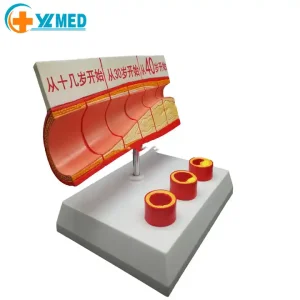
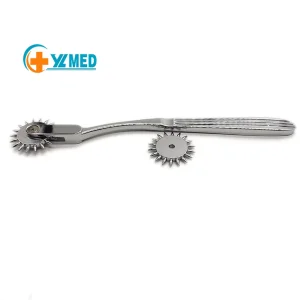
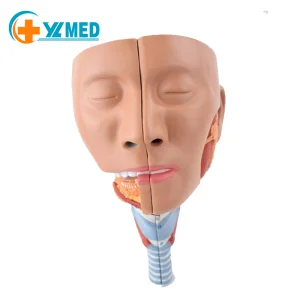
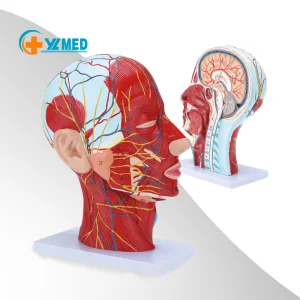
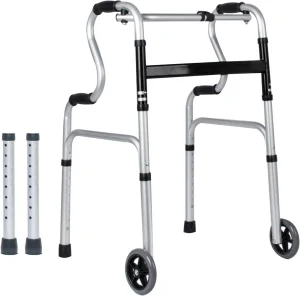
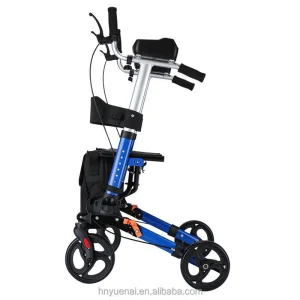
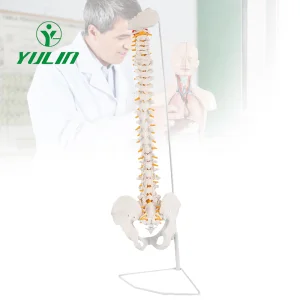
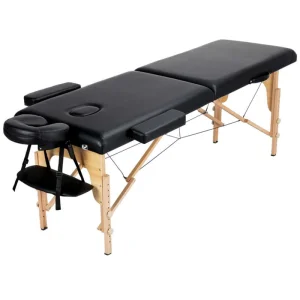
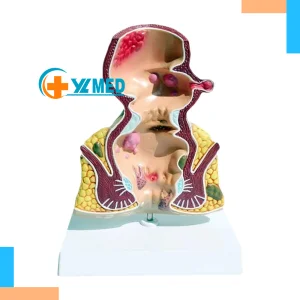
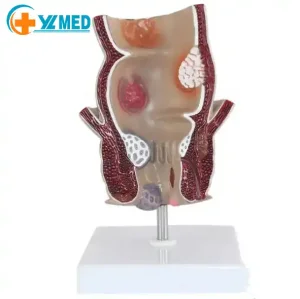
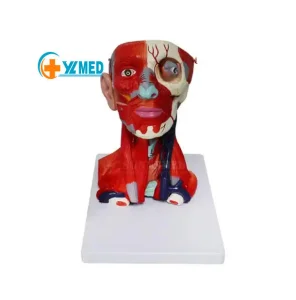
These representative factory products show the material control, molding discipline, finishing standards and export packing used across OEM eye model and medical teaching model programs. They are part of a broader 10-line catalog for distributors, universities, hospitals and tender suppliers.
What an OEM Eye Model Factory Must Prove Before You Place a PO
An eye model is not a decorative anatomical object. It is a learning instrument that must show spatial relationships, dissection planes, pathology, color coding and haptic feedback in a repeatable way. The strongest OEM eye model factory is therefore judged on design intent, process ownership and localization support, not on a catalog photo alone.
Design Intent Comes First
OEM work begins with the learning objective: enlarged orientation, six-part dissection, cataract or glaucoma pathology, lacrimal apparatus, extraocular muscles, or ocular trauma suturing. The factory must translate that objective into scale, segmentation, materials, colors, labels and packaging.
Factory or Factory Network?
Many suppliers describe themselves as factories. Buyers should verify who owns tooling, molding, painting, assembly, inspection and export packing. A reliable manufacturer can explain exactly which processes are in-house and which are controlled through long-term partners.
Localization Before Quotation
Language, anatomical nomenclature, curriculum level, tender documentation and retail packaging should be discussed before the quotation is fixed. This prevents expensive revisions after tooling or artwork has already been approved.
OEM Eye Model Factory & Factories: From Anatomical Reference to Repeatable Production
The practical work behind an OEM eye model program is a sequence of controlled decisions. A buyer may ask for an enlarged six-part eye, a pathological eye set, a lacrimal apparatus model, an extraocular muscle model, or a combined orbit and ocular trauma trainer. Each request changes the mold layout, material selection, painting sequence, labeling and quality inspection plan.
Experienced factories usually work from a model-to-objective matrix. Which structures must be removable? Which pathologies must be visible from the front, side or superior view? Should the model be three times life size, five times life size, or desktop scale? Will it be used for lecture demonstration, small-group dissection, optometry practice, patient education or distributor resale? These questions determine whether the final product is a genuine teaching tool or a generic replica with a new logo.
A credible OEM workflow normally includes: buyer brief and reference review, anatomical and curriculum validation, CAD or sculpting, material and color trials, sample approval, tooling confirmation, pilot production, in-process inspection, final assembly, packaging approval and export documentation. Materials may include PVC, silicone, ABS, acrylic and mixed-media components. The most important issue is not the material name alone; it is whether the factory can reproduce the same appearance, feel and assembly tolerance across repeat orders.
The phrase “factory & factories” matters because global buyers often compare a direct manufacturer with sourcing agents and multi-factory networks. A direct factory offers process visibility and accountability. A factory network can support mixed-category consolidation. The best partner is transparent about both: what is manufactured in-house, what is coordinated through partner factories, and how quality is verified before shipment.
China Factory Supply Chain Advantages for Eye Model and Medical Training Buyers
China’s advantage is not simply labor cost. For anatomical and ophthalmic training models, the real advantage is process density: mold making, PVC and silicone formulation, precision painting, pad printing, packaging, manual assembly and export consolidation are available close together. This shortens sample iterations and reduces the risk of a model looking correct in CAD but failing in production.
Yulin Medical, operated by Henan Yulin Edu. Project Co., Ltd., has manufactured educational and medical training equipment in Xinxiang, Henan, since 1958. The company has more than 200 professional staff, registered capital of RMB 120 million, an ISO 9001 quality management system certified since 2008, and 10 product lines spanning anatomy models, nursing simulation, hospital equipment, dental teaching tools, biology slides and rehabilitation products. For overseas buyers, this breadth supports one-stop orders without losing a single point of accountability.
Tooling Iteration
Close access to mold makers and sample workshops helps refine scale, joins, removable parts and undercuts before mass production.
Material & Finish Control
PVC, silicone, ABS and acrylic components can be tested for color, flexibility, paint adhesion and cleanability against the training use case.
Mixed-Category Orders
Eye models, anatomy models, nursing manikins, hospital furniture and teaching tools can be planned into one shipment and one documentation pack.
Export Risk Reduction
Protective packing, barcode or private-label artwork, carton marking and shipping coordination reduce damage and customs confusion.
Localized Support and Compliance for Global Eye Model Programs
Localization is more than translating a manual. For eye model programs, it can include anatomical terminology, curriculum alignment, language on the model base, packaging claims, shelf presentation for distributors and tender documentation for public procurement. A model that is technically correct but poorly localized may still create training confusion or slow down import clearance.
Compliance should be discussed SKU by SKU. Yulin Medical has maintained ISO 9001 certification since 2008. Product-specific documentation can be provided on request for tenders and import registration. Where a product listing specifies CE/ISO, buyers should confirm the exact certificate scope, model references and destination-market requirements at quotation stage. Educational models are not automatically classified as medical devices in every country, so importers should verify local rules before tender submission.
Language & Curriculum
Manual language, structure labels, teacher notes and pathology descriptions can be adapted to local teaching levels and terminology.
Packaging & Tender Readiness
Private-label boxes, barcode labels, carton marks, product photos and specification sheets help distributors respond to institutional RFQs.
Documentation & Change Control
Sample approval records, inspection criteria, packing requirements and revision notes reduce mismatch between the approved sample and bulk order.
- Confirm destination-market classification and importer responsibilities.
- Request ISO scope, product-specific certificates and model references.
- Approve anatomy labels, language and pathology descriptions in writing.
- Validate packaging artwork, barcode format and carton marking.
- Keep golden samples for repeat-order color and assembly reference.
- Define spare-part, after-sales and technical-question channels early.
Global Enterprise Procurement Demand for Custom Eye Models
Demand is shifting from isolated catalog purchases toward program-based sourcing. Medical schools want curricula-aligned pathology sets. Optometry distributors want private-label kits with local language manuals. Nursing colleges want eye models that support patient education and basic anatomy. Tender agents need documentation, stable specifications and predictable packing. Hospitals and simulation centers increasingly combine eye models with broader nursing and emergency training purchases.
Indicative sourcing signals from mixed-category educational and medical model RFQ patterns. They are planning prompts, not statistical market estimates.
Six Trends Reshaping Eye Model Factories and Ophthalmic Training
Pathology-Rich Models
Buyers increasingly request cataract, glaucoma, diabetic retinopathy, macular degeneration and trauma variants rather than a single normal eye anatomy model.
Modular Dissection
Removable muscles, lens, iris, cornea and retinal layers support step-by-step teaching and assessment in small-group labs.
Tissue-Like Haptics
Silicone and multi-material molding are used to create more realistic suturing, corneal repair and orbital handling experiences.
Curriculum Kits
Distributors want ready-to-sell kits with models, lesson cards, storage cases, QR-linked manuals and local-language labeling.
Tender Traceability
Public procurement places more weight on model references, certificate scope, packing lists and consistent repeat-order quality.
Supply Resilience
Buyers are consolidating suppliers, reducing packaging waste and asking for better lead-time visibility across mixed-category orders.
Where Localized Eye Models Create Training Value
Ophthalmology Residency
Enlarged anatomical orientation, pathology recognition, orbital relationships and pre-surgical discussion.
Optometry & Vision Science
Refractive structures, extraocular muscles, lacrimal apparatus and patient-friendly explanation models.
Nursing & Patient Education
Clear models for eye-drop technique, cataract education, dry-eye discussion and post-operative care instructions.
Distributor & Tender Packages
Private-label sets, multilingual manuals, barcode labeling and specification sheets for institutional bids.
A Practical Eye Model Sourcing Matrix for OEM Buyers
Use this matrix to brief a factory clearly and compare quotations on the same basis.
Enlarged 6-Part Eye
Best for anatomy lectures, orientation and basic structure identification. Confirm scale, removable parts, stand type and labeling language.
Pathological Eye Set
Best for optometry, ophthalmology and clinical education. Specify cataract, glaucoma, retinal disease or trauma variants and color differentiation.
Lacrimal & Muscle Model
Best for tear-pathway explanation and extraocular muscle training. Check soft-tissue detail, mounting and visibility from multiple angles.
Ocular Trauma Trainer
Best for suturing and emergency skills. Define silicone hardness, replaceable insert design, packing and consumable supply.
A Transparent Five-Step Process for Overseas Buyers
From the first requirement review to export support, each stage should have a named contact, written approval and documented quality checkpoint.
Share Requirements
Product type, target learner, scale, pathology, quantity, destination market, certification and tender needs.
Catalog & Proposal
Matched models, specifications, packaging options, documentation scope and shipping suggestions.
Sample Evaluation
Instructors and clinicians test anatomy, labeling, haptics and packaging before bulk production.
Production & QC
Manufacturing and inspection follow the ISO 9001 quality management system and approved sample.
Export & Support
Protective export packing, delivery coordination, documentation and responsive after-sales service.
Why Distributors and Institutions Partner with Yulin Medical
Founded in 1958, Henan Yulin Edu. Project Co., Ltd. has grown into a well-known educational and medical equipment supplier integrating scientific research, production and sales. From No. 8 Daoqing Road, Industry Park, Hongqi District, Xinxiang, Henan, the company manages product development, manufacturing, inspection and export with a simple motto: quality first, service first.
For buyers, the value is one accountable manufacturer for anatomy models, nursing simulators, lab slides, dental teaching tools and hospital equipment, consolidated into a single shipment and backed by an ISO 9001 quality system. The in-house design and packaging team can support private-label presentation that raises resale value rather than merely relabeling a carton.
24/7 Responsive Service
Our team is online 24 hours a day, 7 days a week. Whatever your time zone, detailed answers are typically provided within 24 hours.
Design & Packaging Team
In-house specialists support professional product presentation, private-label packaging and distributor-focused shelf appeal.
Professional Expertise
Decades of category knowledge and ISO 9001 process control support educational and medical training products from mainland China.
60+ Years of Supply Stability
A long factory history and integrated partner supply chain support one-stop demands and predictable repeat orders.
 Headquarters & factory, Xinxiang
 Production workshop
 Bulk orders ready for export
Complete Sourcing for Medical Education and Clinical Use
Ten specialized product lines let procurement teams source simulation, laboratory and hospital equipment from one accountable manufacturer instead of managing multiple suppliers.
Anatomy Models
Torso, organ, heart, brain and muscle models with numbered structures.
View range →Biology Prepared Slides
Histology, botany and zoology slides plus storage and microscope accessories.
View range →Dental Tools & Equipment
Dental teaching models, clinic lights, LED whitening units and endodontic instruments.
View range →General Teaching Models
Science demonstration models for primary, secondary and tender projects.
View range →Hospital Furniture
Stainless steel couches, stretchers, walkers and shower chairs for daily use.
View range →Hospital Machine & Tools
Diagnosis and treatment devices and practical tools for wards and clinics.
View range →Medical Apparatus
Emergency splints, extrication devices, cervical traction and rehabilitation tools.
View range →Medical Nursing Model
Adult, child and neonatal CPR manikins, ACLS simulators and AED trainers.
View range →Skeleton Models
Life-size and desktop skeletons, skulls, spines and joint models.
View range →Suture Pads & Kits
Realistic skin suture pads and complete instrument kits for skills practice.
View range →Clinical, Emergency and Rehabilitation Products for Consolidated Sourcing
These additional original catalog products support mixed-category orders for distributors and institutions that want to reduce supplier management costs.












Practical Guidance from the Team Behind the Models

Do You Really Know How to Observe Biological Prepared Slides?
Many plant and animal cell structures can only be studied under a microscope, which makes prepared biological slides essential in every biology lab. Yet many users never get the full value from them. Our specialists explain how to handle, focus and store slides correctly so students see clearer detail and slide sets last for years.

The 5th Henan Provincial Educational Equipment Expo Concludes Successfully
Themed “Digital Leading Innovation and Development”, the expo reached a record 50,000 m² with 600+ brands and 10,000+ products on display, showcasing the latest educational equipment.

Inside Our Product Showroom
A look at the medical teaching models and training equipment buyers can inspect in person when visiting our Xinxiang facility.
Frequently Asked Questions About OEM Eye Model Factories
Straight answers to the questions procurement managers ask most before placing a first order.
Is Yulin Medical a manufacturer or a trading company?
We are a manufacturer. Henan Yulin Edu. Project Co., Ltd. was founded in 1958 and operates its own factory in Xinxiang, Henan, China, with more than 200 professional staff. For one-stop orders, we also coordinate a stable network of long-term partner factories.
What quality certification does Yulin Medical hold?
Our quality management system has been ISO 9001 certified since 2008. Product-specific documentation can be provided on request for tenders and import registration.
Do you support OEM, private label and custom packaging?
Yes. Our in-house design team develops private-label packaging and product presentation for distributors to increase shelf appeal and resale value.
How do I choose the right CPR training manikin?
Match the manikin to the learner group (adult, child or neonatal), check that real-time feedback covers compression depth, rate and ventilation, confirm alignment with current AHA resuscitation guidelines, and decide whether AED training integration is required.
How quickly will I receive a reply?
Our export team is online 7 days a week and typically replies within 24 hours with catalogs, specifications and shipping options.
What is an OEM eye model factory, and how is it different from a catalog supplier?
An OEM eye model factory builds to the buyer’s teaching objective, localization and packaging requirements. A catalog supplier mainly resells existing SKUs. OEM work requires controlled sample approval, tooling or mold adjustment, written labeling and repeat-order consistency.
Can eye models be localized for curriculum, language and tender requirements?
Yes, within a documented scope. Buyers should confirm anatomical terminology, manual language, model-base labels, packaging claims, barcode format and tender documents before quotation. Regulatory classification should be verified with the importer for the destination market.
How do you control quality and compliance across eye model and mixed-category orders?
Start with an approved golden sample, agreed inspection criteria and written packaging specification. Confirm ISO scope and product-specific documents where applicable, then inspect appearance, assembly, labeling, packing and carton marks before shipment. For mixed orders, each SKU should remain traceable to its approved sample and product reference.
Need Specifications, a Price List or a Tender Package? We Reply Within 24 Hours.
Tell us your target market, quantities, eye model configuration and certification requirements. Our product specialists will recommend suitable models, share detailed specifications and propose the most economical shipping plan for your order.
Additional OEM and Medical Training Products for Consolidated Orders
Use these representative products to evaluate finishing quality, packaging coordination and mixed-category order capability before finalizing an OEM eye model program.