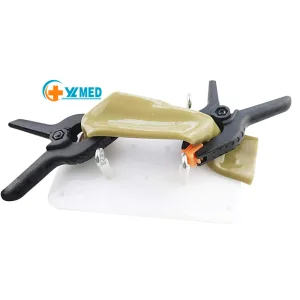
Products Often Sourced Alongside Medical Sterilization Projects
Yulin Medical's catalog supports medical schools, nursing colleges, hospitals, laboratories and distributors. The eight items below are retained from the original product set and remain available through their product URLs, while vertical autoclave projects are quoted separately through a dedicated ODM specification process.
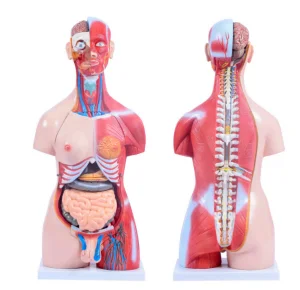
China 30 muscular torso models of both sexes, 85CM Factory, Factories
View Product & Request Quote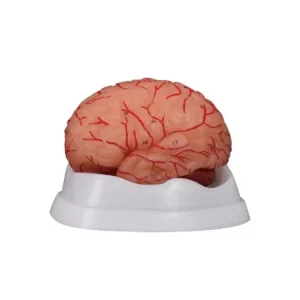
China There were 9 new brain anatomical models for teaching medicine Factories, Service
View Product & Request Quote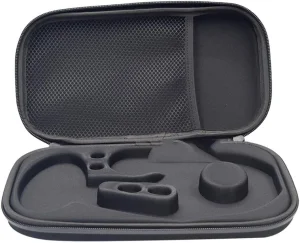
Wholesale Hard Stethoscope Case, Stethoscope Storage Box, Multi-Function Carry Storage Organizer Box with Extra Mesh Pockets for Small Accessories, Device NOT Included(Black) Manufacturers, Service
View Product & Request Quote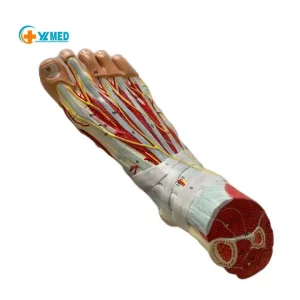
OEM Detachable 9 Parts Foot Joint Muscle Anatomy Model with Ligament Neurovascular Manufacturers, Service
View Product & Request Quote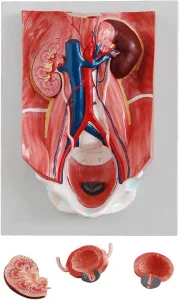
ODM Human Urinary System Model - Human Vesicoureteral Vascular Teaching Model - Kidney Organs Structure Anatomy Model for Medical Education and Learning Manufacturer, Factory
View Product & Request Quote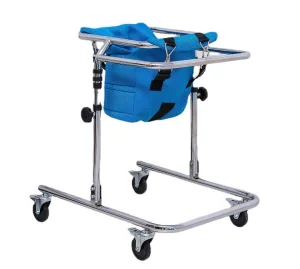
OEM Walking Aid for Cerebral Palsy Stand up Frame Pediatric Walkers Folding Posterior Walker for Child Manufacturers, Factory
View Product & Request Quote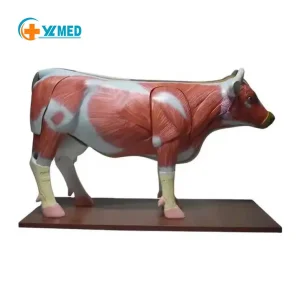
ODM Medical Teaching Cattle models Animal Bovine Anatomical Dissection Model Vet Animal Cow Anatomy Model muscles detachable organs Manufacturer, Quotes
View Product & Request Quote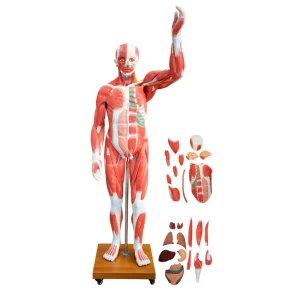
Wholesale Life size Human Muscle Anatomical Model with Organs Removable Whole Body Muscled Model 27 Parts For Teaching Medical Science Manufacturer, Quotes
View Product & Request QuoteWhat an ODM Vertical Autoclave Pricelist Must Prove
A vertical autoclave is a pressure vessel, a steam process system, a documentation package and a service commitment. A serious quote should make every assumption visible, not hide critical cost drivers behind a single chamber-volume price.
In sterilization procurement, price per litre is a weak comparison metric. The more useful question is this: what scope has been priced, what has been excluded, and what evidence will be supplied at factory acceptance and site validation? A 50 L ODM vertical autoclave with a basic control panel is not comparable with a 50 L model that includes custom baskets, cycle data logging, chamber mapping ports, multilingual documentation, local voltage configuration and validated spare-parts support. For distributors and tender teams, the pricelist should function as a risk map covering safety, performance, compliance, installation and lifetime service.
Yulin Medical publishes this buyer guide from the perspective of a long-established medical and educational equipment manufacturer serving global distributors, schools and hospitals. For ODM vertical autoclave projects, our role is to translate the user requirement specification into a clear technical and commercial package, coordinate qualified manufacturing resources, and keep the quotation traceable from design freeze to export packing. Final compliance always depends on the destination market, chamber configuration, pressure-vessel code, electrical standard and the documentation accepted by the relevant authority.
Usable Chamber Volume
The quote should state internal dimensions, usable basket volume, door clearance and load pattern. Nominal litres alone do not reveal whether your trays, instruments or porous loads will fit efficiently.
Pressure Vessel Design
Material grade, wall thickness, welding standard, safety interlock, door gasket and code compliance must be defined. Buyers should ask which pressure-vessel certification route applies in the destination country.
Control & Data Integrity
PLC or microcontroller architecture, HMI language, cycle recipes, alarm history, audit trail, USB or Ethernet export and password control determine validation workload and user confidence.
Vacuum, Steam & Water
Air removal method, vacuum pump quality, steam quality requirements, water consumption and drain conditions influence cycle time, utility cost and long-term reliability.
Validation Package
Ask for factory test records, leak-rate testing, pressure and temperature calibration reports, chamber mapping provisions, biological-indicator guidance and document language options.
Local Compliance Support
Electrical voltage, frequency, plug type, language, pressure-equipment requirements and import documentation differ by market. The quote should separate included documents from optional third-party certification.
Packing, Freight & Install
Export packing, lifting points, container loading plan, unloading responsibility, commissioning, operator training and site utilities should be itemized rather than assumed.
Warranty & Spares
A credible quotation lists warranty terms, recommended spare parts, wear items such as door gaskets, sensor calibration intervals, remote support and response escalation.
From Mechanical Reliability to Connected Sterilization 4.0
Vertical autoclaves are moving from isolated equipment to data-enabled sterilization platforms. The roadmap below is a practical evaluation framework for ODM buyers who need today's reliability with tomorrow's traceability.
The first generation of value is still mechanical: a well-designed pressure vessel, a dependable door mechanism, correct air removal, stable steam supply and serviceable components. The second generation is control: repeatable recipes, clear alarms and documented cycles. The third generation is validation intelligence: chamber mapping, data export, calibration traceability and easier audit preparation. The fourth generation is connected service: remote diagnostics, predictive maintenance and fleet-level performance visibility. For an ODM project, the smartest approach is to define which layer you actually need now, and which layer the control architecture can support later without re-engineering the whole machine.
Mechanical Assurance
Pressure vessel integrity, safety interlocks, door sealing, steam trap, air removal, drainage and robust materials form the non-negotiable base.
Digital Control
PLC/HMI recipes, operator access levels, alarm logs, cycle counters and USB/Ethernet data export reduce training burden and simplify audits.
Validation Intelligence
Calibration ports, leak-test routines, cycle reports, chamber-mapping support and biological-indicator protocols help teams build repeatable validation files.
Connected Service
Remote diagnostics, predictive maintenance prompts, energy dashboards and spare-parts planning turn an autoclave fleet into a managed asset.
What Changes in Vertical Autoclave Procurement Through 2030
Buyers are not only asking whether an autoclave reaches temperature. They are asking whether the cycle can be proven, the data can be trusted, the asset can be serviced and the energy footprint can be managed.
Regulatory Convergence
Pressure-equipment, electrical-safety and sterilization-performance requirements will continue to tighten. ODM proposals should identify the exact conformity route early, rather than after design freeze.
Digital Traceability
Cycle reports, audit trails and electronic signatures will become more common in hospital and laboratory tenders. Controllers should be selected with future data-export needs in mind.
Lower-Carbon Operation
Water reuse, insulation, efficient vacuum pumps, optimized steam use and standby modes are becoming commercial differentiators, especially for high-cycle facilities.
Modular ODM Platforms
Distributors increasingly need one platform that can be localized by voltage, language, documentation, packaging and accessories without redesigning the pressure vessel.
Industry Solutions Mapped to Real Sterilization Workflows
Different buyers define “vertical autoclave” differently. The application determines load pattern, chamber geometry, control logic, documentation and support model.
Hospitals & CSSD
Focus on repeatable cycles, load documentation, safety interlocks, emergency procedures, service response and integration with sterile-services workflows. Tenders often require detailed training and spare-parts commitments.
Medical Schools & Simulation Centers
Medical education buyers often combine autoclaves with anatomy models, nursing simulators and laboratory accessories. Robust basic controls, operator safety and straightforward maintenance are usually prioritized.
Research & Quality Laboratories
Expect requests for validation support, temperature mapping, documentation language options, data export and compatibility with glassware, media or waste-treatment procedures.
Veterinary & Animal Facilities
Loads can be mixed and staff turnover higher, so clear HMI prompts, durable chambers, simple cycle selection and accessible service documentation matter.
Pharma, Food & Cosmetics
Where applicable, buyers require tighter change control, calibrated instrumentation, validation evidence and a clearly documented approach to data integrity and maintenance.
Field & Resource-Limited Settings
Voltage stability, water quality, ambient conditions, portability and spare-part availability must be discussed before selecting a standard model from a pricelist.
Local Support Is a Specification, Not an Afterthought
The most competitive quotation is not always the one with the lowest ex-works number. For exported sterilization equipment, localization and documentation decide whether the unit can be installed, validated and serviced without avoidable downtime.
ODM buyers should convert localization requirements into written specifications. Confirm the electrical supply, plug type, HMI and manual language, pressure-equipment documentation, import registration needs, user training, installation scope, spare-parts list and warranty process before approving the design. Where third-party certification is required, clarify whether it is included, optional or obtainable through a notified body or local representative. Never assume that a CE mark, PED assessment, ASME stamp, EN 285 performance claim or local registration is automatically included in a low-cost quotation.
Electrical Configuration
Voltage, frequency, phase, plug and breaker requirements should match the site. The quote should state the exact configuration and whether a transformer is recommended.
Language & Training
HMI, manuals, labels and training materials can be localized. Include operator and maintenance training deliverables in the purchase order, not only in sales discussions.
Pressure Vessel Documentation
Confirm the applicable code, inspection records, nameplate information and declaration package. Requirements vary by country and by chamber volume and pressure.
Sterilization Performance
Ask for factory test evidence and validation guidance. Site validation may require chamber mapping, biological indicators and locally approved procedures.
Spare Parts Continuity
Recommended spares should include door gaskets, sensors, filters, valves and fuses. For distributors, a starter spare kit can reduce first-year service friction.
Warranty Workflow
Define how claims are submitted, what photos or logs are required, who approves parts replacement and how response times are measured across time zones.
Supply-Chain Resilience and Efficiency Advantages
For ODM projects, Factory 4.0 is not a marketing slogan. It is a set of operating disciplines that make specifications, changes, quality records and export logistics easier to control.
Yulin Medical was founded in 1958 and has operated an ISO 9001 quality management system since 2008. That long manufacturing history is useful to international buyers because it supports a practical approach to mixed-category sourcing: one commercial team, one document trail, consolidated inspection and coordinated export packing. For sterilization equipment programs, the same discipline should be applied to the qualified manufacturing network: digital BOM control, material traceability, supplier redundancy, staged quality gates and disciplined change management. The result is not simply lower cost; it is a more predictable quotation and a lower risk of late-stage surprises.
Digital BOM & Change Control
Configuration items, options and custom labels should be tied to a revision-controlled bill of materials so the approved sample and the bulk order remain aligned.
Supplier Redundancy
Critical components such as controllers, sensors, valves and gaskets should have qualified alternatives or safety stock to reduce single-source disruption.
In-Process QC & Traceability
Incoming inspection, assembly checks, pressure testing, electrical safety checks and final functional tests should generate records that can be reviewed by the buyer.
Export Consolidation
Mixed orders from medical education, hospital equipment and ODM projects can be consolidated with coordinated packing lists, labels and shipping documents.
What Serious International Buyers Ask Before They Compare Prices
Procurement teams need a quotation they can defend internally. That means safety, documentation, support and lifetime cost must be visible before the purchase order is issued.
Distributors
Need repeatable configurations, private-label packaging, spare kits, training material and predictable lead times. Ask for a model matrix that separates standard options from new engineering.
Hospitals & IDNs
Need safety, validation, service response and documentation. Ask how cycle data is retained, how alarms are handled and who performs installation and operator training.
Universities & Institutes
Need predictable budgets and simple operation. Ask whether the chamber can accommodate teaching loads, whether local language is available and what preventive maintenance is recommended.
Tenders & NGOs
Need traceable specifications and robust logistics. Ask for document checklists, packing details, warranty terms and a clear statement of excluded local compliance work.
Illustrative quote-weighting model for internal buyer discussion. Adjust weights for your tender, risk profile and local regulatory context.
From Specification to Shipment: A Transparent Six-Stage Process
Clear gates reduce rework and protect both buyer and supplier. Each stage should produce a document that the next stage can rely on.
URS Intake
Collect chamber size, load type, cycle requirements, utilities, voltage, language, compliance target, packaging and delivery schedule.
Technical Proposal
Match the URS to a base platform, identify custom work, list documents included and separate optional third-party certification.
Design Freeze
Approve drawings, BOM, control features, labels, manuals, test plan and packaging. Any later change should follow a written change-control step.
Sample & Validation Review
Review factory test records, calibration reports, functional checks and, where required, pre-shipment validation documentation.
Production & QC
Manufacture under staged quality gates, perform electrical and pressure-related checks, verify labels and pack with export protection.
Export & Support
Coordinate shipping documents, installation guidance, operator training, spare-parts recommendations and after-sales escalation.

Adjacent Medical Education & Clinical Product Categories
Distributors often consolidate sterilization projects with teaching models, nursing simulation and hospital equipment. The original Yulin Medical category links remain available for mixed-category sourcing.
Questions Procurement Teams Ask About ODM Vertical Autoclave Quotes
Direct answers to the issues that most often delay a quotation, sample approval or tender submission.
Is Yulin Medical a manufacturer or a trading company?
Yulin Medical is Henan Yulin Edu. Project Co., Ltd., founded in 1958, with its own factory in Xinxiang, Henan, China, and more than 200 professional staff. For one-stop orders, the company also coordinates a stable network of long-term partner factories. For ODM sterilization projects, final manufacturing allocation and certification scope should be confirmed in the formal technical proposal.
What quality certification does Yulin Medical hold?
The quality management system has been ISO 9001 certified since 2008. Product-specific documentation can be provided on request for tenders and import registration. Vertical autoclave compliance depends on the destination market and configuration, so pressure-equipment, electrical and performance documents must be specified per project.
Do you support OEM, ODM, private label and custom packaging?
Yes. The in-house design and export teams support private-label packaging, product presentation, manual language coordination and configuration planning. For autoclave projects, ODM scope should be documented through a design-freeze checklist and revision-controlled BOM.
How do I choose the right vertical autoclave size?
Start with the load pattern, not the nominal litre rating. Measure instrument trays, glassware, porous loads, waste bags or teaching materials, then confirm usable chamber dimensions, basket clearance and door access. Also estimate peak daily cycles so the chamber is neither underused nor constantly overloaded.
What should be included in an autoclave quotation?
A useful quotation itemizes the base unit, chamber dimensions, pressure-vessel documents, control architecture, electrical configuration, accessories, validation support, manuals, packaging, freight terms, installation scope, training, warranty and recommended spare parts. Exclusions should be written down clearly.
Can you provide CE, PED, ASME or EN 285 documentation?
Documentation requirements vary by market, chamber design and risk category. Yulin Medical can discuss the required package with the buyer and coordinate with qualified manufacturing and certification resources where applicable. Buyers should confirm the exact conformity route, testing body and local registration requirements before placing the order.
What is the typical lead time for an ODM vertical autoclave?
Lead time is confirmed after specification freeze, quantity, documentation scope and testing requirements are known. Custom voltage, language, packaging, validation documents and third-party certification can change the schedule. The formal quotation should state production, inspection and estimated shipping windows separately.
How quickly will I receive a reply?
The export team is online 7 days a week and typically replies within 24 hours with catalogs, specifications, clarification questions and shipping options. For urgent tender deadlines, include the destination country, required voltage, chamber size, load type and document checklist in your first message.
Need a Pricelist You Can Compare, Defend and Localize?
Send your chamber size, load pattern, voltage, language, destination market and documentation requirements. Our team will help structure an ODM vertical autoclave quotation with clear inclusions, exclusions and next-step engineering questions.
Additional Medical Teaching & Simulation Products
These products complete the original Yulin Medical product set. Images, product URLs and full product references are retained for distributors building mixed-category medical education orders.
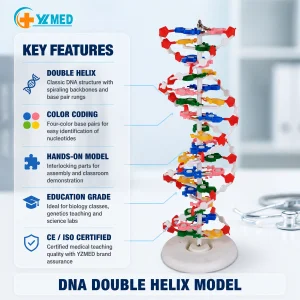
Wholesale Medical Experimental DNA Model/Biological Model Medical Teaching Biology Double Helix DNA Structure Model Manufacturer, Service
View Product & Request Quote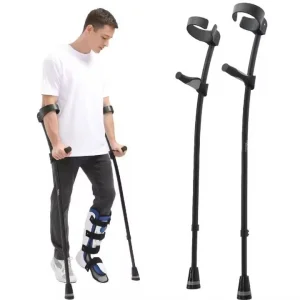
Wholesale Lightweight Durable Aluminum Crutches Elderly Disabled Adults Adjustable Mobility Aid Ergonomic Handles Non-Slip Manufacturer, Pricelist
View Product & Request Quote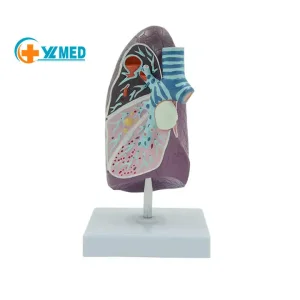
China Medical Research Model Smoking Harms Lung Disease Model Picture High Quality PVC Material Medical Science Cpr Manikin Pricelist, Quotes
View Product & Request Quote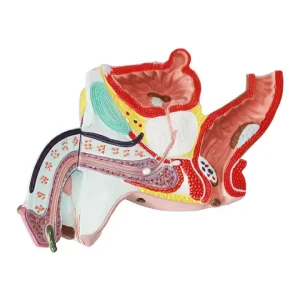
China Medical teaching students physiological learning model advanced male reproductive organs teaching model Manufacturers, Factory
View Product & Request Quote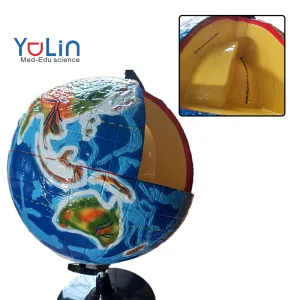
ODM Tectonico Placa Terrestre Modelo Globo Educativo Globo Tierra De Plastico Geographical Earth Internal Structure Globe Model Pricelist, Quotes
View Product & Request Quote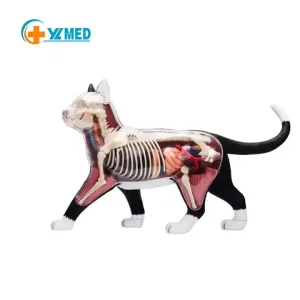
OEM Anatomical cat anatomy model for medical learning with prompt delivery medical science cat anatomy model for kids learning Factory, Quotes
View Product & Request Quote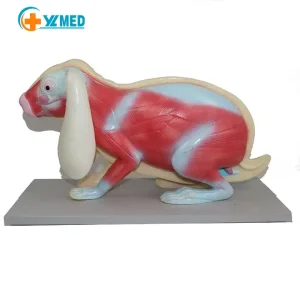
Wholesale Medical anatomy teaching advanced PVC rabbit model Rabbit anatomical model Factories, Quotes
View Product & Request Quote