
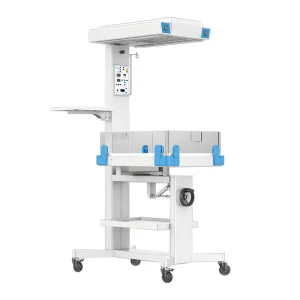
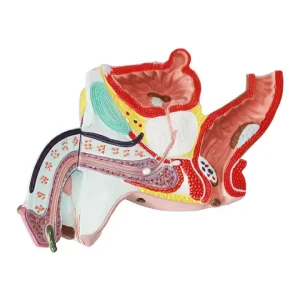
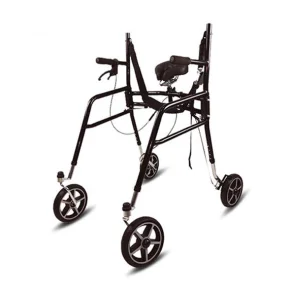
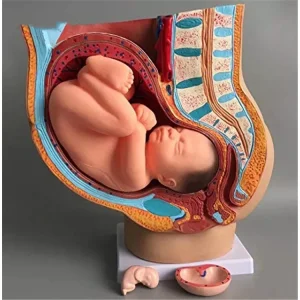
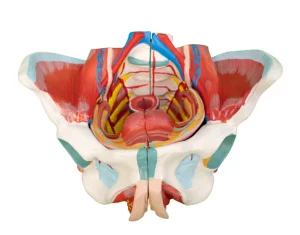
Featured ODM Medical Equipment From the Same Production Floor
Every suction system we quote is manufactured inside the same ISO 9001 quality system that produces the medical teaching, emergency and hospital equipment below — one accountable supplier, one consolidated shipment.



Why a Sputum Suction Device Is Still a "High-Risk" Purchase
A modern sputum suction device — also specified as a medical suction pump, negative-pressure aspirator or airway clearance unit — looks deceptively simple: a vacuum source, a collection jar, tubing and a suction catheter. In clinical reality it is the backbone of airway management, appearing in emergency resuscitation rooms, intensive care units, operating theatres, ambulances and, increasingly, in home-care settings where a family member operates the machine alone at 3 a.m.
It is used to clear secretions, blood, vomit and meconium from a patient's airway before intubation, to manage post-operative sputum retention, to maintain a tracheostomy, and to support neonatal resuscitation. Because the principle is simple, procurement teams have historically treated the category as a low-value commodity line. That assumption no longer holds. A suction system that fails can cause immediate hypoxia; a filter and overflow design that is under-specified can push cross-contamination straight into the next bed; a rough vacuum regulator can add maintenance hours to a nursing rota that has no slack left.
That is exactly why experienced distributors now source this category from an ODM factory that engineers suction as a single integrated system — pump, control, filtration, canister, power and packaging — rather than from a trading company that simply re-badges whatever catalogue it happens to hold.
What a Modern Sputum Suction Device OEM / ODM Factory Actually Designs
Branding a finished product is the last five percent of an ODM project. The first ninety-five percent happens across eight engineering decisions that determine whether the device survives a five-year hospital service life.
1. Oil-Free Piston Pump Architecture
The pump is the single largest driver of reliability. Oil-free piston designs avoid lubricant contamination of the exhaust air stream and deliver a flatter vacuum curve during continuous duty. Buyers should ask for continuous-operation test data, not peak figures taken from a three-second bench run.
2. Stepped Vacuum Regulation
Adult, paediatric and neonatal patients cannot share one nominal vacuum setting. A regulator with a clearly indexed scale, a mechanical stop and a verifiable gauge face lets a clinician dial down for a neonate without guesswork, and gives biomed departments a repeatable calibration point.
3. Overflow Protection & Filtration
A float valve alone is not enough. Serious ODM designs combine a hydrophobic filter, a mechanical overflow shut-off and an exhaust filter so that fluids never reach the pump head and aerosols never reach the room. This is the specification that infection-control committees audit first.
4. Collection Canister System
Capacity, material, graduations and autoclave compatibility all change the total cost of ownership. A 1,000 ml reusable polycarbonate jar suits a ward; a disposable liner system suits a theatre list where turnaround time matters more than unit price.
5. Electric, Battery and Manual Redundancy
Hospitals want mains power, ambulances want a battery runtime they can trust, and disaster planning wants a manual pump that works when the grid does not. A mature ODM platform offers all three from one enclosure family so spare parts stay interchangeable.
6. Digital Control and Alarms
Digital vacuum readouts, blockage alarms, battery state indicators and a silent night-mode are shifting from premium features to expected ones. Alarms must be distinguishable from surrounding equipment noise — a design question, not merely a firmware question.
7. Infection-Control Design
Removable tubing sets, smooth wipeable housings, no hidden crevices around the canister lid, and clear separation between the "dirty" fluid path and the "clean" pump side. Cleaning instructions must be written for the person doing the cleaning, not for an auditor.
8. Noise, Weight and Mounting
Night-shift wards judge a suction unit by its noise floor; ambulance crews judge it by weight and by how fast it clamps to a rail. Trolley mounts, wall brackets and bed-rail hooks are low-cost options that make a quotation far more competitive.
Five Trends Reshaping the Sputum Suction Device Industry
These are the forces that distributors are already pricing into their 2026 buying plans — and the specifications an ODM factory must be able to answer.
1. Care Is Moving Out of the Hospital
Ageing populations, earlier discharge and the expansion of home mechanical ventilation are pushing suction demand into home care, nursing homes and community clinics. Portable, low-noise, battery-capable units with simplified controls and lay-operator instructions are the fastest-growing configuration in most export markets.
2. Infection Prevention Becomes a Core Specification
Post-pandemic purchasing has upgraded filtration and single-use interfaces from "nice to have" to mandatory line items in tender documents. Distributors who can show a documented fluid-path separation strategy win more tenders than those competing purely on pump price.
3. Device Connectivity Enters Asset Management
Hospitals increasingly want run-hour logs, service intervals and fault history pulled into their biomedical asset systems. Suction units are no longer invisible; a controller with a service-hour counter and a diagnostic interface is quietly becoming a differentiator in large fleet tenders.
4. Higher Regulatory Entry Barriers
The European MDR transition, US premarket pathways for powered suction equipment, and tightening registration requirements across Southeast Asia and the Gulf all raise the value of a factory with mature technical documentation. Compliance depth is now a commercial weapon, not a back-office cost.
5. Regional Service and Local Stock
Buyers increasingly evaluate spare-part lead time, not just unit price. Factories that support regional warehousing, consignment accessories or local service partners shorten hospital downtime — and convert a one-off order into a multi-year framework agreement.
The Net Effect on Sourcing
All five trends point the same way: the winning supplier is a factory that can hold a stable pump platform, customise the interface and packaging, document the quality system, and still answer a quotation request within a day.
What International Buyers Actually Ask For
Demand for sputum suction equipment is not one market. It is six markets that happen to share a product category — and each one weights the specification differently.
Acute-Care Hospitals
Fleet purchases, standardised consumables and a single accessory catalogue matter more than unit cost. Buyers want wall-mounted and trolley-mounted variants from the same platform, plus a documented preventive-maintenance schedule.
EMS and Pre-Hospital Providers
Battery runtime, vibration tolerance, a rugged enclosure and a secure mounting system for a moving vehicle dominate the specification. Rapid canister changeover in a confined space is a decisive usability factor.
Long-Term Care and Nursing Homes
Operators want quiet, light, easy-to-learn units operated by carers rather than clinicians. Simplified alarms, larger gauges and translated quick-start guides reduce training time and support-call volume.
Home Care and Individual Buyers
A growing direct-to-consumer channel wants compact, low-noise aspirators with clear instructions, a warranty that is easy to claim, and packaging that survives parcel logistics instead of pallet freight.
Clinical Skills and Teaching Labs
Medical schools pairing airway-management trainers with suction equipment need realistic, cost-controlled units that can tolerate student handling. This is where our teaching-model range and our suction platform combine naturally in one container.
Veterinary and Specialised Clinics
Smaller clinics value a compact footprint and multi-species vacuum range. Veterinary buyers are typically less regulated but highly service-sensitive, making spare-part availability the deciding factor.
Across all six segments, the same tender-grade questions appear: Can you trace a finished unit to a production batch? Will you supply technical files and test reports? Can the label, manual and packaging be localised? What is the spare-part lead time after the warranty ends? A factory that answers these without hesitation is a different kind of supplier from one that only quotes a price per carton.
Supply-Chain Resilience and Efficiency Advantage
China's advantage in medical device manufacturing is no longer simply labour cost. It is industrial density: mould shops, PCB assembly, injection moulding, filter media, silicone tubing and export logistics within a few kilometres of each other.
Vertical Integration Inside One Quality System
Where design, mould making, injection moulding, electronic assembly, final assembly and testing sit under one management system, deviations are caught before they leave the building. That is the practical meaning of resilience: fewer hand-offs, fewer unknowns, fewer surprise inspection failures.
Digital Manufacturing and Traceability
Order tracking through production stages, barcode-scanned incoming inspection, and serial-number-level final testing turn a shipment into a documented record. When a buyer audits a batch two years later, the data exists instead of being reconstructed from memory.
Supplier Redundancy, Not Supplier Hope
Mature exporters qualify a second source for every critical component — pump motors, pressure switches, filter media, connectors. Dual sourcing adds a small paperwork cost and removes the single largest cause of missed delivery dates.
Tooling and Rapid Prototyping
In-house mould capability compresses an ODM customisation cycle — a new housing colour, a different canister mount, a revised control panel — from a quarter to a matter of weeks. For distributors chasing a tender deadline, that speed is worth more than a marginal price reduction.
Capacity Elasticity
Seasonal tender windows and emergency stockpiling both demand short-notice ramp-up. A factory with diversified product lines can shift assembly capacity between categories instead of turning orders away or stretching lead times.
Export Logistics Maturity
Consolidated mixed-category shipments, protective export packaging, and documentation prepared for customs clearance reduce the hidden cost that buyers only notice after the container arrives.
How the Global Market Is Actually Structured
North America and Western Europe remain the highest-value markets per unit, driven by replacement cycles, stricter infection-control expectations and a rapidly expanding home-care segment. Buyers in these regions tend to purchase through distributors with local stock and service capability, which means the factory's job is to make that distributor look reliable — with stable quality, complete documentation and predictable lead times.
Asia-Pacific is simultaneously the world's largest manufacturing base for suction equipment and one of its fastest-growing consumption regions. Domestic hospital expansion, private clinic growth and public health investment across Southeast Asia and South Asia create tender-driven demand where price is important but documentation and after-sales response are decisive.
The Middle East, Africa and Latin America show strong demand for robust, low-maintenance, mains-powered units with simple controls, often procured through government or NGO tenders. In these markets, a supplier that can commit to a spare-part ratio and a multi-year supply continuity statement frequently beats a lower-priced competitor.
Meanwhile, the "China plus one" conversation has changed behaviour without changing the fundamentals. Some final assembly has moved to Vietnam, India or Eastern Europe, but the pump motors, precision moulds, filter media and electronic sub-assemblies still flow through Chinese industrial clusters. Diversification has added a second assembly location, not replaced the underlying supply chain.
For buyers, the practical conclusion is straightforward: choose a factory that can absorb volatility — through component redundancy, documented processes and honest lead-time communication — rather than one that simply offers the lowest quotation this quarter.
One Platform, Eight Localized Configurations
The same suction platform can be configured for very different rooms. Configuring correctly at the quotation stage avoids the most common after-sales complaint: "it works, but not here."
Emergency Department & Resuscitation
Fast pull-down vacuum, large canister, wall or trolley mount and an unambiguous gauge. Reliability under simultaneous multi-patient use matters more than portability.
ICU and Respiratory Wards
Continuous duty operation, low noise and a filtration package that satisfies infection-control rounds. A service-hour counter simplifies preventive maintenance scheduling.
Operating Theatre & Anaesthesia
Theatre suction demands a stable vacuum under sustained load, secure hose connections and a canister system designed for rapid turnover between cases.
Neonatal and Paediatric Units
Precisely limited vacuum ranges, small-volume canisters and gentle catheter interfaces. A regulator that is easy to set and hard to accidentally over-adjust is essential.
Ambulance and Field Response
Battery runtime, weight, vibration resistance and a mount that survives a pothole. A manual pump backup remains a sensible disaster-preparedness option.
Nursing Homes and Long-Term Care
Simple controls, quiet operation and clear translated instructions for carers. Durability to daily cleaning products matters more than any advanced feature.
Home Care and Individual Users
Compact footprint, low noise, mains or rechargeable power, and packaging engineered for parcel delivery. Support documentation in the local language is a genuine selling point.
Clinical Skills and Medical Education
Teaching laboratories pair airway-management trainers with suction units for scenario-based practice. Cost-controlled, robust configurations let institutions equip more stations per budget.
Procurement Benchmarks Behind Every Quotation
Numbers a buyer can verify during a factory audit — and the operating reality they represent.
Henan Yulin Edu. Project Co., Ltd. has been manufacturing educational and medical training equipment in Xinxiang, Henan, since 1958. Registered capital of RMB 120 million and more than 200 professional staff support product development, manufacturing, inspection and export from a single base — which is precisely why a mixed container of suction equipment, anatomy models and emergency devices can leave one dock under one quality system.
How an ODM Suction Device Project Runs — Five Steps
From first enquiry to container departure, each stage has a named contact and a documented output so that procurement, clinical and regulatory stakeholders all see the same picture.
Requirements Brief
Share the target market, patient groups, power configuration, certification needs, volumes and any tender specification you must match.
Configuration & Quote
Receive a matched platform, accessory list, packaging proposal, MOQ structure and a landed-cost shipping plan.
Sample Validation
Clinical or technical stakeholders test samples against real workflows before bulk tooling and labelling are locked.
Production & QC
Manufacturing and inspection follow the ISO 9001 quality management system, with serial-level final testing and batch records.
Export & After-Sales
Protective export packing, documentation support and a spare-part and warranty plan that keeps the fleet running after arrival.
Ten Things to Confirm Before You Request a Quote
A brief that answers these ten points typically halves the back-and-forth between enquiry and a tender-ready quotation.
- Target market and the registration or certification pathway the product must satisfy.
- Patient mix — adult, paediatric, neonatal — and the required vacuum adjustment range.
- Power configuration: mains only, mains plus rechargeable battery, or a manual backup unit.
- Canister strategy: reusable autoclave-safe jars versus disposable liner systems.
- Filtration package specified line by line — hydrophobic filter, overflow shut-off, exhaust filter.
- Mounting style: wall bracket, trolley, bed-rail clamp or portable carry case.
- Localisation scope: language of labels, manual, packaging and any regulatory inserts.
- Accessory bundle and the spare-part ratio you want shipped with the first order.
- Order structure: trial order quantity, repeat-order expectation and MOQ per variant.
- Documentation package required for customs and hospital acceptance — test reports, declaration, packing list.
Quality System, Documentation and Experience
The content on this page is written from the perspective of a manufacturer that has produced educational and medical training equipment since 1958 and has operated an ISO 9001 certified quality management system since 2008. That matters for a suction device buyer in three concrete ways.
First, documentation exists before you ask for it. Incoming inspection records, in-process checks and final testing are part of normal production, not a special project created for one audit. When a distributor needs to support a registration file or a hospital acceptance procedure, the underlying data is retrievable by batch or serial number.
Second, experience shows up in the small details. Knowing that a canister lid needs a specific gasket seat to survive repeated autoclaving, or that a battery indicator must remain readable in dimmed wards, comes from years of hearing what actually failed in the field — not from a design brief alone.
Third, honesty about scope builds trust. We describe what our quality system covers and provide product-specific documentation on request, rather than implying universal approval from a single certificate. Buyers who need regional registration data are invited to state their requirement in the first enquiry so the correct file package can be prepared.
For distributors, this translates into a supplier relationship that survives audits, tenders and the second and third repeat orders — which is where the real margin in this category is made.
Frequently Asked Questions About ODM Sputum Suction Devices
Straight answers to the questions importers, distributors and clinical procurement teams ask most often.
Are you a manufacturer or a trading company?
What does "ODM" actually cover in a suction device project?
Can you produce a configuration for our local registration requirements?
What quality certification do you hold?
How do I choose between a reusable canister and a disposable liner system?
What vacuum and flow specifications should appear in a tender quotation?
Do you support private label, custom manuals and retail packaging?
What is the typical lead time and how do you protect the shipment?
How quickly will I receive a reply?
More ODM Medical & Teaching Equipment for Mixed Containers
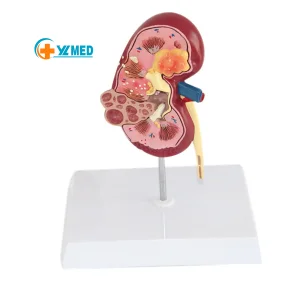
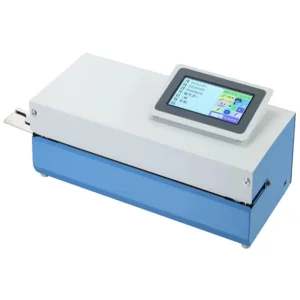
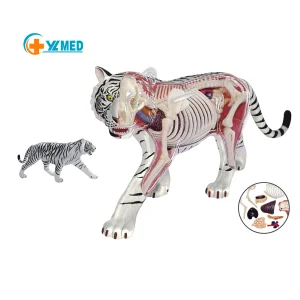
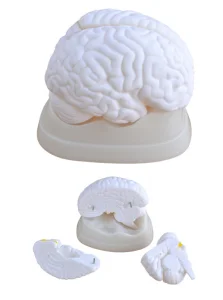
Distributors consolidating a one-stop order can combine suction equipment with the anatomy, biology and dental lines below — one supplier, one inspection standard, one shipment.
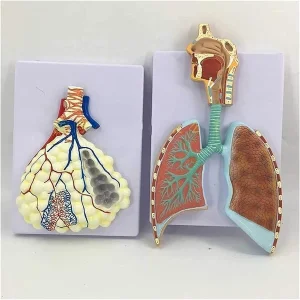
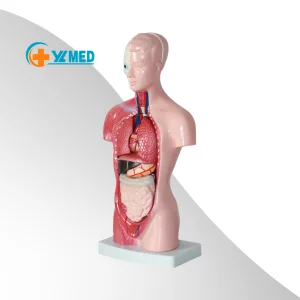
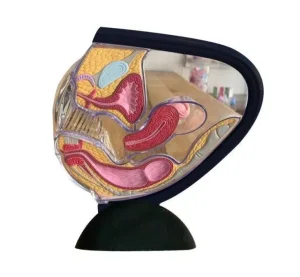
Need Specifications, a Price List or a Tender Package? We Reply Within 24 Hours.
Tell us your target market, the patient groups you serve, your expected volume and any certification requirement. Our product specialists will propose a matched suction platform, share the technical specification sheet, and outline the most economical consolidation and shipping plan for your order.