ODM Patient Monitor Factory & Pricelist
A high-level sourcing guide for distributors, hospital groups, tender teams and medical training institutions comparing ODM patient monitoring factories, pricelist structures, regulatory documentation, localized applications and total cost of ownership.
8 Factory-Direct Medical, Laboratory & Training Products for Mixed Orders
The products below are part of Yulin Medical's broader manufacturing and supply portfolio for distributors, schools, clinics and hospitals. Global buyers frequently combine training models, diagnostic accessories, hospital furniture and ward equipment into one consolidated shipment to reduce handling, documentation and freight complexity.
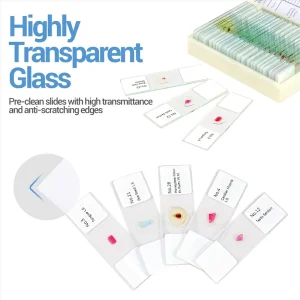
China 50pcs microbiology slides prepared for microscope, include bacteria and fungi Manufacturer, Service
View product →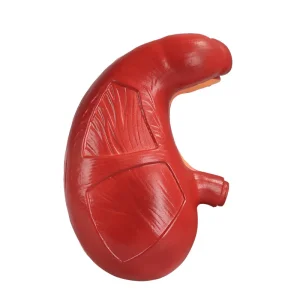
OEM Advanced Quality PVC Human Natural Size Stomach Anatomy Structure Model Teaching Instruments Anatomy Stomach Model for Teaching Manufacturer, Manufacturers
View product →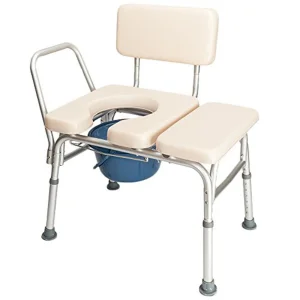
ODM Adjustable Bath Seat Shower Chair Padded Transfer Bench for Bathtub with Backrest Bedside Commode Chair for Bathroom Factories, Pricelist
View product →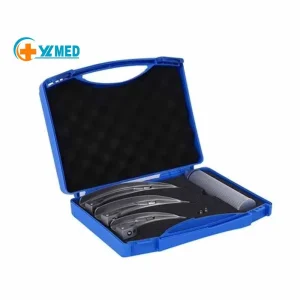
Wholesale Genuine Stainless Steel Indirect Video Laryngoscope Electric Adult Pediatric Laryngeal Ear Eye Nose Throat Surgical Instrument Quotes, Service
View product →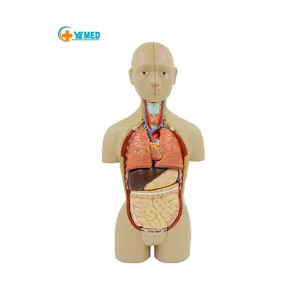
ODM 16 Part Torso Anatomical Model of Human Organs Assembled Trunk Model of Human Visceral Structure Human Torso Body Anatomy Model Factories, Service
View product →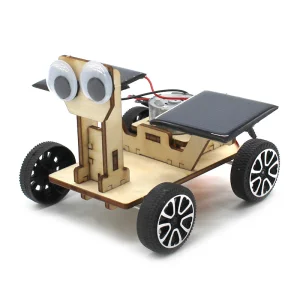
China Shaking head fan No. 2 Scientific experiment model Handmade wooden technology small production model Manufacturers, Pricelist
View product →
What an ODM Patient Monitor Factory & Pricelist Must Prove Before You Buy
In patient monitoring, an ODM relationship is not simply a hardware purchase. It combines a validated monitoring platform, regulatory documentation, software lifecycle control, clinical usability, accessories management, serviceability and long-term supply continuity. A serious pricelist should therefore expose what is included, what is optional and what evidence the factory can provide for your target market.
Factory Evidence, Not a Trading Story
Ask for the manufacturing entity, production address, medical-device license scope, ISO 13485 certificate, product registration or notification status, and the name of the legal manufacturer on the label. Verify whether the assembly, testing and software release are controlled in-house or subcontracted.
A Pricelist Is a Configuration Document
Patient monitor quotations should separate the base unit, parameter modules, probe types, battery, trolley, mounting arms, recorder, central-station options, software licenses and warranty. A single FOB number without configuration is commercially unsafe because the lowest headline price can hide the highest total cost.
Localization Goes Beyond Translation
Clinical language, alarm terminology, voltage, plug type, cuff sizes, probe compatibility, EMR connectivity, print formats and training materials must fit the destination market. For tender projects, local documentation and after-sales response can matter as much as the monitor specification itself.
Editorial note: this guide is written for procurement education. It does not replace regulatory advice. The legal manufacturer, distributor and importer responsibilities vary by country and must be confirmed with qualified regulatory specialists.
The Global Patient Monitor Market: Commercial and Industrial Status
Demand for patient monitoring is being reshaped by aging populations, chronic disease, hospital capacity planning, emergency preparedness, outpatient surgery, home-based care and the digitalization of healthcare. For distributors and hospital groups, the commercial opportunity is real, but the industrial requirements are more demanding than they were a decade ago.
Hospitals increasingly want monitors that integrate with electronic medical records, central stations and mobile viewing systems, while also meeting cybersecurity and software-maintenance requirements. Distributors want differentiated products, reliable accessories, fast technical support and a factory that can protect their brand in local tenders. Emerging markets require cost-effective configurations and robust service networks. High-regulation markets require documented design controls, electrical safety testing, electromagnetic compatibility evidence and post-market surveillance readiness.
On the industrial side, patient monitoring has moved toward modular platforms, wireless connectivity, smaller footprints, longer battery life and software-enabled features. Buyers are also reviewing supply-chain resilience: dual sourcing for probes and cables, component lifecycle plans, spare-parts availability, firmware update pathways and clear responsibilities between the factory, importer and service partner.
- Acute-care hospitals prioritize clinical accuracy, alarm management, interoperability and uptime.
- Distributors prioritize differentiated branding, documentation, margin protection and after-sales support.
- Public tenders prioritize compliance, traceability, training, spare parts and total lifecycle cost.
- Home and primary care prioritize ease of use, connectivity, portability and remote serviceability.
Sample Buyer Evaluation Weighting
Illustrative scorecard used by procurement teams. Adjust weights for your market, tender and clinical setting.
Hospital Capacity & ICU Planning
New ICU beds, operating theatres and emergency departments create demand for multiparameter monitoring, central stations and clinical training. Procurement teams increasingly evaluate lifecycle service, not only initial purchase cost.
Decentralized & Home Care
Telehealth, chronic disease management and home monitoring create demand for compact devices, simple user interfaces, connectivity and remote technical support. Accessories and consumables become a major revenue and service factor.
Regional Regulatory Differences
North America, Europe, Asia-Pacific, the Middle East, Latin America and Africa each present different registration pathways, tender expectations and price sensitivities. A factory's export documentation capability must match the destination market.
Tender & Distributor Requirements
Public tenders often require product registration, technical data sheets, training plans, warranty statements and spare-parts commitments. Distributors need brand protection, packaging quality and reliable lead times for repeat orders.
Why China Remains a High-Efficiency Base for Patient Monitor ODM
China's advantage in patient monitor ODM is not limited to labor cost. It comes from a dense electronics supply chain, mature medical-device quality systems, fast engineering iteration, flexible production and deep export experience. The difference between an average supplier and a strong ODM partner is documented process control.
Mature Electronics & Sensor Clusters
Display modules, power supplies, sensors, cables, connectors, PCB assembly and mechanical fabrication are available close to final assembly, supporting faster prototyping and more stable component lead times.
Engineering Iteration Speed
Firmware changes, enclosure adjustments, packaging updates and accessory development can move quickly when design, tooling, electronics and testing are coordinated by an experienced project team.
Flexible Production & Mixed Orders
Many factories can combine patient monitor accessories with hospital furniture, training models or educational equipment for distributors that sell across multiple categories, reducing supplier-management workload.
Export Documentation Experience
Good factories understand commercial invoices, packing lists, certificates of origin, CE or FDA-related documentation requests, shipping marks and after-sales traceability for repeat international orders.
Localized Application Scenarios: From ICU to Classroom
Patient monitors are used in very different clinical and training environments. A configuration that works in a tertiary ICU may be excessive for a rural clinic, while a home-care device may not meet hospital alarm and interoperability requirements. Localization is therefore a clinical and commercial decision.
ICU, OR & High-Acuity Wards
Continuous multiparameter monitoring, central-station integration, alarm management, EtCO2 options, robust probes and clinical training are critical. Service response and spare-parts planning directly affect uptime.
Emergency & Pre-Hospital Care
Portability, battery life, ruggedness, quick-start workflows and clear alarms matter in ambulances, field hospitals and emergency departments. Training with realistic simulators improves confidence under pressure.
Primary Care, Home & Chronic Care
Simple operation, compact design, connectivity and remote support are more important than advanced critical-care features. Local language, local power standards and affordable accessories drive adoption.
Medical Education & Simulation Labs
Monitor training is most effective when students practice on anatomical models, CPR manikins, prepared slides and clinical simulators that reproduce real procedures. This is where Yulin Medical's training and education portfolio supports distributors building complete lab packages.
Pricelist Anatomy: How to Compare ODM Patient Monitor Quotations
A meaningful ODM patient monitor pricelist should make cost drivers visible. When factories quote only one unit price, buyers cannot compare clinical value, accessory scope, documentation, warranty or long-term service cost. Request a line-item quote and a total cost of ownership model.
Platform, Screen & Housing
Screen size, resolution, touch interface, enclosure material, ingress protection, mounting method and battery capacity all change the factory cost. Confirm whether the quoted housing is standard or requires new tooling, logo changes or custom colors.
Parameter Modules & Probes
ECG, SpO2, NIBP, RESP, temperature and optional EtCO2 configurations must be quoted separately. Probe quality, cuff sizes and cable durability are major factors in user satisfaction and replacement revenue.
Software, Connectivity & Licenses
Central-station software, mobile viewing, HL7 or FHIR interfaces, language packs, firmware updates and cybersecurity documentation may carry separate fees. Clarify whether licenses are perpetual, per bed, per server or tied to a service contract.
Accessories, Packaging & Freight
Trolley, wall mount, basket, recorder, barcode scanner and spare probes can materially change landed cost. Export packaging, pallet dimensions and battery shipping restrictions also affect freight and storage planning.
Certification & Documentation
Electrical safety, EMC, biocompatibility, software validation, cybersecurity, labeling and language requirements are cost centers. A realistic price list states which documents are included and which are quoted as project services.
MOQ, Tooling, Warranty & Lead Time
Minimum order quantity, tooling amortization, sample policy, warranty period, spare-parts guarantee and production lead time should be written into the quotation. The cheapest sample price can hide expensive scaling conditions.
What Global Enterprises Actually Require from an ODM Partner
Large distributors, hospital groups and public tender teams evaluate risk across the entire product lifecycle. They need a supplier that can support documentation, training, spare parts and software maintenance long after the shipment leaves the factory.
Regulatory File Readiness
Technical files, test reports, labeling, IFU, risk management, software validation and post-market surveillance evidence must be available in a form acceptable to the importer and regulator. The responsible legal manufacturer must be clearly identified.
Quality System Discipline
ISO 13485 certification is a starting point. Buyers should review incoming inspection, in-process testing, final release, nonconforming product control, calibration, supplier control and change notification procedures.
Cybersecurity & Data Protection
Networked monitors require access control, secure update processes, vulnerability handling, password policy and data protection guidance. Hospitals increasingly request cybersecurity documentation before connecting devices to clinical networks.
Interoperability & Integration
HL7, FHIR, central-station connectivity and EMR integration requirements vary by hospital. A supplier should clearly state supported protocols, integration services, license costs and validation responsibilities.
Service, Training & Spare Parts
Global buyers need installation guidance, user training, technical manuals, spare-parts lists, warranty handling and failure-analysis support. Accessories such as probes and cuffs should have predictable resupply.
Traceability & Supply Continuity
Serial-number traceability, change notification, component lifecycle plans and spare-parts commitments reduce risk for distributors holding inventory and hospitals planning long-term device fleets.
Industry Trends Shaping Patient Monitor ODM Programs Through 2030
The next generation of patient monitoring will be judged less by the box and more by the clinical workflow, data integration, cybersecurity and service model behind it. Buyers should build pricelists and supplier scorecards that reflect these shifts.
AI-Assisted Clinical Decision Support
Predictive deterioration alerts, analytics and automated documentation are becoming differentiators. Buyers should ask how algorithms are validated, labeled and updated, and who bears clinical responsibility.
Wireless & Ambulatory Monitoring
Telemetry, wearable sensors and mobile viewing expand monitoring beyond the ICU. Battery life, wireless security, network coverage and alarm escalation become central procurement questions.
Open Interoperability & FHIR
Hospitals want device data to flow into EMRs and analytics platforms. Suppliers that provide clear interface specifications, tested integration and transparent licensing can reduce deployment risk.
Cybersecurity & Software Lifecycle
Firmware updates, vulnerability disclosure, secure configuration and end-of-support planning are now part of the product. A pricelist should disclose update policy, support duration and cybersecurity documentation availability.
A Practical Sourcing Process for Tender and Distributor Teams
Use a repeatable five-step process to compare ODM patient monitor factories, pricelists and service commitments. The goal is not to find the lowest quotation, but to select the supplier with the most defensible total value.
Define Clinical Scope
Confirm parameters, patient groups, environment, alarm requirements, connectivity and training needs before requesting prices.
Request Itemized Quote
Ask for base unit, modules, probes, accessories, software, documentation, packaging, warranty and lead time as separate lines.
Validate Documents
Verify manufacturing entity, quality certificates, product registration, IFU, labeling and software/cybersecurity evidence.
Test Samples
Evaluate usability, alarms, probe fit, battery performance, display clarity and training material quality with clinical users.
Pilot, Then Scale
Start with a pilot order, monitor defect rates and spare-part response, then negotiate repeat-order pricing and annual agreements.
Six Decades of Manufacturing Discipline from Henan, China
Henan Yulin Edu. Project Co., Ltd. (Yulin Medical) was founded in 1958 and has built educational and medical training equipment in Xinxiang, China, for more than six decades. The quality management system has been ISO 9001 certified since 2008, and the company motto is simple: quality first, service first.
With registered capital of RMB 120 million and more than 200 professional employees, Yulin Medical manages product development, manufacturing, inspection and export from its base at No. 8 Daoqing Road, Industry Park, Hongqi District, Xinxiang, Henan. The company serves distributors, medical universities, nursing colleges, hospitals, schools and training centers through ten specialized product lines and a network of long-term partner factories for one-stop orders.
For buyers building a complete clinical training or hospital equipment program, Yulin Medical provides a consolidated manufacturing base for anatomy models, CPR and nursing simulation, biology prepared slides, dental teaching equipment, hospital furniture, emergency training devices and rehabilitation products. Patient monitor ODM is a regulated category; buyers should always confirm the specific factory's medical-device license, product registration and software validation for their target market. Yulin Medical supports mixed-category sourcing and documentation coordination for distributors who need multiple product families in one shipment.
 Headquarters & factory, Xinxiang
 Production workshop
 Bulk orders ready for export
Capabilities Across Ten Product Lines
Frequently Asked Questions: ODM Patient Monitor Factory, Pricelist & Yulin Medical
Straight answers for procurement managers, distributors, tender teams and training institutions evaluating factory-direct medical equipment and mixed-category orders.
Is Yulin Medical a manufacturer or a trading company?
Yulin Medical, Henan Yulin Edu. Project Co., Ltd., is a manufacturer founded in 1958 and operates its own factory in Xinxiang, Henan, China, with more than 200 professional staff. For one-stop orders, the company also coordinates a stable network of long-term partner factories. Buyers should always request the exact manufacturing entity and certificate scope for the specific product category being purchased.
What quality certification does Yulin Medical hold?
The quality management system has been ISO 9001 certified since 2008. Product-specific documentation can be provided on request to support tenders and import registration. For regulated medical devices such as patient monitors, buyers must separately verify the medical-device license, product registration, electrical safety, EMC and software documentation applicable to the manufacturing site and target market.
Do you support OEM, private label and custom packaging?
Yes. An in-house design team can develop private-label packaging and product presentation for distributors, helping increase shelf appeal and resale value. Custom packaging projects should define artwork ownership, minimum order quantity, approval workflow, barcode requirements and shipping-mark standards before production.
How do I choose the right CPR training manikin?
Match the manikin to the learner group: adult, child or neonatal. Check that real-time feedback covers compression depth, compression rate and ventilation volume; confirm alignment with current AHA resuscitation guidelines; and decide whether your courses need AED trainer integration. For advanced life-support programs, an ACLS simulator with embedded scenarios offers more assessment value than a basic torso.
How quickly will I receive a reply?
The export team is online 7 days a week and typically replies within 24 hours with catalogs, specifications and shipping options. For tender deadlines, include the destination country, required documents, quantity, configuration and target delivery date in the first message so the quotation can be prepared efficiently.
What is the difference between OEM and ODM in patient monitor sourcing?
In an OEM relationship, the buyer typically owns or specifies the product design and asks the factory to manufacture to that design. In an ODM relationship, the factory owns a platform or design and allows the buyer to customize branding, configuration, packaging, software settings or market-specific features. The commercial and regulatory responsibilities differ, so the contract should clearly identify the legal manufacturer, design owner and change-control process.
What should be included in an ODM patient monitor pricelist?
A professional pricelist should include the base monitor, screen size, parameter modules, probe and cuff quantities, battery, trolley and mounting options, software licenses, central-station connectivity, documentation package, warranty, spare-parts list, MOQ, lead time, Incoterm and exclusions. It should also state whether certification and customization costs are included or quoted separately.
What certifications should a patient monitor factory provide?
Depending on the target market, buyers may need evidence of ISO 13485, IEC 60601-1 electrical safety, IEC 60601-1-2 EMC, software lifecycle validation, cybersecurity documentation, biocompatibility for patient-contact parts, CE MDR documentation, FDA 510(k) clearance or NMPA registration. Always confirm that the certificate or registration applies to the exact product and manufacturing site you are buying from.
How do I compare total cost of ownership for patient monitors?
Compare the same configuration across suppliers and include probes, cuffs, cables, batteries, trolleys, software licenses, installation, training, warranty, spare parts, freight, import duties and expected replacement costs. A lower unit price can become more expensive if accessories are proprietary, licenses are recurring or service response is slow.
Can mixed-category orders be consolidated?
For distributors sourcing across simulation, laboratory, hospital furniture, emergency training and rehabilitation categories, Yulin Medical can coordinate mixed-category orders with one point of contact and consolidated export planning where product and regulatory conditions allow. The buyer should still verify product-specific documentation and registration requirements for each destination market.
What are common reasons for delivery delays?
Common causes include incomplete customization approval, late artwork confirmation, component shortages, probe or accessory mismatch, regulatory documentation gaps, insufficient packaging review and peak-season logistics congestion. Clear specifications, approved samples and a documented production schedule reduce these risks.
How should software and cybersecurity be protected in an ODM project?
The contract should define software ownership, firmware update responsibility, vulnerability handling, access control, data protection, end-of-support policy and incident response. Hospitals may require a software bill of materials, network security guidance and validation evidence before connecting monitors to clinical networks.
Need a Pricelist, Sample Plan or Mixed-Category Quotation?
Send your target market, product categories, quantities, certification requirements and delivery schedule. The team will recommend suitable models, clarify documentation needs and propose a practical shipping plan for your order.
More Factory-Direct Products for Global Distributors, Schools and Hospitals
These additional products support distributors, medical schools, clinics and care providers that need a practical one-stop supply channel for anatomy models, patient-care equipment, emergency training devices, rehabilitation products and educational instruments.
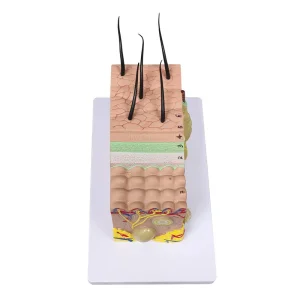
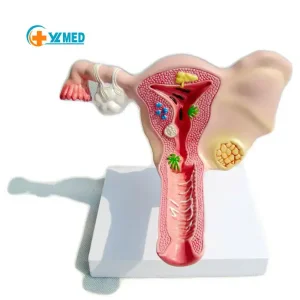
OEM Factory Manufacture Medical Gynaecology Female Ovarian Reproductive Structure Ovarian Uterus Model Manufacturers, Factory
View product →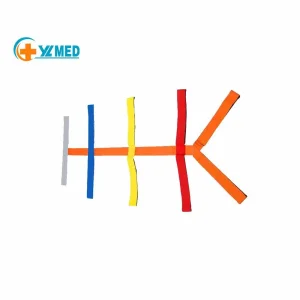
OEM Cross-Mirror Exclusive Spinal Board Emergency Bead Strap Binding Manual Power Source Special Safety Strap for Medical Training Manufacturers, Service
View product →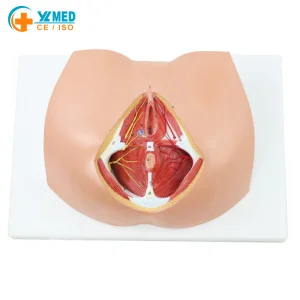
China PVC Female Genital Organ Anatomy Model Medical Science Human Model Gynecological Simulator for Medical School Training Education Factories, Pricelist
View product →