ODM Oxygen Therapy Equipment Factories & Pricelist
A practical, compliance-aware buyer’s guide to oxygen concentrators, regulators, patient interfaces, pulse oximetry and hospital oxygen systems—covering factory qualification, ODM scope, pricelist logic, localized applications, technology roadmaps and procurement checklists from Yulin Medical, an ISO 9001 certified medical and educational equipment manufacturer since 1958.
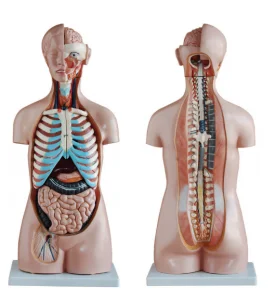
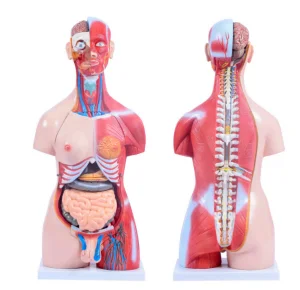
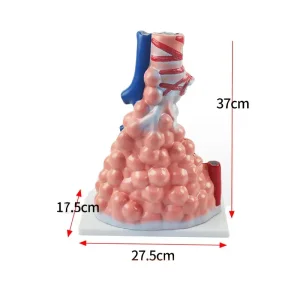
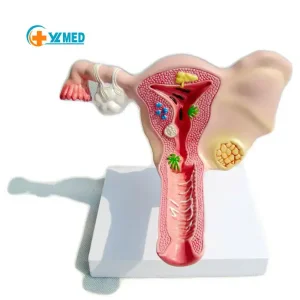
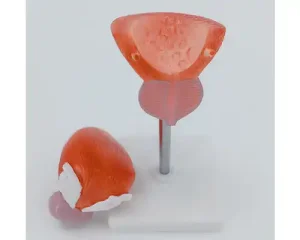
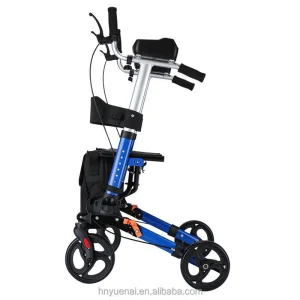
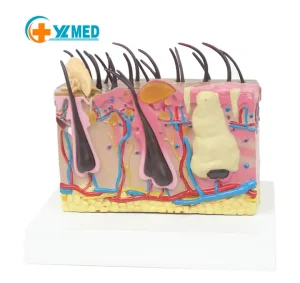
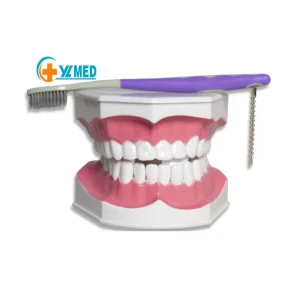
Given Product Showcase — Group 1 of 2
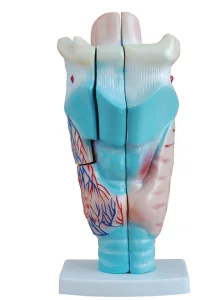
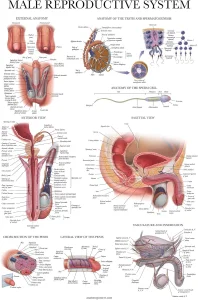
Eight verified catalog items retained with original images and product URLs. These products can be bundled with oxygen therapy accessories, hospital furniture, patient handling equipment and clinical training programs. Every product URL below is presented with a button-style procurement link for clear sourcing action.
Executive Summary: What “ODM Oxygen Therapy Equipment Factory” Really Means
An ODM oxygen therapy equipment factory is not a single product listing. It is a coordinated manufacturing and engineering capability that spans oxygen generation, storage, regulation, humidification, delivery, monitoring, cleaning and service.
ODM means the factory contributes product design, engineering, packaging, documentation and often private-label presentation, while the buyer contributes market access, brand ownership and clinical feedback. OEM usually means the buyer brings a more defined specification or design. In practice, the strongest oxygen therapy programs blend both models: the buyer owns the brand and local registration, while the factory owns the repeatable technical platform, incoming component control, assembly discipline, testing records and export packaging.
The commercial challenge is that oxygen therapy equipment is a system of interdependent components. A concentrator is only as good as its compressor, sieve beds, valves, cooling path, oxygen sensor, alarm logic and service documentation. A regulator is only safe when its inlet fitting, pressure relief, flow accuracy and cleaning process match the cylinder and humidifier it serves. A nasal cannula is low-cost, but it is still a patient-contact device with material, biocompatibility, packaging and labeling obligations. This is why a meaningful pricelist cannot be separated from the technical specification and the regulatory pathway.
Yulin Medical’s origin is in medical and educational equipment. Since 1958, the company has manufactured anatomy models, CPR and nursing simulators, hospital furniture, rehabilitation items and training equipment, and has operated an ISO 9001 quality management system since 2008. For oxygen therapy projects, Yulin Medical acts as an ODM/OEM coordination platform: it consolidates qualified production of concentrators, regulators, interfaces, oximeters and related hospital equipment, while confirming product-specific certificates for each SKU and destination market. Buyers should always verify that the certificate covers the exact model, accessories, intended use and manufacturing site.
This whitepaper adds information gain by linking four topics that are often separated: global demand signals, pricelist architecture, local application requirements and technology roadmaps. The goal is not to publish a flat price list that becomes obsolete, but to give distributors, hospital procurement teams, homecare providers and private-label brands a repeatable decision framework for oxygen therapy sourcing.
Global Commercial and Industrial Status of Oxygen Therapy Equipment
Demand is moving from episodic hospital procurement toward distributed, long-life and service-intensive oxygen ecosystems.
Global oxygen therapy demand is shaped by chronic obstructive pulmonary disease, respiratory rehabilitation, aging populations, homecare, hospital-at-home programs, emergency preparedness, neonatal care and rural clinic upgrades. In high-income markets, the commercial center of gravity is shifting from large hospital capital equipment toward home oxygen therapy, portable concentrators, remote monitoring and service contracts. In emerging markets, demand is still strongly tied to hospital ward expansion, cylinder filling infrastructure, clinic electrification and distributor-led after-sales networks.
Regulatory maturity changes the factory shortlist. Europe and North America usually require evidence of CE MDR or FDA clearance where applicable, risk management under ISO 14971, electrical safety under IEC 60601-1, electromagnetic compatibility under IEC 60601-1-2, and for oxygen concentrators the relevant ISO 80601-2-69 performance considerations. China’s NMPA registration, local market registration in the Middle East, Southeast Asia, Africa and Latin America, and tender-specific documentation can each require a different technical file. A factory that is excellent at producing a device may still fail a buyer’s audit if traceability, labeling, complaint handling or change control are weak.
China remains a major manufacturing base because of component depth, compressor supply, electronics, tooling and flexible private-label packaging. However, price alone is no longer a defensible purchasing strategy. The strongest suppliers are those that can provide stable oxygen purity, flow accuracy, alarm reliability, service parts, training materials and market-specific documents across repeat orders. Distributors increasingly ask for mixed-category consolidation: oxygen therapy accessories together with hospital furniture, patient transfer boards, rehabilitation aids and clinical training products. That is where a long-established manufacturer with a broad medical catalog can reduce supplier-management cost.
Signals above are qualitative procurement priorities compiled for this whitepaper, not third-party market statistics. Use them as discussion prompts during supplier evaluation.
ODM Pricelist Architecture: What Actually Moves a Quotation
An oxygen therapy pricelist is a specification document before it is a price document. The same “5 L concentrator” can differ materially by purity, flow, alarm package, certification, voltage, packaging and warranty.
Clinical specification
Flow range, oxygen purity target, outlet pressure, continuous versus pulse-dose operation, nebulizer integration, battery runtime, noise level and alarm priorities all change bill-of-material cost.
Specification firstCertification and documentation
CE MDR, FDA, NMPA or local registration, IEC 60601 testing, software validation, biocompatibility and labeling translation can add engineering, testing and file-maintenance cost.
Evidence costComponents and process
Compressor grade, sieve-bed quality, valve life, oxygen sensor, PCB protection, tubing material and cleanroom or controlled assembly affect field reliability and warranty exposure.
Reliability costOrder volume and packaging
MOQ, carton strength, private-label printing, manual language, accessory kits, drop-test requirements and pallet configuration influence unit cost and logistics efficiency.
Commercial scaleTesting and warranty
Burn-in time, performance sampling, oxygen purity records, calibration, spare-parts kit and warranty duration must be priced explicitly, not hidden in a headline FOB number.
Lifecycle costLogistics and after-sales
Incoterms, consolidation, dangerous-goods rules for certain accessories, spare-parts stocking, technical training and remote support determine total landed cost.
Landed costThe bands above are indicative planning ranges for standard configurations and are not a quotation. Final pricing depends on specification, certification, MOQ, testing, packaging, Incoterms, freight, duties and after-sales scope. Always request a line-item quotation with exclusions.
Technical Route Map for Oxygen Therapy Equipment
A complete ODM program should cover the oxygen pathway from generation to patient delivery, plus the service architecture that keeps devices safe after installation.
Oxygen concentrator platform
Compressor, sieve beds, valve manifold, oxygen sensor, cooling, flow control, purity monitoring and alarm logic. Platforms should be designed for stable performance across voltage, temperature and altitude conditions.
Regulators and flowmeters
Cylinder valves, pressure regulators, humidifier connections, flow-control accuracy and safety relief. Buyers must confirm inlet standards, pressure ratings and cleaning procedures for each market.
Patient interfaces
Nasal cannulas, simple masks, reservoir masks, humidifier bottles and tubing. These are low-cost items but high-risk patient-contact products requiring material control, biocompatibility evidence and clear single-use labeling where applicable.
Monitoring and oximetry
Pulse oximeters, spot-check monitors and optional data connectivity. Accuracy claims, sensor performance, alarm thresholds and battery life should be documented for clinical and homecare use.
Cylinders and accessories
Oxygen cylinders, carrying bags, trolleys, wall outlets, tubing management and emergency kits. Packaging and transport rules differ by country and by whether the cylinder is shipped filled or empty.
Service and spare parts
Filter kits, sieve replacement guidance, valve parts, fuses, manuals, troubleshooting trees and training. A factory that cannot support service parts will create hidden cost for distributors within the first replacement cycle.
Localized Application Scenarios: One Device Does Not Fit Every Market
Commercial success depends on matching the device to the local care pathway, power quality, climate, user skill level and regulatory status.
Home oxygen therapy and COPD
Patients and caregivers need quiet operation, simple controls, clear alarms, low maintenance and local spare filters. Distributors should stock cannulas, humidifiers, tubing and replacement filters as a complete homecare kit.
Hospital wards and step-down units
Higher duty cycles, centralized gas outlets, nurse call integration and biomedical maintenance access matter more than portability. Tender documents often require electrical safety, EMC and alarm verification reports.
Emergency and ambulance use
Vibration, temperature swings, fast deployment and secure cylinder mounting are critical. Portable oxygen equipment should be evaluated with the stretcher, transfer board and emergency bag workflow in mind.
Rural and remote clinics
Wide voltage tolerance, dust resistance, simple service procedures, solar or generator compatibility and long shelf-life accessories can be more valuable than advanced digital features.
Long-term care and rehabilitation
Elderly users require larger displays, audible and visual alarms, anti-tip design and caregiver training. Oxygen therapy often combines with mobility aids, shower chairs and patient transfer products.
Pediatric and neonatal care
Flow precision, low-noise operation, humidification and clinical training are essential. Buyers should confirm intended-use labeling and avoid assuming that an adult device is automatically suitable for neonatal care.
Industry Trends and Future Outlook
Oxygen therapy equipment is becoming quieter, more connected, more portable and more serviceable. The next competitive advantage will be lifecycle support, not only factory price.
Portable and pulse-dose therapy
Patients want mobility outside the home. Pulse-dose concentrators, lightweight cylinders and airline-compatible kits are expanding the homecare and travel segment, but sensitivity to breathing pattern must be validated carefully.
Quiet, energy-efficient platforms
Compressor and cooling design affect noise, power consumption and long-term reliability. In homecare, a quiet device supports sleep and adherence; in clinics, efficiency lowers operating cost.
IoT and remote adherence
Connectivity can support usage logs, filter reminders, alarm history and preventive maintenance. However, software validation, cybersecurity and data privacy must be addressed before claims are made.
Oxygen-conserving technology
Demand valves, reservoir cannulas and improved pulse-dose control can extend cylinder duration. These accessories require clear compatibility matrices so buyers do not create unsafe combinations.
Infection prevention and cleanability
Housing design, surface materials, filter access and tubing replacement schedules are increasingly part of tender evaluation. Cleanable, tool-light designs reduce turnaround time in rental fleets.
Modular service and circular economy
Replaceable sieve modules, standard valves, accessible filters and long-life spare parts support a circular service model. Distributors should ask for service-life assumptions, not only warranty length.
Macro Industry Solutions: From Single SKU to Program Supply
Oxygen therapy procurement is most efficient when it is designed as a program with clinical, technical, regulatory and after-sales workstreams.
Hospital oxygen ecosystem
Concentrators, cylinders, regulators, wall outlets, humidifiers, masks, oximeters and staff training packaged as one phased hospital oxygen plan with spare-parts coverage.
Homecare distributor program
Private-label devices, patient kits, delivery and collection workflows, filter replacement schedules, bilingual manuals and a service-parts stocking plan for rental fleets.
Emergency preparedness stockpile
Standardized portable oxygen kits, long shelf-life accessories, pre-packed consumables and training materials for public health agencies, clinics and ambulance services.
Private-label ODM brand program
Industrial design, packaging, manual translation, accessory configuration, barcode and traceability, sample approval and repeat-order consistency for distributors building their own brand.
Quality, Compliance and Factory Qualification Checklist
Use a product-specific evidence file rather than a single certificate image. The factory, the model and the intended use must match.
- Quality system: ISO 9001 for process control; ISO 13485 where the product and market require a medical-device quality management system.
- Electrical and performance evidence: IEC 60601-1, IEC 60601-1-2 and relevant particular standards; for oxygen concentrators, confirm ISO 80601-2-69 alignment where applicable.
- Risk and software: ISO 14971 risk management files, software lifecycle documentation and cybersecurity review for connected devices.
- Patient-contact materials: biocompatibility evidence for cannulas, masks and other contact parts, plus clear labeling for single-use or reusable status.
- Traceability: serial numbers, production lot, test records, change control, complaint handling and post-market surveillance responsibilities.
Verify legal manufacturer
Confirm who legally manufactures the device and whether the certificate covers that site and model.
Check product-specific documents
Match registration, test reports, labels and IFU to the exact SKU and destination market.
Audit performance data
Review oxygen purity, flow accuracy, alarm response, noise, power and environmental test records.
Validate packaging and traceability
Inspect drop-test protection, accessories, manuals, serial labels and export carton marking.
Run sample and after-sales tests
Test the sample with local users, confirm spare-parts availability and define warranty escalation.
Manufacturer Profile: Henan Yulin Edu. Project Co., Ltd.
Original company information retained from the source catalog. Yulin Medical is an ISO 9001 certified manufacturer with a long track record in medical, educational and hospital equipment.

Henan Yulin Edu. Project Co., Ltd. (Yulin Medical) has built educational and medical training equipment in Xinxiang, China, for more than six decades. Our quality management system has been ISO 9001 certified since 2008, and our motto is simple: quality first, service first. Every order is produced and inspected so that distributors, medical universities, nursing colleges and hospitals receive consistent, well-documented products on every batch.
- Factory-direct supply across 10 product lines, from anatomy models to hospital furniture.
- Private-label packaging and product design that raises resale value for distributors.
- Mixed-category orders consolidated into one shipment with one accountable contact.
Founded in 1958, Henan Yulin Edu. Project Co., Ltd. has grown into a well-known educational and medical equipment supplier that integrates scientific research, production and sales. With registered capital of RMB 120 million and more than 200 professional employees, we manage product development, manufacturing, inspection and export from our base at No. 8 Daoqing Road, Hongqi District, Xinxiang, Henan, China.
Our goal is to fully satisfy every customer through dependable quality and attentive service, while continuously developing the skills of our team so that each project is handled by experienced people. For buyers, this means one accountable manufacturer for anatomy models, nursing simulators, laboratory slides, hospital furniture and related equipment—consolidated into a single shipment and backed by an ISO 9001 quality system.



Why Distributors and Institutions Partner with Yulin Medical
Four strengths overseas buyers consistently cite when they move long-term orders to our factory.
24/7 Responsive Service
Our team is online 24 hours a day, 7 days a week. Whatever your time zone, you receive a detailed answer as quickly as possible—typically within 24 hours.
Design & Packaging Team
In-house specialists deliver professional product design and private-label packaging that strengthens your brand and increases the added value of every unit you sell.
Professional Expertise
Our vision is to provide professional educational and medical training products from mainland China, built under ISO 9001 process control and decades of category knowledge.
60+ Years of Supply Stability
A factory with over 60 years of history and a deeply integrated partner supply chain lets us meet one-stop demands and keep lead times predictable on repeat orders.
Original Product Categories Retained
The ten specialised product lines below are preserved from the source catalog. They allow procurement teams to consolidate simulation, laboratory and hospital equipment with one accountable manufacturer.
Anatomy Models
Torso, organ, heart, brain and muscle models with numbered structures for lectures and patient education.
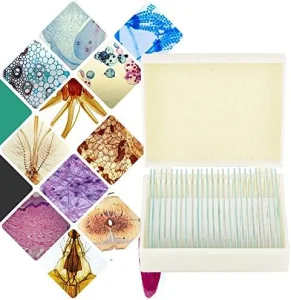
View rangeBiology Prepared Slides and Accessories
Histology, botany and zoology prepared slides plus storage and microscope accessories for biology labs.
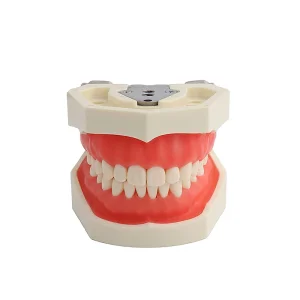
View rangeDental Tools and Equipment
Dental teaching models, clinic lights, LED whitening units and endodontic instruments for training and practice.
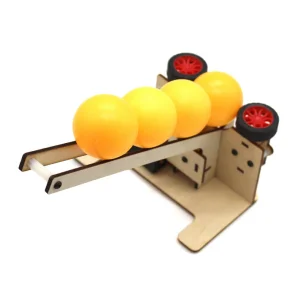
View rangeGeneral Teaching Models
Science demonstration models for primary schools, secondary schools and education equipment tenders.
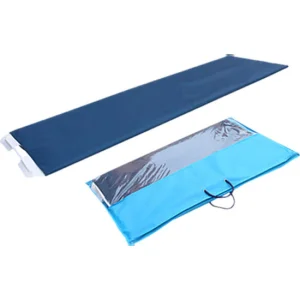
View rangeHospital Furniture and Equipments
Stainless steel examination couches, stretchers, walkers and shower chairs built for daily clinical use.
View rangeHospital Machine and Tools
Diagnosis and treatment devices and practical tools for wards, clinics and emergency departments.
View rangeMedical Apparatus and Instruments
Emergency splints, extrication devices, cervical traction and rehabilitation instruments.
View rangeMedical Nursing Model
Adult, child and neonatal CPR manikins, ACLS simulators and AED trainers for skills assessment.
View rangeSkeleton Models
Life-size and desktop skeletons, skulls, spines and joint models for osteology teaching.
View rangeSuture Pads and Kits
Realistic skin suture pads and complete instrument kits for surgical and wound-closure practice.
View rangeOriginal Featured Range: CPR, Emergency & Rehabilitation Equipment
These source catalog items are retained because oxygen therapy programs often require adjacent emergency, transfer, training and rehabilitation equipment. They support mixed-category consolidation for distributors and institutions.












News & Practical Insights from Our Specialists
Exhibition updates and hands-on guidance written by the team that designs and builds our products.

Do You Really Know How to Observe Biological Prepared Slides?
Many plant and animal cell structures can only be studied under a microscope, which makes prepared biological slides essential in every biology lab. Yet many users never get the full value from them. Our specialists explain how to handle, focus and store slides correctly so students see clearer detail and your slide sets last for years.

The 5th Henan Provincial Educational Equipment Expo Concludes Successfully
Themed “Digital Leading Innovation and Development”, the expo reached a record 50,000 m² with 600+ brands and 10,000+ products on display, showcasing the latest educational equipment.

Inside Our Product Showroom
A look at the medical teaching models and training equipment buyers can inspect in person when visiting our Xinxiang facility.
Original Buyer FAQ Retained
Straight answers to the questions procurement managers ask most before placing a first order.
Is Yulin Medical a manufacturer or a trading company?
We are a manufacturer. Henan Yulin Edu. Project Co., Ltd. was founded in 1958 and operates its own factory in Xinxiang, Henan, China, with more than 200 professional staff. For one-stop orders, we also coordinate a stable network of long-term partner factories.
What quality certification do you hold?
Our quality management system has been ISO 9001 certified since 2008. Product-specific documentation can be provided on request to support tenders and import registration in your country.
Do you support OEM, private label and custom packaging?
Yes. Our in-house design team develops private-label packaging and product presentation for distributors, helping increase shelf appeal and resale value in your market.
How do I choose the right CPR training manikin?
Start with the learner group: adult, child or neonatal. Then check that real-time feedback covers compression depth, compression rate and ventilation volume; confirm alignment with current resuscitation guidelines; and decide whether your courses need AED trainer integration. For advanced life-support programmes, an ACLS simulator with embedded scenarios offers far more assessment value than a basic torso.
How quickly will I receive a reply?
Our export team is online 7 days a week and typically replies within 24 hours with catalogs, specifications and shipping options.
Expanded Oxygen Therapy Equipment Q&A
Practical answers for distributors, hospital procurement teams and private-label brands evaluating an ODM oxygen therapy program.
What is an ODM oxygen therapy equipment factory?
It is a manufacturer that contributes product design, engineering, component sourcing, assembly, testing, packaging and documentation for oxygen therapy devices under the buyer’s brand. The buyer typically owns market access, registration and local clinical feedback. A strong ODM factory can show product-specific evidence, not only a general quality certificate.
How should I compare oxygen therapy pricelists?
Compare the specification line by line: flow, purity, alarm package, power, battery, noise, warranty, certification, packaging, accessories, testing and Incoterms. A lower unit price can be more expensive over the product lifecycle if spare parts, filters or technical support are not included.
Which certifications should a buyer verify?
Verification depends on the destination market and product classification. Common evidence includes ISO 9001, ISO 13485 where applicable, IEC 60601-1, IEC 60601-1-2, ISO 14971 risk management, software documentation, biocompatibility for patient-contact parts, and market registration such as CE MDR, FDA, NMPA or local approvals. Confirm that the document covers the exact factory site, model and intended use.
How do I choose between 5 L and 10 L oxygen concentrators?
Start with the prescribed flow, oxygen purity target, use environment and duty cycle. A 5 L platform may suit many homecare and clinic scenarios, while a 10 L platform may be required for higher-flow clinical programs. Do not choose capacity only by price; confirm continuous-flow performance, alarm behavior and heat management under local conditions.
What is a typical MOQ and lead time for ODM oxygen therapy equipment?
MOQ and lead time vary by platform, customization, certification status and component supply. Private-label packaging, manual translation and accessory kits usually require a higher MOQ than standard cartons. Ask for a production schedule with sample approval, incoming inspection, assembly, testing, packaging and inspection hold points.
Can packaging, labeling and manuals be customized?
Yes, for qualified programs. Customization should cover brand artwork, language, warnings, symbols, accessories, barcodes, serial-number rules and country-specific regulatory statements. The factory should provide proof approval and change-control records so that repeat orders remain consistent.
How can Yulin Medical support an oxygen therapy program if its catalog also includes medical teaching models?
Yulin Medical uses its long manufacturing experience, ISO 9001 process discipline and export coordination to consolidate qualified oxygen therapy production and adjacent hospital equipment. Product-specific certificates and technical claims are confirmed per SKU and destination market. This mixed-category capability helps distributors reduce supplier count while keeping clear responsibility for documentation, packaging and shipment coordination.
Need Specifications, a Price List or a Tender Package? We Reply Within 24 Hours.
Tell us your target market, quantities, clinical application, flow rate, certification requirements and after-sales model. Our product specialists will recommend suitable models, share detailed specifications and propose an economical shipping plan for your order.
For oxygen therapy ODM discussions, include the intended use, required oxygen purity and flow, voltage, language, packaging, annual volume, tender documents and whether you need a private-label program.
Direct Channels
Given Product Showcase — Group 2 of 2
The remaining eight verified catalog items are retained below with their original images and product URLs. Each product URL is presented with a button-style link for direct inquiry, sample request or bundled ODM/OEM quotation.