
Eight factory-direct products from the original Yulin Medical range
The original product images, descriptions and URLs are retained below. For ODM oxygen mask programmes, use these adjacent medical, emergency and rehabilitation categories to evaluate whether a supplier can support mixed-category consolidation, private-label packaging and export documentation.
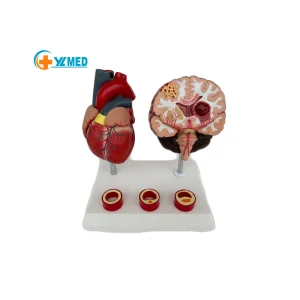
China Human Anatomy Heart Vessels and Brain Pathological Structure Cerebral Vascular Disease Model YL2-30082 Size 3 Non-Electric Manufacturer, Service
View product & pricing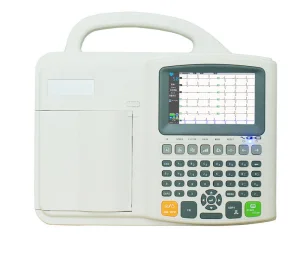
China 6 Channel ECG Machine Portable Ecg Monitoring Automatic Electrocardiograph 5'' Color LCD Screen ECG Machine Factories, Service
View product & pricing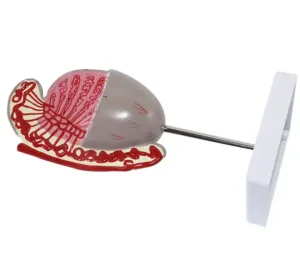
China Anatomical teaching model Human testis model for medical science education Factories, Service
View product & pricing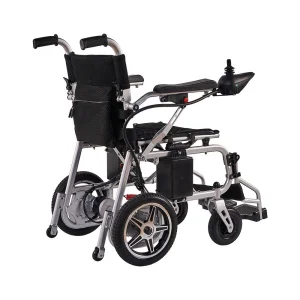
Wholesale High Power Lightweight Carbon Steel Electric Wheelchair Disc Brake Class II Adjustable Foldable Walker Rollator-Factory Direct Manufacturers, Factories
View product & pricing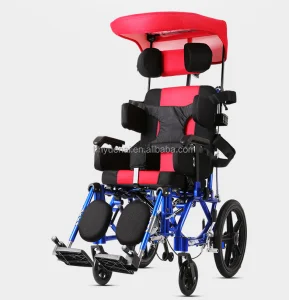
OEM Cerebral Palsy Children Aluminum Lightweight Wheelchair Detachable Elevating Footrest Rehabilitation Therapy Supplies Manufacturers, Factories
View product & pricing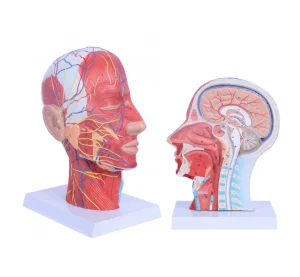
Wholesale Brain Model Human Half Head Superficial Neurovascular Model with Musculature, Life Size Anatomical Head Model Skull and Brain for Medical Teaching Learning Manufacturers, Quotes
View product & pricing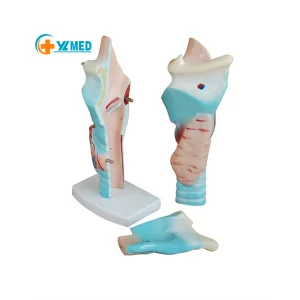
China Best selling Advanced Larynx Structure and Function Model human Larynx Anatomical model 3 times enlarged Quotes, Service
View product & pricing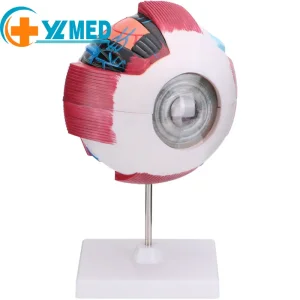
OEM Medical Science Biology 6 times Human eye model Giant eye model Human eye Anatomy Science teaching Medical model Quotes, Service
View product & pricingWhat a genuinely useful ODM oxygen mask pricelist must reveal
An ODM oxygen mask pricelist is a specification document disguised as a price sheet. The number only becomes meaningful when material grade, connector type, tubing length, packaging, cleanroom control, documentation and regulatory pathway are disclosed.
Two quotations for the same “simple oxygen mask” can differ by several hundred percent because one supplier includes a 1.8 m kink-resistant tube, latex-free medical PVC, a universal 15 mm connector, individual polybag and batch traceability, while another quotes a shorter tube, unspecified polymer, bulk pack and no declared change-control process. For distributors, hospital groups and home-care brands, the real comparison is not unit price alone; it is delivered cost at the required quality level, with the documentation needed to pass customs, tenders, audits and post-market surveillance.
This guide adds information gain for serious buyers. It explains China factory advantages, oxygen mask product architecture, regulatory evidence, industry trends, localized application scenarios, macro industry solutions, global procurement demand and pricelist logic. It also preserves the original Yulin Medical product links and company facts, allowing procurement teams to connect respiratory-category sourcing with a wider medical education, emergency, rehabilitation and hospital equipment supply base.
Three questions that expose a weak quotation
- Is the material declared? Ask for resin grade, tube material, connector polymer, valve material and biocompatibility evidence.
- Is the regulatory pathway identified? The same mask can require different evidence in the EU, UK, US, Middle East or Latin America.
- Is the care setting defined? Emergency, ICU, pediatric, home oxygen and dental sedation use cases demand different connectors, flow characteristics and packaging.
Specification-first pricing
A credible ODM factory prices the product from a costed bill of materials, not from a generic catalogue photograph. The pricelist should state assumptions for tube length, connector, packaging, sterility status and MOQ.
Evidence-based compliance
Company certificates are only the beginning. Buyers need product-specific biocompatibility, gas-pathway assessment, risk management, shelf-life and packaging validation for the exact SKU being quoted.
Care-pathway fit
The best mask is not automatically the cheapest or the most advanced. It is the interface that fits the oxygen source, flow rate, clinician workflow, patient profile and local training reality.
Why Chinese ODM oxygen mask factories remain the benchmark for scalable medical procurement
China’s advantage is not a single low labour rate. It is a dense ecosystem of polymer suppliers, mould makers, extrusion lines, cleanroom assemblers, packaging printers, testing laboratories and export documentation teams that can move a new SKU from concept to container in a predictable sequence.
Respiratory consumables are deceptively simple. A mask consists of a body, connector, tubing, strap, valves or reservoir bag, and packaging. Yet every component interacts with breathing resistance, seal comfort, oxygen concentration, infection control and shelf life. Mature Chinese ODM clusters compress the learning curve because a single factory can draw on specialist component suppliers and test houses within a short supply radius. That proximity shortens tooling trials, reduces minimum order friction for private label and makes iterative design more affordable.
The phrase “China factory” is not a quality claim. The best ODM factories behave like risk managers: they control incoming materials, document process parameters, validate packaging, maintain lot traceability and manage change control. The weaker ones simply assemble purchased parts and quote from a photo. A buyer’s job is to separate the two before placing a repeat order, not after a tender complaint.
Integrated component supply
Medical-grade PVC, silicone, SEBS, PP connectors, elastic straps, one-way valves and tubing can be sourced and validated through a concentrated supplier network, reducing lead-time uncertainty.
Fast tooling iteration
New mask geometries, colour-coded Venturi jets, pediatric sizes and custom connectors can be tooled and sample-tested quickly, which matters when distributors compete for tenders with short submission windows.
Documentation depth
Experienced export factories understand technical files, declarations, test reports, UDI, labelling and registration support. This documentation capability often creates more value than a small unit-price reduction.
Private-label flexibility
From printed polybags and colour boxes to IFUs, barcodes and market-specific language, Chinese ODM suppliers can support lower MOQs for brand owners entering respiratory care.
Cost engineering
Value analysis can remove unnecessary packaging, optimise tube length, standardise connectors and consolidate SKUs without compromising the clinical function or regulatory claims.
Export logistics experience
Factories accustomed to FOB, CIF and DDP terms can coordinate palletisation, container loading, shipping marks and customs documents for distributors, tender agents and e-commerce sellers.
ODM oxygen mask product architecture: define the interface before you discuss price
Before a buyer compares unit prices, the clinical job and physical interface must be defined. An oxygen mask is part of a breathing gas pathway; connector, tubing, flow rate, reservoir, nebulizer cup and valve design all affect safety, comfort and total cost.
Simple oxygen mask
General oxygen delivery for wards and clinics. Define tube length, connector diameter, elastic strap, material grade and whether a nasal cannula alternative is required in the same kit.
Venturi mask
Used where controlled oxygen concentration matters, including COPD care. The colour-coded jet precision, label clarity and cleaning instructions are critical ODM variables.
Non-rebreather mask
Reservoir-bag mask with one-way valves for high-concentration oxygen in emergency and critical care. Validate valve function, bag volume, assembly integrity and packaging protection.
Nebulizer mask
Combines oxygen delivery with medication nebulisation. Buyers should specify cup capacity, anti-spill design, tubing, connector and instruction for use in the target language.
Pediatric and neonatal
Smaller dead space, softer edges, lower flow ranges and accurate sizing are essential. A low-cost adult mask adapted for children is rarely an acceptable clinical solution.
Specialty interfaces
Aerosol masks, tracheostomy masks, CPAP-style interfaces and other respiratory accessories require clearly defined leakage, connector and cleaning requirements.
Reusable silicone masks
Higher material and validation costs, but suitable for hospitals that reprocess equipment. The pricelist must state autoclave or disinfection cycles and material compatibility.
Kit configuration
Mask, tubing, connector, head strap, IFU and pouch can be assembled as one SKU. Kitting increases labour and control complexity but reduces hospital stock-keeping units.
Regulatory evidence that separates a reliable manufacturer from a repackager
Medical devices are regulated by intended use and claims, not by appearance. An oxygen mask sold as a general accessory, a hospital oxygen-delivery interface and a sterile single-use device can follow different pathways. Always verify the exact SKU and destination market.
An expert ODM partner will not simply email a folder of certificates. It will map each document to the product, manufacturing site, material, packaging configuration and regulatory claim. It will also explain what is missing. That transparency is a stronger quality signal than a wall of logos, because regulatory status is product-specific and market-specific. A company-level ISO 9001 certificate supports general quality discipline, but it is not a substitute for a medical-device quality management system, product testing or registration.
This section is a procurement education checklist, not legal advice. Final classification, registration and labelling obligations should be confirmed with the manufacturer, importer of record and a qualified regulatory professional in the destination country.
ISO 13485 quality system
For medical-device manufacturing, confirm the certificate scope covers the actual product family and production site, not only a trading office.
ISO 9001 company system
Useful evidence of general process control. Yulin Medical’s quality management system has been ISO 9001 certified since 2008; product-specific medical evidence must still be requested.
Biocompatibility
ISO 10993 evidence for patient-contact materials, supported by material declarations, skin-contact duration and extractable or leachable risk assessment where applicable.
Breathing gas pathway
ISO 18562 assessments may apply to breathing gas pathways. Confirm whether the mask, tubing and connector are in scope and how the supplier controls volatile organic compounds and particulates.
Risk management
ISO 14971 risk files should address occlusion, disconnection, leakage, material irritation, valve failure, misassembly and use-error risks in the intended care setting.
Market registration pathway
CE MDR, UKCA, FDA establishment registration, 510(k) where required, UDI and local registration support depend on claims and classification. Ask for a written pathway.
Traceability and labelling
Lot numbers, manufacturing dates, expiry, UDI, language-specific IFU, symbol compliance and packaging labels should be validated before mass production.
Packaging validation
Seal integrity, transit simulation, shelf life and cleanroom controls need documented validation. A low unit price cannot compensate for damaged or contaminated stock on arrival.
Industry trends shaping ODM oxygen mask demand through 2030
Demand is shifting from commodity mask-only purchasing toward system-level respiratory care. Buyers increasingly ask for product families, training-ready packaging, regulatory files and predictable replenishment rather than isolated low-cost SKUs.
Ageing and chronic respiratory care
Longer life expectancy and higher survival with chronic respiratory conditions continue to expand oxygen therapy, rehabilitation and home-care demand across both mature and emerging markets.
Home oxygen and decentralized care
Home oxygen users need simple interfaces, clear instructions, robust packaging and family-friendly handling. Distributors are building kits that combine masks, cannulas, tubing and education materials.
Single-use and infection control
Hospitals continue to prefer single-patient or single-use respiratory consumables where reprocessing risk is high. This increases demand for consistent, compact packaging and clean manufacturing.
High-flow and specialty support
Advanced respiratory support creates demand for interfaces with precise connectors, controlled leakage and better patient tolerance. ODM factories need stronger engineering documentation to serve this segment.
Material and sustainability pressure
PVC-free options, silicone, SEBS, recyclable mono-material packaging and reduced pack size are becoming tender differentiators, especially in Europe and premium home-care brands.
Digital procurement and traceability
Barcodes, UDI, electronic IFUs and audit-ready digital files reduce friction in hospital supply chains and make supplier performance easier to compare across contracts.
Match the oxygen mask to the real care pathway
A mask that works in a hospital ward may fail in a home-care kit, an ambulance or a dental office. Localized application mapping is one of the highest-value services an ODM partner can provide.
Hospital ward oxygen therapy
Focus on secure fit, flow clarity, cost control and compatibility with wall-mounted oxygen outlets, humidifiers and flowmeters.
Emergency department and ambulance
High-concentration masks, non-rebreather valves and rugged packaging matter. Connectors must work quickly under pressure and with portable oxygen cylinders.
ICU and advanced respiratory support
Specify precise connectors, controlled leakage, soft seals and clear labelling. Documentation and change control are more important than cosmetic packaging.
Pediatric and neonatal units
Use appropriately sized masks with low dead space and soft edges. Avoid adult masks on children and provide clear size identification to prevent use errors.
Home oxygen and long-term therapy
Patients and caregivers need intuitive fitting, low noise from tubing, family-friendly IFU and retail-ready packaging for distributor and e-commerce channels.
Nursing homes and rehabilitation
Durable kits, simple training labels and easy stock rotation support staff with mixed skill levels and frequent shift changes.
Dental sedation and office emergency
Compact emergency oxygen kits, clear flow indicators and single-use masks support dental practices that need preparedness without complex hospital logistics.
Field clinics and low-resource settings
Heat resistance, dust protection, simple connectors and robust packaging matter more than premium aesthetics in mobile clinics and rural health programmes.
From a single SKU to a regional respiratory-care programme
Procurement teams are consolidating SKUs and suppliers. They want a partner who can handle product design, regulatory documentation, mixed-category packing and a predictable replenishment plan.
Distributor private-label programme
Develop a branded respiratory range with consistent packaging, IFUs, barcodes and MOQ tiers. Start with one high-volume mask, then add nebulizer, pediatric and emergency SKUs as demand proves out.
Hospital tender and central supply
Build a tender dossier with specifications, certificates, samples, packaging images, lead-time commitments and complaint handling. Standardise connectors to reduce clinical variability.
Home-care kit assembly
Combine masks, cannulas, tubing and education leaflets into patient-friendly kits. Define the bill of materials, shelf life and replacement cycle before designing retail packaging.
Emergency preparedness stockpile
Public health and emergency services need reserve quantities with long shelf life, robust packaging and rapid replenishment. Verify production capacity and raw-material contingency.
What global corporate buyers ask before a factory visit
Global buyers do not ask identical questions. A market-specific checklist saves weeks of sampling and prevents costly re-labelling after production.
North America
FDA establishment registration, product classification, UDI, insurance requirements, retail-ready packaging and consistent replenishment for group purchasing organisations are common priorities.
European Union and UK
CE MDR or UKCA pathway, EU authorised representative, language-specific IFU, packaging environmental obligations and PVC-free alternatives are frequently requested.
Middle East and Africa
Tender documentation, Arabic or French labelling, high-volume packaging, heat and humidity resistance, and flexible Incoterms are important for public-sector and distributor orders.
Asia-Pacific and Latin America
Registration support, port-to-port logistics, mixed SKU containers and local distributor training matter. Buyers often value stable supply over the absolute lowest first-order price.
Regulatory requirements evolve. Always validate the current pathway before signing a supply contract or printing packaging.
ODM oxygen mask pricelist logic: how to compare quotations without being misled
A professional pricelist should disclose the assumptions behind each price. Use this formula as a buying framework: delivered unit cost = materials + conversion + cleanroom or sterilisation + quality and documentation + packaging + tooling amortisation + compliance + freight and insurance + risk buffer.
The lowest quoted number is often the least complete. If a quotation omits the connector standard, tube length, packaging format, certificate scope or Incoterm, it cannot be compared with a fully specified offer. For repeat orders, ask how raw-material price changes are handled and whether the factory has a written change-control and notification process.
Product type
Simple, Venturi, non-rebreather, nebulizer, pediatric, specialty or reusable. The design function changes material use, assembly time and testing requirements.
Material grade
Medical PVC, silicone, SEBS, PP, valve material and colourant declarations. A lower-grade polymer may look similar but create regulatory or odour complaints.
Tube length and connector
Standard or custom length, kink resistance, 15 mm connector, barbed fitting or specialty adapter. Extra tooling and quality checks increase cost.
Cleanroom and sterilisation
Clean assembly, bioburden control, EO sterilisation or non-sterile declaration. Each option changes validation, packaging and release time.
Packaging and labelling
Polybag, blister, box, pouch, IFU, barcode, language version, shelf-life label and shipping carton. Retail packaging often costs more than the elastic strap.
MOQ and tooling
Low MOQs carry set-up cost. Private-label printing, custom connectors and new moulds require amortisation or a tooling fee that must be stated clearly.
Certification and registration
Test reports, technical files, regulatory support and market registration are not free. Separate product cost from compliance service cost so both are visible.
Incoterms and freight
EXW, FOB, CIF and DDP place different risks on the buyer. Compare landed cost, not only the factory unit price, especially for low-density cartons.
Indicative planning ranges for ODM oxygen masks
The ranges below are planning references for early-stage sourcing comparisons, not formal quotations. Actual ex-factory prices depend on specification, volume, certification, packaging, raw-material markets and delivery terms.
Simple oxygen mask
Reference range for high-volume commodity configurations with standard tubing and packaging. Verify material, connector and traceability assumptions.
Venturi mask
Precision jets, colour coding and clinical labelling add cost. Range depends on connector quality and validation level.
Non-rebreather mask
Reservoir bag and valve assembly increase material and inspection burden. Emergency packaging may move the price upward.
Nebulizer mask
Nebulizer cup, tubing, anti-spill design and performance expectations influence cost. Confirm medication-delivery claims with test evidence.
Pediatric and neonatal mask
Smaller tooling, lower dead space and size labelling add complexity. Do not compare directly with adult commodity masks.
Reusable silicone and specialty
Material, cleaning validation and durability requirements create a wide range. Confirm cycle testing and instructions before tender submission.
How to audit an ODM manufacturer: eight evidence points for the first factory visit
A factory visit should test the system behind the sample, not only the sample itself. Ask for records that show how the factory prevents, detects and corrects problems across batches.
Certificate scope
Check the legal manufacturer name, site address, product scope, expiry date and certification body for every QMS certificate presented.
Product test reports
Review reports for the exact model, material and packaging. A report for a similar mask is useful context but not a substitute for the quoted SKU.
Incoming material control
Confirm supplier qualification, COA review, resin identity checks, incoming inspection and change-control rules for material substitution.
Cleanroom and environment
Look for environmental monitoring, gowning, particle control and separation of clean and dirty processes if the product claims a clean or sterile status.
In-process and final QC
Check leakage, connector fit, strap strength, valve function, visual defects and packaging seal checks. Records should be traceable to the lot.
Packaging validation
Review seal integrity, printing controls, shelf-life justification, transit testing and label reconciliation procedures.
Complaint and CAPA
A mature factory can show complaint trends, root-cause analysis, corrective actions and a mock recall or traceability exercise.
Export readiness
Confirm packing capacity, carton drop protection, shipping marks, lead-time planning and responsiveness when specifications change.
Why Yulin Medical’s six-decade quality culture matters to buyers
The company information below is preserved from the original Yulin Medical profile. For any oxygen mask ODM programme, buyers should still request mask-specific certificates and production-site evidence, because general manufacturing heritage and product-specific regulatory approval are different tests.
Henan Yulin Edu. Project Co., Ltd. (Yulin Medical) was founded in 1958 and has grown into a manufacturer of educational and medical equipment that integrates research, production and sales. The company operates from No. 8, Daoqing Road, Industry Park, Hongqi District, Xinxiang, Henan, China, with registered capital of RMB 120 million and more than 200 professional staff. Its quality management system has been ISO 9001 certified since 2008, and its operating motto is quality first, service first.
Yulin Medical’s portfolio covers ten product lines, including anatomy models, biology prepared slides, dental tools, general teaching models, hospital furniture, hospital machines and tools, medical apparatus, nursing models, skeleton models and suture pads. For one-stop orders, the company also coordinates a stable network of long-term partner factories. That model is valuable for distributors that want to consolidate mixed medical and educational equipment, while keeping one accountable point of contact for specifications, packaging, inspection and export follow-up.
When evaluating an ODM oxygen mask programme, separate three layers of evidence: the company-level quality system, the product-specific technical file, and the actual production line controls. Yulin’s long manufacturing history and ISO 9001 discipline provide a useful context for supplier diligence, but the mask-specific evidence must always govern the purchase decision.
Related medical education, emergency and hospital equipment categories
These original category links are retained to support mixed-category sourcing, distributor catalogue building and tender consolidation alongside respiratory-care products.
Anatomy Models
Torso, organ, heart, brain and muscle models with numbered structures for lectures and patient education.
View range 02Biology Prepared Slides and Accessories
Histology, botany and zoology slides plus storage and microscope accessories for biology laboratories.
View range 03Dental Tools and Equipment
Dental teaching models, clinic lights, LED whitening units and instruments for training and practice.
View range 04General Teaching Models
Science demonstration models for primary schools, secondary schools and education equipment tenders.
View range 05Hospital Furniture and Equipments
Stainless steel examination couches, stretchers, walkers and shower chairs for daily clinical use.
View range 06Hospital Machine and Tools
Diagnosis and treatment devices plus practical tools for wards, clinics and emergency departments.
View range 07Medical Apparatus and Instruments
Emergency splints, extrication devices, cervical traction and rehabilitation instruments.
View range 08Medical Nursing Model
Adult, child and neonatal CPR manikins, ACLS simulators and AED trainers for skills assessment.
View range 09Skeleton Models
Life-size and desktop skeletons, skulls, spines and joint models for osteology teaching.
View range 10Suture Pads and Kits
Realistic skin suture pads and complete instrument kits for surgical and wound-closure practice.
View rangeFrequently asked questions from importers, distributors and tender teams
Straight answers to the questions procurement managers ask most before placing a first order or moving a repeat programme to an ODM supplier.
Is Yulin Medical a manufacturer or a trading company?
What quality certification does Yulin Medical hold?
Do you support OEM, private label and custom packaging?
How do I choose the right CPR training manikin?
How quickly will I receive a reply?
How is an ODM oxygen mask pricelist calculated?
Which documents should buyers request for an oxygen mask ODM project?
How do you ensure consistent quality across repeat orders?
Eight more factory-direct products from the preserved Yulin Medical range
The remaining original product images, descriptions and URLs are retained below. These categories support distributors that need to build a broader medical, dental, emergency and rehabilitation catalogue alongside respiratory-care products.
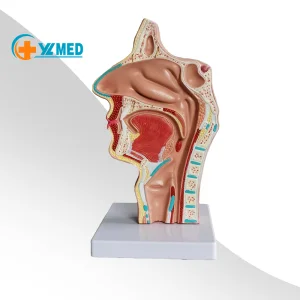
ODM Medical Science Human nose and throat anatomy medical model human anatomy throat model medical mannequins Factories, Service
View product & pricing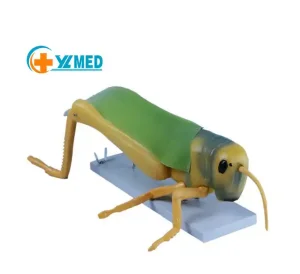
China Medical Science Enlarged Locust Structure Animal Model free 3d animal model life size animal model Factories, Service
View product & pricing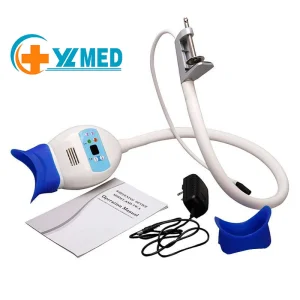
China cold light whitening instrument LED blue card in the column clamp table whitening lamp cosmetic dental beauty instrument Manufacturer, Quotes
View product & pricing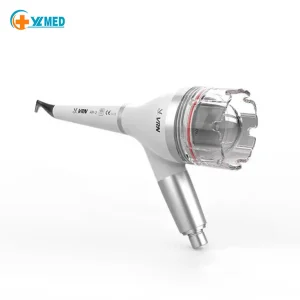
OEM Dental sandblasting gun DP-10 sandblasting tooth cleaning mobile phone does not block sand whitening teeth sandblasting gun Manufacturers, Factories
View product & pricing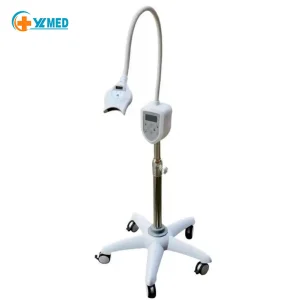
Wholesale Dental medical equipment tooth whitening instrument digital display panel laser tooth whitening equipment Manufacturers, Factories
View product & pricing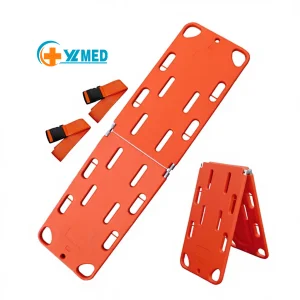
ODM Foldable Spine Board Stretcher with Backboard Straps for Patient Transport Factories, Quotes
View product & pricing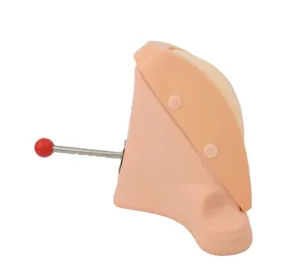
Wholesale Factory Supply High Quality and Best Price Episiotomy Incision and Suture Skills Training and Teaching Models Medical Science Manufacturers, Pricelist
View product & pricing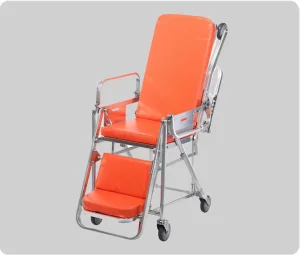
ODM Ambulance Loading Stretcher Aluminum Alloy Foldable Transfer Trolley Emergency Lifting Stretcher Factory, Service
View product & pricingNeed an ODM oxygen mask pricelist, sample plan or tender package? Start with the specification, not the unit price.
Share your target market, mask type, tubing length, connector, material preference, packaging, estimated annual volume and required certificates. The export team can then return a structured quotation with assumptions, lead time and documentation requirements. For mixed medical equipment orders, the preserved Yulin Medical product range can be consolidated with one point of contact.