ODM Laboratory Autoclave Manufacturers & Quotes
A buyer-focused, evidence-led guide to compliant autoclave ODM programs, localized service, China factory supply chain value, global procurement requirements and total cost of ownership.
Integrated Laboratory & Clinical Equipment for Global Buyers
Yulin Medical’s manufacturing and export platform supports mixed-category sourcing for distributors, hospitals, medical schools and laboratory projects. Product URLs are preserved below with quote-ready buttons.
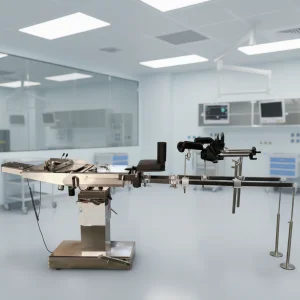
Wholesale Medical Equipment Stable Surgical-grade High-strength Ergonomic Stainless Steel Carbon-fiber Orthopedic Traction Device Manufacturers, Factory
View Product & Quote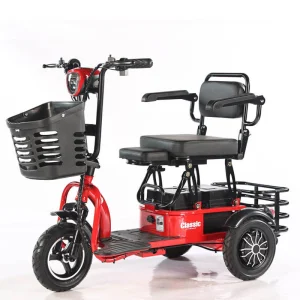
OEM Elderly Disabled Folding Adults Electric Scooter for Handicapped 20mph 130KG Capacity Factories, Pricelist
View Product & Quote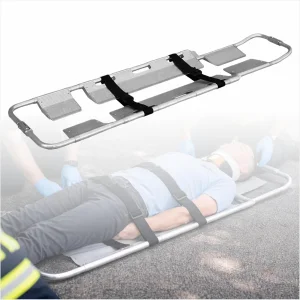
China Aluminum Alloy Scoop Stretcher - Emergency Split Rescue Device with Safety Straps - Lightweight Portable Patient Transfer & Transport Stretcher Pricelist, Service
View Product & Quote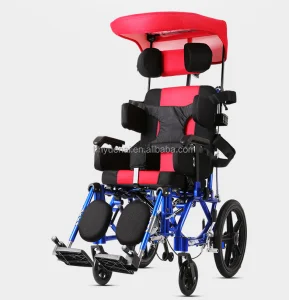
OEM Cerebral Palsy Children Aluminum Lightweight Wheelchair Detachable Elevating Footrest Rehabilitation Therapy Supplies Manufacturers, Factories
View Product & Quote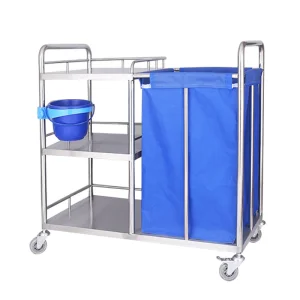
OEM Modern Stainless Steel Medical Trolley Mobile Hospital Furniture for Waste Collection and Commercial Use Factories, Quotes
View Product & Quote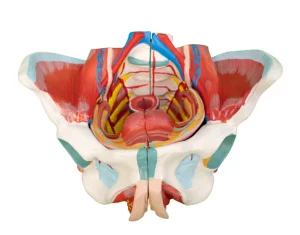
China Life Size Human Female Pelvis Model with Pelvic Floor Muscles, Vessels Nerves & Reproductive, 4 Parts Removable Organs, for the teaching of physiology and hygiene in the teaching of anatomy schools Factories, Quotes
View Product & Quote
ODM Laryngeal Tracheal Bronchial Anatomy Model-Human Trachea and Larynx Organ Structure for Medical Research & Teaching Manufacturer, Pricelist
View Product & Quote
Wholesale Rainforest teaching biology Basic teaching film of human pathology histopathology film Manufacturers, Pricelist
View Product & QuoteThe Real Question Behind an ODM Laboratory Autoclave Quote
A laboratory autoclave is a regulated pressure device, a validated process tool and a long-term service asset. The cheapest quotation can become the most expensive decision when documentation, installation, calibration and local support are missing.
Procurement teams rarely buy an autoclave in isolation. They buy sterility assurance for microbiology, media preparation, glassware, instruments, waste treatment or pharmaceutical quality control. That means the ODM quotation must be read as a lifecycle dossier: chamber specification, control architecture, validation deliverables, local voltage and language requirements, spare parts strategy, training and post-installation response. A manufacturer that can connect these elements has a stronger commercial offer than a supplier that can only quote a chamber size and a price.
China’s laboratory equipment supply chain remains highly relevant for global distributors and enterprise buyers, but the advantage has shifted. The mature value is no longer simply labour cost. It is engineering iteration speed, component depth, stainless-steel fabrication capability, electronics integration, packaging customization, mixed-SKU consolidation and export coordination. At the same time, buyers are under more pressure to demonstrate market access, data integrity, energy performance and service coverage. The winning ODM relationship is therefore a documented partnership, not a one-off transaction.
Market Access First
Clarify the destination market before design freeze. Pressure-vessel codes, electrical safety, EMC, labelling and language requirements can change the bill of materials and the validation plan.
Uptime Is a Quote Item
Ask for spare-parts lists, response times, remote diagnostics, consumable pricing and local service escalation. A low unit price with slow support creates hidden downtime cost.
Factory Discipline Matters
ISO 9001 process control, design reviews, incoming inspection, traceability and change control are evidence of manufacturing maturity when autoclave ODM projects scale.
ODM vs Off-the-Shelf: What a Mature Tender Specification Should Ask For
ODM laboratory autoclave sourcing works best when the buyer defines outcomes rather than only chamber volume. The table below turns a price conversation into a procurement conversation.
| Procurement question | Off-the-shelf quote | Mature ODM quote |
|---|---|---|
| Chamber and footprint | Standard sizes; limited fit to room layout | Chamber, door swing, utilities and loading trolley aligned to the local room plan |
| Control and records | Basic display; cycle records may be optional | Cycle data, user access, audit trail, alarm history and data export defined before design freeze |
| Documentation package | Operating manual only | Technical file, bill of materials, material certificates, calibration records, validation templates and change-control procedure |
| Validation | Buyer manages IQ/OQ/PQ alone | Factory acceptance test, site acceptance test, IQ/OQ/PQ support, cycle development and training |
| Localization | One voltage, one language, one plug type | Market-specific voltage, frequency, plug, label language, manual language and local service escalation |
| Spare parts | Quoted after failure | Recommended spares kit, wear-part list, consumable pricing and agreed response path |
| Packaging and logistics | Standard export carton | Private-label packaging, drop-test plan, humidity protection, Incoterms and total landed cost analysis |
Localized Support and Compliance Assurance: The Hidden Cost of a Cheap Import
Autoclave compliance is not a badge on a brochure. It is a chain of evidence from material traceability and calibrated instruments to validated cycles and post-installation service.
Market-Specific Documentation
Define the required evidence for the destination market: pressure-vessel conformity, electrical safety, EMC, labels, language, test reports and declarations. Documentation must match the exact configuration shipped.
Voltage, Plug and Environment
Local power quality, voltage, frequency, plug type, water quality, drain routing and ambient conditions should be captured during the RFQ. These details prevent site modifications and commissioning delays.
Language and User Experience
Local operators need more than translated buttons. Manuals, alarm messages, training materials and maintenance checklists should use the language and workflow familiar to the end user.
Validation and Training
Ask for factory acceptance test criteria, site acceptance test support, IQ/OQ/PQ templates, cycle development and operator training. Validation responsibility should be explicit before purchase order.
Spare Parts and Service Levels
Request a recommended spares kit, wear-part list, response-time commitment, remote troubleshooting process and escalation contact. Serviceability should be designed in, not discovered after failure.
Change Control and Traceability
Autoclave ODM programs often evolve after the first order. A documented change-control process protects serial-number traceability, spare-parts compatibility and future tender consistency.
| Destination market | Typical buyer validation points | Supplier evidence to request |
|---|---|---|
| European Union | CE marking, pressure-vessel conformity, electrical safety, EMC, labelling, language | Declaration of conformity, risk assessment, test reports, technical file, traceable bill of materials |
| United States | Electrical safety, pressure-vessel code, FDA pathway where applicable, labelling | Compliance statement, third-party test reports, material certificates, validation templates |
| United Kingdom | UKCA or accepted equivalent, electrical safety, pressure-system evidence | UK market documentation plan, labelling review, technical file alignment |
| China | GB-related requirements, electrical safety, pressure-vessel supervision, Chinese labels | Local test reports, manufacturing licence evidence where required, Chinese manual and nameplate review |
| Middle East & Asia | Country-specific registration, SASO or equivalent, voltage and language localization | Registration support list, conformity documents, plug and voltage confirmation, local service plan |
China Factory Supply Chain Advantage — Visible and Hidden Value
The strongest factory advantage is not a lower unit price. It is fewer handoffs, faster engineering iterations and a documented supply chain that can survive regulatory review.
China’s laboratory autoclave supply chain brings together stainless-steel fabrication, pressure-vessel welding, electrical control assembly, sensor and valve sourcing, software configuration, packaging and export logistics. For an ODM buyer, this density can reduce the time between a product requirement and a production-ready configuration. It can also make mixed orders more practical: a distributor may need anatomy models, emergency equipment, hospital furniture and laboratory accessories consolidated into one shipment with one point of contact.
Component Depth
Valves, sensors, controllers, door mechanisms, seals and safety interlocks can be sourced from a mature supplier base. This supports faster configuration changes and more competitive spare-parts planning.
Mixed-Category Consolidation
Distributors and education suppliers often order across categories. A factory platform that manages multiple product lines can reduce freight fragmentation, duplicate paperwork and supplier-management cost.
Export Coordination
Packaging, documentation, booking and after-sales communication are part of the supply chain. A responsive export team reduces the uncertainty that often erodes the apparent factory-price advantage.
Global Enterprise Procurement Requirements in 2025
Large buyers now evaluate autoclave ODM suppliers through risk, documentation, data integrity, energy performance and lifecycle cost — not only unit price.
Tender-Ready Documentation
Public hospitals and universities need consistent specifications, declarations, test evidence and commercial terms. Missing documentation can disqualify an otherwise competitive offer.
Audit Readiness
Supplier audits increasingly examine incoming inspection, non-conformance handling, calibration, training records and traceability. A documented quality system is a commercial asset.
Multi-Site Standardization
Enterprise buyers want the same user experience, spare-parts logic and service instructions across sites. Change control protects standardization across repeat orders and regions.
Data Integrity
Connected autoclaves may need role-based access, audit trails, secure export and time synchronization. These requirements should be specified before the control system is finalized.
ESG and Energy Reporting
Energy, water use, packaging and recyclability are increasingly part of tenders. Buyers should request power-consumption data, standby strategy and packaging material details.
Logistics and Landed Cost
Incoterms, packaging protection, container utilization, insurance and port handling all influence total landed cost. The lowest FOB price may not be the lowest delivered cost.
Industry Trends Reshaping Laboratory Autoclave ODM Programs
Autoclave design is converging with digital documentation, energy management and modular laboratory planning. ODM programs must anticipate these shifts before they appear in tenders.
Digital Validation and Audit Trails
Labs increasingly expect cycle records to be searchable, exportable and protected by user access controls. Data integrity requirements are moving from pharma-only discussions into wider laboratory procurement.
Predictive Maintenance and IoT
Sensor data can support early warning for door seals, vacuum performance, temperature deviation and service intervals. Buyers should define data ownership and cybersecurity expectations.
Energy and Water Efficiency
Steam generation, vacuum pumps and cooling water can dominate operating cost. Efficient cycle profiles, insulation and standby modes are becoming measurable tender criteria.
Modular and Space-Saving Design
Urban laboratories and clinics often have constrained footprints. Pass-through configurations, compact doors, stackable utilities and service access are becoming design differentiators.
Low-Temperature Alternatives
Hydrogen peroxide, plasma and chemical sterilants are expanding the sterilization landscape. Autoclave ODM suppliers should help buyers compare workflow, consumables, cycle time and validation burden.
Regulatory Convergence
Pressure, electrical, software and labelling requirements are increasingly connected. A lifecycle technical file is becoming more valuable than a static certificate pack.
Localized Application Scenarios: Matching Cycles to Real Workflows
The same autoclave specification can perform very differently across applications. ODM success depends on aligning chamber size, cycle profile, validation and local service with the real workflow.
Hospital Central Sterile Services
High throughput, load configuration, traceability, door access and service response dominate. Local engineering support and validation documentation are as important as chamber volume.
Dental and Outpatient Clinics
Compact models, fast cycles, simple operation and low maintenance are critical. Voltage, plug type, water quality and local training should be confirmed before shipment.
University and Research Laboratories
Research labs value flexibility, cycle programming, data export and safe handling of diverse loads. Training and documentation reduce operator variation across departments.
Veterinary and Animal Laboratories
Odour control, waste loads, instrument compatibility and robust construction matter. Local service access helps clinics avoid downtime in time-sensitive procedures.
Pharmaceutical and Biotech QC
Validation depth, audit trails, change control and calibration dominate. ODM suppliers must be able to support qualification packages and maintain configuration consistency.
Food, Beverage and Environmental Labs
Throughput, waste load, cycle reliability and operating cost are central. Local support and spare-parts planning protect sample turnaround during peak testing periods.
How to Compare ODM Laboratory Autoclave Quotes: A 100-Point Scorecard
A structured scorecard reduces the risk of over-weighting unit price. The weights below can be adapted to hospital, university, distributor or enterprise procurement priorities.
| Evaluation area | Weight | What a strong answer looks like |
|---|---|---|
| Compliance and documentation | 25 | Clear market-access plan, exact configuration traceability, pressure and electrical evidence, labels, language and technical file |
| Technical fit | 20 | Chamber, door, utilities, control architecture, cycle performance and loading workflow match the real application |
| Validation and training | 15 | FAT/SAT, IQ/OQ/PQ support, cycle development, operator training and acceptance criteria defined before order |
| Local service and spares | 15 | Spare-parts kit, response path, remote diagnostics, escalation contacts and maintenance documentation |
| Supply chain and change control | 10 | Documented BOM, approved-equivalent process, serial-number traceability and repeat-order consistency |
| Total cost of ownership | 10 | Energy, water, consumables, freight, installation, validation and service cost included in comparison |
| ESG and efficiency | 5 | Power data, standby strategy, packaging choices, recyclability and responsible manufacturing evidence |
A quote that scores well on unit price but poorly on compliance, validation and service should be treated as an incomplete offer. A useful discipline is to ask every supplier to respond in the same structure, with assumptions clearly stated. This makes the ODM quotation comparable and creates a written basis for later change control.
From RFQ to Validation: A Five-Step ODM Project Path
A transparent process protects timelines, budgets and technical expectations. Each step should produce a named deliverable that both sides can review.
Requirements Workshop
Define market, application, load pattern, utilities, documentation, local service and commercial constraints.
Technical Proposal
Receive a configuration, preliminary compliance plan, packaging proposal, lead time and total landed cost estimate.
Design Freeze
Lock chamber, control, materials, labels, manuals and validation deliverables. Record approved assumptions.
Build and FAT
Manufacturing, inspection and factory acceptance testing follow the agreed quality plan and technical file.
Ship and Support
Export packing, delivery, installation, training, validation support and after-sales response are coordinated.
Yulin Medical: Medical Teaching Models, CPR Manikins & Hospital Equipment Manufacturer Since 1958
Henan Yulin Edu. Project Co., Ltd. has built educational and medical training equipment in Xinxiang, China, for more than six decades. Its quality management system has been ISO 9001 certified since 2008.

Founded in 1958, Henan Yulin Edu. Project Co., Ltd. has grown into a well-known educational and medical equipment supplier that integrates scientific research, production and sales. With registered capital of RMB 120 million and more than 200 professional employees, the company manages product development, manufacturing, inspection and export from its base at No. 8 Daoqing Road, Hongqi District, Xinxiang. The company motto is simple: quality first, service first. Every order is produced and inspected so that distributors, medical universities, nursing colleges and hospitals receive consistent, well-documented products on every batch.
Factory-Direct Supply
Ten product lines, from anatomy models to hospital furniture, support consolidated sourcing across medical education and clinical categories.
Private-Label Capability
In-house design and packaging support can raise resale value for distributors and strengthen local brand presentation.
One Point of Contact
Mixed-category orders can be consolidated into one shipment with coordinated inspection, documentation and export communication.
24/7 Responsive Service
The export team is online 7 days a week and typically replies within 24 hours with catalogs, specifications and shipping options.
Design & Packaging Team
Professional product design and private-label packaging increase the added value of every unit sold through distribution.
Professional Expertise
ISO 9001 process control and decades of category knowledge support consistent quality across education and medical equipment.
60+ Years of Stability
A long manufacturing history and integrated partner supply chain help meet one-stop demands and predictable repeat orders.












Complete Sourcing for Medical Education & Clinical Use
Ten specialised product lines let procurement teams source simulation, laboratory teaching and hospital equipment from one accountable manufacturer instead of managing multiple suppliers.
Anatomy Models
Torso, organ, heart, brain and muscle models with numbered structures for lectures and patient education.
View range → 02Biology Prepared Slides and Accessories
Histology, botany and zoology prepared slides plus storage and microscope accessories for biology labs.
View range → 03Dental Tools and Equipment
Dental teaching models, clinic lights, LED whitening units and endodontic instruments for training and practice.
View range → 04General Teaching Models
Science demonstration models for primary schools, secondary schools and education equipment tenders.
View range → 05Hospital Furniture and Equipments
Stainless steel examination couches, stretchers, walkers and shower chairs built for daily clinical use.
View range → 06Hospital Machine and Tools
Diagnosis and treatment devices and practical tools for wards, clinics and emergency departments.
View range → 07Medical Apparatus and Instruments
Emergency splints, extrication devices, cervical traction and rehabilitation instruments.
View range → 08Medical Nursing Model
Adult, child and neonatal CPR manikins, ACLS simulators and AED trainers for skills assessment.
View range → 09Skeleton Models
Life-size and desktop skeletons, skulls, spines and joint models for osteology teaching.
View range → 10Suture Pads and Kits
Realistic skin suture pads and complete instrument kits for surgical and wound-closure practice.
View range →Featured CPR, Emergency & Rehabilitation Equipment
Best-selling simulation manikins, first-aid devices and mobility aids requested by training centres, ambulance services and healthcare distributors.

Advanced Full-Body CPR Training Manikin with 8" Color Feedback Display

AED Automated External Defibrillator Trainer for CPR Courses


Neonatal ACLS Training Manikin Aligned with AHA 2020 Guidelines



Non-Pneumatic Shock-Absorbing Emergency Splint & Tension Bandage





News & Practical Insights from Our Specialists
Exhibition updates and hands-on guidance written by the team that designs and builds our products.

Do You Really Know How to Observe Biological Prepared Slides?
Many plant and animal cell structures can only be studied under a microscope, which makes prepared biological slides essential in every biology lab. Yet many users never get the full value from them. Our specialists explain how to handle, focus and store slides correctly so students see clearer detail and slide sets last for years.

The 5th Henan Provincial Educational Equipment Expo Concludes Successfully
Themed “Digital Leading Innovation and Development”, the expo reached a record 50,000 m² with 600+ brands and 10,000+ products on display, showcasing the latest educational equipment.

Inside Our Product Showroom
A look at the medical teaching models and training equipment buyers can inspect in person when visiting our Xinxiang facility. The showroom supports product evaluation, packaging review and project discussion.
Frequently Asked Questions from Importers
Straight answers to the questions procurement managers ask most before placing a first order or scaling a repeat program.
Is Yulin Medical a manufacturer or a trading company?
What quality certification does Yulin Medical hold?
Do you support OEM, private label and custom packaging?
How do I choose the right CPR training manikin?
How quickly will I receive a reply?
What should an ODM laboratory autoclave quotation include?
Need Specifications, a Price List or a Tender Package? We Reply Within 24 Hours.
Tell us your target market, quantities and certification requirements. Our product specialists will recommend suitable models, share detailed specifications and propose the most economical shipping plan for your order.
Additional Products for Integrated Laboratory & Clinical Projects
The final product selection below completes the 16-item display. Product URLs and images are preserved, with button styling for quote-ready navigation.
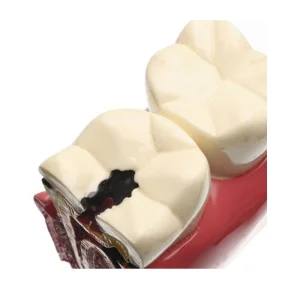
ODM The caries nursing model and the caries teaching research model were compared in the medical science teaching experiment Manufacturers, Quotes
View Product & Quote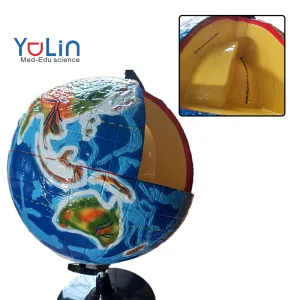
ODM Tectonico Placa Terrestre Modelo Globo Educativo Globo Tierra De Plastico Geographical Earth Internal Structure Globe Model Pricelist, Quotes
View Product & Quote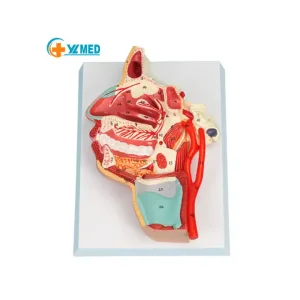
OEM Medical science high quality best price Hot selling head anatomical Model with CE certificate for teaching and learning model Manufacturers, Factory
View Product & Quote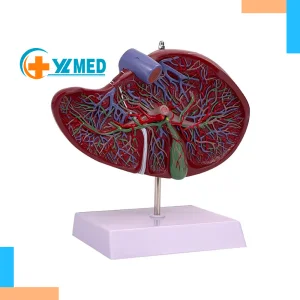
Wholesale Human Liver Anatomy Model PVC Plastic Natural Life Size School Medical Teaching Display Tool Lab Equipment Medical Models Pricelist, Quotes
View Product & Quote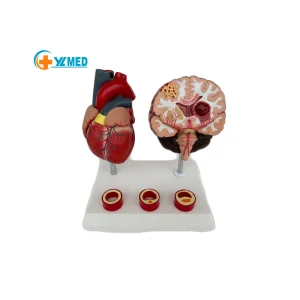
China Human Anatomy Heart Vessels and Brain Pathological Structure Cerebral Vascular Disease Model YL2-30082 Size 3 Non-Electric Manufacturer, Service
View Product & Quote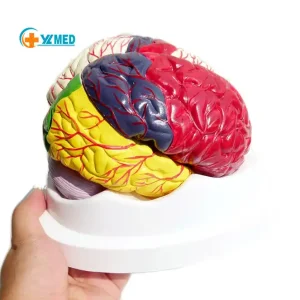
Wholesale Medical Science Teaching Models for School Use Color 8 Parts Brain Model Factories, Service
View Product & Quote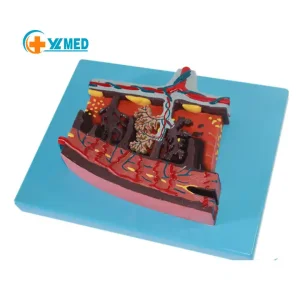
Wholesale exquisite workmanship Placental tissue Simulation model medical Pelvis Placenta Model Quotes, Service
View Product & Quote