ODM Infant Incubator Factory & Service
Factory-direct neonatal thermal care programs for distributors, hospitals, NGOs and public tender teams. Backed by 60+ years of manufacturing discipline in Xinxiang, China, 200+ professional staff and a 24-hour export response commitment.
8 Selected Products from Yulin Medical's Factory Range
These eight factory-direct products support hospital outfitting, clinical skills education and neonatal-adjacent training procurement. They can be consolidated with ODM infant incubator projects into one shipment, one documentation package and one accountable point of contact. Every product image and URL below is retained from the original range.
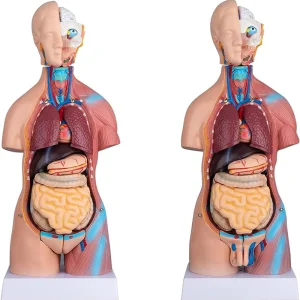
ODM 23 Parts Human Body Torso Model 45Cm Anatomy Model Unisex Removable Parts with Heart Brain for School Science Medical Education Pricelist, Quotes
View Product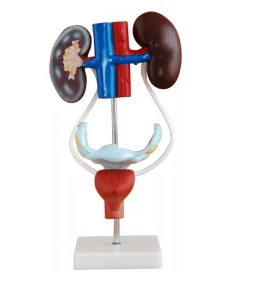
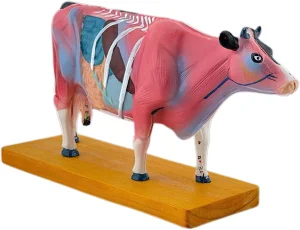
China Cow Anatomy Model for and Moxibustion Anatomical Cow Model Animal Anatomical Model for Veterinary Learning Cow Anatomy Model Anatomy Model Animal Anatomy Model Anatomy Model Cow Pricelist, Quotes
View Product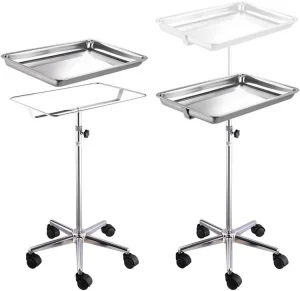
OEM Top Selling Adjustable Mayo Stainless Steel Tray Stand Mobile Trolley Medical Salon Equipment Tattoo 45lb Capacity Factory, Factories
View Product
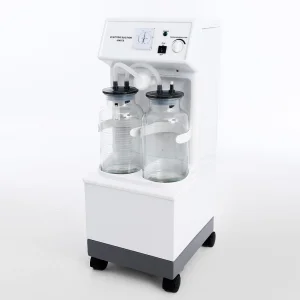
ODM Medical Electric Aspirator Suction Machine: Double Bottles with Vacuum Suction Trolley Unit Manufacturers, Service
View Product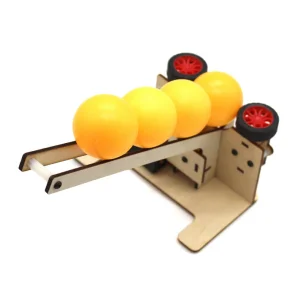
ODM Teaser Fun Science small production of primary and secondary school students stem education movement Energy driving model Manufacturers, Factory
View Product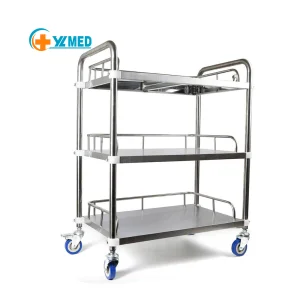
China Light and Strong Hospital Patient Trolley Nurse Dental Surgery Trolley Beauty Equipment Three-Layer Stainless Steel Treatment Pricelist, Quotes
View ProductWhat an ODM Infant Incubator Factory & Service Partner Must Deliver
Infant incubator procurement is no longer a simple “buy a box” decision. It is a clinical risk, engineering and lifecycle management decision.
ODM Infant Incubator Factory & Service is a high-intent search phrase used by distributors, hospital groups, ministries of health and clinical engineering teams that need more than a catalogue product. They need a manufacturing partner capable of co-designing a neonatal thermal care platform, documenting it for tenders and local registration, localizing packaging and labelling, training clinical users and supporting the installed base for a decade or more.
Henan Yulin Edu. Project Co., Ltd. (Yulin Medical) has built educational and medical training equipment in Xinxiang, Henan, China, since 1958. Our quality management system has been ISO 9001 certified since 2008, and our operating principle remains straightforward: quality first, service first. With more than 200 professional staff, registered capital of RMB 120 million and ten product lines, we manage product development, manufacturing, inspection, export documentation and after-sales coordination from one accountable organization.
This guide is written for procurement managers, clinical engineers, distributors and public-health program teams evaluating an ODM infant incubator factory and service partner. It explains global demand, macro-level solutions, the technical roadmap, commercial and industrial realities, localization and compliance, and the service model required for long-term neonatal care.
What Buyers Should Verify Before Shortlisting a Factory
- Intended clinical use and patient population
- Servo temperature and humidity performance
- Alarm logic, usability and nurse workflow
- IEC 60601-family design documentation
- Local registration and labelling pathway
- Spare parts, training and service coverage
- Total cost of ownership, not unit price alone
- Traceability, batch records and warranty terms
Technical review: Yulin Medical export engineering team. Always validate final configuration, regulatory classification and clinical claims with your own medical and compliance teams.
Global Enterprise Procurement Demand for Infant Incubators
Demand is shifting from single-device purchasing to program-level neonatal thermal care. The strongest ODM partners help buyers connect clinical intent, tender scoring and lifecycle cost.
Global demand for infant incubators is shaped by four forces: neonatal survival targets, expansion of secondary and tertiary neonatal intensive care units, replacement of ageing fleets, and the need for equipment that can be serviced locally. Hospitals want stable thermal control, intuitive alarms and low noise. Distributors want differentiated products, private-label packaging, reliable documentation and a factory that responds quickly. Public tender teams want traceability, warranty clarity, training plans and spare-parts continuity. NGOs and donor programs want rugged designs, low maintenance burden and practical training for nurses and biomedical technicians.
A credible infant incubator ODM factory should therefore separate clinical requirements from commercial requirements. Clinical requirements include skin-temperature servo control, humidity management, oxygen concentration monitoring where specified, phototherapy integration, easy cleaning, reliable alarms and a clear user interface. Commercial requirements include MOQ, packaging, branding, voltage and plug customization, document packages, warranty, spare-parts kits and service-level commitments. When these are defined early, the ODM process becomes faster and the final product is easier to register, train and maintain.
| Buyer Type | Primary Procurement Priority | ODM Factory Response |
|---|---|---|
| Hospital NICU | Clinical performance, alarm reliability, uptime, nurse training | Configurable incubator platform, commissioning support, preventive maintenance plan |
| Medical Distributor | Private label, margin protection, registration documents, fast response | OEM/ODM branding, packaging design, export documentation, spare-parts kits |
| Government Tender | Compliance, traceability, warranty, local service, training-of-trainers | Specification matching, batch records, tender package preparation, phased delivery |
| NGO / Donor Program | Ruggedness, low power burden, simple operation, long service life | Robust configurations, quick-start guides, maintenance training, spare-parts planning |
| Teaching Hospital | Usability, simulation integration, data review, clinical education value | Optional data logging, training accessories, model and skills-training bundles |
| Private Hospital Group | Standardization, telemetry, brand consistency, procurement efficiency | Multi-site configuration standards, consolidated shipments, lifecycle service options |
Information Gain: A Practical Tender Readiness Checklist
Before requesting a quotation for an ODM infant incubator, prepare the following information. It reduces clarification cycles and helps the factory provide a more accurate technical and commercial proposal.
- Target market and regulatory pathway
- Hospital level and expected annual volume
- Required modes: air mode, skin mode or both
- Humidity, oxygen and phototherapy requirements
- Alarm language, user manual language and label requirements
- Voltage, plug type and backup power expectations
- Warranty period, spare-parts list and service response time
- Training plan for nurses, biomedical engineers and distributors
From One NICU to a National Neonatal Network
An ODM infant incubator program should scale from a single hospital department to a multi-site standardization project without losing documentation control or service consistency.
District & Primary NICU
Reliable thermal support, simple controls and low maintenance are more important than advanced connectivity. The ideal configuration emphasizes skin-temperature control, humidity, clear alarms, easy cleaning and nurse-friendly training.
Tertiary & Teaching NICU
Teaching hospitals often need advanced monitoring, phototherapy integration, data review and training accessories. The ODM platform should support modular upgrades without forcing a complete equipment replacement.
Transport & Emergency Neonatal Care
Transport incubators require robust battery strategy, secure ambulance mounting, vibration tolerance, rapid thermal stabilization and clear procedures for handover between clinical teams.
Distributor & Private Label
Distributors need a factory that can support brand-specific packaging, manuals, labels, accessory kits and spare-parts programs while protecting delivery schedules and product consistency.
Public Tender & Ministry Programs
Large programs require specification matching, batch traceability, warranty administration, training-of-trainers and phased delivery. Documentation quality is often as important as the device itself.
Humanitarian & Low-Resource Settings
In low-resource environments, simplicity, spare-parts availability and local training determine long-term impact. The factory should provide practical service documentation and clear maintenance intervals.
Technical Roadmap for Connected, Human-Centered Neonatal Thermal Care
The next generation of ODM infant incubators will be judged not only by thermal performance, but by workflow, data integrity, serviceability and regulatory readiness.
A strong baseline incubator should provide double-wall thermal stability, air-mode and skin-mode servo control, humidity management, oxygen monitoring where specified, visible and audible alarms, phototherapy options, tilt adjustment, smooth castors and surfaces that support effective cleaning. These are foundational. The competitive difference emerges in how the platform is configured, documented, tested and supported over its service life.
| Time Horizon | Engineering Direction | Buyer Benefit |
|---|---|---|
| 2025–2026 | Connected incubator: data logging, USB or Ethernet export, nurse-call integration, remote service diagnostics | Better audit trails, faster troubleshooting, improved biomedical engineering visibility |
| 2026–2028 | Closed-loop thermoregulation with multi-sensor fusion, humidity control, predictive alarm logic and cybersecurity-by-design | Fewer manual adjustments, earlier warning of sensor drift, safer clinical workflow |
| 2028+ | Human-centered NICU platform with AI-assisted decision support, predictive maintenance, interoperability and eco-design | Higher lifecycle value, improved uptime, better procurement justification and sustainability reporting |
Future outlook must remain grounded in regulatory reality. Any new sensor, software feature or alarm algorithm requires risk management, verification and validation. Cybersecurity is now part of medical device engineering, not an afterthought. For distributors and hospital groups, the practical question is not simply “what can the incubator do?” but “can the factory prove it, document it and service it in my market?” That is why ODM infant incubator factory and service should be evaluated as one integrated capability.
What Global Buyers Need to Know About Supply, Cost and Regional Demand
The infant incubator market is influenced by health budgets, neonatal capacity building, tendering cycles and the availability of clinical engineering support.
China remains a major manufacturing base for medical equipment because it combines electronics, injection molding, stainless steel fabrication, sensor supply and export logistics in mature industrial clusters. For buyers, this can shorten development cycles and consolidate mixed-category orders. However, not every factory is equal. The strongest ODM partners invest in incoming inspection, process control, final testing, packaging validation and export documentation. They can explain how a change in a sensor supplier, power supply or plastic resin is controlled and communicated to the buyer.
Commercial decisions should be based on total cost of ownership. A lower unit price can become expensive if spare parts are unavailable, training is weak, alarms create workflow friction or registration documents are incomplete. A slightly higher initial price can be justified when the factory provides stable lead times, batch traceability, preventive maintenance guidance and responsive technical support.
| Region / Market | Typical Demand Pattern | ODM & Service Priority |
|---|---|---|
| Southeast Asia | NICU expansion, humid climates, mixed public and private procurement | Humidity performance, English/local-language manuals, distributor service training |
| Africa | Donor programs, district hospital upgrades, decentralization of neonatal care | Rugged configuration, low maintenance, spare-parts kits, practical nurse training |
| Middle East | High-specification tenders, private hospital groups, demanding after-sales expectations | Documentation depth, compliance support, premium finish, rapid technical response |
| Latin America | Long registration timelines, Spanish and Portuguese requirements, local distributor networks | Registration-ready documents, language localization, long-term service planning |
| Europe & North America | Mature regulatory systems, cybersecurity expectations, post-market surveillance | Regulatory pathway planning, software validation, risk management and traceability |
| China Domestic | Hospital tiered-care upgrades, volume procurement, standardization initiatives | Cost efficiency, domestic service network, configuration consistency and fast delivery |
Localization Is Not a Translation Task — It Is a Market Entry Capability
From voltage and plug type to language, labelling, training and spare parts, localization determines whether an incubator can be adopted smoothly by clinical teams.
QMS & Traceability
Yulin Medical's quality management system has been ISO 9001 certified since 2008. Production records, inspection records and batch traceability can be organized to support buyer quality audits and tender requirements.
Design & Risk Documentation
Where required, documentation can be prepared in alignment with design-control principles and risk-management practices such as ISO 14971. Final requirements depend on the target market and product classification.
Electrical Safety & EMC
Infant incubator projects can be designed with reference to IEC 60601-1, IEC 60601-1-2 and IEC 60601-2-19 requirements where applicable. Test reports and certificates are configuration- and market-specific.
Registration Support
We support the preparation of technical files, labels, IFUs, test reports and declarations needed for local registration pathways such as CE MDR, FDA 510(k), UKCA, TGA, ANVISA or other national systems, where applicable. Approval remains subject to the relevant authority.
Language & Power Localization
User interfaces, manuals, labels, voltage, plug type, alarm wording and packaging can be localized. For distributors, private-label branding and market-specific accessory kits are available.
Training & Service Localization
Commissioning checklists, nurse training materials, biomedical maintenance guides and spare-parts recommendations help local teams take ownership of the equipment after handover.
Compliance Statement
Yulin Medical is ISO 9001 certified since 2008. We do not represent that every incubator configuration is pre-certified for every market. Certificates, test reports, labelling, UDI and registration data are configuration-specific and market-specific. Final classification, clinical claims and approval rest with the relevant regulatory authority. Buyers should validate all technical and regulatory claims against their intended use and local requirements.
A Transparent 5-Step Process for Overseas Buyers
From first conversation to delivery, every stage has a named contact and clear documentation so you can plan stock, tenders and training schedules with confidence.
Share Requirements
Send product types, quantities, target market, clinical use and any tender or certification needs.
Catalog & Proposal
Receive matched models, specifications, packaging options, documentation scope and shipping suggestions.
Sample Evaluation
Test samples with your clinicians, nurses or biomedical engineers before confirming bulk production.
Production & QC
Manufacturing and inspection follow our ISO 9001 quality management system, with batch traceability.
Export & Support
Protective export packing, delivery coordination, training materials and responsive after-sales service.
Service Is Part of the Product
The value of an ODM infant incubator factory is measured over the full service life, not only at the point of shipment.
A neonatal incubator may remain in service for many years. The supplier must therefore plan for commissioning, user training, preventive maintenance, spare parts, calibration, software updates where applicable and technical support. In public tenders, service commitments can influence scoring. In private hospital groups, service quality influences clinical uptime. In distributor markets, service capability protects the brand.
Commissioning & Installation
Site readiness checks, unpacking inspection, power verification, alarm testing and handover documentation help ensure that the incubator enters service correctly.
Clinical Training
Training should cover daily operation, cleaning, alarm response and escalation. Biomedical training should cover maintenance intervals, spare-parts replacement and service records.
Preventive Maintenance
A documented maintenance schedule protects uptime and supports audits. Spare-parts recommendations and service intervals should be agreed before shipment, not after a breakdown.
Spare Parts & Accessories
Filters, sensors, power cords, castors, humidity components and other service parts should be listed with recommended stock levels for the target market.
Calibration & Records
Temperature, humidity and alarm verification records support quality audits and preventive maintenance programs. Documentation language and format can be adapted to local practice.
Remote Technical Support
Our export team is online 7 days a week and typically replies within 24 hours with catalogs, specifications and shipping options. Technical escalation can be coordinated with your local service partner.
Why Distributors and Institutions Partner with Yulin Medical
Four strengths overseas buyers consistently cite when they move long-term orders to our factory.
24/7 Responsive Service
Our team is online 24 hours a day, 7 days a week. Whatever your time zone, you receive a detailed answer as quickly as possible — typically within 24 hours.
Design & Packaging Team
In-house specialists deliver professional product design and private-label packaging that strengthens your brand and increases the added value of every unit you sell.
Professional Expertise
Our vision is to provide the most professional educational and medical training products from mainland China, built under ISO 9001 process control and decades of category knowledge.
60+ Years of Supply Stability
A factory with over 60 years of history and a deeply integrated partner supply chain lets us meet one-stop demands and keep lead times predictable on repeat orders.
A Six-Decade Manufacturer Trusted by Educators and Clinicians
Company facts, factory evidence and quality discipline are part of the E-E-A-T foundation for any serious ODM partnership.
Founded in 1958, Henan Yulin Edu. Project Co., Ltd. has grown into a well-known educational and medical equipment supplier that integrates scientific research, production and sales. With registered capital of RMB 120 million and more than 200 professional employees, we manage product development, manufacturing, inspection and export from our base at No. 8 Daoqing Road, Industry Park, Hongqi District, Xinxiang, Henan, China.
Our goal is to fully satisfy every customer through dependable quality and attentive service, while continuously developing the skills of our team so that each project is handled by experienced people. What this means for buyers is simple: one accountable manufacturer for anatomy models, nursing simulators, lab slides, hospital equipment and broader medical training ranges — consolidated into a single shipment and backed by an ISO 9001 quality system.



Explore the Complete Yulin Medical Product Categories
Ten specialised product lines let procurement teams source simulation, lab and hospital equipment from one accountable manufacturer instead of managing multiple suppliers.
Anatomy Models
View Range 02Biology Prepared Slides and Accessories
View Range 03Dental Tools and Equipment
View Range 04General Teaching Models
View Range 05Hospital Furniture and Equipments
View Range 06Hospital Machine and Tools
View Range 07Medical Apparatus and Instruments
View Range 08Medical Nursing Model
View Range 09Skeleton Models
View Range 10Suture Pads and Kits
View RangeAdditional Original Yulin Medical Equipment
The following original product images and names are retained from Yulin Medical's hospital, emergency, rehabilitation and clinical training range. They are available for mixed-category orders and can be reviewed together with ODM infant incubator projects.












News and Practical Insights from Our Specialists
Exhibition updates and hands-on guidance written by the team that designs and builds our products.

Do You Really Know How to Observe Biological Prepared Slides?
Many plant and animal cell structures can only be studied under a microscope, which makes prepared biological slides essential in every biology lab. Our specialists explain how to handle, focus and store slides correctly so students see clearer detail and your slide sets last for years.

The 5th Henan Provincial Educational Equipment Expo Concludes Successfully
Themed “Digital Leading Innovation and Development”, the expo reached a record 50,000 m² with 600+ brands and 10,000+ products on display, showcasing the latest educational equipment.

Inside Our Product Showroom
A look at the medical teaching models and training equipment buyers can inspect in person when visiting our Xinxiang facility.
Frequently Asked Questions from Global Buyers
Straight answers to the questions procurement managers ask most before placing a first order or starting an ODM infant incubator project.
Is Yulin Medical a manufacturer or a trading company?
What quality certification do you hold?
Do you support OEM, private label and custom packaging?
How do I choose the right CPR training manikin?
How quickly will I receive a reply?
What is included in an ODM infant incubator factory and service program?
Which standards are relevant to infant incubator projects?
Can you support local registration and tender documentation?
How do you handle spare parts and after-sales service?
Can I combine an infant incubator project with other Yulin Medical products?
What information should I send to receive an accurate quotation?
Need Specifications, a Price List or a Tender Package? We Reply Within 24 Hours.
Tell us your target market, quantities and certification requirements. Our product specialists will recommend suitable models, share detailed specifications and propose the most economical shipping plan for your order.

Henan Yulin Edu. Project Co., Ltd. — ISO 9001 certified manufacturer of medical teaching models, simulation manikins, hospital equipment and broader medical training ranges. Our export team supports distributors, medical universities, nursing colleges, hospitals, NGOs and tender teams worldwide.
Request a Catalog or Start an ODM Discussion
Share your target market, quantities, clinical requirements and certification needs. Our product specialists will recommend configurations, prepare a specification sheet and propose a shipping and service plan.
Follow Yulin Medical
Factory updates, product showcases and buyer education.
For distributors: ask about private-label packaging, mixed-category consolidation, spare-parts kits and market-specific documentation support.
8 Additional Factory Products for Consolidated Procurement
These eight original product images and URLs complete the given factory range. They can be combined with ODM infant incubator discussions, hospital furniture requirements and clinical training equipment orders.
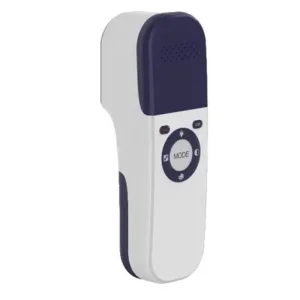
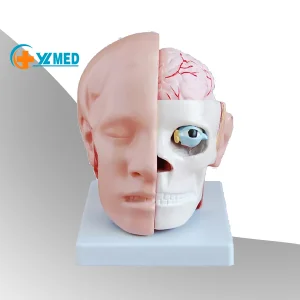
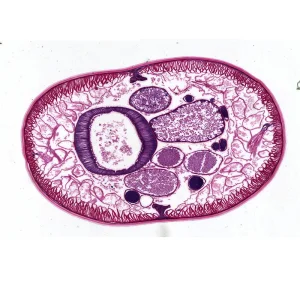
ODM 50-Slice Teaching Resources Medical Sciences Undergraduate Study Zoology Parasitology Preparing for Microscopy Medical Slides Manufacturers, Service
View Product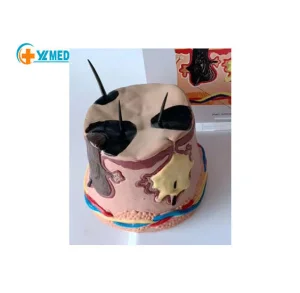
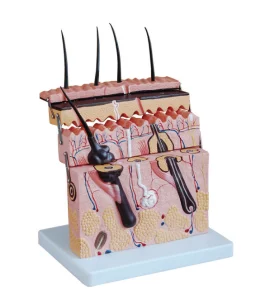
China Human Pathological Round Skin Model Abscess Inflamed Skin Enlarged Hair Growth Process Skin Pouch Construction Model Manufacturers, Pricelist
View Product